AI in Healthcare
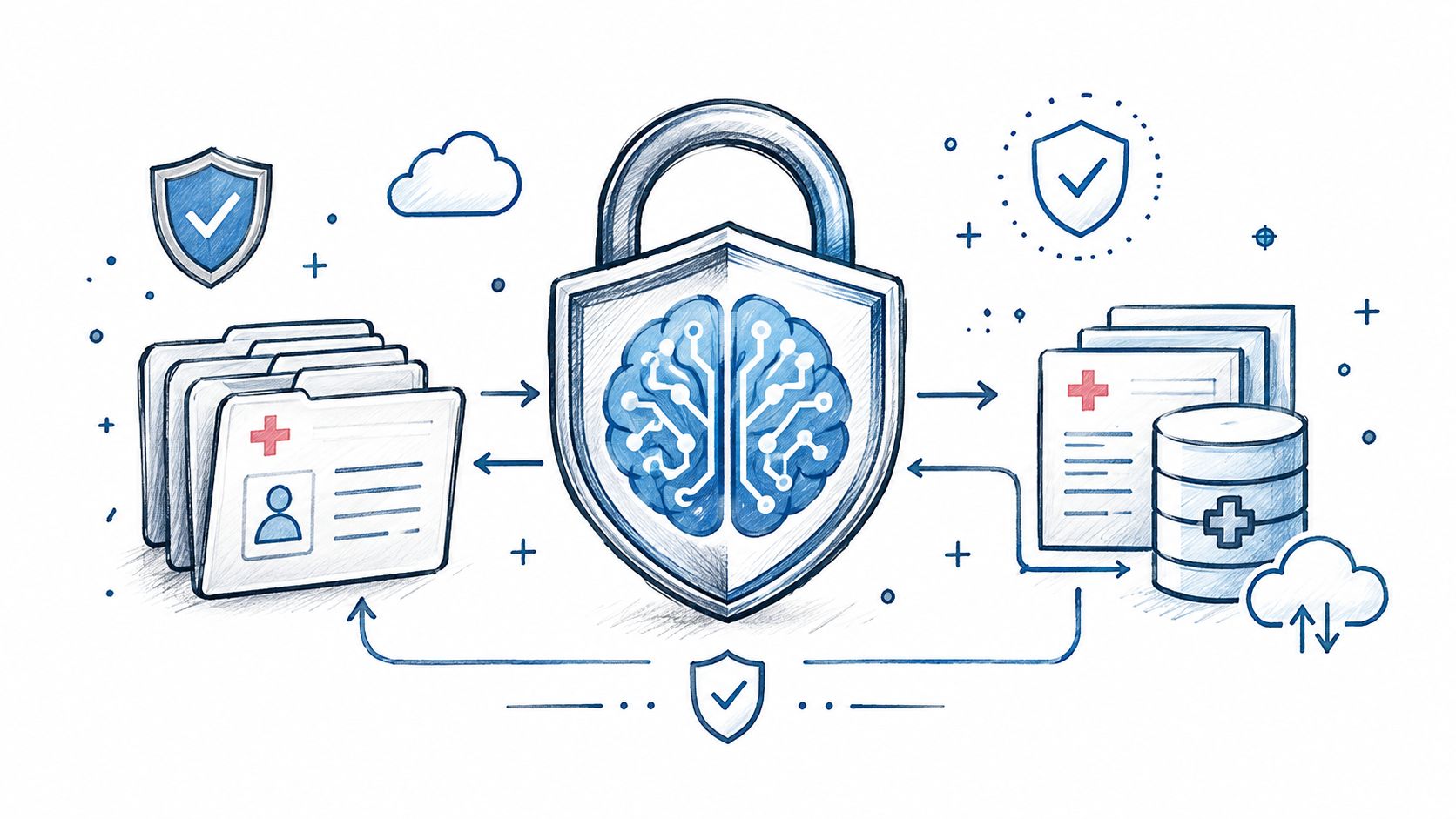
HIPAA-Compliant AI: How to Use LLMs With PHI Safely
How to build HIPAA-compliant AI: when LLM providers need a BAA, data minimization, de-identification, audit controls and a reference architecture.
October 16, 2026Read more
AI is improving healthcare interoperability by enabling seamless data exchange across systems. It enhances data accuracy, supports real-time access, and improves coordination for better patient care outcomes.
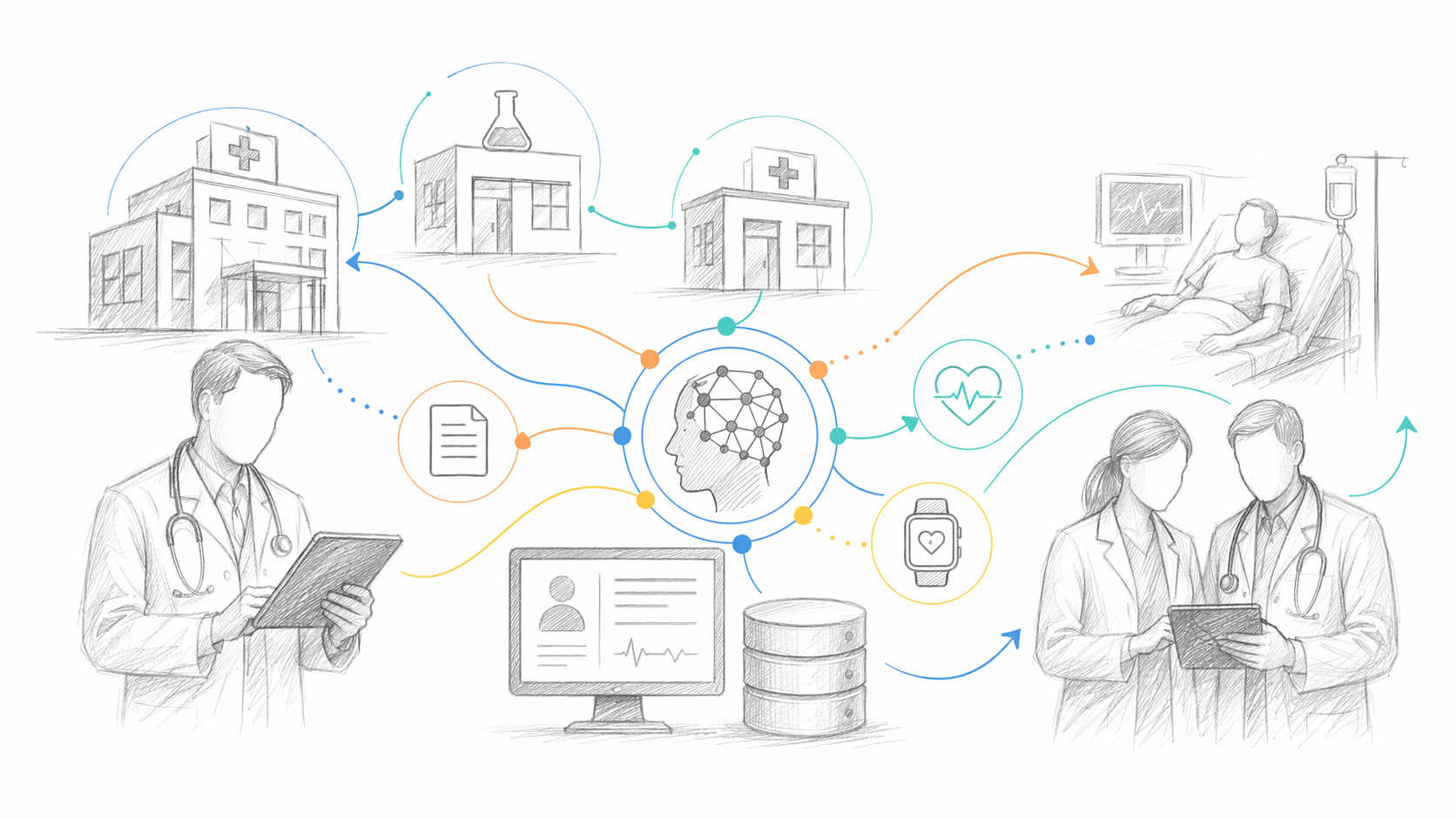
Patient data often resides in various systems across hospitals, laboratories, and clinics. Each system stores records in its own way, and that creates communication gaps. These gaps lead to delayed diagnoses, incomplete patient records, and confusion when planning treatment. Healthcare today needs connected systems that share information without friction. AI healthcare interoperability steps in to solve this problem by building smart links between platforms. It changes how data moves, how systems read it, and how care teams use it from start to finish.
Healthcare interoperability describes different systems sharing and applying patient data freely. It aims to create a smooth flow of information across platforms. Three simple levels exist. Basic data exchange moves information from one system to another. Structured data sharing organises that information into usable forms. Fully integrated systems offer a single view where all data works together as events happen. Achieving this level of connectivity often requires guidance from a healthtech engineering partner who understands both clinical workflows and technical integration.
Data silos happen when systems run alone. Hospitals, labs, and clinics often rely on separate software that does not talk well with others. This creates scattered records where patient information sits spread across many platforms. Because of this, healthcare providers find it hard to get a complete and accurate view of a patient's history. That hurts continuity of care.
Different healthcare systems use varying data standards like HL7 and FHIR. These need proper alignment to work without friction. In many cases, data lives in inconsistent formats, which creates confusion during exchange. Systems fail to read shared information correctly. This leads to miscommunication and incomplete data transfer across platforms. Healthcare AI services can help bridge these format gaps by translating and standardising data across different systems automatically.
Many healthcare organisations still rely on hand-typed data entry and repeated steps. Staff often enter the same patient information into multiple systems. This raises the risk of mistakes. Duplicate records, missing details, and wrong entries become common problems. These errors lower data accuracy and affect clinical decisions.
Healthcare data holds sensitive patient information that needs strict protection. Regulatory rules like HIPAA and GDPR add layers of complexity to data exchange. Systems that lack proper safeguards face higher risks of data leaks and unauthorised access. This makes organisations hesitate to share data across platforms.
Accessing patient records across different systems often takes time because systems do not connect well. Doctors may have to wait for lab results, diagnostic reports, or historical data from other providers. These delays slow down diagnosis and treatment. That directly affects patient care and operational efficiency.

AI improves interoperability by taking over data integration across systems. It reads information from many sources and pulls it into one unified structure. This cuts down on manual work and creates a steady flow of data across platforms.
SaMD solutions play a part in clinical settings where software-driven insights connect directly with patient care systems. This strengthens interoperability within clinical workflows.
AI studies large amounts of healthcare data and finds patterns across different systems. This improves data accuracy and consistency. It reduces duplicate entries and matches records from various sources into a single, reliable format.
Healthcare data often lives in unstructured forms like clinical notes, prescriptions, and reports. AI processes this data and turns it into structured formats. This makes the data easier to read and usable across systems.
AI processes data instantly and updates records across connected systems as events happen. Real-time exchange improves coordination between departments and healthcare providers. It also cuts down waiting time for patient information.
AI automation services streamline repeated data tasks and reduce manual work across healthcare workflows. This improves efficiency and lowers operational complexity. Healthcare staff often spend a lot of time typing patient details, updating records, and moving information between systems. AI lessens this load by processing and organising data from many sources on its own. It also reduces duplicate work by syncing information across platforms as events happen. As a result, teams can put more energy into patient care and important decisions instead of paperwork. A well-designed custom AI strategy report can help identify which repetitive tasks to target first for the greatest impact.
AI implementation support helps organisations line up new technology with existing systems without disruption. This creates a smooth transition during digital transformation.
AI depends on advanced technologies to improve data exchange and system connections.
Machine learning studies patterns inside large datasets and predicts outcomes based on past information. In healthcare, it finds relationships across records from different systems. This improves data matching, lowers duplicate entries, and builds a steady patient profile across platforms.
Natural language processing reads clinical notes, prescriptions, and reports. It pulls meaningful information from unstructured text and turns it into structured data. This improves how systems read and share patient information.
APIs connect different software systems and let them communicate. AI-driven tools improve this connection by translating data formats on their own. This creates smoother interaction between systems without manual work.
AI standardises data by lining up different formats into one unified structure. It matches data elements across systems and improves compatibility. This creates a common language for healthcare platforms.
AI applications in healthcare show real gains in data exchange. These practical AI use cases demonstrate how technology solves everyday data-sharing problems across clinical environments.
AI connects EHR systems across hospitals and clinics. It pulls patient records into a single view. This reduces duplicate entries and improves access to complete medical histories.
AI processes lab reports and diagnostic results from many sources. It adds them to patient records as events happen. This improves accuracy in diagnosis and treatment planning.
AI collects data from wearable devices and remote monitoring tools. It blends this data with clinical systems. Doctors receive ongoing updates on patient health.
AI connects systems across different hospitals. It allows healthcare providers to reach patient records from multiple locations. This improves coordination during referrals and emergency care.
AI-driven interoperability brings real improvements across healthcare systems.
Healthcare data needs strong protection because of how sensitive it is. Systems must guard patient information at every step of data exchange. AI boosts security through data encryption, following rules like HIPAA and GDPR, and spotting risks. It catches unusual patterns, stops fraud, and keeps data accurate and safe across systems. With AI workflow automation, routine security checks and compliance tasks run continuously without manual effort, reducing the chance of human error.
AI will shape a future where predictive analytics guide early detection, systems across the globe share data without friction, and connected networks improve patient outcomes. Decision support tools will offer real-time insights that lift clinical care and operational efficiency. Healthcare platforms will become more linked, which will shrink data gaps between providers and locations. Advanced AI models will improve how systems read complex medical data and deliver clear insights for faster action. As interoperability gets better, healthcare organisations will gain a fuller view of patient journeys. This will strengthen coordination and long-term care planning.
AI has changed how healthcare systems connect and share information. It breaks down data silos, lifts accuracy, and builds a connected environment where information moves without waiting. AI healthcare interoperability plays a key part in building smarter healthcare systems that improve patient care and operational clarity. Contact us to explore how this shift can fit with your healthcare goals.
AI healthcare interoperability enables seamless data sharing between systems, and healthcare AI services help make this exchange faster and more accurate.
A healthtech engineering partner provides AI implementation support to connect systems and ensure smooth integration of AI healthcare interoperability solutions.
SaMD solutions enhance clinical connectivity by enabling secure and structured data flow as part of AI healthcare interoperability systems.
AI automation services streamline data transfer, reduce manual errors, and strengthen AI workflow automation across healthcare systems.
Key AI use cases include EHR integration, lab data sharing, and real-time monitoring, all improved through AI healthcare interoperability.
How to build HIPAA-compliant AI: when LLM providers need a BAA, data minimization, de-identification, audit controls and a reference architecture.
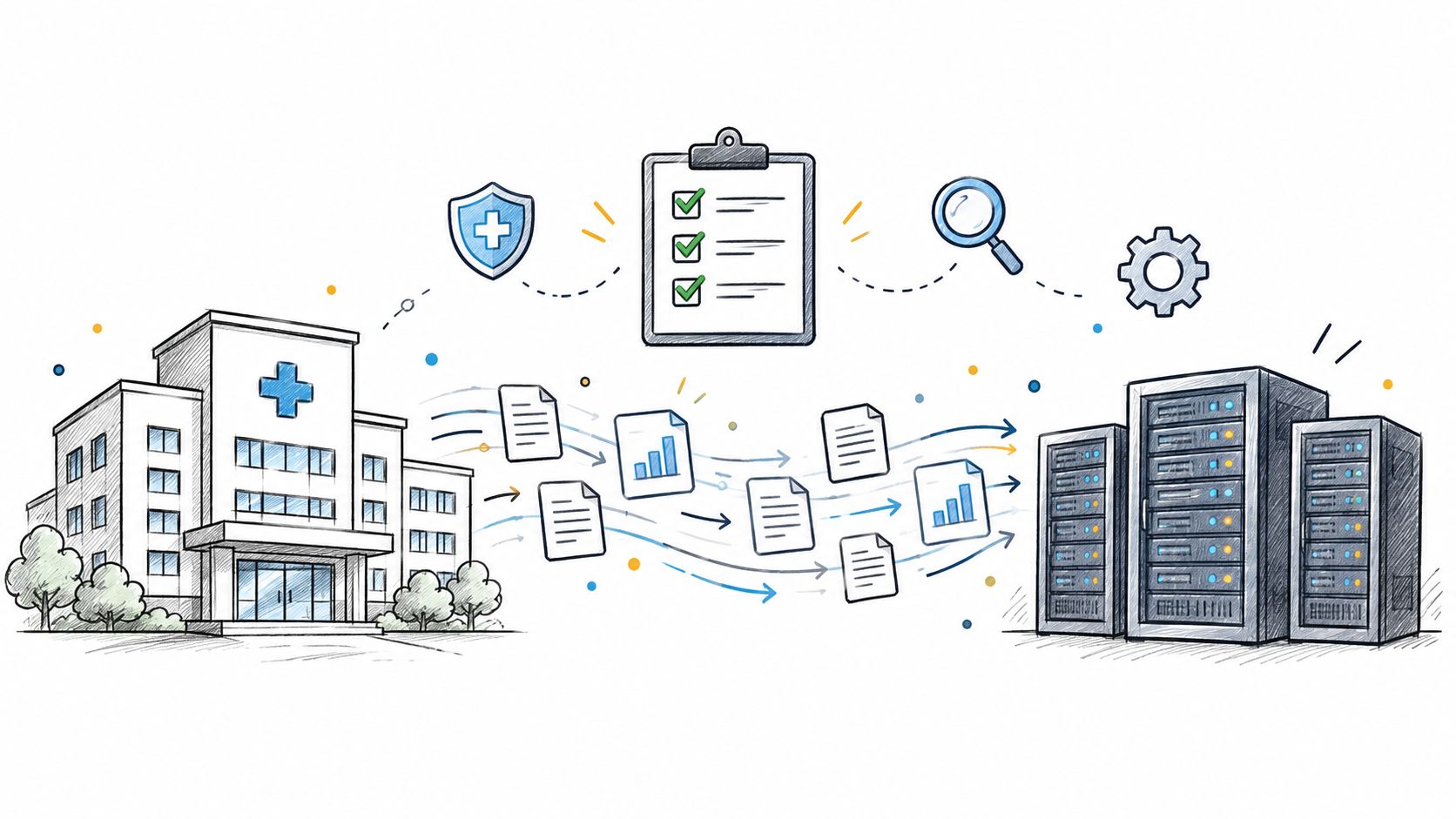
Practical data migration planning guide for healthcare teams. Scope, mapping, compliance, validation, cutover and rollback decisions explained end to end.
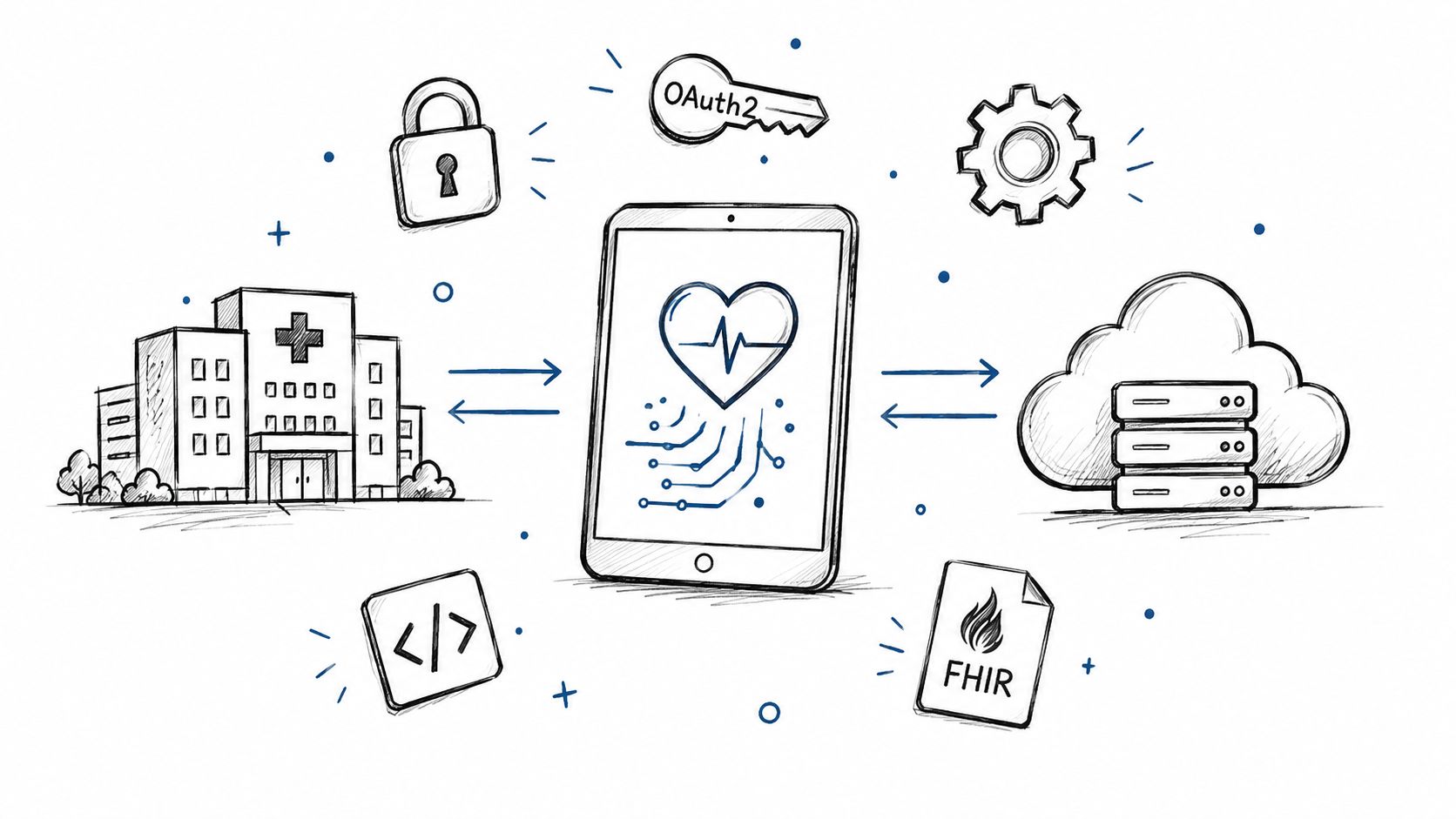
Smart on FHIR guide for healthtech engineers. Learn the OAuth 2.0 launch model, scope syntax, backend services, and US regulatory requirements.
Connect with our team to explore how AI expertise can transform your business.