AI in Healthcare
HIPAA-Compliant AI: How to Use LLMs With PHI Safely
How to build HIPAA-compliant AI: when LLM providers need a BAA, data minimization, de-identification, audit controls and a reference architecture.
October 16, 2026Read more
AI is transforming clinical decision support systems by analyzing vast medical data and delivering real-time insights to healthcare professionals. This helps improve diagnosis accuracy, support faster decisions, and enhance patient outcomes.
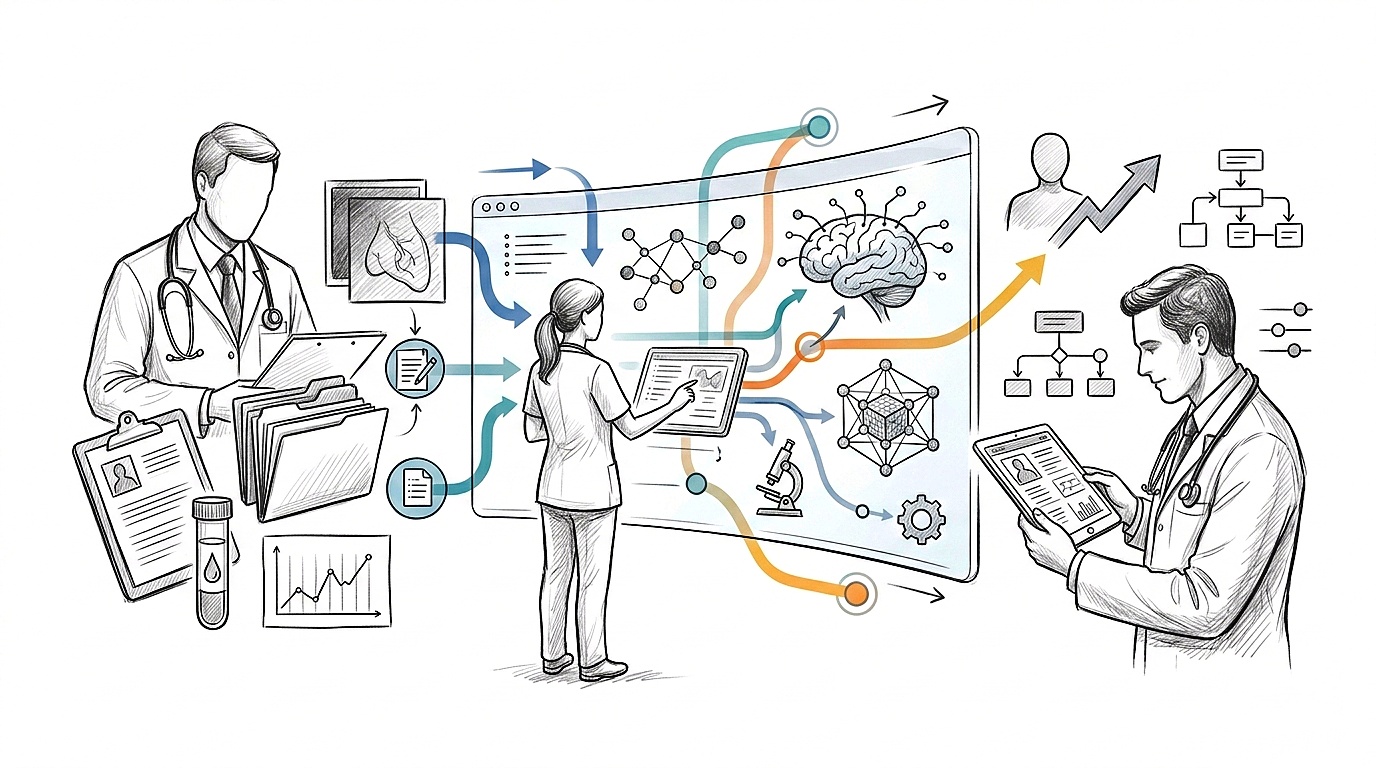
Healthcare professionals go through large amounts of patient information every day. They look at medical histories, lab results, scans, and past treatments before making decisions. Earlier clinical support tools helped by offering reminders, showing medical guidelines, and suggesting treatment options. Those systems brought more structure to the way care was delivered. But as healthcare data grew more complex and diseases became harder to track, those older tools started to fall short. Artificial intelligence is now changing how these systems work. It helps make sense of data more quickly and offers sharper insights at the right moment. This shift means that AI clinical decision support is changing how clinicians understand patient information and apply what they know during care.
Clinical decision systems are digital tools that help healthcare professionals assess patients and plan treatments. They look at patient records alongside medical knowledge databases to offer useful information at the moment a decision is being made.
These systems serve several everyday functions. They can flag unusual lab results, suggest treatments based on accepted guidelines, or give quick access to medical reference material. With these features, doctors get organized information that makes it easier to handle complex decisions in hospitals and other care settings.
Clinical workflows are the steps physicians go through when they care for patients. They look at symptoms, check lab results, study images, and decide on treatments, all within a short period. As the number of patients grows and medical histories become more complex, the pressure on doctors keeps increasing.
Hospitals often bring in a healthtech engineering partner to build digital systems that fit naturally into these workflows. The goal is to create tools that work alongside how doctors already operate, while also connecting smoothly with patient records and the hospital's data systems.
Artificial intelligence is bringing deeper analytical power into healthcare. Machine learning models study patterns across patient records, lab results, scans, and past treatments. With this kind of analysis, AI clinical decision support helps doctors see more clearly when diagnosing and planning care.
Hospitals and research teams are turning to healthcare AI services more often to make sense of large amounts of clinical data and uncover connections that might otherwise go unnoticed.

Older digital tools for clinical decisions were built around fixed rules that often struggled to keep up with complex medical situations. Many healthcare organizations start their shift toward modernization by developing a custom AI strategy report. This document outlines their clinical priorities, the data they currently hold, and the specific steps required to move forward with transformation.
These systems relied on rules set in advance, usually based on medical guidelines. But clinical situations are often too complex to fit neatly into those fixed structures.
Patient information comes in many forms, including scans, physician notes, lab results, and genetic data. Older systems had a hard time handling such a wide mix of information.
Physicians see many patients each day and are flooded with notifications. When alerts pop up too often, they start to get ignored.
Older platforms focused on what was happening with a patient at that moment. They offered little help in predicting how a condition might progress over time.
Modern healthcare systems often include intelligent tools through SaMD solutions, which are regulated medical software built specifically for clinical use. Artificial intelligence brings several improvements to how clinical decisions are made.
Machine learning looks at medical patterns across large sets of patient data, helping doctors evaluate conditions more precisely.
Advanced tools process patient records in seconds, cutting down the time spent searching through scattered information.
Automated analysis helps catch unusual patterns, possible medication issues, and inconsistencies in treatment plans.
Insights drawn from data guide doctors toward treatment plans that fit each patient's specific situation.
Care teams spend more time with patients and less time jumping between different systems to find what they need.
Healthcare organizations are putting AI automation services to work in a number of practical ways. Disease prediction tools look at patient history and lab results to catch early signs of long-term illness. Imaging platforms powered by AI review scans and flag unusual areas for doctors to examine more closely. Medication safety systems check prescriptions against allergies and past treatments to catch possible drug interactions before they happen. Hospitals also use advanced analytics to study admission patterns, improve how treatments are scheduled, and keep daily operations running more smoothly.
When hospitals bring in intelligent clinical tools, they often need AI implementation support to help with the rollout across different systems.
Medical records hold sensitive patient information. Strict rules and strong data protections have to be in place.
Hospitals run on complex digital setups. Electronic health records, imaging tools, and lab platforms all need to work together.
Doctors depend on their own judgment when diagnosing patients. AI tools need to be clear about how they reach conclusions so that confidence can grow.
Medical technology must follow strict healthcare regulations. Any clinical software has to go through careful review and validation before it can be used.
Healthcare organizations that are getting ready to adopt intelligent technology often start with an AI readiness assessment. This helps them take a clear look at their current systems, how data is managed, the quality of their information, and how well clinical workflows are set up.
A well-thought-out AI adoption roadmap then guides long-term change across departments, medical specialties, and digital platforms. Leaders also focus on the most valuable AI use cases, including tools that predict disease, analyze medical images, check medication safety, and forecast patient risk. As the technology continues to advance, AI clinical decision support will offer deeper insights that help doctors diagnose more accurately and plan treatments with greater confidence.
Artificial intelligence is changing how clinical decisions are made. It brings deeper analysis and a clearer view of patient information. Hospitals that adopt intelligent decision tools see faster evaluations, more accurate diagnoses, and smoother daily operations. By taking a closer look at healthcare data, AI clinical decision support helps doctors think through complex cases and deliver better care.
Organizations that invest in these technologies gain more efficient workflows and stronger patient outcomes. For those ready to explore intelligent healthcare solutions, contact us to start making real progress in clinical decision innovation.
AI clinical decision support uses intelligent analytics to examine patient data and help clinicians make faster, more accurate treatment decisions.
Healthcare AI services analyze large clinical datasets and support AI use cases like disease prediction, imaging analysis, and medication safety.
A healthtech engineering partner helps design SaMD solutions, integrate AI tools with hospital systems, and provide reliable AI implementation support.
Organizations often begin with an AI readiness assessment and a custom AI strategy report to evaluate infrastructure, data quality, and clinical priorities.
Following a structured AI adoption roadmap and implementing practical AI automation services helps hospitals scale AI systems across clinical workflows.
How to build HIPAA-compliant AI: when LLM providers need a BAA, data minimization, de-identification, audit controls and a reference architecture.
Practical data migration planning guide for healthcare teams. Scope, mapping, compliance, validation, cutover and rollback decisions explained end to end.
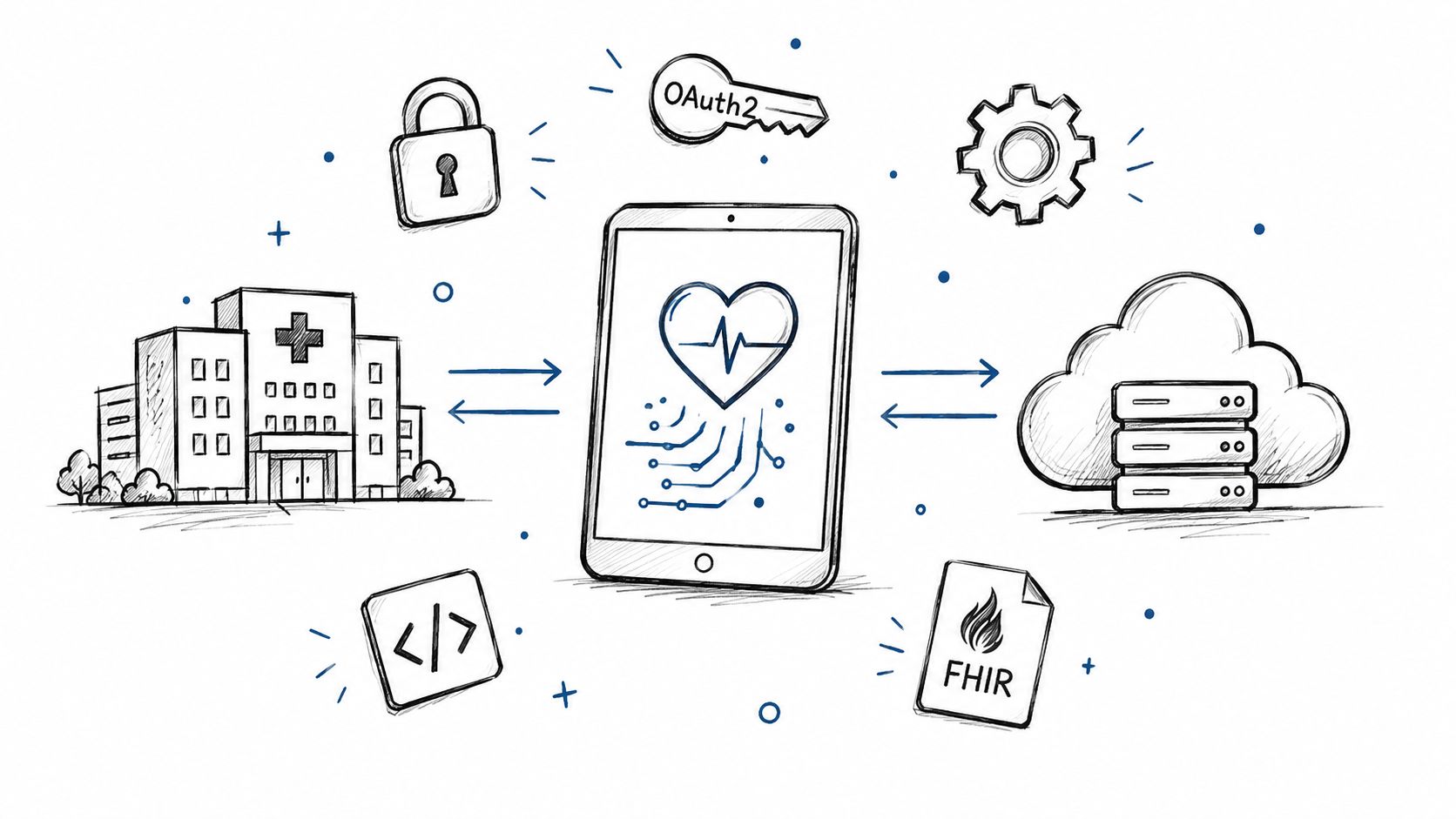
Smart on FHIR guide for healthtech engineers. Learn the OAuth 2.0 launch model, scope syntax, backend services, and US regulatory requirements.
Connect with our team to explore how AI expertise can transform your business.