
AI in Healthcare
HIPAA-Compliant AI: How to Use LLMs With PHI Safely
How to build HIPAA-compliant AI: when LLM providers need a BAA, data minimization, de-identification, audit controls and a reference architecture.
October 16, 2026Read more
The future of work lies in collaboration between humans and AI. Explore how businesses can redefine talent, build new skills, and foster a culture ready for long-term transformation.
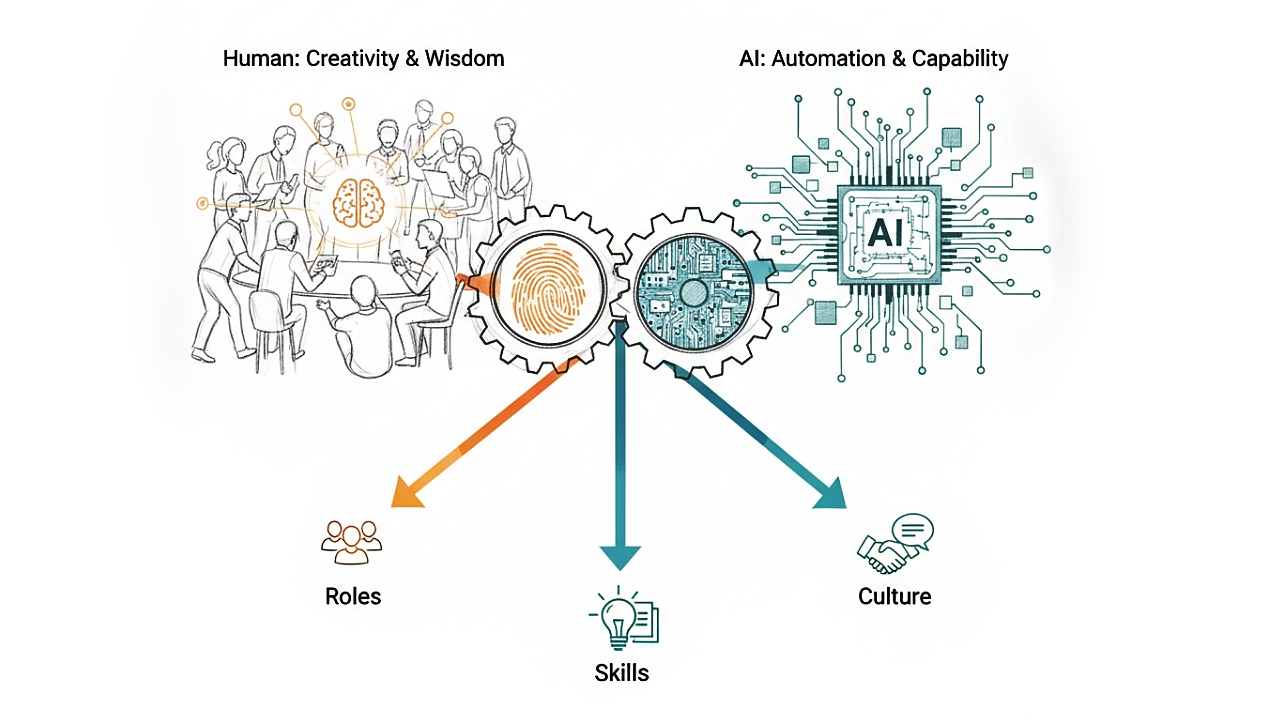
A profound change is reshaping how we work, one based on partnership rather than replacement. We are entering an era shaped by the union of human creativity and artificial intelligence. This powerful combination is opening new doors and redefining our understanding of roles and collaboration. As this partnership grows, the coming years will be defined by a simple question: how effectively can we merge human wisdom with machine capability to forge a more productive future of work?
A quiet evolution is happening in offices everywhere. Businesses are now developing models that employ artificial intelligence to support decisions, drive automation, and enhance analytics. This change is a key part of a larger movement: the evolution of the AI workforce. It is reshaping how teams operate and succeed. As AI systems take over routine and repetitive tasks, people are finding they have more space. This space is for the work that truly needs a human touch, for strategic thinking, creative exploration, and solving complex problems.
Knowledge workers will notice their focus shifting. They will spend more time on tasks that call for good judgment, clear communication, and empathy. Analytical jobs remain significant, yet they will evolve. People in these roles will work with AI to interpret data, moving beyond data collection tasks. As companies bring more AI Solutions into their daily work, teams must learn how to partner with this technology. The goal is to let the tools handle data while people bring their own insight to the table.
The success of people and AI working together will rely on having the right skills. While technical knowledge will always be important, it is not enough on its own. People at work will need to combine their digital understanding with strong people skills. Traits like curiosity, flexibility, and clear thinking will be central for anyone who teams up with AI systems.
Many organizations will create structured learning to help their staff understand how AI tools work. Some leaders will bring in AI strategy consulting experts to help rebuild their training for this new reality. The goal is not to make everyone a technical expert. The goal is to equip every person to use AI thoughtfully and effectively in their daily tasks.

For people and AI to work well together, the workplace culture must be strong and supportive. Staff should feel comfortable adopting new AI tools and exploring different work methods. Leaders also have a role to play. They should understand how AI systems make decisions and how data is managed. When a culture is built on trust, employees are more likely to see AI as a useful partner. This change is now easier to see as the AI workforce transformation continues to shape how organizations adjust and move forward.
Work environments will also improve with more open communication, clear goals, and shared responsibility. Many companies are now using structured plans, such as an AI maturity model, to help shape their long-term vision. This approach provides teams with a clear view of their current position and a practical direction for future AI adoption.
While AI is a powerful tool, it should not be brought into a business without careful planning. Leaders must first consider their existing strengths, current challenges, and future objectives. A detailed AI readiness assessment can highlight gaps in a company's processes and team skills. This step enables smoother and more successful AI adoption.
When introduced thoughtfully, AI supports people's work and creates room for new ideas. Companies that move too quickly can encounter problems such as disrupted workflows or unclear responsibilities. Choosing to work with an AI implementation partner can help prevent these issues. A good partner provides the right technical guidance, deep industry knowledge, and a clear plan for bringing new technology into the workplace.
As AI gains greater presence in the workplace, businesses are exploring wider strategies to integrate this technology into their plans. Many leaders are now investing in a custom AI strategy report. This report helps build a long-term plan that fits the company's specific goals. It identifies the most relevant AI use cases for their field and illustrates how these applications can support the business over time.
A structured plan also prevents companies from applying AI in fragmented or inconsistent manners. Rather than choosing tools without a clear aim, teams can follow an AI adoption roadmap. This roadmap outlines each step, guiding a company from early experiments to a dependable, consistent AI practice.
This new era of work is about more than just technology. It is deeply connected to people. Teams will need support, training, and open conversation as AI becomes a normal part of the workday. People will focus more on creative and strategic tasks while AI manages routine processing. Organizations will need leaders who champion trying new things and who build a culture of ongoing learning.
This change will take time. The coming decade will bring steady and significant changes to how we perceive jobs, careers, and collaboration. Human potential will find new strength when combined with capable AI tools.
Humans, through collaboration with AI, are building a workplace where technology and people can both succeed. A clear plan, open communication, and a supportive culture allow companies to enter the next phase of change with certainty. AI workforce transformation will continuously shape jobs, skills, and organizational structures. With careful planning, this change becomes a real opportunity. To learn more about how this shift can help you reach your goals, contact us.
AI workforce transformation refers to the shift where humans and AI collaborate to improve productivity and innovation. It focuses on redefining roles, upgrading skills, and integrating AI Solutions into daily operations.
An AI readiness assessment helps organizations evaluate current skills, tools, and processes. It ensures smoother AI workforce transformation and builds a clear AI adoption roadmap.
AI strategy consulting helps identify relevant AI use cases and align them with business goals. It often results in a custom AI strategy report that guides long-term workforce and technology planning.
An AI implementation partner is valuable when introducing new AI Solutions or scaling initiatives. They provide technical expertise, structured deployment, and support cultural change during AI workforce transformation.
An AI maturity model measures an organization’s current capabilities and progress. It supports structured growth, informed decision-making, and a practical AI adoption roadmap for sustainable AI workforce transformation.
How to build HIPAA-compliant AI: when LLM providers need a BAA, data minimization, de-identification, audit controls and a reference architecture.

Practical data migration planning guide for healthcare teams. Scope, mapping, compliance, validation, cutover and rollback decisions explained end to end.

Smart on FHIR guide for healthtech engineers. Learn the OAuth 2.0 launch model, scope syntax, backend services, and US regulatory requirements.
Connect with our team to explore how AI expertise can transform your business.