AI in Healthcare
HIPAA-Compliant AI: How to Use LLMs With PHI Safely
How to build HIPAA-compliant AI: when LLM providers need a BAA, data minimization, de-identification, audit controls and a reference architecture.
October 16, 2026Read more
Unlock business growth with human AI strategy consulting. Learn how an expert partner can help you build and execute an AI roadmap that delivers real results.

Let's be honest, the term "AI" gets thrown around a lot. For many business leaders, it brings to mind either a magical black box that solves everything or a job-stealing robot from a sci-fi movie. The reality is far more practical and, when done right, far more powerful.
At its core, human AI strategy consulting is about bridging the gap between brilliant technology and real-world business needs. It’s a partnership focused on solving your core challenges by weaving AI into the very fabric of your company—your goals, your people, and your culture. It's not about just plugging in software; it's about ensuring technology works for you, not the other way around.
Let's cut through the jargon. True AI strategy isn't about buying the shiniest new tool. It's a strategic process that puts your people at the centre of the technological equation to create real, lasting value.
Think of an AI consultant like a seasoned architect hired to design your company's new headquarters. The AI models and platforms are the raw materials—the steel, the glass, the concrete. They're essential, but without a skilled architect, you just have a pile of expensive supplies.
The architect, your consultant, first seeks to understand your company's soul. They learn your vision, how your teams collaborate, and the unique landscape you operate in. Only then can they design a building that's not just functional, but inspiring and perfectly built for its purpose. That's what a human-centric AI strategy does.
 This human-focused method is what separates a successful AI initiative from a costly tech experiment. It starts by aligning powerful AI capabilities with your most valuable asset: your people. This means digging deep into a few key areas:
This deep dive ensures every penny spent on AI is directly linked to a clear, measurable outcome.
Choosing to put people at the heart of your AI strategy isn't just a feel-good decision; it delivers tangibly different and superior business results compared to a purely tech-focused rollout. The table below highlights the stark contrast in outcomes.
Business Aspect
Human-Centric AI Strategy
Technology-Only Approach
Employee Adoption
High engagement and buy-in from teams who see AI as a helpful tool.
Low adoption rates, resistance, and workflow disruption.
Return on Investment
Faster and higher ROI as AI directly addresses validated business problems.
Slow or negative ROI from investments that don't align with business needs.
Innovation
Fosters a culture of continuous improvement as people find new ways to use AI.
Stifles creativity, as AI is seen as a rigid, top-down mandate.
Customer Experience
AI-powered insights help teams deliver more personalised and empathetic service.
Creates generic, automated interactions that can frustrate customers.
Risk Management
Proactively addresses ethical concerns, bias, and data privacy from the start.
Often encounters ethical and compliance issues after implementation.
Ultimately, a strategy that ignores your people is a strategy built to fail. By prioritising the human element, you create a foundation for sustainable growth and a genuine competitive advantage.
A consultant's main job is to help you craft a unified plan that brings technology, people, and processes together. As we explored in our guide on building an AI strategy framework, this roadmap provides a clear path forward. It prevents the all-too-common "random acts of AI" that burn through budgets with little to show for it.
The real goal is to augment your team, not replace them. An effective strategy ensures AI becomes a powerful co-pilot, handling the repetitive tasks and surfacing key insights. This frees up your people to focus on what they do best: creative problem-solving, strategic thinking, and building meaningful customer relationships.
The "human" in human AI strategy consulting provides the foresight, ethical compass, and workforce empowerment that are the real keys to unlocking long-term success with artificial intelligence.

Diving into AI without a seasoned guide is a bit like setting off into the wilderness without a map. The potential for incredible discoveries is there, but so is the risk of getting lost in costly, time-consuming dead ends. Bringing in an AI strategy consulting partner changes the game, turning a high-risk gamble into a well-planned journey toward real business results.
An expert partner's first move is to de-risk your investment. A classic mistake many companies make is falling in love with a flashy new technology before they even know what problem they’re trying to solve. A good consultant stops this from happening. They ensure you start by zeroing in on your biggest business challenges and opportunities, making sure every ounce of effort is aimed at creating tangible value.
This strategic focus is your best defence against expensive failures. An experienced consultant has seen it all—the triumphs and, more importantly, the disasters—across countless industries. They bring that hard-won wisdom to your organisation, helping you sidestep the common traps and pointing you towards solutions they know will work.
One of the biggest hurdles in any AI project is the communication breakdown between the tech teams and the business leaders. Your technical experts are talking about algorithms, data models, and infrastructure. Your executives are focused on KPIs, market share, and profitability. An AI strategy consultant is the essential interpreter who can speak both languages fluently.
This translation work ensures everyone is pulling in the same direction, with shared goals and clear metrics. Instead of a tech team building a technically brilliant model that solves the wrong business problem, the consultant facilitates a process of AI co creation. Here, both sides collaborate from day one. This builds a unified vision from the start, preventing the kind of misalignment that can completely derail a project down the line.
A consultant’s real value isn't just in their AI knowledge; it’s in how well they understand your business. They’re the ones who connect the dots between what the technology can do and what the business needs to achieve—like smashing a growth ceiling, fixing a stubborn operational bottleneck, or fending off a new market competitor.
By building this shared understanding, a consultant ensures your AI initiatives aren't just siloed IT projects. They become deeply woven into the very fabric of your business strategy.
The demand for this kind of strategic guidance is skyrocketing as more organisations realise just how complex AI adoption really is. The global artificial intelligence consulting market was valued at USD 8.75 billion in 2024 and is expected to climb to USD 58.19 billion by 2034, growing at an impressive CAGR of 20.86%. This massive growth, evident in markets from Germany to the rest of the world, is fuelled by a clear need for expert help in areas like machine learning and AI governance to improve operations and drive innovation.
This trend underscores a critical point: getting AI right requires more than just technical chops. It demands a partner who can blend deep tech expertise with sharp business acumen.
At the end of the day, an AI strategy partner is the catalyst that transforms the immense potential of AI into solid business performance. They bring the structured thinking and objective viewpoint you need to make smart, informed decisions.
This partnership helps you focus on what really matters:
By working with an expert partner, you aren't just buying advice. You are investing in a strategic capability that speeds up your progress, minimises risk, and ensures your AI initiatives deliver meaningful, lasting results.
Diving into an AI strategy engagement might feel like a huge undertaking, but it’s actually a well-defined and collaborative journey. Think of it less like a blind leap and more like a guided expedition. A good consultant provides a clear, phased roadmap, so you always know where you are, where you’re going, and why. It's about blending your team's invaluable inside knowledge with an expert's outside perspective to build something truly effective.
The whole process is built on partnership. Your team is at the heart of every decision, which makes the journey predictable and ensures the final strategy is genuinely yours—not just a generic plan dropped on your desk. This approach demystifies the technology and turns a potentially intimidating shift into a series of manageable, logical steps toward growth.
We always start by rolling up our sleeves and getting a deep understanding of your organisation. This first phase is all about alignment. Through workshops and straight-talking interviews with your key people, your consultant will work to understand your business from the inside out. The goal is to map out your current situation—your strengths, your challenges, and your biggest ambitions.
It’s about establishing a clear, honest baseline. We look beyond just the tech you have; we assess your data's readiness, your team's skills, and how your daily operations actually work. This groundwork is crucial. It stops us from building solutions in a vacuum and ensures that everything we recommend is practical, relevant, and poised to make a real impact.
Once we have a crystal-clear picture of your starting point, it’s time to chart the course forward. This is where the creative and strategic work really kicks in. Together, we’ll design a custom AI strategy framework. This is no one-size-fits-all template; it’s a detailed plan built for your specific goals, outlining the necessary changes to your technology, processes, and even team structures.
This roadmap becomes your north star, giving everyone a clear vision of how AI will fit into your business. It identifies top priorities, sets out realistic timelines, and defines the crucial metrics we'll use to track success. It’s all about creating a shared vision that gets everyone—from the leadership team to the people on the front lines—on the same page and genuinely excited for what's next.
The infographic below shows how this strategic process flows, from the initial assessment through to long-term refinement.
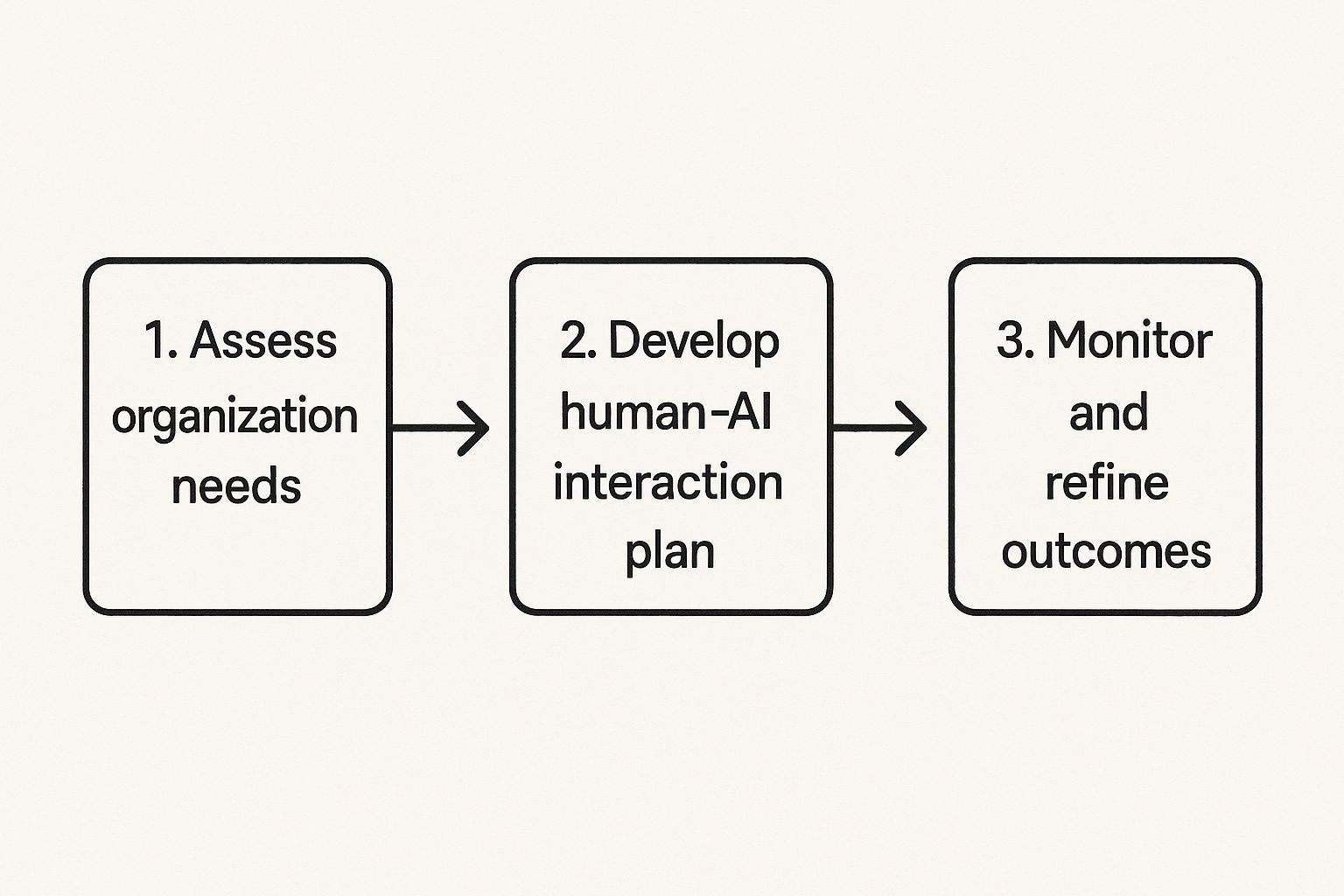
As you can see, it's a continuous cycle: we assess your needs, develop a human-centred plan, and then constantly monitor the results to make the approach even better over time.
Let's be realistic: not all AI opportunities are created equal. This phase is all about focus—pinpointing the projects that will give you the biggest bang for your buck, and quickly. We use a structured method, often with tools for AI requirements analysis, to identify use cases that are high-impact but also genuinely achievable.
The goal here is to get some early wins on the board. By starting with a pilot project, we can test our ideas on a smaller, manageable scale, prove the concept, and demonstrate a tangible return on investment. This builds crucial momentum and gets the rest of the organisation on board for the wider journey.
Once a pilot succeeds, it provides the perfect blueprint for scaling the solution across the business, making the full rollout much smoother and more effective.
This structured approach is gaining serious traction, as more businesses realise a formal plan isn't a "nice-to-have" but a competitive necessity. In Germany, for instance, a recent KPMG study revealed that only 6% of companies had actually implemented a formal AI strategy. This points to a massive opportunity for businesses to get ahead by adopting an integrated approach that thoughtfully combines technology with ethical rules and employee support.
Finally, a successful AI journey doesn't just stop once a system is switched on. This last phase is about building for the long haul. We establish a robust governance framework to ensure your AI operates ethically, transparently, and safely while managing risks and staying compliant. This is a non-negotiable part of any human-centric AI strategy.
At the same time, the focus shifts to continuous improvement. We monitor performance against the goals we set in the roadmap, gather feedback, and constantly refine the models and processes. This ensures your AI initiatives don't just deliver a one-time boost but continue to evolve and provide sustainable value for years to come. It’s this ongoing partnership and guidance that our expert team delivers, making sure your AI strategy remains a living, breathing asset for your success.
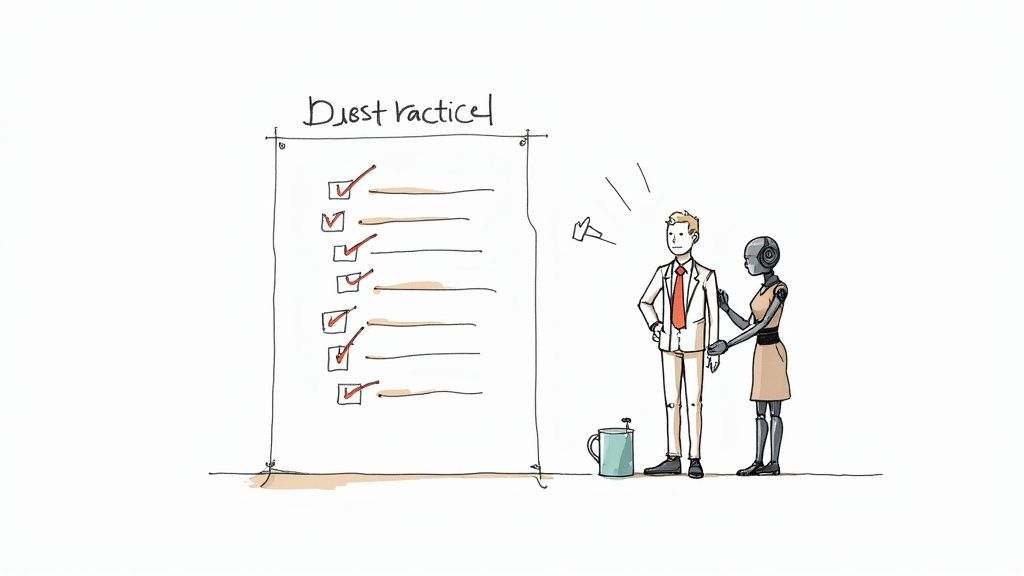
Alright, let's move from the why to the what. A genuinely effective AI strategy that stands the test of time isn’t built on buzzwords; it rests on four solid pillars. Think of it like constructing a house. You need a solid foundation, the right structural frame, skilled builders, and a clear set of safety rules. If you skimp on any one of these, the whole project becomes unstable, inefficient, or even dangerous.
This section is your practical checklist for getting it right. We'll walk through each pillar, giving you actionable advice on everything from wrangling your data and picking the right tools to empowering your people and navigating the tricky ethical waters. Consider this your blueprint for building an AI strategy that actually delivers.
Let's start with the absolute bedrock: your data. Data is the fuel for any AI system. Without clean, well-organised, and accessible data, even the most sophisticated algorithm is completely useless. Getting this first pillar right is non-negotiable. It’s all about creating clear, sensible rules for how data is collected, stored, secured, and actually used across your business.
Imagine trying to build the world's greatest library before you hire a top-tier researcher. If the books (your data) are a disorganised mess, full of errors, or locked away in a back room, the researcher (your AI) can't possibly do their best work. Strong data governance makes sure your AI is working with high-quality information, which is the only way to get accurate and reliable insights.
Once your data house is in order, the next step is choosing the right technology. The market is absolutely flooded with AI platforms, models, and apps, and it's incredibly easy to get overwhelmed or distracted by the shiniest new toy. The trick is to choose tools that genuinely match your specific business goals and what your teams can realistically handle. A key part of any human AI strategy consulting engagement is helping you cut through this noise.
For many businesses, using a dedicated AI Strategy consulting tool provides a much-needed structure for making these decisions. These platforms can help you weigh up your options, model different outcomes, and make sure the tech you choose is fit for purpose.
Here’s an example of a tool designed to help you organise your thinking around AI adoption.
This screenshot shows how a platform can prompt you to define your project, pinpoint relevant departments, and clarify your strategic goals right from the start. This kind of structured thinking is crucial. It ensures your AI strategy is firmly connected to real business results, not just vague tech ambitions.
Technology and data are just two pieces of the puzzle. The third pillar, and you could argue the most important one, is your people. A successful move into AI is about so much more than just hiring a few data scientists; it requires a real cultural shift. Your entire workforce, from the front line to the executive suite, needs to feel prepared, skilled, and confident enough to work with AI. As we explored in our AI adoption guide, managing this change is everything.
This boils down to a few key actions:
Your people aren't obstacles to be managed; they are your single greatest asset in unlocking what AI can do. A smart strategy invests in them, helping to turn anxiety into advocacy and building the human know-how needed to turn AI insights into real-world value.
This final pillar is what keeps your AI efforts responsible, safe, and trustworthy. As AI gets more powerful, the ethical questions get bigger and more complicated. Designing a solid framework for ethics and risk management isn't a "nice-to-have"—it's an absolute must for protecting your customers, your brand, and your bottom line.
This means you have to tackle big issues like data privacy, algorithmic bias, and transparency head-on, right from day one. You need clear governance in place to ensure your AI systems are fair, understandable, and secure. A human-first approach to AI strategy consulting always puts these ethical guardrails front and centre, making sure your drive for innovation never compromises your core values. By building on these four pillars, you create a complete and robust strategy that's ready for long-term success.
It’s one thing to talk about frameworks and theories, but it’s another thing entirely to see the results in the real world. This is where the value of human-AI strategy consulting really clicks—not as some vague idea, but as a genuine force for driving business growth. The most impressive AI success stories aren't just about clever algorithms; they're stories of smart strategy, deep industry know-how, and crucial human guidance.
Let's look at a couple of concrete examples of how this partnership plays out, turning thorny business problems into major wins. These aren't just tech projects; they're business turnarounds, led by human experts.
A mid-sized German manufacturing firm was constantly fighting fires. Their production line machinery would break down without warning, leading to costly halts in production, ballooning maintenance bills, and frustrated clients waiting on delayed orders. They had a hunch AI could be the answer, but they were stumped on how to even begin.
A regional financial services company was steadily losing customers to bigger banks with slicker digital experiences. Their engagement numbers were tanking because they couldn't provide the kind of personalised product suggestions that people now expect.
These real-world use cases highlight a key principle: the consultant's strategic direction was the key ingredient that turned raw technological potential into tangible, proven ROI.
This trend of human-guided AI is especially powerful in Germany. The German AI market is on a trajectory to explode from USD 15.45 billion in 2023 to an estimated USD 106.39 billion by 2030. Bolstered by strong government support and a world-class industrial base, the appetite for consulting that marries technical expertise with a human-first business strategy is growing faster than ever. You can discover more insights about the German AI market growth and what's driving it.
Choosing a partner to guide your human-AI strategy is probably the most critical decision you'll make on this journey. The right firm doesn't just suggest new tech; they become an extension of your own team, genuinely invested in seeing you succeed. The wrong one? They can lead you down a very expensive rabbit hole of tools that never quite deliver on their promise.
Your job is to look for a few non-negotiable qualities. This isn’t about being wowed by a slick presentation, but about finding a partner with real substance.
A genuine partner puts your success before their sales targets. You'll know you've found one when they're laser-focused on solving your actual business problems, not just selling you a service.
Pay close attention during those initial meetings. Are they asking sharp questions about your operations, your strategic goals, and your biggest headaches? Or are they just rattling off a list of their technical capabilities? A great consultant listens far more than they talk. They should be more interested in your pain points than in their own solutions. This business-first mentality is the clearest sign of a partner who will tie their work directly to your bottom line.
To feel confident in your choice, you need to find a team that blends proven experience with a truly collaborative spirit. Your ideal partner should check these boxes:
Here’s a powerful question to ask any potential consultant: "Tell me about a project that went sideways and how your team handled it." Their answer will tell you more about their character and problem-solving abilities than any list of successes ever could.
Ultimately, you're searching for a partner who embodies these traits. When you’re ready to find a team to help you navigate these complexities, you can connect with our expert team to talk about your specific goals.
Got questions about human-AI strategy consulting? You're not alone. Let's clear up some of the most common queries people have about the process, what’s involved, and what you can really expect.
Think of it this way: developers are the brilliant mechanics who build the engine, while a strategy consultant is the architect who designs the entire car and plots the cross-country road trip.
An AI developer is a technical specialist. You give them a specific task—like building a recommendation algorithm—and they’ll build it. Their world is code, models, and implementation.
On the other hand, a human-AI strategy consultant starts with a much bigger question: "Where are we trying to go as a business?" They dig into your core challenges, your market, and what you want to achieve in the long run. They help you figure out which AI projects will actually make a difference, how to manage the human side of change, and how to do it all responsibly.
It really depends on how complex your business is and what you're trying to achieve. A typical engagement to map out your initial strategy usually takes between 4 and 12 weeks.
That initial phase involves a lot of listening—workshops, digging into your data, and talking to the people on the ground. The result is a clear, step-by-step plan. After that, helping you get a pilot project off the ground might take another 3 to 6 months. Some companies prefer to keep a consultant on retainer for the long haul, offering ongoing advice as things inevitably shift.
This is a critical question, and the answer starts right at the beginning of the engagement, not at the end. A huge part of a consultant's job is helping you define exactly what success looks like in concrete, measurable terms.
We’re talking about specific Key Performance Indicators (KPIs) tied directly to business results. For instance, we could measure ROI through:
The consultant helps you set that starting line (the baseline) and then tracks progress against it. This way, you can see a clear, quantifiable return on your investment.
Absolutely. In fact, this is one of the most valuable times to bring in a consultant. It's a classic chicken-and-egg problem that many businesses face.
One of the first things a consultant will do is assess where you are with your data. If your data is sparse or messy, the first strategic move won't be to build a complex AI model. Instead, it will be to create a solid plan for gathering and managing the right data.
They can point you to the exact information you need to start collecting, show you how to structure it, and help put processes in place to keep it clean. Getting your data house in order is a foundational step, and a good consultant will guide you through it. For more detailed answers, you can also explore our main FAQ page.
Ready to turn your AI ambitions into a clear, actionable strategy? Ekipa AI delivers tailored AI strategies and execution plans without the traditional consulting overhead. Our approach, guided by our expert team, ensures your journey into AI is built for success. Discover your AI opportunities today.
How to build HIPAA-compliant AI: when LLM providers need a BAA, data minimization, de-identification, audit controls and a reference architecture.
Practical data migration planning guide for healthcare teams. Scope, mapping, compliance, validation, cutover and rollback decisions explained end to end.
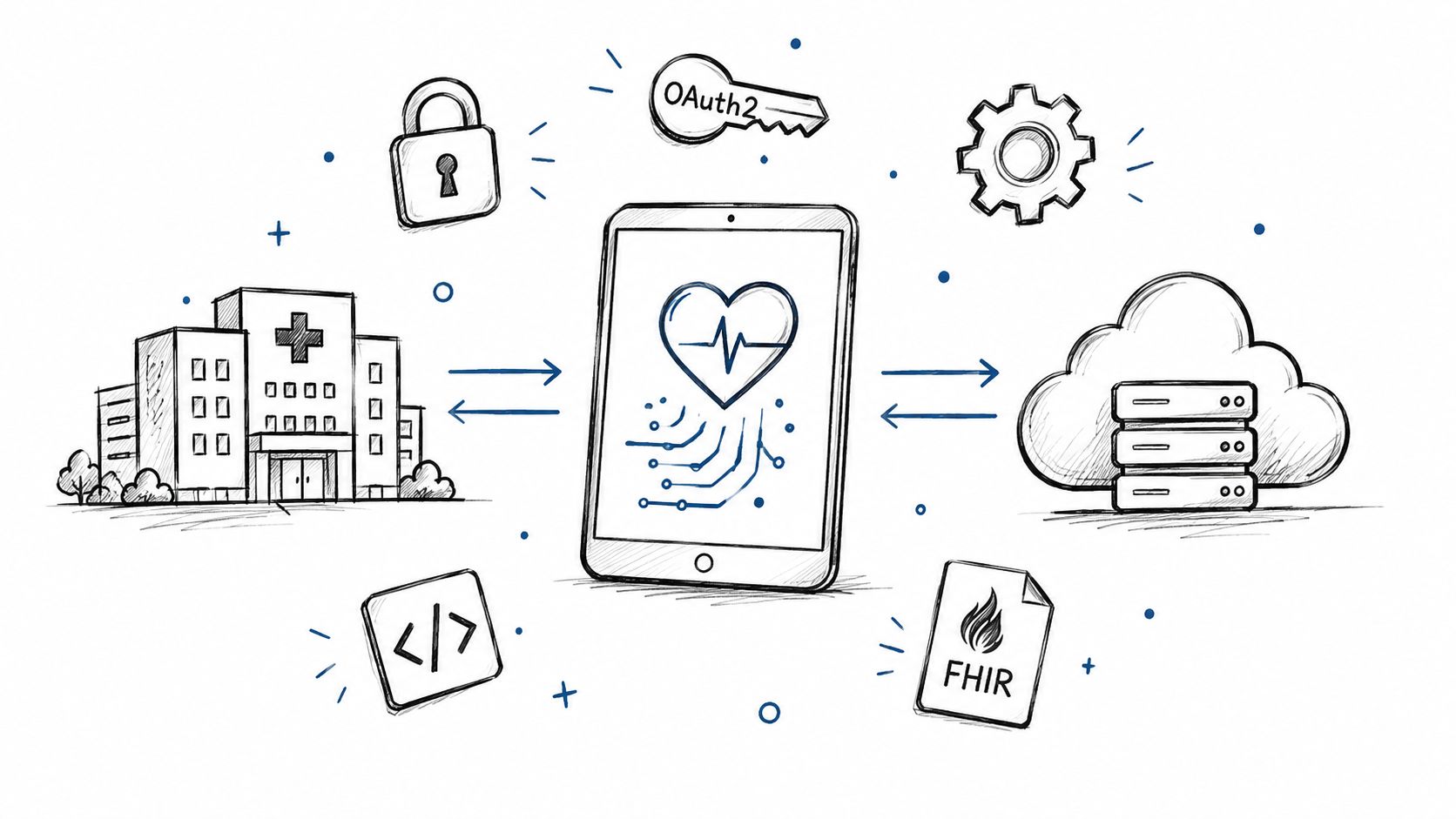
Smart on FHIR guide for healthtech engineers. Learn the OAuth 2.0 launch model, scope syntax, backend services, and US regulatory requirements.
Connect with our team to explore how AI expertise can transform your business.