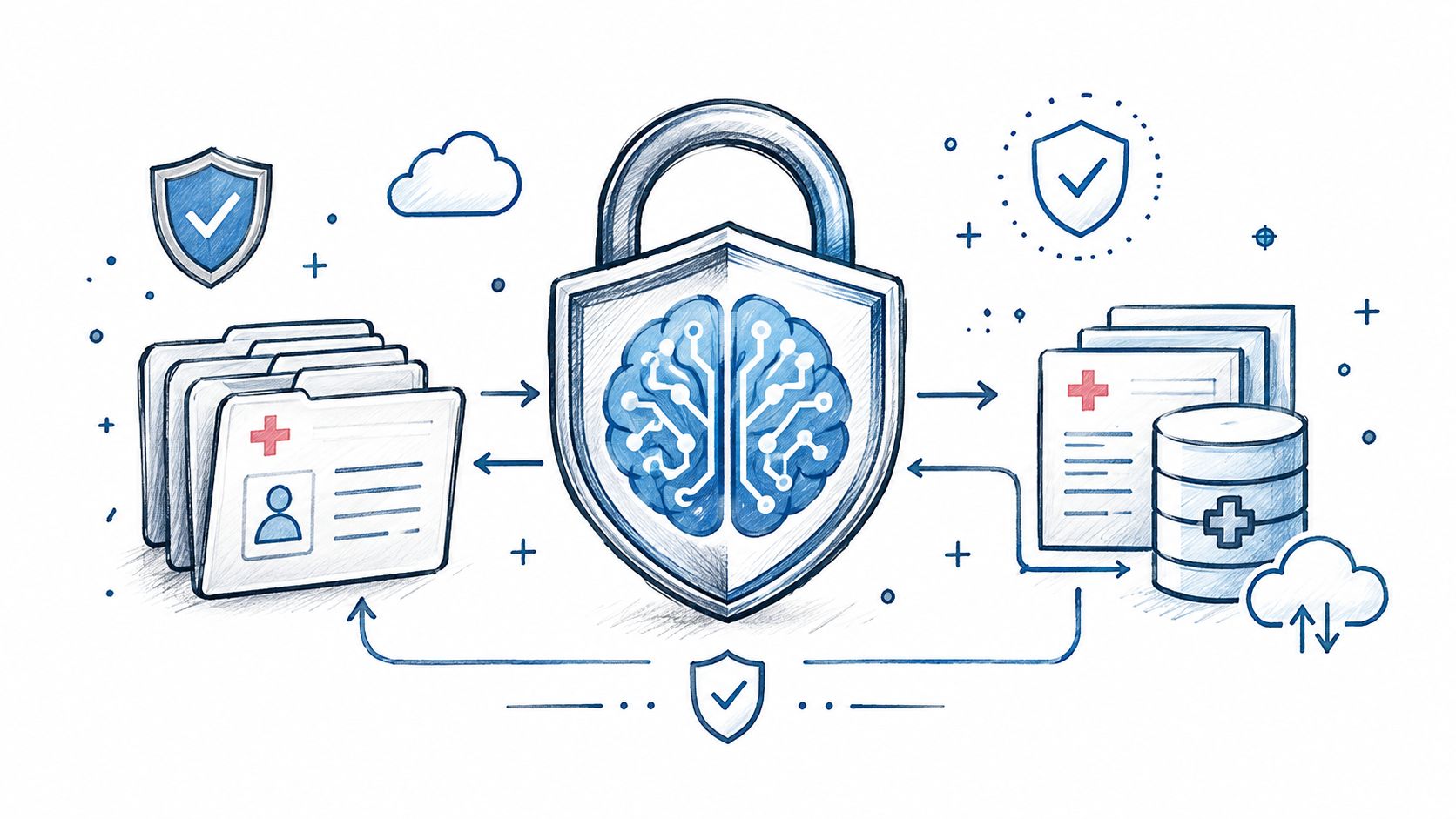
AI in Healthcare
HIPAA-Compliant AI: How to Use LLMs With PHI Safely
How to build HIPAA-compliant AI: when LLM providers need a BAA, data minimization, de-identification, audit controls and a reference architecture.
October 16, 2026Read more
Explore 8 key LLM applications in healthcare operations. Learn how AI transforms clinical documentation, patient triage, and supply chains for better ROI.

Clinicians still spend about 33% of their workday on non-patient-care administrative tasks, and administrative requirements can take at least 25% of a clinician's time. That is the budget line healthcare leaders should target first, because every hour lost to documentation, intake, scheduling, and manual review drives labor cost up and patient access down.
Adoption patterns already point to the right starting point. A 2024 systematic review in npj Digital Medicine mapped 89 studies on LLMs in patient care and found that 84 of 89 studies (94.4%) focused on medical chatbot use cases, while smaller shares targeted translation and summarization (5 of 89, 5.6%) and discharge instructions (1 of 89, 1.1%). Health systems should read that trend correctly. Start with communication-heavy, repetitive, lower-risk workflows where implementation is faster, governance is clearer, and ROI shows up in months, not years.
This guide is built for executive decisions, not AI theater. It ranks the healthcare workflows most worth automating, explains why each one matters operationally, and gives you a practical view of expected ROI, implementation timelines, and the fastest path to a controlled pilot. If your team is sorting through intake forms, referrals, prior auth paperwork, or unstructured operational documents, an AI-powered data extraction engine for healthcare workflows can cut manual handling before you roll out broader LLM programs.
The operating rule is simple. Pick one high-friction workflow, define baseline metrics before deployment, and hold the project to hard targets such as turnaround time, labor hours saved, denial reduction, staff capacity gained, or patient response speed. As seen across other real-world use cases, teams get the best results when they fix a specific operational bottleneck first, then expand only after accuracy, compliance, and handoff steps are stable.
If you need help turning the shortlist into production systems, work with a healthtech engineering partner that can handle integration and delivery, and with a team experienced in custom healthcare software development.
Clinical documentation is the cleanest entry point for LLM adoption. The workflow is repetitive, text-heavy, and expensive when it drags clinician time into evenings and weekends. It also creates a direct downstream effect on coding, quality reporting, and reimbursement.

The strongest operational case is ambient documentation. In healthcare operations, LLM-based ambient documentation has reported up to a 50% reduction in charting time by converting visit conversations into structured SOAP or clinical notes. That time reduction matters because note quality affects coding completeness, claim readiness, and the reliability of analytics built on clinical text.
Nuance DAX, Abridge, and EHR-embedded drafting tools have pushed this category into mainstream operational planning. The right comparison isn't “AI note writer versus human clinician.” It's “manual note production versus clinician-reviewed draft generation with structured capture.”
Start in one department with predictable visit patterns, such as primary care or orthopedics. Build specialty-specific prompts and note templates before rollout. Generic prompts produce generic notes, and generic notes create coding friction.
Use tools such as an AI-powered data extraction engine to structure diagnoses, procedures, medications, and clinical findings before they reach the coding queue.
Practical rule: Never auto-finalize complex notes. Require human review for high-value encounters, multi-problem visits, and documentation that drives major reimbursement decisions.
A good pilot tracks:
If you can't show faster note completion and cleaner coding handoff, don't scale yet. Fix prompt design, workflow fit, and review rules first.
Most intake processes are still fragmented. Patients repeat symptoms by phone, portal, and front-desk check-in. Staff then re-enter the same information into the EHR. LLM-enabled triage and intake systems cut that duplication by turning free-text or voice conversations into structured intake data before the visit begins.
This category fits front-door operations especially well because it handles conversation, not autonomous diagnosis. That's why it maps to the broader pattern already seen in early LLM healthcare adoption.
Use LLMs to gather symptom history, medications, allergies, prior care context, and scheduling intent. Then connect that intake output to scheduling logic, nurse escalation, or service-line routing. Done properly, the model doesn't replace clinical judgment. It organizes information so staff can act faster.
Tools in this category include symptom checkers, intake chatbots, and voice agents embedded into access-center workflows. Health systems also use them to pre-populate forms and standardize intake language across web, mobile, and call channels.
This is a strong fit for AI Automation as a Service when your organization needs a fast operational rollout without building the orchestration layer from scratch.
Use a simple deployment sequence:
Don't deploy triage AI as a standalone chatbot. Tie it to a real operational endpoint, such as appointment routing, nurse review, or intake completion.
The ROI shows up as reduced call handling time, better intake completeness, and fewer avoidable handoffs. But only if you connect the model to actual workflow ownership.
Healthcare operations teams don't just manage staff and schedules. They also manage policy updates, utilization protocols, clinical pathway changes, and payer documentation rules. That creates a constant need to synthesize dense medical and regulatory information fast.
LLMs are useful here because they compress reading time. They can summarize guidelines, compare recommendation changes, draft internal briefings, and organize literature by topic or strength of evidence. For operational leaders, that means faster policy updates and fewer delays between new evidence and frontline implementation.
Evidence synthesis is one of the highest-value internal use cases, but it needs guardrails. Models can summarize well and still miss nuance. They can also present unsupported conclusions too confidently if no verification layer exists.
That's why this category should sit inside a governed knowledge workflow, not a casual prompt box. Pair the model with approved sources, citation checks, and named reviewers from clinical leadership, quality, or pharmacy.
A practical rollout often includes:
This is a good place to bring in AI strategy consulting if your organization hasn't yet defined which decisions should remain fully human-led and which can be model-assisted.
Real-world use looks less like “ask the AI any medical question” and more like “summarize the latest heart failure pathway revisions and flag operational changes to discharge planning, coding, and prior authorization.” That's where the value is.
Not every high-value LLM workflow sits close to the patient. Some of the most useful ones sit in the back office, where teams spend hours reading procurement notes, utilization summaries, incident reports, inventory comments, vendor emails, and OR scheduling explanations.

LLMs help by making unstructured operational data usable. They summarize supply issues, classify delay reasons, surface recurring bottlenecks, and generate recommendations from free-text logs that normal BI tools often ignore.
Start where staff already complain about reading overload. OR block utilization reviews, supply substitution workflows, bed management notes, and throughput huddles are common candidates. These workflows generate a lot of text and require coordination across departments.
Expert reviews also note that LLMs are being applied to prior authorization and disease-management tasks by summarizing long records and extracting evidence for payer review, while other model classes work with structured medical codes to predict events such as readmissions or long stays. The operational lesson is simple. Text summarization and structured prediction are stronger together than apart.
Use workflow automation and internal tooling to place the model inside scheduling, procurement, utilization, and command-center workflows rather than leaving it as an isolated analytics experiment.
A practical sequence looks like this:
For teams also working on logistics resilience, this operational thinking aligns with broader lessons on managing supply chain challenges with Peak Transport.
Poor follow-through drives a large share of avoidable healthcare waste. Patient chatbots can reduce that waste, but only if they are built to change a specific operational metric such as refill completion, appointment prep, or post-discharge follow-up.
A generic assistant that answers broad health questions will not move the business. Healthcare leaders should deploy narrow, protocol-driven chatbots tied to care management workflows, with clear handoffs to staff and clear stop rules for anything clinical. That is how these tools produce ROI in 90 to 180 days instead of turning into another digital pilot with no owner.
Recent review work points to strong potential for multimodal LLMs in emergency care, older-adult care, digital medical procedures, and radiology reporting, while warning that health systems can widen disparities if tools fail non-English speakers or patients with limited digital access (JMIR review). Treat that as a design requirement. If the bot cannot support multiple languages, low reading levels, and easy escalation to a human, do not launch it.
Start with workflows that already have a manual outreach burden and a visible financial consequence when patients drop off. Good early targets include medication reminders, chronic disease check-ins, pre-visit preparation, benefits questions, and post-discharge education.
The ROI logic is straightforward. Every avoided no-show, missed prep step, preventable readmission risk flag, or incomplete care-plan follow-up saves staff time and protects revenue. The fastest wins usually come from one service line with high volume and repeatable scripts, not from an enterprise-wide rollout.
Use a focused build:
Condition-specific programs usually outperform general engagement bots because they map to real workflows. Diabetes, hypertension, behavioral health follow-up, maternity, and post-op recovery are strong starting points. A targeted support experience such as an AI wellness hub for personalized patient engagement makes more sense than a broad chatbot that tries to cover every use case and owns none of them.
Do not buy a chatbot because it sounds modern. Buy one only if an operations leader agrees to own a metric, a care team agrees to own escalations, and IT agrees to connect it to scheduling, CRM, or the EHR task queue. If those three pieces are missing, delay the rollout.
A practical roadmap is simple. In month one, choose one population and one workflow. In months two and three, launch a bounded script with escalation and reporting. By month six, expand only if the pilot shows lower outreach burden, stronger patient completion rates, or fewer avoidable staff touches.
One more point. Keep operational links where they belong. Broader logistics lessons like managing supply chain challenges with Peak Transport matter to healthcare systems, but patient engagement programs should be judged on adherence, navigation, and care coordination outcomes, not supply performance.
A patient chatbot should own one operational result. If it does not improve a defined metric, cut scope or shut it down.
Clinical trial recruitment is an operational problem disguised as a research problem. The primary bottleneck is usually chart review, eligibility interpretation, and outreach timing. LLMs help by screening unstructured records against complex inclusion and exclusion criteria faster than manual review alone.
This is one of the most promising use cases when your organization has active research programs and a usable EHR data estate. It's especially useful in oncology, rare disease, and specialty programs where eligibility depends on nuanced clinical language buried in notes.
The model shouldn't decide trial eligibility on its own. It should rank and explain candidate matches, show which chart evidence supports the recommendation, and hand the case to research coordinators or investigators for validation.
That's why this often fits into broader SaMD solutions planning, even when the first deployment is operational rather than patient-facing.
Launch with a narrow design:
The ROI usually comes from faster candidate identification, better coordinator productivity, and fewer missed opportunities to enroll eligible patients. The risk comes from weak explainability. If coordinators can't see why the system suggested a patient, they won't trust it.
Coding audit is where many organizations can save money without touching the patient experience. It's also where sloppy AI deployment creates immediate compliance exposure. That means governance has to come first.
The best use of LLMs here isn't autonomous coding. It's pattern detection. The model compares documentation against coded claims, flags inconsistencies, highlights missing support, and identifies notes that deserve a second review before submission or audit.
Focus on specialties with complex documentation and expensive claim consequences, such as cardiology, oncology, orthopedics, and hospital medicine. Use the model to surface missing specificity, unsupported modifiers, repeated undercoding patterns, and notes that don't justify billed complexity.
This category works best when paired with a regulatory compliance partner and clear internal standards from revenue cycle and compliance leadership.
Build the workflow around coder trust:
Good coding AI doesn't replace coders. It gives them a prioritized worklist and cleaner justification.
This is also one of the easiest places to prove operational value qualitatively. Teams can see fewer manual audits, faster review of high-risk charts, and better alignment between documentation and billed services.
Staff scheduling looks like a math problem, but most healthcare leaders know it's really a negotiation among staffing rules, burnout risk, skills coverage, union constraints, manager habits, and staff preferences. LLMs help when those constraints live in policy documents, comments, messages, and exception requests that normal scheduling engines struggle to interpret.
They're most useful as a layer around workforce systems, not as a replacement for them. The model can summarize shift change reasons, draft fairer scheduling recommendations, explain conflicts, and turn scheduling exceptions into structured inputs for planners.
Begin with one department where scheduling pain is visible and rules are stable enough to model, such as imaging, perioperative nursing, or a single inpatient unit. Don't begin with system-wide nursing coverage. That's how trust gets lost early.
A strong implementation follows an AI Product Development Workflow so fairness logic, approval rules, and exception handling are designed before automation expands.
Use these design rules:
Grand View Research estimated the global LLM in healthcare market at USD 1.3 billion in 2025 and projected it to reach USD 12.5 billion by 2033. That projection reflects broad confidence in operational use cases like extracting and summarizing complex clinical information from EHRs. Workforce operations should be part of that roadmap, but only after leaders define what “better schedule” means.
| Item | Implementation complexity | Resource requirements | Expected outcomes | Ideal use cases | Key advantages |
|---|---|---|---|---|---|
| Clinical Documentation Automation & Medical Coding | Medium (4–8 weeks; EHR integration & validation) | EHR connectors, clinician validation, HIPAA security, training | 25–40% ↓ documentation FTEs; 15–20% faster billing cycle | Outpatient/inpatient notes, billing accuracy, revenue cycle | Reduces doc time, improves coding accuracy, speeds claims |
| Patient Triage & Intake Automation | Medium–High (6–12 weeks; clinical validation) | Conversational AI, triage protocols, multilingual NLU, scheduling integration | 35–50% ↓ front‑desk FTEs; 30–40% ↑ appointment utilization | Pre-visit intake, symptom triage, 24/7 routing | Faster intake, better data completeness, early risk flags |
| Medical Literature & Evidence Synthesis | Low–Medium (3–6 weeks; knowledge integration) | Access to indexed databases, citation verification, expert review | 40–60% ↓ literature review time; faster guideline updates | Research reviews, guideline development, point‑of‑care evidence | Rapid synthesis, evidence grading, semantic search |
| Healthcare Operations & Supply Chain Optimization | High (8–16 weeks; extensive data work) | Cross‑system data integration, analytics, change management, dashboards | 15–25% ↓ operational costs; 20–30% ↑ scheduling efficiency | OR scheduling, inventory management, bed/flow optimization | Demand forecasting, waste reduction, predictive maintenance |
| Patient Engagement & Health Coaching Chatbots | Medium (6–10 weeks; content + validation) | Personalization engine, EHR/wearable integrations, escalation rules | 20–30% ↓ readmissions; 15–25% ↑ medication adherence | Chronic disease management, adherence programs, wellness coaching | Continuous engagement, adherence support, reduced follow‑ups |
| Clinical Trial Matching & Patient Recruitment | High (8–12 weeks; regulatory review) | EHR/genomic access, consent workflows, clinical validation | 50–70% faster enrollment; 30–40% improved feasibility forecasting | Trial recruitment, oncology/rare disease enrollment, feasibility | Faster patient ID, improved diversity, higher recruitment rates |
| Medical Coding Audit & Compliance Monitoring | Medium (4–8 weeks; integration & training) | Billing/EHR integration, coding rules, compliance expertise | 10–20% ↓ denied claims; 60–80% ↓ compliance violations | Audit support, high‑value specialties, fraud detection | Proactive compliance, anomaly detection, audit trails |
| Healthcare Staff Scheduling & Workforce Management | High (10–14 weeks; pilot & change mgmt) | Historical staffing data, regulatory constraints, stakeholder alignment | 20–35% ↓ premium overtime; 10–15% ↑ staff retention | Nurse scheduling, multi‑skill rostering, large health systems | Fairer schedules, reduced overtime, burnout risk reduction |
Healthcare AI programs fail for a simple reason. Leaders buy a model before they define the business problem, the workflow owner, and the payback period.
Start with operational pain. Choose work that is repetitive, text-heavy, and expensive when done poorly. Good first targets are tasks that consume labor, slow patient flow, create billing rework, or expose the organization to compliance risk. That is why the strongest LLM applications in healthcare are usually embedded in existing processes, not launched as standalone tools.
Use a staged blueprint.
First, pick one workflow with a single accountable executive. Second, define success in business terms. Use measures such as time returned to clinical staff, lower denial rates, shorter intake cycles, fewer manual touches, or faster case review. Third, keep human review in any workflow that affects patient safety, reimbursement, or audit exposure. Fourth, measure whether the tool removes work from the system or just shifts it to another team.
This is the ROI test. If a pilot saves minutes but does not improve throughput, reduce rework, or prevent costly errors, it does not deserve expansion.
A practical rollout usually follows three phases. Phase one targets one low-risk, high-volume process and proves adoption. Phase two connects that workflow to core systems such as the EHR, scheduling, revenue cycle, or patient communication stack. Phase three adds governance, audit logging, model monitoring, and expansion into more sensitive use cases. This approach is less flashy than an enterprise-wide launch. It is also the one that gets funded twice.
For executives, the decision framework is straightforward:
Ekipa AI is one option for organizations that want outside support on strategy, prioritization, and implementation. The value is not the vendor name. The value is getting architecture, workflow design, governance, and deployment sequencing right before teams waste budget on disconnected pilots.
What are the best LLM applications in healthcare operations to start with?
Start with clinical documentation, intake automation, coding audit, and operational summarization. These workflows are high-volume, language-heavy, and easier to govern than autonomous clinical decision support.
How should hospitals measure ROI from healthcare LLM projects?
Measure operational outcomes. Track labor hours saved, reduction in rework, cycle-time improvement, denial-related changes, escalation rates, and actual staff adoption. If usage is low, projected ROI is irrelevant.
Are LLMs safe for patient-facing healthcare workflows?
They are safe only when the scope is narrow and escalation rules are explicit. Triage, discharge communication, multilingual messaging, and access-related workflows need tighter controls, stronger validation, and clear human handoff points.
What's the biggest implementation mistake?
Launching a chatbot or summarization layer without tying it to a workflow that already has an owner, a baseline, and a decision path. If nobody is accountable for the output, outcomes will not change.
Do healthcare organizations need custom builds or off-the-shelf tools?
Choose based on workflow complexity, integration depth, and compliance requirements. Packaged tools work for narrow use cases. Custom orchestration becomes necessary when you need specialty-specific logic, tighter governance, or integration across multiple systems.
How to build HIPAA-compliant AI: when LLM providers need a BAA, data minimization, de-identification, audit controls and a reference architecture.
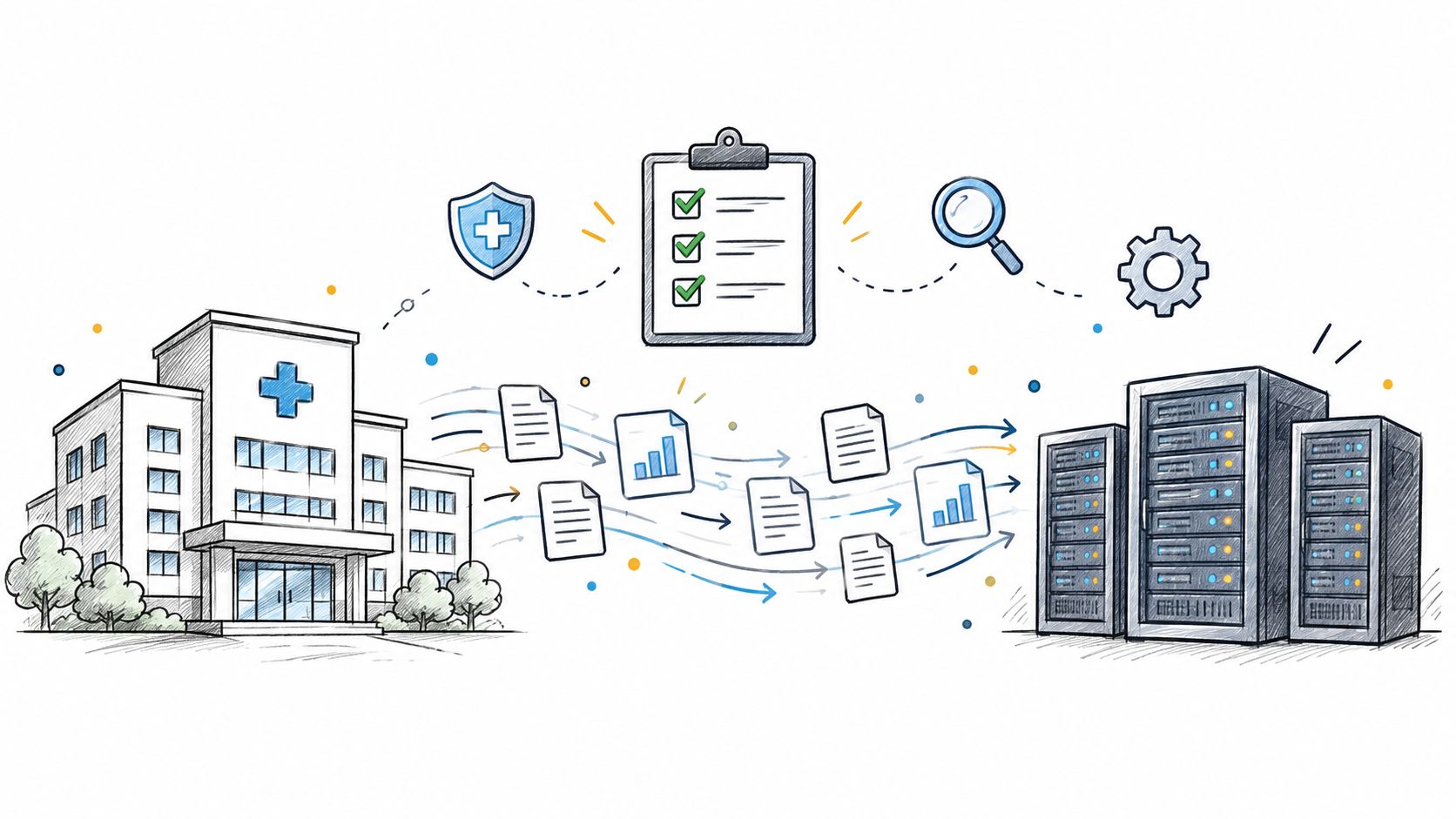
Practical data migration planning guide for healthcare teams. Scope, mapping, compliance, validation, cutover and rollback decisions explained end to end.
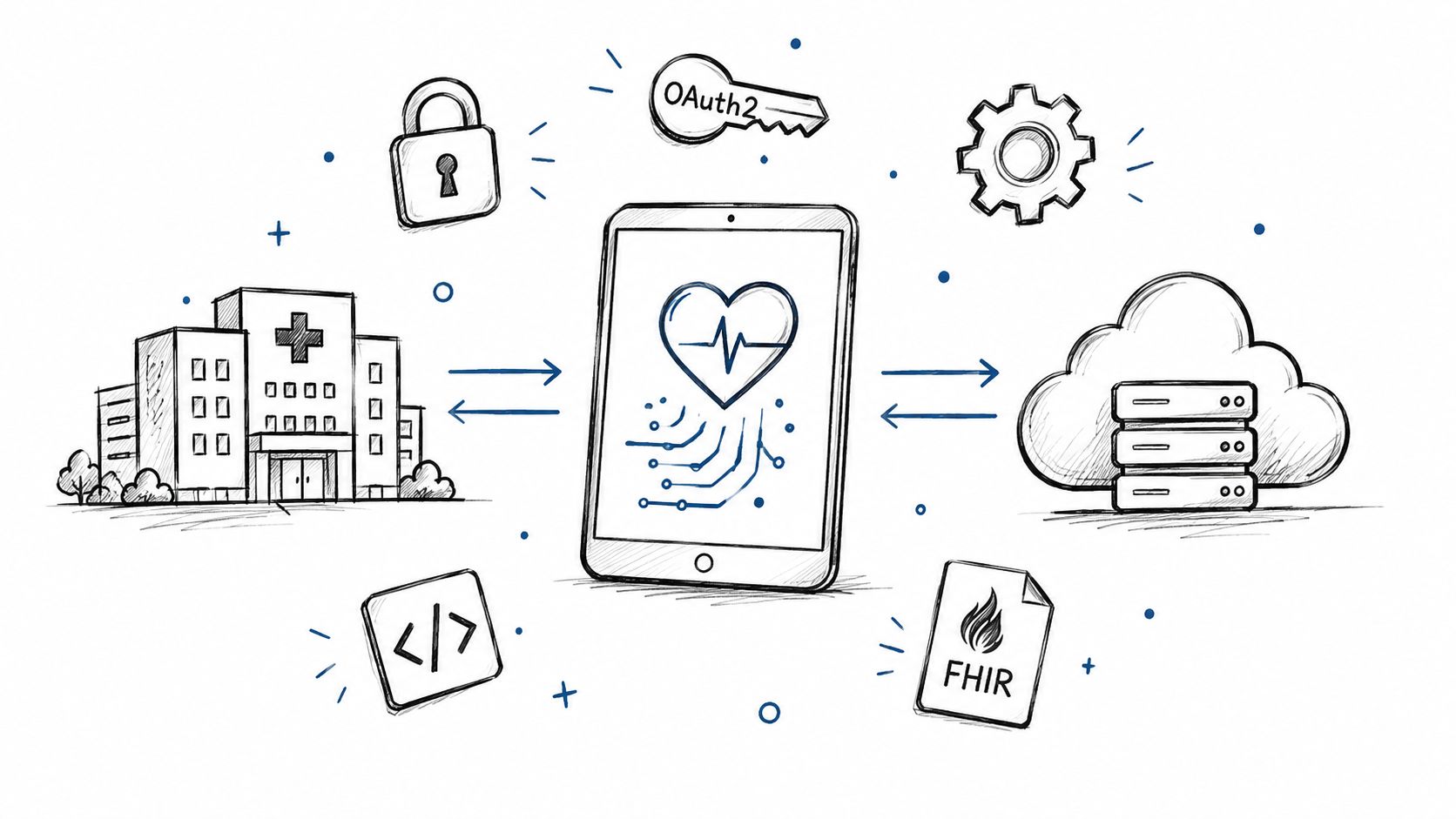
Smart on FHIR guide for healthtech engineers. Learn the OAuth 2.0 launch model, scope syntax, backend services, and US regulatory requirements.
Connect with our team to explore how AI expertise can transform your business.