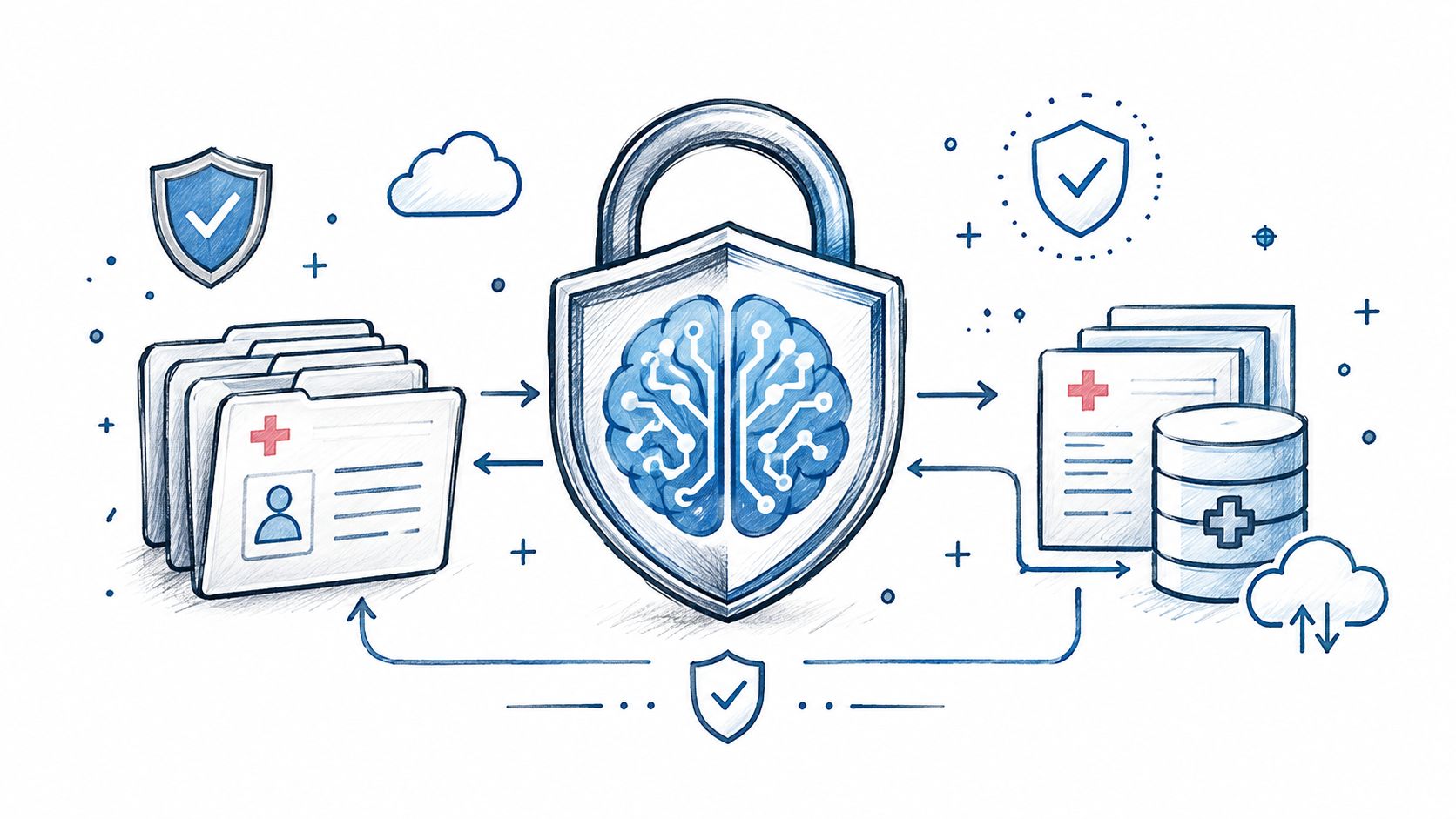
AI in Healthcare
HIPAA-Compliant AI: How to Use LLMs With PHI Safely
How to build HIPAA-compliant AI: when LLM providers need a BAA, data minimization, de-identification, audit controls and a reference architecture.
October 16, 2026Read more
Discover how long term care software empowers HealthTech leaders to streamline operations and improve resident care in 2026.

You're probably staring at the same mess a lot of operators face on a Monday morning. MDS work is piling up, a nurse just swapped shifts, billing wants answers on a denial, and someone is asking whether the latest CMS report is ready. Long Term Care Software exists because spreadsheets, generic EHRs, and patchwork tools can't carry all of that without breaking something important.
For a CEO and CTO, the primary question isn't whether to “digitize.” It's whether the platform can handle compliance, interoperability, staffing, billing, and analytics as one operating system for care. The market is already a multi-billion-dollar category, with one estimate putting it at USD 5.23 billion in 2025 and projecting USD 10.31 billion by 2030 (The Business Research Company), but size alone doesn't make the software useful. What matters is whether it can survive the day-to-day realities of nursing facilities, assisted living, and post-acute workflows.
A clinical director in a skilled nursing facility does not start the day thinking about software architecture. She starts with resident assessments, coverage changes, med-pass issues, and a CMS submission deadline. The right platform absorbs those moving parts so the team spends less time reconciling forms and more time running the floor.

At a practical level, Long Term Care Software connects resident documentation, staff scheduling, billing, and reporting. A generic EHR documents care, but this platform serves as the workflow spine for nurses, administrators, billing staff, physicians, and, in many setups, family-facing portals.
A hospital system can record care and still miss the rhythm of long-term care. This environment depends on recurring assessments, changing census, shift-based staffing, medication administration, and billing logic that affects revenue. Nursing home software therefore needs a different structure from acute-care records.
Practical rule: If the system cannot help a floor manager answer “who is here, what changed, what is due, and what is at risk” without three separate logins, it is not doing the job.
The test is operational visibility. If leaders need to chase five screens to see staffing gaps, overdue documentation, or a billing issue, the platform is already slowing them down. Good systems make those answers visible fast, which is why operators should pay close attention to real-time operational analytics as part of the buying conversation.
Small operators need to look at economics with open eyes. A weak fit does not just create workflow drag. It locks in manual work, extra training, and more rework every month, which is hard to absorb when the team is already thin.
The first sign you have outgrown spreadsheets is not failure. It is the amount of time smart people spend retyping the same fact into three systems.
Buy the workflow spine, not a feature catalog. In long-term care, the right platform ties together the module families that keep compliance, staffing, and reimbursement from drifting apart, and each one has to prove itself in daily use.
| Module | Primary User | Sample Workflow | Outcome Metric |
|---|---|---|---|
| Clinical | Nurses, physicians, MDS coordinators | Assessment, care plan update, eMAR task, wound follow-up | Fewer documentation gaps |
| Scheduling and Workforce | DON, staffing coordinators, charge nurses | Shift swap, open shift fill, credential check | Less manual coverage chasing |
| Billing and Revenue Cycle | Billing team, business office | Claim prep, denial review, resident trust accounting | Cleaner claim flow |
| Analytics | Administrators, operators, quality leads | Measure review, occupancy review, staffing review | Faster decision-making |
Clinical modules should cover assessments, care plans, medication administration, and wound tracking. Workforce modules should cover shift management, contract labor, and credentialing. If those sit in separate systems, nurses document care in one place and staff availability in another. That is how missed handoffs and avoidable errors start.
The billing side matters just as much. In a Medicare and Medicaid setting, the software has to support claims logic, denials, and trust accounting without making staff rebuild the resident story by hand. That is where margin gets protected or lost.
Are quality measures drifting? Is occupancy stable? Are staffing ratios manageable? Analytics should surface those answers without forcing leaders to stitch together exports from three different reports.
A small assisted living operator learned that the hard way after buying separate tools for care, payroll, and billing from three vendors. Each system worked on its own, but the team spent evenings reconciling resident changes across screens, and the billing office kept chasing inconsistent data before every claim run. The result was more manual work, slower closeout, and less time for actual operations.
For smaller assisted living or home-based operators, the platform can be narrower, but it still has to connect care, staffing, and billing cleanly. Fragmented purchases look cheaper at the start and cost more every month in rework, training, and handoffs.
A vendor saying it “integrates” means little. The test is whether usable data moves across hospitals, pharmacies, labs, and post-acute partners without staff rekeying it. Federal review found nursing-home and SNF EHR adoption was above 78% in 2018, yet interoperable exchange was still not routine or widely used (AHCA/NCAL summary of the federal report). That gap is the operational problem.

HL7 v2 often carries the event stream. HL7 CDA, HL7 CCD, and FHIR matter when the platform must exchange structured clinical summaries and near real-time data. The HealthIT.gov primer on long-term and post-acute care EHRs says one mandatory stage function is sending and receiving information through an HIE or exchange entity in a standards-based consumable format such as XML, HL7, or FHIR, and it also names interoperability standards including HL7 CCD, HL7 CDA, HL7 Consolidated CDA, and NCPDP 10.6 or higher (HealthIT.gov primer).
For a CEO or CTO, the due diligence is straightforward. Ask which standards are exposed, which ones are bi-directional, and which ones depend on middleware. Then ask what happens when the interface fails at 2 a.m. If the answer depends on manual workarounds, the integration plan is weak.
For hands-on implementation help, see our AI-powered data extraction engine that simplifies EHR data mapping. For a deeper implementation lens, healthcare IT partner guidance from DataTeams treats interoperability as a delivery problem rather than a marketing slogan.
Vendor demo test: Ask them to trace one medication update from source system to resident record, then back out into a summary view. If they cannot show that chain cleanly, they are selling a promise, not a workflow.
Long-term care software sits inside a regulatory stack. If you are building or buying, compliance is part of the product definition from day one.
For Medicare and Medicaid-certified nursing facilities, CMS MDS 3.0 is mandatory, and it has been the standard since October 1, 2010 (RESDAC CMS data overview). The system has to collect, validate, and submit structured resident-assessment data on a recurring basis. That makes the software both compliance software and revenue-cycle software.
CMS also says providers in the Medicare Promoting Interoperability Program need certified EHR technology that stores data in a structured format, and the CEHRT functionality has to be in place by the first day of the reporting period while the product must be ONC-certified by the last day of that period (CMS certified EHR technology guidance). Procurement teams should treat that as a hard requirement, not a nice-to-have.
CMS has announced that the legacy iQIES front-end interface for manually creating assessments will be discontinued effective October 1, 2026, meaning LTCHs will no longer be able to enter assessment data directly through that system, and future data must be uploaded in the correct format (CMS iQIES discontinuation notice). For LTCH-related systems, that is a migration trigger.
CMS also set FY 2026 Long-Term Care Hospital Quality Reporting Program thresholds at 85% for quality measures data collected using the LCDS and submitted through iQIES, and 100% for quality measures data collected and submitted using CDC NHSN (CMS FY 2026 LTCH QRP FAQs). If the platform cannot handle those submission mechanics, it is not ready for serious operator use.
Compliance rule: Buy the system that can prove submission behavior, auditability, and structured data handling. Do not buy the one that only says it is “compliant-ready.”
HTI-1 pressure is the part many vendors underplay. The federal analysis flagged movement toward certified health IT modules supporting USCDI v3 by January 2026 (NCBI Bookshelf discussion of LTC interoperability and regulation). That pushes product planning toward disciplined structured data, not loose form capture.
AI is useful in long-term care only when it reduces work or sharpens a decision that already exists. If the data is messy, the model is decorative. If the alert doesn't reach the right clinician in time, it's noise.
Documentation burden is the obvious starting point, especially for nurses who are spending too much time on repetitive charting. Ambient capture, assisted summarization, and structured note drafting can help, but only if the underlying assessments are reliable. AI can also support fall and elopement risk prediction, staffing demand forecasting, denial prediction, and quality measure analytics.
The mistake is treating AI as a separate initiative. It should sit on top of the same workflows already discussed, especially assessment, medication, staffing, and reporting. That's why AI Automation as a Service belongs in the conversation only after the process map is clear.
A frail population, inconsistent documentation, and fragmented systems make bias and reliability real issues. The CTO should ask where the training data comes from, how model drift will be monitored, and who signs off when a prediction affects clinical workflow. If the software can't surface the prediction in the resident context, the project won't stick.
For product teams considering a first AI use case, the best filter is simple. Pick one workflow with visible pain, one data source that is already reasonably clean, and one person who owns the outcome. That's the only sane way to avoid a pilot that never escapes the demo stage.
Run a short scoring session and keep the room small. Put clinical, compliance, IT, and operations leaders in the same discussion, score the options, and force the team to focus on what changes daily work.

Start with clinical workflow fit. Then weigh regulatory coverage depth and integration and interoperability. Security posture matters, but a platform that cannot support the work is a dead end. Total cost of ownership and references should inform the decision, not dominate it.
A good demo should answer these questions without drama:
The search for the right platform can include a mix of products and service partners. One option teams sometimes use is AI tools for business for narrower workflow support, but only after the core care and compliance stack is understood.
Ask how data leaves the platform, what export formats are available, and how long a migration takes in practice. If the answer is vague, the buyer is accepting lock-in before the contract is even signed.
Smaller operators don't need a heroic rollout. They need a sequence that won't crush staff, cash, or training bandwidth. That means phased deployment, not a giant switch flip.
Start with the foundation, clinical documentation, MDS, and eMAR. Then add integrations to EHR, pharmacy, and lab systems. After that, move into scheduling and time tracking. Leave analytics and AI for the optimization phase, when the data is stable enough to support them.
A realistic checkpoint plan looks like this:
Independent market research consistently points to high implementation and maintenance costs as a restraint, especially for smaller or independently operated facilities and rural or developing markets, with limited technical expertise and legacy integration complexity adding friction (Nova One Advisor U.S. market report). That's why phased deployment is the practical choice.
If you need help turning that roadmap into a build-versus-buy plan, the AI Product Development Workflow is the right place to align product, engineering, and rollout decisions without overcommitting on scope.
ROI reality: Don't promise the board a full transformation in one quarter. Promise a sequence of operational fixes that each earns the next phase.
Should we build or buy? Buy if your differentiation is care delivery, not software plumbing. Build only when your workflows are unusual enough that off-the-shelf systems would force constant workarounds.
How do we estimate true total cost of ownership? Count licensing, implementation, integration, training, support, and the internal time spent managing change. If a vendor can't show where those costs live, assume they're hidden somewhere.
What does a healthy roadmap look like? It should show regulatory milestones, interface upgrades, and a clear plan for structured data. If the roadmap is mostly UI polish, you're looking at cosmetic progress.
How should we plan for AI? Start with one workflow that already produces structured data. Don't buy broad AI promises before the assessment, staffing, and compliance layers are stable.
If you want a partner who can pressure-test a path like this, talk to our expert team before you sign a contract or commit engineering time. For product strategy, compliance-heavy build decisions, and resident workflow design, Ekipa AI can help you separate signal from vendor noise and turn the requirements into a realistic plan.
How to build HIPAA-compliant AI: when LLM providers need a BAA, data minimization, de-identification, audit controls and a reference architecture.
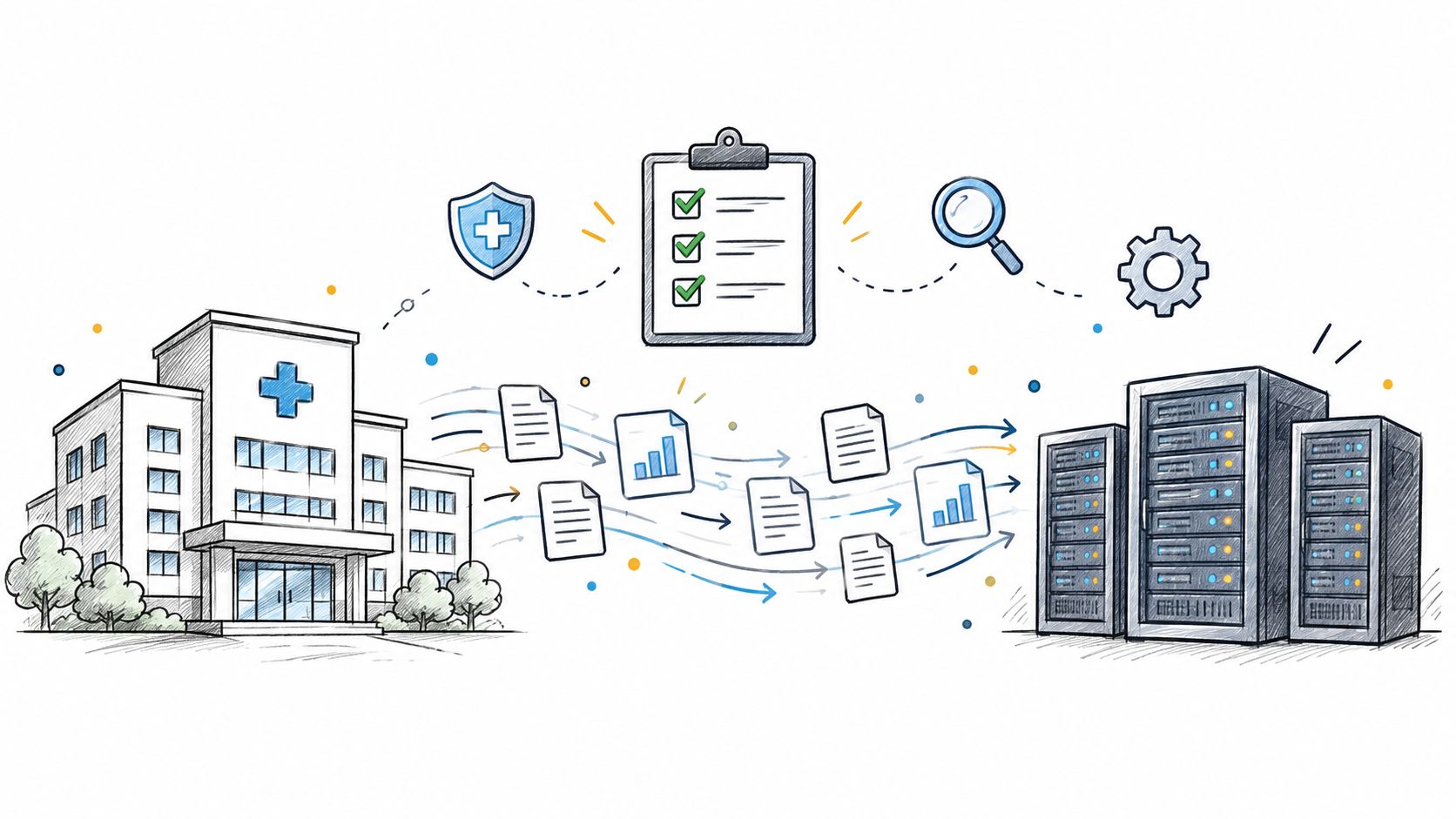
Practical data migration planning guide for healthcare teams. Scope, mapping, compliance, validation, cutover and rollback decisions explained end to end.
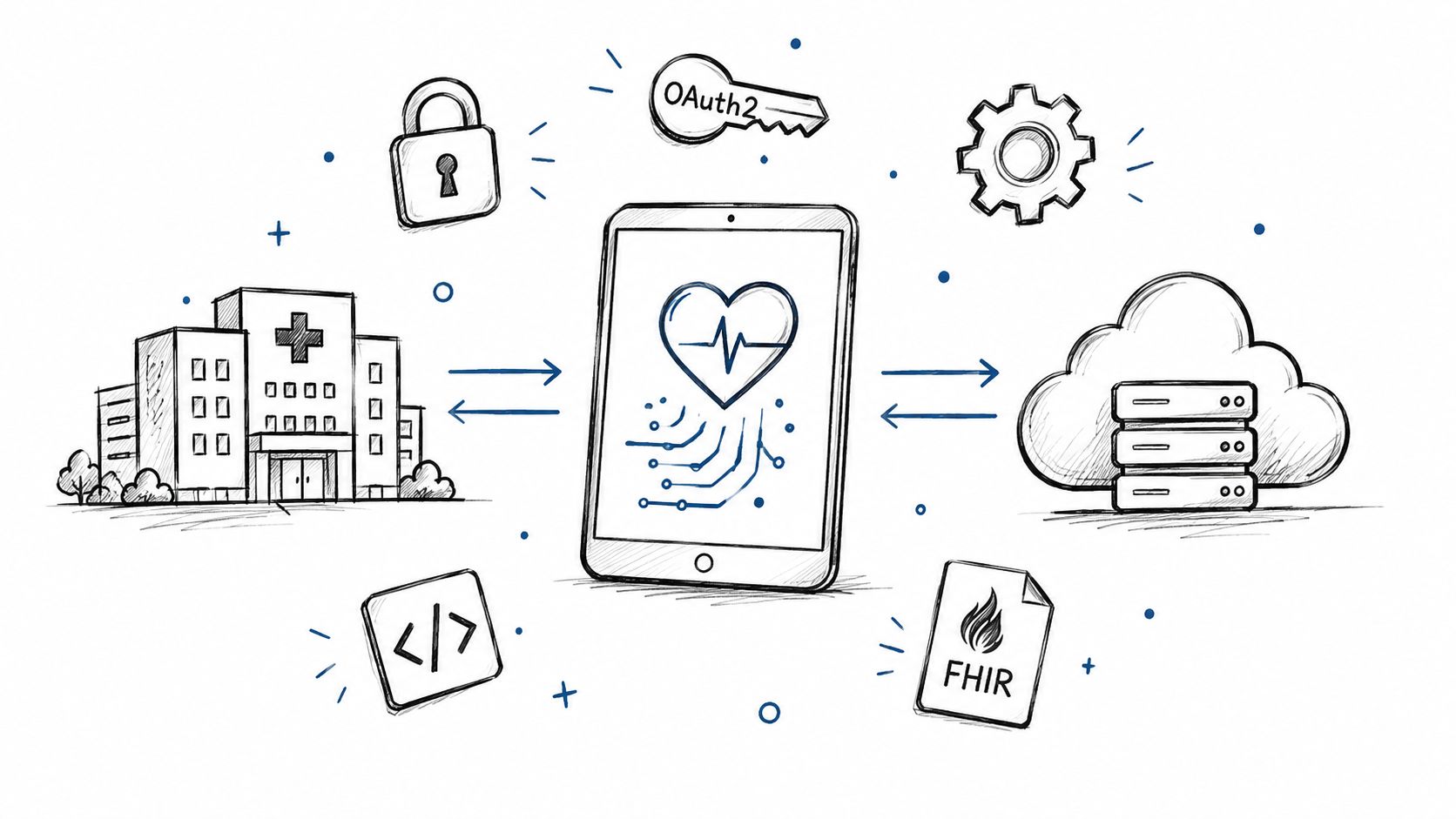
Smart on FHIR guide for healthtech engineers. Learn the OAuth 2.0 launch model, scope syntax, backend services, and US regulatory requirements.
Connect with our team to explore how AI expertise can transform your business.