AI in Healthcare
HIPAA-Compliant AI: How to Use LLMs With PHI Safely
How to build HIPAA-compliant AI: when LLM providers need a BAA, data minimization, de-identification, audit controls and a reference architecture.
October 16, 2026Read more
Discover MedGemma, Google's open-source AI for healthcare. This guide explains how it works, its real-world applications, and its impact on medical diagnostics.
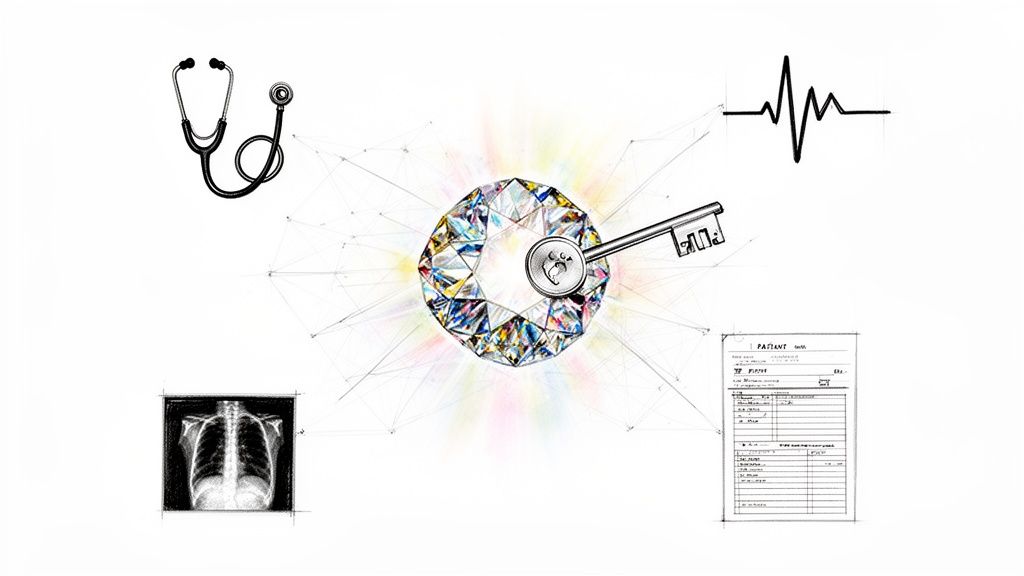
Google has just dropped a powerful new AI model called MedGemma, built from the ground up for the healthcare world. This isn't your average, general-purpose AI. It’s been specifically trained on medical data, which means it's designed to handle tricky tasks like analyzing medical scans, making sense of electronic health records, and summarizing patient notes.
For hospitals, clinics, and health-tech companies, this is huge. It offers a way to plug operational gaps and get new ideas off the ground faster.
MedGemma's arrival really changes things for healthcare organizations. For a long time, the most powerful AI was trapped inside expensive, proprietary systems that were tough for most places to adopt.
MedGemma breaks that pattern. It's an open-source model, which hands the keys back to developers and institutions, giving them control over their own AI strategy. In a tightly regulated field like healthcare, this open approach is a big deal—it allows for the kind of flexibility, privacy, and custom-tailoring that's absolutely essential.
Think of MedGemma not as a finished product, but as a foundational building block. It even comes in different sizes. Some are lightweight enough to run on a single GPU or even a mobile device, which makes advanced AI far more accessible. This flexibility means it can be fine-tuned for incredibly specific medical jobs, from radiology to pathology.
One of the most impressive things about MedGemma is its ability to understand different kinds of data at the same time—what's known as multimodal capability. It can process and connect information from various sources, such as:
This knack for weaving together information from multiple sources is a lot like how a human doctor thinks. It leads to insights that are more accurate and have a much better sense of the full context. It’s not just generating text; it’s acting more like a digital assistant that can see the complete patient picture.
For businesses, this opens the door to creating sophisticated diagnostic tools and automating complex workflows. As we saw when looking at the capabilities of the Google Personal Assistant, embedding this kind of intelligence into daily operations can lead to massive efficiency improvements.
By combining image and text analysis, MedGemma helps bridge the gap between raw data and actionable clinical intelligence, creating a more cohesive view of patient health.
To really make the most of this technology, an organization first needs to figure out where it fits. Kicking things off with a thorough AI gap analysis is the critical first step. It helps pinpoint the exact operational headaches where MedGemma can deliver the biggest impact, ensuring you're not just adopting new tech for its own sake, but using it to solve real-world problems.
To really get what MedGemma is all about, don't think of it as just another piece of software. Picture it more like a brilliant medical specialist who also happens to have a top-tier general education. It starts with a solid foundation—Google's powerful Gemma models—which gives it a massive understanding of language and logic. Then, it goes through an intensive medical residency, getting trained on vast amounts of specialized healthcare data.
This two-part training is MedGemma's secret sauce. It can analyze a complex chest X-ray with incredible accuracy but doesn't get confused by a simple question about patient scheduling. It sidesteps a common problem where specialized AI becomes so hyper-focused that it’s useless for anything outside its narrow lane.
The real game-changer with MedGemma is how adaptable it is. It's not a one-size-fits-all model. It comes in different sizes, including a lighter 27-billion parameter version, making it usable on a wide range of hardware. But the key is that these models can be fine-tuned to perform very specific jobs within any healthcare environment.
Think about it this way: a hospital could take the base MedGemma model and train it further on its own repository of anonymized electronic health records (EHRs). This process essentially teaches the AI the hospital's unique shorthand, data formats, and clinical patterns. The results are pretty staggering. This kind of custom tuning has been shown to slash errors by 50% when pulling information from EHRs. That level of precision is exactly what's needed for complex diagnostic work. You can dive into the specifics by reading the full research from Google.
This concept map helps visualize how MedGemma's different pieces fit together.
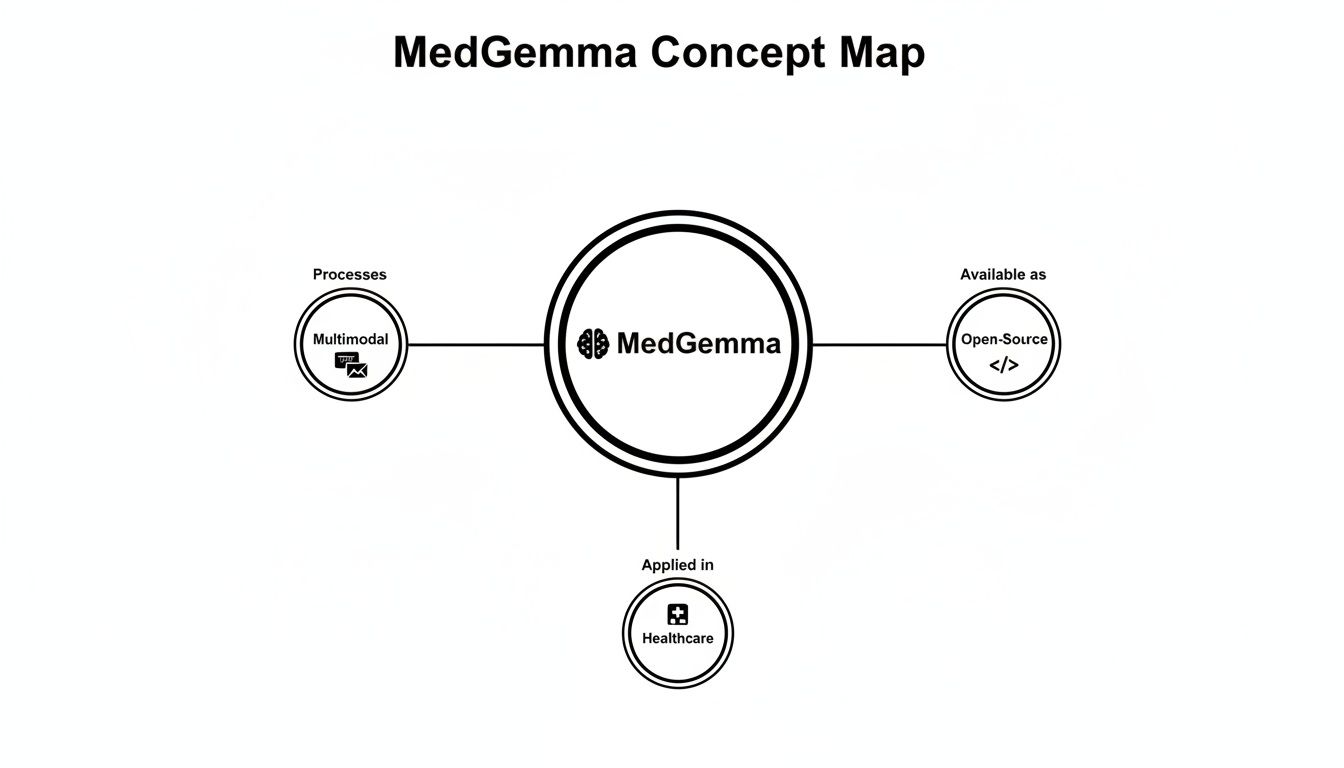
As the map shows, it’s the combination of its ability to handle different data types (multimodal), its open-source foundation, and its sharp focus on healthcare that makes it such a potent tool. This is a big step forward among the growing suite of specialized AI tools for business that are changing how industries operate.
MedGemma’s design isn’t just a technical curiosity; it offers a real competitive edge for healthcare organizations. Because it’s open-source and relatively lightweight, it can be put to work in all sorts of places—from large urban medical centers to smaller clinics—without needing a massive investment in new hardware.
This table breaks down some of the key features and their direct impact on business operations.
| Feature | Description | Business Impact |
|---|---|---|
| Open-Source | Based on Google's Gemma, allowing for community-driven improvements and transparent development. | Reduces vendor lock-in, lowers licensing costs, and offers greater flexibility for custom development. |
| Multimodal Input | Capable of processing and interpreting various data types, including text, images (like X-rays), and EHRs. | Enables more comprehensive analysis by combining different patient data sources for richer diagnostic insights. |
| Fine-Tuning Ready | Designed to be easily adapted and trained on specific, proprietary datasets. | Allows for highly specialized applications that are tailored to an organization's unique needs and workflows. |
| Scalable Models | Available in different sizes (e.g., 27B parameters) to suit various hardware and performance requirements. | Provides options for deployment, from on-device applications to large-scale, cloud-based systems. |
| Specialized Training | Pre-trained on a massive corpus of medical literature, research, and clinical data. | Delivers high accuracy on medical tasks out-of-the-box, significantly reducing the time to value. |
This flexibility means organizations can get ideas off the ground and into testing much faster. For any leader thinking about what's next, MedGemma offers a clear path to meaningful innovation.
Of course, putting a tool like this to work effectively starts with a solid plan. An AI requirements analysis is the first step to pinpointing exactly where MedGemma can deliver the biggest wins, making sure its powerful capabilities are aimed squarely at your most pressing challenges.
Theory is one thing, but the real test of any new technology is how it performs in the clinic. MedGemma is designed to provide concrete solutions to the everyday problems that healthcare professionals grapple with, translating messy, complex data into clear insights that can genuinely improve patient care and make operations smoother.
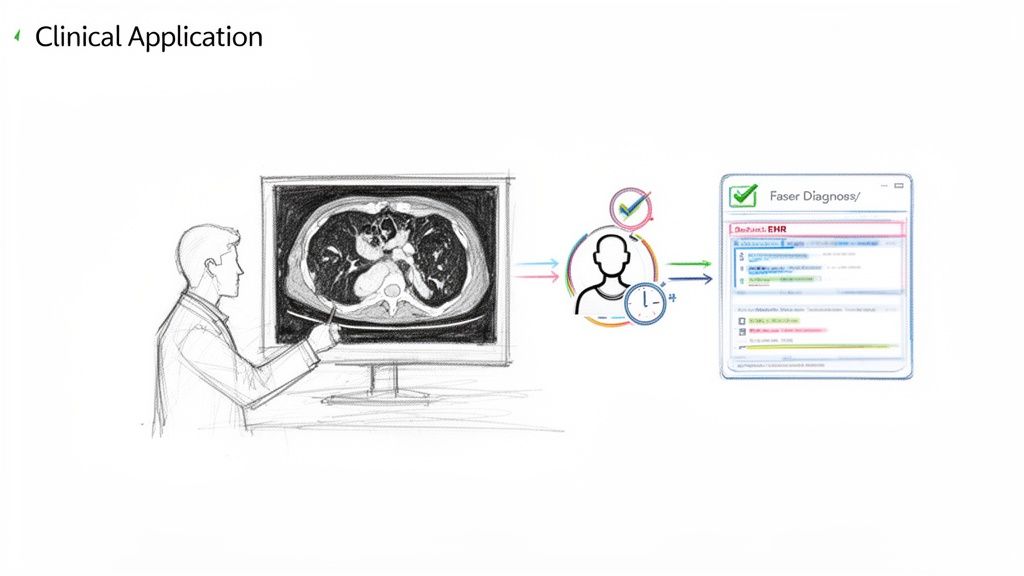
Think about a radiologist who has to get through dozens of scans every hour. MedGemma can serve as a tireless second set of eyes, flagging subtle anomalies in X-rays or CT scans that could easily be missed during a long shift. The AI doesn't replace the expert's judgment; it enhances it, leading to quicker, more accurate diagnoses and cutting down on the risk of human error.
Now, consider the crushing administrative workload many clinicians face. A huge chunk of their day is lost to summarizing patient visits, updating electronic health records (EHRs), and piecing together patient histories. MedGemma can handle this grunt work by creating concise summaries from clinical notes and conversations, freeing up doctors and nurses to spend more time with their patients.
MedGemma’s impact goes far beyond simple task automation. Its real strength is its multimodal capability—its power to pull together different types of data into a single, understandable diagnostic picture.
By pulling together all these different data sources, MedGemma helps build a complete picture of a patient's health. This allows for a major shift from just reacting to sickness to proactively managing wellness with data-driven care.
These are exactly the kinds of applications our specialized Healthcare AI Services are built to deliver, helping integrate these advanced tools into your existing clinical environment. For organizations that want a more hands-off solution, our AI Automation as a Service can manage the entire process from implementation to ongoing optimization.
The ROI from bringing MedGemma into a clinical setting is clear, both in terms of cost savings and better patient outcomes. Just automating EHR summaries can save a clinician several hours a week, which translates directly into lower administrative costs and helps reduce burnout.
Better diagnoses mean more effective treatments, fewer hospital readmissions, and ultimately, a healthier patient population. We dive into many similar examples and their tangible benefits in our collection of real-world use cases.
Of course, as providers gain these powerful new insights from MedGemma, it's crucial to integrate them into care models that still put the patient first. To get the full benefit, explore some proven patient engagement strategies in healthcare to complete the circle of care.
The end goal is to build a healthcare system that's more efficient, more accurate, and more focused on the patient. MedGemma is a powerful tool, but getting it right often requires deep expertise in both AI and the realities of healthcare workflows. For complex projects, services like custom healthcare software development can ensure the technology is perfectly tailored to your organization's unique needs. Our expert team specializes in bridging that gap, turning potential into measurable results.
To really get a handle on MedGemma, you have to understand the world it's stepping into. This isn't an empty arena; it's a bustling market for AI in healthcare, and knowing where MedGemma stands reveals its true power and the unique doors it can open.
The demand for these kinds of tools is exploding. The global market for medical image analysis software was already valued at $4.0 billion in 2026. It’s on track to hit $6.7 billion by 2033, growing at a solid 7.7% CAGR. Why the boom? It’s simple: the sheer volume of medical imaging is overwhelming, and hospitals need smarter ways to sift through all that diagnostic data. With North America and Europe making up over 64% of this market, it's clear that established healthcare systems are hungry for advanced AI, a trend highlighted in recent market trend analyses.
When you think of AI in healthcare, big names like NVIDIA and Microsoft probably come to mind. They offer incredibly powerful platforms, but they operate within walled gardens. These closed, proprietary systems are robust, for sure, but they often lead to vendor lock-in, boxing you into their ecosystem and limiting your ability to adapt. You end up paying significant licensing fees and, more often than not, have to bend your established workflows to fit their software.
This is exactly where MedGemma changes the game.
As an open-source model, MedGemma fundamentally flips the script. It hands the power back to healthcare organizations, offering a transparent, high-performance alternative that allows them to innovate on their own terms.
This open-door policy is a huge deal in a field as specialized and regulated as healthcare. It means you can truly integrate the model into your existing systems and fine-tune it with your own private data. You can build bespoke solutions for your specific clinical needs without being shackled to a single tech company's development schedule.
Choosing an open-source model like MedGemma isn't just a technical decision; it's a strategic one with long-term advantages.
Making sense of this dynamic market takes a clear vision. Deciding between an open platform like MedGemma and a closed one from a tech giant is a major fork in the road. Getting expert AI strategy consulting can make all the difference, ensuring your technology investments actually line up with your long-term goals and deliver real, measurable results.
Bringing a new AI model like MedGemma into the fold is never a simple plug-and-play affair. It's a strategic move that ripples through nearly every corner of a clinical operation. To get it right, you need careful planning and a real-world understanding of how healthcare actually works.
The journey starts with your data. For MedGemma to truly shine, it needs to learn from your organization's unique datasets. This immediately brings data governance to the forefront, ensuring every piece of patient information is anonymized and handled securely right from the get-go.

In healthcare, compliance isn't just a checkbox; it's the foundation of trust. MedGemma is just a tool, but making it HIPAA compliant depends entirely on how you implement it. This means embedding it within a secure infrastructure, complete with strict access controls and airtight data handling protocols. You have to be able to track and audit every step, from the moment data enters the system to the final output from the model.
The secret to a successful MedGemma integration is a two-pronged approach: unleash its powerful analytical abilities while simultaneously building a fortress of security and compliance around it to safeguard patient data.
This naturally leads to the big infrastructure question: on-premise or cloud? The good news is that MedGemma models are lightweight, which gives you options. The final decision really comes down to your organization's specific security policies, budget, and what your current tech stack looks like.
A structured, step-by-step approach is the only way to ensure a smooth rollout. It all begins with a deep-dive AI requirements analysis to pinpoint the highest-impact use case and establish what success actually looks like in concrete terms.
From that starting point, a typical implementation journey looks something like this:
Sometimes, an off-the-shelf solution just won't cut it. For organizations with very specific workflows or challenges, a custom healthcare software development project can build a solution that fits like a glove. A well-designed system can fundamentally improve how work gets done, much like our HCP Engagement Co-pilot simplifies interactions for medical professionals. This level of planning is what turns MedGemma from just another piece of technology into a genuinely valuable clinical partner.
Seeing what a tool like MedGemma can do is one thing. Knowing exactly how to put it to work for your organization—that’s where the real challenge begins. And the clock is ticking. The AI in healthcare market isn't just growing; it's exploding. Valued at $39.34 billion in 2025, it’s projected to hit a staggering $1,033.27 billion by 2034.
That’s a growth rate nearly six times faster than traditional health tech, a clear signal that standing still means falling behind. You can see the full numbers for yourself in this market analysis.
This is exactly where Ekipa AI steps in. We move beyond the theoretical and help you build a practical, effective strategy that turns MedGemma’s power into a real-world advantage for your teams and patients.
The journey starts with our Custom AI Strategy report. Our whole process is built to rapidly pinpoint where a model like MedGemma will make the biggest difference in your specific day-to-day operations. We help you cut through the hype and develop a clear, expert-led roadmap that ties AI adoption directly to business outcomes.
For any organization looking to build out sophisticated AI capabilities, a solid grasp of what's involved in AI engineering services is key to building a realistic and successful plan. After all, a MedGemma project is about much more than just the tech; it requires a thoughtful plan for everything from data governance to integrating it seamlessly into existing workflows.
A successful AI initiative is built on a clear strategy that aligns technology with business objectives. Our goal is to create a direct path from your current challenges to tangible AI-driven solutions.
Our work doesn't stop once the plan is in place. We offer comprehensive AI implementation support to make sure your strategy comes to life. We'll guide you through the technical hurdles of deployment, fine-tuning, and integration, ensuring your MedGemma solution is secure, compliant, and a perfect fit for your clinical teams.
Ready to take the lead in this new era of healthcare? Get to know the people who will help you get there by meeting our expert team. Let’s build a future where advanced AI powers better patient outcomes, together.
Got questions about MedGemma? We've got answers. Let's tackle some of the most common questions we hear and what they mean for your healthcare organization.
MedGemma is a family of open-source artificial intelligence (AI) models developed by Google, specifically designed and fine-tuned for the healthcare and medical industry. Unlike general-purpose AI, it is trained on specialized medical data, making it highly effective at tasks like interpreting medical images, understanding clinical notes, and analyzing electronic health records (EHRs).
The biggest difference is specialization. Think of it this way: a general model like Gemini is like a general practitioner—it knows a lot about a wide range of topics and is incredibly versatile.
MedGemma, on the other hand, is a specialist. It has been intensively trained and fine-tuned on vast quantities of medical data. This deep, focused training makes it exceptionally good at specific clinical jobs, like making sense of complex EHR notes or analyzing medical scans. It has the domain-specific expertise you need when the stakes are high.
This is a critical point: the model itself is just a tool, so it isn't inherently HIPAA compliant or non-compliant.
HIPAA compliance comes down to how the model is implemented. It's all about the environment you build around it. This includes:
Working with the right partner is key to building a secure, compliant solution from the ground up that meets all regulatory requirements.
For a smaller practice, the key is to start small and smart. Don't try to boil the ocean.
Pick one focused, high-impact problem to solve first, a strategy we explored in our AI adoption guide. Maybe that's automating a time-consuming administrative task or helping your team with one specific type of diagnostic analysis. Because MedGemma is designed to be lightweight, you can get started without a huge upfront investment in new hardware.
The best first step is often an AI gap analysis to pinpoint where you'll get the most bang for your buck. With a clear, targeted plan, even smaller clinics can see a real return on their investment surprisingly quickly.
Ready to see how MedGemma could fit into your healthcare strategy? Ekipa AI provides the expert guidance and strategic planning you need to turn AI potential into measurable results. Get your custom AI roadmap today and connect with our expert team to start the conversation.
How to build HIPAA-compliant AI: when LLM providers need a BAA, data minimization, de-identification, audit controls and a reference architecture.
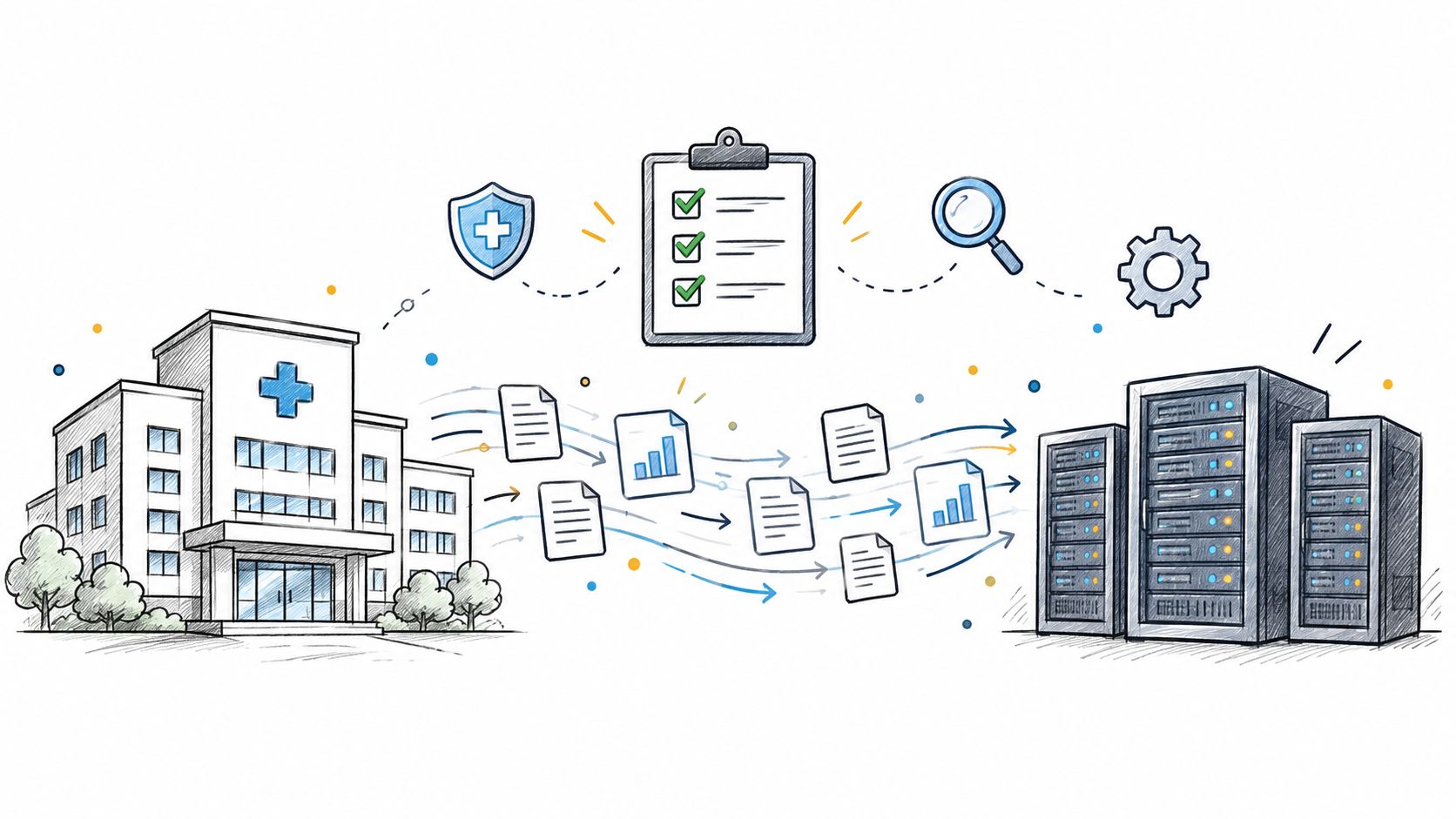
Practical data migration planning guide for healthcare teams. Scope, mapping, compliance, validation, cutover and rollback decisions explained end to end.
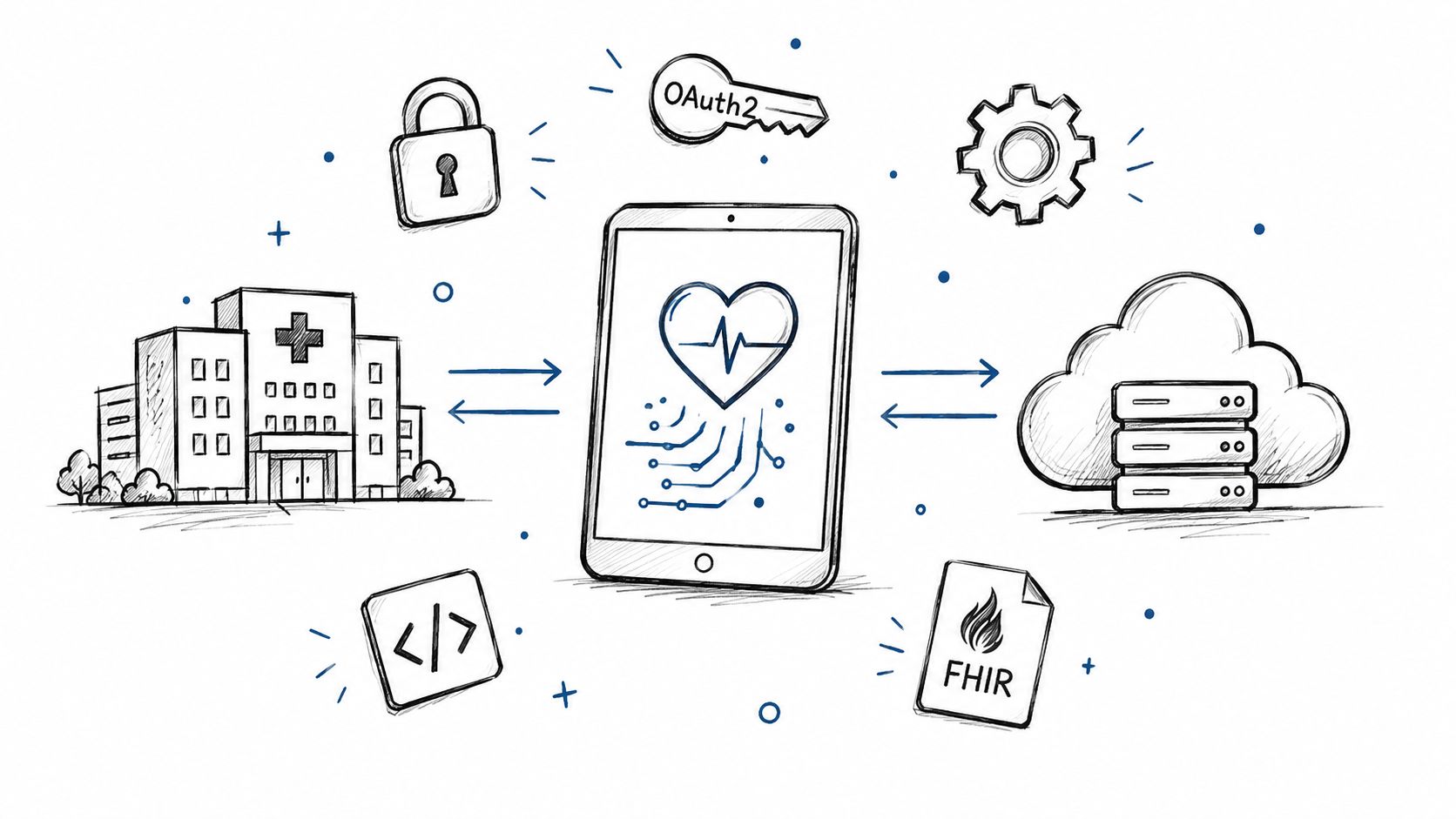
Smart on FHIR guide for healthtech engineers. Learn the OAuth 2.0 launch model, scope syntax, backend services, and US regulatory requirements.
Connect with our team to explore how AI expertise can transform your business.