AI in Healthcare
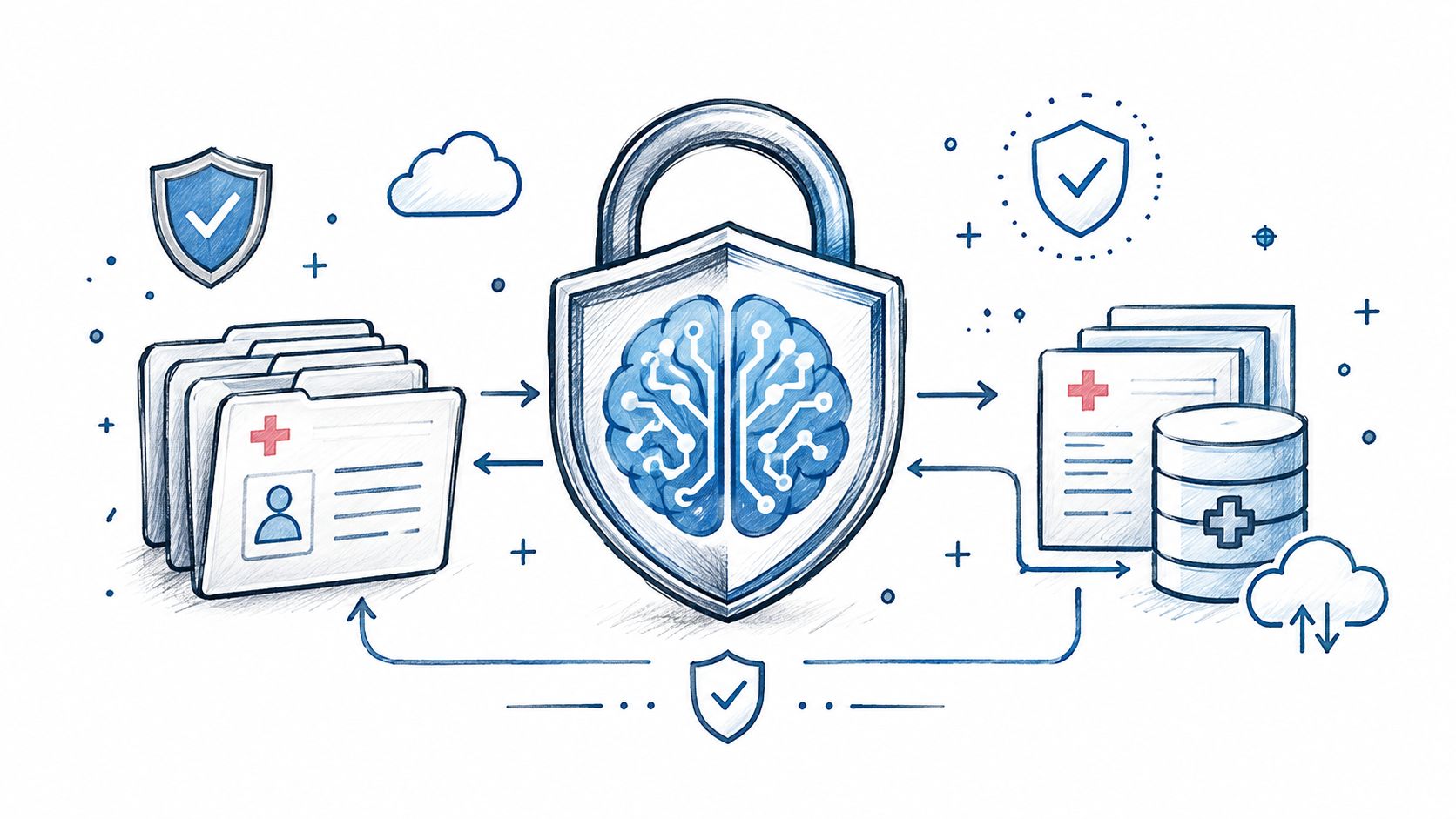
HIPAA-Compliant AI: How to Use LLMs With PHI Safely
How to build HIPAA-compliant AI: when LLM providers need a BAA, data minimization, de-identification, audit controls and a reference architecture.
October 16, 2026Read more
Discover nursing home software solutions that streamline care, billing, and compliance. A practical guide for healthcare leaders evaluating modern platforms.

A Tuesday morning at a skilled nursing facility can expose every weakness in a software stack. The director of nursing is reconciling paper medication records with a pharmacy portal, a surveyor wants fall documentation before lunch, and admissions is coordinating a hospital discharge while two CNAs call in sick. The EHR, scheduling tool, pharmacy system, billing platform, and family communication channel each contain part of the truth, but none of them share it reliably.
That's why nursing home software solutions shouldn't be evaluated as a list of attractive modules. The purchase decision is about whether the facility can reduce manual handoffs, protect documentation quality, coordinate staffing, and exchange resident information without creating another silo. Long-term care software is already a substantial market. One estimate places the global nursing homes segment at US$1,558.1 million in 2023, with projected growth of about 7.2% CAGR from 2024 to 2030, reaching US$2,557.4 million by 2030 (Grand View Research market data).
The right approach moves from operational pain to software definition, then from core modules to architecture, vendor evaluation, implementation, and measurable return.
The facility in that Tuesday morning scenario doesn't have a technology problem in the abstract. It has a coordination problem that appears in clinical, administrative, and financial work at the same time.
A nurse may document a change in condition in one system while a physician receives the update through a separate message. The pharmacy portal may show a medication status that hasn't reached the resident chart. The scheduling team may know that a shift is uncovered, while the clinical team discovers the gap only when rounds begin. Admissions may receive hospital information as scanned pages instead of structured data that can populate the resident record.
The director of nursing then becomes the integration layer. Staff re-enter information, search through attachments, call external partners, and reconstruct timelines for survey preparation. That work consumes attention that should go toward resident care and team supervision.
The federal long-term care technology review shows why digitization alone hasn't solved the issue. Estimated EHR adoption among nursing home and skilled nursing facility providers was greater than 78% in 2018, while another summary reported adoption at 84% in 2018 and 78% in 2017. The same federal summary said about 80% of nursing homes and home health organizations were adopting EHRs for clinical and business needs, but interoperable exchange still wasn't routine (Provider's summary of the federal interoperability report).
Operational reality: An electronic record that still requires manual copying at every transition is digital documentation, not connected care.
A practical Healthcare AI Services strategy starts with the work people perform under pressure. Map the admission, medication, staffing, billing, transfer, and survey workflows before reviewing vendor demos. The next questions are straightforward: what should the software connect, which modules are essential, and what architecture can make the exchange safe and usable?
Nursing home software solutions are an integrated layer of clinical and operational tools that coordinate the resident journey from admission through discharge or end-of-life care. The definition sets the buying scope. A single EHR rarely supports every workflow, while disconnected products force duplicate entry and create conflicting records.
The stack works like air traffic control. It does not fly aircraft, repair runways, or forecast weather. It coordinates those inputs so each decision uses current information. Nursing home software should connect resident documentation, care plans, medication administration, staffing, billing, pharmacy communication, referrals, and family updates without making staff rebuild the same record.
A buyer usually chooses one of three operating models:
Buy for the operating model, not for the longest feature list. Clinical coverage includes the EHR, electronic medication administration record, care planning, assessments, orders, and physician documentation. Operational coverage includes billing, scheduling, time tracking, admissions CRM, analytics, family communication, and partner exchange.

The buying test is direct: can information entered once support the next legitimate action? A medication order should inform administration and pharmacy workflows. An admission record should support care planning and billing. A staffing change should reach the people responsible for coverage and resident safety.
If it cannot, postpone new modules. Fix the interoperability gap first. More software will otherwise increase the number of places staff must check, while staffing constraints make that extra work harder to absorb.
A modern nursing home stack should cover seven operational areas, with depth matched to the facility's operating model. EHR, medication administration, care planning, billing, and scheduling are table stakes. Telehealth and analytics belong later in the sequence, after the foundational record and workflows are reliable.
| Module | Front-Line Value | Back-Office Value |
|---|---|---|
| EHR and clinical documentation | Gives nurses and clinicians a current resident record, supports charting, MDS assessments, orders, and physician signatures | Supports survey readiness, documentation controls, record retrieval, and clinical oversight |
| Care planning | Keeps person-centered goals and interdisciplinary updates visible to the care team | Shows whether plans are current, assigned, reviewed, and aligned with resident needs |
| Billing and RUG or PDPM optimization | Reduces interruptions caused by missing documentation and unclear payer requirements | Supports Medicare and Medicaid claims, denial management, reimbursement review, and revenue-cycle control |
| Staff scheduling and time tracking | Matches staff to shifts, availability, qualifications, and resident needs | Improves visibility into overtime, agency use, attendance, and payroll inputs |
| Medication administration | Supports eMAR workflows, barcode scanning, administration records, and pharmacy links | Helps reconcile orders, identify exceptions, and monitor pharmacy-related processes |
| Telehealth and remote physician rounds | Connects residents with specialists and physicians without requiring every decision to begin with a transfer | Coordinates consultations, records follow-up actions, and supports continuity of care |
| Analytics | Gives teams clinical, operational, and financial views with drill-down into the underlying record | Supports management review, trend analysis, compliance monitoring, and resource decisions |
The EHR must make the correct action easier than the workaround. Nurses should be able to confirm whether an order is active, whether a physician has signed it, and whether a recent change appears in the care plan without checking several disconnected screens. If the workflow still depends on manual reconciliation, buy interface work before another module.
Care planning deserves its own evaluation. A care plan created only for compliance review adds paperwork without guiding care. Require person-centered goals, clear interdisciplinary task ownership, update history, and links between assessments, interventions, and outcomes. Those connections give supervisors a practical way to see whether planned care is current and assigned.
Billing connects clinical documentation with financial control. The platform should link documentation to Medicare and Medicaid claims, support denial management, and show reimbursement logic to authorized users. Reject a billing module that only exports data and leaves staff to resolve exceptions in another system.
Staff scheduling and time tracking must reflect actual coverage. The system must help coordinators match shifts, monitor overtime, manage availability, and identify gaps early. A polished roster that ignores attendance, agency coverage, or last-minute changes is a display, not workforce management.
Medication administration requires the same workflow discipline. eMAR, barcode scanning, and pharmacy connectivity should reduce ambiguity without forcing nurses to work around the platform. Telehealth can extend access to physicians and specialists, provided documentation and follow-up tasks remain visible in the resident record.
Buy analytics after these workflows produce dependable data. Dashboards don't create clean data. The other six modules do. Start with the modules that reduce daily coordination work and protect resident-care execution, then add reporting and remote-care capabilities when the underlying records can support them.
Treat compliance, security, and interoperability as one architecture, not three procurement checkboxes. A secure EHR, an available pharmacy connection, and an auditable billing system still fail if staff cannot use exchanged data inside the resident workflow.
The federal long-term care EHR guidance expects healthcare standards and HIPAA-related controls, including interchange standards, interchange agreements, and non-repudiation when systems exchange information. CMS regulations and guidance for nursing homes also make documentation, auditability, and compliance workflow support operational requirements because noncompliance with Medicare or Medicaid requirements can lead to enforcement actions.
Put HL7 feeds, FHIR-based APIs, Direct-style messaging, health information exchange connectivity, and hospital ADT notifications into the initial architecture review. The platform should receive a discharge notice, referral, medication list, treatment order, or laboratory result and place it where the responsible clinician can act.
The National Academies review of interoperability describes the operating gap: many nursing homes still cannot consistently send, receive, search, and integrate electronic health information across care settings. It also reports that only about half of EHR systems overall can transfer medical records to other EHRs. The NIH long-term care technology review identifies the inability to share information electronically between hospital and nursing home EHRs as a major barrier to effective EHR use.
Require encryption at rest and in transit, single sign-on, multifactor authentication, role-based access, granular permissions, audit trails, Business Associate Agreements, and documented incident response. Test each control during ordinary work. A night nurse should reach the information required for care without viewing unrelated financial data. An auditor should reconstruct who viewed or changed a record. Administrators should be able to disable access promptly when a user leaves.
Security also depends on workflow design. A vendor that offers secure transport without reliable ingestion leaves the facility with fragmented work and manual reconciliation. An assessment of SaMD solutions should therefore examine the complete exchange and governance model, not only the interface specification.

Feature count is a poor buying framework. A vendor can demonstrate dozens of modules and still leave the facility dependent on spreadsheets, manual exports, and vendor-controlled configuration.
Use a scorecard that reflects operating risk. Give the highest practical priority to interoperability depth, staff usability, and total cost of ownership. Module breadth belongs lower on the list unless the missing module creates a genuine workflow break.
| Evaluation Criteria | Weight | What to Verify |
|---|---|---|
| Interoperability depth | Highest | Supported HL7 and FHIR workflows, inbound data ingestion, outbound exchange, ADT handling, pharmacy and lab connectivity, and two-way updates |
| Configurability | High | Whether authorized administrators can modify forms, rules, queues, and workflows without engineering tickets |
| Total cost of ownership | High | Subscription, implementation, interfaces, migration, training, support, upgrades, and add-on fees over the planned ownership period |
| Skilled nursing references | High | References from facilities with comparable clinical, payer, staffing, and survey requirements |
| Vendor stability | High | Ownership, product investment, support capacity, security posture, and financial durability |
| Roadmap transparency | Medium | Release cadence, deprecation policy, customer input process, and commitments affecting integrations |
| Module breadth | Medium | Coverage of required workflows and the ability to replace or connect existing products |
| User experience | High | Time required for nurses, aides, schedulers, billers, and administrators to complete common tasks |
Ask vendors to demonstrate the workflow, not the slide deck. Send a hospital discharge record into the platform. Show how an admission becomes a resident chart, care plan, medication workflow, and billing event. Ask an administrator to change a form without opening an engineering ticket. Have a scheduler handle an absence and show how the change reaches the right people.
Red flags include proprietary data formats, opaque integration charges, per-module pricing that appears late in negotiations, vague SLAs, and references that come only from organizations unlike yours. Score finalists in a shared working document. Don't let the most polished demo become the default decision.
Most facilities should fix the pipes before buying the prediction engine. If hospital records arrive as PDFs, scheduling data sits apart from timekeeping, and documentation uses inconsistent terms, an AI model inherits those defects. Its output may look advanced while giving clinicians little reason to trust it.
Interoperability is the higher-return first move because it improves the flow of information that people already need. Standards-based exchange can reduce manual re-entry during transitions, make resident history more usable, and create a dependable foundation for reporting. CMS's Data Element Library helps vendors implement required long-term and post-acute care fields and associated IT standards, which makes structured mapping a procurement issue rather than an engineering detail (CMS Data Element Library interoperability guidance).
The market context reinforces the sequencing decision. The long-term care software market was estimated at US$3.25 billion in the United States in 2025, with nursing homes representing 42.0% of that market (Grand View Research U.S. long-term care software analysis). Another analysis reported nursing homes held 41.10% of global long-term care software revenue in 2025, equivalent to roughly US$2.31 billion in software spend (Grand View Research global nursing homes segment data). Facilities are spending in a category where integration quality will shape the value of that investment.
AI can support real workflows today, but it shouldn't be the first purchase if basic information exchange is unreliable. Recent senior living market coverage found 77% of executives ranked interoperability among their top three barriers, while fewer than 26% said their organizations were fully aligned on resident health and wellness definitions (HIT Consultant survey coverage). The same coverage reported that 63% of senior living operators cited limited funding as a major barrier. Under those conditions, buying a predictive dashboard before standardizing data is poor capital allocation.
A safe rollout limits simultaneous change. Residents and staff shouldn't absorb a new EHR workflow, medication process, scheduling model, and billing interface in one cutover.
Use a 60-day discovery sprint to document current-state workflows, system dependencies, data owners, failure points, and survey obligations. Interview nurses, aides, schedulers, billers, admissions staff, physicians, pharmacy contacts, and night-shift supervisors. Identify a clinical champion and create a go-live readiness score that covers training, migration, integrations, permissions, downtime procedures, and support coverage.
Run a 90-day pilot on one unit or shift. Limit the scope to the workflows that matter most for the pilot, such as scheduling and medication administration. Establish a baseline for incident-related measures before launch, then collect frontline feedback at defined intervals. Keep a paper or downtime procedure available, and protect night-shift coverage during training windows.
Use a 120-day expansion phase to add care planning and billing integration after the pilot team demonstrates reliable use. Don't move forward because the calendar says it's time. Require evidence that staff can complete core tasks, exceptions are handled consistently, and migrated historical records are accurate enough for clinical sign-off.
A 180-day scale phase should add governance, KPI reviews, super-user training, release management, and a formal process for enhancement requests. Cut over no more than one mission-critical module at a time. Require the vendor to prove migration accuracy and interface behavior before expanding to additional units or facilities.

A structured AI Product Development Workflow can help keep discovery, implementation, validation, and governance connected. The essential discipline is operational: collect feedback from the people using the system, assign owners for unresolved defects, and stop expansion when a safety-critical workflow remains unstable.
Finance leaders don't need a vague promise of efficiency. They need a defensible connection between an investment and the work it changes.
Start with a baseline before the pilot. Track the facility's existing performance for overtime hours per resident day, medication pass times, claim denial rates, survey deficiency counts, and rehospitalization within 30 days. Then assign each expected improvement to a specific module. Scheduling should be accountable for workforce measures, medication tooling for administration workflow measures, billing integration for denial measures, and clinical exchange for transition-related measures.
| KPI | Baseline | Target | Measurement Cadence |
|---|---|---|---|
| Overtime hours per resident day | Record the current facility baseline | Set a target tied to scheduling and timekeeping changes | Review at 90, 180, and 365 days |
| Medication pass times | Record by unit, shift, and medication workflow | Set a clinically safe workflow target | Review during pilot and at 90, 180, and 365 days |
| Claim denial rates | Establish the current denial profile and causes | Set a target for documentation and billing workflow improvement | Review monthly, with formal checkpoints at 90, 180, and 365 days |
| Survey deficiency counts | Document recent deficiencies by category | Set a target for documentation, auditability, and corrective-action visibility | Review at 90, 180, and 365 days |
| Rehospitalization within 30 days | Establish the facility's current measure | Set a target only after validating data completeness and attribution | Review at 90, 180, and 365 days |
Calculate the full cost of ownership, including subscription, interfaces, migration, training, workflow redesign, support, and internal project time. Compare that investment with the cost of inaction: repeated manual work, delayed claims, uncovered shifts, survey preparation burden, and unreliable transition information. Don't claim the platform caused an outcome unless the measurement design can connect the change to the module and implementation period.
Before signing, build a shortlist against the vendor scorecard, select a single-unit pilot, and pressure-test the integration plan with an experienced AI strategy consulting partner. Ekipa AI can also support custom healthcare software development, AI Automation as a Service, and internal tooling when the right answer is a connected layer around existing systems rather than a wholesale replacement.
Ekipa AI helps healthcare teams define integration requirements, assess AI opportunities, and plan implementation for nursing home software solutions without losing sight of clinical safety or operational reality. Visit Ekipa AI to discuss your architecture, pilot scope, and next software decision with our expert team.
How to build HIPAA-compliant AI: when LLM providers need a BAA, data minimization, de-identification, audit controls and a reference architecture.
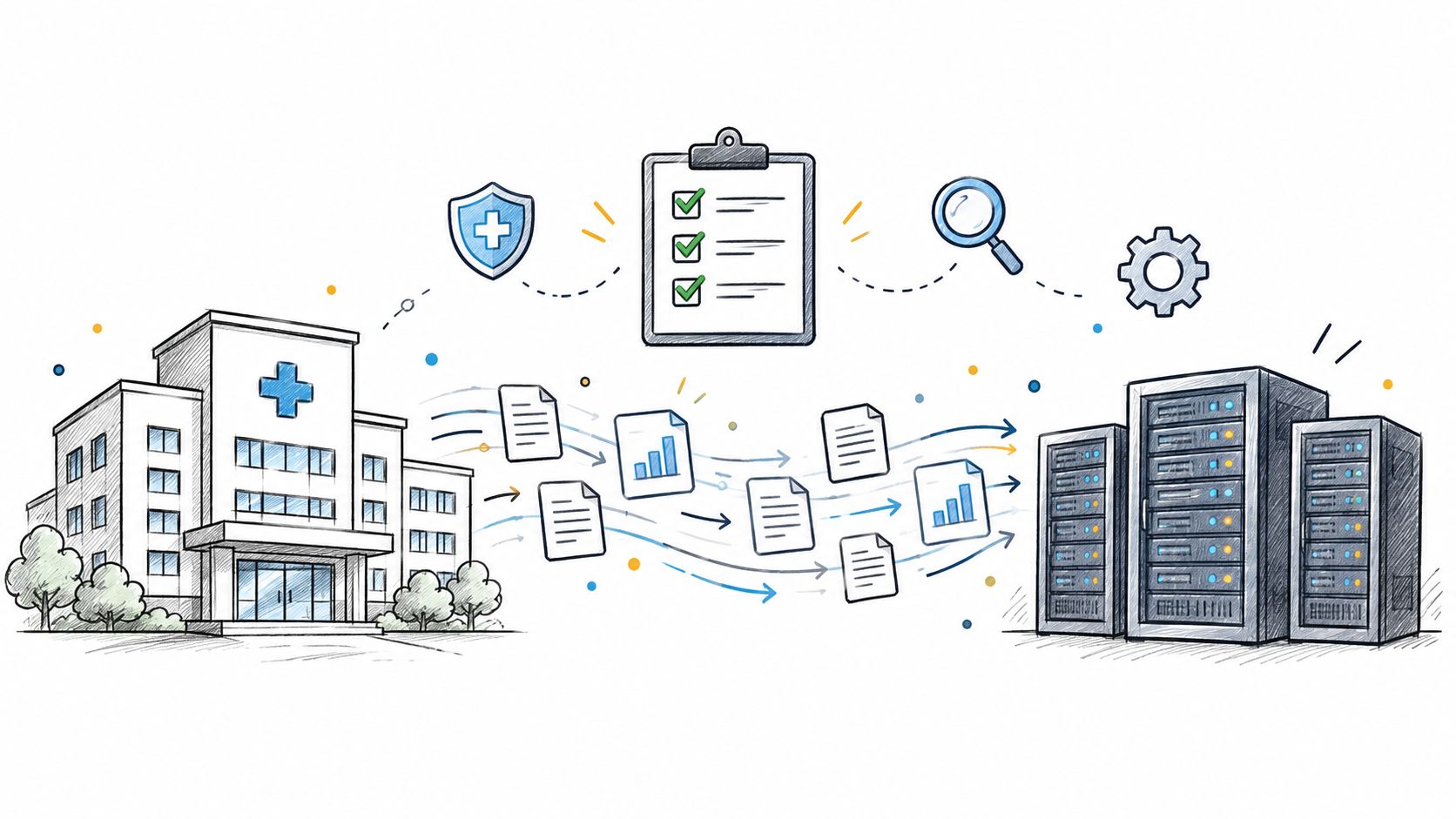
Practical data migration planning guide for healthcare teams. Scope, mapping, compliance, validation, cutover and rollback decisions explained end to end.
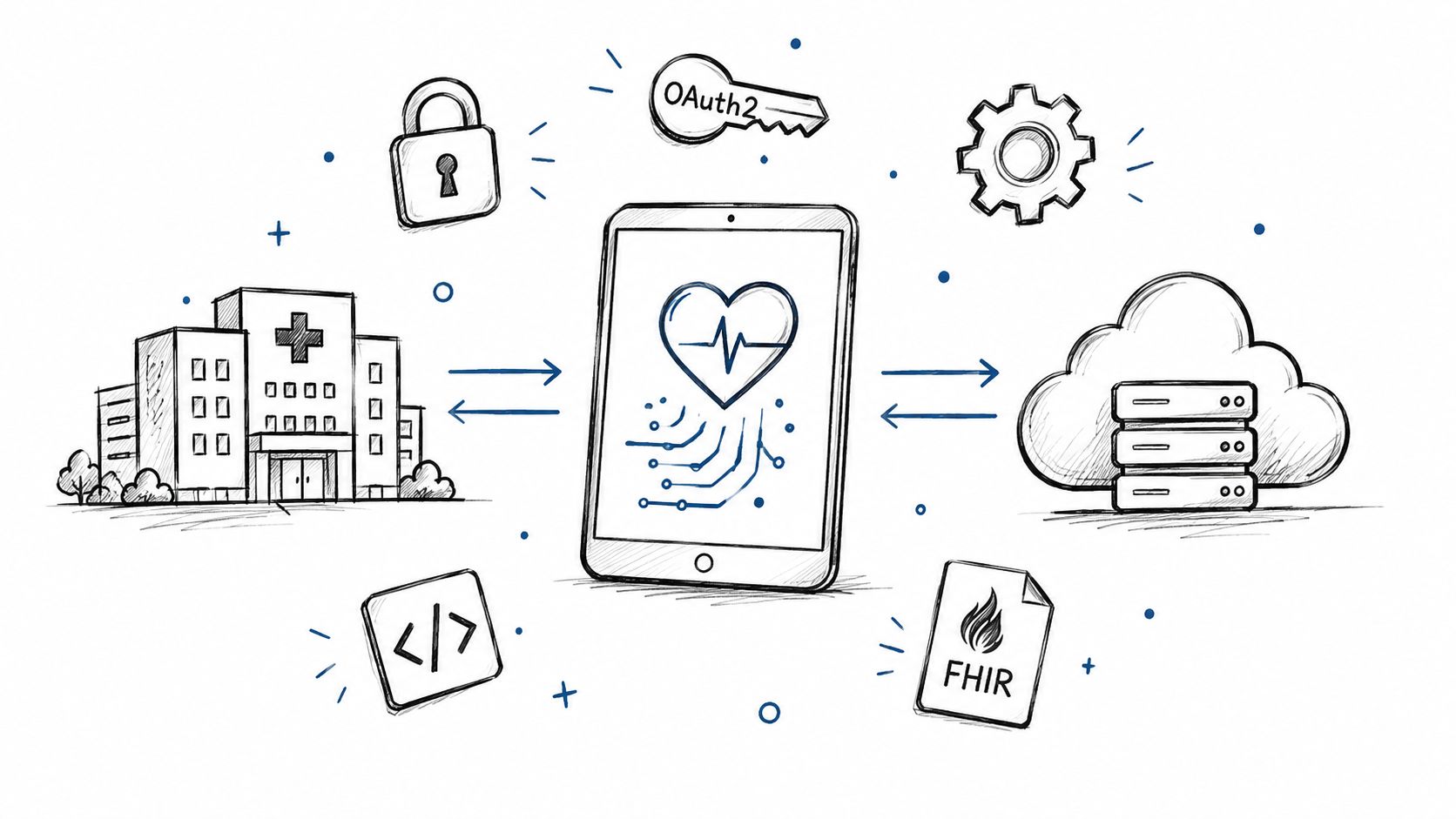
Smart on FHIR guide for healthtech engineers. Learn the OAuth 2.0 launch model, scope syntax, backend services, and US regulatory requirements.
Connect with our team to explore how AI expertise can transform your business.