AI in Healthcare
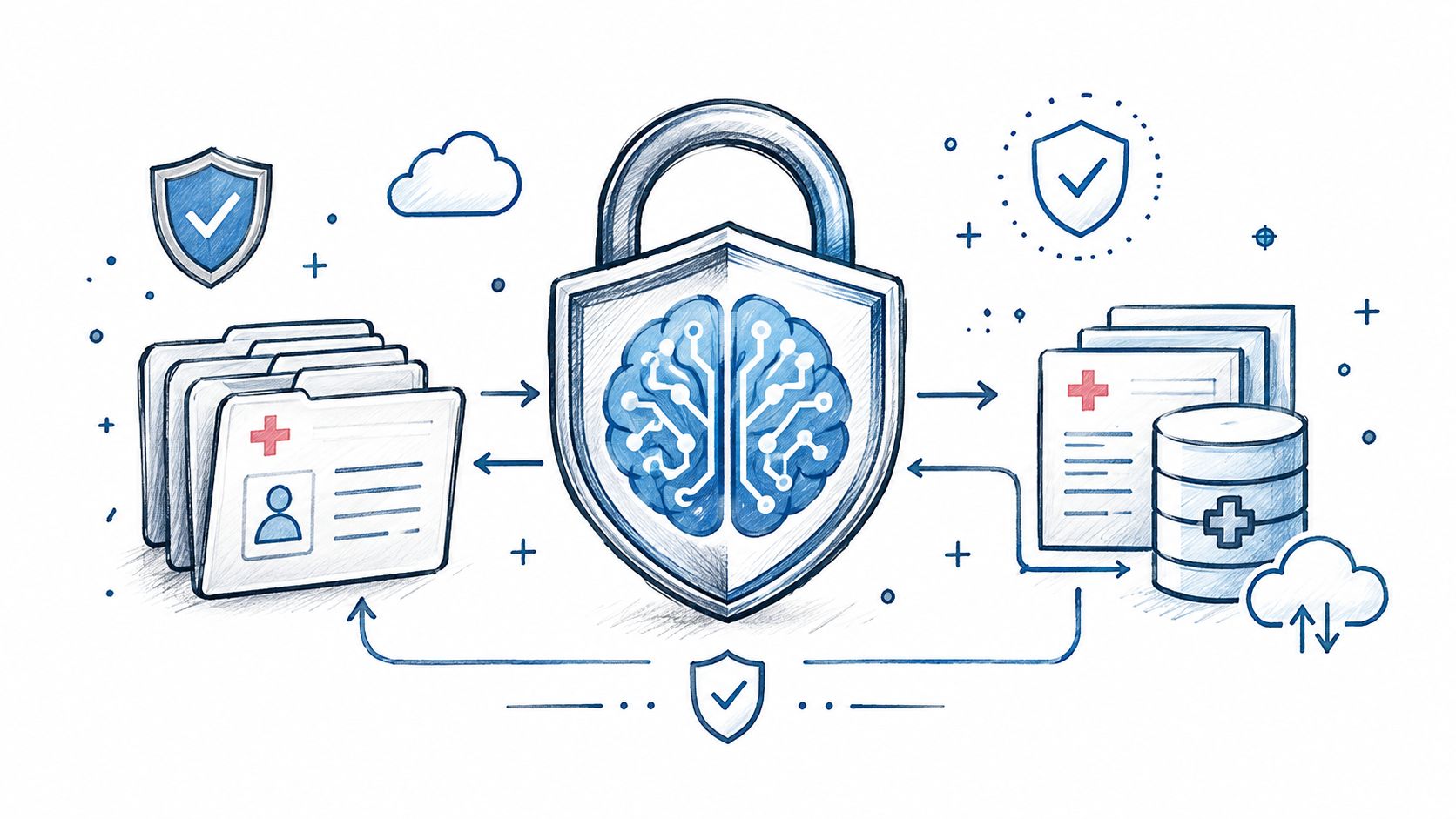
HIPAA-Compliant AI: How to Use LLMs With PHI Safely
How to build HIPAA-compliant AI: when LLM providers need a BAA, data minimization, de-identification, audit controls and a reference architecture.
October 16, 2026Read more
Predictive AI for hospital resource planning - Optimize hospital resource planning with predictive AI. Drive ROI, efficiency, and informed decisions. Explore

The bed board is full, the ICU charge nurse is calling for a cleaner bed that doesn't exist yet, pharmacy is waiting on a supply pull, and the staffing lead is trying to cover tomorrow's admissions with yesterday's guesswork. That's the daily cost of planning from hindsight. Predictive AI for hospital resource planning changes that operating model, because it turns admissions patterns, patient risk, and supply demand into forecasts leaders can act on.
This shift is already happening in mainstream hospital systems. In 2024, 71% of nonfederal acute care hospitals in the United States reported using predictive AI integrated into their EHRs, up from 66% in 2023 (American Hospital Association market scan). The important point isn't adoption for its own sake. It's that hospitals are moving predictive AI from side project to operating layer, because bed demand, staffing intensity, and downstream utilization all depend on better forecasts.
Executives should care about three outcomes at once, throughput, safety, and control. When the right team is on shift, the right unit has capacity, and critical supplies are staged before the surge hits, operations stop reacting to fires and start managing flow. The rest of this guide focuses on the practical mechanics, the governance layer most articles skip, and the implementation choices that separate a useful forecast from an expensive dashboard.
For healthcare organizations looking for a healthtech engineering partner, Ekipa AI works across healthcare workflows, EHR integrations, and AI delivery. Start with its Healthcare AI Services if you want to map predictive planning into existing operations without treating it like a science project.
Predictive AI in hospital resource planning means using historical and live operational data to forecast what the hospital will need next, then feeding those forecasts into scheduling, staffing, and inventory decisions. The simplest way to think about it is weather forecasting for the hospital. You don't wait for the rain to decide whether to bring an umbrella, and you shouldn't wait for a bed shortage to decide whether to open capacity.
In practice, the model can forecast bed demand, ICU load, ventilator usage, blood-unit needs, and staffing pressure. That matters because a hospital's resources don't move independently. A rise in admissions changes bed turnover, which changes cleaning schedules, which changes nurse workload, which changes supply consumption.
That's why predictive AI is more useful than a descriptive dashboard. A dashboard tells you what already happened. A forecast tells you what is likely to happen next, so you can prepare the people, rooms, and materials before the bottleneck forms.
Practical rule: if the forecast doesn't trigger a scheduling, inventory, or bed-management action, it's just reporting.
A good hospital forecast should flow into systems leaders already use, not sit in a separate analytics portal. That means capacity planning, staffing rosters, transfer decisions, and supply ordering need to consume the prediction directly. If the model is accurate but disconnected, operations still run on manual escalation and phone calls.
The business case for predictive AI is readily apparent. Predictive AI can help teams decide whether to hold a bed, reassign labor, or stage equipment before a surge starts. You don't need a grand digital transformation narrative to justify that. You need fewer surprises and faster response times.
For leaders comparing service models, Healthcare AI Services is the kind of internal capability area to look at when the goal is operational forecasting, not just experimentation. The value is in the connection between prediction and execution.

The financial case for predictive AI starts with accuracy, but it ends with operations. A hospital doesn't earn value from a model because it sounds advanced. It earns value when the forecast helps reduce waits, improve bed turnover, and use labor more efficiently. This represents the fundamental ROI discussion.
One hospital-resource forecasting study reported 85%–90% prediction accuracy for ICU beds, ventilators, and blood-unit demand, with an ICU bed error margin of 2 beds per day, a ventilator error margin of 1 unit per day, and more than 88% accuracy for blood-unit predictions during peak admissions (IJIRT paper). Those are not abstract model scores. They are the difference between guessing at capacity and planning it.
The same source reports a 20% reduction in patient waiting times and a 33% increase in bed turnover rate in a real-world AI-driven resource optimization evaluation (IJIRT paper). That is where operational leaders should focus. Better forecasts matter only if they produce faster patient movement and less idle capacity.
If your AI pilot can't connect forecast quality to throughput or turnaround, the business case isn't ready.
Executives should stop asking whether the model is “smart” and start asking whether it changes cost drivers. Better bed turnover lowers waste in constrained environments. Lower waiting times reduce friction across admissions, diagnostics, and transfers. More accurate staffing plans reduce overreaction and understaffing at the same time.
For leaders building the internal case, a Custom AI Strategy report can frame those tradeoffs in operational terms, while AI strategy consulting helps align the forecast use case with business priorities. The point is not to buy more AI. The point is to decide which operational problem the forecast should solve first.

Hospitals often underestimate how much of the value comes from the data pipeline, not the model choice. The model can't forecast demand if it only sees a partial view of the hospital. A useful system needs operational, financial, and clinical context, then a loop that keeps the model current.
The practical input mix includes EHR records, claims data, finance and operations data, demographics, and seasonal disease signals (IJETCSIT article). That combination matters because demand is shaped by more than recent admissions. Patient mix, payer behavior, budget constraints, and disease seasonality all change how resources get consumed.
The strongest deployments don't treat training as a one-time task. They use continuous retraining so the forecast updates as conditions shift (IJETCSIT article). That's especially important for hospitals where flu patterns, procedure volumes, and transfer activity can change the resource picture quickly.
Recent research describes a three-module architecture with machine-learning demand forecasting, a constrained optimization scheduler, and an NLP-driven feedback evaluator (PMC research). That structure is the right one to emulate. Forecasting alone tells you what may happen. Optimization tells you what to do about it. Feedback tells you whether the system's decisions are holding up in practice.
A useful implementation sequence looks like this:
If you want a parallel example outside hospital flow, Forge Reliability explains predictive maintenance in a way that mirrors this same pattern, data in, prediction out, action loop closed. The concept is similar even though the domain is different. Ekipa's AI tools for business and internal tooling capabilities are relevant when forecasts need to land inside the systems people already use every day.

Hospitals don't fail because they lack predictions. They fail because no one can explain who approved the forecast, how it was checked, or what happens when it drifts. Governance is not an afterthought here. It's the difference between a model people trust and a model people work around.
The cleanest KPI set starts with forecast accuracy, bed occupancy variance, and staffing adherence. Those three measures tell leaders whether the model is technically useful, operationally stable, and followed by the workforce. If any one of them is weak, the system is incomplete.
The health IT guidance on predictive AI makes the oversight issue plain, hospitals must verify model decisions and monitor drift to safely convert forecasts into allocations (healthit.gov). That's the governance standard leaders should adopt. A forecast that isn't auditable should not drive staffing or inventory choices.
Every allocation decision should leave an audit trail. Who reviewed the forecast? Who overrode it? What data version was used? These are basic questions, yet many organizations leave them unanswered until a failure occurs.
For a practical governance reference, implementing AI governance is a useful way to think about controls, review routines, and policy alignment. Hospitals should also involve a regulatory compliance partner early, especially when the forecast influences clinical operations or staffing decisions that touch regulated workflows.
Forecasts become operational decisions only when someone is willing to defend them in front of nursing, finance, and quality teams.
Hospitals should not roll predictive AI across the enterprise on day one. Start narrow, prove it on one service line, and expand only after the forecast survives real operational pressure. That's how you keep the project grounded and avoid building a beautiful model that nobody uses.
Begin with a single unit and a single resource problem. Single-unit bed forecasting is the cleanest test because the data is easier to validate and the operational owner is obvious. The goal is not perfection, it's signal quality and workflow fit.
On this pilot, judge the model by whether it can support a planning conversation before the shift starts. If it can't help the charge nurse, bed manager, or unit lead make a better call, the pilot isn't ready to scale. AI-driven operations research focused on hospital allocation under dynamic, high-demand conditions specifically targets the environment where resource planning tends to break down (Dialnet study).
Once the model is stable, expand to multiple departments and connect it to workforce planning. Then, the forecast becomes more valuable, because bed assignments, staff scheduling, and patient flow start interacting across units. A hospital can't optimize one department in isolation if demand merely shifts to the next bottleneck.
At this stage, use the forecast to support cross-departmental resource allocation and compare predicted need against actual handoffs. If you want a practical implementation structure, real-world use cases are useful for showing how similar operational problems have been framed before. Teams that need a delivery path should also align the rollout with Ekipa's AI delivery framework or AI Product Development Workflow.
Once predictions are embedded into routine operations, move to continuous retraining, real-time dashboards, and closed-loop feedback. The priority shifts from “can we forecast?” to “can we adapt fast enough when demand changes?” That is where predictive AI starts functioning as an operational control system rather than an analytics add-on.
A good optimization phase should include proactive patient flow management, live review of overrides, and periodic model recalibration. For teams that want a more operational point of entry, AI Automation as a Service and clinic AI assistant are relevant if the hospital needs workflow support that touches front-line coordination.
The strongest advice is simple. Pilot narrowly, scale only when the forecast changes behavior, and optimize only when the system can explain its own decisions. That sequence protects trust and keeps the project tied to patient flow, not hype.
Vendor selection should be ruthless. If a provider can't show healthcare EHR integration, explain how it supports SaMD solutions, and prove how its system fits into scheduling and inventory workflows, it's not ready for hospital operations. Ask about deployment models too, because hosted and on-prem choices have different implications for IT control and compliance.
Start with these fundamental requirements:
A practical next step is to pair the technical review with the workflow side. The Closer Innovation Labs Corp. eSignature platform is the kind of adjacent workflow tool that shows how document-heavy healthcare operations benefit from digital controls, especially when approvals and accountability matter.
If you need a broader engineering lens, Ekipa's AI tools for business and our expert team can support planning, implementation, and integration decisions. For organizations where compliance is a central constraint, a regulatory compliance partner should be part of the vendor conversation from the start.
Predictive AI for hospital resource planning works when it does three things at once. It forecasts demand accurately, it translates those forecasts into operational decisions, and it proves those decisions are safe to trust. Without governance, the model is just another screen. Without phased rollout, it becomes an expensive experiment.
Hospitals that want to move faster should treat this as an operating model change, not a software purchase. Ekipa AI can act as a healthtech engineering partner, and if you want to evaluate delivery capability, meet our expert team before you commit to a build.
Which data sources matter most for rare events?
Start with the broad operational data set, then layer in the signals that capture unusual spikes, such as seasonal disease patterns, transfer activity, and historical surge behavior. Rare events need context, not just volume.
How long should it take to see ROI?
Fast wins usually come from one narrow use case with a clear operational owner. If the forecast changes staffing, bed use, or wait-time decisions quickly, you'll see value much sooner than if the model sits in a reporting layer.
How do we keep model updates compliant?
Use change control, audit logs, drift monitoring, and a named reviewer for overrides and retraining cycles. Keep the compliance team involved whenever the model output affects resource allocation.
If you're ready to move from theory to execution, contact Ekipa AI to start an AI requirements analysis, shape the rollout, and turn predictive AI into a governed hospital planning capability.
How to build HIPAA-compliant AI: when LLM providers need a BAA, data minimization, de-identification, audit controls and a reference architecture.
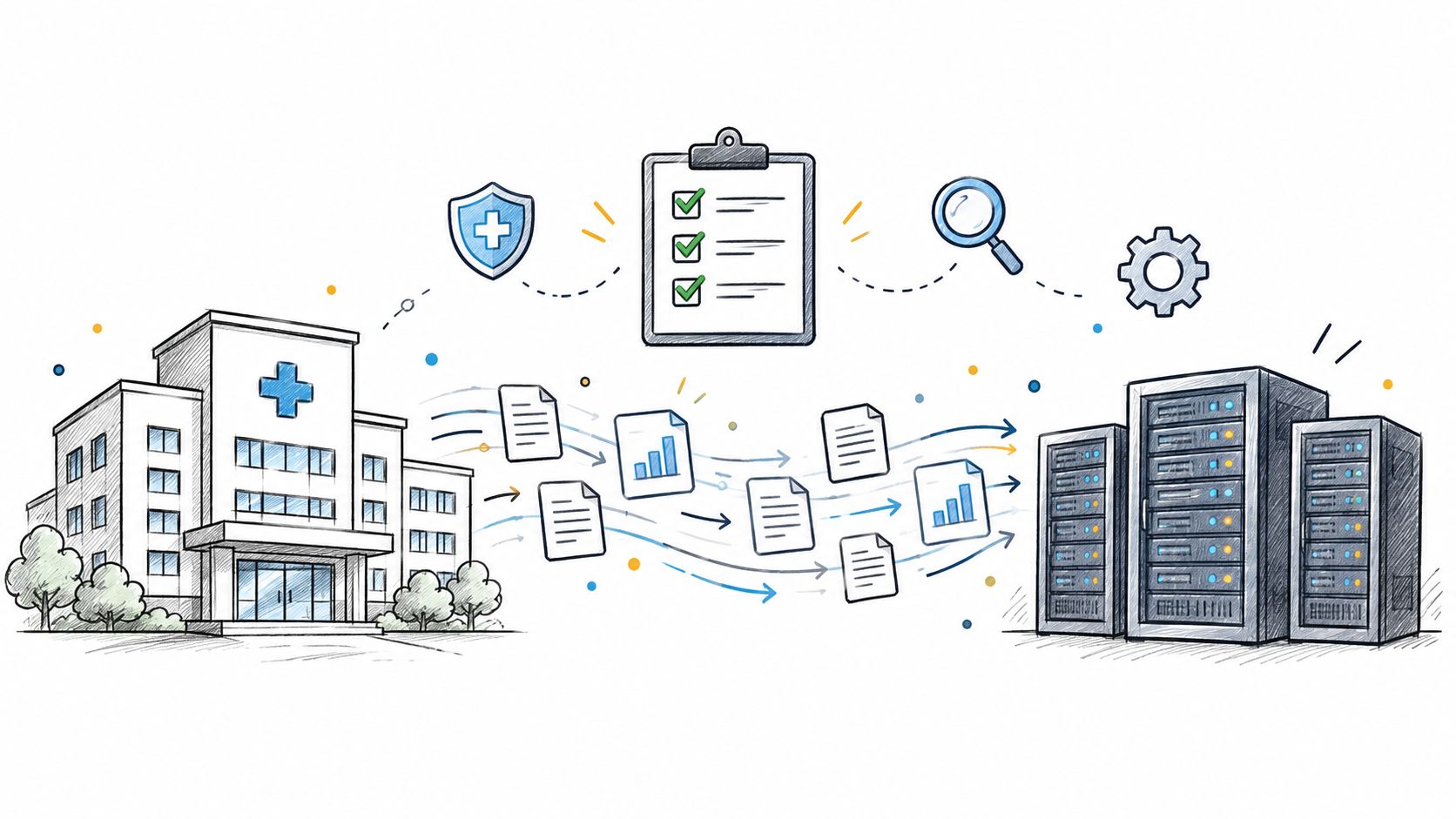
Practical data migration planning guide for healthcare teams. Scope, mapping, compliance, validation, cutover and rollback decisions explained end to end.
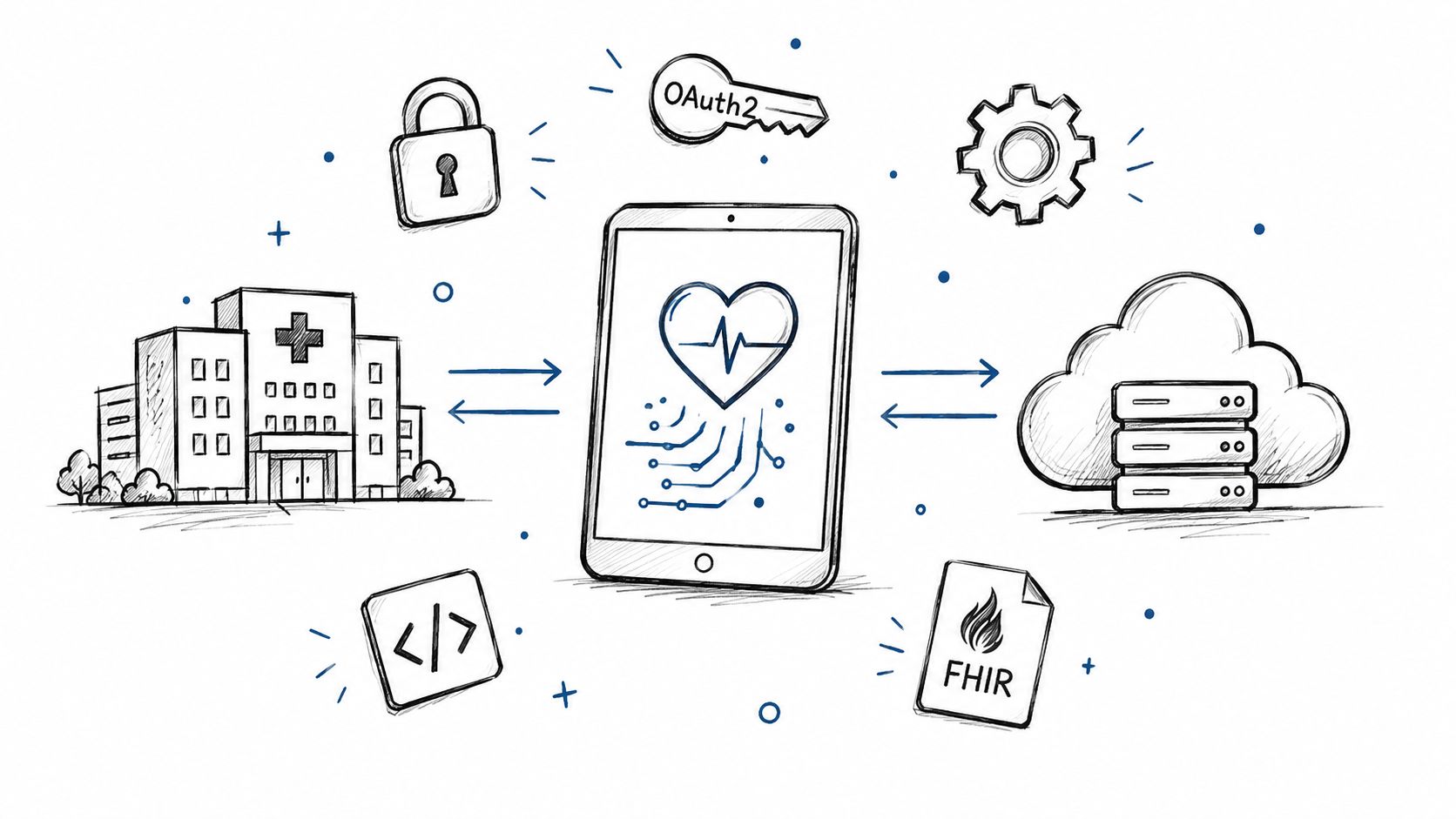
Smart on FHIR guide for healthtech engineers. Learn the OAuth 2.0 launch model, scope syntax, backend services, and US regulatory requirements.
Connect with our team to explore how AI expertise can transform your business.