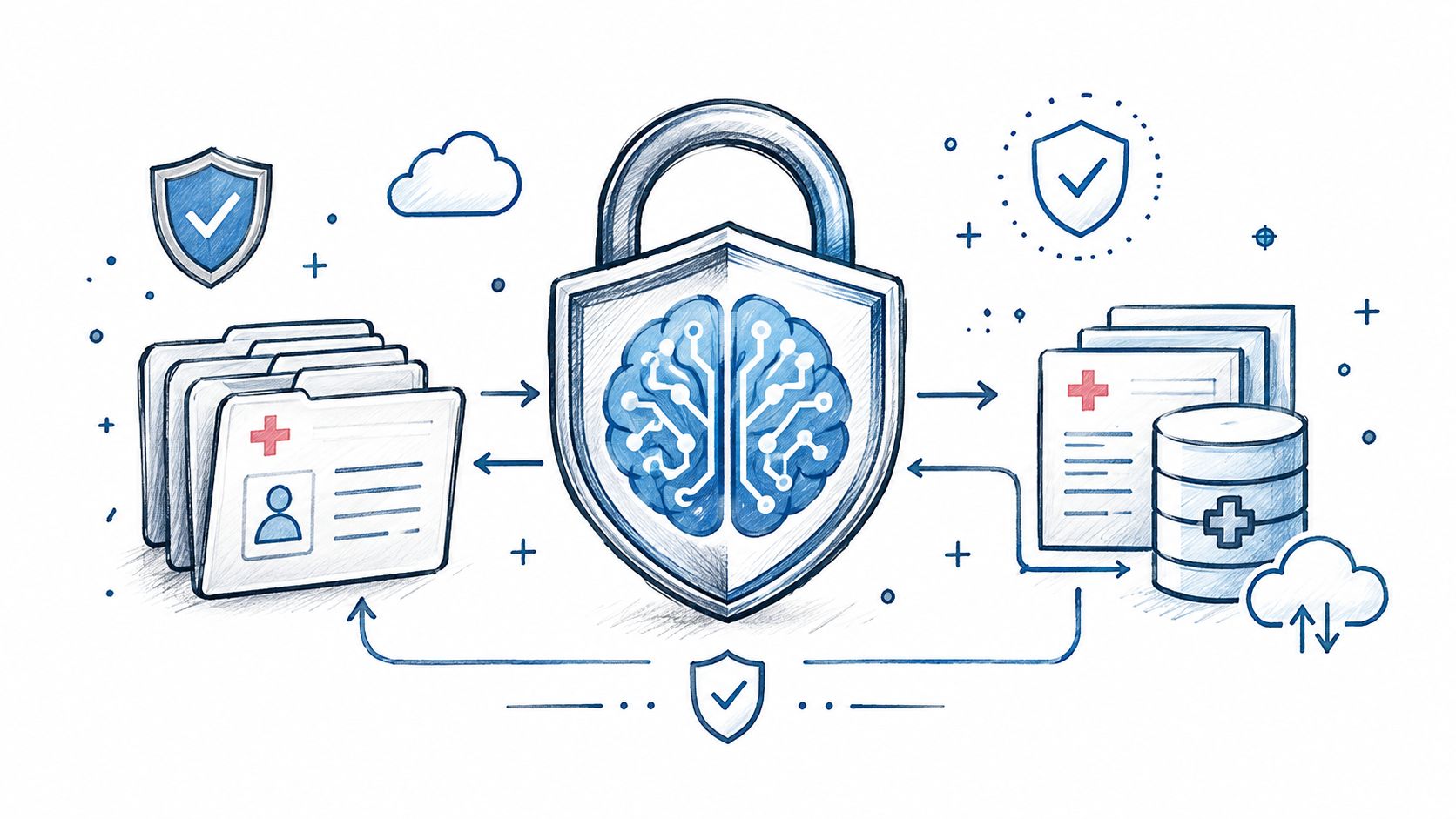
AI in Healthcare
HIPAA-Compliant AI: How to Use LLMs With PHI Safely
How to build HIPAA-compliant AI: when LLM providers need a BAA, data minimization, de-identification, audit controls and a reference architecture.
October 16, 2026Read more
A strategic guide to predictive analytics in healthcare covering techniques, use cases, data, governance, implementation roadmap, KPIs, and ROI.

You're sitting in a leadership meeting looking at the same problem from three angles. Clinicians want fewer surprise deteriorations, operations wants better bed and staffing decisions, and finance wants proof that another analytics program won't become shelfware. Predictive analytics in healthcare is the lever that can connect those concerns, but only if it's treated as an operating decision, not a model demo.
A common mistake teams make is simple. They buy, build, or pilot a prediction engine and then ask the wrong question, namely whether the model is “accurate enough” in a vacuum. The most important question is whether the prediction still holds up after it's embedded in actual workflows, with data drift, clinician behavior, and interventions attached to it.
A patient looks stable in the morning, but by evening the unit is scrambling because deterioration was missed. Leaders are trying to prevent that moment, and that is why predictive analytics in healthcare belongs in the executive lane, not just the data science lane. The field uses historical and real-time data with statistical modeling and machine learning to forecast future clinical events across the full disease trajectory, from prevention and diagnosis to treatment and prognosis.
That definition changes the management question. You are not buying reporting. You are deciding whether your organization can identify who is likely to worsen, be readmitted, or respond poorly to therapy before those events happen. For a health system, payer, or digital health company, capacity, risk, and earlier intervention become the assets that matter.
A foundational review places predictive analytics among the five canonical healthcare analytics types alongside descriptive, diagnostic, prescriptive, and discovery analytics, and the Healthcare AI Services perspective is useful here because it ties analytics to operational use instead of abstract model performance. The taxonomy matters less than the operating shift it creates. Predictive work moves an organization from reacting to yesterday's data to triggering action before a patient crosses a threshold.
Practical rule: If a predictive program does not change a care pathway, staffing decision, or allocation rule, it is not an operating capability. It is a dashboard with a fancier label.
That is why the executive lens is the right one. Clinical teams care about who needs help now. Operations cares about where bottlenecks will hit next. Finance cares about whether the intervention paid for itself. If the model cannot support those decisions, the algorithm's elegance does not matter.
The question is whether the prediction still holds up after it leaves the lab, enters clinical workflow, and meets data drift, clinician behavior, and intervention design. That is the standard leaders should set. Prediction only matters when it survives actual conditions and produces a measurable clinical or financial outcome.

Predictive analytics transforms complex healthcare data into a risk score or forecast that can drive action. The inputs are typically historical and real-time signals, especially EHR data, imaging, genomics, claims, and wearables, and the output is a prediction about clinical deterioration, readmission risk, medication response, or disease progression supervised learning review.
Descriptive analytics tells you what happened. Diagnostic analytics tells you why it happened. Predictive analytics tells you what is likely to happen next. Prescriptive analytics goes one step further and suggests what should be done. That distinction matters because many vendors blur prediction with recommendation, and those are not the same thing.
A risk score alone doesn't improve care. The score becomes useful only when it triggers a workflow, such as an outreach call, medication review, specialist referral, or bed planning adjustment. That's why the strongest implementations link data, model, and intervention in one chain.
A prediction is not an outcome. It's a decision trigger.
Supervised learning fits into this process. The model learns from labeled historical cases, then applies that pattern to new patients or new events. In practice, that means the organization can stop treating every case as equal and start prioritizing the people most likely to need attention first.
If your team is building a clinical intelligence layer, this is also where a focused product path matters. A tool like AI tools for business only has value in healthcare if it's tied to the right clinical workflow, data structure, and governance controls. Otherwise, it's just software with a prediction feature.

The first question is not whether a model can predict something. It is whether the prediction will change a workflow that already exists, because that is what moves care quality and financial performance. Readmission risk, clinical deterioration, resource planning, population risk stratification, and treatment response forecasting all matter, but only when they lead to a specific action.
Readmission models work when they flag patients who need a discharge protocol, a follow-up call, or medication reconciliation before they return to the hospital. Deterioration models work when they alert the care team early enough to change the patient's trajectory. Capacity models work when they inform staffing, bed allocation, and equipment planning before the pressure hits the unit.
Population health stratification has a different payoff. It lets leaders target the right cohorts for outreach, prevention, and chronic care management instead of spreading interventions evenly across everyone. Treatment response prediction is more precise still, because it helps clinicians choose therapies based on expected response rather than defaulting to trial and error.
A systematic review reported that predictive analytics programs often show clinical benefit when they are tied to operational action, and it highlighted early-warning models that reduced critical care mortality as well as readmission programs that lowered 30-day all-cause readmissions systematic review. The point is simple, the same review showed that prediction only matters when it is paired with intervention protocols.
For executives, that is the operating standard. A prediction that sits in a dashboard is decoration. A prediction that routes a nurse call, triggers a medication review, or changes a staffing plan is an intervention. If you want a concrete example of how structured clinical data can surface actionable patterns, the real-world GraphRAG case study is a useful reference.
For teams evaluating a first deployment, start with one narrow workflow, such as readmission prevention or deterioration alerting. Broad “AI everywhere” programs usually stall because they spread attention across too many use cases. A productized starting point like Diagnoo fits the kind of use case where clinical signals need to be organized into a decision-support flow, not left as model output alone.

Most predictive programs fail before model selection matters. The problem is usually data shape, data access, or data trust. Healthcare teams pull from EHRs, imaging, claims, genomics, wearables, and sometimes social determinants of health, but those sources only help if identity resolution, harmonization, and consent are handled properly.
A model trained on inconsistent data will produce inconsistent decisions. A model deployed without a clear audit trail will create clinical and legal risk. That's why governance has to sit at the front of the program, not the end.
A systematic review found that predictive ML is still concentrated in ICU settings, and recurring barriers include limited and imbalanced datasets, poor interpretability, integration difficulties, and privacy concerns systematic review. Those barriers explain why a model that looks promising in a paper may struggle in oncology, chronic disease, or primary care.
The equity issue is just as important. Predictive analytics can sharpen care delivery in underserved communities, but only if the underlying data and deployment choices don't reinforce existing gaps. Local validation matters more than a polished headline result, because models can behave differently when infrastructure, staffing, or patient mix changes.
If the model can't survive your local workflow, it's not ready for your local patients.
For governance teams, a strong external benchmark is a DevArmor healthtech guide that reinforces the need for explicit controls around security, compliance, and operational readiness. The right internal question is simple. Do we have clean enough data, a defensible consent posture, and a validation plan that matches the deployment setting?
If not, pause. Build the foundation first. Predictive analytics in healthcare does not forgive weak plumbing.

The cleanest way to run a predictive program is through clear stages. Executive teams should care less about model-building theater and more about whether the model still predicts well after it leaves the lab, fits the local workflow, and produces a measurable clinical or financial result.
Start with one decision point. Pick a use case where the organization already has a workflow that can act on a prediction, such as readmission prevention or deterioration response. The executive deliverable is a clear use case charter with a named owner and a defined action.
Audit data quality, completeness, bias, access, and governance before anyone starts training. This stage answers the question that matters most in practice, whether the available inputs are good enough to support a live model in the actual care setting.
The gate is blunt. If you cannot trust the data, do not train yet.
Model development should be disciplined and short. Performance in a development environment is not enough. The model also has to be transparent, independently testable, and validated against the setting where it will be used.
This five-stage process is part of our AI Delivery Framework. If the team needs a practical handoff structure, the AI Product Development Workflow is where product, engineering, clinical, and compliance ownership should be defined.
This is the real test. Predictions have to land where clinicians and operations teams already work, and the workflow has to define who sees the signal and what happens next. If the model is not embedded in EHR routines or operational tools, it will sit outside the decision path and change nothing.
Post-deployment monitoring should track drift, override rates, escalation quality, and workflow impact. Teams also need a clear process for retraining, recalibration, and retiring a model when its performance slips or the care pathway changes.
The roadmap only works if each stage has a go or no-go gate. Without that discipline, predictive analytics becomes a pilot that never earns operational trust.
A predictive program lives or dies on whether it changes business metrics, not model metrics. A strong AUC is nice. A lower readmission rate, fewer ICU deaths, or reduced cost per patient is what boards care about.
The most defensible evidence is the kind tied to an intervention. A randomized trial in older adults found that predictive analytics combined with customized interventions produced a 31% lower annualized inpatient cost per patient, a 20% lower annualized total cost per patient, and 68% fewer 90-day readmissions versus standard care trial.
Use four KPI families. Clinical outcomes, such as deterioration and readmission. Utilization and capacity, such as bed pressure and staff time redirected. Financial impact, such as cost per patient and avoidable utilization. Equity and safety, such as whether the model performs consistently across patient groups and care settings.
The trap is confusing algorithm performance with business impact. Sensitivity and specificity are necessary, but they are not sufficient. If no intervention is attached, the model may be technically impressive and operationally irrelevant.
A model that doesn't change a workflow is a science artifact, not an investment.
The board-level conversation should sound like this. What patient action does the prediction trigger, who owns that action, how quickly does it happen, and which metric proves the change? That's a much harder question than “how accurate is the model,” but it's the one that matters.
If you're building a measurement framework, anchor it to the outcome you can control, then tie the model to the care or operations team that can move it. That discipline is what keeps predictive analytics from becoming another analytics program with no visible return.
Predictive models fail in production for reasons that rarely show up in vendor demos. They don't generalize cleanly across sites. Clinicians ignore alerts if the signal is noisy. EHR integration slows everything down. And if the model can't be explained, trust collapses fast.
Generalizability is the first issue. A model trained in one high-acuity environment may not hold up in another setting with different data quality, staffing patterns, or patient mix. The only serious mitigation is local validation, followed by recalibration if needed.
Alert fatigue is next. Too many prompts, or prompts that don't lead to action, will train clinicians to dismiss the system. The fix is not “make the model smarter” in the abstract. It's stricter thresholding, fewer alerts, and clear ownership for every alert that fires.
Integration friction is the operational killer. If the model sits outside the clinical workflow, it adds friction instead of value. That's where a SaMD solutions approach and a regulatory compliance partner become relevant, because clinical AI needs both a delivery path and a defensible compliance posture.
For risk models, transparency is essential. Predictive accuracy can't be judged from a black box description. The algorithm behind the prediction should be available and described in enough detail for others to reproduce and evaluate it transparency guidance.
Leaders should ask one question before approving rollout, can a clinician understand why this model is acting now?
If the answer is no, the deployment is too fragile. If the answer is yes, then you can start scaling with confidence, while keeping governance and workflow controls in place.
Start with one use case and one care pathway. Do not launch a platform program. Pick a problem the organization already feels, then define the intervention that happens when the model flags risk. That is the first 30 days.
In the next 30 days, audit data readiness. Check whether source systems are stable, whether the key fields are usable, whether governance is in place, and whether the model will have enough signal to matter. If the data is fragmented, fix the plumbing before you buy more ambition.
By day 90, you should have a pilot scope, a validation plan, a workflow owner, and a monitoring framework. If you need external help, a healthtech engineering partner can help scope the work, while real-world use cases can sharpen the choice of a first deployment. If your team needs structured discovery, AI requirements analysis is the right starting point, not a slide deck about generic AI.
The target is measurable improvement in care and cost, the kind that shows up only when prediction is tied to intervention. That is the standard worth aiming for, because prediction without action does not move the business or the bedside.
If you want a sharper internal discussion, pair this article with our AI adoption guide and then bring the questions back to your leadership team. For deeper help on scoping, delivery, and governance, our expert team can help you move from concept to a working healthcare deployment.
How to build HIPAA-compliant AI: when LLM providers need a BAA, data minimization, de-identification, audit controls and a reference architecture.
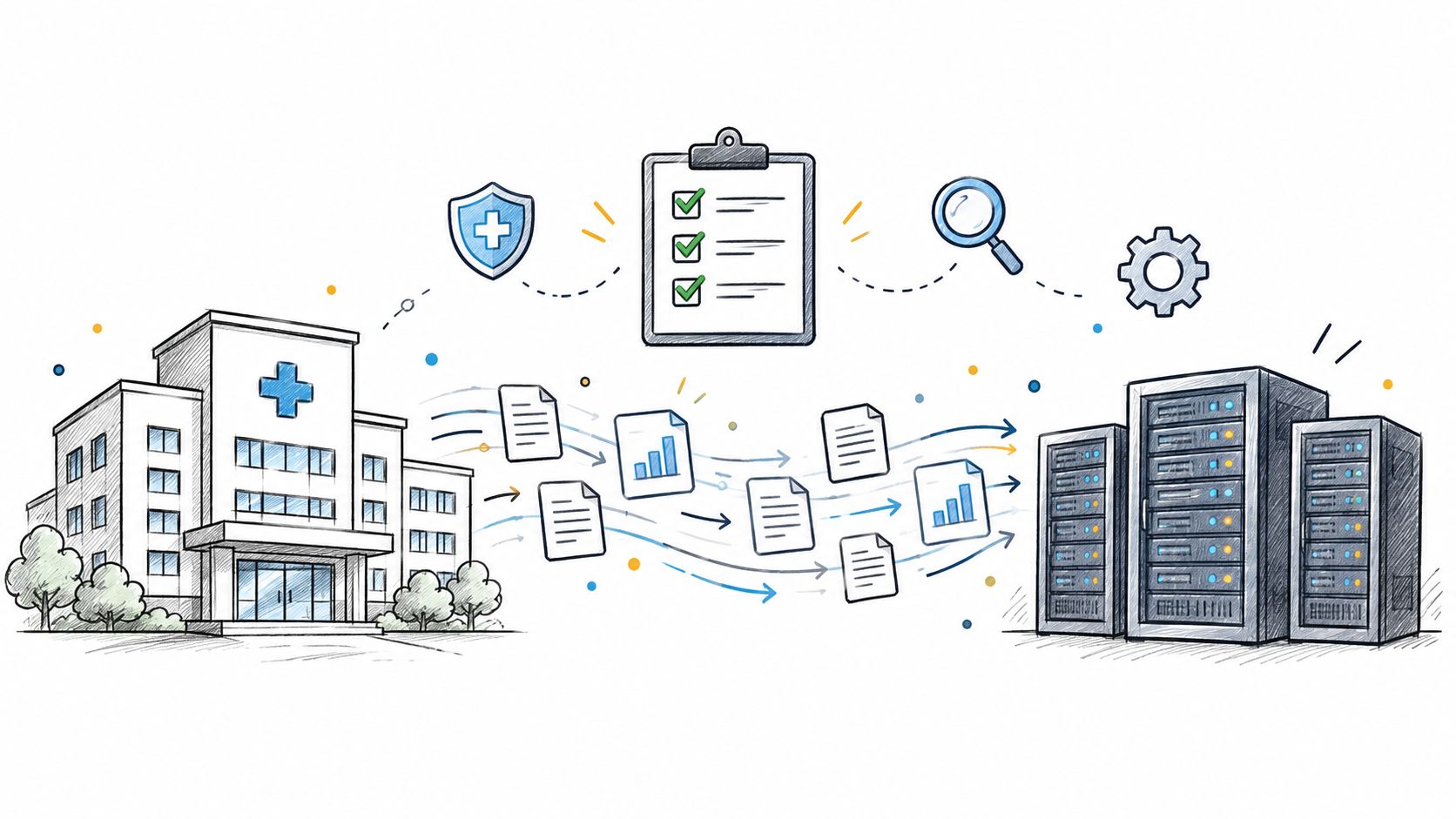
Practical data migration planning guide for healthcare teams. Scope, mapping, compliance, validation, cutover and rollback decisions explained end to end.
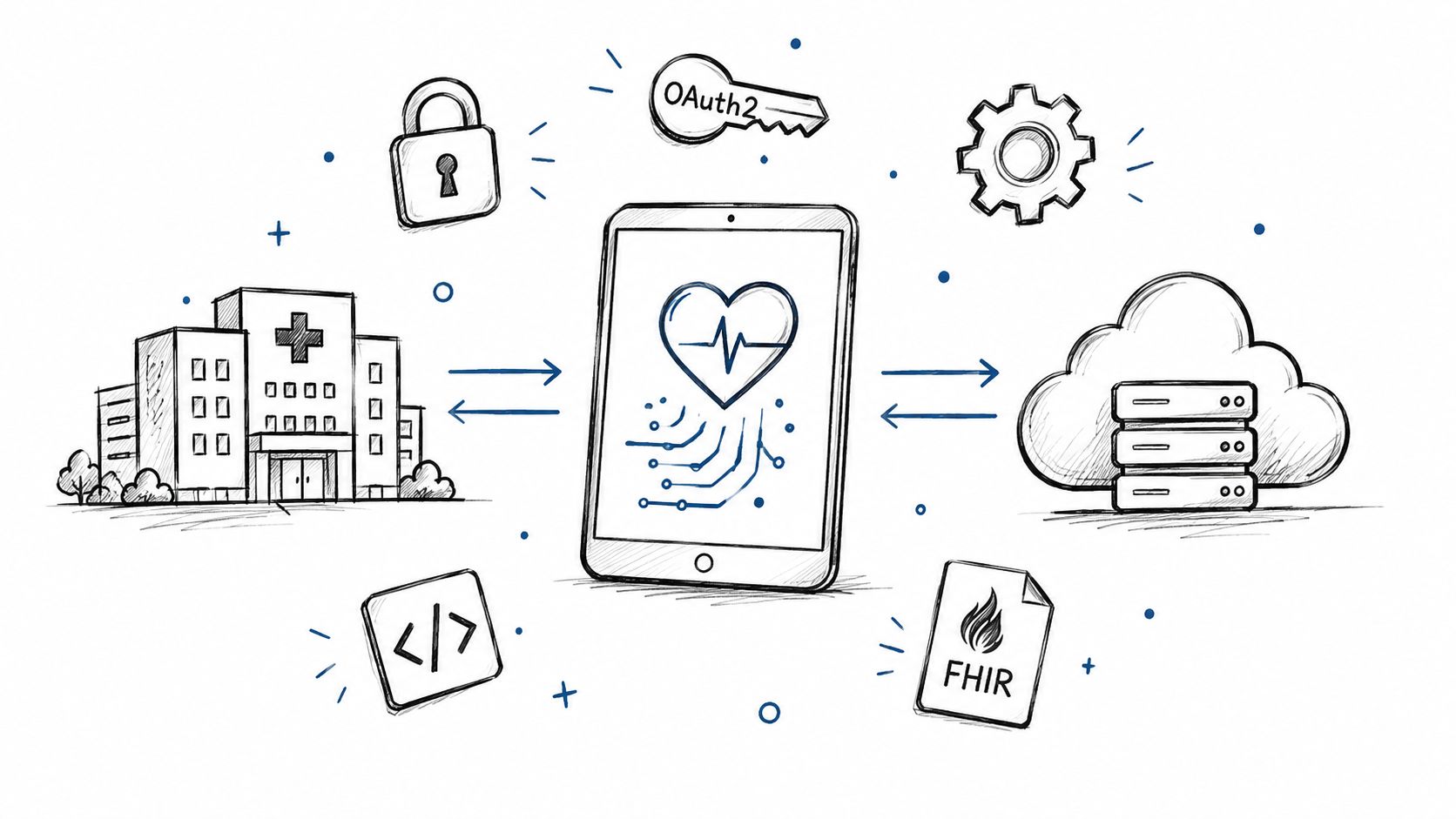
Smart on FHIR guide for healthtech engineers. Learn the OAuth 2.0 launch model, scope syntax, backend services, and US regulatory requirements.
Connect with our team to explore how AI expertise can transform your business.