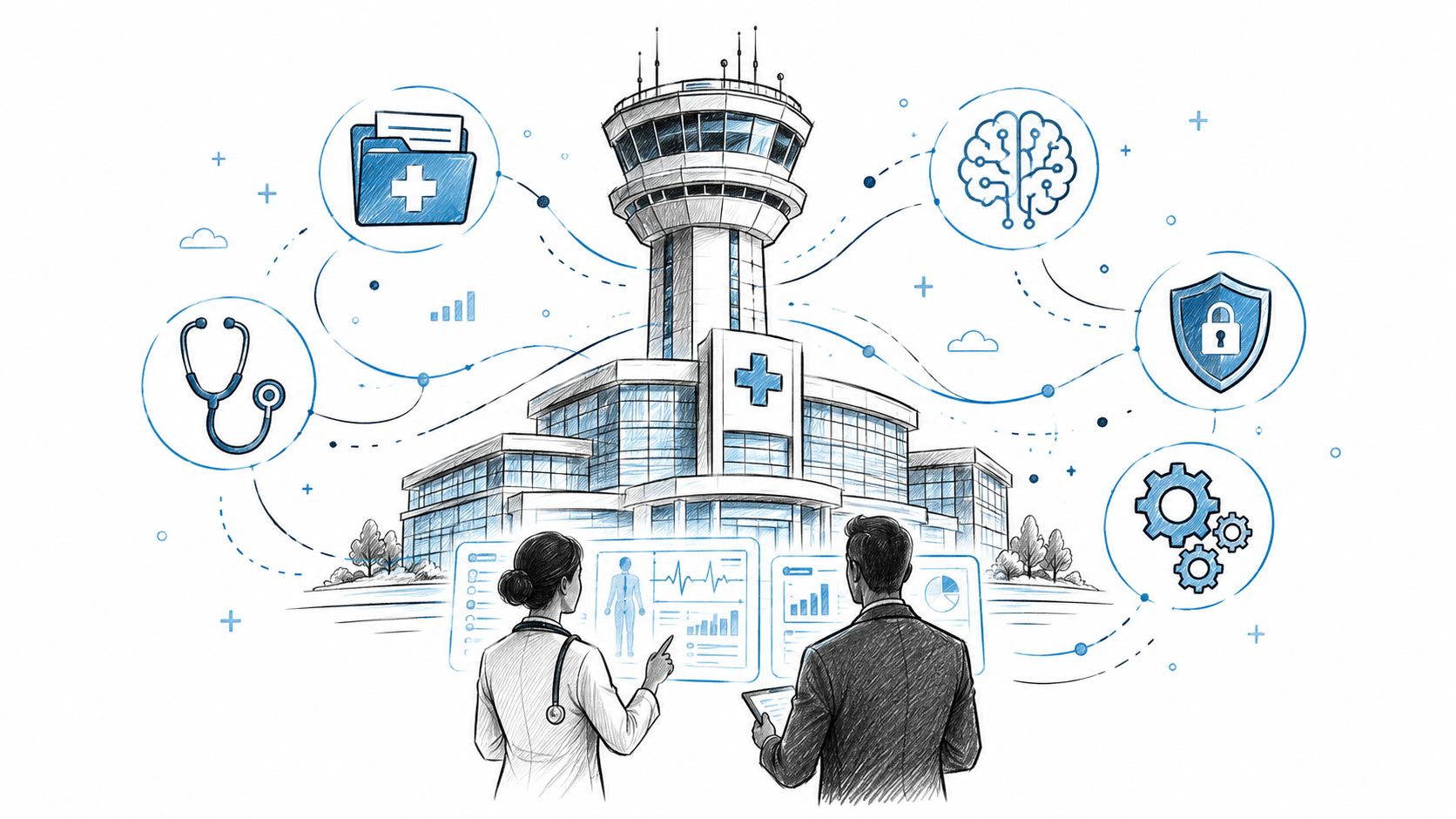
AI in Healthcare
Intelligent Healthcare Systems Explained for Leaders
What are intelligent healthcare systems? Explore architecture, EHR integration, AI use cases, ROI, risks and how to build compliant systems.
September 21, 2026Read more
Senior care digital transformation in 2026: drivers, AI use cases, KPIs, pitfalls, and a practical roadmap to scale technology across aging services.

Monday morning at a mid-size senior living operator usually starts the same way. Leadership is staring at three stalled pilots, frontline teams are still paper-heavy, and family members are calling for updates that nobody can answer quickly. That isn't a software problem first. It's an operating-model problem, and senior care digital transformation fails when leaders treat it like a shopping list.
The right mental model is simpler. People first, process second, platform third. That order matters because the best tool in the wrong workflow just automates confusion. Ekipa's healthtech engineering partner model fits that reality when the team's job is to translate care operations into buildable, scalable systems instead of piling on another disconnected vendor.

Senior care digital transformation is not “buy more software.” LeadingAge defines it as using digital technologies to create new or modify existing organizational processes, culture, and resident and staff experiences, and it puts the sequence bluntly, people first, process second, platform third LeadingAge. That framing is the difference between a serious transformation program and a pile of tools with no operating model behind them.
A CEO walks into the weekly ops meeting and hears the same three complaints. Nurses are duplicating documentation, the billing team can't reconcile handoffs cleanly, and family caregivers want faster communication. A vendor is promising AI. Another is promising a dashboard. A third is promising to “streamline” the workflow, which usually means nobody has mapped the workflow properly yet.
The right question isn't which product to buy. It's which resident, staff, and caregiver experience needs to change first, then which process supports that change, then which platform can carry it. That order is the only way to avoid freezing old habits into a shiny new interface.
Practical rule: if your transformation program can't describe how a shift handoff, medication update, or family communication path will change, you're still in procurement, not transformation.
For teams needing a broader healthcare lens, the same logic applies in the Healthcare AI Services context. Digital change succeeds when it reshapes how people work together, not when it just digitizes paper.
A chief executive does not need another tech pitch to justify change. The pressure is already visible in the budget, the roster, the compliance file, and the daily handoffs that keep slipping between teams. Senior care digital transformation is driven by four forces, demand, cost, workforce strain, and governance, and each one pushes leaders toward a people-and-process reset long before platform choice enters the conversation.
Australia's aged-care system makes the economics impossible to ignore. Government expenditure on aged care was AU$19.6 billion in 2019 to 20 and was projected to rise to AU$27 billion by 2023 to 24, serving 1.2 million Australians Cisco. The same source says less than 20% of older people are in residential care, yet residential care absorbs nearly 70% of government spending, at an average of about AU$54,000 per person Cisco.
That imbalance explains why leaders cannot treat digitization as a back-office cleanup project. The most expensive settings are also the most operationally dense, which means small gains in coordination, monitoring, and workflow execution can have a material budget impact. Senior care operators who wait for a perfect business case usually end up paying more for the same fragmentation.
Providers also face higher expectations for traceable data, safer handoffs, and defensible decisions. Compliance now sits inside the operating model, not beside it. A regulatory compliance partner can help keep the legal and quality burden visible while the team maps the actual workflow, but the core work still belongs to the operator.
Labor strain makes the situation worse. Staff shortages and turnover expose every weak handoff, every duplicate entry, and every unclear escalation path. The result is data trapped between senior living, home health, post-acute, and primary care teams, which slows decisions and forces caregivers to work around systems that were never designed for their actual routines.
If you are comparing tools, use browse AI agent tools to examine how each option handles records, routing, and escalation paths, not just the polish of the dashboard. The right filter is operational fit. If a platform cannot support the way work really moves, it will add another layer of friction instead of removing one.
The response should be structured, board-visible, and tied to the operating model. Start with the economics, the care burden, and the risk created by fragmented data. Then decide which resident, staff, and caregiver experience needs to change first, which process has to change with it, and only then which platform can support that design.
Senior care providers do not need a bigger software stack. They need fewer manual handoffs, fewer blind spots, and a better way to coordinate decisions across care settings.
LeadingAge's 3 Ps are useful because they force discipline. Too many senior care programs start with platform selection and work backward, which is exactly how organizations end up digitizing broken habits. The better sequence is to design for the humans doing the work, then redesign the work itself, then choose the infrastructure that can support it.
The people in the system are not interchangeable. Frontline caregivers need tools that fit time pressure and low-friction routines. Family caregivers need clarity, consent-aware access, and communication that doesn't force them to become mini-clinicians. Residents need usability and trust. Clinical leadership needs visibility without drowning in noise.
That's why “more features” is usually the wrong answer. In older-adult care, usability, trust, and value barriers are persistent, so the design has to be simpler, more explicit, and more humane. If the people using the system don't trust it, adoption will stall no matter how strong the underlying technology is.
Start with a concrete workflow. A shift handoff. A fall response. A medication reconciliation. A discharge from post-acute care. Then ask what must happen, who must see it, and where the decision gets logged. Only after that should technology enter the conversation.
Operator test: if the current process still needs manual re-entry to move information from one caregiver to another, the platform is supporting the old model, not the new one.
Platform choices include the EHR, integration layer, data warehouse, and AI services. The platform should reinforce the new workflow, not lock in legacy steps. If you're comparing options for clinical and document-heavy environments, the SaMD solutions page is relevant for regulated use cases, while internal tooling is often the cleaner path for staff-facing operational systems.
The point is simple. Don't ask whether a tool is advanced. Ask whether it reduces friction for the people doing the work and supports the process you want.
Not every use case deserves equal attention. Senior care leaders should rank options by the size of the problem, the quality of the data, and the operational complexity of getting it live. The four most valuable categories are remote monitoring with sensors, predictive analytics, virtual care, and operations automation.
| Use case | Primary business problem | Data readiness | Time-to-value | Integration complexity |
|---|---|---|---|---|
| Remote monitoring with sensors | Late detection of resident decline or incidents | Moderate, if sensor and alert data exist | Faster when workflows are defined | Moderate to high |
| Predictive analytics | Risk stratification and earlier intervention | Higher, because structured data matters | Medium | High |
| Virtual care and telehealth | Access gaps and delayed clinical review | Moderate | Medium | Moderate |
| Operations automation | Admin load, rostering, documentation drag | Often strongest because process data already exists | Fastest | Moderate |
The trade-off is clear. Operations automation often delivers the quickest organizational payoff because the workflow is already there, even if it's messy. That's why AI Automation as a Service belongs on the shortlist when documentation, routing, and internal coordination are the bottlenecks. Use cases in the real-world use cases library are useful here because they help teams stop debating abstractions and start comparing actual jobs to be done.
Predictive and monitoring use cases are more powerful when the data is structured and continuously updated. Provider Magazine notes that newer interoperability and exchange solutions can share data bidirectionally across care settings, which is what lets analytics shift from reactive reporting to proactive care Provider Magazine. Without that, predictive models are stuck looking backward.
For resident education and engagement, it also helps to look beyond the operator. A practical set of elderly patient education resources can support the communication layer around adoption, especially when staff need material that families can use.
Three obstacles determine whether pilots scale or fail: interoperability, equity, and caregiver coordination. They sound like separate issues, but they fail together.

The senior living market knows this already. Argentum's 2025 Technology Report found that 77% of executives ranked interoperability as a top-three barrier to implementation, and described it as the most impactful issue limiting resident health management Argentum. That's not a minor IT nuisance. It's the reason data gets trapped between senior living, home health, post-acute, and primary care teams.
When interoperability is weak, every transition creates information loss. Medication changes get retyped. Status updates don't travel. Care plans drift. AI can't rescue that mess, because predictive systems need structured, synchronized data to do anything useful.
Digital transformation in aged care is also an equity problem. Older adults and unpaid carers can be pushed online without adequate support, and that creates exclusion when services aren't hybrid by design. The right response is not to remove digital channels, it's to preserve human contact while making sure the digital path doesn't become mandatory for participation.
That's where buying decisions get harder. A vendor can have strong features and still be wrong if it can't support consent, accessible interfaces, and shared workflows across professional and family caregivers. Those are governance questions as much as technical ones.
A frequent blind spot is caregiver-centered interoperability. Much of the public conversation focuses on resident-facing tools, but older adults often depend on family caregivers to coordinate care, medication, and follow-up. A serious program has to account for shared access, communication permissions, and role clarity across those caregivers.
If you're evaluating Healthcare AI Services, ask whether the solution respects that triangle of resident, professional caregiver, and family caregiver. If it doesn't, the rollout will create more coordination work than it removes.
A senior care program needs gates, not wish lists. The cleanest operating sequence is assessment, prioritization, pilots, and scale. Each phase needs a decision rule before anyone starts building or buying.

Assessment means inventorying current systems, mapping the process, and identifying where data is duplicated or lost. Start with the workflows that break under load, not with vendor demos. Prioritization should come after that, using clear criteria like flexibility, impact, cost, and operational reality before any discussion of platforms.
The budget discussion should follow the process map, not lead it. Pair the workflow review with KPI planning, then use the guide to budgeting and KPIs for digital to frame what finance and operations need to agree on before the work expands.
Pilots should be narrow, measurable, and clinically reviewed. Define adoption targets, staff feedback loops, and an exit criterion before the pilot starts. If it cannot prove value in a controlled environment, it should stop there.
Scale is where many programs stall because change management gets treated as an afterthought. A pilot can work and still fail across the organization if leaders cannot fund it, train people on it, or connect it across sites. The AI Product Development Workflow matters at that point, because implementation support is what turns a workable concept into a deployable system.
If you need bespoke engineering for enterprise rollout, custom healthcare software development is often the right phrase for the work, especially when integrations and compliance requirements are part of the scope. The plan should center on the workflow rather than the vendor.
Senior care digital transformation usually slows down in the gap between interest and action. Leaders agree the work matters, then the team spends weeks re-litigating the same workflow questions, ownership questions, and rollout questions. The bottleneck is execution discipline, not model capability.
An AI strategy platform helps by putting structure in place early. It starts with AI requirements analysis so the team defines the problem in operational terms, not in vague ambition. It continues with a Custom AI Strategy report that turns broad intent into scoped use cases, dependencies, and trade-offs. The AI tools for business view matters because leaders need a clear read on what can be adopted now and what still needs custom build work.
A serious program does not need more brainstorming. It needs fewer false starts. When a team can align on the actual workflow, review the options with a cross-functional team, and move from discovery to implementation support in one sequence, the organization stops paying for repeated analysis. The work gets clearer, faster, and easier to govern.
Ekipa fits as one option. It is useful when the organization needs to scope, prioritize, and build around care workflows instead of buying isolated features. That is the practical answer in this kind of program, because the winning move is usually workflow clarity first and platform choice third.
As noted earlier, stakeholder buy-in is rarely the only problem. The test is whether the program can translate intent into a system that staff will use. Discovery-to-execution speed is the advantage, and that is what separates plans that stall from programs that scale.
You don't prove transformation with enthusiasm. You prove it with a short KPI stack and hard gates. In senior care, track four categories. Clinical outcomes like falls, hospitalizations, and length of stay. Operational outcomes like admin hours saved and staffing hours per resident day. Experience outcomes like family and resident satisfaction, plus staff retention. Financial outcomes like cost per resident day and revenue capture.
The common pitfalls are predictable. Pilots without owners drift. Vendors without integration plans create islands. Dashboards without decisions become theater. Transformations without change management die in the handoff from leadership to frontline teams.
Pick one KPI first, then pick the workflow that moves it. If you can't name both, you're not ready to scale.
The next 30 days should be blunt. Pick the KPI. Pick the use case. Pick the partner. Pick the gate. If you need a team that can help translate those choices into a real operating plan, the Ekipa team is the place to start, and it's the same kind of cross-functional thinking we covered in our AI adoption guide for buy-in and rollout discipline.
If you want senior care digital transformation to produce more than slide decks and stalled pilots, Ekipa AI can help you define the workflow, scope the use case, and turn the plan into something your teams can run. Visit Ekipa AI to see how the work gets translated from strategy into delivery, then use the team page to judge whether the people behind it can handle the complexity.
What are intelligent healthcare systems? Explore architecture, EHR integration, AI use cases, ROI, risks and how to build compliant systems.
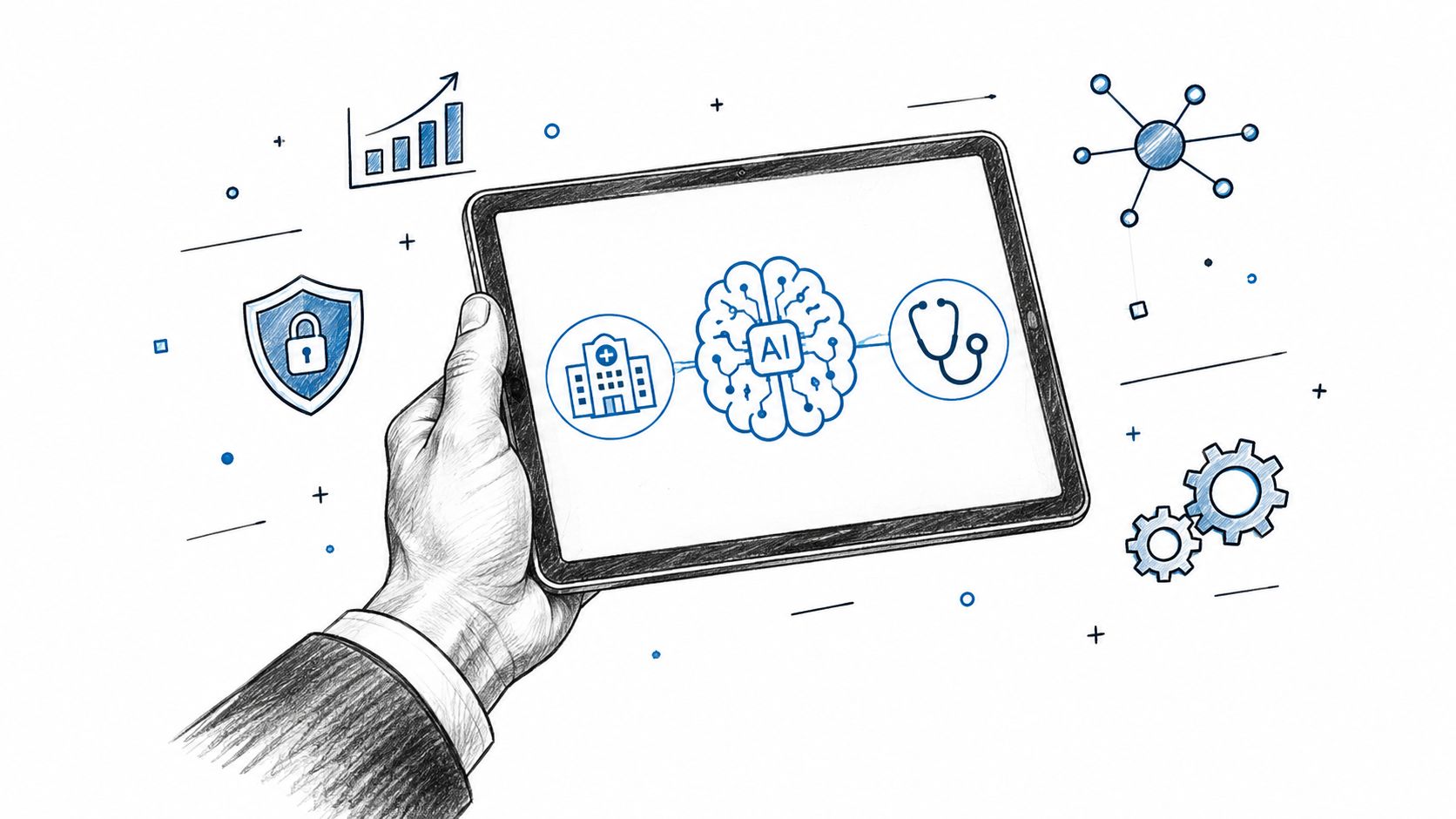
Master AI-driven healthcare with this guide. Explore clinical use cases, regulatory requirements, vendor selection, and a practical roadmap for safe deployment.
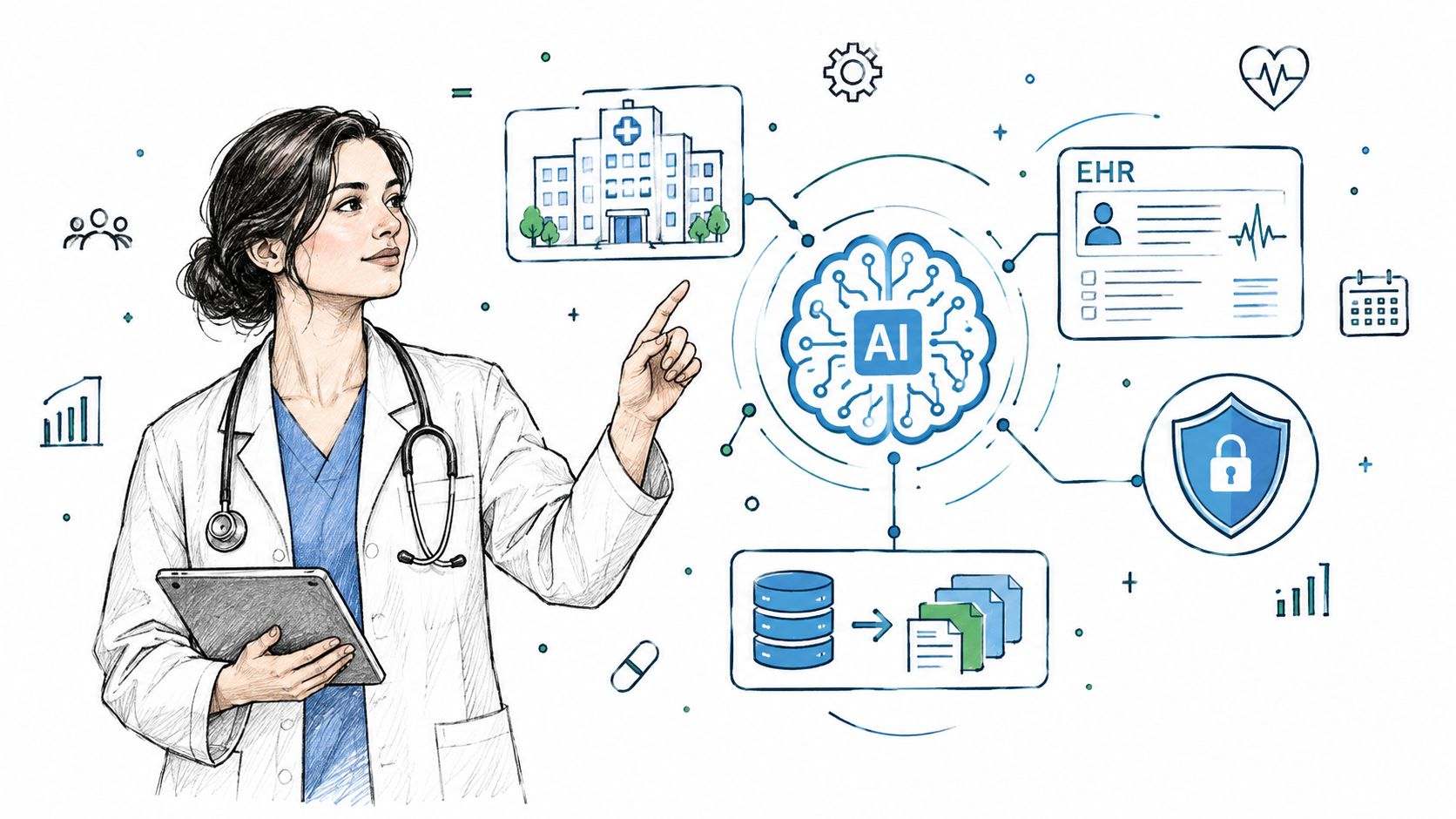
Learn what AI healthcare software is, where it delivers ROI, and how leaders evaluate vendors, integrations, regulation, and rollout in 2026.
Connect with our team to explore how AI expertise can transform your business.