
AI in Healthcare
HIPAA-Compliant AI: How to Use LLMs With PHI Safely
How to build HIPAA-compliant AI: when LLM providers need a BAA, data minimization, de-identification, audit controls and a reference architecture.
October 16, 2026Read more
Intelligent scheduling is transforming home healthcare operations by improving care coordination, reducing delays, and optimizing caregiver availability. AI-driven scheduling systems help providers deliver efficient, timely, and patient-focused care.
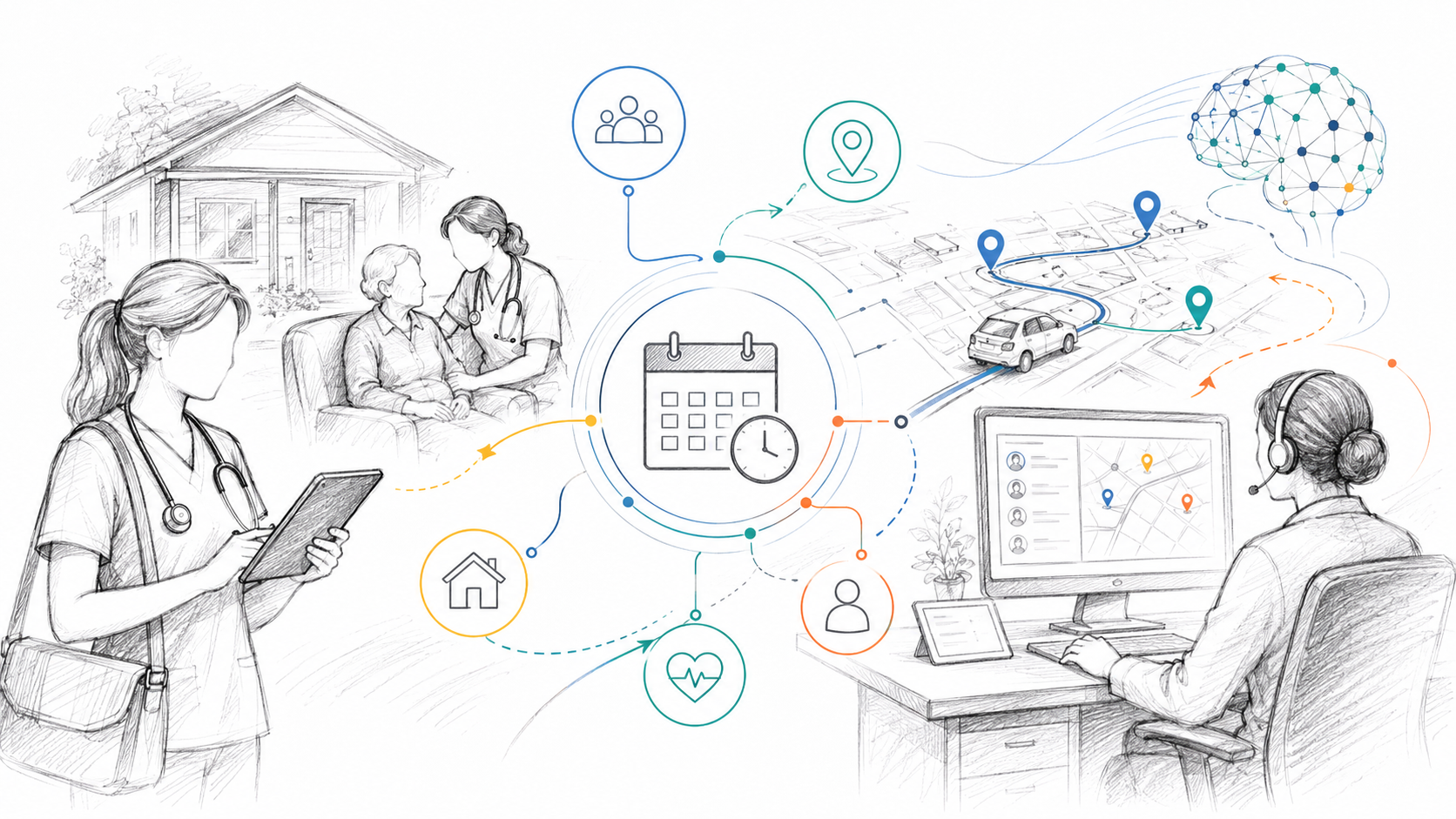
Home healthcare is becoming more common across hospitals, clinics, rehabilitation programs, and senior care networks. Patients prefer receiving care in familiar surroundings, while care teams manage large numbers of visits spread across different locations each day. When schedules are managed manually, delays occur, visits are missed, caregivers spend long hours traveling, and communication between teams breaks down. These challenges add pressure to daily care routines. This is why healthcare scheduling automation is now central to planning in-home healthcare. Intelligent scheduling systems use data, AI‑driven planning, predictive insights, and real-time workforce updates to keep care operations running smoothly.
Many home healthcare agencies still depend on spreadsheets, phone calls, paper records, and manual calendars. These methods slow down caregiver assignments, route planning, and visit coordination. When patients request changes at the last minute, teams often face confusion, and long travel routes take up much of the workday.
To address these challenges, more providers now work with a healthtech engineering partner to adopt modern scheduling platforms, mobile coordination tools, and connected care systems across wide service areas. Care teams often struggle with communication gaps during shift changes, patient updates, and urgent requests. At the same time, administrative staff spend hours reviewing schedules, adjusting appointments, and tracking caregiver availability. This reduces the time they can spend on patient‑focused tasks.
Because of these pressures, many providers are turning to healthcare AI services. These tools provide real-time scheduling updates, patient prioritization, route planning, and clear visibility into the caregiver workforce across field operations.
Intelligent scheduling is a digital approach that uses AI, predictive planning, workforce data, patient history, and live updates to coordinate caregivers. Before assigning visits, the system reviews patient location, caregiver skills, appointment urgency, and travel distance.
Many organizations prepare a custom AI strategy report before starting large scheduling projects. This gives leadership teams a clear view of workforce gaps, scheduling patterns, patient demand, and technology goals.
Modern platforms also strengthen healthcare scheduling automation by automating caregiver assignments, providing live route updates, sending appointment reminders, and using predictive planning to prepare for future patient needs.

AI systems review scheduling data, patient history, caregiver availability, and visit frequency to plan daily operations with accuracy. Machine learning studies patterns across large healthcare networks and improves future scheduling decisions.
Workforce dashboards give managers a clear view of caregiver locations, visit progress, delayed appointments, and urgent requests. Quick access to this information makes coordination easier across mobile care teams. Many digital care platforms now include SaMD solutions for remote patient monitoring, digital health tracking, appointment updates, and connected scheduling functions in home healthcare.
Route planning tools reduce travel time across busy cities and rural areas. Smart mapping creates practical schedules for caregivers who need to visit several patients during one shift.
Mobile applications give caregivers access to schedules, patient notes, visit updates, and appointment alerts wherever they are. This improves communication across field operations and keeps care teams aligned.
Intelligent scheduling systems check caregiver availability, patient location, skills, and visit urgency within seconds. This reduces delays in assigning caregivers and keeps daily care coordination smooth across multiple visits.
Manual scheduling often leads to double bookings, missed appointments, or assigning the wrong caregiver. Automated systems cut down these mistakes by tracking schedules live and planning appointments accurately.
Caregivers spend less time on phone calls, route confusion, or clarifying schedules. Clear schedules and mobile updates give them more time to focus on patient visits and care delivery.
Patients receive timely visits, appointment reminders, and clear communication about schedule changes. Consistent caregiver coordination creates a smoother experience for both patients and families.
Administrative teams often spend long hours adjusting schedules, managing cancellations, and tracking caregiver availability. Intelligent scheduling systems reduce these manual tasks through automated workflows and live schedule management.
Digital scheduling platforms give caregivers, coordinators, and managers instant access to appointment changes, patient updates, and urgent requests. This strengthens communication across distributed care teams.
Healthcare organizations gain clearer visibility of the workforce, balanced schedules, reduced travel time, and smoother appointment coordination. These improvements strengthen daily operations across home healthcare services.
Modern scheduling systems match caregivers with patients based on condition, language preference, care experience, availability, and travel distance. Patients receive timely appointment reminders through mobile alerts and communication tools.
Care managers gain live updates on completed visits, delayed appointments, caregiver status, and urgent requests. This creates smoother coordination across healthcare teams working in different locations.
Predictive scheduling systems study admission patterns, seasonal illness trends, follow‑up visits, and recurring care needs. Care teams use this information to plan the workforce more accurately and distribute appointments smoothly across service areas.
Modern scheduling platforms track caregiver schedules, leave requests, shift patterns, and workload history. This gives coordinators a clear view of available staff for upcoming visits and urgent requests.
Emergency requests often disrupt daily schedules in home healthcare. Predictive scheduling tools identify open time slots, nearby caregivers, and available resources to coordinate emergency visits quickly.
Uneven scheduling can lead to long hours, travel fatigue, and staff exhaustion. Intelligent scheduling systems balance workloads, spread appointments fairly, and reduce excessive overtime across field operations.
Healthcare leaders rely on scheduling data for workforce planning, route management, patient demand analysis, and operational planning. Real‑time insights guide faster and more accurate decisions across home healthcare services.
Some healthcare providers still use legacy scheduling systems, paper records, and disconnected communication tools. Moving to new technology requires careful planning, workforce training, and secure data management practices.
Care teams also need time to adjust when digital scheduling is introduced. Leadership groups review privacy rules, patient data protection, workflow changes, and project costs before starting large technology initiatives.
AI‑based scheduling systems are gaining attention across healthcare operations. These platforms review large amounts of scheduling data to guide workforce decisions and plan patient visits more effectively.
Virtual consultations are now linked with digital scheduling systems. This integration supports remote appointment coordination, follow‑up planning, and patient communication across home healthcare services.
Future scheduling systems may create personalized care plans based on patient condition, medication timing, mobility level, caregiver familiarity, and treatment frequency.
Home healthcare operations are changing through intelligent scheduling systems, predictive planning tools, live workforce coordination, and connected care platforms. Healthcare scheduling automation improves caregiver assignment, reduces delays, strengthens communication, and creates smoother coordination across distributed healthcare networks. These technologies also give care teams clearer visibility for workforce planning and patient visit management.
As patient demand continues to rise, providers need smarter scheduling systems for accurate planning and efficient care delivery. Intelligent scheduling platforms offer practical solutions for workforce coordination, patient communication, and daily operational planning. Healthcare organizations looking for guidance on scheduling modernization and digital care coordination can contact us for further discussion.
Healthcare scheduling automation uses AI-driven systems to manage caregiver assignments, appointment planning, route optimization, and real-time scheduling updates more efficiently.
A healthtech engineering partner helps providers build connected scheduling platforms that improve caregiver workforce management and daily care coordination.
Healthcare AI services support predictive scheduling, workforce planning, patient prioritization, and automated communication across home healthcare operations.
A custom AI strategy report helps healthcare organizations identify workflow gaps, workforce challenges, and technology goals before implementing healthcare scheduling automation.
SaMD solutions support remote monitoring, connected scheduling tools, and real-time patient updates, improving operational efficiency across care teams.
How to build HIPAA-compliant AI: when LLM providers need a BAA, data minimization, de-identification, audit controls and a reference architecture.

Practical data migration planning guide for healthcare teams. Scope, mapping, compliance, validation, cutover and rollback decisions explained end to end.

Smart on FHIR guide for healthtech engineers. Learn the OAuth 2.0 launch model, scope syntax, backend services, and US regulatory requirements.
Connect with our team to explore how AI expertise can transform your business.