
AI in Healthcare
HIPAA-Compliant AI: How to Use LLMs With PHI Safely
How to build HIPAA-compliant AI: when LLM providers need a BAA, data minimization, de-identification, audit controls and a reference architecture.
October 16, 2026Read more
Healthcare AI initiatives often overlook governance. Learn why a clear governance layer is essential for compliance, risk control, and scalable AI adoption.
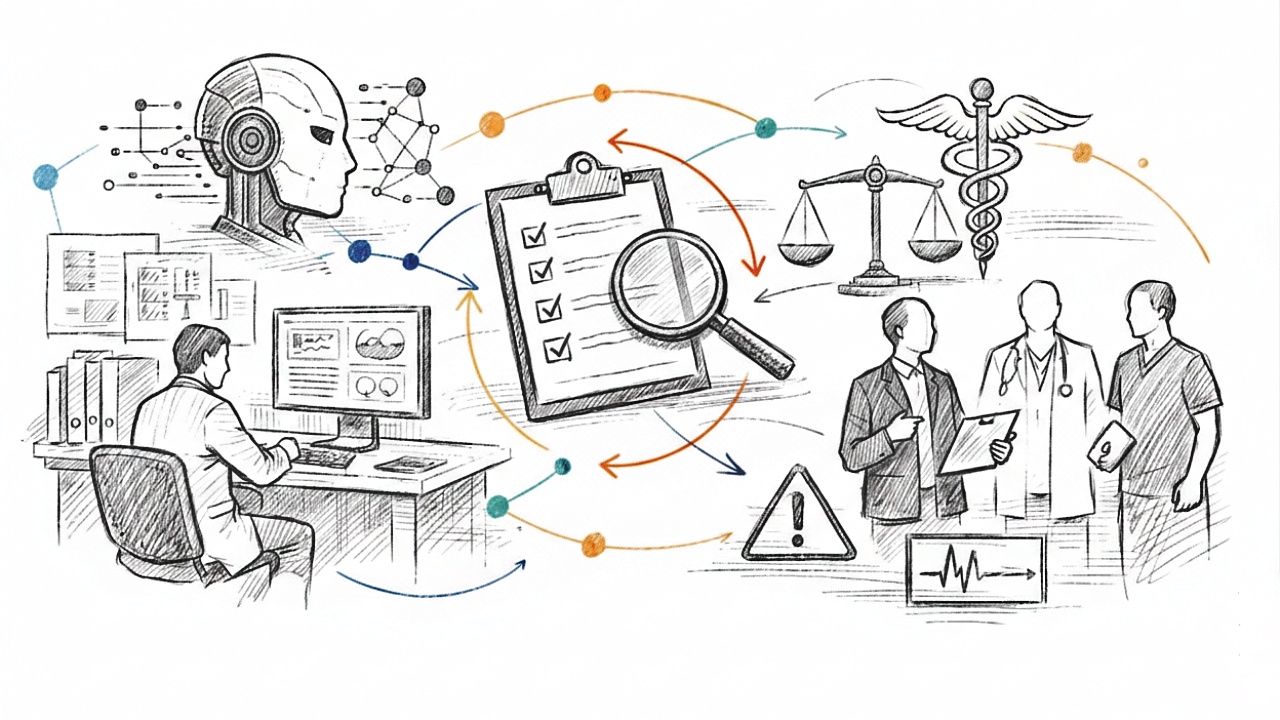
Healthcare is a living network of information. Patient records, appointments, and treatment strategies involve an uninterrupted stream of data. Within this complex system, artificial intelligence has become a permanent presence. As these AI applications grow more capable and widespread, foundational support often receives insufficient attention. Governance. Governance. The lack of a clear structure to guide responsibility, oversight, and accountability presents a subtle but accumulating challenge. This void does not halt innovation. Instead, it creates unseen vulnerabilities that often only become apparent when confidence in the technology weakens.
Adopting AI in healthcare can happen in many ways. Sometimes new models are created, sometimes tools are bought, and pilot programs can become regular practice quite quickly. The problem arises when the authority for decisions, the process for regular checks, and the line of accountability remain undefined from the start. Without this foundation, AI systems operate outside the rules and principles that govern medical and administrative decisions, making it more difficult to build trustworthy AI.
Here, AI governance in healthcare defines success. It establishes who is responsible for an algorithm, who reviews its performance, and what actions follow if its results begin to shift. Many programs advance without this framework, relying instead on informal reviews or promises from suppliers.
A lack of governance does not always create an immediate problem. The risk builds from smaller issues left unaddressed. A bias in training data can go unseen. Updates to a model can happen without a doctor's evaluation. Performance may focus on speed while overlooking safety. Over time, this wears away the trust of the staff who must use these tools.
Healthcare AI services often inform critical choices. When proper oversight is absent, accountability grows unclear. A team can find itself unable to explain how a system made a decision or why its advice shifted. This ambiguity directly lowers trust and increases doubt around adoption.

Governance defines ownership. Without it, no single group feels responsible for results. Medical staff may think technical experts are in charge. Technical experts may think the final decision belongs to management. This cycle means no one has a clear answer when something goes wrong.
AI Solutions used in healthcare need a line of accountability that connects design, launch, and ongoing observation. Governance sets the review points and the process to follow. It creates a shared understanding of who acts and when to act.
Ethical principles may exist on paper, yet they can feel unclear without practical steps to apply them. Governance translates these principles into daily practice. It governs the use of patient information, the testing of models, and the maintenance of transparency.
AI strategy consulting teams often note this shortfall in reviews. The problem is almost never about intention. It is about the missing steps that link good ideas to actual results. Governance provides this connection through structure, not guesses.
Some groups move toward deployment without checking their own readiness. Others hold back on innovation because of uncertainty. Governance finds a middle ground. It matches ambition with real capacity while keeping AI use cases aligned with real operational goals.
An AI maturity model positions governance with data quality and technical skill. Without this balance, programs can stop completely or grow in an unsafe manner. Governance gives the protective rails that allow steady progress instead of sudden halts.
External vendors often bring advanced tools, but governance remains an internal duty. An AI implementation partner can provide models and systems, while the organization keeps the final say on how they are managed. Clear roles for internal teams and external partners limit confusion.
Custom planning documents, such as a custom AI strategy report, can reveal governance gaps at an early stage. These findings point leadership toward practical actions instead of vague frameworks.
Governance does not start after launch. It begins with preparation. An AI readiness assessment identifies gaps in policy, skills, and supervision, placing AI governance in healthcare at the center of early planning. These observations form a practical plan for moving ahead.
An AI adoption roadmap weaves governance milestones together with technical steps. Regular reviews, audits, and performance checks become part of the schedule, not items added at the end. This method supports lasting stability and trust.
Other regulated industries have used structured oversight models for a long time. Healthcare can learn from fields with strong experience managing complex risk. Existing concepts, such as clinical data governance, already provide frameworks that can support the management of AI systems. These practices demonstrate the value of reviews, audits, and performance checks.
AI governance in healthcare gains strength when it adapts proven methods, not starting from scratch.
Healthcare AI programs continue to grow, yet governance often lags behind progress. This missing layer directly shapes how people trust, adopt, and maintain these systems. Governance does not delay innovation. It provides direction and builds credibility. Groups that close this gap early create confidence among their staff, leadership, and patients. For teams planning the next phase of AI investment, governance merits a central place in strategic conversations. To discuss structured approaches and long-term planning, contact us.
How to build HIPAA-compliant AI: when LLM providers need a BAA, data minimization, de-identification, audit controls and a reference architecture.

Practical data migration planning guide for healthcare teams. Scope, mapping, compliance, validation, cutover and rollback decisions explained end to end.

Smart on FHIR guide for healthtech engineers. Learn the OAuth 2.0 launch model, scope syntax, backend services, and US regulatory requirements.
Connect with our team to explore how AI expertise can transform your business.