
AI in Healthcare
HIPAA-Compliant AI: How to Use LLMs With PHI Safely
How to build HIPAA-compliant AI: when LLM providers need a BAA, data minimization, de-identification, audit controls and a reference architecture.
October 16, 2026Read more
AI is helping healthcare move toward personalized treatment for chronic diseases. Analyzing patient data enables tailored care plans that improve outcomes and long-term disease management.
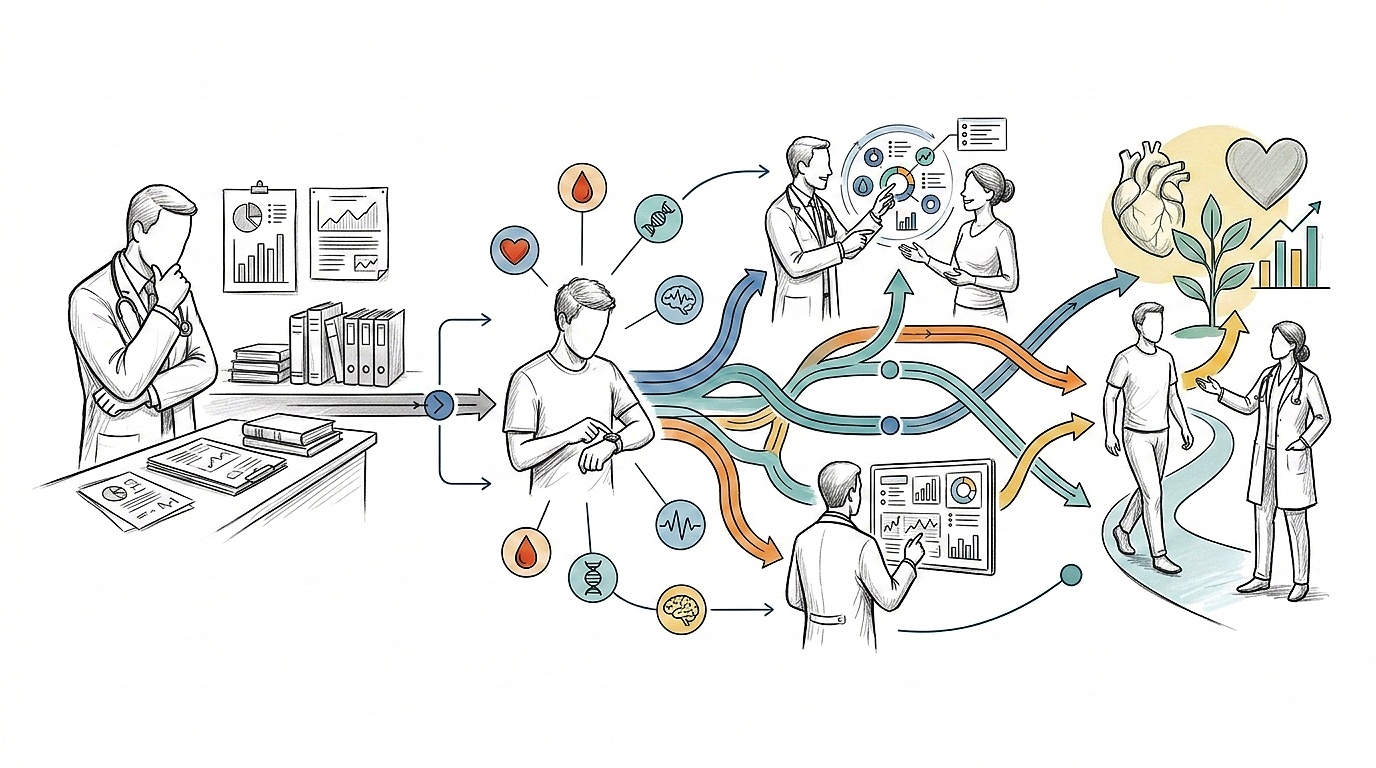
Chronic diseases affect the daily lives of millions of people and place constant pressure on healthcare systems across different regions and populations. Traditional care often follows standard treatment plans, which can struggle to account for personal differences in symptoms, lifestyle, genetics, and the course of a condition. Artificial intelligence introduces a new model of care that focuses on individual needs through data-driven understanding and clinical context. AI personalized medicine directs treatment that adjusts for each patient rather than guiding all patients through a single clinical path. This change brings clarity, precision, and consistency to long-term care journeys while maintaining a human-centered approach.
Chronic conditions such as diabetes, heart disease, asthma, and autoimmune disorders rarely follow a predictable path. Symptoms rise and fall, medications lose their effect over time, and patient behavior shapes outcomes in ways that are often uncertain. Clinicians must manage large amounts of information from test results, clinical notes, imaging, wearable devices, and patient reports. Manually reviewing all of this slows down decisions and adds mental load.
Care teams also work with records spread across different systems and locations. Limited visibility reduces confidence during treatment planning. Many patients experience trial-based adjustments that prolong discomfort and reduce trust. Healthcare AI services analyze a patient's long-term clinical data to guide personalized treatment decisions in chronic care. A refined approach that reads patterns across time and patient context remains necessary to deliver sustainable chronic care.
Artificial intelligence provides analytical depth to detailed datasets that are difficult for human analysis. Machine learning models study trends across clinical history, medication response, biomarkers, and lifestyle signals. These insights lead clinicians to treatment options centered on patient-specific patterns instead of broad averages.
Predictive models forecast disease progression, flare risks, and medication response using both historical and real-time data. Treatment plans adjust as new information is added. Care moves from reactive changes toward planned steps guided by probability and context.
This approach also strengthens coordination across care teams. Shared insights across physicians, nurses, and care managers create a unified view of patient status. AI Solutions provide consistent clinical intelligence across teams. They improve decision-making for long-term care without complicating daily clinical work.

Personalized treatment pathways depend on both structured and unstructured data collected throughout the care journey. Electronic health records capture clinical history, test results, and prescriptions. Wearables provide continuous signals, including activity levels, heart rate, and sleep patterns. Patient input provides context around symptoms, diet, and daily challenges.
AI systems bring these signals together across time. Patterns appear through correlation rather than assumption. Subtle changes that point to risk or improvement receive attention earlier. Clinicians gain foresight during care planning rather than relying on the past.
Data governance remains central in this process. Clean data, consistent standards, and transparent usage policies maintain clinical trust. AI strategy consulting aligns data frameworks, governance models, and analytical goals with clinical priorities and ethical needs. This connects algorithmic recommendations directly to medical practice and patient well-being.
Predictive analytics form the core of AI-driven treatment pathways. These models study long-term data to forecast future outcomes. Risk scoring identifies patients with a higher chance of complications or hospital admission. Medication response modeling guides dose adjustments by learning from similar patient profiles.
In chronic disease management, timing is as important as treatment choice. Predictive insight supports timely clinical action without waiting for a crisis to occur. Care teams become proactive, which lessens interruptions for patients.
This predictive layer also strengthens resource planning across healthcare organizations. Staff allocation, follow-up scheduling, and remote monitoring align with patient needs rather than fixed schedules. This predictive approach also improves resource planning across healthcare organizations. The insights are documented in a custom AI strategy report, which guides long-term care decisions.
Personalized treatment pathways shift the patient experience from passive compliance to active participation. Care plans reflect personal goals, habits, and limitations. Education connects directly to real risks rather than offering generic advice.
Remote monitoring combined with AI analysis reduces the need for frequent clinic visits while maintaining clinical oversight. Patients experience continuity across different stages of care with fewer unexpected changes. Trust grows as treatment decisions reflect lived experience rather than abstract guidelines.
AI use cases in personalized medicine shape this experience through tailored treatment choices and adaptive care planning that respect both biological and behavioral differences. Personalization becomes practical in daily routines rather than remaining a theoretical concept.
AI systems integrate into existing clinical workflows. Recommendations appear within the same interfaces where clinicians already document and review care. Visual summaries show important changes clearly. This approach keeps clinical judgment at the core. Physicians remain the decision makers, guided by insight rather than automation. AI brings clarity to complex information without replacing professional reasoning. Decision certainty strengthens in long-term care planning. This guidance originates from structured tools such as an AI maturity model, which tracks progress in both clinical practice and operations.
Personalized care shaped by AI depends on trust. Patients want transparency about how their data is used and how it influences clinical decisions. Clear communication about the role of algorithms and their limitations builds confidence. Ethical principles guide the testing and implementation of the model. Systems check for bias across all types of patients. Trust grows through consistency, accountability, and measurable outcomes rather than promises. Long-term adoption relies on visible alignment between patient benefit and system design.
Academic studies show a clear link between AI-guided personalization and improved outcomes in chronic disease care. Turning research findings into everyday practice requires careful planning. Success depends on integration across systems, clinician training, and patient education. Healthcare organizations with AI-guided systems view personalization as a continuous process, not a one-time feature. Continuous learning from patient outcomes improves accuracy over time. AI personalized medicine builds credibility through measurable improvements in following treatment plans, symptom control, and quality of life for people with chronic conditions.
AI-driven personalized treatment pathways transform chronic disease care through precision, foresight, and continuity. Data-driven understanding changes how clinicians plan, adjust, and coordinate long-term care without adding extra burden. Predictive models, ethical oversight, and patient involvement together create a sustainable care framework that reflects real-world complexity. AI personalized medicine stands as a practical clinical approach that respects individual differences across chronic conditions. Contact us to build intelligent care pathways designed for long-term disease management.
AI personalized medicine uses data-driven insights to tailor treatment plans for each patient, improving outcomes and long-term disease management.
Healthcare AI services analyze patient data, detect patterns, and provide AI Solutions that help clinicians make more precise treatment decisions.
Common AI use cases include predicting disease progression, monitoring patient data, and adjusting treatments based on individual responses.
Hospitals can begin with an AI readiness assessment, AI maturity model, and a custom AI strategy report to guide planning and integration.
Working with an AI implementation partner, supported by AI strategy consulting and a clear AI adoption roadmap, ensures effective deployment.
How to build HIPAA-compliant AI: when LLM providers need a BAA, data minimization, de-identification, audit controls and a reference architecture.

Practical data migration planning guide for healthcare teams. Scope, mapping, compliance, validation, cutover and rollback decisions explained end to end.

Smart on FHIR guide for healthtech engineers. Learn the OAuth 2.0 launch model, scope syntax, backend services, and US regulatory requirements.
Connect with our team to explore how AI expertise can transform your business.