
AI in Healthcare
HIPAA-Compliant AI: How to Use LLMs With PHI Safely
How to build HIPAA-compliant AI: when LLM providers need a BAA, data minimization, de-identification, audit controls and a reference architecture.
October 16, 2026Read more
AI is enabling personalized treatment planning by analyzing patient data to create tailored care strategies. It helps improve outcomes, support better decisions, and enhance overall patient care.
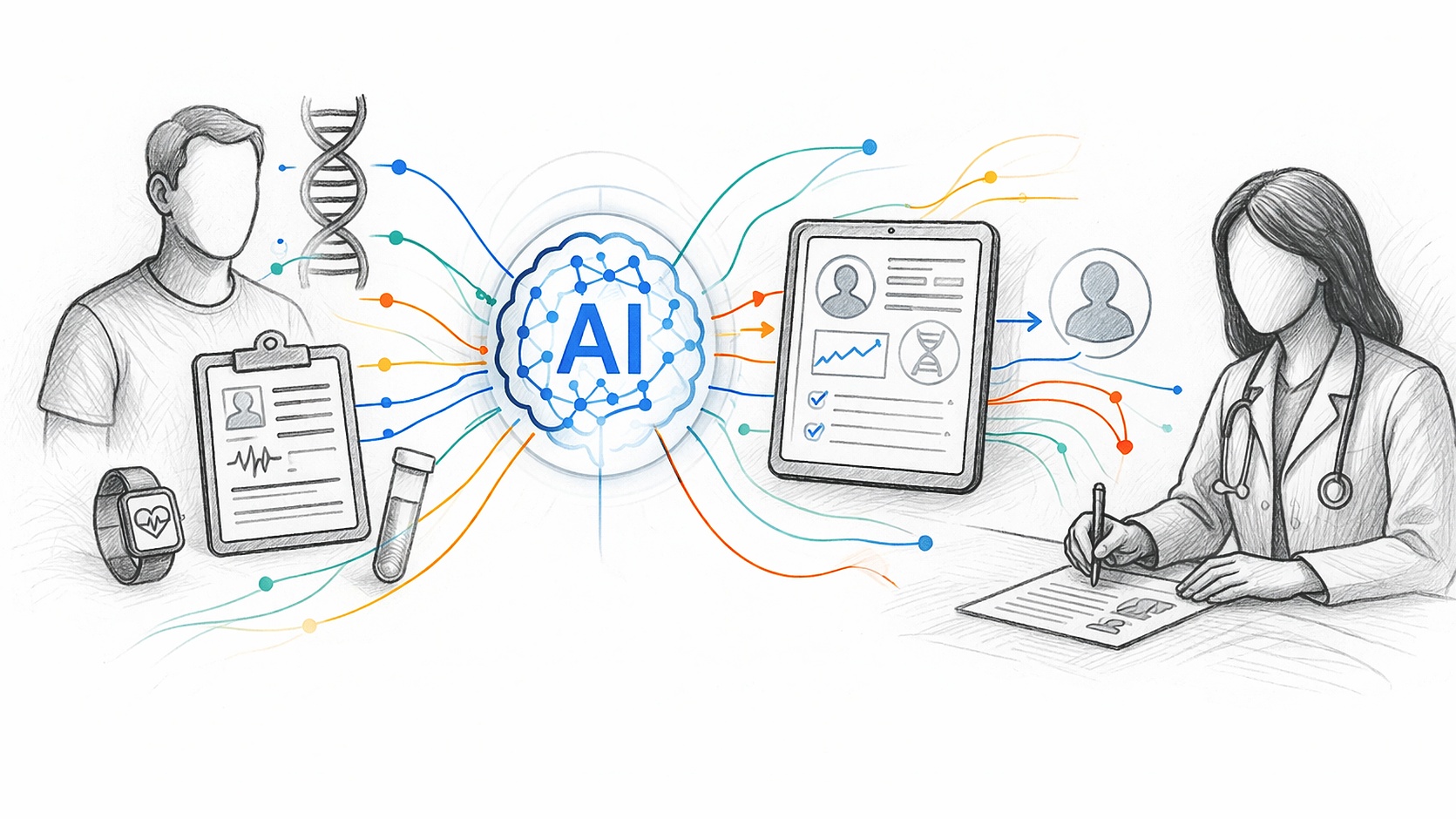
Healthcare is shifting from “one treatment for all” to “care designed for each person.” This change reflects a deeper understanding that every patient has unique medical needs and personal circumstances. Standard treatment methods often rely on broad patterns, which may overlook important differences between individuals.
Personalized treatment planning focuses on care shaped by patient-specific data. AI personalized treatment planning brings advanced analysis and accuracy. It guides doctors toward clear decisions that match each patient’s condition, medical history, and response patterns.
Personalized treatment planning involves designing medical care based on each patient's unique data. This includes their medical history, current health, daily habits, and genetic makeup. Two patients with the same diagnosis may need different approaches. Age, diet, environment, and genetics all influence treatment outcomes. Personalized planning takes these differences into account, which leads to better recovery and fewer side effects.
AI personalized treatment planning brings together data, analysis, and clinical insight to shape more precise care.
Modern healthcare systems produce large amounts of patient data. AI gathers information from medical records, lab results, and diagnostic tools to create a full view of each patient. A skilled healthtech engineering partner helps structure these data systems, enabling smooth information flow across platforms and greater clinical clarity.
AI identifies patterns that manual review might miss. These patterns give a clearer view of how a disease progresses and how a patient responds. Through advanced healthcare AI services, clinical teams gain insights that sharpen diagnosis and guide treatment decisions with more confidence.
AI can estimate how a patient might respond to a specific treatment. It reviews past data and compares it with similar cases to estimate outcomes. A well-defined custom AI strategy report can outline which predictive models make sense, and help providers choose the right approach for each patient.
AI helps refine treatment plans by suggesting medications, therapies, and dosages based on individual patient data. In regulated settings, SaMD solutions support clinical decisions with validated tools that meet healthcare standards.
Tracking patient progress over time is part of effective treatment planning. AI monitors changes in health data and updates recommendations as needed. With structured AI automation services, providers can manage patient data efficiently and keep treatment plans current throughout the care cycle. A solid framework supported by AI implementation ensures AI tools integrate smoothly into clinical systems. This creates a stable environment for treatment planning driven by data.
Efficient data handling through AI workflow automation simplifies repetitive clinical tasks. This frees up time for healthcare teams and allows them to focus more on patient care. Real-world examples show how personalized treatment planning leads to better outcomes across different medical conditions. These cases highlight the practical value AI brings to everyday healthcare.
AI plays a significant role in cancer treatment planning. Each patient may respond differently to therapies. AI analyzes tumor data and patient history to guide targeted treatment strategies. In chronic conditions such as diabetes, AI tracks patient data over time and suggests adjustments in medication and lifestyle. This leads to consistent management of the condition.
Precision-based healthcare approaches rely on detailed patient data. AI contributes to this process by aligning treatments with specific biological and environmental factors. These real-world AI use cases highlight how advanced technologies are improving treatment planning across different healthcare scenarios.

AI handles large amounts of patient data with a level of precision that manual review cannot easily match. It examines medical history, diagnostic reports, and clinical patterns to inform treatment choices. This reduces the risk of errors and improves the overall quality of care. Doctors gain deeper insights, which result in more informed and reliable treatment plans for each patient. Machine learning in healthcare strengthens these capabilities by helping detect patterns more effectively and refine clinical decisions over time.
Timing is critical in healthcare, particularly for early diagnosis and treatment initiation. AI analyzes data in seconds, cutting down delays in identifying conditions and planning next steps. This speed is vital when early action can influence outcomes. Care teams can respond quickly and plan treatments without long waits, improving the patient experience.
Personalized treatment focuses on therapies that fit a patient’s unique profile. AI evaluates how different individuals respond to medications and helps identify options with lower risk. This reduces unwanted side effects and makes treatment more comfortable. Patients face fewer complications, which supports smoother recovery and builds trust in the care they receive.
When treatment plans are built around individual needs, the likelihood of successful recovery increases. AI uses predictive insights to guide treatment choices that match patient conditions. This leads to steady improvements in health outcomes over time. Patients receive care suited to their specific situation, helping both short-term recovery and long-term stability.
AI helps streamline care by reducing unnecessary tests, repeated procedures, and treatments that are unlikely to work. When decisions are based on accurate data, healthcare systems can allocate resources more effectively. This improves efficiency and lowers costs. Hospitals and clinics benefit from better resource management, supporting sustainable healthcare delivery.
AI personalized treatment planning depends on large amounts of sensitive patient information, including medical history, diagnostic reports, and personal health details. Keeping this data safe is a major responsibility for healthcare providers. Any weakness in security can lead to data breaches, which can shake patient trust and compromise confidentiality. Strong data governance, secure storage, and controlled access are needed to protect privacy and build confidence among patients and providers.
AI systems learn from the data they are trained on, and the quality of that data shapes the results. If the training data is not diverse or carries bias, the system may give uneven treatment suggestions. This can affect certain groups of patients more than others. Tackling this requires careful selection of data, regular model reviews, and ongoing work to maintain fairness and accuracy for all patients.
How well AI performs in treatment planning depends on how accurate and complete the data is. Incomplete records, outdated details, or inconsistent formats can lead to misleading insights. That can affect treatment choices and make AI recommendations less reliable. Healthcare systems need to keep data quality high, update records regularly, and manage information carefully to get consistent results.
AI offers useful insights and suggestions, but medical decisions still need human judgment and clinical experience. Doctors play a critical role in reviewing what AI brings to the table and making sure it fits with real patient conditions. This balance between technology and human expertise keeps treatment plans safe, practical, and focused on the patient. Human oversight also helps build trust in AI-driven healthcare systems.
AI is transforming the way treatment plans are developed. It brings data-driven precision and organized insight to clinical decisions. AI personalized treatment planning is shaping a more focused approach to patient care. This approach leads to more tailored, accurate, and effective care across healthcare systems.
Organizations looking into advanced treatment strategies can benefit from thoughtful AI integration. Contact us to explore how intelligent systems can align with today’s healthcare needs.
AI personalized treatment planning uses patient data and intelligent systems to design treatments tailored to individual needs and conditions.
Healthcare AI services analyze patient data, enable predictive insights, and support key AI use cases for accurate and efficient care planning.
A healthtech engineering partner helps integrate systems, manage data flow, and provide AI implementation support for smooth clinical adoption.
They can use a custom AI strategy report to choose the right models and apply AI automation services for continuous monitoring and updates.
SaMD solutions and AI workflow automation streamline clinical decisions, improve accuracy, and support real-time treatment adjustments.
How to build HIPAA-compliant AI: when LLM providers need a BAA, data minimization, de-identification, audit controls and a reference architecture.

Practical data migration planning guide for healthcare teams. Scope, mapping, compliance, validation, cutover and rollback decisions explained end to end.

Smart on FHIR guide for healthtech engineers. Learn the OAuth 2.0 launch model, scope syntax, backend services, and US regulatory requirements.
Connect with our team to explore how AI expertise can transform your business.