
AI in Healthcare
HIPAA-Compliant AI: How to Use LLMs With PHI Safely
How to build HIPAA-compliant AI: when LLM providers need a BAA, data minimization, de-identification, audit controls and a reference architecture.
October 16, 2026Read more
Organizations collect vast amounts of data, but turning it into actionable insights is the real challenge. Discover how AI analytics helps businesses transform data into smarter decisions and sustainable growth.
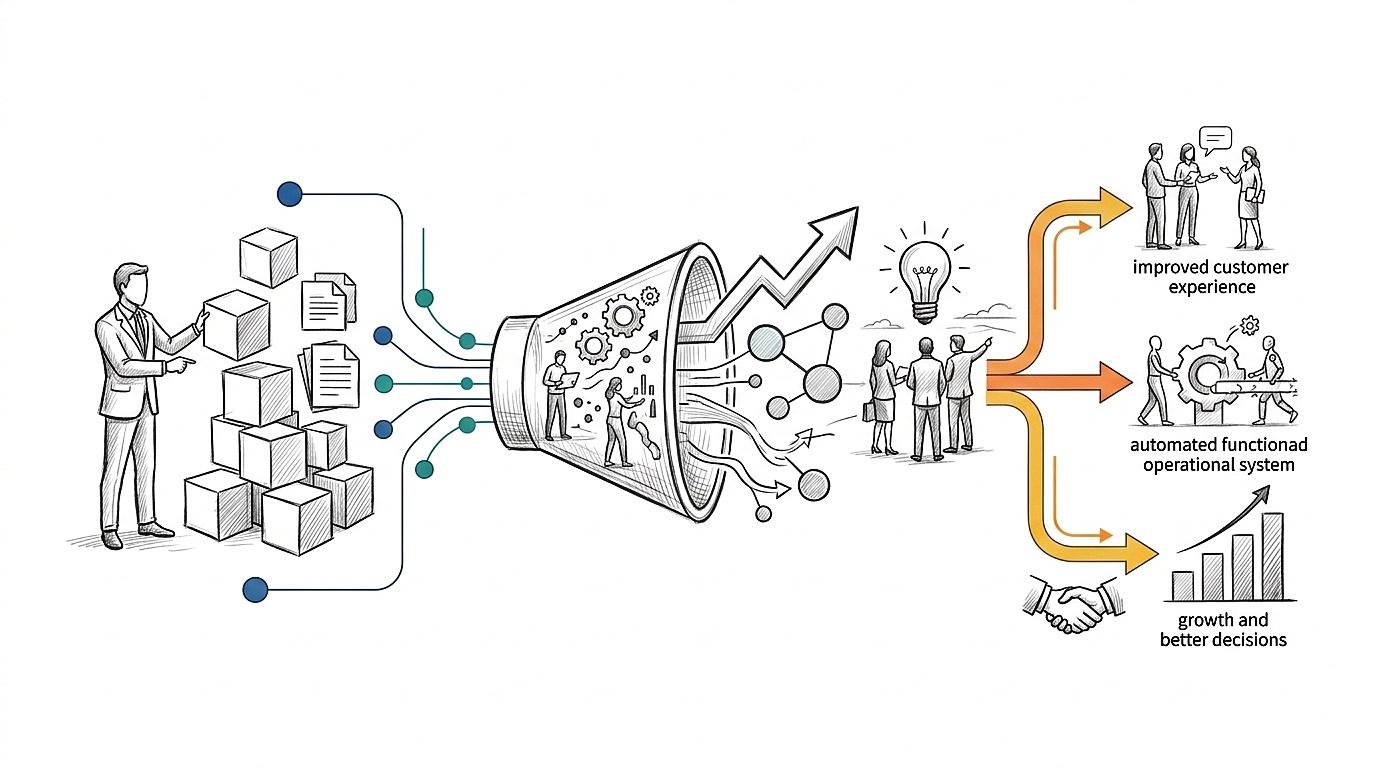
Organizations today collect large amounts of data from digital platforms, sales tools, customer interactions, operational systems, and online services. As data continues to pile up across departments, leadership teams face the challenge of making sense of it all. Raw information on its own does not offer much value. It needs to be analyzed and structured. Advanced analytical tools turn complex datasets into practical knowledge that helps guide strategy, planning, and daily operations. Through intelligent interpretation, AI analytics for business transforms scattered information into insights that support growth, improve efficiency, and inform long-term decisions.
AI analytics means using intelligent algorithms and machine learning models to examine data in advanced ways. These systems can process large amounts of information quickly and uncover patterns that standard reporting methods might miss. By bringing together artificial intelligence, machine learning, and data analysis, organizations get a clearer view of how their business runs, how customers behave, and where money is moving.
Modern analytics tools look at millions of data points from operations, customer transactions, and digital channels. They spot trends, connections, and early signals that can guide plans. Many enterprise technology teams build AI Solutions that turn everyday operational data into useful insights through intelligent analysis.
Modern businesses generate complex information across many areas, including marketing, finance, supply chains, and customer interactions. Traditional ways of analyzing data often take too long and involve a lot of manual work. AI-driven analytics, powered by machine learning, speed up the process and deliver useful insights in much less time.
Many companies start this shift by working with experts through AI strategy consulting. These advisors take a close look at the organization's data systems, analytical capabilities, and business goals. From there, they design structured approaches to analytics that support long-term objectives.
AI analytics turns raw information into useful insights through a clear, step-by-step process. Each stage helps businesses better understand their operations and the markets they serve.
The process starts with gathering information from different sources. These include customer systems, financial tools, websites, and operational databases. Together, they capture customer interactions, sales activity, product performance, and daily operations. When combined, this data creates a complete picture of how the business is running.
Before analysis can begin, large amounts of data need to be organized. AI tools handle this by preparing the information automatically. They remove duplicate entries, arrange datasets, and make sure everything is in a consistent format. Clean data leads to more accurate analysis and more reliable insights.
Machine learning models study past data to find connections between things like customer behavior, operational efficiency, financial trends, and product demand. These connections often reveal signals that are easy to miss. Business leaders gain a clearer understanding of shifts in demand, how well marketing is working, and where operations can improve.
Predictive analytics looks at past patterns to estimate what might happen next. These models study sales cycles, customer activity, and financial trends to forecast future performance. The results help businesses plan and prepare for changes in the market.
Leadership teams take the insights from AI and apply them to real planning. This might involve marketing, finance, supply chain decisions, or product strategy. When decisions are guided by data, they tend to be more aligned across departments. Common AI use cases include forecasting demand, analyzing customer groups, tracking how well operations are running, and evaluating the success of marketing campaigns.
AI analytics for business gives leadership teams a clearer view of how the business is performing. Dashboards present key data in a way that helps guide planning and keeps decisions grounded in facts.
Predictive models help businesses see what might come next. They can spot future demand, track how customers are likely to behave, and project revenue. This makes planning more accurate across the organization.
By studying customer data, businesses can better understand what people want and how they behave. This information helps improve service and makes engagement efforts more effective.
Automated analysis cuts down on manual reporting work. Data can be interpreted faster and with more consistency, which helps different parts of the business stay coordinated.
Companies that can make sense of data quickly are better positioned to respond to market changes and customer needs. Strategic insight helps them stay agile and plan more effectively.
Many organizations work with an experienced AI implementation partner during this stage to build analytical platforms, connect data systems, and guide large-scale analytics efforts.
Companies use AI analytics in many different areas of their operations. These include understanding customer behavior, forecasting sales, measuring how well marketing campaigns perform, detecting fraud, and making supply chains run more smoothly. Analytical tools look at what customers are buying, how they respond to campaigns, what revenue patterns look like, and where risks might be hiding.
Many organizations capture these insights in a structured custom AI strategy report. This document gives leadership teams a clear view of where analytics can make the biggest difference and how to plan for the future.
When companies start using AI analytics for business, they often run into several common challenges. These include inconsistent data quality, information spread across too many different systems, a lack of people with the right analytical skills, and the difficulty of connecting new tools to older systems. Data governance and privacy also need careful attention across the organization.
To understand how ready they are, leadership teams often turn to a structured framework like an AI maturity model. This tool helps measure where the company stands in terms of data infrastructure, analytical culture, how data is governed, and overall technology readiness.
AI analytics continues to spread across more organizations as businesses look for a deeper understanding of the data they collect. Being able to interpret information in real time is becoming more important in industries where leaders need to track operations, customer behavior, and shifts in the market. Many companies begin major transformation efforts by going through an AI readiness assessment, which helps them look closely at their data systems, how ready the organization is for change, and whether the technology can support new tools. Long-term progress often follows a clear AI adoption roadmap that lays out the stages of analytical growth and where technology investments should go.
Data keeps growing across businesses, which makes intelligent analysis more important than ever. Raw information on its own offers little value without the right techniques to uncover patterns, trends, and what might come next. With smart data interpretation, organizations can turn everyday operational information into useful knowledge that shapes strategy and drives growth. Companies that put AI analytics for business to work strengthen their decision-making, get a clearer view of operations, and build strategies rooted in data for long-term success.
For organizations looking for a structured approach to analytics, contact us to explore strategic guidance, planning support, and enterprise data initiatives.
AI analytics for business uses AI Solutions and machine learning to analyze large datasets and turn operational data into insights that guide strategic decisions.
AI analytics studies patterns in sales, operations, and customer behavior, helping leaders identify trends and apply insights through practical AI use cases.
Many businesses start with AI strategy consulting and a custom AI strategy report to identify the best opportunities for analytics-driven growth.
Organizations often use an AI maturity model and an AI readiness assessment to measure data quality, infrastructure, and analytical capabilities.
Working with an AI implementation partner and following a clear AI adoption roadmap helps companies scale AI analytics effectively across operations.
How to build HIPAA-compliant AI: when LLM providers need a BAA, data minimization, de-identification, audit controls and a reference architecture.

Practical data migration planning guide for healthcare teams. Scope, mapping, compliance, validation, cutover and rollback decisions explained end to end.

Smart on FHIR guide for healthtech engineers. Learn the OAuth 2.0 launch model, scope syntax, backend services, and US regulatory requirements.
Connect with our team to explore how AI expertise can transform your business.