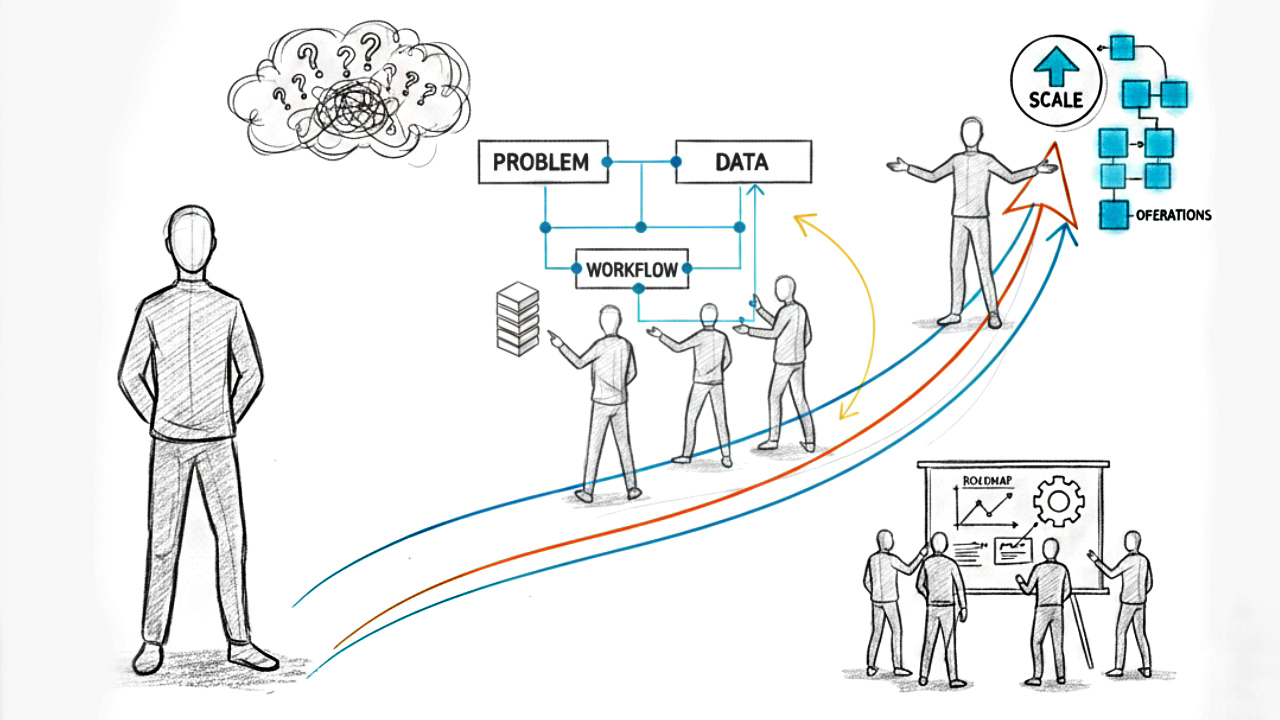
A company's journey with AI often starts with a small pilot project. The goal is to test an idea and see some early results. When it is time to move that pilot into daily business use, most cannot leap. Research indicates that nearly 80% of these AI projects fail to grow. This leaves many teams wondering what happened. The problem is rarely the technology itself. Instead, it is usually because the organization was not prepared to support it.
This blog will explore why these pilots struggle and what the successful companies do instead. The lessons are straightforward, practical, and based on real experiences from today's businesses.
Why Most AI Pilots Fail Before Reaching the Next Stage
Lack of Clear Business Problems to Solve
Many pilots begin with excitement but without a clear target. Teams build models without first choosing a real business problem to solve. When the pilot finishes, leaders are left wondering what to do with it. The project then slowly disappears. If a model is not tied to a real business need, it cannot grow.
A structured AI readiness assessment provides clarity at this stage. It enables organizations to identify what truly matters before technical work starts.
Data Quality Issues Slow the Entire Process
An AI model is only as good as the data you give it. In many organizations, data is stored in separate systems. It can be old, messy, or missing pieces. When a pilot starts, teams often spend most of their time cleaning data instead of building. This leads to a project that is only partly done and never goes live.
Companies that succeed think about this early. They work on organizing and improving their data over time. This careful preparation simplifies AI scaling across enterprises over time.
Pilots That Are Not Integrated Into Real Workflows
Some pilot projects operate in isolation. They are built away from the actual tools and routines people use every day. A model might test well but still fail because employees cannot access it within their normal work systems. If using AI is not simple, people will stop. The project cannot grow then.
Working with a strong AI implementation partner can help here. They guide the process of integrating new technology with existing work. This prevents the pilot from becoming just an isolated experiment.
No Ownership or Long-Term Team Structure
Many pilot projects are led by a single enthusiastic team or by several technical experts. However, once their initial work is done, there is often no clear plan for who will manage it. A successful AI solution needs constant attention. This includes monitoring data, introducing new features, and adapting to business shifts.
Successful organizations do something different. They build a dedicated team and assign clear ownership from the very beginning. They do not wait until the pilot is over to figure this out.
Misalignment Between Technology and Leadership
Sometimes leaders approve a pilot project without a clear plan for the future. At the same time, technical teams build without a shared direction. When both groups have different visions, the project loses focus. It then becomes very hard to grow.
Companies that do this well connect these groups early. They often engage in AI strategy consulting to define clear goals, realistic timelines, and measurable outcomes for all parties. This alignment makes a big difference from the start.
What Successful Organizations Do Differently

1. They Choose Pilots Linked to Real Business Outcomes
Successful companies do not select projects at random simply to test the technology. Instead, they choose specific AI use cases that solve a real business problem. The goal might be to improve how work gets done, boost productivity, or enhance service to customers. Because they begin with a clear problem in mind, the project has a defined path for expansion if the pilot proves effective.
2. They Prepare Their Data Before Building Anything
High-performing organizations do not wait to fix their data. They invest time early to clean, organize it, and document it properly. This preparation makes the pilot stage run much more smoothly. It also creates a strong foundation for future growth. These teams often use a helpful tool such as an AI maturity model. This helps them honestly check their current strengths and weaknesses before they begin.
3. They Build AI Into Existing Tools and Workflows
Companies that succeed in scaling AI in enterprises do not treat their pilots as temporary projects. They connect the AI's work directly to the tools their teams already use every day. This could be their sales software, their project dashboards, or their main operational systems. When the AI resides within these familiar tools, employees can access it without disrupting their routine. This clear link creates confidence and encourages broader acceptance of the new solution.
To plan this integration well, some organizations work with an external partner. They create a custom AI strategy report that maps out how the technology will fit into different workflows.
4.They Follow a Clear Roadmap From Pilot to Production
Successful leaders treat their AI growth like any other important business plan. They set clear milestones, track the value delivered, assign specific responsibilities, and follow a defined path. A solid AI adoption roadmap gives them this structure. It helps guide the journey from a small pilot test to widespread use across the organization with clarity and direction.
5. They Focus on People, Not Just Technology
AI is not only about models or algorithms. It is also about the people who use them. Organizations that scale AI successfully train their teams, collect feedback, and adjust the tools based on that feedback. Employees learn to trust and accept AI when they feel they are part of the process.
The Role of External Guidance
Some organizations decide to seek expert help. This might be through working with AI Solutions providers or receiving structured guidance. These teams gain clarity on where to begin, how to deploy their projects, and what to focus on next. Having an outside advisor helps remove confusion and makes choosing the right steps easier.
Conclusion
Most AI pilots do not fail because the technology is too complex. They fail because the organization itself is not ready to support the project's growth. Successful companies take a different approach. They focus on solving a real business problem first. They prepare their data, align their leaders, integrate AI into their existing tools, and follow a clear plan from the start. With the right structure, mindset, and help, the journey of scaling AI in enterprises becomes a more realistic and lasting effort.
Contact us to build a clear, actionable AI strategy tailored to your organization's needs.
FAQ
1. Why Is Scaling AI in Enterprises So Difficult?
Scaling AI in enterprises often fails due to unclear goals, poor data quality, and a lack of workflow integration. Without an AI readiness assessment and structured planning, pilots rarely move to production.
2. How Can Organizations Choose the Right AI Use Cases?
Companies should focus on AI use cases that solve real business problems. AI strategy consulting can help align technical efforts with measurable outcomes and long-term business value.
3. What Role Does an AI Implementation Partner Play?
An AI implementation partner supports deployment, system integration, and performance monitoring. They also help create a custom AI strategy report and define a practical AI adoption roadmap.
4. How Do Tools Like an AI Maturity Model Help?
An AI maturity model helps organizations evaluate their current capabilities, identify gaps, and prepare for Scaling AI in enterprises. It ensures AI Solutions are built on a strong operational foundation.
5. When Should a Company Conduct an AI Readiness Assessment?
An AI readiness assessment should be done before launching major AI initiatives. It clarifies data quality, infrastructure, and team capabilities to support a successful AI adoption roadmap.