AI in Healthcare
HIPAA-Compliant AI: How to Use LLMs With PHI Safely
How to build HIPAA-compliant AI: when LLM providers need a BAA, data minimization, de-identification, audit controls and a reference architecture.
October 16, 2026Read more
Many AI initiatives fail due to unclear goals, poor data, and weak adoption. Learn the key pitfalls and how to prevent them.
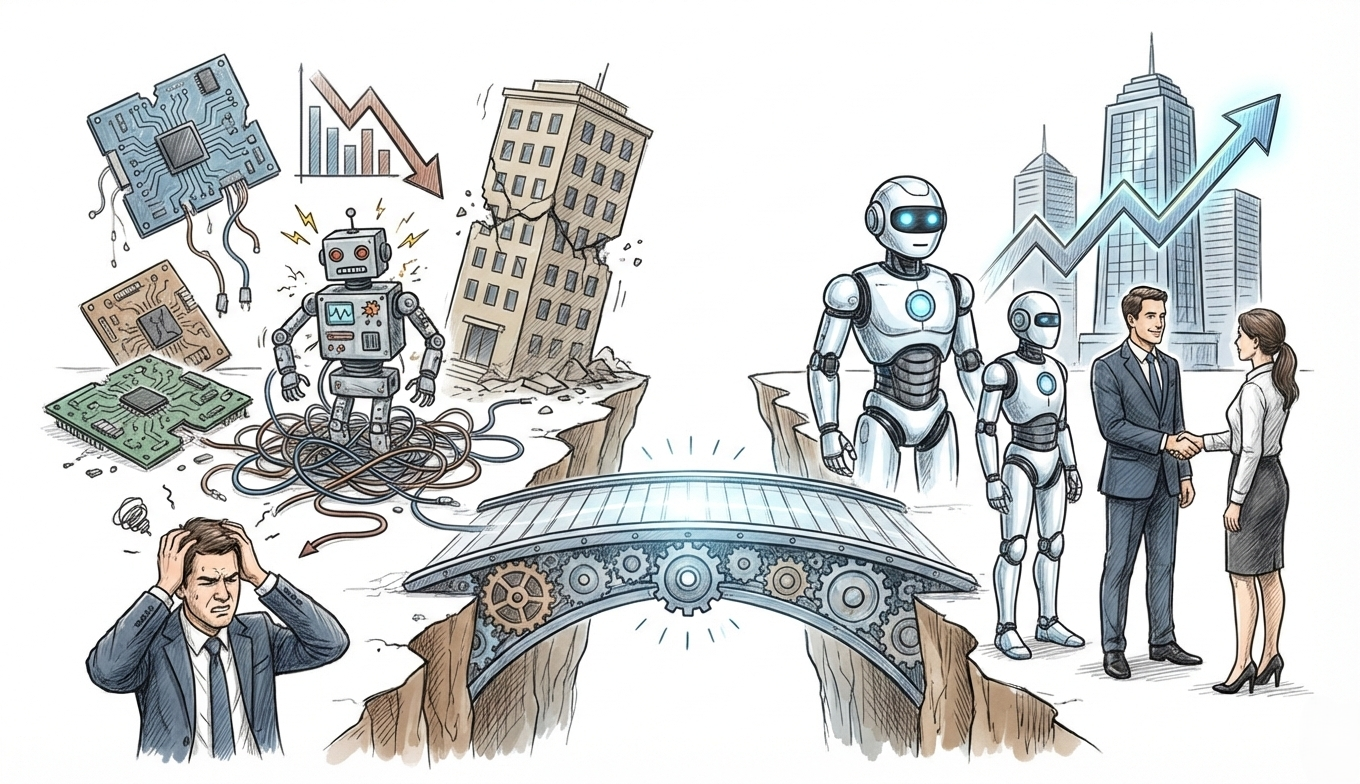
Artificial Intelligence is a powerful tool for business growth. It helps companies understand customers better and make more effective decisions. The possibilities seem endless. Yet, many businesses fail to achieve the results they hope for. A large number of these initiatives fall short of their goals. This is often described as an AI project failure.
So, what goes wrong? The technology itself is rarely the problem. The problems often begin with unclear goals, incomplete planning, or an unprepared team. This blog will walk you through the common reasons for these setbacks and offer simple, practical advice for avoiding them.
Understanding Why AI Projects Fail
Many businesses are eager to adopt AI, but they move forward too fast without a clear plan. When this happens, the project is much more likely to struggle. A common mistake is starting an AI initiative simply because it seems like the thing to do, without knowing what specific problem it will fix. This lack of a clear target often leads to confusion, wasted resources, and disappointing outcomes.
The way to avoid this is to build a strong foundation first. This involves setting specific goals, defining what success looks like, and ensuring the project directly supports a core business need. A great way to do this is to examine relevant AI use cases in your industry. Taking the time to create a thoughtful plan before you start makes your work with AI purposeful and valuable, not just a trend you follow.
Pitfall 1 – Unclear Objectives and Lack of Business Alignment
A major reason for AI project failure is simple: not knowing what you want to achieve. If your team lacks a clear definition of success, measuring progress or demonstrating the value of your work becomes difficult. Your AI should have a specific task, like reducing costs, accelerating a key process, or enhancing the customer experience.
Before you write a single line of code, it is wise to perform an AI readiness assessment. This is a helpful check-up for your company. It examines your data, your tools, and your team's expertise. This review confirms your business is prepared to support a new AI initiative and lowers the risk of unexpected problems.
Pitfall 2 – Unrealistic Expectations from AI
Another common problem happens when companies expect AI to work miracles overnight. The truth is, AI is a powerful tool, but it is not magic. It needs time to learn from data, recognize patterns, and produce consistent results. When leaders set goals that are too ambitious, it leads to frustration and can cause teams to lose faith in the project.
Working with an experienced AI implementation partner can make a big difference. They help you set practical goals and create a sensible timeline. Their guidance, from initial planning to the final launch, helps you find a good balance between your big ideas and what is actually possible to achieve.
Pitfall 3 – Poor Data Quality and Lack of Integration
Think of AI as a car engine; it needs clean fuel to run properly. If your information is disorganized, incomplete, or kept in separate systems, even the most advanced AI system will not perform effectively. This data issue is a leading cause of AI project failure across many industries.
To get this right, companies need to focus on organizing and cleaning their data. They must link their various data systems to allow collaboration. Seeking AI strategy consulting can be beneficial in this situation. An expert can help you build a solid plan for managing your data, which will support your AI efforts at every step.
Pitfall 4 – Ignoring Scalability and Maintenance
Many companies create a small AI model that works perfectly in a test setting. Then it is never used in the business. The problem is often a lack of planning for growth and upkeep. A model that works on a small scale can easily fail when it has to handle real-world tasks and larger amounts of data.
To solve this, you need to build systems that can grow from the very beginning. It is also vital to set up a plan for regular care, updates, and improvements. This continuous work keeps your AI accurate and reliable as your business evolves and new information emerges. This careful approach creates a foundation for AI solutions that deliver value for years to come.
Pitfall 5 – Lack of Collaboration and Skill Gaps
An AI project can struggle when teams work alone. For success, your data scientists, software developers, and company leaders must work together. They must talk clearly and share the same goals. If they do not collaborate, the final AI system might solve a technical puzzle, but it will not solve a real business problem.
A strong approach is to form teams of diverse experts. Everyone on the team should understand how their own tasks contribute to the project's main goal. Getting a custom AI strategy report can also be a great help. It can reveal where your team's skills are lacking, get everyone working together, and set clear goals for the team to achieve.
Pitfall 6 – Resistance to Change
Sometimes, the technology works well, but people are not ready for it. Employees can feel worried about new automation. They might fear their jobs will change or even disappear. This kind of resistance can prevent a new AI system from ever showing its value.
To manage this, companies need a clear onboarding plan. A good AI adoption roadmap includes proper training, open communication, and ongoing support. When employees see that AI is a tool to help them do their jobs better and not something that replaces them, they are much more likely to welcome the change.
Building a Strong Foundation for AI Success
Stopping AI project failure takes more than just good technology. It requires a full and thoughtful plan. A great first step is to use an AI maturity model. This is like a map for your company's journey. It helps you spot weaknesses in your data, your team's skills, and your technology before you try to grow.
It is also essential to include company leaders early. Their guidance connects every AI effort to the company's main goals. With committed leadership, strong data management, and careful execution, a company can move from small experiments to a truly transformed way of operating.
Here are some simple steps you can take to build a strong AI plan for your business.
Start with a small test: Begin with a pilot project to learn how it works before expanding too much.
Focus on your data: Good results depend on clean and well-organized information.
Involve your entire team: Make AI a team effort by including members from every area of the company.
Track your results: Use clear key performance indicators to see the real value you are getting.
Find the right guide: It is smart to work with an experienced AI implementation partner who can help you on your journey.
Following these steps will help you avoid such failure. It will also help your business stay competitive as new technology appears.
Conclusion
Many projects fail for simple reasons such as poor planning, unrealistic goals, or data that is not ready. You can avoid these problems by facing them early. This turns potential failures into chances for success.
If you are starting your first project or growing an existing one, begin by checking your readiness. Set clear goals and find the right partners for your team. If you need expert help or a plan designed for your business, contact us today. We are ready to help you build a successful and lasting AI future.
FAQ
The most common cause of AI project failure is unclear business goals. Many companies launch AI projects without defining the specific problem they plan to solve. Without alignment between AI efforts and business objectives, even advanced AI solutions fail to deliver measurable value.
Businesses can identify the right AI use cases by focusing on real operational challenges that impact efficiency, cost, or customer experience, rather than adopting AI just because it is trending.
High-quality data is essential for reliable AI performance, and AI strategy consulting helps organizations organize, integrate, and prepare their data to support scalable AI systems.
An experienced AI implementation partner helps businesses set realistic expectations, manage execution, and plan for scalability, lowering risks throughout the AI lifecycle.
Long-term success depends on having a clear AI adoption roadmap that guides organizations from early experimentation to full-scale deployment and continuous improvement.
How to build HIPAA-compliant AI: when LLM providers need a BAA, data minimization, de-identification, audit controls and a reference architecture.

Practical data migration planning guide for healthcare teams. Scope, mapping, compliance, validation, cutover and rollback decisions explained end to end.

Smart on FHIR guide for healthtech engineers. Learn the OAuth 2.0 launch model, scope syntax, backend services, and US regulatory requirements.
Connect with our team to explore how AI expertise can transform your business.