
AI in Healthcare
HIPAA-Compliant AI: How to Use LLMs With PHI Safely
How to build HIPAA-compliant AI: when LLM providers need a BAA, data minimization, de-identification, audit controls and a reference architecture.
October 16, 2026Read more
AI success requires more than data science expertise. Learn why strategy, leadership support, and operational integration are key to delivering measurable AI value.
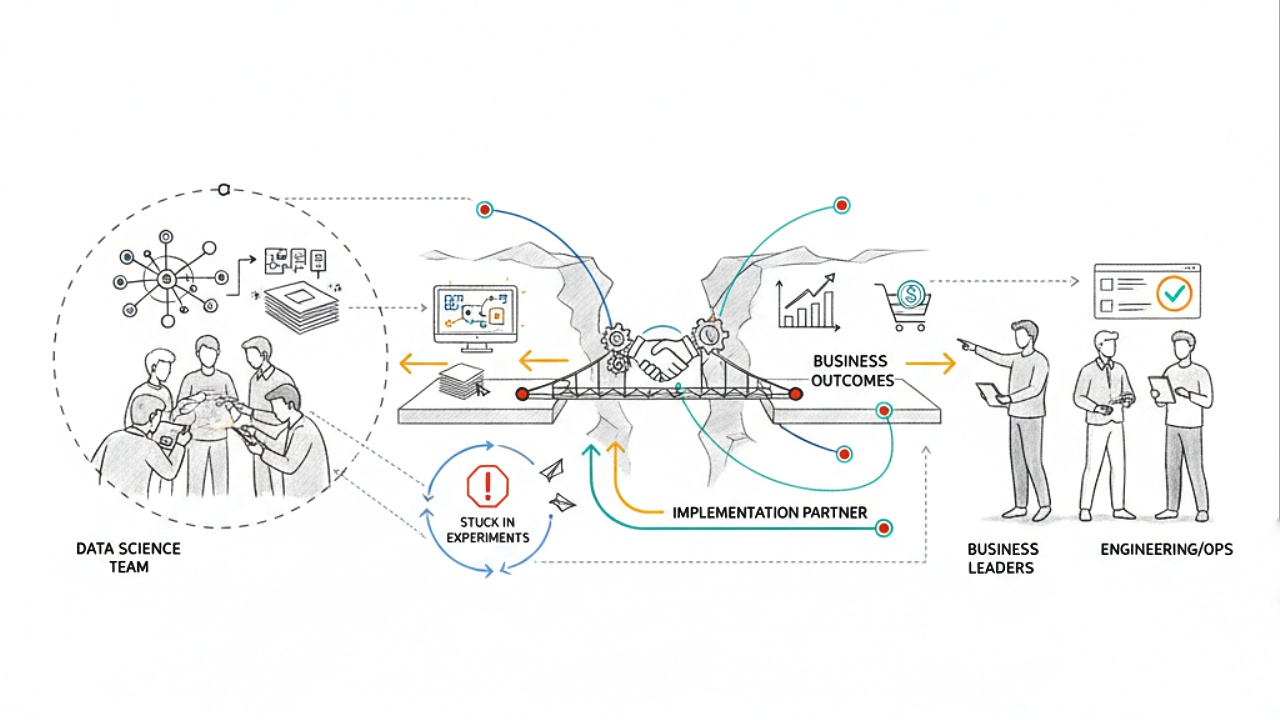
Having a strong team of data scientists can make an organisation feel ready for artificial intelligence. These skilled individuals can build complex models, identify patterns in vast amounts of data, and generate insightful findings. Many times, these projects stop before they truly help the business. The problem is not a lack of technical skill. It is a set of data science AI limitations that become clear when the team's work is not properly integrated with the company's goals, its daily operations, and its people. To find real value, AI needs more than just great analysis. It needs teamwork, clear leadership, and practical execution across the entire company.
A data science team naturally cares about model accuracy, technical performance, and running tests. Meanwhile, a business team is focused on hitting targets, growing revenue, and improving the customer experience. When these two groups work separately, results get trapped inside reports and dashboards, never moving beyond the data science tools where they began. The absence of shared ownership stops progress. These occur when technical work lacks the business context it must have.
A proof of concept can seem very promising. The model makes accurate predictions, and the insights appear useful. The real trouble starts when this work never reaches the actual products or systems people use. Without a proper AI implementation partner from engineering, the project stays in the testing phase. This is often where AI Solutions never reach the people they were meant for, because no single team is responsible for making the model a real, working feature.

Data scientists usually do not control budgets, set product priorities, or decide project timelines. The decisions about how a model goes live and how teams adapt to it rest with other departments. When company leadership fails to guide the effort, model projects lose their momentum and stall. Getting clear direction from AI strategy consulting can connect technical work to long-term business goals. Without that guidance, projects simply lose momentum and stop.
Models are created using past data, but the business itself runs in live, current systems. When the predictions do not reflect how people actually do their jobs, no one wants to use them. This points to a common data science AI limitation, where useful information comes too late or in a form that is difficult for teams to use. Taking the time to understand real AI use cases before any model is the best way to prevent this problem.
Moving a model from a testing notebook into a live company system needs strong support from engineers. At this stage, elements such as performance, security, and scaling become important. A data science team alone cannot handle all this work. An AI implementation partner often plays this key role. They connect the models to the company's real applications and workflows, which makes the results usable for everyone.
Leaders do not need to see complicated charts. They need clear, simple signals they can use to make a decision. When a model's output is unclear or difficult to grasp, people lose faith in it. Simple explanations and straightforward numbers are more useful than deep technical details. A custom AI strategy report can address this issue. It translates the model's complex results into a clear plan that leaders can understand and act on.
Some organizations jump into AI projects without first looking at their data, tools, and internal culture. This often results in frustration and project delays. An AI maturity model can help a team understand their current position and choose the right next steps. Without this clear picture, data science teams are left facing demands they cannot possibly handle on their own.
Even the best models fail if people do not trust them or understand how to use them. Training and clear communication are very important here. An AI readiness assessment helps find the exact skill and process gaps that are holding a company back. This is a core example of the data science AI limitations that arise when people and processes are overlooked. Closing these gaps requires teamwork across the entire company; it is not just a job for the technical team.
A plan might look good on paper, but real value only comes from actually implementing it. You need clear timelines, defined owners, and steady follow-through. An AI adoption roadmap provides a structure for this entire process. Yet to succeed, it must have the full support of company leaders and operations teams. Data scientists cannot manage this alone.
The work on an AI model does not finish when it goes live. Models need to be updated, monitored, and refined with new feedback. Treating AI like a single, one-time project leads to its slow decline. A clear view of the full machine learning lifecycle helps teams plan for lasting success. It also builds a sense of shared responsibility across different roles.
The real value from AI comes from teamwork, not from one team working alone. Data science teams provide the insights, but it is the business leaders, engineers, and operations teams who turn those insights into real action. This shared effort is the only way to move past the common data science AI limitations. When a company understands and supports this shared responsibility, projects move past the testing phase and start to deliver real results. The limits we have discussed here explain why focusing only on data science often leads to projects that do not finish.
For any organization thinking about its next step, the way forward begins with better collaboration and clear, shared goals. Contact us to learn how a connected, team-based approach can help turn your AI efforts into clear, measurable value.
Data science AI limitations appear when models are not aligned with business goals, operations, or leadership support, limiting real AI value.
They build models, but AI Solutions need engineering, leadership, and operational ownership to move beyond experiments and deliver impact.
AI strategy consulting connects technical work to business priorities through clear AI use cases and a custom AI strategy report.
An AI maturity model and AI readiness assessment evaluate capabilities, close skill gaps, and prepare teams for structured AI adoption.
An AI implementation partner helps deploy models into live systems and follow an AI adoption roadmap for long-term success.
How to build HIPAA-compliant AI: when LLM providers need a BAA, data minimization, de-identification, audit controls and a reference architecture.

Practical data migration planning guide for healthcare teams. Scope, mapping, compliance, validation, cutover and rollback decisions explained end to end.

Smart on FHIR guide for healthtech engineers. Learn the OAuth 2.0 launch model, scope syntax, backend services, and US regulatory requirements.
Connect with our team to explore how AI expertise can transform your business.