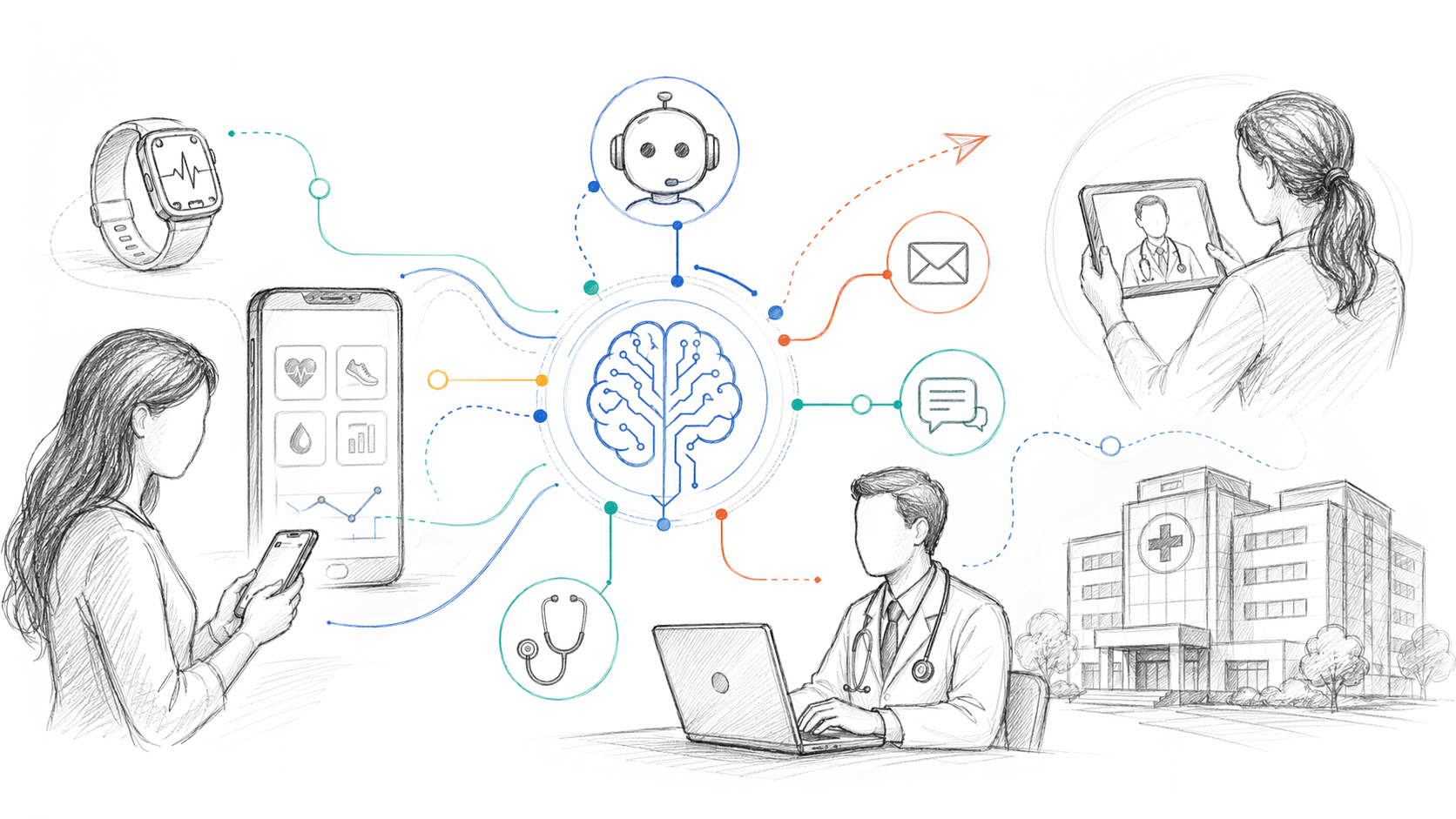
Patient Engagement
AI for Patient Engagement: A Complete Guide
Our guide to AI for patient engagement: conversational assistants, intake, messaging, personalization, platforms and measurement.
October 23, 2026Read more
Healthcare automation platforms are reshaping care delivery by streamlining workflows, reducing manual tasks, improving care coordination, and helping providers deliver efficient, patient-centered care.
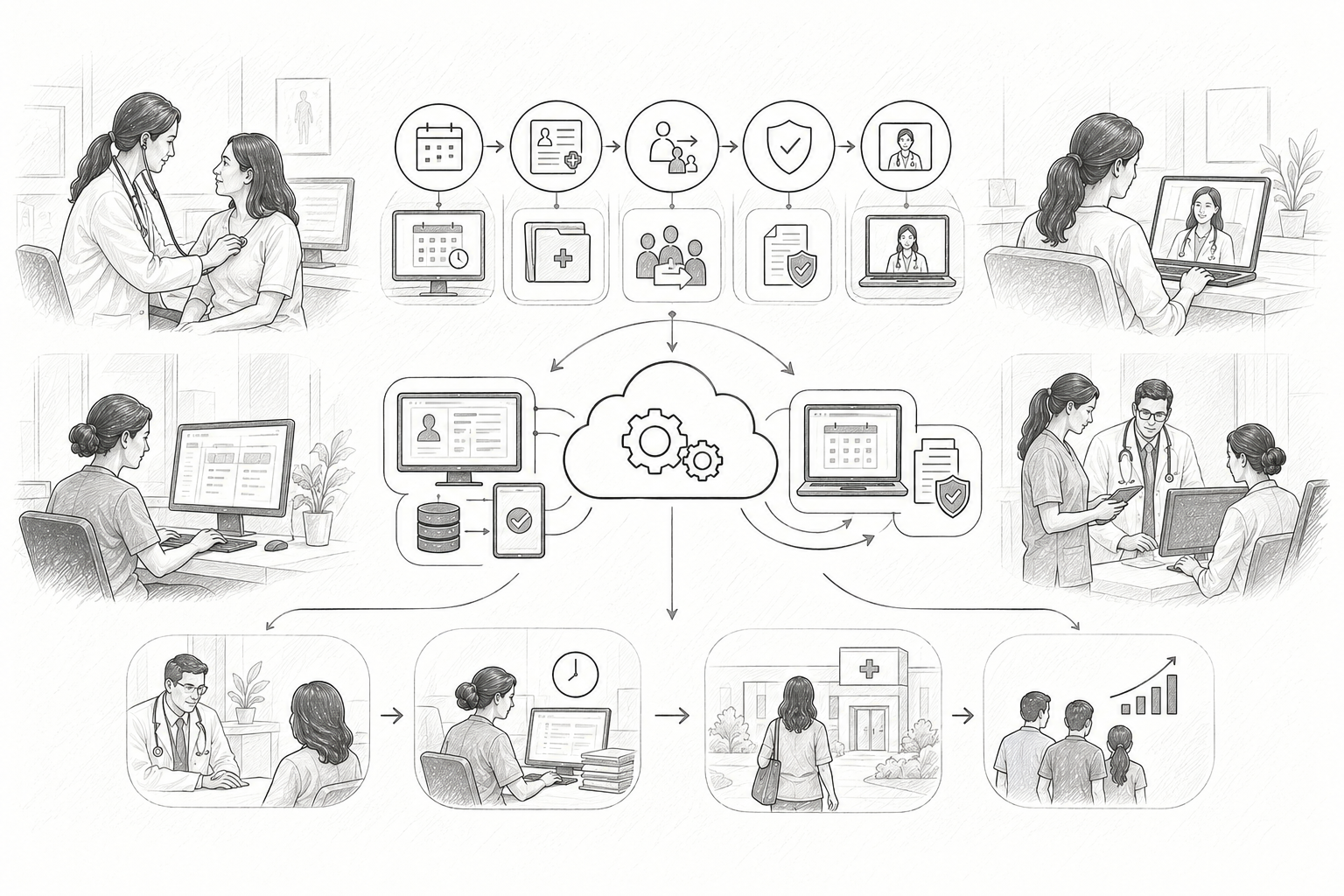
Healthcare delivery depends on more than clinical expertise. Behind every consultation, diagnosis, treatment plan, and follow-up is a network of administrative and operational tasks that keep care moving. Appointments must be scheduled, patient records updated, referrals coordinated, claims processed, and clinical teams kept informed. When these activities rely on disconnected systems or manual processes, even well-equipped healthcare organizations can experience delays, duplicated work, and communication gaps.
A healthcare automation platform can help address these challenges by connecting workflows, automating repetitive tasks, and supporting timely decisions across the care journey. Rather than treating each operational problem separately, these platforms create a more coordinated approach to how healthcare teams manage information and deliver services.
The shift is not simply about replacing manual work with software. It is about redesigning healthcare operations so that clinicians can spend more time on patient care, administrative teams can focus on exceptions that require human judgment, and patients can move through the healthcare system with fewer unnecessary barriers.
As healthcare organizations face growing patient volumes, workforce constraints, and pressure to improve outcomes while controlling costs, automation is becoming an important part of modern care delivery.
Healthcare workflows have become increasingly complex. A single patient's journey may involve primary care, diagnostic services, specialists, pharmacies, insurance providers, and post-treatment support. Each participant generates information and relies on other teams to act on it.
When these processes are managed through separate systems, small inefficiencies can create larger operational problems.
For example, a delayed referral may postpone a specialist consultation. Missing documentation can hold up insurance authorization. A patient may receive repeated requests for information because different departments cannot access the same updated record.
These issues are not always caused by a lack of staff or clinical expertise. Often, they reflect gaps in the systems connecting people, information, and tasks.
A modern healthcare automation platform helps address these gaps by enabling organizations to:
Reduce repetitive administrative work: Automate routine data entry, reminders, document routing, and status updates.
Improve coordination: Connect tasks and information across departments and care settings.
Support timely decisions: Surface missing information, overdue actions, and workflow exceptions.
Standardize processes: Apply consistent rules to routine operational activities.
Improve visibility: Help teams understand where requests are waiting, delayed, or incomplete.
The goal is not to make every healthcare process fully automated. It is to make routine work more reliable while preserving human oversight where clinical judgment, empathy, or complex decision-making is required.
Healthcare organizations already use electronic health records, scheduling applications, billing software, and patient engagement tools. However, having multiple digital systems does not necessarily mean that workflows are connected.
A healthcare automation platform focuses on the movement of work between these systems and the people who use them.
Depending on its capabilities, the platform may combine workflow orchestration, rules-based automation, integrations, analytics, and AI-enabled assistance.
Coordinates the sequence of tasks involved in processes such as referrals, discharge planning, appointment management, and insurance authorization.
Helps information move between relevant applications, reducing repeated data entry and minimizing the need for staff to switch between disconnected tools.
Provides visibility into queues, bottlenecks, incomplete tasks, and recurring delays so teams can identify where processes need attention.
In suitable use cases, AI can help classify documents, extract information, summarize records, or prioritize tasks for human review.
These capabilities work together to support more connected operations. The value comes from how well the platform fits into existing care processes, not simply from the number of features it offers.
Digital care automation can improve several stages of the patient journey, from the first appointment request to follow-up after treatment.
The most effective starting points are usually workflows with high volumes of repetitive tasks, clear rules, and measurable delays.
Patient registration often requires collecting information, checking records, confirming appointments, and sending instructions. Automation can support digital forms, appointment reminders, document collection, and routing of completed registrations.
This can reduce avoidable administrative work and help patients arrive better prepared for consultations.
Referrals often require multiple handoffs between healthcare professionals and departments. Automated workflows can track referral status, route requests to the appropriate team, flag missing information, and notify staff when action is overdue.
These capabilities help reduce the risk of referrals remaining unnoticed in a queue. They also provide clearer visibility into where a patient is in the care process.
Automation can support the preparation of visit summaries, follow-up reminders, document classification, and routing of results for review.
However, clinical content generated or transformed by AI must be reviewed according to the risk of the task. Automating the delivery of a routine reminder is different from generating a treatment recommendation or interpreting a diagnostic result.
Healthcare administration includes eligibility checks, claims preparation, authorization requests, and documentation verification. Rule-based automation can handle predictable steps and flag exceptions that require staff intervention.
When these processes become more consistent, teams can spend less time chasing missing information and more time resolving complex cases.
The important distinction is that automation should support the workflow as a whole. Automating one step without considering the next handoff may simply move the bottleneck somewhere else.
Automation is not a substitute for good process design. If a workflow contains unnecessary approvals, unclear responsibilities, or duplicated steps, automating it may make those problems happen faster.
Effective workflow optimization starts by understanding how work currently moves through the organization.
A practical assessment should identify:
Where requests enter the system.
Which teams or applications handle each step.
Where information is repeatedly entered or transferred.
Which tasks require clinical judgment or approval.
Where work typically waits.
Which exceptions cause the most rework.
Consider a referral process in which staff manually check incoming requests, verify patient details, contact referring providers for missing documents, and update a tracking spreadsheet.
Instead of automating every existing step as it stands, the organization could first standardize the required information, define routing rules, connect the referral queue to the relevant system, and establish an escalation process for incomplete requests.
Automation can then handle routine routing and notifications while staff focus on cases that require intervention.
This approach helps avoid a common mistake: investing in technology before understanding the actual operational problem.
It also makes success easier to measure. Rather than judging a project by the number of automated tasks, healthcare leaders can assess whether the new process reduces delays, rework, and administrative effort.
 Traditional automation works well when a process follows predictable rules. For example, a system can send an appointment reminder a specified number of days before a visit or route a complete form to a designated department.
Healthcare operations, however, often involve incomplete information, changing priorities, and exceptions that cannot be handled through a simple rule.
This is where intelligent operations can provide additional value.
AI-enabled capabilities may help identify patterns in incoming documents, categorize requests, summarize relevant information, or detect tasks that need attention. Predictive analytics may also help teams anticipate demand or identify operational bottlenecks.
For example, a workflow system could detect that a referral is missing a required document, classify the request, and route it to the appropriate administrative team. If the referral remains incomplete beyond a defined period, the system could escalate it for review.
The automation handles the predictable steps, while the escalation process keeps a person involved when the situation falls outside normal rules.
This distinction matters in healthcare because operational efficiency must not come at the expense of safety.
Intelligent operations should be designed around clear decision boundaries. Organizations need to determine which actions can happen automatically, which require human approval, and which should remain exclusively under qualified clinical control.
One of the biggest challenges in implementing a healthcare automation platform is connecting it to existing technology.
Hospitals, clinics, laboratories, and health networks may use different electronic health record systems, billing applications, scheduling tools, document repositories, and patient communication platforms. These systems may store overlapping information in different formats or expose different integration capabilities.
Without reliable integration, automation can create additional problems. A workflow may use outdated patient details, duplicate an existing request, or fail because information from another application is unavailable.
A well-designed implementation considers several technical requirements.
Interoperability: Use suitable APIs and healthcare data standards to exchange information between systems. Where relevant, standards such as HL7 FHIR can support structured data exchange.
Identity and data matching: Ensure that records are associated with the correct patient and that duplicate or conflicting information is handled appropriately.
Access controls: Give users and automated services only the permissions needed for their responsibilities.
Auditability: Record important workflow events, system actions, exceptions, and approvals.
Resilience: Define how the process should respond when an integration fails, a system becomes unavailable, or data cannot be validated.
Legacy compatibility: Consider whether existing applications can be integrated directly, require middleware, or need a phased replacement strategy.
Integration decisions should reflect the organization's current infrastructure and future needs. A new platform does not need to replace every existing application to deliver value. In many cases, connecting a small number of high-impact workflows can be a more practical starting point.
Not every healthcare automation use case requires AI. Many administrative workflows are better served by predictable rules, clear conditions, and dependable integrations.
AI becomes useful when the task involves information that is difficult to process through fixed rules alone, such as classifying unstructured documents, extracting relevant details from clinical notes, or summarizing large volumes of text.
The technology must be selected according to the intended use.
For example:
Appointment reminders and task routing may use straightforward workflow automation.
Document classification may use machine learning or language models with appropriate validation.
Clinical decision support may require additional clinical evaluation, monitoring, and safeguards.
Software that meets the applicable definition of a medical device may be subject to specific regulatory requirements.
SaMD solutions, or software as a medical device, need particular attention when automation involves a medical purpose such as diagnosis, prevention, monitoring, or treatment. Regulatory status depends on the software's intended use and the applicable jurisdiction; it should not be assumed that every healthcare application or AI feature qualifies as SaMD.
Teams developing or integrating these capabilities should assess safety, performance, intended users, data quality, and applicable regulatory obligations early in the project.
The U.S. Food and Drug Administration's guidance on Software as a Medical Device provides a useful starting point for understanding this distinction.
The broader lesson is that intelligent automation needs both technical capability and appropriate governance. AI should be introduced where it solves a defined problem, not simply because the technology is available.
A technically successful platform can still fail to improve care delivery if staff find it difficult to use or if it adds new steps to their daily work.
Clinicians and administrative teams need to understand what the system does, when they must intervene, and how to correct errors. Patients also need clear communication when automated tools are used to collect information, send messages, or coordinate services.
Several practices can improve adoption.
Involve end users early. Clinicians, nurses, administrative staff, and care coordinators can identify practical workflow requirements that may not be obvious during technical planning.
Design around existing work. Where possible, provide alerts, task updates, and relevant information within the systems staff already use instead of introducing unnecessary application switching.
Keep exceptions manageable. Automated workflows should explain why a task was flagged and what action is expected next.
Provide a fallback process. Staff should know how to continue critical work when an integration fails or an automated service becomes unavailable.
Train teams using real scenarios. Practical training helps users recognize errors, handle exceptions, and understand when human review is necessary.
Automation should reduce cognitive and administrative burden, not create another layer of monitoring for staff to manage.
Patient experience should also remain central. Clear instructions, accessible digital interfaces, language support, and non-digital alternatives can help prevent automation from becoming a barrier for people who have limited access to technology or need additional assistance.
The success of a healthcare automation platform should be measured by its effect on care delivery and operations, not by the number of workflows automated.
Organizations should establish baseline measurements before implementation and compare results after deployment. Metrics should reflect the original problem and the level of risk associated with the workflow.
|
Area |
Example metrics |
|
Operational efficiency |
Time to complete a workflow, manual processing time, cost per transaction |
|
Workflow reliability |
Error rates, rework, incomplete requests, failed handoffs |
|
Care coordination |
Referral turnaround time, missed follow-ups, time to close care gaps |
|
Staff experience |
Administrative burden, user satisfaction, time spent on repetitive tasks |
|
Patient experience |
Appointment completion, communication response times, patient-reported experience |
|
Safety and governance |
Incorrect routing, escalation accuracy, access violations, incidents requiring review |
Not every metric will be relevant to every project. For example, automating claims documentation requires different outcome measures from improving referral coordination.
It is also important to distinguish correlation from impact. A reduction in appointment delays after automation may be influenced by staffing changes, seasonal demand, or other process improvements. Where possible, teams should use a consistent measurement period and account for major operational changes.
Efficiency must be balanced with quality. A faster process is not a successful improvement if it increases errors, causes inappropriate escalation, or leaves patients without necessary follow-up.
A successful automation initiative starts with a clear operational objective and expands based on evidence.
Healthcare organizations can use the following approach to move from experimentation to sustainable implementation.
Select a process with frequent manual work, measurable delays, and a clear operational owner. Avoid beginning with the most complex or clinically sensitive workflow.
Document tasks, handoffs, systems, exceptions, and decision points. Remove unnecessary steps before introducing automation.
Decide whether the workflow needs rules-based automation, system integration, AI-assisted processing, or a combination of these capabilities.
Establish access controls, human review requirements, escalation rules, audit logs, and responsibility for resolving failures.
Test the workflow with a defined group, compare results with baseline performance, collect user feedback, and address problems before scaling.
A phased approach gives healthcare teams an opportunity to learn from real usage before expanding automation across multiple departments or care settings.
Organizations developing more complex solutions may benefit from working with a healthtech engineering partner that understands healthcare integrations, data security, software architecture, and clinical workflow requirements. A structured assessment or custom AI strategy report can also help clarify which use cases should be prioritized and which require further technical or regulatory evaluation.
The focus should remain on solving operational problems in a way that is sustainable, measurable, and appropriate for the healthcare environment.
Healthcare automation platforms are reshaping care delivery by connecting processes that have traditionally been managed through separate systems, manual handoffs, and repetitive administrative work.
Through digital care automation, workflow optimization, and intelligent operations, healthcare organizations can improve coordination, reduce avoidable delays, and give staff more time to focus on tasks that require human judgment and patient interaction.
However, automation is not a standalone solution to every operational challenge. Its value depends on reliable integrations, thoughtful workflow design, staff adoption, appropriate safeguards, and continuous measurement.
The most effective strategy is to start with a clearly defined problem, select technology that fits the workflow, and expand only when the results demonstrate meaningful improvement. When implemented with these principles, a healthcare automation platform can become an important foundation for more connected, efficient, and patient-centered care.
A healthcare automation platform is a technology solution that coordinates and automates tasks across healthcare workflows. Depending on its capabilities, it may support appointment management, referrals, documentation, billing, data exchange, notifications, and AI-assisted processing.
Healthcare automation can reduce administrative delays, improve the coordination of referrals and follow-ups, and help staff access relevant information more efficiently. Its impact depends on how well the automated workflows are designed and integrated into clinical operations.
Healthcare automation executes or coordinates tasks based on defined rules and workflow logic. Healthcare AI uses techniques such as machine learning or language models to perform tasks involving patterns, prediction, classification, or language. A healthcare platform may combine both, but not every automated workflow needs AI.
It can be safe when designed for the intended use, validated appropriately, and supported by access controls, audit trails, monitoring, and human oversight where needed. Higher-risk clinical functions require more rigorous evaluation than routine administrative tasks.
Start by identifying a repetitive workflow with measurable delays or administrative burden. Map the existing process, establish baseline metrics, assess integration and security requirements, and pilot an appropriate solution before expanding it across the organization.
Our guide to AI for patient engagement: conversational assistants, intake, messaging, personalization, platforms and measurement.
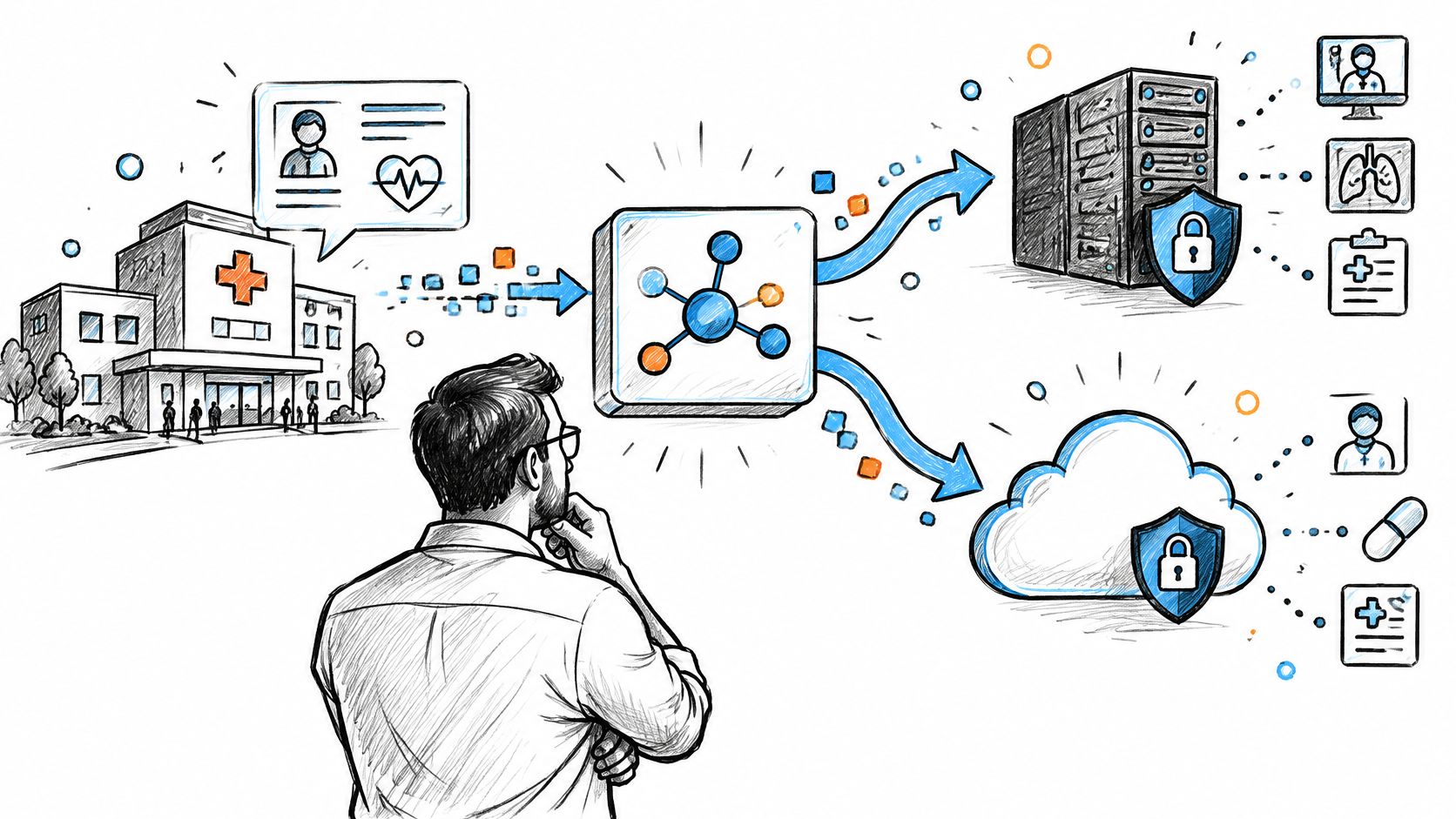
Compare Mirth Connect alternatives after the licensing change, from Open Integration Engine and BridgeLink to commercial engines and cloud HL7 and FHIR services
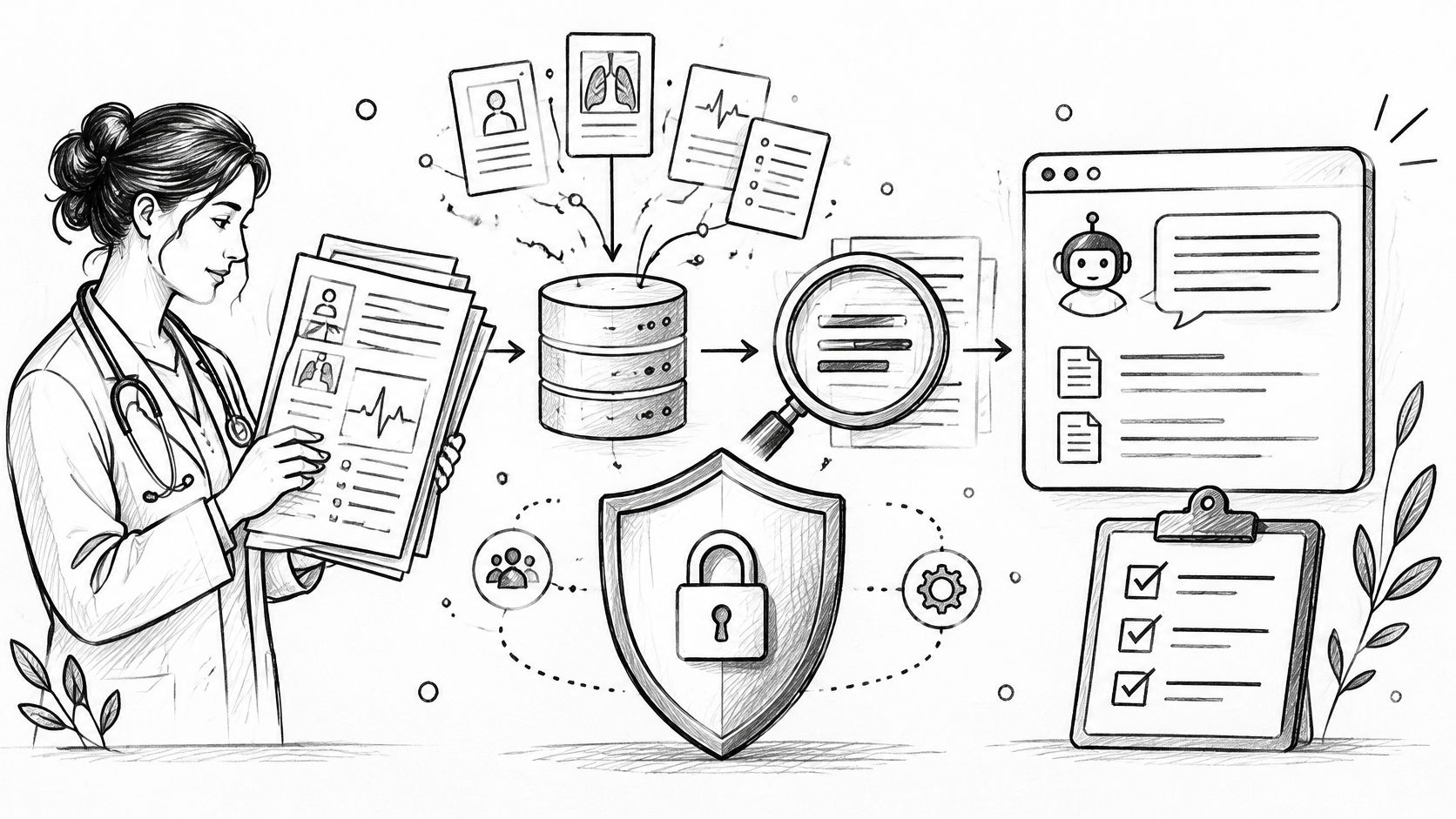
RAG for clinical documents: ingest FHIR notes, retrieve and cite evidence, protect PHI, and test faithfulness, recall and abstention before release.
Connect with our team to explore how AI expertise can transform your business.