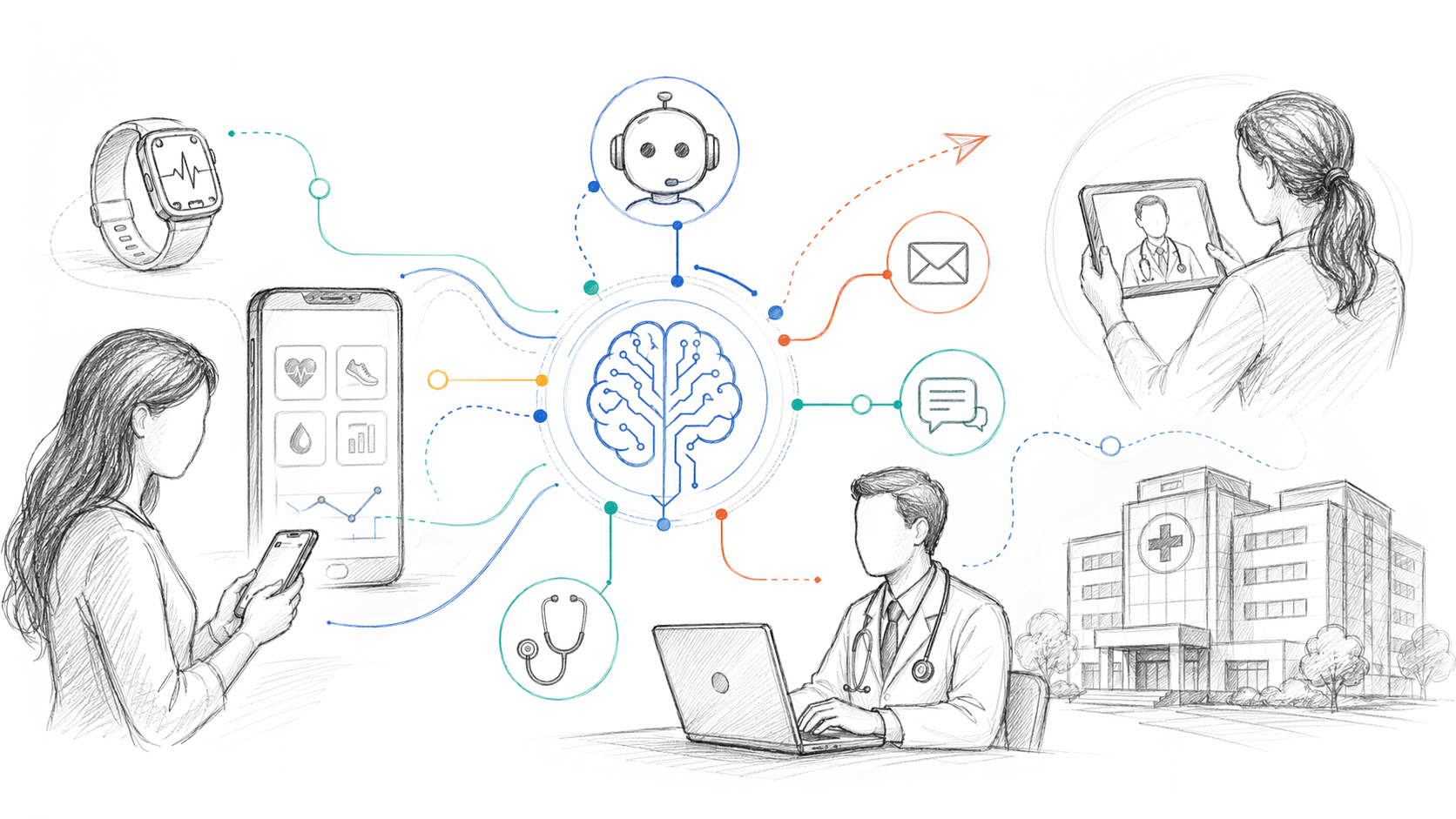
Patient engagement covers every way a health organization communicates with patients and helps them take part in their care: booking and intake, reminders, questions between visits, results, follow-up and ongoing support. AI now plays a part in all of these, from chat assistants and message drafting to personalized outreach. This guide explains how the pieces fit together, what to get right in each area and which of our articles to read next.
Digital access is already widespread: in 2024, 77% of US individuals were offered online access to their health information and 65% accessed it at least once in the past year (ASTP/ONC). The challenge now is turning access into engagement that improves care.
Start here
- Conversational AI for Patient Engagement: Uses, Safety and Integration: the main use cases for patient-facing assistants and how to deploy them safely.
- AI for Patient Engagement by Channel: Portal, Text, Email, Voice: what AI does well in each channel and the rules that apply.
- Generative AI in Patient Communication: Evidence and Safe Use: what studies show about AI-drafted patient messages.
- How to Measure Patient Engagement and Where AI Helps: how to prove that engagement programs work.
Find the right article for your goal
Conversational AI, intake and triage
Chat and voice assistants work best on frequent, well-defined tasks: scheduling, directions, refills, intake forms and routing. Keep three safeguards in place: check for emergency symptoms first, give patients a fast path to a person, and never let the assistant give a diagnosis. Intake works best when answers flow straight into the EHR so staff do not re-enter them. Triage tools need the most caution, because research on symptom checkers shows they can misjudge urgency; measure how often patients are sent to a lower level of care than they need.
Patient communication and messaging
Generative AI can draft portal replies, explain results in plain language and turn visit notes into instructions. Studies so far show it can reduce the sense of burden for clinicians without reliably saving time, so judge it on quality and workload as well as speed. Clinicians should review anything clinical, some states require disclosure when AI writes patient messages, and urgent messages should be routed to staff rather than answered with a draft.
Personalization and patient experience
Start with what patients tell you: preferred language, channel, times and who else may receive information. Use AI to adjust timing, reading level and channel, and to target outreach to patients most likely to miss appointments or need support. Check that models do not give some groups less outreach or worse options, and keep personalized care messages separate from marketing.
Platforms and settings
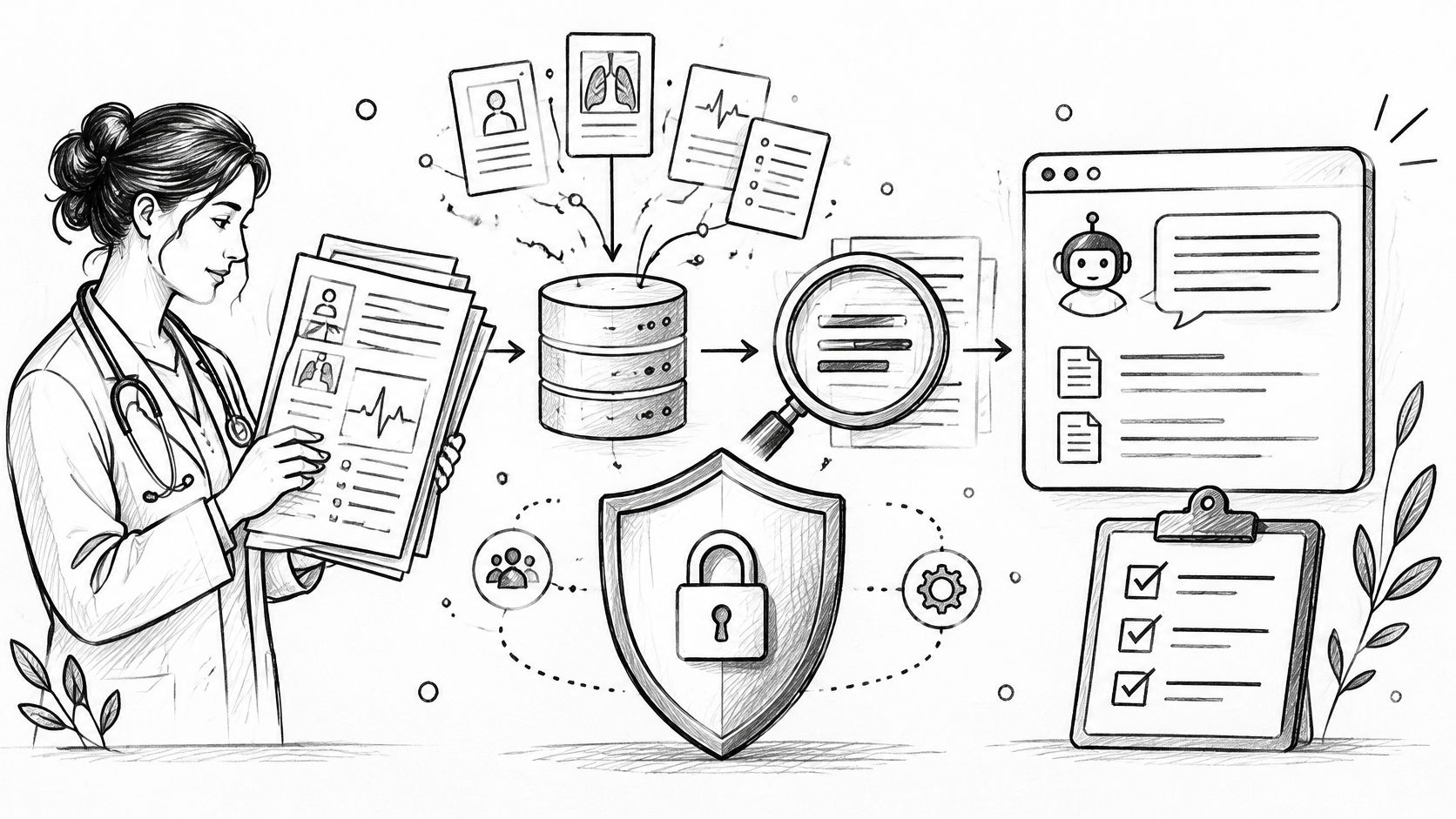
Engagement depends on the systems behind it. A CRM manages outreach, referrals and contact center work alongside the EHR, which stays the clinical record. Virtual care adds video visits and remote monitoring, and home health depends heavily on family caregivers, visit communication and teach-back education between visits.
Rules that apply across patient engagement
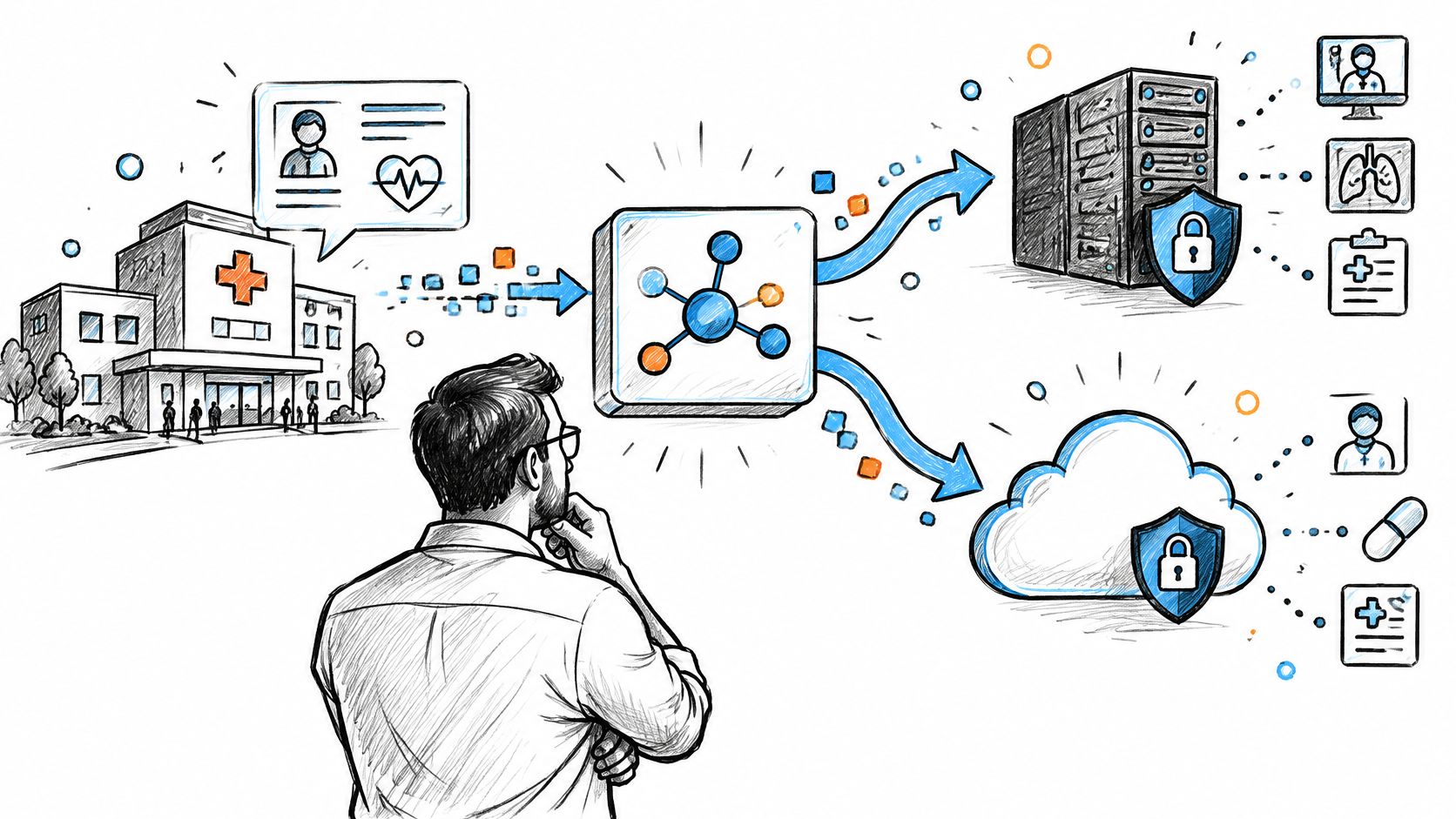
- Privacy: vendors that handle protected health information need a business associate agreement, and HIPAA limits using PHI for marketing without authorization (HHS).
- Texts and calls: automated messages are subject to consent and opt-out rules under the Telephone Consumer Protection Act.
- Language access: Section 1557 rules require qualified human review when machine translation is used for critical information (45 CFR Part 92).
- Clinical safety: clinicians should review AI-drafted clinical messages, and urgent symptoms should be routed to staff.
Measuring results
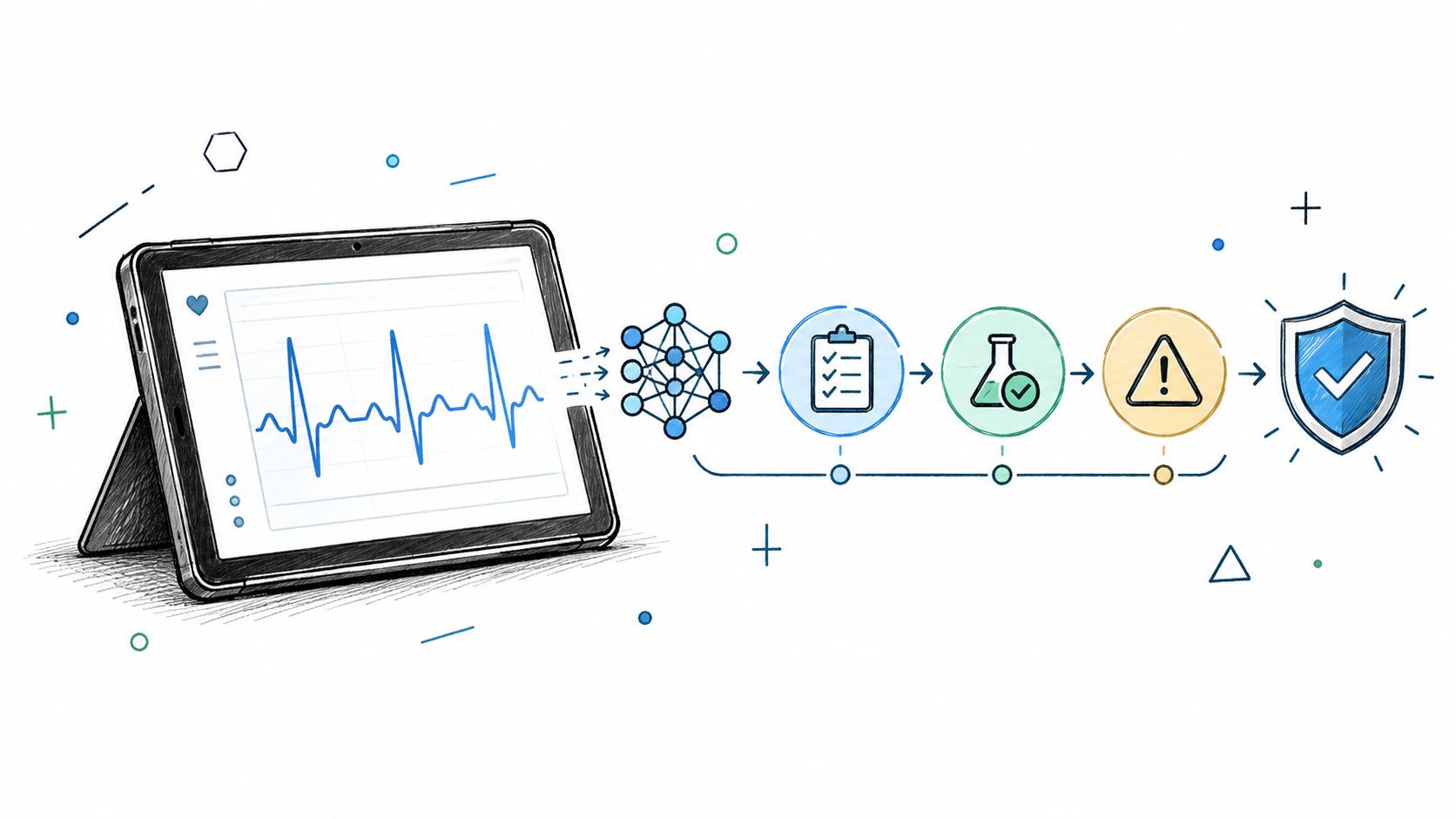
Measure engagement at four levels: reach (who can and does use a tool), activity (how they use it), behavior (no-shows, adherence, follow-up) and outcomes (care gaps, readmissions, patient experience). Activity metrics such as message volume are easy to collect but do not prove value on their own, so pair them with at least one behavior and one outcome measure, and compare against a baseline.
If you are building patient engagement tools, see our healthcare engineering services.
Conclusion
AI supports patient engagement across conversational assistants, intake and triage, messaging, personalization and the platforms behind them. Start with the four core articles above, follow the rules on privacy, consent, language access and clinical review, and measure results from reach through to outcomes.
If you want help planning or building patient engagement tools, book a consultation with Ekipa's HealthTech engineers.
Frequently asked questions
How is AI used in patient engagement?
For chat and voice assistants, intake and triage, drafting patient messages, personalized outreach and analyzing engagement data.
Where should a health system start with AI for patient engagement?
With a high-volume, lower-risk task such as scheduling, reminders or routine questions, measured against a baseline.
Is AI patient communication safe?
It can be, with clinician review of clinical content, escalation of urgent symptoms and clear limits on medical advice.
What rules apply to AI patient engagement tools?
HIPAA privacy and security rules, business associate agreements, marketing restrictions, consent rules for texts and calls, and language access requirements.
How do you measure patient engagement?
Across reach, activity, behavior and outcomes, using measures such as portal activation, no-show rates, adherence and patient experience scores.