
AI in Healthcare
HIPAA-Compliant AI: How to Use LLMs With PHI Safely
How to build HIPAA-compliant AI: when LLM providers need a BAA, data minimization, de-identification, audit controls and a reference architecture.
October 16, 2026Read more
Healthcare workflow automation improves efficiency by reducing manual tasks, streamlining operations, accelerating care delivery, and enhancing patient outcomes.
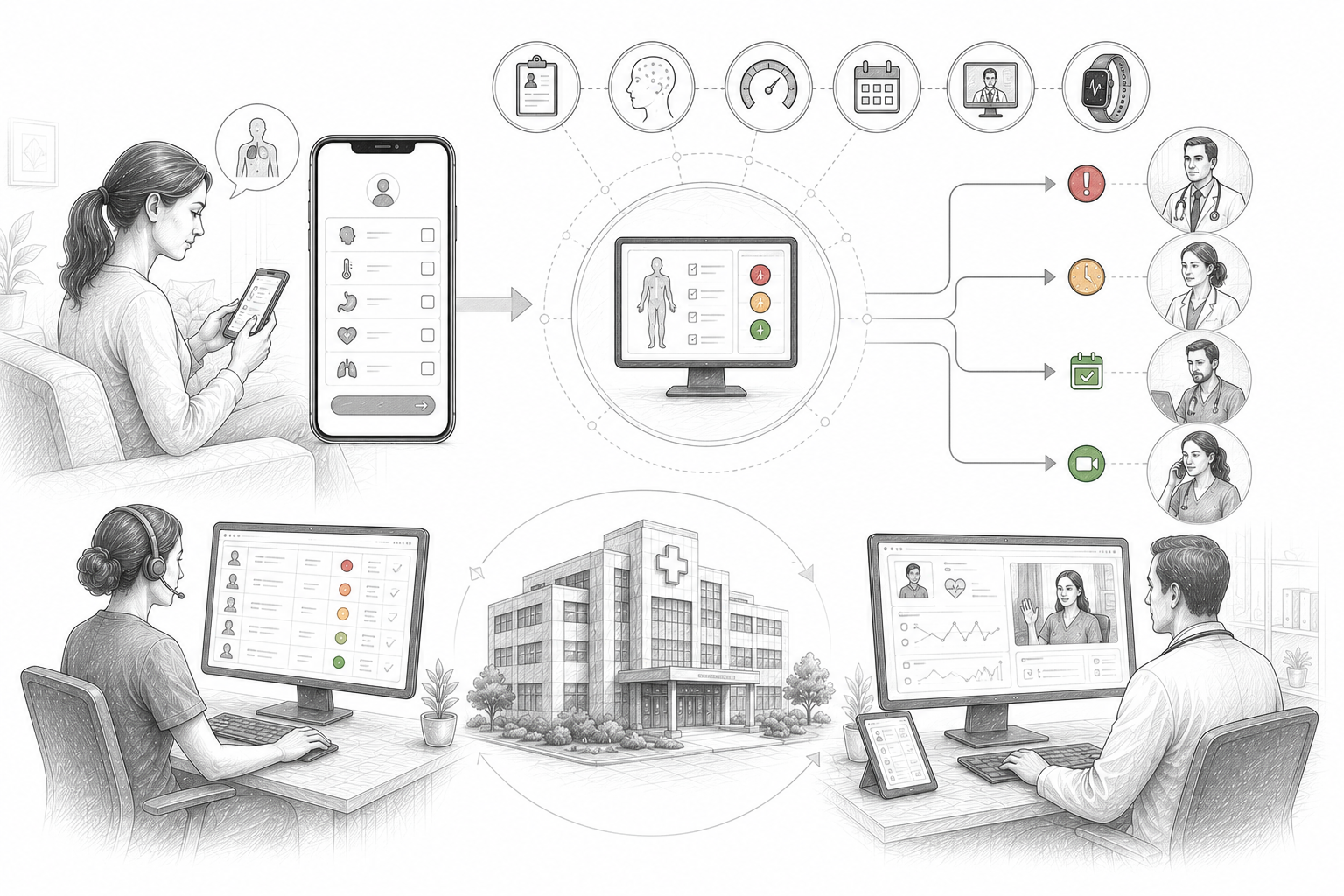
Healthcare organizations today face mounting operational challenges. Rising patient volumes, workforce shortages, increasing regulatory requirements, and growing administrative workloads are placing unprecedented pressure on healthcare providers. While delivering high-quality patient care remains the top priority, organizations must also improve efficiency, reduce operational costs, and maximize resource utilization.
Many healthcare processes still rely on manual workflows that consume valuable time and increase the risk of errors. Activities such as patient registration, appointment scheduling, documentation, billing, claims processing, and care coordination often involve repetitive administrative tasks that delay service delivery and reduce staff productivity.
This is where healthcare workflow automation is transforming modern healthcare. By automating routine processes and connecting digital systems, healthcare organizations can streamline operations, improve collaboration, and enable clinicians to spend more time focusing on patient care.
Rather than simply replacing manual tasks, workflow automation creates intelligent operational environments where data flows seamlessly between departments, supporting faster decision-making, improved healthcare productivity, and better patient experiences.
Healthcare workflow automation refers to the use of digital technologies to automate repetitive administrative, clinical, and operational processes across healthcare organizations.
Instead of relying on paper-based workflows or manual data entry, automated systems use intelligent software, artificial intelligence, and integrated platforms to execute tasks with minimal human intervention.
Healthcare workflow automation supports processes such as:
By eliminating repetitive administrative activities, healthcare providers can reduce delays, improve accuracy, and enhance operational consistency.
Automation also enables information to move seamlessly between departments, creating connected workflows that improve both clinical and business performance.
Despite significant investments in digital health technologies, many healthcare organizations continue to depend on manual workflows.
These outdated processes often create operational bottlenecks that affect both patients and healthcare professionals.
Common challenges include:
Healthcare staff spend significant time completing repetitive documentation and managing routine operational tasks.
Disconnected systems often require information to be transferred manually between departments.
Manual approvals and paper-based workflows slow patient access to healthcare services.
Repeated manual input increases the likelihood of incomplete or inaccurate patient records.
Without automated reporting, healthcare leaders may struggle to identify workflow bottlenecks or performance trends.
These challenges reduce organizational efficiency while increasing operational costs and clinician burnout.
Modern process automation enables healthcare organizations to standardize workflows while reducing administrative complexity.
Rather than relying on manual intervention, automated systems can trigger actions based on predefined clinical or operational rules.
Examples include:
Patient information can be collected and verified digitally before appointments, reducing administrative effort.
Automation helps match patients with appropriate providers based on availability, specialty, and clinical needs.
Digital tools streamline documentation by automatically populating patient records and reducing repetitive data entry.
Automated workflows accelerate claims submission while reducing coding errors and reimbursement delays.
Healthcare organizations can automate appointment reminders, follow-up notifications, and care instructions through secure digital channels.
These capabilities improve efficiency while creating more consistent healthcare experiences for both patients and providers.
Healthcare organizations are increasingly adopting digital operations strategies to create connected, technology-enabled healthcare environments.
Digital operations combine automation, artificial intelligence, cloud technologies, and integrated data platforms to improve organizational performance.
Key benefits include:
Real-time operational data enables healthcare leaders to respond quickly to changing patient and organizational needs.
Automation helps optimize workforce allocation, scheduling, and facility management.
Connected digital systems improve communication across clinical, administrative, and operational teams.
Healthcare leaders gain real-time visibility into workflow performance, enabling continuous improvement initiatives.
As healthcare systems become increasingly complex, digital operations provide the foundation for scalable and sustainable healthcare delivery.
Workflow automation becomes significantly more powerful when combined with artificial intelligence.
Modern healthcare AI services help healthcare organizations automate complex decision-making while improving operational efficiency.
AI-powered workflow automation supports:
AI analyzes operational data to prioritize urgent activities and allocate resources effectively.
Machine learning identifies potential bottlenecks before they impact patient care.
AI extracts and validates information from clinical documents, reducing manual review.
Healthcare leaders receive actionable insights that support continuous process improvement.
AI automates patient communications based on individual healthcare journeys and clinical needs.
By integrating artificial intelligence into workflow automation, organizations can improve efficiency while enhancing care quality and patient satisfaction.

As healthcare organizations continue adopting automation technologies, many intelligent software platforms are being developed as SaMD solutions (Software as a Medical Device). These applications perform medical functions independently of physical medical devices and increasingly support clinical workflows, patient monitoring, and healthcare operations.
Examples include:
When integrated with healthcare workflow automation, these technologies enable clinicians to access timely information while reducing manual administrative effort.
Automated workflows also ensure that patient data moves seamlessly across departments, allowing SaMD solutions to generate more accurate insights and support better clinical decisions.
As healthcare delivery becomes increasingly digital, intelligent software will continue playing a central role in improving operational excellence while maintaining patient safety and regulatory compliance.
Implementing healthcare workflow automation requires more than introducing new software.
Healthcare organizations must integrate legacy systems, connect clinical and operational workflows, maintain cybersecurity, ensure interoperability, and comply with evolving healthcare regulations.
A specialized healthtech engineering partner helps organizations design intelligent digital ecosystems that support automation while minimizing operational disruption.
Before investing in enterprise-wide automation initiatives, many healthcare providers benefit from developing a custom AI strategy report that evaluates current workflows, identifies operational bottlenecks, prioritizes automation opportunities, and establishes a roadmap for long-term digital transformation.
Experienced engineering teams support organizations through:
Rather than automating isolated processes, healthcare organizations can build connected operational environments that improve collaboration, scalability, and long-term efficiency.
This strategic approach enables providers to maximize the value of automation while preparing for future healthcare innovation.
Organizations that achieve successful automation initiatives typically follow several best practices.
Focus automation efforts on repetitive workflows that consume significant administrative time and frequently create operational bottlenecks.
Automation is most effective when electronic health records, scheduling platforms, billing systems, and patient communication tools operate together within a connected ecosystem.
Accurate, standardized healthcare information enables automated workflows to perform consistently while reducing operational errors.
Automation should support clinicians and administrative teams rather than replace human expertise.
Healthcare professionals remain responsible for clinical decisions and patient care.
Healthcare organizations should regularly evaluate workflow efficiency, staff productivity, patient satisfaction, and operational outcomes to identify new optimization opportunities.
Healthcare workflow automation will continue evolving alongside advances in artificial intelligence, cloud computing, and connected healthcare technologies.
Future intelligent healthcare platforms are expected to support:
As healthcare organizations generate increasing amounts of operational and clinical data, intelligent automation will become essential for managing complexity while improving organizational performance.
Healthcare providers who invest in scalable automation platforms today will be better positioned to adapt to changing healthcare demands while delivering more efficient and patient-centered care.
Operational excellence has become a strategic priority for healthcare organizations seeking to improve patient care while managing increasing administrative complexity.
Healthcare workflow automation enables providers to streamline routine tasks, improve collaboration, reduce operational costs, and enhance healthcare productivity.
By combining process automation, digital operations, healthcare AI services, and intelligent software platforms, organizations can create connected healthcare environments that support both clinical excellence and operational efficiency.
Healthcare leaders planning long-term digital transformation can begin with a custom AI strategy report to identify automation opportunities, optimize workflows, and develop a scalable roadmap for operational innovation.
Healthcare workflow automation uses digital technologies to automate administrative, clinical, and operational tasks, helping healthcare organizations improve efficiency, reduce errors, and enhance patient care.
Automation streamlines repetitive processes, reduces administrative burden, improves communication, and enables healthcare professionals to focus more on patient care.
Process automation involves using software and AI to automate routine healthcare activities such as patient registration, appointment scheduling, documentation, billing, and communication.
Healthcare AI services enhance automation through predictive analytics, intelligent document processing, workflow optimization, and AI-powered operational insights.
A healthtech engineering partner helps organizations integrate automation technologies, ensure interoperability and compliance, optimize workflows, and build scalable digital healthcare infrastructures.
How to build HIPAA-compliant AI: when LLM providers need a BAA, data minimization, de-identification, audit controls and a reference architecture.

Practical data migration planning guide for healthcare teams. Scope, mapping, compliance, validation, cutover and rollback decisions explained end to end.

Smart on FHIR guide for healthtech engineers. Learn the OAuth 2.0 launch model, scope syntax, backend services, and US regulatory requirements.
Connect with our team to explore how AI expertise can transform your business.