
AI in Healthcare
HIPAA-Compliant AI: How to Use LLMs With PHI Safely
How to build HIPAA-compliant AI: when LLM providers need a BAA, data minimization, de-identification, audit controls and a reference architecture.
October 16, 2026Read more
Interoperability is becoming essential for modern care coordination by enabling seamless data exchange across healthcare systems. It improves communication, supports better clinical decisions, and enhances patient care outcomes.
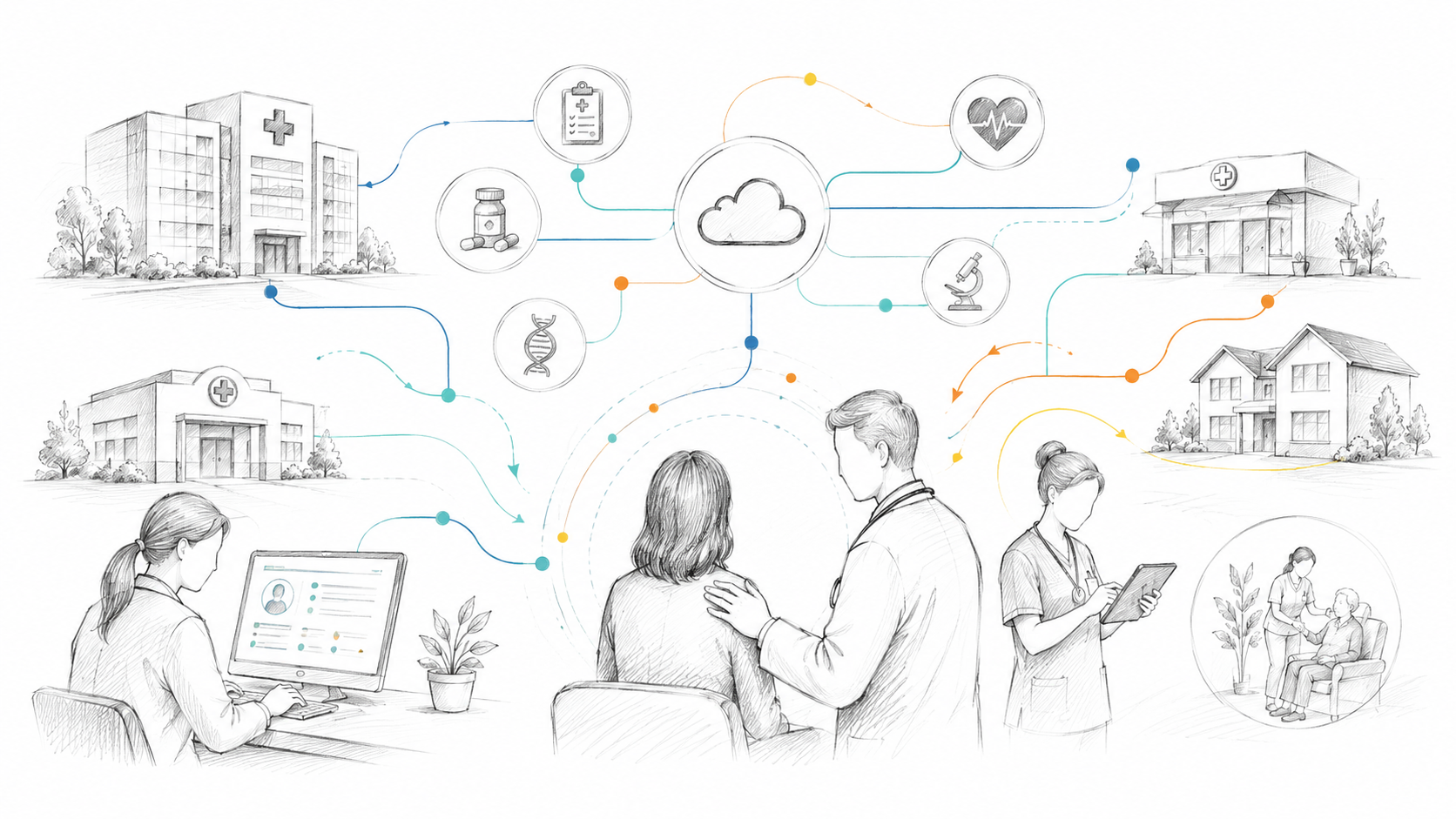
Modern healthcare brings together hospitals, clinics, pharmacies, home care teams, diagnostic labs, and virtual care platforms. Patient records move across all these systems during treatment, recovery, and follow‑up care. When data exchange slows down, communication breaks, tests are repeated, and clinical decisions become harder. Healthcare interoperability plays a central role in building connected care across every stage of treatment. This blog looks at how connected systems improve coordination, patient experience, clinical workflows, and operational clarity across healthcare organizations.
Healthcare organizations rely on different digital systems for patient records, appointments, billing, prescriptions, and diagnostics. Interoperability means smooth data exchange across these systems through shared standards and formats. Tools such as electronic health records, APIs, FHIR frameworks, and secure data channels create a single view of patient information.
Disconnected systems slow down treatment. A doctor may wait for lab results from another facility, or a caregiver may receive incomplete medication details during discharge. Connected systems give fast access to patient records across departments and care settings.
Large hospital groups often work with a healthtech engineering partner during platform modernization projects. Unified data systems reduce confusion across departments and make coordination during patient care more straightforward.
Care coordination means organized communication across healthcare teams during patient treatment. Doctors, nurses, specialists, pharmacies, home care agencies, and telehealth providers share clinical information through connected workflows. A patient recovering from surgery may visit a hospital, join remote consultations, receive medication guidance from a pharmacy, and continue recovery with home healthcare services. Clear communication across every provider creates continuity during recovery.
Healthcare organizations also use healthcare AI services for patient scheduling, risk analysis, and clinical workflow planning. Shared data across platforms gives faster access to patient history during treatment. Fragmented systems lead to duplicate documentation, repeated patient interviews, and delays during referrals. Connected communication reduces confusion across care teams and strengthens coordination across every stage of care.
Healthcare organizations handle large volumes of patient information every day. Medical histories, prescriptions, lab reports, imaging records, and insurance details are stored across different systems. Connected data exchange gives smooth access to complete patient information during treatment.
Remote consultations and home healthcare services continue to expand across modern healthcare. Doctors, nurses, caregivers, and patients need shared access to medical records for clear communication and continuous care across different locations.
Quick access to patient information improves clinical decisions during emergencies, consultations, and follow‑up care. Real-time data exchange reduces delays, repeated tests, and communication gaps between healthcare providers.
Healthcare providers now place greater focus on patient outcomes, treatment quality, and long‑term recovery. Shared patient records create a complete view of treatment history, which strengthens care planning and coordination across departments.
Healthcare organizations continue to adopt digital platforms, electronic health records, cloud systems, and smart technologies. Connected systems improve workflow efficiency and create smoother communication across healthcare networks.
Governments and healthcare authorities promote the use of standardized data exchange across healthcare systems. These regulations strengthen patient safety, improve access to information, and create clear communication across hospitals, clinics, pharmacies, and home healthcare services.
Connected systems strengthen communication across hospitals, specialists, and care teams. Healthcare interoperability gives smooth access to patient records during diagnosis, treatment, discharge, and recovery. A physician reviewing patient history through shared records can check medications, allergies, imaging results, and clinical notes without waiting for manual file transfers. Quick access to information improves clinical decisions during urgent situations.
Many healthcare providers use SaMD solutions for remote monitoring, chronic disease tracking, and digital treatment programs. Shared patient data across connected systems gives a clear view of long‑term care journeys. Patients also experience smoother transitions across care settings. A discharge summary from a hospital can reach home healthcare teams and pharmacies through connected digital channels. This process reduces repeated paperwork and communication gaps.
Administrative tasks take up a large amount of time across healthcare organizations. Staff often enter the same patient details into multiple systems during admissions, referrals, and discharge. Connected systems reduce manual documentation by sharing data across platforms. Front desk teams, clinicians, billing departments, and pharmacies can access updated records through unified workflows.
Organizations that focus on connected care solutions create centralized communication across departments. Shared workflows reduce delays during approvals, referrals, and coordination activities. Unified patient records also give clinicians a clearer view during treatment planning. Care teams spend more time with patients and less time searching for scattered information.
Connected healthcare systems bring together medical history, prescriptions, lab reports, allergies, and treatment records in one place. Through health data integration, care teams gain a clear and complete view of the patient during treatment.
Shared patient information gives healthcare providers a deeper understanding of individual health conditions. This makes treatment planning more precise, based on patient history, lifestyle, and ongoing medical needs.
Patients with long‑term conditions often receive care from multiple providers. Connected systems strengthen communication across care teams and create continuity during ongoing treatment.
Accurate patient information reduces medication errors, duplicate tests, and delays during treatment. Quick access to updated records improves clinical decisions and raises the quality of patient care.
Digital health platforms give patients easier access to medical records, prescriptions, and appointment details. Clear access to health information increases patient awareness and improves communication with healthcare providers.
Electronic health records form the base of digital communication in healthcare. These systems store patient history, prescriptions, diagnostic reports, and treatment notes across different clinical environments. FHIR frameworks and APIs create shared structures for data exchange across software platforms. Cloud platforms provide scalable access to records across healthcare networks. Health information exchanges connect hospitals, clinics, labs, and pharmacies through secure communication channels.
Healthcare interoperability also strengthens data sharing across analytics platforms, population health systems, and remote monitoring tools. Artificial intelligence and predictive analytics continue to shape clinical operations through pattern analysis, patient risk identification, and workflow planning. Many organizations also use a custom AI strategy report to guide the adoption of these technologies and align them with clinical and operational goals.
Data Privacy and Security Concerns: Healthcare organizations manage sensitive patient information across multiple systems. Secure data exchange and compliance with healthcare regulations remain major concerns during interoperability projects.
Legacy Healthcare Systems: Many providers still depend on outdated software that was not designed for modern data sharing. These systems often create communication gaps and slow down information exchange.
Lack of Standardization: Different healthcare platforms use different data formats and communication methods. This makes it difficult for organizations to exchange patient information across systems.
Integration Complexity: Connecting hospitals, clinics, laboratories, and home healthcare platforms requires careful technical planning. Complex integrations can affect workflows and reduce efficiency during implementation.
Cost and Implementation Barriers: Interoperability projects often need investment in technology, infrastructure, staff training, and system upgrades. Smaller healthcare organizations may face financial and operational challenges during adoption.
Connected healthcare ecosystems are shaping the future of patient care. Artificial intelligence, predictive analytics, remote monitoring, and digital communication platforms create faster coordination across healthcare environments. Future systems may bring together patient journeys across hospitals, virtual consultations, pharmacies, diagnostic labs, and home healthcare services. Shared communication across every provider creates smoother experiences for patients and care teams. Healthcare leaders continue to invest in scalable digital systems that provide clear visibility across patient care journeys, operational workflows, and clinical communication.
Modern healthcare depends on clear communication across providers, platforms, and care settings. Healthcare interoperability creates connected workflows, smoother clinical communication, reduced administrative effort, and clearer patient coordination across healthcare environments. Healthcare organizations continue to invest in connected digital systems to improve patient experiences and strengthen operational performance across long‑term care delivery.
Contact us for further guidance on connected healthcare strategies and digital care coordination planning.
Healthcare interoperability allows hospitals, clinics, labs, and home healthcare providers to exchange patient data smoothly. This improves communication, reduces delays, and supports better care coordination through connected care solutions.
A skilled healthtech engineering partner helps healthcare organizations connect systems, improve workflows, and strengthen health data integration across clinical and operational platforms.
Healthcare AI services improve scheduling, workflow automation, predictive analytics, and patient communication while supporting healthcare interoperability across digital care systems.
A custom AI strategy report helps organizations identify gaps in digital infrastructure, improve connected care solutions, and plan scalable interoperability initiatives more effectively.
SaMD solutions support remote monitoring, digital therapeutics, and clinical decision-making by enabling secure data sharing and stronger healthcare interoperability across healthcare networks.
How to build HIPAA-compliant AI: when LLM providers need a BAA, data minimization, de-identification, audit controls and a reference architecture.

Practical data migration planning guide for healthcare teams. Scope, mapping, compliance, validation, cutover and rollback decisions explained end to end.

Smart on FHIR guide for healthtech engineers. Learn the OAuth 2.0 launch model, scope syntax, backend services, and US regulatory requirements.
Connect with our team to explore how AI expertise can transform your business.