
AI in Healthcare
HIPAA-Compliant AI: How to Use LLMs With PHI Safely
How to build HIPAA-compliant AI: when LLM providers need a BAA, data minimization, de-identification, audit controls and a reference architecture.
October 16, 2026Read more
Many clinical AI models show strong results in testing but struggle in real hospital environments. Learn why production failures happen and how organizations can design AI systems that work reliably in real-world healthcare settings.
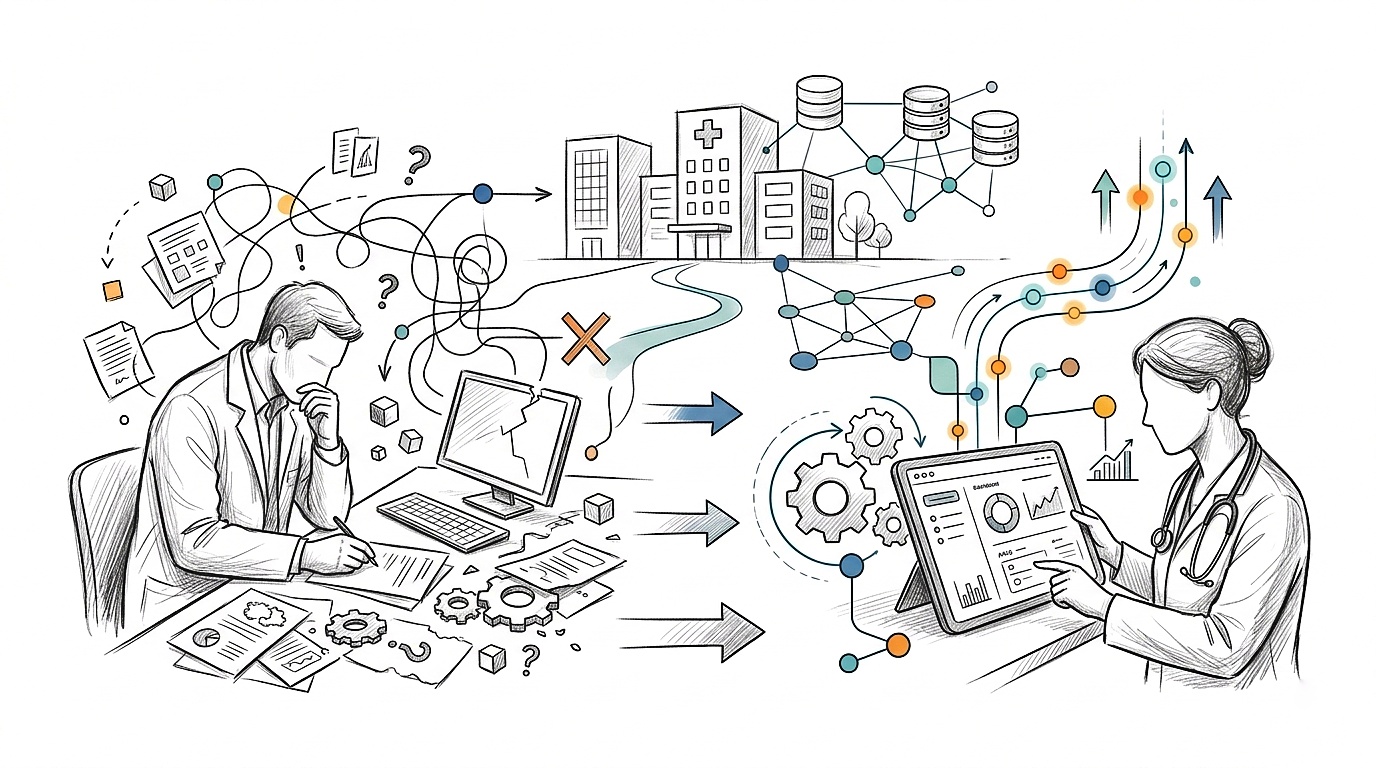
Hospitals worldwide are investing heavily in artificial intelligence. They expect these tools to improve how they diagnose patients, predict health risks, and make care decisions. Many AI models perform well during research trials and small pilot programs. Under controlled conditions, they deliver strong results. But real hospitals work differently. Information is scattered across systems, workflows are complex, and technology has limits. These everyday challenges often reduce the value of AI once it leaves the research setting. This is why so many projects struggle after they go live. Understanding what stands in the way of successful clinical AI deployment is crucial for healthcare leaders seeking systems that are reliable and designed to scale.
Hospitals invest in artificial intelligence because data-driven tools can support better clinical decisions. AI systems help analyze medical images, interpret lab results, and guide doctors during diagnosis. Predictive models spot patterns that point to patient risk, and early warning systems can flag signs of decline before they become obvious. These insights allow hospitals to plan care more proactively, manage the health of entire populations, and improve outcomes.
AI also helps with the daily work of running a hospital. Tasks like clinical documentation, patient triage, scheduling, and care coordination become more efficient when intelligent tools learn from past data. Large health systems often turn to healthcare AI services to build platforms that assist with reading radiology scans, analyzing tissue samples, and deciding which emergency cases need attention first.
AI development teams often concentrate heavily on model performance during testing. In controlled research settings, the results appear strong, and expectations rise. But real hospitals are different. Patient data is scattered across many systems, including electronic health records, lab databases, imaging tools, pharmacy systems, and billing software. When information is scattered across disconnected systems, predictive models lose their accuracy.
There is also the challenge of how hospitals actually run. Doctors work within routines shaped by years of experience. If new technology does not fit naturally into those routines, it tends to get ignored. This is why even well-designed AI solutions can fail to gain traction. On top of that, hospitals must meet strict privacy rules and go through clinical validation before anything new can be trusted. Running an AI readiness assessment before deployment often brings these issues to light. Problems with data quality, gaps in infrastructure, or tools that do not match clinical workflows can all drag down performance once the model leaves the development stage.

Data quality is one of the biggest hurdles in healthcare technology. Clinical information shows up in many different forms and across a wide range of systems.
Patient records include structured data, handwritten or dictated physician notes, diagnostic reports, and image files.
Many hospitals still run older systems that keep information locked in separate databases.
Different departments often use tools that do not communicate with each other in any standardized way.
The data used to train models during development is often carefully selected and cleaned.
Real hospitals, on the other hand, deal with incomplete records, duplicate entries, inconsistent terms, and information that is not always up to date.
A structured AI maturity model can help reveal how ready an institution's data really is. It looks at governance, data organization, interoperability between systems, and how well data is managed day to day.
When clinical data is not clean and consistent, predictive models struggle once they are put to work.
Inconsistent information leads to unreliable results, and clinicians lose confidence in the tools they are asked to use.
Getting AI to work inside a hospital is difficult because the technology must fit into a complex web of existing systems. Electronic health records hold patient histories and clinical notes, while labs and imaging centers operate on separate platforms. AI tools need information from all these sources to be useful, but when systems do not connect well, critical data may not reach doctors when they need it. An experienced AI implementation partner evaluates infrastructure, system communication, and data flow before introducing any platform. Without careful integration, AI tools can end up disconnected from the real work happening in clinical settings.
Hospitals run on routines that are built around patient safety and keeping things moving smoothly. Doctors follow established steps for diagnosis, consultation, and treatment. When AI tools suggest something that does not fit into these routines, it can create friction. If physicians have to take extra steps or work around the technology, it slows them down and adds to their workload.
For AI to be adopted successfully, it needs to be designed with real clinical work in mind. Developers should spend time understanding how doctors move through their day, how departments operate, and when decisions actually get made. Many hospitals turn to AI strategy consulting to make sure the technology they build fits with how care is delivered. Involving clinical staff early in the design process also helps. When the people using the tools have a say in how they work, adoption goes more smoothly.
Doctors base their decisions on evidence. Every choice they make affects patient safety, treatment results, and the hospital's responsibility for the care provided. When AI tools act like black boxes, offering no clear reason for their predictions, physicians struggle to trust them. Without transparency, confidence in the technology drops quickly.
Models that show why they arrived at a particular result help build trust. When clinicians can see what factors influenced a prediction, they are more likely to rely on it. Many hospitals put together a custom AI strategy report that lays out what the model is supposed to do, how it will be evaluated, how it was tested, and how it will be governed. This kind of clarity helps clinical teams and technology developers work together more effectively.
Healthcare technology has to follow strict legal and ethical rules. Patient data privacy laws control how information is accessed and shared across hospitals and clinics. Before any algorithm can be used in patient care, it must go through clinical testing, risk reviews, and safety checks. These steps take time and can slow down deployment.
To manage this, many organizations use an AI adoption roadmap. This helps them line up compliance tasks with development work and clinical validation, keeping everything on track across the healthcare system.
Making AI work in healthcare takes more than just good technology. It requires input from many different people. Technology teams build the models and set up the systems that data runs through. Clinicians bring knowledge of how patients are diagnosed and treated. Administrative leaders help define what matters most and how decisions should be governed.
AI tools need to solve problems that matter in a real clinical setting. The most effective AI use cases deliver real value when they tackle issues like which patients are likely to be readmitted, delays in diagnosis, or tasks that slow down daily work. When organizations bring together clinical insight, operational planning, and solid technical design, AI systems can actually make a difference in patient care.
Reliable, well-governed data with consistent formats and smooth interoperability across platforms ensures predictive models perform accurately in real hospital settings.
AI tools gain acceptance when they fit naturally into existing routines and appear within systems doctors already use. Involving clinicians early in design ensures the tools work as intended and encourages adoption.
Hospitals require validation studies and explainable algorithms to trust AI in patient care. Clinical trials, real-world testing, and ongoing monitoring confirm reliability across diverse populations and build confidence among clinicians and leadership.
Rolling out AI gradually through pilot programs reduces disruption and allows clinical feedback to guide adjustments. Once pilots succeed, expansion to other departments can follow. Ongoing monitoring of performance, usage, and patient outcomes supports long-term success.
Healthcare technology continues to advance through better data systems, ongoing analytics research, and closer collaboration between doctors and engineers. Connected health platforms are unifying patient information across hospitals, laboratories, and imaging centers, which strengthens predictive accuracy. Governance frameworks are taking shape to guide responsible adoption, focusing on ethics, regulation, and transparency. As clinicians and technology teams work more closely, the tools they build become better suited to real medical challenges. Scalable platforms are bringing intelligent decision support to large health systems, pointing to a future where clinical AI becomes a normal, dependable part of everyday healthcare.
Artificial intelligence creates new opportunities to enhance patient care, assist clinical decisions, and improve hospital operations. Many AI models show promise during development, yet actual hospital settings introduce their own challenges. These include scattered data, gaps in infrastructure, tools that do not fit into daily routines, a lack of transparency, and tight regulatory requirements. Successful clinical AI deployment takes more than just a good model. It requires thoughtful planning, reliable data systems, alignment with how care is actually delivered, proper validation, and responsible governance practice, which takes more than just a good model. It requires thoughtful planning, reliable data systems, alignment with how care is actually delivered, proper validation, and responsible governance. Contact us to explore practical ways to bring AI into your healthcare environment.
Clinical AI deployment refers to integrating AI Solutions into real hospital workflows to support diagnosis, patient risk prediction, and operational efficiency.
Many fail due to fragmented data, poor integration with hospital systems, and misalignment with workflows, which healthcare AI services aim to address.
Hospitals can start with an AI readiness assessment and an AI maturity model to evaluate infrastructure, data quality, and governance readiness.
AI strategy consulting and a custom AI strategy report help identify the right AI use cases and align technology with clinical priorities.
Working with an AI implementation partner and following a structured AI adoption roadmap helps organizations scale AI reliably across healthcare environments.
How to build HIPAA-compliant AI: when LLM providers need a BAA, data minimization, de-identification, audit controls and a reference architecture.

Practical data migration planning guide for healthcare teams. Scope, mapping, compliance, validation, cutover and rollback decisions explained end to end.

Smart on FHIR guide for healthtech engineers. Learn the OAuth 2.0 launch model, scope syntax, backend services, and US regulatory requirements.
Connect with our team to explore how AI expertise can transform your business.