
AI in Healthcare
HIPAA-Compliant AI: How to Use LLMs With PHI Safely
How to build HIPAA-compliant AI: when LLM providers need a BAA, data minimization, de-identification, audit controls and a reference architecture.
October 16, 2026Read more
Real-time healthcare data sharing improves coordinated care by enabling faster communication, accurate decisions, and seamless collaboration across healthcare systems. It helps providers deliver timely treatment and better patient outcomes.
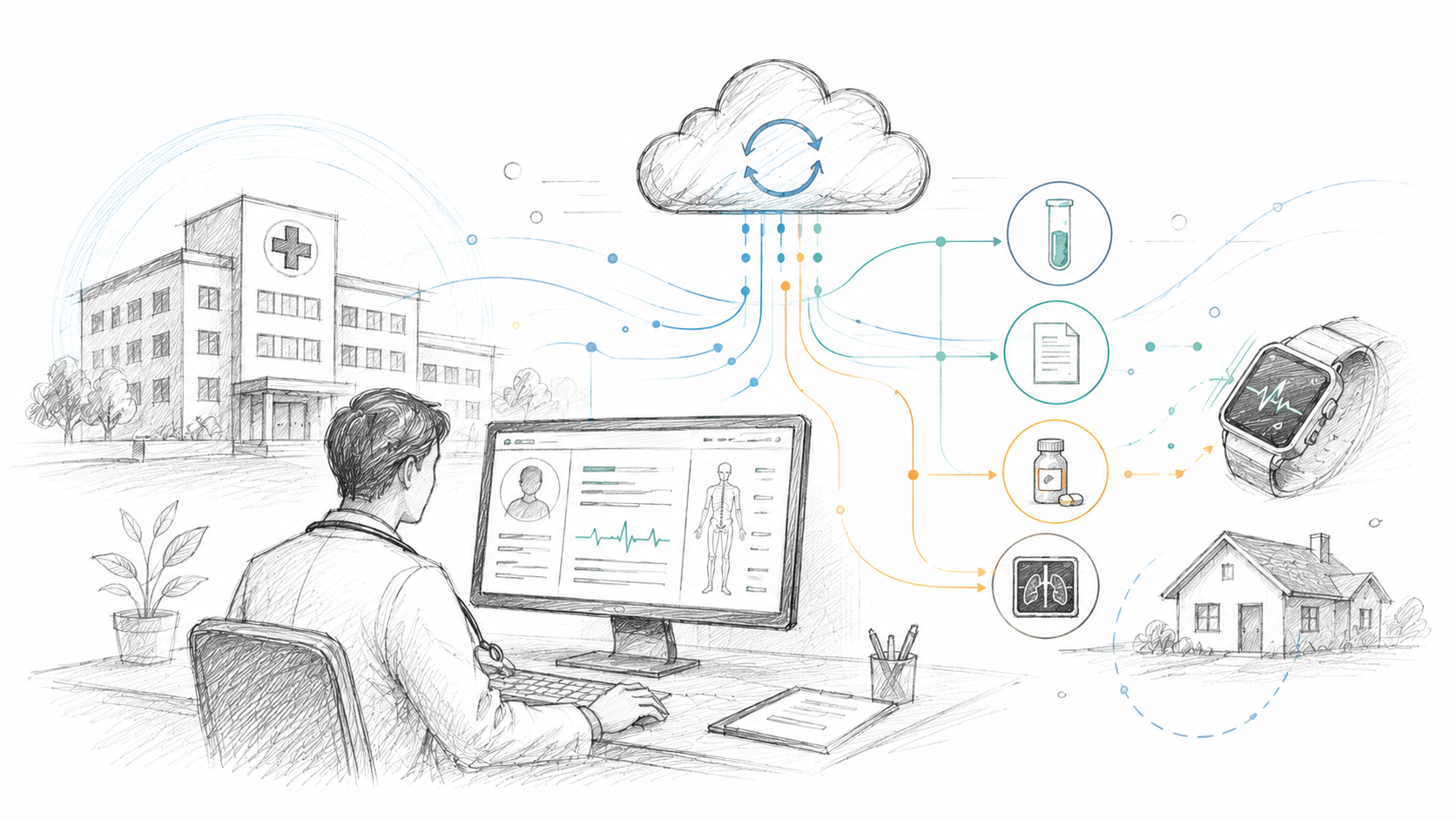
Healthcare teams often work across hospitals, clinics, labs, pharmacies, rehabilitation centers, and home care programs. A single patient may meet five different care teams within days after surgery or during long-term treatment. When records are delayed, treatment plans can break down, medication updates may be missed, and clinical decisions can be affected.
Real-time healthcare data sharing gives doctors, nurses, specialists, and care staff immediate access to updated patient records across connected systems. This steady flow of information keeps care timely, communication clear, and treatment safe through every stage of recovery.
Real-time exchange of clinical information connects EHR systems, diagnostic labs, medical devices, pharmacies, and care teams through one shared digital network. A doctor can see new lab results within seconds of testing. A nurse can check medication updates during discharge planning. A monitoring device at home can send patient vitals straight into connected systems. Older workflows depended on delayed uploads, paper files, phone calls, and manual entry. Current exchange models create faster communication across all care settings. These models rely on clinical data integration to keep patient information consistent across hospitals, labs, and care teams.
A patient recovering from cardiac surgery may receive care from surgeons, primary doctors, rehabilitation staff, nutrition specialists, and home nurses. Each provider needs access to the same patient history, medication plan, discharge notes, and recovery updates. Clear communication across departments reduces confusion during transitions and strengthens clinical planning throughout the care journey.
A healthcare organization working with a healthtech engineering partner can link clinical systems across multiple facilities through unified data platforms. This approach creates smooth communication between care providers and administrative teams. A connected healthcare ecosystem brings together hospitals, imaging centers, emergency departments, pharmacies, and outpatient clinics through continuous information exchange. Healthcare networks now focus on digital care coordination for chronic disease programs, post-surgical recovery, and emergency response planning.

Coordinated care is a connected approach where different healthcare providers work together using shared patient information, clear communication, and aligned treatment plans. It creates a smooth experience for patients across hospitals, clinics, rehabilitation centers, diagnostic labs, pharmacies, and home care services. Modern healthcare systems also use healthcare AI services for patient monitoring, clinical insights, and faster care coordination across connected healthcare environments. This approach reduces confusion during treatment and keeps care consistent at every stage.
Several healthcare professionals may treat a single patient at the same time. Surgeons, specialists, nurses, therapists, and primary doctors all need access to the same clinical information to make accurate decisions. Consistent collaboration leads to safe treatment plans, timely updates, and clear communication across departments.
Patients with chronic illness, post-surgical recovery needs, or complex conditions often interact with different care teams during treatment. Each provider focuses on a specific part of patient care. Shared access to medical records, prescriptions, diagnostic reports, and discharge summaries creates coordinated decisions across all providers involved.
Continuity of care creates a smooth journey for patients from admission through recovery. They need consistent guidance during hospital stays, follow-up visits, rehabilitation sessions, and home care programs. Connected communication between providers reduces repeated tests, medication confusion, and treatment delays.
Clear communication between healthcare teams strengthens treatment accuracy and patient safety. Specialists need the latest diagnostic updates, nurses need current treatment instructions, and primary doctors need complete recovery details. Some healthcare organizations also use a custom AI strategy report to improve communication workflows and data coordination across departments. Shared data systems make coordination faster at every stage of patient care.
Disconnected systems cause delays in patient records, missing updates, repeated paperwork, and gaps in communication between providers. A doctor may not have access to recent test results or medication changes during treatment planning. These gaps affect care quality, patient experience, and efficiency across healthcare organizations.
Emergency doctors need quick access to allergy history, medication records, past scans, and recent admissions. Fast access shortens delays during trauma care, stroke treatment, and intensive care planning. Real-time healthcare data sharing gives providers the most current details during critical moments.
Disconnected records can lead to duplicate tests, prescription confusion, and missing updates. Shared systems close communication gaps between departments. Doctors can check recent prescriptions and treatment changes before new medication orders are given to patients.
A patient discharged after orthopedic surgery may continue recovery through rehabilitation and home monitoring. Shared records make it easier to transfer treatment plans smoothly between all providers involved in recovery.
Remote devices can send heart rate, oxygen levels, glucose readings, and blood pressure data directly through digital platforms. Many healthcare organizations also use SaMD solutions for remote monitoring, patient tracking, and clinical data analysis across connected care environments. Care teams can spot changes early and respond with timely action.
Digital workflows cut down on paperwork, repeated data entry, and manual coordination tasks. Administrative staff can review admissions, discharge activity, appointment updates, and care records through one connected platform. Real-time healthcare data sharing also strengthens communication between departments during periods of high patient volume.
Modern healthcare systems use connected technologies to move patient information quickly between hospitals, labs, pharmacies, and care teams. These tools improve communication, reduce delays, and create coordinated care for patients.
EHR and EMR systems store patient records such as medical history, prescriptions, lab results, and treatment plans. When these systems are integrated, providers can easily access updated patient information across facilities.
Interoperability means different healthcare systems can communicate with each other. It creates seamless data exchange between hospitals, labs, pharmacies, and clinical applications.
HL7 and FHIR are data standards used in healthcare for structured information exchange. They make communication consistent between applications and digital platforms.
APIs connect healthcare applications and transfer patient data between systems. Integration platforms manage this flow and create faster communication across departments.
Event-driven integration sends updates right after a clinical event, such as patient admission, discharge, or lab report completion. This gives care teams immediate information to act on.
Connected healthcare ecosystems link hospitals, clinics, pharmacies, diagnostic centers, and home care services through shared digital communication. This creates continuous visibility across the patient journey.
Healthcare organizations face several hurdles during modernization projects. Privacy concerns, outdated infrastructure, gaps in data standards, scalability demands, and regulatory requirements often slow progress. Older software platforms can block smooth communication between departments. Clinical teams also need training to adapt to new workflows and connected systems. Clear governance and structured integration models make adoption easier across large healthcare environments.
Healthcare organizations are expanding connected care models with predictive analytics, AI-driven monitoring systems, remote treatment programs, and cloud-based interoperability platforms. These technologies create faster communication between hospitals, specialists, labs, pharmacies, and home care teams. Doctors can review patient updates in real-time, monitor health conditions remotely, and respond quickly during critical situations. Connected healthcare systems also strengthen care planning for patients with chronic diseases, post-surgical recovery needs, and long-term treatment programs.
Future healthcare environments may deliver more personalized and data-driven care through advanced digital platforms. Intelligent systems can study patient history, identify risks early, and guide providers during treatment planning. Cloud-based data exchange platforms make communication smoother across multiple facilities without delays in clinical information. As healthcare networks expand digital coordination strategies, providers may deliver faster decisions, improved patient experiences, and more connected recovery pathways across every stage of care.
Coordinated care depends on timely communication between doctors, nurses, specialists, labs, pharmacies, and recovery teams. Real-time healthcare data sharing gives care providers clear visibility across every stage of treatment and recovery. Healthcare organizations continue to build connected systems that strengthen communication, improve operations, and enhance patient safety. Contact us for further guidance on connected healthcare communication strategies.
Real-time healthcare data sharing helps providers access updated patient records instantly, improving treatment accuracy and digital care coordination across healthcare teams.
A skilled healthtech engineering partner helps healthcare organizations build a connected healthcare ecosystem with secure integration and smoother communication workflows.
Healthcare AI services support faster clinical decisions, remote monitoring, predictive insights, and automated workflows across connected healthcare environments.
A custom AI strategy report helps organizations evaluate infrastructure, workflow gaps, compliance planning, and real-time healthcare data sharing requirements before implementation.
SaMD solutions improve patient monitoring, remote care management, and communication between providers through connected digital systems.
How to build HIPAA-compliant AI: when LLM providers need a BAA, data minimization, de-identification, audit controls and a reference architecture.

Practical data migration planning guide for healthcare teams. Scope, mapping, compliance, validation, cutover and rollback decisions explained end to end.

Smart on FHIR guide for healthtech engineers. Learn the OAuth 2.0 launch model, scope syntax, backend services, and US regulatory requirements.
Connect with our team to explore how AI expertise can transform your business.