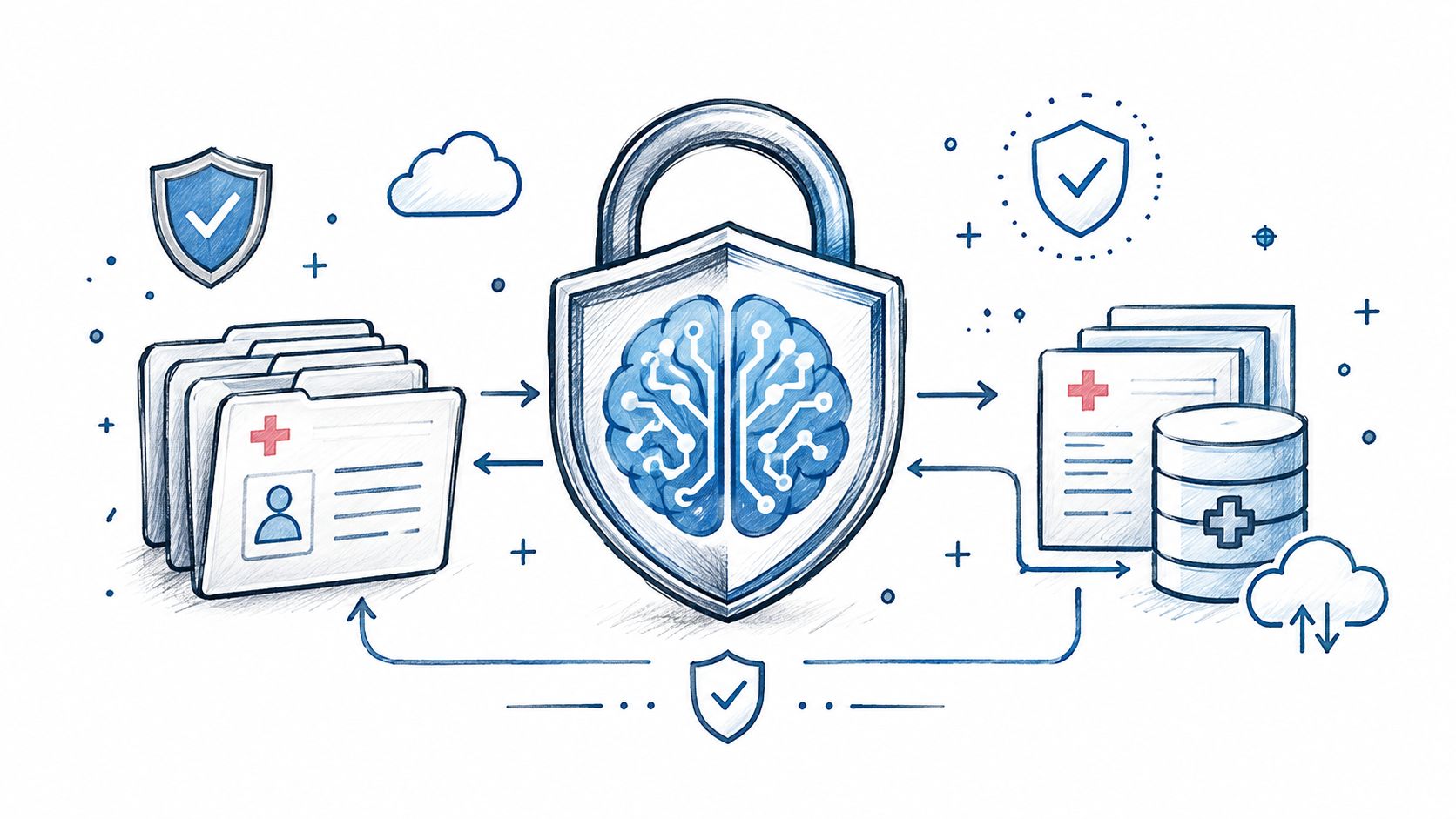
AI in Healthcare
HIPAA-Compliant AI: How to Use LLMs With PHI Safely
How to build HIPAA-compliant AI: when LLM providers need a BAA, data minimization, de-identification, audit controls and a reference architecture.
October 16, 2026Read more
Boost healthcare efficiency & patient outcomes with AI-driven care optimization. Explore practical strategies for innovation and success in 2026.

Let's cut through the noise. AI-driven care optimization isn't some far-off concept; it’s a practical, data-first strategy that is actively reshaping patient care right now. It marks a crucial pivot from the old reactive model—where we treat problems as they arise—to a predictive, proactive one. It's all about using AI to analyze massive datasets to see trouble coming before it ever hits.
AI in healthcare is no longer just a pilot program or a research paper. It’s a core operational strategy delivering real-world results. For providers, this means finally moving past the traditional, manual processes that have bogged down clinical teams for decades.
Consider the all-too-familiar preoperative assessment workflow. In many hospitals, this still consumes up to 50% of a nurse's time with administrative work, pulling them away from direct patient interaction. This inefficiency creates last-minute chaos, preventable surgery cancellations, and a ton of stress for everyone involved. AI flips this dynamic on its head by automating the grunt work and adding a layer of intelligent foresight.

The true power of AI here is its ability to digest and make sense of staggering amounts of information—from electronic health records (EHRs) and lab results to real-time monitoring data. It finds the subtle patterns that even the most experienced clinician would miss, allowing health systems to anticipate what patients will need instead of just reacting to emergencies.
With AI-driven care optimization, we can finally pinpoint which patients are at high risk, intervene much earlier, and design care plans with a degree of precision we could only dream of before. This isn't just about better patient safety; it's a game-changer for operational efficiency.
For instance, an AI model can analyze a patient's chart and live vitals to flag a rising risk of sepsis or a cardiac event, triggering an alert for preemptive action. This one shift from reactive to proactive care creates a powerful ripple effect across the organization, leading to:
This is more than just a technology upgrade; it’s about fundamentally changing the business of delivering care. To get started, it's critical to understand the full landscape of Healthcare AI Services and how they can build a more resilient, efficient, and patient-focused system.
To get any major initiative off the ground, especially one involving technology, the conversation with leadership has to shift quickly from "what it is" to "what it's worth." While AI-driven care optimization promises incredible clinical advancements, its real power for the C-suite is its direct, measurable impact on the bottom line. This isn't about chasing the latest tech trend; it's about making a smart investment that pays for itself in financial and operational returns.

At its core, the business case for AI in healthcare is about boosting efficiency and cutting down on risk. Think about it in practical terms. Some studies show that AI-powered programs can lead to a 40% reduction in avoidable 72-hour surgery cancellations. Every single one of those cancellations means lost revenue, a tied-up operating room, and an administrative scramble—all of which hit your P&L directly. AI helps turn that unpredictable cost into a smooth, predictable process.
The financial arguments are both direct and indirect, tackling immediate costs while building a stronger foundation for the future. A solid business case will put real numbers to the potential gains.
So where does the money come from? You’ll want to focus on a few key metrics:
The operational improvements you get from smarter care pathways translate directly into major financial wins. We've seen some health systems realize an ROI of up to $10 million per 100 operating rooms just by optimizing these processes with AI.
This is exactly why a formal planning process is so vital. It helps you move past generic industry claims to define specific, quantifiable goals for your own organization's financial reality. For a hands-on approach to defining these goals, you might be interested in our AI strategy workshop.
While hard numbers are crucial for getting a "yes," the strategic value of AI-driven care is just as compelling. These are the benefits that strengthen your market position and set you up for long-term growth.
Don’t forget to highlight these advantages:
A persuasive business case tells a clear, data-backed story that connects the dots between a technology investment and these tangible business outcomes. It shows stakeholders the precise value AI can deliver and gives them the confidence to approve the investment that will start your organization’s journey toward intelligent care.
So, what does AI-driven care optimization actually look like on the ground, in a real hospital setting? This isn't about futuristic concepts; we're talking about practical artificial intelligence business solutions that are already delivering measurable results today.
The big shift is moving from reacting to problems to anticipating them. By focusing on prediction, remote monitoring, and making operations more efficient, AI gives a hospital a much stronger ability to provide top-tier care without breaking the bank. These applications show the immediate value this technology can bring, and you can see the sheer breadth of what’s possible by exploring more real-world use cases.
One of the most significant ways AI is changing healthcare is by spotting high-risk patients long before a crisis hits. Traditional methods often rely on very general criteria, but AI models can dig deep into a patient's electronic health record (EHR), analyzing thousands of data points to find subtle risk factors that a human might miss.
Think of it as a sophisticated early warning system. For instance, an AI can flag a patient who, based on their unique combination of lab results, existing conditions, and even demographic data, is at high risk of developing sepsis or facing complications after surgery.
By flagging these at-risk individuals proactively, clinical teams can intervene with targeted preventative care, moving from a "wait and see" approach to one of "predict and prevent."
This has a direct and powerful impact on both patient outcomes and the hospital's bottom line. By directing resources to the patients who truly need them most, hospitals can:
AI is also pushing the boundaries of care well beyond the hospital walls. When you combine remote patient monitoring (RPM) with AI, you completely change the game for managing chronic diseases. This approach enables continuous care and helps prevent the acute episodes that land people in the emergency room. It's an area where many compliant SaMD solutions are making a real difference.
AI-driven RPM systems gather a constant stream of data from wearables and at-home medical devices. The AI then analyzes this data for trends that signal a patient's health might be declining. For someone with congestive heart failure, the system could catch a slight but steady weight gain and a drop in activity level, alerting the care team to step in before the condition becomes critical.
The results are pretty compelling. AI-powered remote monitoring has proven it can dramatically cut down on hospital readmissions and boost patient safety. For example, some AI-driven patient safety networks have achieved a stunning 65% reduction in clinical distress codes and slashed ICU transfers by 48%. This isn't just about better clinical numbers; it's about making healthcare more accessible and centered on the patient's life.
AI-driven optimization isn’t just for direct patient care—it's also a fantastic tool for untangling the logistical knots of running a hospital. Two areas seeing massive improvements are bed management and staff scheduling.
Getting these resources right is absolutely vital for financial stability and the patient experience. AI models can predict when patients will be discharged with much greater accuracy, which means beds can be turned over more efficiently and wait times in the emergency department can be cut down.
In the same way, AI can create optimal staff schedules that match patient needs and numbers, making sure the right nurses and specialists are always where they're needed most. This doesn't just reduce expensive overtime; it also helps prevent staff burnout by creating more manageable workloads. If you're curious how AI could support your own teams, you might want to look into something like our Clinic AI Assistant. Ultimately, these operational gains free up clinicians to focus on their most important job: caring for patients.
Bringing AI into your healthcare operations feels like a huge undertaking, but it doesn't have to be. The key is breaking it down into manageable phases. A proven approach follows three logical stages: Discovery, Pilot, and Scale. For a broader business perspective, you can find a practical roadmap for implementing AI in business that covers similar principles.
This structured method helps you sidestep the common mistake of jumping into a big technology investment without a clear plan. Instead, each step builds on the last, delivering real, measurable value along the way.
Before you write a single line of code, any successful AI initiative starts with an honest, deep look at your organization’s actual needs and current capabilities. This discovery phase is all about asking the right questions to build a solid foundation. The goal is to find the most pressing clinical or operational problems that AI is uniquely suited to solve.
A critical first step is a thorough AI requirements analysis to get a handle on your data, your workflows, and what you’re ultimately trying to achieve. This process helps pinpoint specific, high-value opportunities where AI-driven care optimization can make a tangible difference, like reducing readmissions for congestive heart failure or untangling the complexities of OR scheduling.
This initial phase isn’t just about the tech; it’s about tying your AI goals directly to your core business objectives. This is where you define what a "win" looks like and build a compelling business case that gets everyone on board.
That strategic alignment is non-negotiable. To help you move faster during this crucial planning stage, an AI Strategy consulting tool can be invaluable for mapping out potential projects and estimating their financial return, turning a big-picture vision into a concrete, actionable plan.

The flow above shows how AI helps you move from simply identifying at-risk patients to actively monitoring them beyond the hospital walls and, finally, to optimizing the internal operations that support their care.
Once you have a clear strategy, it’s time to test your assumptions with a focused pilot program. The trick is to pick a single use case that offers high impact but is also relatively contained. This lets you demonstrate value quickly, learn from a real-world application, and build momentum without causing major disruptions.
For instance, you might pilot a predictive model on a single hospital floor to identify patients at a high risk of falling. The scope should be tightly defined, with clear success metrics from the start—like a measurable percentage drop in fall incidents.
The data backs this up. Predictive analytics is no longer a futuristic concept; it's a cornerstone of modern healthcare. Nearly 70% of providers are already using it to flag high-risk patients. Organizations that get this right have seen hospital readmissions drop by up to 50%. In one case, a large network that rolled out predictive AI reported 10–29% more discharges and annual savings between $55–$72 million. The value of a smart, targeted pilot is undeniable. To dig into the numbers, you can find in-depth details on AI in healthcare here.
With a successful pilot under your belt, it's time to think bigger. This phase is about more than just rolling out technology; it's about navigating the technical and organizational hurdles needed to embed the solution across your entire enterprise. Having a clear understanding of the full AI Product Development Workflow becomes essential here.
Scaling successfully means focusing on three key areas:
This final stage is what turns a promising experiment into a core part of how you operate. By moving methodically from discovery to pilot and then to scale, your organization can embrace AI with confidence, especially when guided by an experienced HealthTech engineering partner.
Getting the AI models to work is often the easy part. The real challenge—the one that determines success or failure—is wrestling with the tangled web of governance, ethics, and regulation that comes with it. When you're talking about AI-driven care optimization, trust is everything. That trust isn't a given; it's earned by proving every algorithm is fair, transparent, and accountable.
This means you have to tackle the non-technical headaches head-on. You need an ironclad plan for managing data privacy and HIPAA compliance, but it goes deeper than that. You have to actively hunt for and root out algorithmic bias and find ways to explain how your models arrive at their conclusions. This isn't just about checking a regulatory box. It's a moral and operational necessity.
Good governance isn't about cleaning up messes after the fact. It’s about building guardrails before you even launch a pilot. In the high-stakes world of patient care, these rules of the road are what protect your patients, your clinicians, and your organization.
Here’s what that framework needs to include:
Taking on these sensitive topics shows a mature, responsible approach to innovation. It demonstrates that your AI strategy puts patient safety and ethical integrity first, a principle that is core to how we deliver our AI Automation as a Service.
Algorithmic bias is one of the biggest landmines in healthcare AI. If your model is trained on data reflecting decades of healthcare disparities, it won’t just learn those biases—it will amplify them at scale. The result? Potentially worse outcomes for already vulnerable patient groups.
Fighting this requires a constant, active effort:
By weaving strong governance and ethical practices into your AI strategy from day one, you build a program that's not only powerful but also sustainable and worthy of trust. It’s how you turn a promising technology into a genuinely positive force for improving patient care.
Making AI-driven care optimization a reality is a serious undertaking. It’s a path that leads to a more efficient, responsive, and patient-focused healthcare system, but getting there requires more than just buying new technology. You need the right strategy and, just as importantly, the right partner to help you bring it all together. This is where a dedicated HealthTech engineering partner proves its worth.
Adopting AI isn't a one-and-done project; it’s about building a lasting capability within your organization. It all starts by getting crystal clear on the specific problems you need to solve. From there, you need a practical roadmap that delivers real value at every step, moving from initial discovery to a contained pilot and, eventually, to a full-scale rollout. This phased approach is the key to managing risk and building momentum.
The best partners don't just hand you a report and walk away. They roll up their sleeves and work right alongside your team, bridging the gap between learning what's possible and actually doing it.
At Ekipa, we combine fast-moving AI strategy consulting with the hands-on engineering to get the job done. We can help you:
We begin by mapping out your journey in a Custom AI Strategy report, giving you a clear, evidence-based plan for your first moves. After that, we bring the technical horsepower to make it happen, whether that means implementing our AI Automation as a Service or deploying the right AI tools for business.
The potential to improve patient care is immense, but it won't happen on its own. The time for theory is over. Your organization can redefine what's possible in care delivery, and we have the expertise to help you make it a reality.
The work begins with a simple conversation. Get in touch with our expert team to talk through your unique challenges. Let's start building a plan that delivers results you can actually measure.
Let's tackle some of the most common questions we hear from healthcare leaders about AI-driven care optimization. We'll dig into what it really is, the benefits you can expect, the hurdles you'll face, and how to get started on the right foot.
At its core, think of it as a highly intelligent co-pilot for your clinical and operational teams. AI-driven care optimization uses advanced algorithms to sift through vast amounts of health data, uncovering patterns that would be impossible for a human to spot. This allows you to predict which patients are at the highest risk, tailor treatment plans with incredible precision, and even smooth out hospital logistics like bed assignments.
The entire point is to move from a reactive model of care—where you're just putting out fires—to a proactive one. As we explored in our AI adoption guide, it's about using data to get ahead of problems before they even start.
The two biggest wins are dramatically improved patient outcomes and a much healthier bottom line. For your patients, this means care that feels truly personalized, a lower chance of complications, and fewer frustrating return trips to the hospital. It builds a safer, more effective path to recovery.
For the hospital itself, this translates directly to lower operating costs, fewer readmission penalties, and smarter use of your most valuable resources—from ICU beds to your clinical staff's time. You end up delivering a higher quality of care while making the organization more financially sound.
By making your core processes more intelligent, you don't have to choose between clinical excellence and financial stability. You get both. This is the fundamental promise of optimizing care with AI.
The biggest obstacles are almost always the same: messy data, navigating regulations like HIPAA, and addressing the ethics of it all. AI is completely dependent on the data you feed it, so getting your data clean, organized, and complete is non-negotiable. It's the essential first step.
On top of that, you have to work within a complex web of medical software regulations. Ethically, you have to be vigilant about ensuring your AI models are fair, unbiased, and transparent in their recommendations. And finally, don't underestimate the human element—guiding your teams through this change and building their trust in these new tools is a massive part of a successful rollout.
The most successful projects always begin with a clear strategy, not a fancy new technology. Start by pinpointing one specific, high-value problem you want to solve—something like reducing readmissions for congestive heart failure patients, for example. From there, an AI requirements analysis will tell you if your data is ready for the job.
Working with an AI strategy consulting partner can help you cut through the noise, find the most promising opportunities, and build a rock-solid business case. This approach ensures you're tying every dollar you invest to a real, measurable outcome right from the start.
Ready to turn that strategy into a concrete plan? At Ekipa AI, we specialize in building that clear path forward. Get a Custom AI Strategy report to discover your highest-impact opportunities and kickstart your journey. Our expert team is here to help you navigate every step of the process.
How to build HIPAA-compliant AI: when LLM providers need a BAA, data minimization, de-identification, audit controls and a reference architecture.
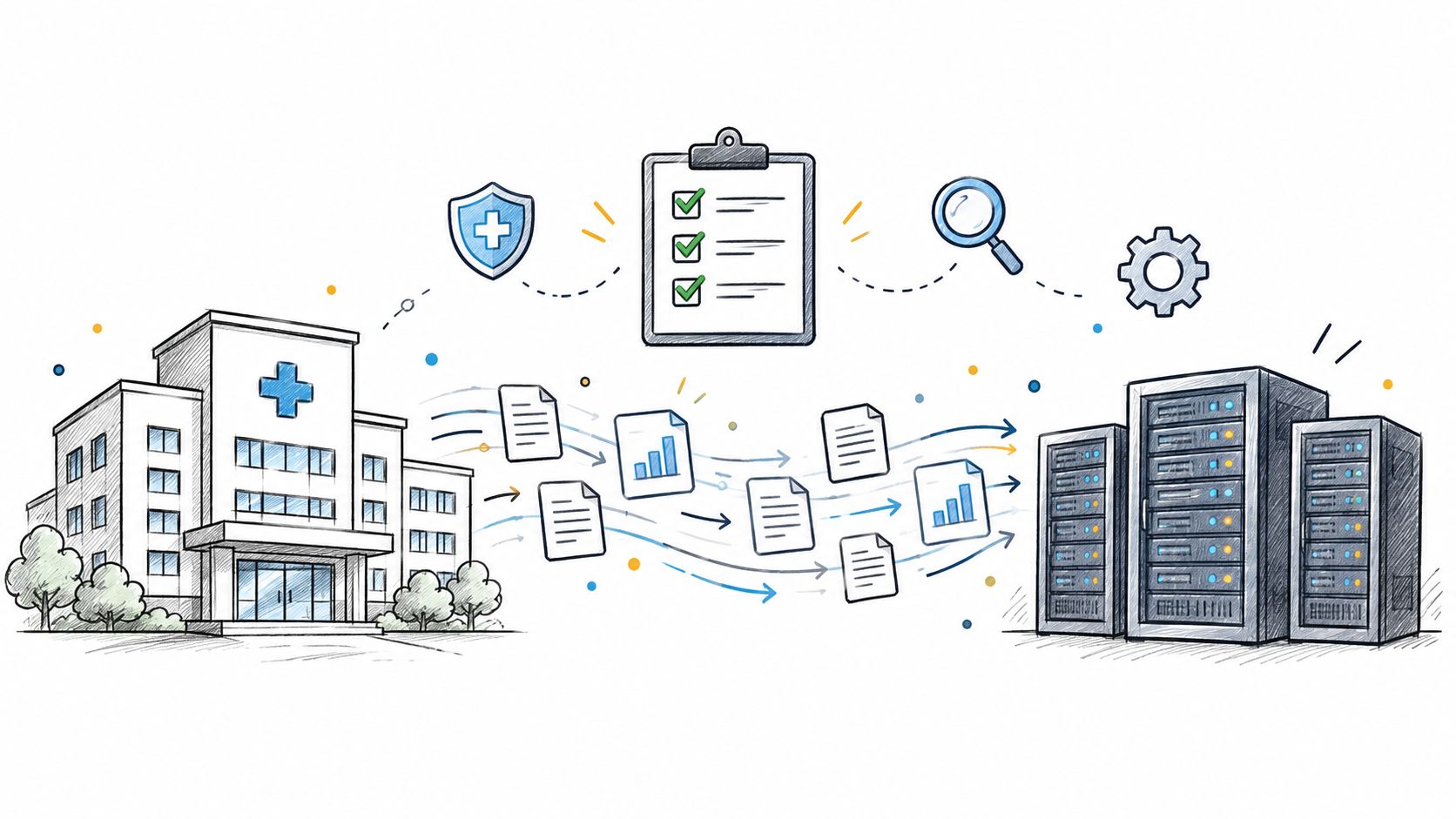
Practical data migration planning guide for healthcare teams. Scope, mapping, compliance, validation, cutover and rollback decisions explained end to end.
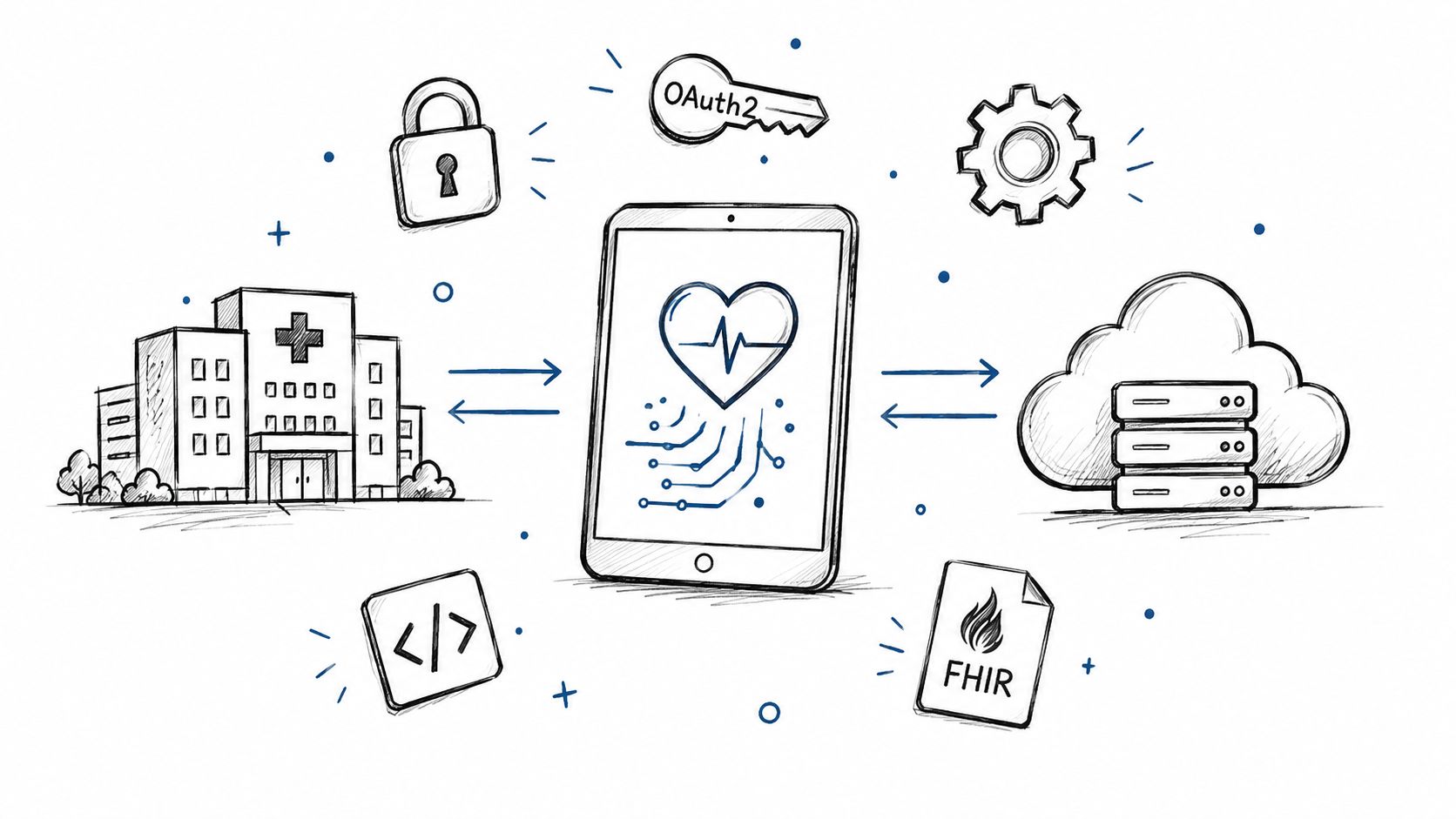
Smart on FHIR guide for healthtech engineers. Learn the OAuth 2.0 launch model, scope syntax, backend services, and US regulatory requirements.
Connect with our team to explore how AI expertise can transform your business.