AI in Healthcare
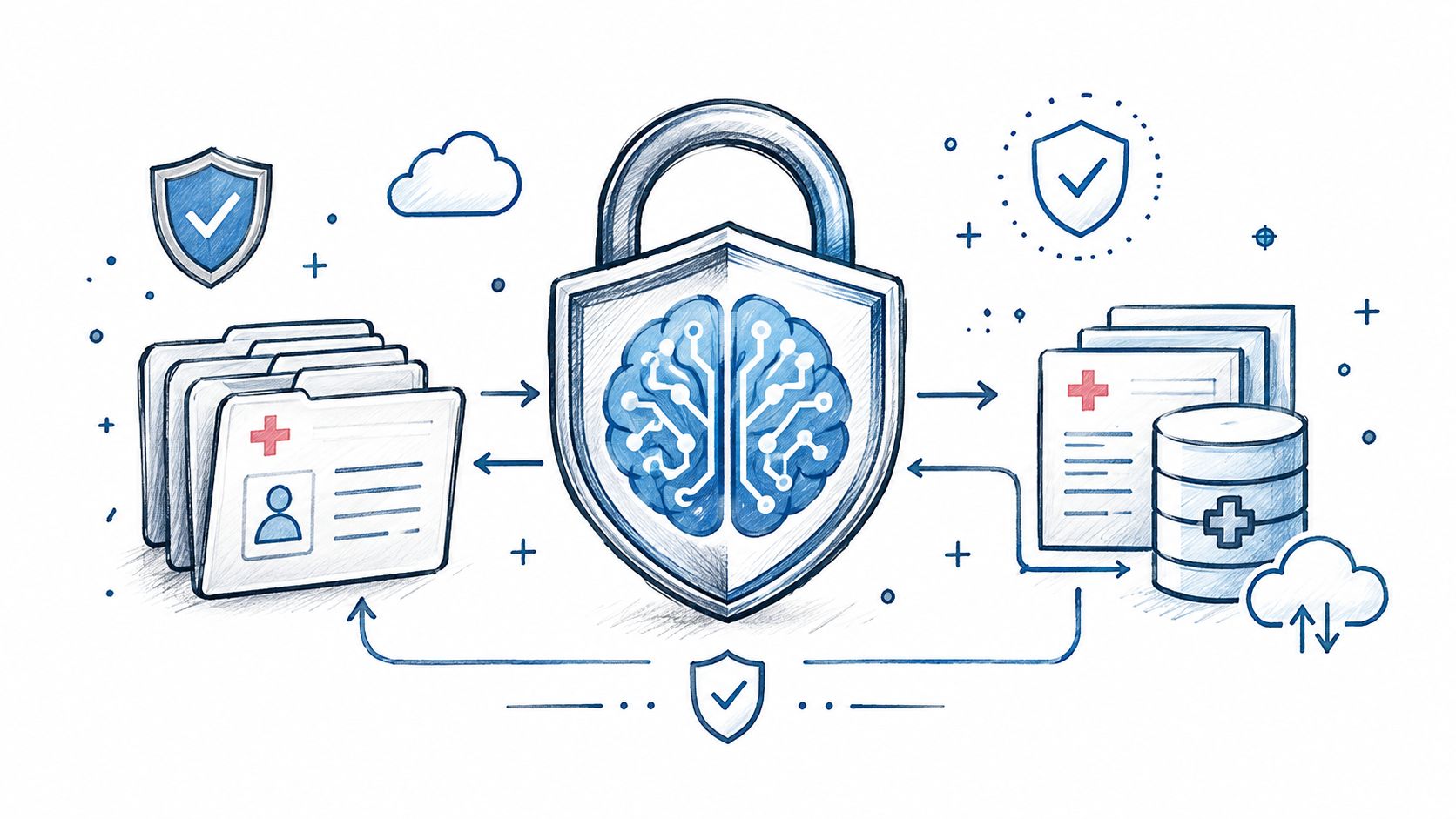
HIPAA-Compliant AI: How to Use LLMs With PHI Safely
How to build HIPAA-compliant AI: when LLM providers need a BAA, data minimization, de-identification, audit controls and a reference architecture.
October 16, 2026Read more
Clinical data intelligence solutions - Explore clinical data intelligence solutions in our 2026 guide. Learn core components, business value, implementation, &

Healthcare teams used to accept a bad trade-off: spend most of their effort preparing data, then make decisions from reports that arrived too late to change much. In many environments, teams historically spent 80% of their time on data cleaning and only 20% on insight generation according to Mordor Intelligence’s clinical data analytics market analysis. That ratio explains why clinical data intelligence has moved from a nice-to-have to an operating priority.
For executive teams, the question is no longer whether clinical data intelligence solutions matter. The critical question is which capabilities create measurable value, which architectures hold up under regulatory pressure, and which implementation patterns fail once they hit real workflows.
Clinical data intelligence works when it is treated as an organizational capability, not a dashboard project. It connects fragmented data, standardizes it, applies analytics where decisions happen, and gives operations, clinical, and research teams a shared view of what needs action now.
The market signal is hard to ignore. The global clinical data analytics market was valued at USD 24.0 billion in 2023 and is projected to reach USD 196.9 billion by 2032, with a 26.3% CAGR, according to Straits Research. That growth reflects a simple reality: healthcare organizations are drowning in data but still struggle to turn it into reliable action.
Clinical data intelligence solutions sit above raw storage and basic reporting. They unify data from clinical systems, research environments, and operational platforms, then make that data usable for decisions about care delivery, trial execution, coding, utilization, and risk.
Legacy analytics usually breaks in predictable ways.
Modern CDI platforms solve a different problem than traditional BI. They are built to support near-real-time monitoring, predictive models, workflow triggers, and standardized data pipelines that make downstream analytics trustworthy.
Three pressures have made CDI central to strategy.
First, healthcare organizations now operate under stronger pressure to justify outcomes, cost, and throughput. Second, research organizations need faster, cleaner trial operations across more data sources. Third, precision medicine and longitudinal care demand a more integrated view of the patient than older architectures can support.
That combination changes CDI from an IT initiative into a business capability. When an executive team invests in it correctly, they are not buying reports. They are building the foundation for better decisions across clinical operations, revenue cycle, and research.
A practical starting point is to align the CDI roadmap with broader Healthcare AI Services priorities so the platform is tied to actual operational use cases from day one.
Key takeaway: Clinical data intelligence solutions matter now because fragmented, retrospective analytics cannot support the speed, complexity, or accountability required in modern healthcare.
A useful CDI platform is not one product. It is a stack. CTOs who treat it that way make better decisions about vendor selection, integration scope, and where custom engineering is necessary.

Most CDI programs start with the same obstacle. Data lives in too many places, in too many formats, with too many owners.
A modern platform needs connectors for EHR feeds, laboratory systems, imaging systems, trial data capture platforms, payer data, and document repositories. In practice, this usually combines APIs, batch pipelines, and ETL jobs.
The technical challenge is not only moving data. It is preserving lineage, timestamps, provenance, and patient identity resolution so downstream models are defensible.
In many organizations, the fastest early win comes from extracting value from unstructured records that staff already use every day. A focused tool such as Ekipa’s AI-powered data extraction engine fits this layer well when teams need to operationalize scanned notes, PDFs, or other hard-to-query content.
At this stage, many CDI efforts either become scalable or become expensive forever.
If every source keeps its own semantics, every dashboard, model, and report requires custom cleanup. Standardization solves that. In trial-heavy environments, adherence to CDISC standards such as SDTM and ADaM can reduce data integration errors by up to 40-60% and accelerate regulatory submissions by 20-30%, according to Medidata’s overview of clinical data integration.
That matters because standardization is not a compliance side task. It is an ROI lever.
A mature normalization layer usually includes:
Once the data is reliable, the platform can do useful work.
This layer often includes machine learning for prediction, natural language processing for chart abstraction, rules engines for alerts, and biostatistical workflows for research analysis. The right mix depends on the business problem.
For providers, a model might identify patients whose records suggest elevated readmission risk. For pharma, NLP might screen narrative records for trial eligibility signals. For payer or risk-bearing groups, analytics may support stratification and coding review.
The common mistake is overinvesting in the model before the data layer is ready. In healthcare, the model is rarely the first bottleneck.
Executives often see dashboards and assume that is the product. It is not.
The visible layer should present role-based views for clinical leaders, trial operations, quality teams, finance, and compliance. But dashboards only matter if they connect to action. A useful CDI deployment pairs insight with workflow, escalation, and documentation.
A durable platform also needs a governance layer that covers access controls, audit trails, validation, retention policies, and review processes for model changes.
A CDI platform is usually on the right track if the team can answer four questions clearly:
| Question | What good looks like |
|---|---|
| Can we ingest data from multiple systems without rebuilding pipelines each quarter? | Reusable connectors and governed ETL |
| Can we reconcile conflicting data definitions? | Standard data model and terminology management |
| Can we use both structured and unstructured data? | NLP and extraction pipelines with review controls |
| Can users act on insights in their workflow? | Alerts, queues, reports, and documented interventions |
Organizations building regulated digital products often find that the same architectural discipline also supports future SaMD solutions, especially when traceability and validation are already built into the CDI backbone.
CDI earns budget when leaders tie it to operational and financial outcomes, not when they describe it as a data modernization effort. The strongest business cases come from a narrow set of measurable improvements that matter to the organization now.

Real-world CDI platforms have demonstrated 15-30% improvements in HCC coding accuracy and 12-18% reductions in hospital readmissions through real-time predictive analytics on longitudinal EHR data, according to Oracle Health Data Intelligence solution materials. Those are the kinds of outcomes executive teams should use to frame value.
For provider organizations, CDI helps move from reactive care management to earlier intervention. The business value comes from identifying who needs action, which teams should act, and whether interventions changed outcomes.
Useful KPIs include:
A lot of CDI ROI hides in coding and documentation workflows. When the platform can surface missing or inconsistent evidence from longitudinal records, coding teams work from stronger inputs and can prioritize records with the highest financial significance.
This is especially valuable when structured data alone misses context that exists in clinical notes, scanned referrals, or problem-list drift across encounters.
Trial operations benefit when candidate identification, site readiness, and data review are less manual. The value is not only speed. It is fewer bottlenecks between source data and operational decisions.
Teams should monitor:
For risk-bearing organizations, CDI makes stratification more useful by incorporating more of the patient’s longitudinal record into targeting decisions. The result is usually better prioritization, not just more reporting.
A CDI program gets traction when its first scorecard is simple. Start with a handful of business metrics that leaders already care about.
Practical advice: If the KPI would not appear in an operations review or finance review, it should not be the lead metric for your CDI business case.
A straightforward executive scorecard might look like this:
| Business area | KPI to track | Why it matters |
|---|---|---|
| Utilization management | Readmission trend | Links analytics to cost and care quality |
| Revenue cycle | Coding accuracy review outcomes | Ties CDI to reimbursement integrity |
| Trial operations | Time to data lock | Reflects data readiness and process friction |
| Care management | Time to intervention | Shows whether insight changes workflow |
Organizations that prefer a managed delivery model sometimes combine CDI initiatives with AI Automation as a Service when they need to move faster without building a large internal platform team.
Most CDI projects do not fail because the use case was wrong. They fail because the organization started too wide, delegated strategy to vendors, or underestimated workflow change.

The implementation challenge is well documented. A common issue for CTOs is the lack of clear ROI benchmarks for CDI integration. One example cited by Healthcare Tech Outlook is that AI-driven biosimulation can reduce trial timelines by 25%, yet adoption lags at 15% because of implementation hurdles and regulatory ambiguity. That pattern shows up across CDI more broadly. Potential value is real. Execution discipline is the differentiator.
Start by selecting one workflow where data friction is already visible to the business. Good examples include trial data reconciliation, coding support, readmission monitoring, or chart abstraction.
At this stage, leaders should answer:
The worst opening move is a broad “enterprise data intelligence” program with no operational owner. CDI needs sponsorship from people who run a function, not only people who run infrastructure.
A structured delivery model such as an AI Product Development Workflow helps here because it forces early agreement on scope, validation, and handoff points.
This phase is less glamorous and more important.
The team needs a clear data model, source prioritization, access controls, data quality rules, and a review process for derived fields. If governance is vague, every downstream output will be contested.
Common technical priorities include:
The pilot should prove one thing well. It should not try to prove every future value story at once.
A strong MVP usually has a narrow user group, one measurable workflow, limited source integration, and a clear review loop. For example, a coding support pilot may focus on one service line and one documentation queue before broad rollout.
What works: choose a pilot where staff already feel the pain.
What does not: choose a pilot because the data is easy, even though the business impact is weak.
After the pilot shows value, the program shifts from experimentation to operating model design.
That means formalizing support ownership, model monitoring, release management, audit readiness, and user training. This is also the point where many teams realize they need better role design. Analysts, clinicians, engineers, compliance staff, and operations leads all interact with CDI differently.
A connection to the EHR is not the same as a usable dataset. Teams often discover too late that fields are inconsistent, sparse, or encoded differently across departments.
Vendors can provide tools. They should not define your operating metric. If the only success measure is adoption of a dashboard, the program is already drifting.
If insights arrive outside the user’s normal process, they will be ignored. CDI must fit into queues, case review, care management, coding review, or trial operations processes that staff already follow.
Clinicians and operations leads do not need marketing claims about AI. They need to know where the signal came from, how often it is wrong, and what they are expected to do with it.
Some organizations invest heavily in the platform and lightly in training. That rarely works. The implementation plan should specify new responsibilities, escalation paths, exception handling, and ownership for reviewing model outputs.
A CDI roadmap succeeds when the first deployment is small enough to govern and meaningful enough to matter.
In healthcare, a CDI platform is only as strong as its auditability. If leaders cannot explain where the data came from, how it was transformed, who accessed it, and why a model produced a recommendation, the platform will struggle in regulated use.
HIPAA, GDPR, clinical research requirements, and internal data governance all push toward the same architectural discipline. Access needs to be role-based. Sensitive data handling needs to be explicit. Audit trails cannot be an afterthought.
For clinical research and submission-oriented workflows, data integrity matters as much as privacy. Teams need validated processes for data capture, transformation, review, versioning, and approval. The operational implication is clear: compliance is not a final review step. It shapes architecture, process, and vendor selection from the beginning.
Organizations that need specialized regulated builds often rely on partners with experience in custom healthcare software development when CDI requirements extend into bespoke workflow, interoperability, or validated product environments.
Many executive teams focus first on whether a model performs. Regulators and compliance leaders ask additional questions.
Those questions matter even more when the platform uses unstructured data, inferred variables, or predictive prioritization.
Fairness assessments are not theoretical. They affect who gets identified for intervention, who is recruited into research, and whose records are considered complete enough to drive automated workflows.
Research highlighted in Genesis Pub’s discussion of health disparities and data science notes that minority inclusion in clinical trials remains low, at only 5-10%, which means biased data pipelines can reinforce already skewed representation.
A practical fairness program for CDI usually includes:
Compliance reality: A technically impressive platform can still create legal and operational risk if its outputs are not explainable, reviewable, and equitable.
Clinical data intelligence becomes easier to evaluate when leaders see it inside actual workflows. The value shows up differently in pharma, payer, and provider settings.

A study team needs to identify eligible participants across fragmented records. Inclusion and exclusion logic exists, but much of the needed evidence sits in narrative notes, pathology summaries, lab history, or external systems.
A CDI-enabled workflow ingests those sources, maps them to a standard structure, and surfaces likely candidates for coordinator review. The key is not full automation. It is reducing the time staff spend searching, reconciling, and rechecking records by hand.
In practice, this works best when eligibility logic is transparent and coordinators can validate why a patient appeared in the queue. It fails when the model produces opaque rankings with no supporting evidence.
A payer wants to prioritize members who are likely to need intervention soon. Claims alone often lag. Care management teams need a broader view that includes clinical patterns, documentation signals, and longitudinal history.
CDI helps by combining those sources into a more useful prioritization layer. Instead of generating long static lists, the platform can route the highest-priority members to the right care pathway or review team.
What matters operationally is the handoff. If the output lands in a report no one owns, nothing changes. If it enters a care management workflow with clear responsibility, the insight becomes useful.
A health system often sees treatment variation across sites, units, and clinicians even when patient profiles look similar. Some variation reflects good clinical judgment. Some reflects documentation gaps, inconsistent ordering patterns, or delayed escalation.
CDI helps teams analyze those patterns with more context than traditional reporting allows. They can compare outcomes, review exceptions, and identify where standardization would help without flattening necessary clinical discretion.
This use case usually gains traction when service line leaders help define the questions. Broad “optimize care pathways” projects tend to stall. Focused questions such as where discharge planning breaks down or where documentation diverges are much easier to operationalize.
For leaders looking beyond these examples, Ekipa’s library of real-world use cases is a useful way to compare CDI opportunities across functions and maturity levels.
Clinical data intelligence solutions are not just another analytics category. They represent a shift in how healthcare organizations operate. The shift moves teams from fragmented records and retrospective reporting toward standardized, actionable intelligence that supports care, research, and financial performance.
The opportunity is real, but so are the trade-offs. Strong CDI programs start with a narrow business problem, invest early in data quality and governance, and design for workflow adoption instead of dashboard consumption. They also treat compliance, fairness, and explainability as build requirements, not cleanup work.
Leaders who approach CDI this way put themselves in a stronger position to improve execution across the organization.
If you are evaluating where to begin, book an AI strategy consulting conversation and connect with our expert team to turn a CDI concept into a practical roadmap.
Start with workflow fit.
If your organization has standard reporting needs, common integrations, and limited internal engineering capacity, an off-the-shelf platform may get you moving faster. If your value depends on unique workflows, specialized data extraction, or differentiated clinical logic, a custom build often makes more sense.
Many teams land in the middle. They buy a core platform, then extend it with internal tooling for the parts that create competitive or operational advantage.
A Common Data Model, or CDM, gives the organization a consistent way to represent data from different systems. That consistency is what makes enterprise analytics reproducible.
Without a CDM, every downstream team recreates mappings, definitions, and assumptions. With one, teams can build governance, analytics, and interoperability on a shared foundation.
Start with one painful workflow. Good candidates are no-show management, referral leakage review, coding support, or a manual chart abstraction process that consumes staff time.
Keep the first deployment narrow. Use scalable cloud tools where possible, and focus on proving one clear operational result before expanding. Smaller organizations do better when they avoid enterprise ambition at the start and use modular AI tools for business selectively.
As we explored in our AI adoption guide, the strongest early wins usually come from use cases that already have an owner, a visible cost, and a measurable output.
Ekipa AI helps healthcare and life sciences teams move from AI ideas to execution with practical strategy, use case discovery, and delivery support. If you want a faster way to evaluate clinical data intelligence opportunities, start with Ekipa AI.
How to build HIPAA-compliant AI: when LLM providers need a BAA, data minimization, de-identification, audit controls and a reference architecture.
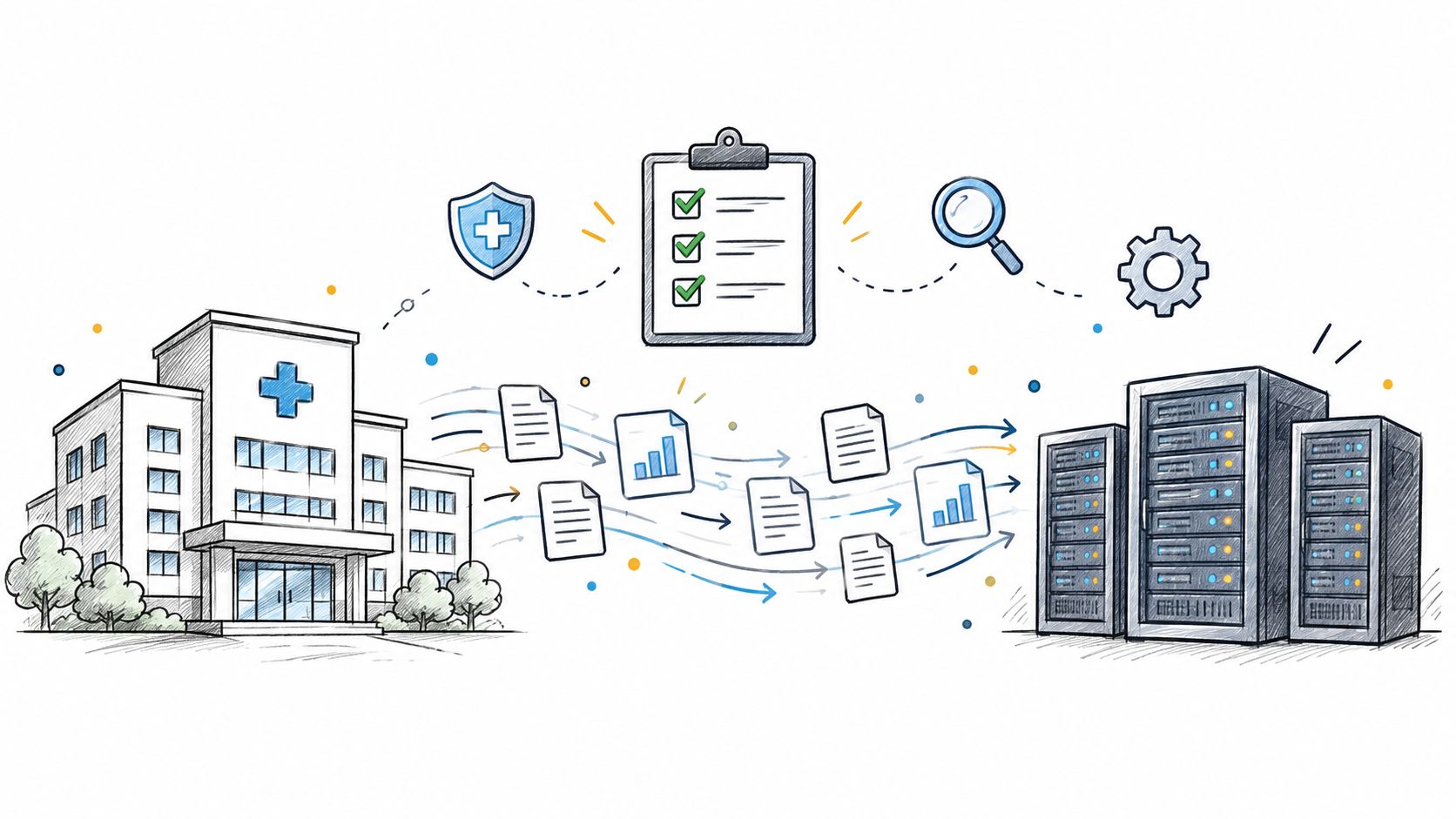
Practical data migration planning guide for healthcare teams. Scope, mapping, compliance, validation, cutover and rollback decisions explained end to end.
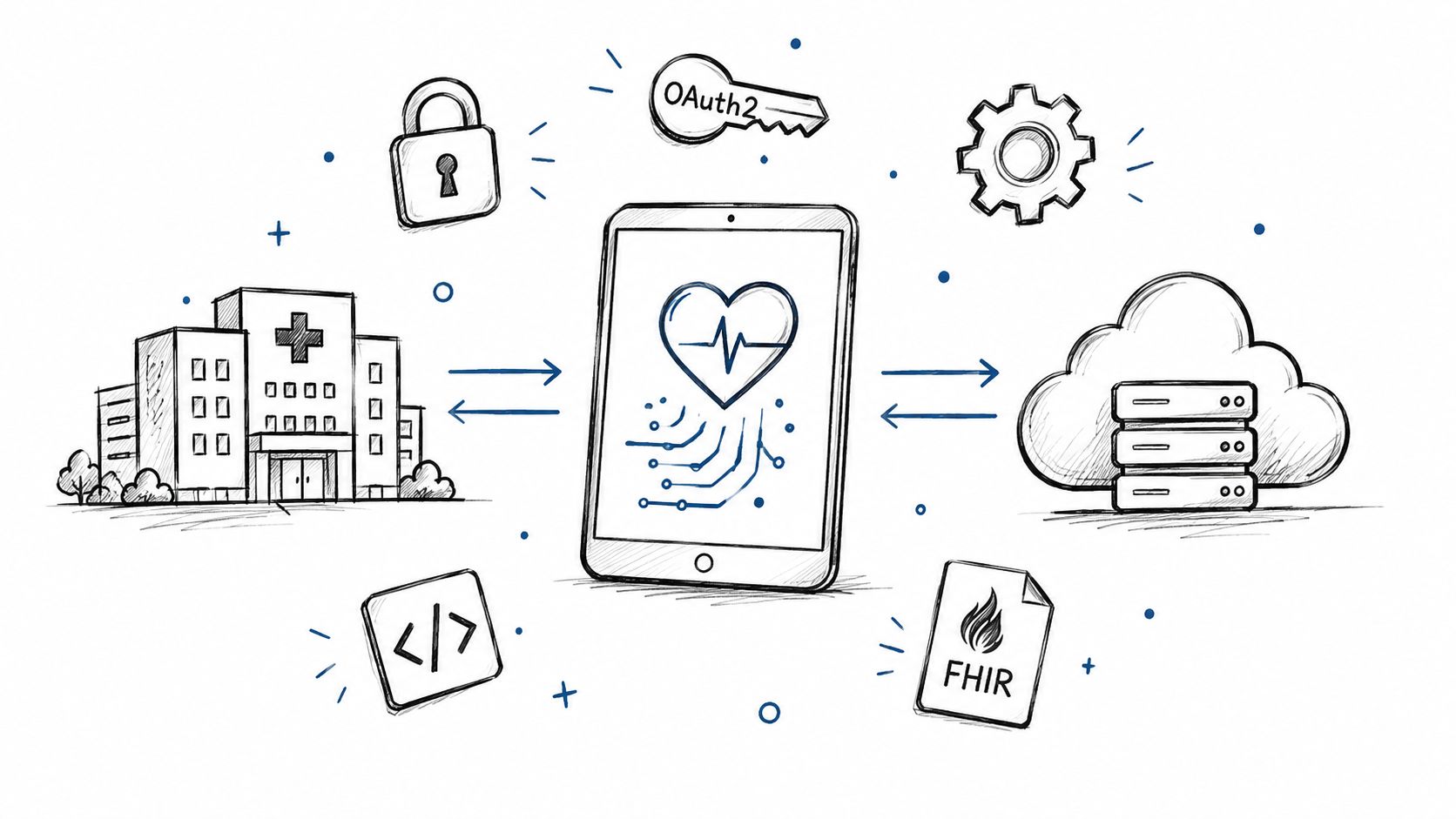
Smart on FHIR guide for healthtech engineers. Learn the OAuth 2.0 launch model, scope syntax, backend services, and US regulatory requirements.
Connect with our team to explore how AI expertise can transform your business.