
AI in Healthcare
HIPAA-Compliant AI: How to Use LLMs With PHI Safely
How to build HIPAA-compliant AI: when LLM providers need a BAA, data minimization, de-identification, audit controls and a reference architecture.
October 16, 2026Read more
AI in healthcare operations is streamlining processes from scheduling to follow-ups. It improves efficiency, reduces delays, and enhances patient care through automation and smarter workflow management.
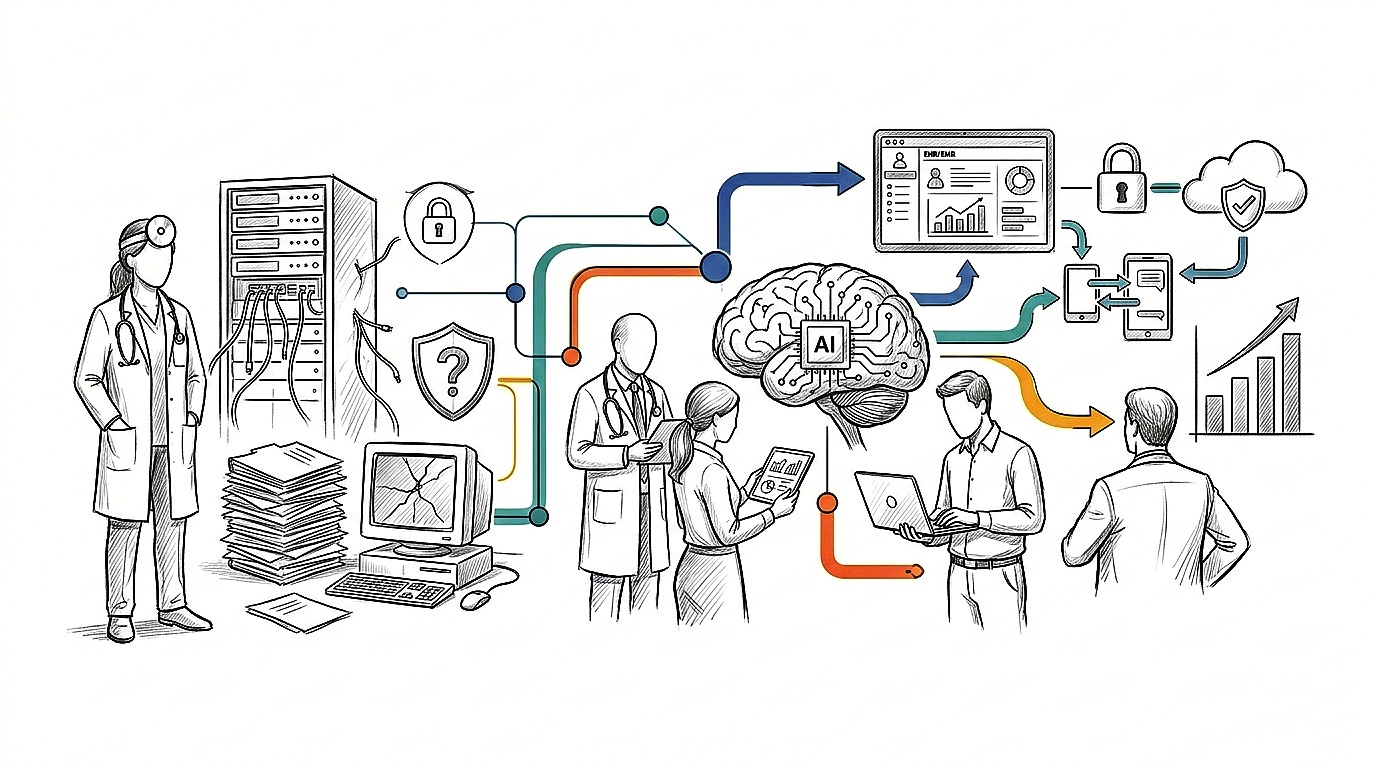
Hospitals and clinics now see more patients than before, which puts pressure on daily coordination and service delivery. Manual scheduling often causes delays, double-booked appointments, and confusion in patient flow. Administrative staff spend long hours managing calendars, handling reschedule requests, and tracking follow-up visits.
AI healthcare operations point to a move toward structured, data-driven care processes where technology helps manage patient journeys from start to finish. Operational complexity calls for automation that reduces manual work and improves cross-departmental teamwork. AI healthcare operations now play a key part in bringing order to scheduling, communication, and post-care interactions, creating smoother experiences for both patients and healthcare staff.
AI healthcare operations may sound complex, but their actual role in hospital settings is quite straightforward. The goal is to reduce repetitive administrative tasks and handle large volumes of data that slow down daily workflows. This covers areas like patient scheduling, tracking cancellations, understanding attendance trends, and coordinating between departments. Hospitals already produce vast amounts of operational data each day, such as appointment histories, patient details, staff availability, and peak hour activity, yet most of this information stays unused when making decisions.
AI connects these scattered data points and turns them into useful insights that improve scheduling accuracy and patient flow as events happen. It identifies patterns from routine hospital activity and applies them to make operations smoother without changing existing systems. A healthtech engineering partner plays a key role in integrating these AI-driven abilities with current hospital setups like electronic health records and practice management tools, strengthening efficiency while keeping existing workflows intact.

AI healthcare operations change the entire scheduling process by removing manual coordination and replacing it with structured, data-driven workflows. Instead of relying on phone calls, long waits, and repeated confirmations, the process becomes smooth, responsive, and continuous at every stage of patient interaction. A custom AI strategy report helps define how these workflows are built, making sure scheduling logic, patient data patterns, and operational needs come together for accurate and consistent performance.
Patients can book appointments online at any time using a phone, laptop, or other digital device. The system instantly checks doctor availability, consultation type, and relevant patient details to offer suitable time slots. This removes the need for repeated calls to the front desk and shortens waiting time during booking.
The system does more than show available times. It looks at appointment length, doctor specialty, patient needs, and overall schedule load. This helps assign appointments in a way that fits operational flow and avoids crowding or mismatched bookings.
Once an appointment is confirmed, the system immediately sends confirmation details to the patient. As the appointment date gets closer, reminders are sent through preferred channels such as SMS, email, or mobile alerts. Patients who are more likely to miss appointments receive extra reminders based on their past behaviour.
When a cancellation happens, the system quickly finds another suitable patient from the waiting list and fills the open slot without delay. If a doctor's schedule shifts or runs late, updates are shared instantly with affected patients, keeping communication clear and reducing confusion on the day of the visit.
After the consultation, the system continues patient contact through structured follow-up messages. These include care instructions, feedback requests, and reminders for future visits. These actions help maintain care continuity and reduce missed follow-up communication, creating a more organised patient experience across AI healthcare operations.
AI healthcare operations play a key part in lowering missed appointments and improving scheduling precision. By using data-driven insights and automated communication, hospitals can maintain steady patient attendance and make better use of available time slots. The use of healthcare AI services further strengthens this process by adding intelligent reminders, predictive analysis, and workflow automation into everyday scheduling systems, leading to more dependable appointment outcomes.
Patients receive timely reminders through SMS, email, or mobile alerts before their scheduled visits. These notices are sent based on appointment time and patient preference, helping improve attendance consistency.
The system studies past attendance records, cancellation history, and engagement levels to identify patients who may skip appointments. This allows hospitals to take early action through targeted reminders.
When a patient cancels an appointment, the system quickly finds another person from the waiting list and assigns the open slot. This reduces idle time and keeps the schedule active.
By reducing missed appointments and filling gaps efficiently, clinics can use their time and resources more effectively. This improves overall operational flow and gives patients better access to care.
Hospitals run as complex environments where many departments work at the same time. AI systems manage patient movement, assign resources, and coordinate between departments to keep operations balanced.
A SaMD solutions framework brings software-driven medical tools into hospital systems, improving coordination between diagnostic units and administrative teams. AI healthcare operations simplify front desk tasks, lower manual workloads, and maintain steady communication between clinical and operational staff.
Care does not stop after a consultation. Ongoing contact plays a key part in recovery and long-term health management. Automated systems send follow-up reminders, track recovery progress, and share medication alerts. This integration of healthcare workflow AI ensures that every post-care action follows a structured and timely path.
The idea of patient follow-up automation strengthens communication between healthcare providers and patients after discharge. These systems maintain contact through structured reminders and regular check-ins. AI healthcare operations extend care beyond hospital walls by keeping patients engaged over time.
Care does not stop after a consultation. Ongoing contact plays a key part in recovery and long-term health management. Automated systems send follow-up reminders, track recovery progress, and share medication alerts.
The idea of patient follow-up automation strengthens communication between healthcare providers and patients after discharge. These systems maintain contact through structured reminders and regular check-ins. AI healthcare operations extend care beyond hospital walls by keeping patients engaged over time.
Improved efficiency across operations: Faster coordination of scheduling, patient flow, and daily hospital tasks.
Better patient satisfaction: Reduced waiting time and smoother communication during visits.
Reduced administrative burden: Automation of routine tasks like booking, reminders, and updates.
Cost and time savings for healthcare providers: Better resource use and fewer delays in operations.
Smarter decision making using data: Insights from patient and operational data for better planning.
The future of AI healthcare operations is moving toward systems that anticipate needs, act as events unfold, and connect every step of the patient journey without friction. Scheduling will become predictive, where patient demand, doctor availability, and past patterns guide appointment planning with greater accuracy. Entire patient journeys will be managed through automation, linking booking, consultation, and care coordination in a continuous flow that cuts delays and manual work. Follow-up care will shift toward very personal interactions, where recovery trends and medical history shape timely reminders and post-treatment contact. As healthcare systems become more connected and digital, data will move smoothly across hospitals, clinics, and diagnostic centres, forming a unified network that improves coordination, strengthens decision-making, and changes how care is delivered from beginning to end.
AI healthcare operations play a central role in reshaping hospital workflows from scheduling to follow-up care. The entire patient journey becomes more organised, predictable, and efficient through structured automation and smart coordination.
From booking appointments to maintaining ongoing care interactions, AI improves communication and lowers operational pressure across healthcare systems. The future of healthcare depends on connected digital systems that put patient experience and operational clarity first. To explore advanced solutions and implementation strategies, contact our team.
AI healthcare operations streamline scheduling, coordination, and patient flow. With a healthtech engineering partner, hospitals implement healthcare AI services for smoother, data-driven workflows.
AI enables appointment automation by managing bookings, slot allocation, and reminders. A custom AI strategy report helps design efficient healthcare workflow AI systems for accuracy.
AI uses predictive alerts and patient follow-up automation to reduce no-shows. It is strengthened by healthcare AI services that improve communication and attendance rates.
AI manages coordination, patient flow, and resources through healthcare workflow AI. SaMD solutions further improve integration across clinical and administrative systems.
AI ensures continuous care through patient follow-up automation and reminders. A healthtech engineering partner helps scale AI healthcare operations for better post-care engagement.
How to build HIPAA-compliant AI: when LLM providers need a BAA, data minimization, de-identification, audit controls and a reference architecture.

Practical data migration planning guide for healthcare teams. Scope, mapping, compliance, validation, cutover and rollback decisions explained end to end.

Smart on FHIR guide for healthtech engineers. Learn the OAuth 2.0 launch model, scope syntax, backend services, and US regulatory requirements.
Connect with our team to explore how AI expertise can transform your business.