AI in Healthcare
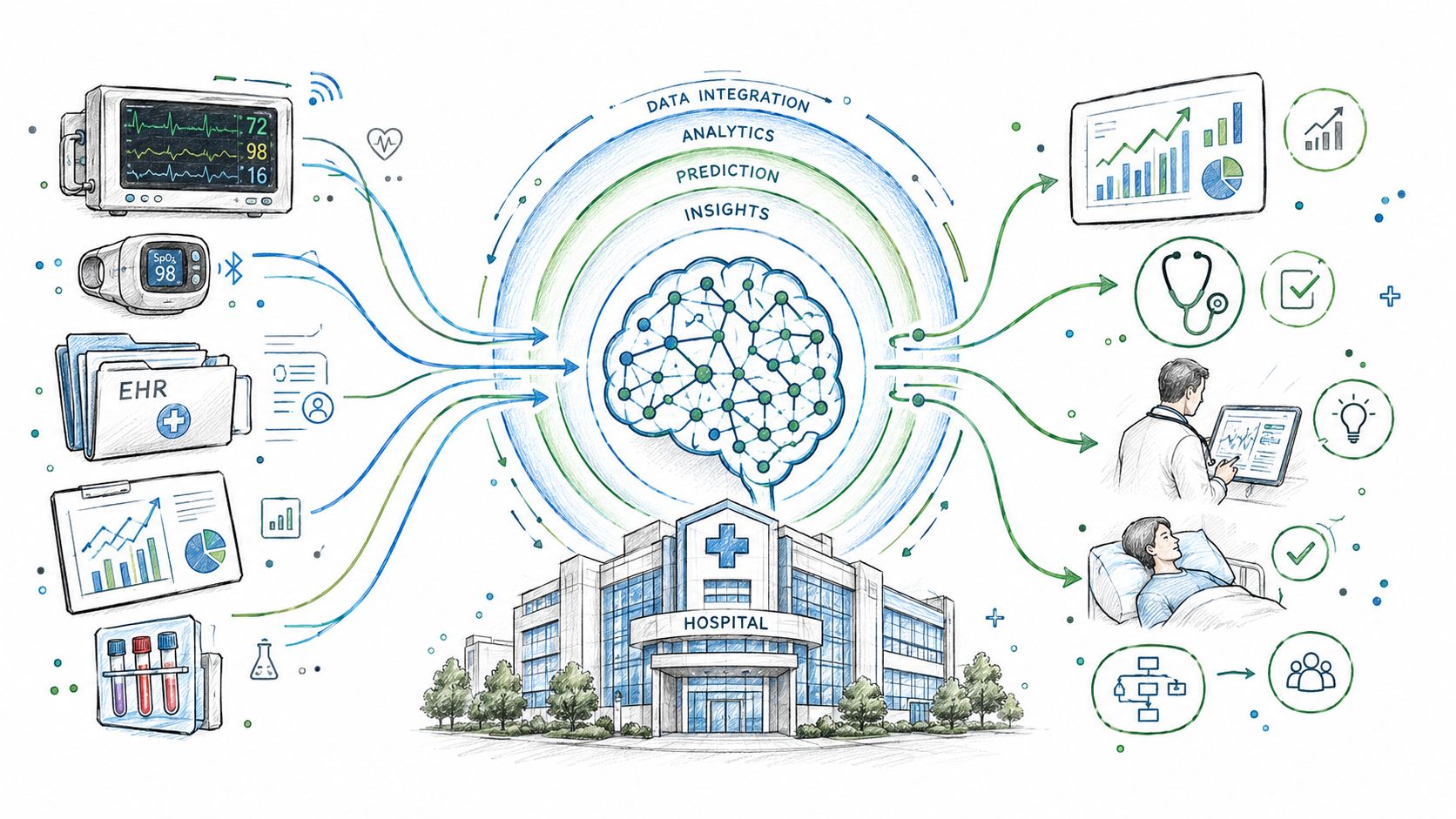
AI Healthcare Analytics Explained: A Practical Guide
Learn what AI healthcare analytics is, how it creates business value, and what it takes to implement it across EHR systems, compliance, and ROI.
September 16, 2026Read more
AI is transforming medical imaging by enhancing diagnostic accuracy and enabling faster image analysis. It helps detect diseases early, supports clinicians, and improves patient outcomes.
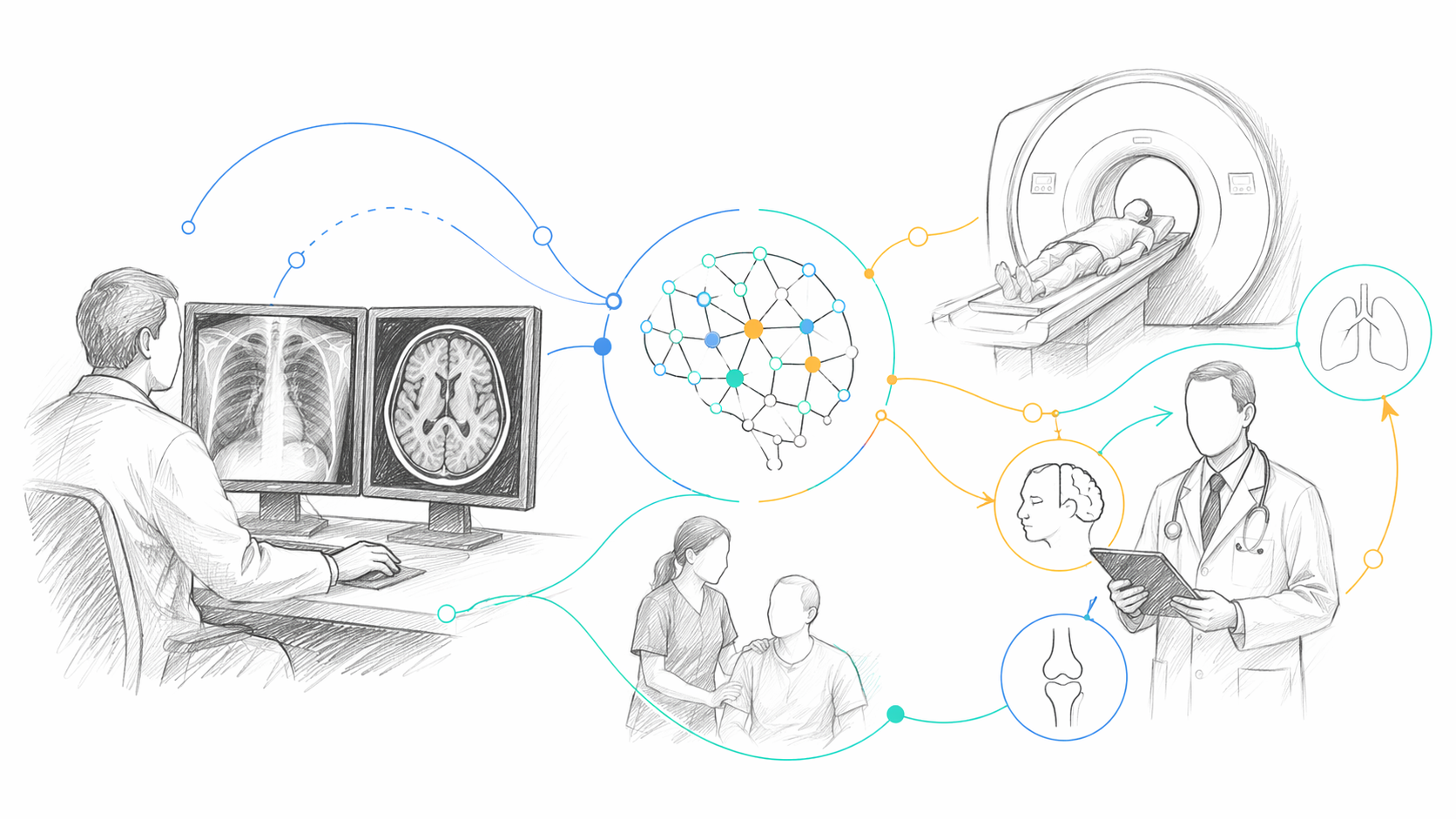
Medical imaging holds a vital place in modern healthcare. Technologies like X-rays, MRI scans, and CT scans give doctors a clear look inside the human body and help guide treatment choices. Traditional image analysis relies mostly on human eyes and judgment. This can lead to delays and occasional mistakes, especially under heavy workloads. The arrival of AI medical imaging technology has shifted this reality. It brings faster readings, sharper precision, and deeper insights into diagnosis, raising the bar for accuracy in patient care.
AI in medical imaging means using smart algorithms to study medical pictures with high accuracy. These systems run on machine learning and deep learning models trained on large collections of images. They look for patterns, spot unusual findings, and interpret complex visual information in ways that match clinical knowledge. Over time, the system gets better as it sees more data, sharpening its ability to detect diseases. This approach gives healthcare professionals a powerful tool that works alongside their own expertise and brings more clarity to diagnosis.
Manual analysis relies on human eyes and judgment. This can vary depending on experience and how busy the day is. Small, subtle details may slip past during routine checks, especially when the workload is high.
Even skilled professionals can overlook tiny irregularities in the early stages of a disease. These minor details often carry serious clinical weight, particularly in conditions that grow quietly without clear signs.
Reviewing large volumes of scans takes a lot of time. This can push back diagnosis and treatment planning, especially in busy healthcare settings where quick decisions matter.
Radiologists often handle more imaging studies each day than before. This rising demand adds pressure and can lower overall diagnostic efficiency. A healthtech engineering partner plays a key part in designing intelligent systems that solve these problems through structured and scalable solutions.

AI systems study medical images at a very fine level, often down to single pixels. This close examination allows them to spot tiny irregularities that may stay hidden during normal human review. These small patterns can point to early stages of diseases like cancer or other internal problems. By bringing attention to these small changes, AI raises the chance of catching illnesses early and starting treatment sooner. That can make a real difference in how well patients respond to care.
Manual interpretation of medical images can vary depending on a person's experience, how busy they are, and the pressure of the moment. AI brings a steady method of analysis that lowers these differences. It looks at every image with the same sharp focus and care, pointing out areas that need attention without ever getting tired or distracted. This steady approach reduces the chance of missing important findings and makes diagnostic results more dependable across different cases and clinical settings.
AI follows set rules that apply the same standards every time it evaluates an image. This means every scan is assessed using the same criteria, regardless of external factors. This kind of consistency matters a lot in large healthcare systems where many different professionals take part in diagnosis. It brings departments into better alignment and builds stronger trust in the diagnostic process, because results stay steady and dependable over time.
AI speeds up the analysis of imaging data by automating repetitive and time-intensive tasks. It works through large numbers of scans in a short span and delivers sharp insights that guide clinical choices. Faster analysis means patients wait less and treatment planning moves ahead sooner. This gain in speed matters most in emergency cases, where every moment affects patient outcomes. Organisations that offer healthcare AI services focus on bringing these advanced abilities into real clinical workflows. They make sure that accuracy and efficiency turn into real, meaningful improvements in healthcare.
AI has shown it can spot early signs of diseases like cancer and tumours through careful pattern recognition. It looks at tiny differences in imaging data that manual review might miss. These systems link visual findings with known clinical outcomes, leading to earlier detection. That directly affects treatment success and patient recovery. With AI medical imaging technology, providers gain deeper insights that improve both the timing and accuracy of diagnosis. A well-prepared custom AI strategy report helps align such technologies with clinical goals.
AI adds a helpful layer to the diagnostic process by reviewing large amounts of imaging data as it comes in. It points out patterns and irregularities that may not stand out during manual review. This early detection gives doctors more clarity during diagnosis and raises the chances of starting treatment on time.
Radiologists often work under heavy pressure with many scans to review. AI brings steadiness to image analysis by spotting abnormalities with accuracy. This lowers the risk of missing important findings and makes diagnostic results more reliable across different cases.
AI speeds up image evaluation by handling repetitive analysis tasks. This shortens the time needed to read scans and gives medical professionals more room to focus on complex clinical decisions, especially in busy environments.
With AI managing routine analysis, radiologists and specialists can give more attention to critical cases. This improves the overall output of healthcare teams and makes better use of time and operational resources.
AI brings together imaging data, patient records, lab reports, and past information to produce deeper clinical insights. These insights help doctors design treatment plans that fit each patient's specific condition, leading to more accurate and individualised care. SaMD solutions integrate these advanced capabilities within clinical systems, matching intelligent analysis with real diagnostic workflows.
AI plays a key part in finding cancers like lung and breast cancer through early pattern detection. It also supports brain imaging by helping diagnose conditions such as stroke and other neurological disorders. In emergency rooms, AI helps spot fractures and internal injuries quickly, which improves response times. In specialised areas like wound and burn assessment, AI offers detailed information for treatment planning. The growth of AI medical imaging technology across these fields shows its expanding role in everyday clinical practice, with AI automation services improving both efficiency and accuracy across healthcare systems.
AI works beside radiologists as a smart analytical layer that strengthens their abilities. It offers extra insights, cuts down on repetitive tasks, and improves diagnostic accuracy. The partnership between human skill and AI-driven analysis leads to more confident clinical decisions. Radiologists stay at the centre of the diagnostic process, while AI acts as a valuable extension of their expertise. Effective AI implementation support plays a key part in building trust and allowing smooth teamwork between clinicians and technology.
Medical imaging data holds very sensitive patient information. This includes medical history, diagnostic reports, and personal details. Protecting this data remains a major concern when adopting AI. Healthcare systems must follow strict rules and maintain secure data environments to stop breaches. Any lapse in data security can damage patient trust and bring legal trouble, which makes organisations cautious about using AI-driven tools.
AI systems depend on large amounts of accurate and varied data for training and performance. If the data is incomplete, biased, or uneven, the results AI produces can become unreliable. High-quality datasets need proper labelling, validation, and regular updates. Building such datasets takes time and effort, which can slow adoption in many healthcare settings.
Healthcare environments often rely on older systems that have been in place for years. These systems may not line up easily with new AI technologies. Adding AI requires careful technical planning, checks for system compatibility, and adjustments to workflows. Without proper integration, the full potential of AI stays out of reach, which creates a barrier for many organisations.
Healthcare professionals need clear proof and steady results before they trust AI for clinical decisions. Trust grows slowly through proven accuracy and real-world performance. Doctors and radiologists also need training to understand how AI systems work and how to read their outputs. Without confidence in the technology, adoption can stay slow even when the benefits are clear. Structured AI workflow automation plays an important part in addressing these challenges. It improves system alignment, streamlines processes, and creates a more efficient operational environment across healthcare systems.
AI in medical imaging is moving toward systems that learn continuously and improve with every new dataset. These advances will lead to more accurate and personalised diagnosis across many medical conditions. As adoption spreads through hospitals and clinics, AI will become a normal part of diagnostic workflows, shaping the future of healthcare delivery. New AI use cases continue to emerge in areas like oncology, neurology, and emergency radiology, expanding the reach of intelligent imaging across medicine.
AI has changed medical imaging by improving diagnostic accuracy through precise analysis, early disease detection, and steady performance. It has reduced delays, strengthened clinical decision-making, and raised patient care outcomes across various medical fields. The ongoing progress of AI medical imaging technology will shape the future of diagnostics through new ideas and intelligent systems. Contact our team to learn how advanced imaging solutions can fit with modern healthcare goals and drive real clinical impact.
AI medical imaging technology uses advanced algorithms to analyse scans, and healthcare AI services enhance accuracy and speed in diagnosis.
A healthtech engineering partner provides AI implementation support to integrate AI medical imaging technology into clinical workflows.
SaMD solutions enable AI-driven diagnostics within imaging systems, improving accuracy and supporting key AI use cases in healthcare.
AI automation services and AI workflow automation reduce manual tasks, speed up image analysis, and improve overall efficiency.
A custom AI strategy report helps identify the right AI use cases and ensures effective deployment of AI medical imaging technology.
Learn what AI healthcare analytics is, how it creates business value, and what it takes to implement it across EHR systems, compliance, and ROI.

Learn how predictive AI in healthcare works, where it delivers value, and how to deploy it safely inside real clinical workflows with a clear roadmap.

Learn how deep learning in healthcare powers imaging, EHR and SaMD solutions, from model types to deployment, compliance and ROI for leaders.
Connect with our team to explore how AI expertise can transform your business.