In today’s fast-moving digital economy, creating a great product idea is only half the journey. Turning that idea into a marketable, competitive offering requires smart strategy, disciplined execution, and often, the power of AI. AI product innovation is becoming a necessity for forward thinkers. Across sectors, organizations that invest in AI solutions and adopt an AI strategy consulting mindset are seeing meaningful impact, from speeding up development cycles to delivering customer experience breakthroughs.
AI could unlock billions annually by accelerating research and development and enabling more rapid product innovation. AI-driven R&D in knowledge-intensive industries may double innovation speed.
Meanwhile, academic research shows that firms investing in AI tend to deliver greater growth in sales, jobs, and valuation, largely owing to enhanced product innovation.
In this post, we’ll explore how to approach AI product innovation systematically, discuss real-world AI use cases, highlight key pillars you need (like roadmap, implementation, and strategy), and show how your company can become a credible AI implementation partner for clients.
Why AI Product Innovation Matters
The Productivity & Growth Imperative
Innovation cycles are tightening. Leading firms leverage AI automation services to reduce development overhead, simulate prototypes, and validate ideas faster. According to industry analysis, as model size doubles every few months and datasets grow continuously, organizations with mature AI adoption maintain an advantage.
From Experimentation to Scale
Many companies begin with pilot AI use cases. But the gap between pilot and scale is wide. There is a need to move from isolated experiments to integrated AI product lines. Those who do it right see AI solutions becoming core offerings rather than side experiments.
Competitive Differentiation
When you deliver proprietary AI product innovation, you distinguish your offerings from commoditized services. You gain the ability to build unique features faster, embed intelligence into product defaults, and attract customers who expect smart features out of the box.
Key Pillars of AI Product Innovation
Defining an AI Roadmap
An AI roadmap services approach sets the sequence and priorities of feature development. It identifies which capabilities should come first (e.g., smart recommendations, anomaly detection, predictive models), and balances short-term wins with long-term platform investments. A strong roadmap aligns with business goals.
Strategy & Consulting First
Before writing a model, you need the right strategy. An AI consulting team should lead by asking: What problem are we solving? What data exists? How will we measure success? A clear strategy avoids building features no one uses.
Valid Use Cases Over Novelty
Successful AI use cases are grounded in customer pain points. For example, product recommendation systems, quality inspection via computer vision, predictive maintenance, and intelligent search are proven domains.
Algorithm + Infrastructure + Workflow
True innovation lies in combining algorithms with robust infrastructure and workflow automation. You need scalable data pipelines, model versioning, efficient deployment, and integration into user workflows. The “AI factory” concept captures this full cycle.
Monitoring, Feedback, & Continuous Improvement
AI features must evolve. You need monitoring of model drift, feedback loops from real users, and a process for retraining. Without these, what was once innovative decays into stale or incorrect performance.
Real-World AI Use Cases Illustrating Product Innovation
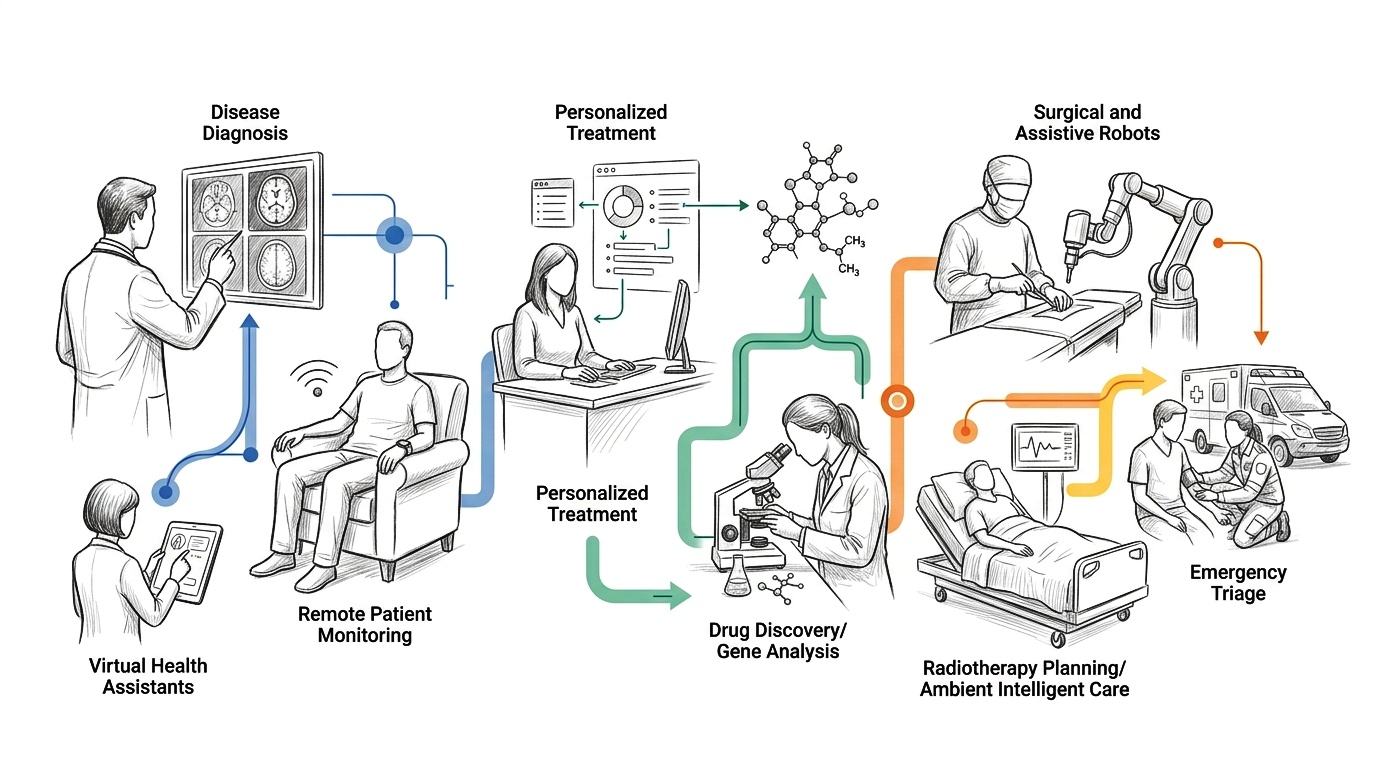
- In healthcare, generative models help researchers discover more novel materials or compounds, fueling downstream product releases.
- In financial services, chatbots and predictive analytics built by AI development companies have enabled hyper-personalized user experiences, improving conversion metrics.
- In retail, smart shelf analytics combine vision and inventory data, reducing stockouts and improving sales per square foot.
These cases show that AI product innovation is not hypothetical. It already powers business transformation.
How to Become a Trusted AI Implementation Partner
Build Domain and Technical Credibility
Clients look for partners who understand not just the technology but also the specific challenges of their industry, whether it’s ecommerce, healthcare, or finance. Combining domain expertise with strong technical proficiency allows your team to design AI solutions that align with real business goals. Developing internal demos, proof-of-concepts, and reference architectures can help showcase your capability and build confidence with clients.
Start with Small Wins
Rather than proposing large-scale AI transformations right away, begin with small, modular solutions that address clear and measurable problems. Delivering quick, tangible results helps clients see the value of AI in action and builds early trust. Once credibility is established through these wins, you can gradually expand into larger, more strategic AI initiatives with stronger buy-in.
Offer Full-Stack Services
Becoming a true AI implementation partner means supporting clients at every stage of their AI journey, from strategy and roadmap development to model creation, deployment, and ongoing monitoring. Offering full-stack AI services reduces dependency on multiple vendors and provides clients with a seamless, cohesive experience. This end-to-end approach not only ensures better outcomes but also positions your company as a long-term strategic ally.
Collaborate, Don’t Replace
The most successful AI consulting engagements are collaborative, not competitive. Work closely with the client’s internal teams, sharing knowledge and building their confidence in AI systems. By helping upskill their employees and integrating them into the process, you foster a sense of ownership and trust. This partnership mindset turns short-term projects into lasting client relationships.
Focus on Ethical, Explainable AI
Ethical AI is a competitive advantage. Clients increasingly value transparency, accountability, and fairness in AI systems. By embedding ethical principles and explainability into your design process, you ensure that models are not only accurate but also responsible. This commitment differentiates your brand from vendors offering opaque, black-box AI solutions.
Challenges to Address
Data Quality and Availability
High-quality, well-labeled data forms the foundation of any successful AI initiative. Without accurate and diverse datasets, even the most sophisticated models can produce unreliable or biased results. Organizations must invest in proper data collection, cleaning, and labeling processes to ensure AI models are trained effectively. Additionally, having continuous access to updated data helps maintain model performance over time.
Integration Complexity
Integrating AI into existing legacy systems can be a daunting task that requires careful architectural planning. Many older systems lack the APIs or flexibility needed to support advanced AI models, leading to time-consuming workflow redesigns. Businesses must often modernize their tech stacks or introduce middleware solutions to ensure smooth AI adoption. Addressing integration early on helps prevent performance bottlenecks and ensures scalability. Refer to our industry-based strategic reports to learn more.
Change Management
AI transformation is a cultural shift rather than mere technical upgradation. Employees may be hesitant to adopt AI tools due to fear of job loss or lack of understanding. A strong change management strategy that includes training, transparency, and user education is critical. Encouraging participation and showing how AI enhances human capabilities rather than replacing them builds trust and smoother adoption.
Model Maintenance Cost
AI systems are not one-time investments; they require continuous monitoring, retraining, and infrastructure upkeep. As data evolves, models can experience “drift,” reducing their accuracy and reliability. Regular evaluation and retraining ensure consistent performance, but these activities come with operational costs. Budgeting for maintenance and adopting automation tools can help streamline this process efficiently.
Overpromising and Unrealistic Expectations
One of the biggest pitfalls in AI adoption is overhyping its capabilities. Promising instant transformation or flawless automation can damage credibility when outcomes fall short. Organizations must communicate clearly about what AI can and cannot do, setting realistic timelines and expectations. Building trust through transparency ensures long-term success and responsible innovation.
Getting Started: Your First Steps
- Conduct a discovery audit: identify pain points, data maturity, and technical readiness
- Define 1–2 anchor use cases with clear ROI and measurable outcomes
- Develop a phased AI roadmap services plan
- Build a cross-functional team combining domain experts, data engineers, and AI strategists
- Pilot, iterate, measure, and scale
Conclusion
AI product innovation holds enormous promise. It empowers you to move from simply applying AI solutions to inventing new products and experiences. With the right AI strategy consulting mindset, robust roadmap services, and a disciplined implementation team, your organization can shift from reacting to competition to defining the next wave of digital products.
Many firms struggle to translate AI pilots into real offerings, but those who succeed reap growth, differentiation, and deep client trust. Let us help you cross that bridge. If you are ready to explore AI use cases tailored to your business, achieve workflow automation, or need a partner for full product development, connect with us today or visit our website to explore how our services can drive your innovation journey.
FAQ
1. What is AI product innovation?
AI product innovation is the process of using AI techniques to ideate, design, and launch new or enhanced products that deliver intelligence and automation.
2. How does AI strategy consulting help?
AI strategy consulting helps align business goals with technical feasibility and define a roadmap for adoption.
3. What kinds of AI use cases deliver value quickly?
Smart recommendations, anomaly detection, predictive maintenance, and intelligent search are among the fast-payoff use cases.
4. Why engage an AI implementation partner?
A partner brings experience, best practices, and end-to-end support to scale your AI from prototype to production.
5. How do you maintain AI features over time?
Implement monitoring, feedback loops, and retraining pipelines to manage model drift and improve performance continually.