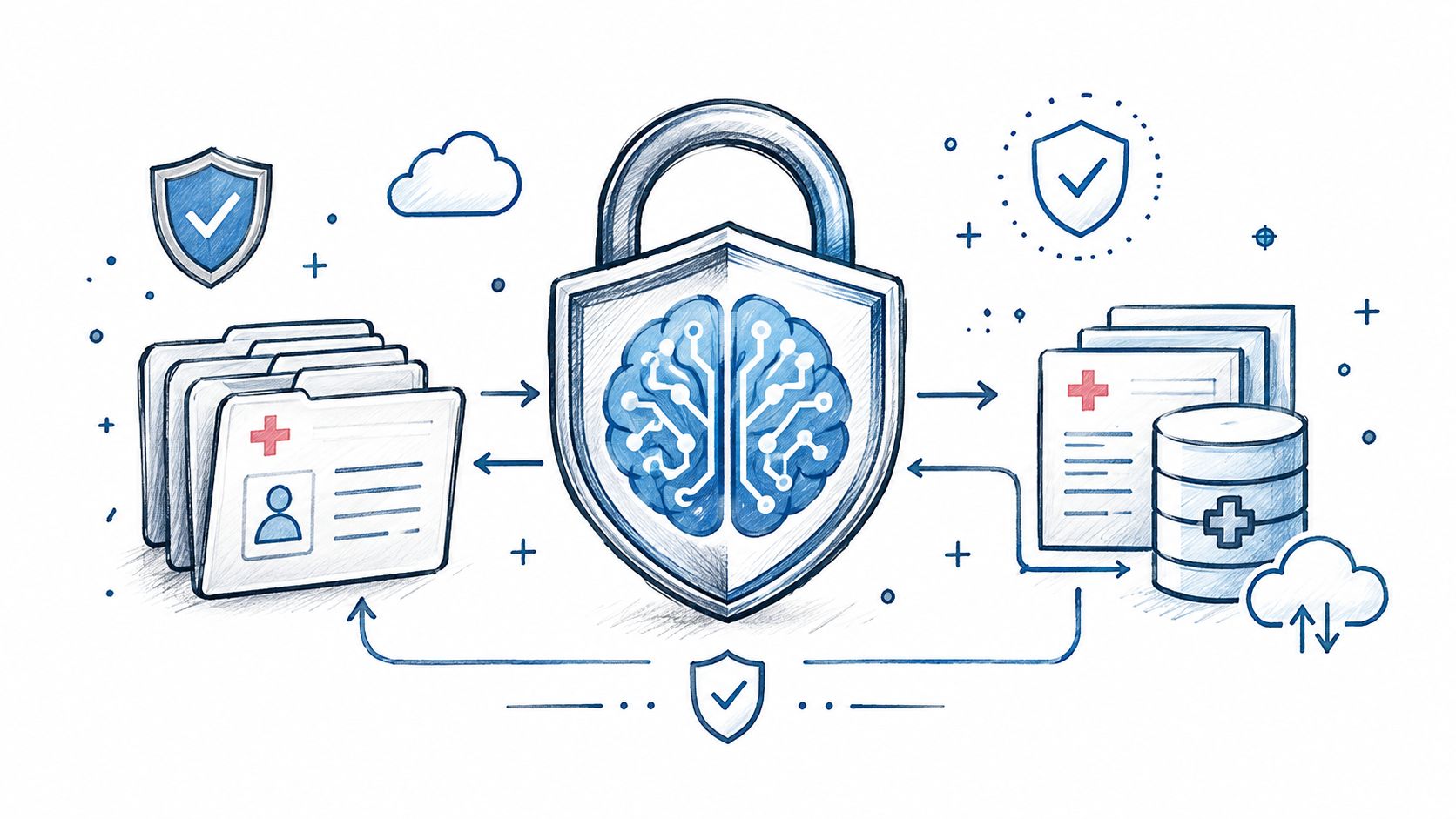
AI in Healthcare
HIPAA-Compliant AI: How to Use LLMs With PHI Safely
How to build HIPAA-compliant AI: when LLM providers need a BAA, data minimization, de-identification, audit controls and a reference architecture.
October 16, 2026Read more
Explore our guide to AI readiness for healthcare enterprises. Learn how to move from gap analysis to ROI with actionable strategies for successful AI adoption.

For any healthcare organization today, figuring out if you're truly ready for AI isn't just a good idea—it's a fundamental requirement for staying relevant and competitive. This means taking a hard, honest look at your data, your people, your daily operations, and your tech stack to see if you can actually support and scale artificial intelligence. We're past the point of treating AI as a far-off concept; it’s about what you can do right now.
The debate around AI in healthcare has moved on. It’s no longer if we should adopt it, but how quickly we can get it right. The time for small-scale experiments and pilot programs is over. For healthcare leaders, this means shifting from simply being aware of AI to taking decisive, strategic action. The pressure is on because we all see the potential: better patient outcomes, more efficient operations, and new avenues for life-saving innovation.

The proof is in the numbers. We're seeing a huge spike in AI adoption across the board. An incredible 70% of healthcare organizations are now actively using AI, a significant jump from just 63% in 2025. This isn't just about tinkering anymore; AI is becoming a core part of day-to-day operations.
The growth is particularly strong in a few key areas:
This is the new reality, and this guide is your playbook for navigating it. We'll break down the core components of AI readiness that every organization needs to get right.
Getting ready for AI is about more than just buying new software. From my experience, true readiness is a measure of your entire organization's ability to adapt. It's about aligning key business functions to work together seamlessly. Understanding these pillars is the first step toward building a successful strategy for your Healthcare AI Services.
I've seen many organizations stumble by focusing on one area while neglecting others. To avoid that, you need a balanced approach. We've found it's best to think about readiness across five essential domains.
The table below summarizes these core pillars. Think of it as a high-level checklist for where to focus your initial assessment.
| Pillar | Focus Area | Key Question |
|---|---|---|
| Data | Quality, accessibility, security, and governance of your data assets. | Is our data clean, accessible, and structured for AI applications? |
| People & Culture | Leadership buy-in, staff digital literacy, and capacity for change. | Is our team, from the C-suite to the front lines, ready to embrace new ways of working? |
| Processes | Identifying and optimizing workflows for AI integration. | Where can AI have the biggest impact on our existing clinical and operational workflows? |
| Technology | Scalability and compatibility of current IT infrastructure. | Can our current systems handle the demands of AI tools and scale with them? |
| Compliance | Adherence to regulations like HIPAA and FDA guidelines. | Do we have a robust framework to ensure our AI initiatives are safe, ethical, and compliant? |
By systematically reviewing these five areas, you can see exactly where you stand. You'll uncover your strengths, identify critical gaps, and get the clarity needed to build a real, actionable plan.
This kind of proactive assessment is what separates organizations that successfully integrate AI from those that just talk about it. It moves you from a reactive position to one of strategic control, putting you in the driver's seat to capitalize on the incredible opportunities AI offers.
Before you can build a successful AI strategy, you have to take an honest look in the mirror. A real-world AI readiness for healthcare enterprises isn’t just about having the latest tech—it’s about having the right foundation. This means performing a gap analysis, a deep dive into the five areas that will make or break your AI initiatives: Data, People, Process, Technology, and Compliance.
Think of it as a self-audit. It's the only way to get a clear, data-driven picture of your true strengths and weaknesses before you invest a single dollar.

Let’s be blunt: data is the fuel for AI. Without clean, accessible, and well-governed data, even the most sophisticated algorithm is useless. I’ve seen promising projects fall apart because the team overlooked this fundamental step.
Start by asking your team some tough questions about your data assets:
Get this right, and you’re building on solid ground. Get it wrong, and you're building on sand.
Technology doesn’t implement itself—people do. The most brilliant AI tool will gather dust if your team, from the C-suite down to the frontline clinicians, isn't prepared for it. A big part of your analysis is figuring out if you have the right skills and, just as crucially, the right mindset.
A culture that resists change or lacks leadership buy-in can stop an AI initiative before it even begins. True readiness is as much about mindset as it is about technology.
To see where you stand, consider your team's current capabilities and your organization's capacity for change. You might need to bring in specialized artificial intelligence talent to fill the gaps.
Ask yourself:
The answers will tell you if your biggest investment needs to be in training programs and better communication, not just new software.
AI creates the most value when it’s woven directly into your daily operations, solving real problems without adding new layers of complexity. This means you first need to pinpoint the processes that are ripe for an upgrade and then confirm your tech stack can handle the new workload.
When looking at your processes, hunt for friction. Where are the bottlenecks? What manual, repetitive tasks are eating up your clinicians' valuable time? Finding these pain points will lead you straight to high-impact opportunities where AI can make an immediate difference.
On the technology side, your infrastructure has to be up to the task. Can your current servers handle the heavy computational load that AI models demand? Do you have the right platforms in place to either build or integrate the AI tools you’ll need? An honest assessment here is critical.
In healthcare, compliance isn't just a box to check—it’s a core requirement. A slip-up can have serious legal and financial consequences, not to mention the damage to your reputation. Your gap analysis has to include a rigorous review of your ability to navigate the complex web of regulations.
Your compliance checklist should include:
Failing to plan for this from day one is a recipe for disaster. This is often where bringing in an experienced partner can help you ensure your AI initiatives are not only innovative but also safe and fully compliant.
You’ve finished your gap analysis, and now you’re staring at a list of potential AI projects as long as your arm. It’s a common—and slightly overwhelming—place to be. With so many possibilities, from automating patient scheduling to pioneering new diagnostic tools, the biggest challenge isn't a lack of ideas. It’s focus.
The real work begins now: turning that sprawling wish list into a smart, prioritized portfolio. This isn’t about tackling everything. It’s about making deliberate choices that match your organization's current readiness, solve your most pressing problems, and build momentum for the long haul. This is often where an experienced HealthTech engineering partner can be a huge asset, helping you cut through the noise.
To move from a jumble of ideas to a clear roadmap, you need a consistent way to vet each project. We use a simple but effective matrix to score real-world use cases against the criteria that matter most. While your specific weights might vary, any solid evaluation boils down to four questions.
Scoring every potential project against these four pillars lets you map everything out visually. Suddenly, the front-runners become obvious.
I’ve seen it time and again: the best first projects are rarely the most technologically dazzling. They’re usually simple, focused tools that solve a well-understood and painful problem, delivering an impact that everyone can see and feel right away.
A smart AI portfolio isn't one-dimensional. It needs a healthy mix of projects that deliver immediate value and those that will redefine your organization down the road.
Imagine you're weighing two options. One is an ambitious plan to use AI to help radiologists interpret complex MRIs. The clinical potential is enormous, but it’s a heavy lift with significant regulatory and technical hurdles. The other is an AI Automation as a Service tool to fix your messy revenue cycle management process. It’s not as glamorous, but the financial ROI is clear and it's much easier to get up and running.
So, which one do you pick? The answer is both—or rather, a strategy that includes both types of initiatives.
Making these trade-offs requires a formal assessment, which we typically consolidate into a Custom AI Strategy report. This grounds your decisions in the reality of your current capabilities, not just wishful thinking. As you explore specific tools, looking at something like the HCP Engagement Co-pilot can provide a great example of how a targeted AI platform can solve a very specific industry challenge.
In the end, prioritization is about choosing the right projects, in the right order, to create a program that delivers value today while building the capacity for even greater things tomorrow.
Now that you’ve wrestled with the big-picture strategy and sorted your AI use cases, it's time to get your hands dirty. An ambitious vision is great, but without a concrete plan, it’s just that—a vision. This is where a 30-90-180 day roadmap comes in. It’s not just a timeline; it's your playbook for turning ideas into action.
Breaking a massive initiative into these smaller, digestible chunks does two critical things: it makes the work manageable and shows tangible progress to your stakeholders. This keeps momentum high and proves you’re delivering value right from the start.
Your first month is all about laying the groundwork. The temptation is to jump straight into development, but I’ve seen that backfire too many times. A rushed start almost always leads to a stalled project. Instead, your focus here is on alignment, governance, and planning. Getting this right is non-negotiable.
Your key milestones for this period should include:
I can't stress this enough: the success of your entire AI program can hinge on the clarity and buy-in you achieve in these first 30 days. It's less about code and more about consensus.
With your foundation firmly in place, it’s time to build. The next three months are all about execution and iteration. This is when your pilot project comes to life. Your goal isn’t perfection; it’s about getting a working solution into the hands of real users and starting the feedback loop as quickly as possible.
This is where the real work begins. You’ll deploy the pilot and immediately start listening to what your users have to say. This agile approach, which we detail in our AI Product Development Workflow, is fundamental to getting it right.

The framework above helped you pick a pilot with the right mix of impact and feasibility. Now, in this 90-day window, you’ll see if that choice holds up in the real world.
Here’s what you’ll be doing:
By the six-month mark, your pilot has been in the wild long enough to generate meaningful data. This is your moment of truth. You’ll measure the results against your initial goals and make a data-driven decision about what comes next. The objective is to build a solid business case for expanding the initiative.
Your main activities during this final stretch of the initial roadmap are:
To help you structure this process, here’s a simple template that outlines the key activities and goals for your first six months. Think of it as a starting point to customize for your own initiative.
| Timeframe | Key Activities | Primary Goal |
|---|---|---|
| Days 1-30 | Assemble governance council, finalize pilot scope, define success metrics, secure stakeholder buy-in, select vendor/partner. | Establish a solid project foundation and complete all prerequisite planning. |
| Days 31-90 | Launch pilot in a controlled environment, establish user feedback channels, begin data collection, iterate on the solution. | Deploy a minimum viable product (MVP) and gather real-world user feedback. |
| Days 91-180 | Analyze pilot KPI data, calculate initial ROI, document lessons learned, develop a business case for expansion. | Evaluate pilot success and make a data-driven decision on scaling the solution. |
This roadmap provides a clear, logical progression from a strategic idea to a validated solution. Once you have a successful pilot under your belt and a clear plan to scale, you’ll find it’s much easier to secure the resources and support needed for your broader AI ambitions. If you need a hand turning this template into a reality, our experts specialize in structured AI implementation support.
Let's be honest: no AI project gets off the ground—or stays funded—without a strong business case. A great idea isn't enough. To get the green light from hospital administrators and keep your clinical teams bought in, you need to show them the numbers.
This is where many AI initiatives falter. They focus on flashy tech instead of tangible results. For your program to have a future, you have to connect every project to the financial and operational goals that keep leadership up at night. We're talking about real-world improvements, not just vanity metrics. Did you reduce diagnostic errors? Did patient throughput in the ER get better? Are operational costs actually going down? This is the language of success.
To tell a compelling story with your data, you need to track two types of metrics: leading and lagging indicators. I've seen teams get discouraged when they only focus on the big, slow-moving goals.
Think of it this way:
Leading Indicators are your early warning system. They tell you if you're headed in the right direction. These are things you can see almost immediately, like user adoption rates, how many tasks your AI is completing, or the time your staff is saving on paperwork. Seeing these numbers tick up builds crucial momentum and shows stakeholders that the project is alive and well.
Lagging Indicators are the ultimate prize. These are the big outcomes you're aiming for, like better Hospital Consumer Assessment of Healthcare Providers and Systems (HCAHPS) scores, lower patient readmission rates, or a healthier revenue cycle. They take months, sometimes even a year, to show a real shift.
By tracking both, you can demonstrate early progress with leading indicators while you wait for the lagging ones to catch up. It proves the long-term value of your Healthcare AI Services is on the horizon.
The good news is that the financial argument for AI in healthcare is stronger than ever. Investors are pouring money into this space because they see a clear path to value.
Consider this: healthcare AI companies are projected to capture 55% of all health tech funding in 2026. That's a huge jump from 37% in 2025. This isn't just a trend; it's a massive vote of confidence from the market. You can use this data in your own business case. It shows that investing in AI is no longer a speculative bet but a core component of a modern healthcare strategy, justifying the cost of your overall AI strategy consulting.
Your business case should frame AI not as a technology expense, but as the solution to your organization's most pressing financial and operational problems. It's a direct investment in efficiency, quality, and sustainability.
Before you even launch a pilot, you need to know exactly how you'll measure success. Your key performance indicators (KPIs) must be tied directly to the specific problem your use case is designed to solve.
Here are a few real-world examples of KPIs we've seen work well:
For boosting operational efficiency:
For improving clinical outcomes:
For strengthening financial performance:
By choosing a balanced mix of KPIs across these areas, you build a powerful, 360-degree view of your AI's impact. This isn't just about justifying your budget; it’s about creating a data-driven cycle of improvement that guides your next steps. If you're struggling to nail down the right metrics, our expert team can help you connect your KPIs directly to your strategic goals.
As healthcare leaders begin to explore AI, the same questions and concerns pop up time and time again. Let's tackle them head-on. Drawing from the real-world experiences of our expert team, here are some straight answers to demystify the process and give you a clear path forward.
Everyone wants to jump straight to the cool tech, but the real first step is a frank self-assessment. Before you even think about a specific tool, you need to conduct a thorough gap analysis to see where you stand today. As we explored in our AI adoption guide, this means getting honest about everything from the quality of your data to the digital skills of your staff. An AI Strategy consulting tool is perfect for this, as it gives you an objective look at your strengths and weaknesses, creating a solid foundation for everything that comes next.
The key is to start small and aim for a quick, high-impact win. Forget about trying to solve a massive clinical puzzle right out of the gate. Instead, find a manual, repetitive process that’s a known headache for your organization. Think about things like patient scheduling, automating parts of the billing cycle, or streamlining prior authorizations. These are often fantastic starting points. Your goal is to pick a project that is visible, achievable in about 90-180 days, and delivers value people can actually see. A successful first step builds incredible momentum and gives your team the confidence to tackle bigger challenges, like advanced SaMD solutions, down the line.
Your initial project's success is less about technical complexity and more about its ability to demonstrate clear, undeniable value to stakeholders. This early victory becomes the fuel for your entire AI program.
This is the classic "build vs. buy" dilemma, and the right answer really depends on your goals, resources, and in-house expertise. Building your own proprietary AI tools for business can give you a huge competitive edge and total control, but don't underestimate the investment. It demands significant time, capital, and a team of specialized talent you may not have. On the other hand, teaming up with a HealthTech engineering partner gets you to the finish line much faster and gives you immediate access to seasoned experts. For most healthcare organizations we work with, a hybrid approach works best. You can use proven solutions like AI Automation as a Service for common problems while co-developing custom AI for the unique, strategic challenges that truly set you apart.
Compliance can't be an afterthought—it has to be baked into your AI strategy from day one. This means getting your legal and compliance teams involved right from the beginning, during the AI requirements analysis and vendor vetting stages. The landscape of AI governance laws is also evolving, so staying ahead of new regulations is critical for ethical and legal deployment. When you look at any AI solution, you need to demand total clarity on its data governance, security protocols, and exactly how it handles Protected Health Information (PHI). If you're exploring clinical applications, especially those that qualify as Software as a Medical Device (SaMD), you have to follow strict FDA regulatory pathways. Partnering with a team that specializes in custom healthcare software development and has a proven record of navigating these rules isn't just a good idea—it's non-negotiable.
There's no single price tag. The cost of an AI project can range from a relatively small investment for a pilot using a ready-made tool to a much larger one for developing custom internal tooling for a complex clinical problem. A better way to think about it is through the lens of ROI. A successful project should ultimately pay for itself by making your operations more efficient, cutting costs, or improving patient outcomes. A focused AI strategy consulting engagement is the best way to model the potential costs and returns for your top use cases, which helps you build a solid business case to get the investment approved.
Ready to move from questions to a concrete plan? Ekipa AI delivers the strategic clarity and technical execution you need to make AI a reality. Our platform provides a tailored Custom AI Strategy report in 24 hours, helping you pinpoint high-impact opportunities and build a roadmap for success with our expert team.
How to build HIPAA-compliant AI: when LLM providers need a BAA, data minimization, de-identification, audit controls and a reference architecture.
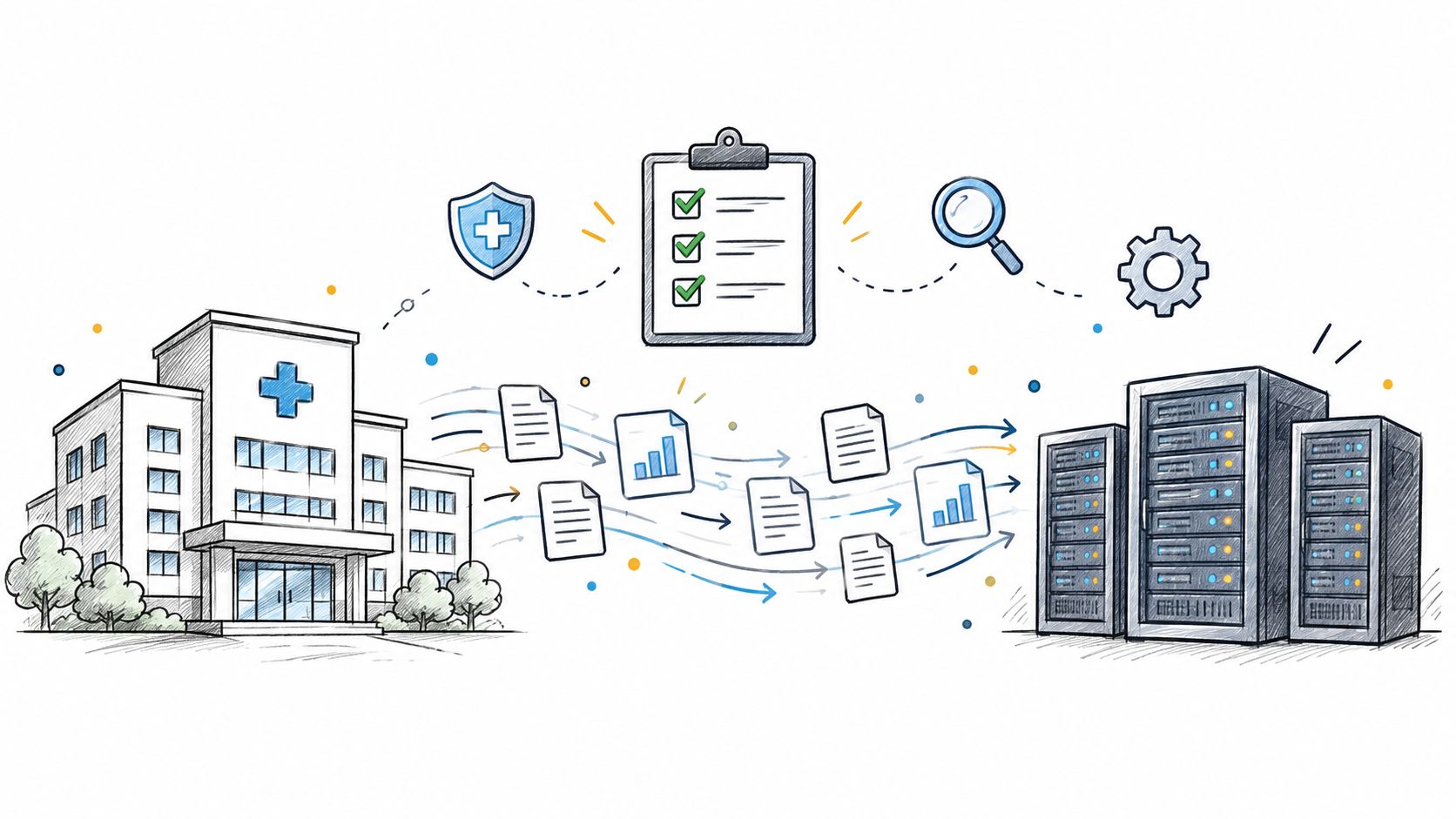
Practical data migration planning guide for healthcare teams. Scope, mapping, compliance, validation, cutover and rollback decisions explained end to end.

Smart on FHIR guide for healthtech engineers. Learn the OAuth 2.0 launch model, scope syntax, backend services, and US regulatory requirements.
Connect with our team to explore how AI expertise can transform your business.