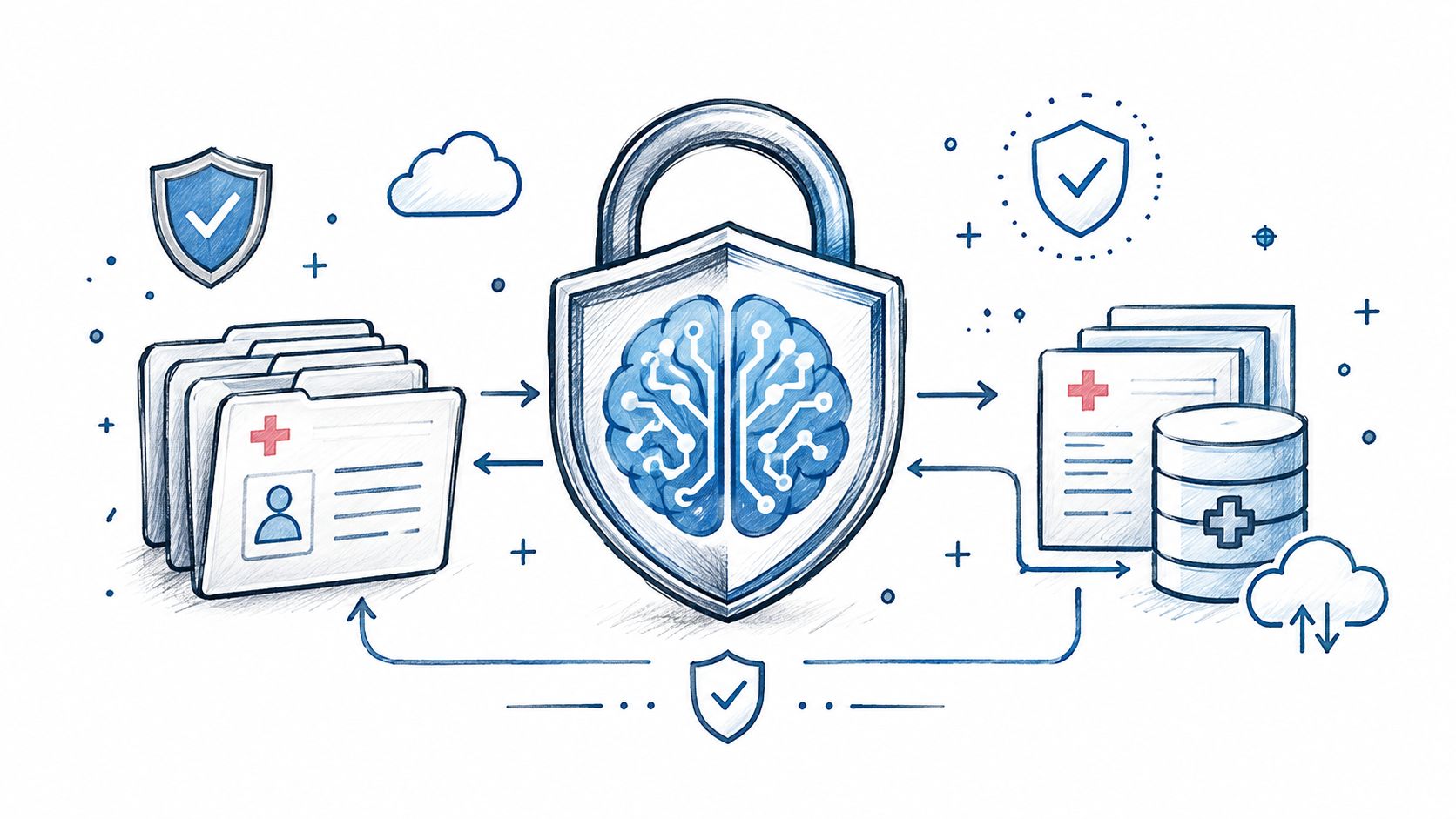
AI in Healthcare
HIPAA-Compliant AI: How to Use LLMs With PHI Safely
How to build HIPAA-compliant AI: when LLM providers need a BAA, data minimization, de-identification, audit controls and a reference architecture.
October 16, 2026Read more
Discover how artificial intelligence medical applications are revolutionizing healthcare, from diagnostics to operations. See how AI improves patient care.

Artificial intelligence in medical settings is no longer a futuristic concept; it's a powerful, data-driven assistant working alongside clinicians today. It enhances human expertise by processing vast amounts of information to improve diagnostics, personalize treatments, and streamline hospital operations. The core function is to augment, not replace, the critical judgment of medical professionals.

Forget depictions of autonomous robots in sci-fi films. The reality of artificial intelligence medical applications is far more practical and integrated. Think of AI as an incredibly capable colleague for every doctor, nurse, and administrator—one that can analyze millions of data points in seconds without fatigue. This "assistant" can identify subtle patterns in an MRI scan, predict patient readmission risks, or optimize surgical schedules for maximum efficiency.
This shift is not about removing the human element but amplifying it. By handling complex data analysis and repetitive administrative tasks, AI frees up healthcare professionals to focus on what they do best: providing compassionate, high-quality patient care. Our AI solutions are specifically designed to address these persistent challenges, turning data into a strategic asset.
The impact of artificial intelligence in the medical field spans across clinical and operational functions. Clinically, it acts as a decision-support tool, offering insights that can lead to earlier and more accurate diagnoses. Operationally, it drives efficiency, reduces costs, and improves resource management, which we explore further in our overview of AI for the healthcare industry. This dual benefit is what makes its adoption so compelling for modern healthcare organizations.
The primary goal of medical AI is to create a more predictive, preventative, and personalized healthcare system. It equips providers with the tools to anticipate health events, not just react to them.
To better understand this landscape, it’s helpful to categorize where AI is making its most significant contributions. These domains represent the foundational pillars of the AI-driven healthcare transformation. The following table provides a clear framework for the key areas where AI is already delivering substantial value.
| Domain | Primary Function | Example Application |
|---|---|---|
| Clinical Diagnostics | Augmenting human analysis of medical data to improve accuracy and speed. | AI algorithms detecting early-stage cancer cells in pathology slides that are invisible to the human eye. |
| Treatment Personalization | Analyzing genomic data and patient history to recommend tailored treatment plans. | Predicting a patient's response to a specific chemotherapy drug based on their genetic markers. |
| Operational Efficiency | Automating administrative tasks and optimizing resource allocation. | Intelligent scheduling systems that reduce patient wait times and optimize operating room usage. |
Understanding these core applications is the first step for any healthcare leader looking to build a successful AI strategy. Each domain offers a distinct opportunity to improve outcomes, lower costs, and ultimately deliver a higher standard of care for every patient. This guide will explore these use cases in greater detail.

Nowhere is the impact of artificial intelligence in medicine more visible than in diagnostics. This is where AI algorithms, especially deep learning and computer vision, are fundamentally reshaping how clinicians read and interpret complex medical data, particularly from imaging.
Think of these tools not as a replacement for a skilled radiologist, but as an incredibly sharp, tireless second set of eyes. They can analyze scans with a level of speed and precision that’s simply beyond human capacity.
These systems learn their craft by training on massive datasets—literally millions of annotated X-rays, CT scans, MRIs, and pathology slides. By sifting through this vast library, the AI learns to spot subtle anomalies, tiny fractures, or the earliest signs of a tumor that might otherwise go unnoticed. This directly speeds up the diagnostic process, paving the way for earlier intervention and, ultimately, better patient outcomes.
The real magic of AI in diagnostics isn't about replacing doctors; it's about augmenting their expertise. A radiologist brings years of hard-won experience and nuanced clinical judgment to every case. An AI brings the raw computational power to process immense amounts of visual data without ever getting tired, flagging patterns that correlate with known conditions.
AI functions as a powerful decision-support tool. It can highlight a suspicious area on a scan, precisely measure a lesion's size and density, and cross-reference the findings against a database of millions of similar cases—all in a matter of seconds. This frees the specialist to concentrate on the most complex aspects of the diagnosis and map out a treatment plan.
For instance, when reviewing a chest X-ray, an AI might flag a faint shadow that could indicate a developing tumor. In dermatology, it can analyze a simple photo of a skin lesion and calculate its probability of being malignant. The final call always belongs to the medical professional, but the AI delivers critical, data-driven insights that make that decision much more informed.
AI in diagnostics is no longer just a concept in a research lab; it's actively being deployed in clinical settings. The momentum is undeniable. By 2025, it's estimated that roughly 80% of hospitals worldwide will have integrated AI solutions to enhance patient care.
This rapid adoption is fueled by AI’s proven ability to make screening faster and more accurate, often finding abnormalities that even a trained human eye might miss.
Here are a few high-impact examples already in play:
These examples show how AI is quickly becoming an essential part of the modern diagnostic toolkit. By shouldering the heavy lifting of data analysis, these technologies empower clinicians to focus on what they do best: providing patients with the most accurate and timely diagnoses possible.
While AI-powered diagnostics often grab the headlines, some of the most practical and immediate gains are happening behind the scenes. Artificial intelligence isn't just changing medicine; it's completely overhauling the business of healthcare, untangling the complex, resource-draining administrative work that gets in the way of great patient care.
This is about more than just incremental tweaks. It's a fundamental shift, aimed at freeing up your most skilled people from the endless cycle of paperwork and logistical gymnastics. The idea is simple: let technology handle the tedious, predictable tasks so your clinical staff can focus their expertise on patients.
AI brings a new level of precision to the operational side of a hospital. Think intelligent patient scheduling that slashes wait times and maximizes a doctor's availability, or billing systems that catch errors before they happen, smoothing out the entire reimbursement process.
The beauty of applying AI to operations is that the benefits aren't siloed in one department. Instead, you see a ripple effect of efficiency that improves how the entire hospital runs. For anyone navigating tight budgets while trying to elevate care standards, this kind of holistic improvement is a game-changer. As we explore in our guide to workflow automation, the real power comes from connecting and streamlining processes across the board.
Take resource management—a constant headache for any hospital administrator. AI can forecast demand to prevent shortages of critical medical supplies or dynamically manage bed allocation to get patients out of the ER and into a room faster. It’s about making smarter decisions with the data you already have.
Here are a few key areas where AI is making a real difference:
To truly grasp the financial impact, let's look at a concrete comparison. The following table illustrates the potential ROI when AI takes over key administrative and operational functions in a typical hospital setting.
| Operational Area | Traditional Method (Annual Cost/Time) | AI-Powered Method (Annual Cost/Time) | Potential Annual Savings/Efficiency Gain |
|---|---|---|---|
| Medical Coding & Billing | Staff of 10 coders: ~$600,000 | AI Software + 4 oversight staff: ~$350,000 | $250,000 annually + 40% error reduction |
| Patient Scheduling | Staff of 5 schedulers: ~$250,000 | AI Scheduling Platform: ~$80,000 | $170,000 annually + 25% fewer no-shows |
| Supply Chain Management | Manual inventory tracking, high waste: ~$5M | Predictive AI analytics: ~$4.2M (incl. software) | $800,000 annually from waste reduction |
| Staff Rota Management | Manual scheduling, high overtime: ~$700,000 | AI-driven forecasting & scheduling: ~$550,000 | $150,000 in reduced overtime costs |
As the numbers show, the shift from manual, labor-intensive processes to intelligent, automated systems doesn't just save money—it makes the entire operation more efficient, accurate, and resilient.
Getting started with these technologies is more straightforward than you might think. Many organizations are turning to models like AI Automation as a Service, which provides access to powerful tools without requiring a massive upfront investment in new hardware or a team of in-house data scientists. This lets you target specific pain points first—like appointment scheduling or revenue cycle management—and then expand as you see results.
For hospitals with highly specific needs, a more tailored approach might be better. Developing custom internal tooling ensures that an AI system integrates seamlessly with your existing workflows. And for a truly unique solution, engaging in custom healthcare software development can produce a platform built from the ground up to solve the specific operational challenges your institution faces, driving maximum impact and user adoption.
By automating the predictable, AI gives your people the space to focus on the profoundly human side of healthcare. It’s about shifting your most valuable resources—your team's time and talent—away from administrative overhead and toward direct patient interaction.
Ultimately, streamlining hospital operations with AI is about building a smarter, more efficient, and more patient-focused organization. It's an investment that pays for itself not just on the balance sheet, but in the quality of care you deliver every single day.
Moving from theory to practice with artificial intelligence in medical settings requires a clear, deliberate plan. A successful adoption journey isn't about chasing the latest shiny object; it’s about strategically solving your organization's most pressing challenges. From my experience, a well-defined roadmap is the single most important factor for success, as we explored in our AI adoption guide.
This process starts with an honest look at your organization's unique pain points. Are patient wait times getting out of hand? Is administrative burnout tanking staff morale and retention? Are you catching early diagnostic indicators as often as you should be? Pinpointing these critical issues gives you the focus needed to guide your entire strategy.
This is where professional AI strategy consulting can be a game-changer. It helps marry what’s technologically possible with concrete business goals, ensuring every initiative is designed to deliver real value from day one. This alignment prevents expensive missteps and keeps the focus where it belongs: on improving patient care and operational strength.
The diagram below shows how AI can weave through key hospital operations, turning a series of complex, disjointed processes into an efficient, automated system.

As you can see, AI has the potential to connect disparate functions—from patient scheduling to billing and resource management—into a cohesive and intelligent operational flow.
Your first step is a thorough discovery process. Instead of asking, "What can we do with AI?" you need to ask, "What are our biggest problems, and could AI help solve them?" This problem-first approach ensures your investment addresses a genuine need, not just a technological curiosity. Exploring a variety of real-world use cases can help inspire this process.
This phase means diving deep into your current workflows. A comprehensive AI requirements analysis is crucial here to pinpoint the exact areas where automation and intelligent insights can make the biggest difference. The goal is to build a prioritized list of potential projects, ranked by their impact on clinical outcomes, operational efficiency, and financial health. A well-structured AI Product Development Workflow then helps frame these concepts for successful execution right from the start.
AI models are only as good as the data they eat. Before you even think about launching a project, you have to get real about the quality, accessibility, and security of your data. This boils down to a few key questions:
This assessment often uncovers foundational work that has to be done first, like shoring up data governance policies or finally modernizing those legacy systems. For organizations that want a ready-made plan, a Custom AI Strategy report can deliver a detailed analysis and actionable next steps.
Don't try to boil the ocean. Instead of attempting a massive, organization-wide rollout, start with a focused pilot program. Pick one of your top-priority use cases and implement it on a smaller, controlled scale. This is your chance to test the technology in the real world, gather honest feedback, and demonstrate value quickly.
A successful pilot program acts as a powerful proof-of-concept. It builds momentum, secures buy-in from skeptical stakeholders, and provides invaluable lessons that you can apply to future, larger-scale deployments.
The industry is moving fast. Recent data shows that more than 63% of healthcare professionals are already actively using AI. And the results are compelling: organizations are seeing tangible benefits, with 81% reporting revenue increases and 73% watching operational costs go down because of AI. This is precisely why 78% of healthcare organizations are planning to increase their AI budgets in the coming year. You can explore more of these trends in healthcare and life sciences to see the full picture.
By following this structured roadmap—from identifying core problems to launching a strategic pilot—healthcare leaders can take the mystery out of AI adoption. It turns the concept of artificial intelligence in medical care from an abstract idea into a practical, value-driven reality. For deeper guidance on crafting your own strategy, our expert team is ready to help.

Bringing artificial intelligence medical tools into your organization isn't just a technical upgrade; it's a profound commitment. To do it right, you have to nail the fundamentals of data governance, navigate the thicket of healthcare regulations, and get the ethics right. This isn’t just a box to check—it’s the very foundation of patient trust.
The conversation always starts with data privacy. Patient data fuels these AI models, but regulations like HIPAA put strict guardrails around its use. Every single piece of data used to train an algorithm has to be rigorously anonymized and protected. The consequences of getting this wrong aren't just legal penalties; they're a catastrophic loss of patient confidence.
Beyond security, we run straight into the ethical minefield of algorithmic bias. Think about it: if an AI model learns from data that mostly represents one demographic, its insights could be dangerously inaccurate for others. This doesn't just create a flawed tool; it risks making existing health disparities even worse.
The answer lies in pursuing Explainable AI (XAI). This is a commitment to making sure AI decisions don't happen in a mysterious "black box." Your clinicians need to understand why the algorithm suggested a certain diagnosis or action. That kind of transparency is non-negotiable for building accountability and ensuring the technology serves every patient fairly.
Navigating the ethical landscape of medical AI is not just about compliance; it's about a fundamental commitment to fairness. The goal is to build systems that reduce, rather than amplify, human biases in healthcare delivery.
A critical report on AI in healthcare celebrated its potential to analyze massive datasets for better outcomes, but it also pointed directly to the challenges of data quality and access. The report made it clear: you need a careful balance of diverse, high-quality data to build AI models you can actually rely on.
Then there's the regulatory environment. Many AI-powered tools, particularly those involved in diagnosis or treatment planning, are considered medical devices. That puts them squarely under the purview of agencies like the U.S. Food and Drug Administration (FDA).
Getting FDA approval is a serious undertaking. It requires exhaustive validation to prove the technology is both safe and effective. You’ll need rock-solid documentation, robust clinical trial data, and a clear-cut case for how the tool genuinely improves patient care. A key part of this is proving data integrity; resources on medical annotation ensuring accuracy and compliance can offer crucial guidance here.
Managing privacy, ethics, and regulations all at once is a massive undertaking. It demands a sophisticated mix of technical expertise, legal know-how, and a real-world understanding of how your clinicians work. This is precisely where a well-defined AI strategy, guided by experts, can make all the difference, ensuring your innovations are as principled as they are powerful.
So, how do you actually prove that your big bet on artificial intelligence medical technology is paying off? Once the initial buzz fades, every leader needs a straightforward way to measure success. It all comes down to defining concrete Key Performance Indicators (KPIs) to justify the investment and show real, tangible returns.
The tricky part is that the right metrics depend entirely on what you’re trying to fix. A one-size-fits-all dashboard won't cut it. The goals for a clinical AI tool are worlds apart from those for an operational one, so you have to measure success against the specific problem you set out to solve.
When it comes to clinical tools, success is all about the patient. The most important numbers will track direct improvements in the quality, speed, and effectiveness of care.
On the other hand, operational AI is measured by how smoothly the hospital runs. Here, the KPIs are all about the financial and administrative health of your organization.
Proving the value of AI isn't just about crunching numbers; it's about telling a compelling story. You need to connect your KPIs directly back to your organization's core mission—whether that's improving community health, leading research, or simply running a more efficient operation.
To really see the big picture, think about how AI fits into new healthcare models. The shift toward value-based care, for instance, links payments directly to patient outcomes. You can get more insights on Value-Based Care in this expert interview. This model makes AI-driven improvements not just a "nice-to-have," but financially essential.
Pulling this data-driven strategy together requires a clear vision from day one. If you need a hand defining the right KPIs and building a business case for your specific goals, connect with our expert team. We can help you turn your strategic ambitions into results you can actually measure.
As a healthcare leader, you're right to ask tough questions before bringing any new technology into your organization. Let's tackle some of the most common concerns I hear from executives about getting started with AI.
That’s often the first question, and for good reason. The good news is that you don't have to rip and replace your existing Electronic Medical Record (EMR) system. Modern AI tools are built to integrate, not dominate.
This connection usually happens through secure APIs (Application Programming Interfaces). Think of an API as a secure, managed translator between the two systems. It allows the AI to analyze de-identified patient data from your EMR without disrupting your core infrastructure. A proper AI requirements analysis is the first step to making sure this handshake between systems is smooth and secure.
This is less about turning your clinicians into data scientists and more about helping them trust and use a new source of information. The best AI tools don't require technical expertise; they have intuitive dashboards that surface insights clearly.
Training should focus on the practical side of things:
Yes, you can. The biggest mistake I see is thinking you have to boil the ocean. You don't. The smart way to start is to pick one specific, high-value problem and solve it.
Instead of a massive capital investment, look for a targeted pilot project. Models like AI Automation as a Service let you dip your toes in the water without a huge upfront cost. Find a single operational headache—like patient no-shows or claim denials—and use AI to prove the ROI. A small win builds the confidence and the business case for expanding later.
For organizations ready to map out this journey, a Custom AI Strategy report can provide a clear, budget-friendly roadmap. It's about starting smart, not starting big. If you want to talk through your specific situation, you can always connect with our expert team.
No, the goal of artificial intelligence in medical settings is to augment, not replace, human expertise. AI acts as a powerful decision-support tool, handling complex data analysis and repetitive tasks to free up clinicians to focus on patient care, complex decision-making, and the human side of medicine.
The primary ethical challenges include ensuring patient data privacy (HIPAA compliance), preventing algorithmic bias (ensuring AI models are fair and don't perpetuate health disparities), and maintaining transparency (making sure clinicians can understand why an AI made a certain recommendation).
The best approach is to start small with a pilot project that addresses a specific, high-impact problem. This involves identifying a clear use case, assessing data readiness, and choosing a scalable solution. This allows you to prove ROI and build organizational buy-in before expanding to larger initiatives.
Ready to transform your healthcare organization with a clear, actionable AI plan? Ekipa AI delivers tailored AI strategies and end-to-end execution to turn your ideas into scalable impact. Our expert team is here to guide you every step of the way. Get started today.
How to build HIPAA-compliant AI: when LLM providers need a BAA, data minimization, de-identification, audit controls and a reference architecture.
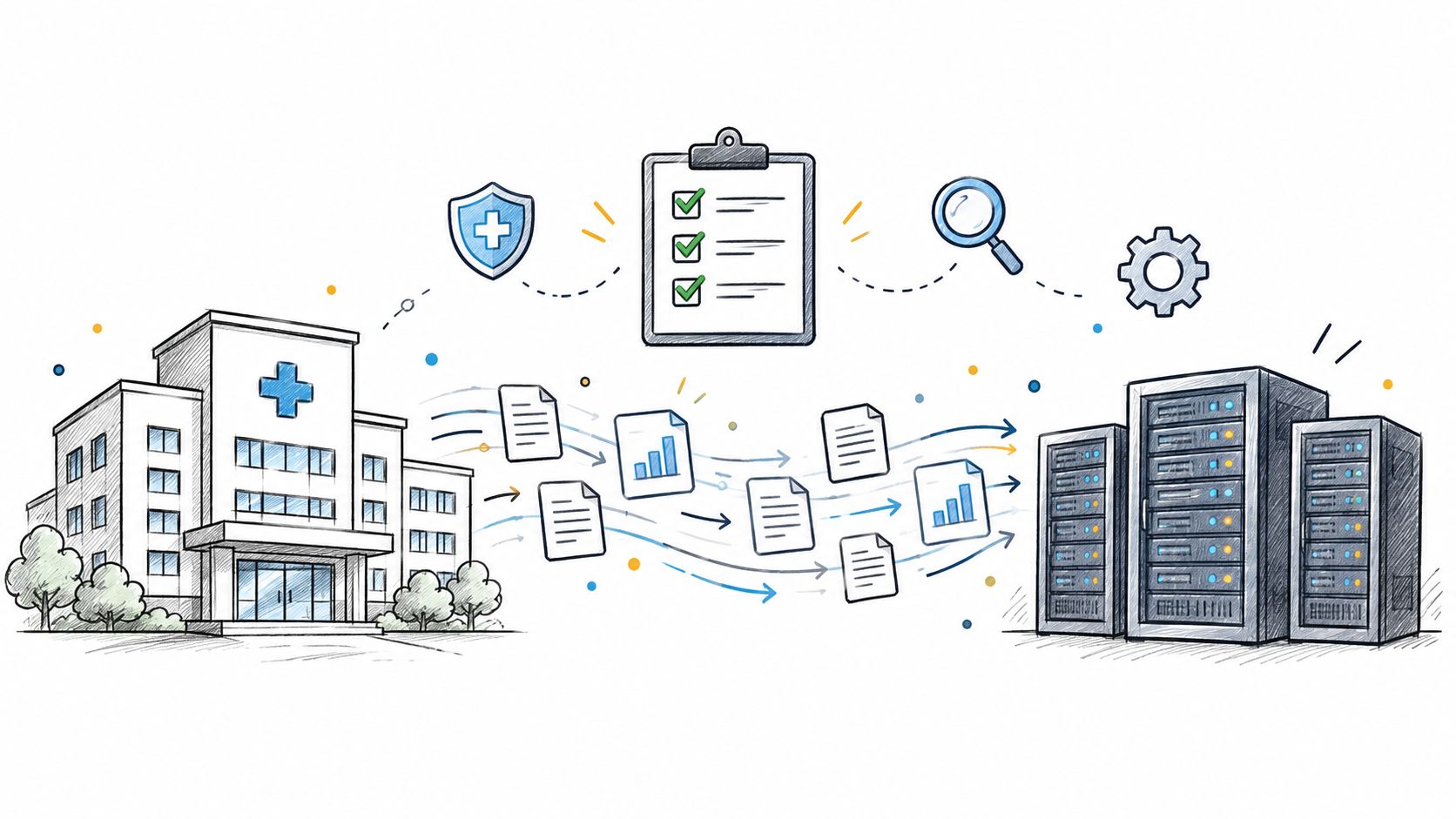
Practical data migration planning guide for healthcare teams. Scope, mapping, compliance, validation, cutover and rollback decisions explained end to end.
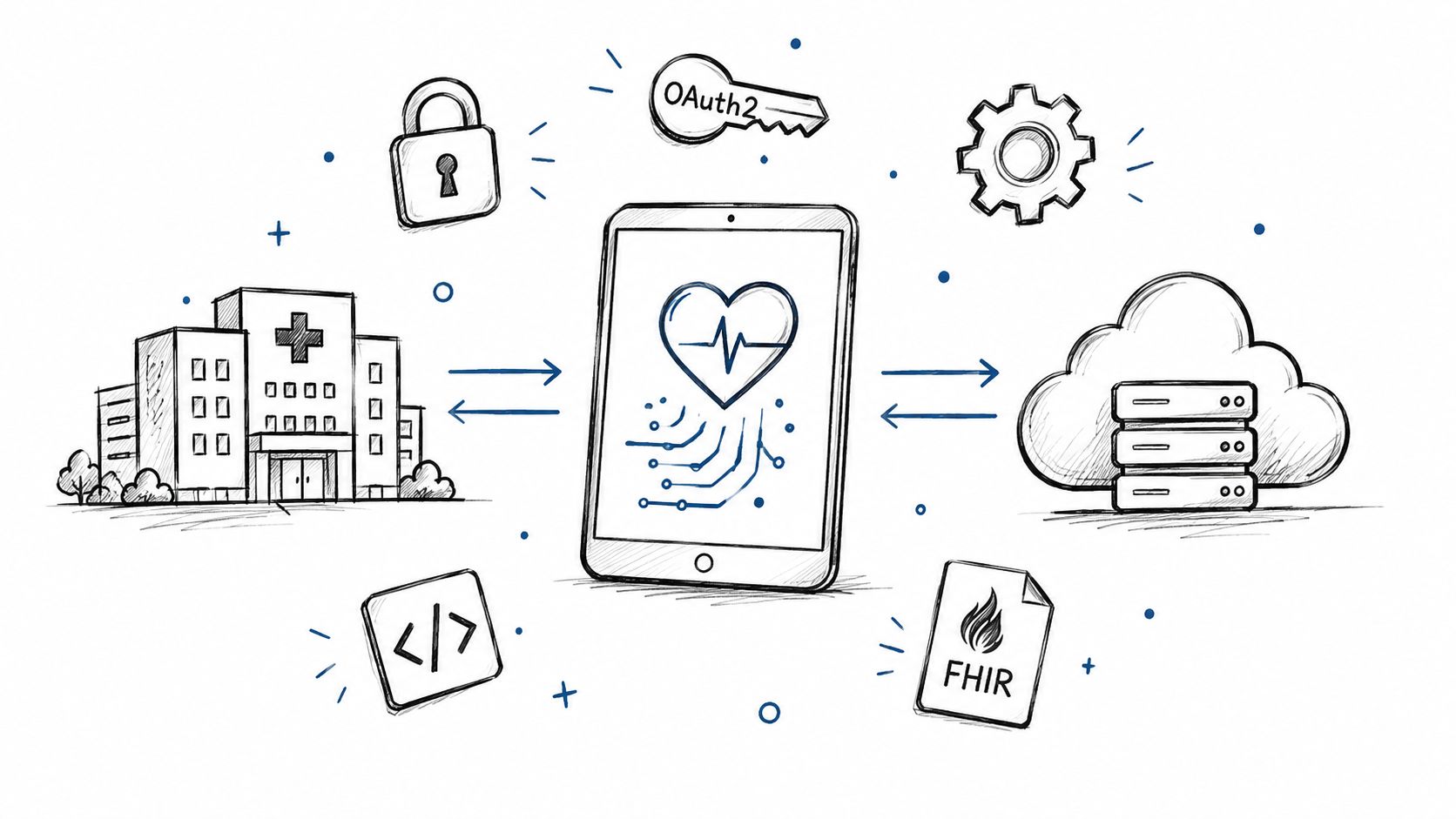
Smart on FHIR guide for healthtech engineers. Learn the OAuth 2.0 launch model, scope syntax, backend services, and US regulatory requirements.
Connect with our team to explore how AI expertise can transform your business.