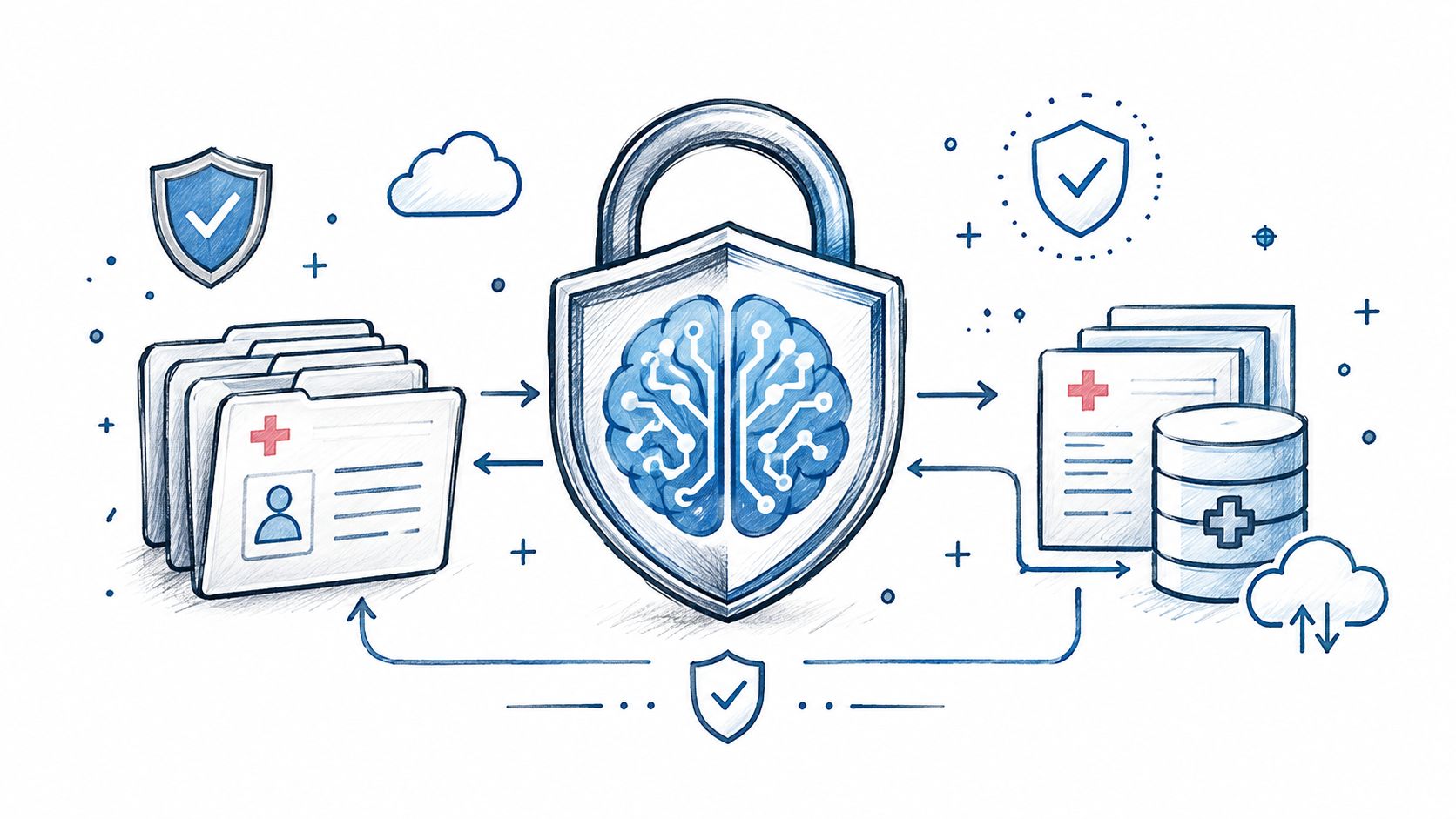
AI in Healthcare
HIPAA-Compliant AI: How to Use LLMs With PHI Safely
How to build HIPAA-compliant AI: when LLM providers need a BAA, data minimization, de-identification, audit controls and a reference architecture.
October 16, 2026Read more
Learn how an AI Maturity Framework empowers businesses to assess readiness, refine strategy, and implement scalable, high-impact AI initiatives for measurable success.

The journey to harnessing artificial intelligence (AI) is no longer a matter of simple experimentation. It is a strategic imperative. Many organisations today are asking: where do we stand in terms of our AI adoption, and how do we progress? A well-structured AI Maturity Framework offers the blueprint for assessing your readiness, shaping AI solutions, and delivering measurable value.
In this blog, we explore the role of an AI Maturity Framework in guiding organisations through stages of development, aligning strategy and execution, and unlocking the promise of AI in concrete ways. We draw on research and industry data to chart this journey, and point out how co-creating with the right AI implementation partner and leveraging expert consulting can make all the difference.
Whether you are just beginning your AI use cases or looking to scale across the enterprise, this article will help you map your path.
At its core, an AI Maturity Framework is a structured method to assess where your organisation stands today in terms of AI capabilities, what gaps exist, and what roadmap will deliver future impact. It helps you shift from ad-hoc pilots to enterprise-wide deployment. Along with technology, maturity involves data readiness, process, governance, culture, and strategy.
For example, organisations with advanced maturity (in the top stages of their model) outperform their peers in operations and customer experience. Four parameters: AI strategy and roadmap articulation, data readiness, regulatory alignment, and deployment stage, are central to a robust framework of AI maturity.
By adopting such a framework, organisations can transform from isolated experiments into strategic, scalable deployments of AI solutions and integrate their efforts into a broader transformation narrative.
A sound AI strategy consulting approach begins with clear leadership commitment, defined objectives, and alignment with business goals. Governance must address roles, accountability, ethics, and regulatory obligations. Strategy and governance are among the seven core pillars of enterprise maturity.
No AI initiatives succeed without data readiness. Organisations must ensure the right data infrastructure, pipelines, quality, and accessibility. Many AI maturity models emphasise data and infrastructure as foundational dimensions.
Building a culture that embraces experimentation, learning, and change is pivotal. Workforce skill-building, leadership literacy, and clear ownership of AI use cases underpin successful adoption. Organisations in the initial stages are still educating their workforce and building policies.
Moving from pilots to production at scale demands robust platforms, models, reuse of components, and trustworthy processes. Stage models reflect that until organisations industrialise AI, value is limited.
It is not enough to deploy AI for novelty. The value comes when AI solutions are aligned with business priorities, embedded into operations, and deliver measurable outcomes. Linking use cases to value and scaling beyond pilot programmes.
Organisations progress through a series of maturity stages in the AI Maturity Framework. While models vary, many share similar patterns. The stages are:
In other frameworks, such as the one by CognitivePath, five stages including, Ad Hoc, Experimental, Systematic, Strategic, Pioneering, are used. The important point is that maturity is cumulative: you must master foundational elements before you scale value.
By situating your organisation on the maturity continuum, you understand what comes next and avoid jumping into advanced analytics without foundations in place. Few organisations are ready for enterprise-wide deployment even as they run pilots.
With a defined maturity model you can build an AI adoption roadmap, what capabilities need to be built, what technology required, what governance frameworks applied, and sequence resources and investments accordingly.
When AI use cases are aligned with an articulated strategy and proper readiness, their value multiplies. Without maturity, many pilots fail to transition into operational value.
To accelerate the journey, organisations often work with experienced AI implementation partners who bring expertise in strategy, data, model deployment, change management and AI solutions. A custom AI strategy report and readiness assessment from such partners can boost your efforts significantly.
Begin with a structured AI readiness assessment, covering strategy, data, technology, people, governance, and culture. Several frameworks, such as the one from AI Sweden and Info-Tech, offer tools to measure maturity across these dimensions.
Identify and prioritise AI use cases that align with strategic objectives, be that cost reduction, revenue growth, customer experience improvement, or operational excellence.
Using the assessment output and your strategic priorities, develop an AI adoption roadmap. This may include immediate pilots, medium-term infrastructure investment, and longer-term cultural and governance changes.
Select a partner experienced in AI solutions who can deliver a custom AI strategy report, work with you on building capability, guiding pilots, and scaling solutions.
Track performance metrics, governance maturity, model performance, process integration, and cultural adoption. Use learnings to refine and scale AI across the enterprise.
Many organisations treat AI as a standalone initiative, running one or two pilot projects and expecting immediate transformation. This approach often leads to fragmented results with limited scalability. Without a structured AI Maturity Framework to connect pilots to long-term goals, efforts remain siloed and disconnected from broader business strategy. To avoid this, embed AI within your enterprise roadmap and view it as a continuous, evolving journey rather than a short-term experiment.
AI solutions are only as effective as the data and systems that support them. When data is inconsistent, poor in quality, or stored in isolated systems, AI initiatives struggle to perform. Many businesses overlook this foundational step and face delays or inaccurate results later. To prevent such setbacks, prioritise a comprehensive data readiness assessment that ensures robust data pipelines, governance, and scalable infrastructure before deployment.
Governance and ethics are critical pillars of successful AI adoption. Without a proper framework for accountability, bias mitigation, and compliance, organisations risk damaging their reputation and violating regulations. Ethical lapses can also erode stakeholder trust and hinder adoption. Establishing strong AI governance with clear policies, transparent decision-making, and adherence to industry standards ensures responsible and sustainable AI growth.
Technology is only one aspect of AI maturity, the human element is equally vital. Organisations often fail to prepare their teams for change, resulting in resistance or poor adoption. Building an AI-driven culture requires leadership commitment, continuous training, and open communication to foster confidence and collaboration. Encouraging a test-and-learn mindset helps employees adapt and view AI as a tool that enhances, not replaces, their capabilities.
Without measurable objectives, even technically sound AI solutions can lose direction. Many organisations deploy AI without defining key performance indicators (KPIs) or linking projects to tangible business outcomes. This makes it difficult to prove ROI and secure stakeholder buy-in. By setting clear success metrics tied to financial, operational, or customer-focused goals, you can track progress, demonstrate value, and refine your AI adoption roadmap effectively.
Establishing where your organisation stands today in its AI journey is critical. A robust AI Maturity Framework gives you clarity, direction and confidence to transform your AI strategy from concept to enterprise-wide value. By assessing readiness, building data and technology foundations, developing people and culture, and aligning with measurable use cases, you increase the odds of success.
Today’s business landscape demands not just experimentation in AI, but thoughtful, scalable adoption supported by expert AI solutions and a trusted AI implementation partner. Whether you are just setting out or aiming to scale and transform, aligning your efforts with a maturity framework and roadmap is essential.
If you’re ready to explore your AI maturity, build a custom AI strategy report, and partner with experts in AI strategy consulting to design your AI adoption roadmap, talk to us or visit our website to begin your journey today.
Q1: What is an AI Maturity Framework and why is it important?
An AI Maturity Framework is a structured model that helps organisations assess their current AI capabilities, identify gaps and plan for advancement. It is important because it brings clarity, benchmarking, and a roadmap to move from ad-hoc experiments to scalable enterprise-wide AI solutions.
Q2: How do we know which stage our organisation is in?
You determine your stage by assessing dimensions such as strategy, data readiness, technology, governance, people, and culture. For example, research by MIT CISR places organisations in Stage 1 to 4 based on the effectiveness of AI in operations, customer experience, and ecosystem.
Q3: What role do AI use cases play in the maturity framework?
AI use cases are the means by which value is realised. A maturity framework emphasises identifying, prioritising, and scaling use cases that are aligned to business goals. The right use cases help you move from pilots to enterprise impact.
Q4: Can an external consulting firm help with the maturity process?
Yes. Engaging an AI strategy consulting firm or AI implementation partner helps you design and execute a custom AI strategy report, conduct readiness assessments, build roadmaps, and deliver solutions. External expertise often accelerates maturity and avoids common pitfalls.
Q5: How quickly should an organisation move through the maturity stages?
The pace varies depending on industry, resources, culture, and existing capabilities. What matters more than speed is building solid foundations, data, governance, skills; before scaling. The maturity framework helps you plan realistic timelines, map dependencies, and monitor progress, rather than diving into advanced AI initiatives prematurely.
How to build HIPAA-compliant AI: when LLM providers need a BAA, data minimization, de-identification, audit controls and a reference architecture.
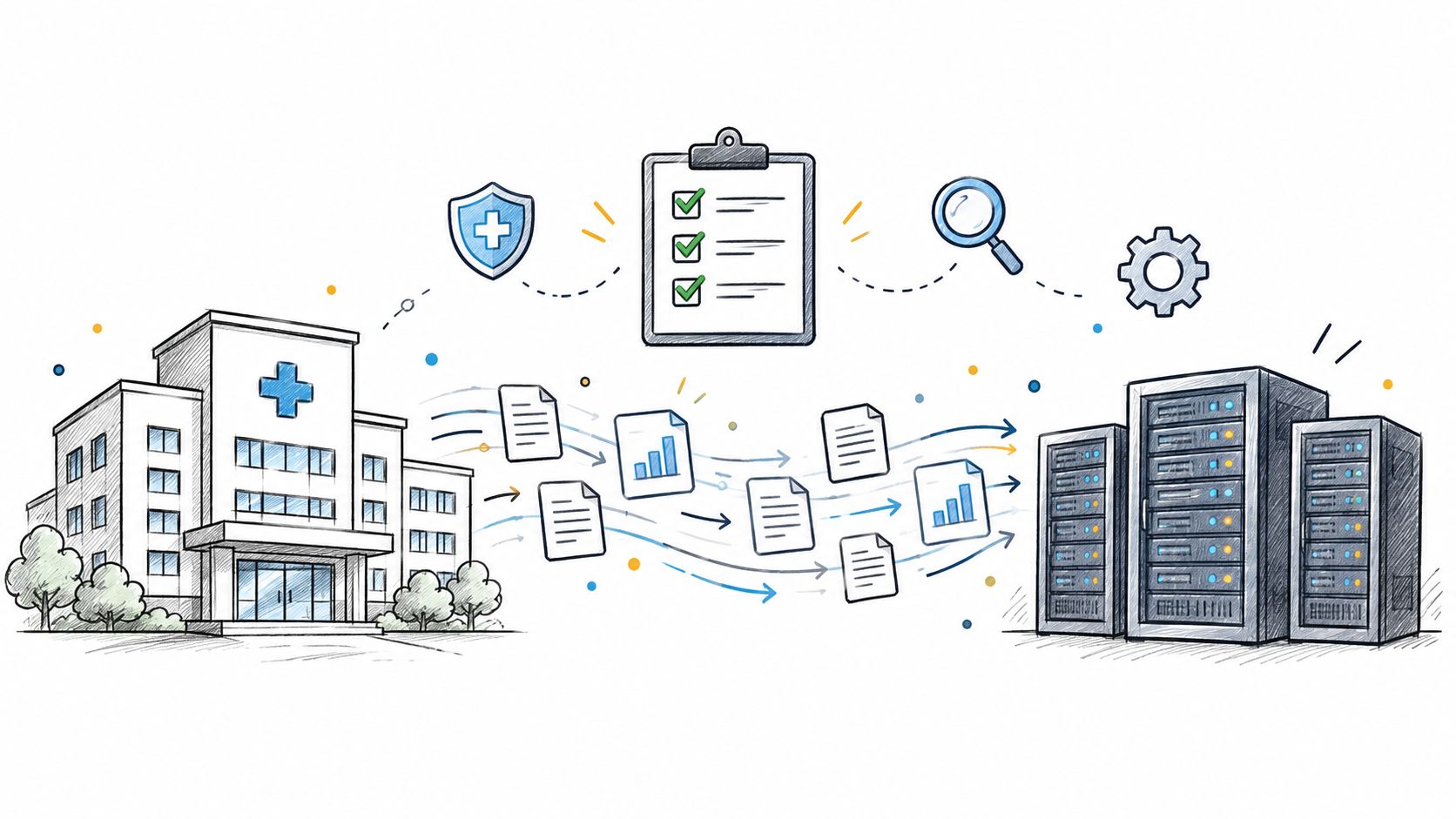
Practical data migration planning guide for healthcare teams. Scope, mapping, compliance, validation, cutover and rollback decisions explained end to end.
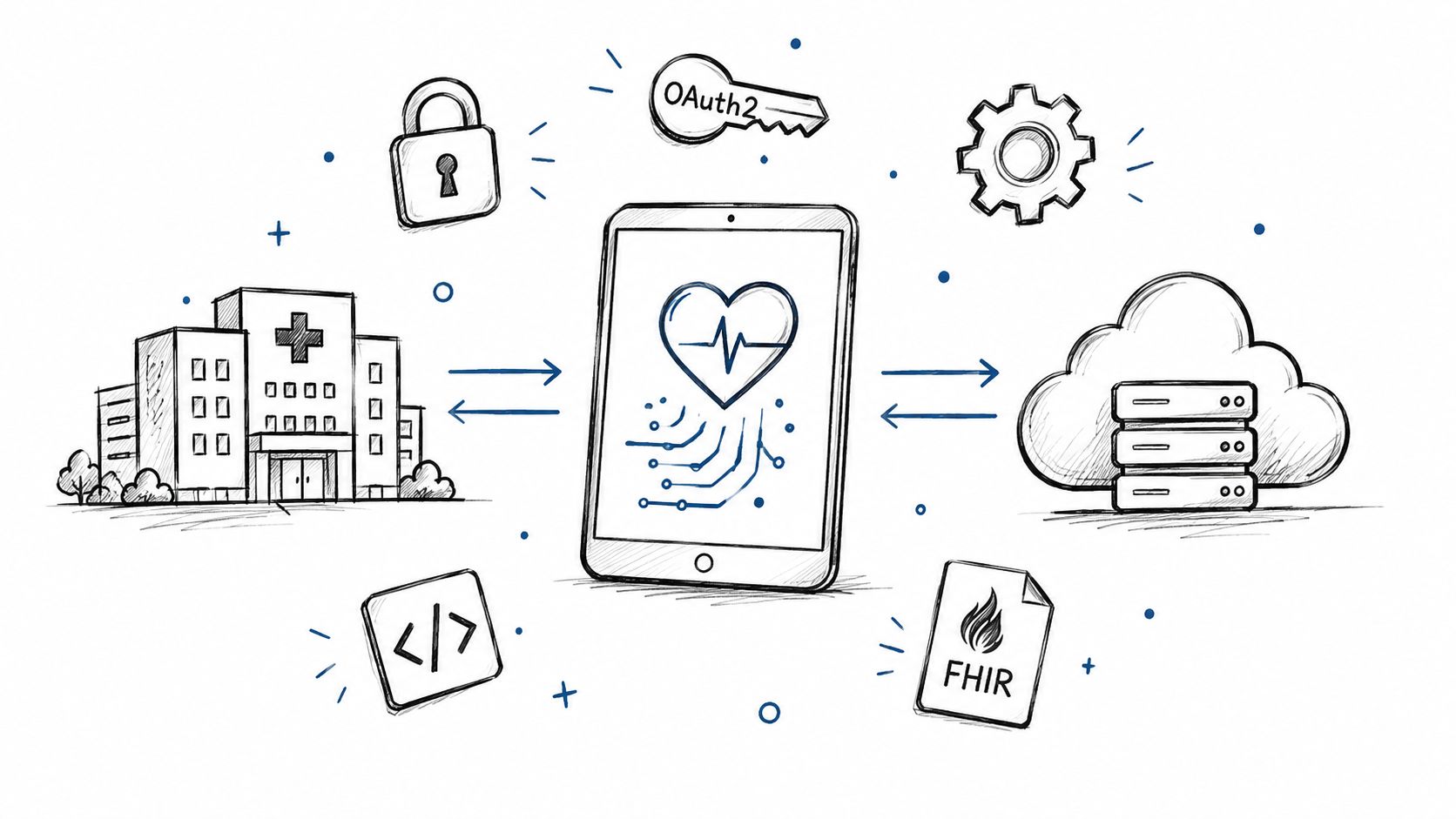
Smart on FHIR guide for healthtech engineers. Learn the OAuth 2.0 launch model, scope syntax, backend services, and US regulatory requirements.
Connect with our team to explore how AI expertise can transform your business.