Building Scalable AI Infrastructure for Healthcare Organizations
Scalable AI infrastructure is essential for healthcare organizations to handle growing data, ensure reliability, and support advanced analytics. Learn how the right architecture enables secure and efficient AI adoption.
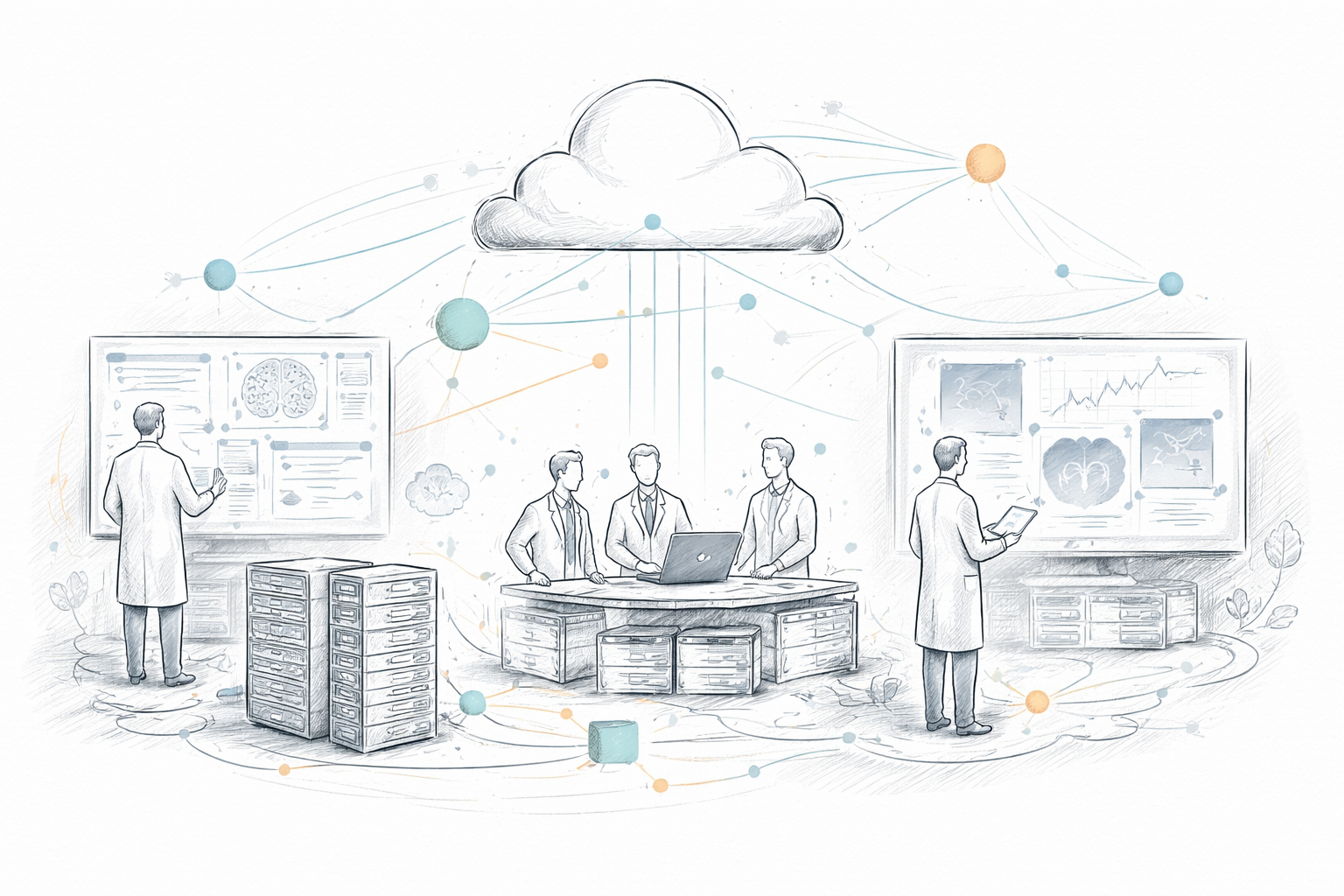
Healthcare organizations are dealing with growing amounts of clinical data, diagnostic records, medical images, and operational information. Artificial intelligence now plays a major role in making sense of this data and supporting medical decisions. To use AI at scale, organizations need reliable systems that can process, store, and analyze large healthcare datasets. That is why many are investing in scalable infrastructure that stays stable as data volumes and AI demands increase. A well-designed healthcare AI infrastructure creates the foundation for dependable analytics, clinical intelligence, and digital health services across modern medical environments.
Understanding AI Infrastructure in Healthcare
Artificial intelligence in healthcare depends on a mix of data platforms, computing power, software tools, and integration layers. These pieces collect information from hospital systems, organize patient records, process large datasets, and train machine learning models. A full infrastructure setup includes data storage, secure access layers, platforms for training models, and systems that deliver AI insights to clinicians.
Technology teams often work with a healthtech engineering partner who understands healthcare systems, regulations, and clinical workflows. This partnership helps build scalable data environments, stable computing resources, and secure processing pipelines that prepare organizations for long-term AI adoption.
Challenges Healthcare Organizations Face When Scaling AI
Healthcare organizations run into several operational and technical hurdles when expanding AI. Many start the process with an AI readiness assessment that takes a close look at technology maturity, data access, governance practices, and infrastructure capacity before moving forward with large-scale deployment.
Fragmented Healthcare Data Systems
Patient information is spread across lab systems, imaging platforms, hospital databases, and electronic records. This makes it hard to bring everything together for analysis.
Difficulty Integrating AI With Existing EHR Systems
Electronic health records hold valuable data, but connecting new AI tools to them takes careful planning and attention to how systems exchange information.
Data Privacy and Regulatory Requirements
Healthcare organizations must follow strict rules around privacy and data handling, which affects how AI systems can process information.
Infrastructure Limitations in Hospitals
Many hospitals still run on older systems with limited computing power, making it difficult to train or run advanced AI models.
Lack of Unified Data Environments
AI models work best when data is clean and well-organized across departments. Many healthcare settings lack a central platform that brings clinical data together in a structured way.
Core Components of Scalable AI Infrastructure in Healthcare
A modern healthcare AI setup includes several layers that work together to manage large medical datasets and AI tools across clinical environments.

Healthcare Data Infrastructure
Central platforms bring together patient records, images, reports, and operational data from across the hospital. These systems organize information so it can be used for AI.
Data Storage and Processing Systems
Large-scale storage handles structured records, medical images, lab results, and clinical notes. Distributed processing platforms analyze complex datasets efficiently.
AI Development Environments
Machine learning engineers need controlled spaces where they can train models using healthcare data, test accuracy, and fine-tune predictions.
Computing Resources for Training AI Models
Powerful computing clusters process massive datasets and train algorithms that support clinical work.
Deployment Platforms for AI Applications
Hospitals roll out AI models through platforms that connect predictions to clinical systems, monitoring tools, and diagnostic software. Many organizations first review AI use cases to find the most valuable applications before launching AI across departments.
Building Reliable Data Pipelines for Healthcare AI
Artificial intelligence depends on a steady flow of data across healthcare systems. Data pipelines gather records from hospital platforms, diagnostic tools, medical devices, and patient monitoring apps. These pipelines organize incoming information, clean up inconsistent data, structure clinical records, and get datasets ready for machine learning. Many healthcare organizations turn to specialized healthcare AI services that build scalable pipelines capable of handling imaging data, lab results, clinical notes, and sensor readings across large medical networks.
Integrating AI Infrastructure With Healthcare Systems
AI platforms need to work alongside tools hospitals already use, like electronic health records, lab systems, and diagnostic platforms. Integration connects AI models to clinical workflows so doctors get useful insights when they are evaluating patients, making diagnoses, or planning treatments. This takes standardized data formats, secure system connections, and stable integration frameworks across different healthcare applications.
Technology teams often put together a custom AI strategy report that lays out system design, how data will be connected, computing needs, and timelines for rolling out healthcare AI programs. This document helps leaders make decisions about infrastructure, how AI will fit into clinical work, and long-term technology planning across the hospital network.
Cloud and Scalable Computing for Healthcare AI
Advanced AI models need plenty of computing power and flexible data environments. Cloud platforms offer scalable processing clusters, distributed storage, and high-performance computing resources that can handle demanding AI workloads. Healthcare organizations use these platforms to train predictive models, process medical images, and analyze patient data across large networks. In many cases, cloud systems also run AI automation services that handle administrative tasks, medical documentation, and operational analytics across healthcare organizations.
From Pilot AI Projects to Enterprise Scale Deployment
Healthcare organizations usually start using AI through small pilot projects. Early efforts might focus on analyzing images, reviewing clinical notes, or studying patient monitoring data. These pilots help test how well the models work, what integration with existing systems looks like, and whether they actually help in clinical settings. Technology teams often bring in specialists for AI implementation support during testing, infrastructure setup, and connection to hospital data systems.
Once pilots show consistent results, organizations begin spreading AI across more departments. Clinical teams, IT staff, and data scientists work together to roll out AI systems across hospitals, labs, and patient monitoring programs. A clear AI adoption roadmap often guides this expansion, covering infrastructure growth, computing needs, system connections, and training for staff.
Ensuring Long-Term Scalability of Healthcare AI Systems
Making healthcare AI work over the long haul takes careful infrastructure planning, regular monitoring, and ongoing updates to models. Technology teams track system performance, computing capacity, and how data grows as AI use spreads across the organization. Medical technology now includes SaMD solutions, which are regulated software products that bring AI into clinical decision systems and patient care platforms. Continuous attention to infrastructure keeps performance steady across healthcare networks as new AI tools become part of everyday practice.
Conclusion
Artificial intelligence is now part of how healthcare organizations handle diagnostics, monitor patients, run operations, and support clinical decisions. Large-scale AI programs need solid technology foundations that can manage growing data, computing demands, and integration with clinical systems. A well-planned healthcare AI infrastructure creates the base for reliable AI tools, efficient data handling, and lasting innovation across the organization. For organizations looking for guidance on this journey, contact us to explore a strategic direction for future AI-driven healthcare systems.
Frequently Asked Questions
1. What Is Healthcare AI Infrastructure?
Healthcare AI infrastructure refers to the data platforms, computing resources, and integration systems that support AI models and analytics across healthcare environments.
2. Why Do Hospitals Partner With a Healthtech Engineering Partner for AI Infrastructure?
A healthtech engineering partner helps design scalable systems, integrate healthcare AI services, and provide AI implementation support for reliable AI deployments.
3. How Can Healthcare Organizations Prepare for Scalable AI Adoption?
Most organizations begin with an AI readiness assessment and develop a custom AI strategy report to evaluate data systems, infrastructure capacity, and priority AI use cases.
4. What Role Do AI Automation Services Play in Healthcare Infrastructure?
AI automation services help streamline administrative tasks, manage clinical data workflows, and support operational efficiency within healthcare AI infrastructure.
5. How Do Organizations Scale AI From Pilots to Full Deployment?
Healthcare teams follow a structured AI adoption roadmap, expand validated AI use cases, and deploy regulated tools like SaMD solutions across clinical systems.