AI in Healthcare
HIPAA-Compliant AI: How to Use LLMs With PHI Safely
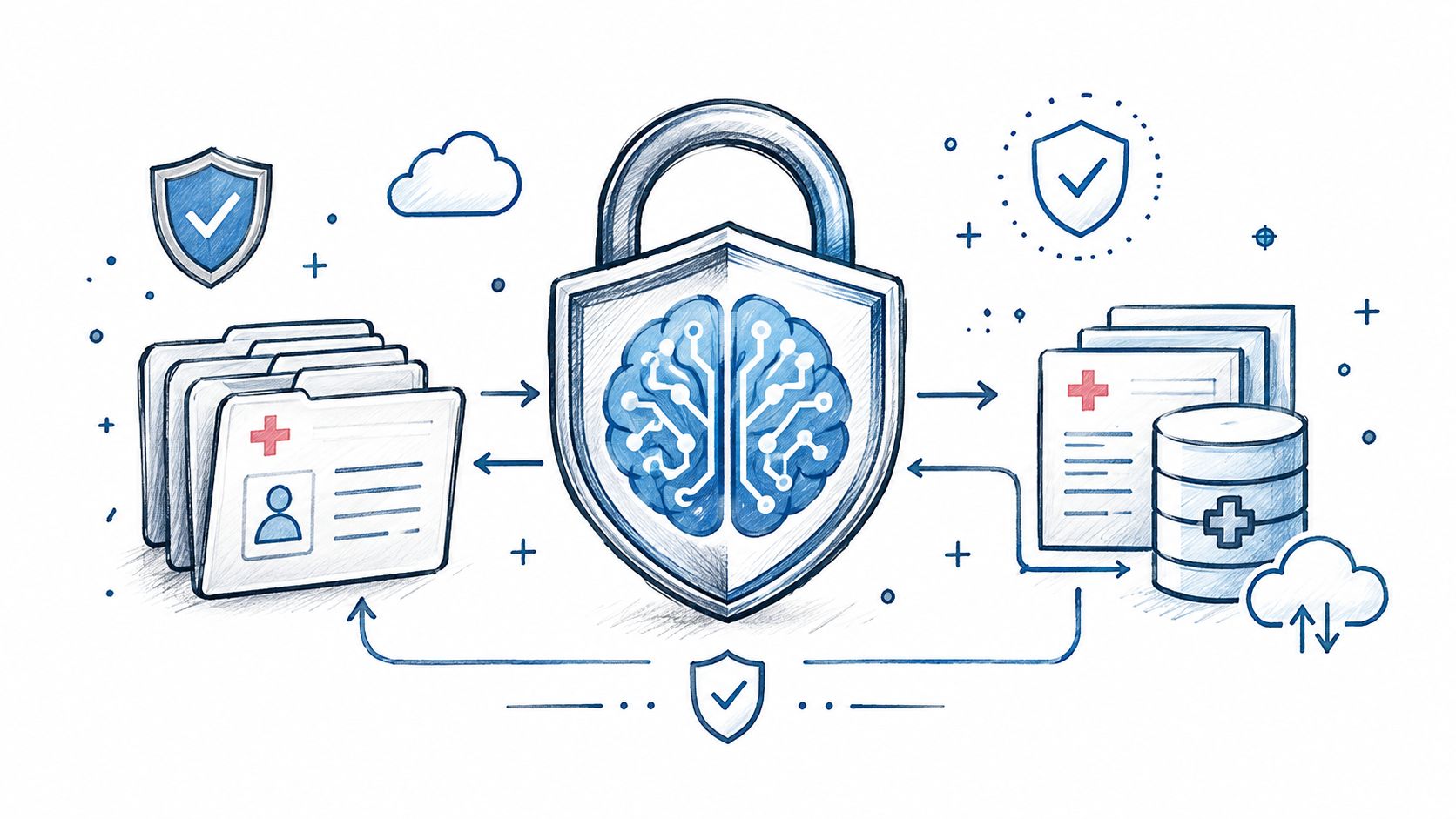
How to build HIPAA-compliant AI: when LLM providers need a BAA, data minimization, de-identification, audit controls and a reference architecture.
October 16, 2026Read more
Explore how clinical workflow intelligence optimizes hospital operations, reduces burnout, and boosts ROI in 2026.

Ever tried to imagine a busy airport without air traffic control? That’s what many hospitals are running like today. Clinical workflow intelligence is the missing air traffic control system for healthcare—a data-driven brain that brings order to operational chaos. It creates clear, intelligent pathways that directly boost patient care and bring down costs.
This is the very foundation of modern healthcare software solutions that build a more connected and efficient care environment.
At its heart, clinical workflow intelligence is all about using technology to see, manage, and improve the incredibly complex web of activities happening inside a hospital at any given moment. Think of it as the conductor of a hospital's orchestra, making sure every department, clinician, and piece of equipment plays its part in perfect harmony.
This goes way beyond simple automation. We're talking about real-time, predictive insights that help your team make smarter decisions on the fly.
Let's be honest: outdated, manual processes are buckling under the pressure of rising patient loads and administrative demands. The constant phone tag, mountains of paper charts, and disconnected software systems create bottlenecks that delay care and burn out your best people. Clinical workflow intelligence is designed to tackle these problems head-on.
Without an intelligent system keeping an eye on the whole operation, hospitals get stuck in a cycle of recurring problems that hit both patients and staff hard. These usually fall into a few common buckets:
Information Silos: Critical patient data gets locked away in separate systems—the EHR, the lab software, the scheduling tools—making it impossible to get a single, clear view of a patient’s journey.
Reactive Decision-Making: Staff are constantly putting out fires. They're reacting to a sudden ER surge or a shortage of clean beds instead of getting ahead of the problem before it starts.
Excessive Administrative Burden: Clinicians are drowning in non-clinical work. They spend huge chunks of their day on manual data entry and coordinating logistics, which is time stolen from direct patient care.
This operational friction isn't just inefficient; it has a real financial cost and puts care quality at risk. Solving these deep-seated issues is why investment in this area is exploding. The clinical workflow solutions market was valued at USD 15.99 billion in 2025 and is projected to skyrocket to USD 40.20 billion by 2034.
This growth, as detailed in this industry report, is largely driven by increasingly complex care delivery and persistent workforce shortages, with the United States market being a major contributor.
The following table breaks down how this technology directly addresses the common pain points that hospital leaders know all too well.
| Common Operational Challenge | Direct Impact on Hospital | Clinical Workflow Intelligence Solution |
|---|---|---|
| Patient Flow Bottlenecks | Increased wait times, ED overcrowding, delayed discharges, patient dissatisfaction. | Real-time tracking of patient location and status; predictive analytics to anticipate bed demand and staffing needs. |
| Siloed Communication | Care delays, medical errors, redundant tests, frustrated clinical teams. | A unified communication platform that integrates with the EHR, sending automated alerts and updates to the right person at the right time. |
| Inefficient Asset & Room Use | Staff wasting time searching for equipment (e.g., IV pumps, wheelchairs); ORs and exam rooms sitting empty due to poor scheduling. | IoT sensors and RTLS (Real-Time Location Systems) to track equipment; AI-powered scheduling to optimize room turnover and utilization. |
| High Administrative Load | Clinician burnout, less time for patient care, high turnover rates, increased labor costs. | Automation of routine tasks like charting, reporting, and inter-departmental communication. |
| Reactive Staffing | Understaffing during surges, overstaffing during lulls, reliance on expensive agency staff. | Demand forecasting that aligns staffing levels with predicted patient admissions and acuity, improving workforce management. |
By connecting these everyday problems to specific, intelligent solutions, it becomes clear that this is about creating a more resilient and responsive healthcare system.
Clinical workflow intelligence isn't about replacing human expertise; it's about amplifying it. By taking the repetitive, low-value work off their plates and giving them predictive insights, it frees clinicians to work at the top of their license and focus on what they do best: caring for patients.
This strategic approach is a cornerstone of effective AI strategy consulting, where the entire goal is to tie technology directly to core operational goals for improvements you can actually measure.
Think of clinical workflow intelligence as the central nervous system for a hospital. It senses what's happening everywhere, processes that information in real-time, and sends signals to coordinate action—transforming a reactive environment into a proactive one. It’s not just about collecting data; it's about understanding what that data means for the immediate future.
The process starts by breaking down the information silos that plague most healthcare systems. A workflow intelligence platform connects to and pulls data from all the places where critical information lives but rarely interacts.
This includes sources like:
Electronic Health Records (EHRs)
Lab and Radiology Information Systems (LIS/RIS)
Real-time patient monitoring equipment and wearables
Staff scheduling and billing software
By gathering this information into one unified view, you get the first complete picture of what’s truly happening across your entire operation.
With all the data in one place, the "intelligence" engine gets to work. This is where advanced AI and machine learning models begin sifting through millions of data points, looking for patterns, bottlenecks, and opportunities that are simply impossible for a person to spot on their own.
The system isn't just looking backward at what happened. It’s constantly asking, "What's next?" and "What if?" to predict future events.
The ultimate goal is to deliver a specific, actionable insight to the right person at the perfect moment. These aren't just more alerts or dashboards; they are clear, contextual prompts embedded directly into the tools clinicians already use. It’s about augmenting human expertise, not replacing it.
This diagram shows the journey from operational chaos to clarity.

As you can see, the intelligence layer doesn't just clean up the mess—it creates a clear path forward, making the entire process smarter and more efficient.
This entire system is built on three pillars that work together. Each one is a crucial step in turning raw data into real-world improvements in patient care and operational efficiency.
Data Ingestion and Integration: This is the foundation. The platform uses modern APIs to securely connect with all your disparate systems. It creates a live, comprehensive map of everything happening in the hospital, from a patient being admitted in the ED to the real-time location of an available IV pump.
AI-Powered Analytics and Prediction: Once the data is flowing, machine learning models analyze it to forecast critical events. Imagine predicting a surge in patient admissions hours in advance, pinpointing which patients are at high risk for a discharge delay, or identifying a looming shortage of a key medication before it becomes a crisis. This is what moves an organization from being reactive to proactive.
Workflow Orchestration and Automation: This is where insight becomes action. The system translates its predictions into automated alerts, new tasks, and smart recommendations that go directly to front-line staff. For example, it might automatically notify the transport team that a patient in room 4B is ready for their MRI, or it could flag a high-risk patient for a priority check-in with a case manager. For a deeper look at this final step, see our complete guide on workflow automation.
This orchestrated approach ensures that insights don’t just sit in a report. They are delivered to the right person, at the right moment, in the right context to drive meaningful action. It closes the loop between data analysis and real-world operational improvement.
By mastering these three functions, clinical workflow intelligence gives your hospital the ability to respond to challenges and opportunities with speed, precision, and foresight.
When we talk about clinical workflow intelligence, what really separates the good from the great is artificial intelligence. Basic automation is useful, sure—it can connect systems and shuttle data back and forth. But AI does something more. It turns a simple, reactive process into a smart, predictive co-pilot for your clinical teams. Think of it as the difference between getting a fire alarm and having a system that spots the conditions for a fire and prevents it from ever starting.
This is all made possible by machine learning models that are constantly learning from your hospital's operational data. So instead of just reacting to a suddenly overcrowded ER, the AI engine can actually forecast patient surges. It does this by analyzing historical admission trends, local public health data, and even seemingly unrelated things like public transit schedules. This gives hospital leaders a precious head-start to adjust staffing and get resources where they need to be, long before the chaos hits.

This kind of foresight is exactly what helps healthcare providers meet rising patient demand, even when dealing with a strained workforce. It’s about creating a calm, well-managed environment out of what could have been pure chaos. For many organizations, getting smart about this isn't just an option anymore; it’s becoming critical for survival.
But AI’s job doesn’t stop at forecasting. Its real power comes from acting as an intelligent orchestrator, managing the countless moving parts of a hospital's day-to-day operations.
Smarter Task Assignment: Forget the old "first-come, first-served" model. AI can instantly route tasks to the best person for the job by looking at their current workload, their physical location on the floor, and even their specific skill set. This ensures the right clinician gets to the right patient faster, which is a win for both efficiency and quality of care.
Lifting the Administrative Burden: A huge driver of clinician burnout is the mountain of paperwork and repetitive digital tasks. AI can automate a surprising amount of this, from transcribing doctor's notes to pre-filling standard forms. When you consider that some nurses spend over 25% of their shift on administrative work, giving that time back to patient care is a massive improvement.
Dynamic Resource Management: The AI can keep a real-time pulse on everything from available beds and operating rooms to the location of every IV pump. By accurately predicting turnover times and future demand, the system makes sure these high-value assets are always in use, not sitting idle while patients are left waiting.
Key Insight: The real magic of AI in clinical workflows is its ability to turn a flood of data into direct, intelligent action. It’s not just about flagging a problem—it’s about automatically kicking off a coordinated, data-backed response to solve it before it escalates.
The industry is clearly taking notice. The market for AI in clinical workflows is on track to explode from USD 2.94 billion in 2025 to an incredible USD 26.18 billion by 2035. This massive growth isn't just hype; it reflects a fundamental shift where AI is becoming the new standard for running a modern healthcare facility.
So, how does this all happen behind the scenes? It's not as mysterious as it might sound. To get a feel for the practical application, it’s helpful to see how others are using AI to simplify, organize, and reset workflows. The core idea is to train AI models to spot patterns and then empower them to act.
The process usually breaks down into a few key steps:
First, the AI continuously ingests data from all your core systems—EHRs, scheduling software, IoT sensors on equipment, and more.
Next, it sifts through that data to find subtle patterns that a human would likely miss. These are the early warning signs of a future bottleneck or an opportunity for improvement.
Then, it generates predictive alerts. For example, it might flag that a specific patient has a high probability of missing their follow-up appointment based on past behavior and demographic data.
Finally, it can trigger automated actions. Based on rules you define, the system can automatically schedule a reminder call, text the patient, or even assign a case manager to follow up personally.
It’s one thing to talk about technology in theory, but in healthcare, real-world results are what truly matter. This is where clinical workflow intelligence stops being a buzzword and becomes a practical tool that delivers a clear return on investment (ROI). After all, the ultimate test for any new system is simple: does it solve real problems and make a measurable difference?
Let's dig into some real-world use cases where these platforms are having a major impact on day-to-day hospital operations.

We’ll look at how AI-powered platforms are helping specific departments improve efficiency, increase revenue, and ultimately, provide better patient care.
The emergency department (ED) is the front door of the hospital, and it’s often a scene of organized chaos. Overcrowding, frustratingly long wait times, and fractured communication are daily hurdles that burn out staff and put patients at risk.
The Problem: Patients arrive with no idea how long they’ll wait, leading to frustration and some leaving without ever being seen. Meanwhile, staff are juggling patient tracking, bed availability, and coordinating with other departments like radiology or the lab, often with incomplete information.
The AI-Powered Solution: A workflow intelligence platform connects directly to the EHR, creating a live, bird's-eye view of the entire ED. It tracks every patient’s journey, predicts wait times, and even uses machine learning to forecast incoming patient surges. The system can automatically flag bottlenecks—like a backed-up CT scanner—or alert a charge nurse when a patient’s wait time exceeds a critical threshold.
The Measurable Result: Hospitals that get this right see incredible results. Some have reported a 20-30% reduction in patients who leave without being seen. They also see a notable drop in the average length of stay for admitted patients, which directly frees up beds faster.
With predictive insights, ED leaders can finally shift from constant crisis management to proactive planning. They can get staff and rooms ready before the next rush hits, not after.
This is a perfect example of how targeted custom healthcare software development can untangle specific, costly operational knots.
The operating room (OR) is a hospital's financial engine. But even small hiccups in the OR schedule can cause millions in lost revenue, not to mention creating friction with surgeons and staff.
The Problem: Poor scheduling leads to expensive ORs sitting idle between cases. Last-minute cancellations happen because equipment wasn't ready, and slow turnover times mean fewer surgeries can be completed in a day. This creates backlogs, delays patient care, and hurts the bottom line.
The AI-Powered Solution: Instead of relying on guesstimates, workflow intelligence tools analyze historical data to predict procedure durations with much higher accuracy. The system optimizes the daily schedule based on surgeon availability, equipment needs, and realistic turnover times. It can also send automatic alerts to sterile processing and cleaning crews the second a surgery ends, kicking off the turnover process without delay.
The Measurable Result: The ROI here is direct and powerful. Health systems have boosted their surgical case volume by 10-15% without building a single new OR. They also report less staff overtime and higher surgeon satisfaction—a huge win.
A smooth discharge process is critical for maintaining patient flow across the entire hospital. When one patient's discharge is delayed, it creates a domino effect that backs up the ED and recovery units.
The Problem: Discharging a patient is surprisingly complex, requiring coordination between doctors, nurses, case managers, pharmacists, and transport staff. When done manually, steps are missed, paperwork is delayed, and patients can wait hours for their final medications or a ride home—all while occupying a much-needed bed.
The AI-Powered Solution: The system acts as a digital checklist, automatically sending tasks and reminders to the right person at the right time. It can even predict which patients are likely to be discharged tomorrow, giving case managers a head start on planning. By applying smart AI tools for business, hospitals can even automate post-discharge follow-up calls to help reduce readmissions.
The Measurable Result: Hospitals using these systems have successfully cut down their average discharge-to-door time by several hours. This directly opens up beds, allowing them to admit more patients from the ED and increase their overall capacity and revenue.
The data speaks for itself. Investing in workflow intelligence isn't just about adopting new technology; it's about making tangible improvements that resonate from the balance sheet to the patient bedside.
A data-driven look at the financial and operational benefits realized by implementing workflow intelligence in key hospital departments.
| Application Area | Key Performance Indicator (KPI) | Typical ROI and Impact |
|---|---|---|
| Emergency Department | Patient "Left Without Being Seen" (LWBS) Rate | 20-30% reduction in LWBS rates, improving patient satisfaction and capturing lost revenue. |
| ED Length of Stay (LOS) | 15-25% decrease in median LOS, freeing up beds and reducing patient wait times. | |
| Operating Room | Surgical Case Volume | 10-15% increase in case volume with existing resources, directly boosting surgical revenue. |
| OR Turnover Time | 20% reduction in turnover time, leading to better block utilization and surgeon satisfaction. | |
| Inpatient Discharge | Discharge Order to Departure Time | Cuts hours off the process, increasing daily bed availability by up to 10%. |
| 30-Day Readmission Rates | 5-8% reduction through automated follow-up and better care coordination. |
As these examples show, a well-designed system creates benefits that ripple across the entire organization, proving that optimizing operations is one of the most effective ways to improve both financial health and patient care.
So, you're ready to bring this kind of intelligence into your organization. The key is to think of it less as a simple tech project and more as a fundamental shift in how you operate. True success comes from a deliberate, phased approach that stays laser-focused on clear business goals, not just the bells and whistles of the technology itself.
This roadmap will give you a clear path, turning a powerful concept into a practical reality for your healthcare system.
The first, and most important, step is defining what success actually looks like for you. Before you even think about vendors, your leadership team needs to agree on specific, measurable targets. Are you trying to slash emergency department wait times? Boost surgical throughput? Or maybe just get patients discharged more efficiently? Vague goals like "improving efficiency" just won't cut it.
You need to pinpoint one or two high-impact areas to start with. Pick a workflow where the pain points are obvious and a clear win can build the momentum you'll need for a broader rollout.
A project this significant can't live in an IT or administrative silo. You need a cross-functional team, a group of champions from key areas who can guide the project and clear any organizational roadblocks that pop up.
Your team should absolutely include:
Clinical Champions: Find those respected physicians and nurses who others listen to. They will be your best advocates on the floor and provide priceless, real-world feedback.
IT and Data Specialists: These are your technical experts. They’ll handle the nuts and bolts of system integration, data security, and making sure the new platform plays nicely with your EHR and other systems.
Operational Leaders: Think department heads from the ER, OR, and patient services. These are the people who know the current workflows inside and out, warts and all.
An Executive Sponsor: You need a leader from the C-suite who can secure the budget, break down barriers between departments, and ensure the project stays aligned with the hospital's top-level strategy.
Once your goals are crystal clear and the team is in place, you can start looking at technology partners. This is a make-or-break decision. Look for partners who genuinely understand the messy, complex reality of healthcare—not just tech companies with a healthcare skin. Ask for proof of successful projects in environments like yours.
I've seen this happen time and again: organizations get excited and jump straight to picking a technology without a solid strategy. The most effective projects start with a Custom AI Strategy report. This document acts as your blueprint, making sure your investment is perfectly aligned with your core objectives from day one.
This strategy-first mindset is the cornerstone of expert AI strategy consulting. It’s what turns a daunting, high-risk project into a series of manageable, value-driven steps.
The technology is only half the equation. The other, arguably harder, half is managing the human side of this change. Your staff will have questions—and probably some skepticism—about anything that changes their day-to-day work.
Start by being transparent about the "why." Explain how this new system is designed to make their jobs easier, not more complicated. For instance, research shows over 25% of a nurse's shift can be eaten up by documentation alone. When you can show them how a new tool gives that time back so they can focus on patients, you'll start to win them over.
Provide hands-on training that’s built for specific roles, not a one-size-fits-all presentation. Most importantly, start small, as we explored in our AI adoption guide. Prove the value with your pilot project, and then use that success story to build genuine enthusiasm for a wider rollout. Following a structured AI Product Development Workflow is the best way to ensure these critical steps are planned and executed perfectly.
Bringing clinical workflow intelligence into your organization is a big undertaking, but it shouldn't be a slow-motion, budget-draining marathon. We’ve seen it time and again: traditional consultants spend months in discovery, racking up fees long before you see any meaningful results.
There’s a better way. At Ekipa AI, we offer a faster, more agile path to genuinely improve hospital operations. Our Healthcare AI Services combine deep industry experience with smart AI tools to zero in on your biggest opportunities and help you act on them—fast.
Our support covers the entire process, starting with a clear, actionable strategy. We skip the months-long analysis paralysis by using our unique AI Strategy consulting tool. This helps us work with you to quickly identify the high-return use cases that will make a real difference, ensuring your efforts are grounded in solid business value from day one.
From there, we get hands-on. We help you map out your technology needs and provide the practical support to build and roll out the necessary internal tooling. Think of us as an extension of your own team, here to provide the extra firepower you need to make change happen.
Our partnership focuses on a few key areas:
AI Strategy and Discovery: We help you pinpoint your most pressing workflow bottlenecks and match them to proven AI solutions that actually work.
Rapid Use Case Validation: Before you invest heavily, we help you quickly test and confirm the potential impact of different initiatives so you can prioritize what matters most.
Implementation and Execution Support: We provide the technical and project management guidance to turn your strategic vision into a reality.
At Ekipa, we believe a great strategy is one that gets executed. We close the gap between your operational goals and the powerful AI solutions that can achieve them, making sure you see a real, measurable return on your investment.
When you're making a change this important, you need more than just a technology vendor—you need a partner you can trust. Our entire model is built on transparency and delivering results you can see and measure. We make sophisticated strategic insights accessible, so you can move from idea to impact with confidence.
To see a practical example of how AI can directly support your teams, check out our post on the Clinic AI Assistant.
Ultimately, your success will be guided by seasoned experts who are truly passionate about making healthcare work better. We invite you to meet our expert team—the people who will help you build a smarter, more efficient, and more responsive healthcare organization. Let's start building the future of your operations today.
When exploring clinical workflow intelligence, it's natural for questions to come up. We've gathered the most common ones we hear from healthcare leaders to give you clear, straightforward answers and help you map out your next steps.
The primary goal is to use data and AI to make hospital operations more efficient, proactive, and patient-centered. It aims to eliminate bottlenecks, reduce administrative burdens on clinicians, and improve patient flow by providing real-time, predictive insights to the right people at the right time.
The most critical first step isn't about buying new software. It’s about taking an honest look at your current operations to figure out where the real pain points are. Before you can fix a problem, you have to know exactly what it is. A thorough AI requirements analysis will help you pinpoint which processes have the most room for improvement—is it patient intake, OR scheduling, or maybe something else? Kicking off with a Custom AI Strategy report ensures that your technology investment is tied directly to a business goal, so you get a real return instead of just buying tech for tech's sake.
This is a big one, and the good news is that modern clinical workflow intelligence is designed to play nicely with your current systems. It doesn't replace your EHR; it enhances it. Think of it as an intelligence engine that sits on top of your core platforms. Using secure APIs and common data standards like HL7 and FHIR, it pulls information from your EHR and other sources, analyzes it, and then delivers insights right back to your clinicians inside the interface they already use every day. Our AI Product Development Workflow is built around this principle to make adoption smooth and minimize any disruption to your team.
Absolutely not. While large systems certainly see a huge impact, the same principles and tools can deliver significant value for specialty clinics, ambulatory centers, and hospitals of any size. The scalability of cloud-based solutions, like AI Automation as a Service, makes this technology accessible without a massive upfront capital investment. A smaller clinic might use it to optimize its appointment calendar and cut down on no-shows, while a mid-sized facility could focus on improving staff assignments. It's all about tailoring the solution to fit your specific challenges and scale.
The most successful projects always start with a sharp, focused strategy, regardless of an organization's size. A smaller clinic can see just as impressive an ROI as a large hospital by targeting its single most critical workflow bottleneck. It proves the power of a smart, targeted approach.
To see what this looks like in the real world, feel free to browse our collection of use cases. Every organization's path to operational excellence is different, and the right partner can help you find yours.
Ready to turn these ideas into real-world impact? At Ekipa AI, we don't just talk strategy; we help you build it and execute it. Meet our expert team and see how we can help accelerate your progress.
How to build HIPAA-compliant AI: when LLM providers need a BAA, data minimization, de-identification, audit controls and a reference architecture.
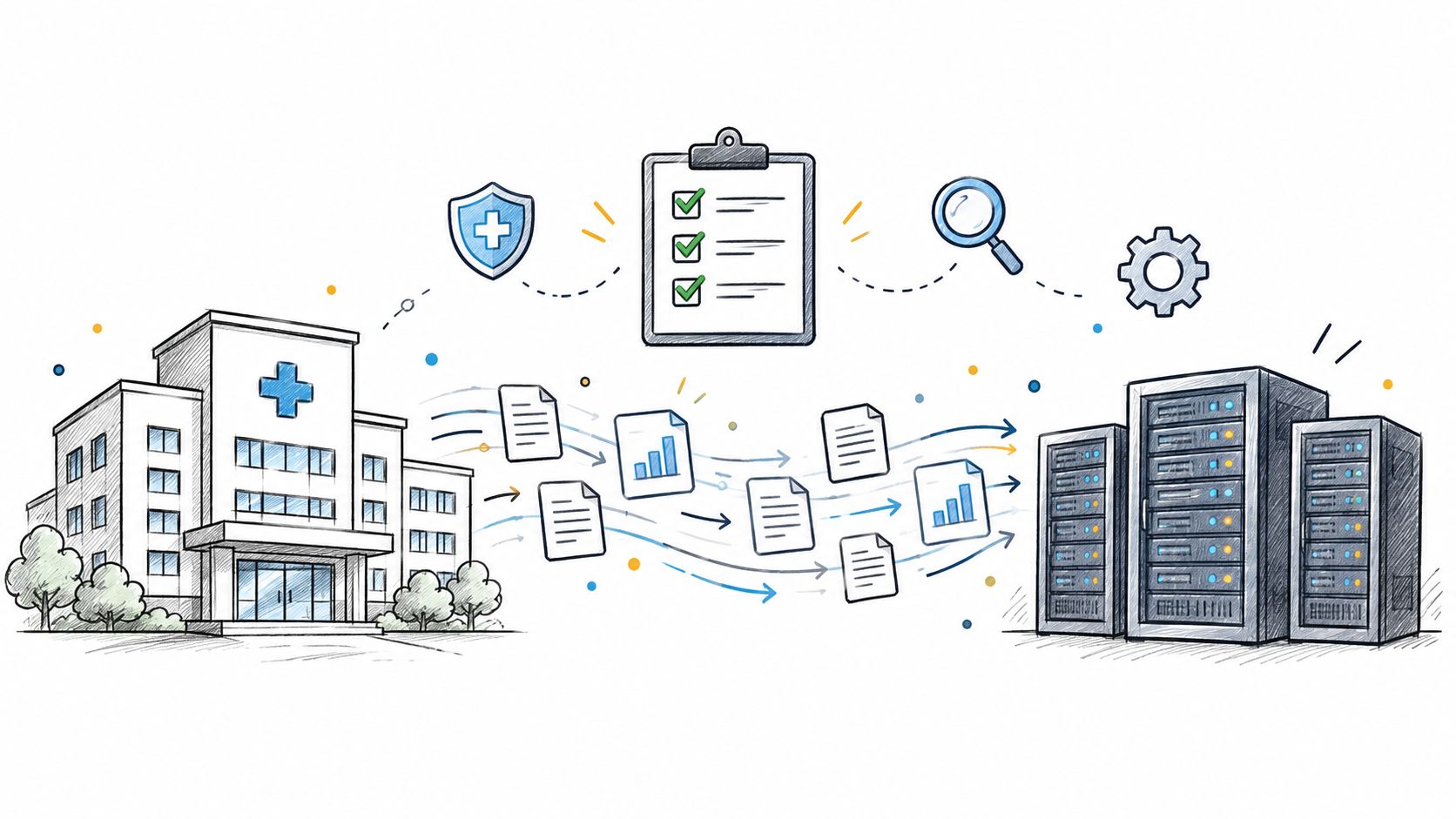
Practical data migration planning guide for healthcare teams. Scope, mapping, compliance, validation, cutover and rollback decisions explained end to end.
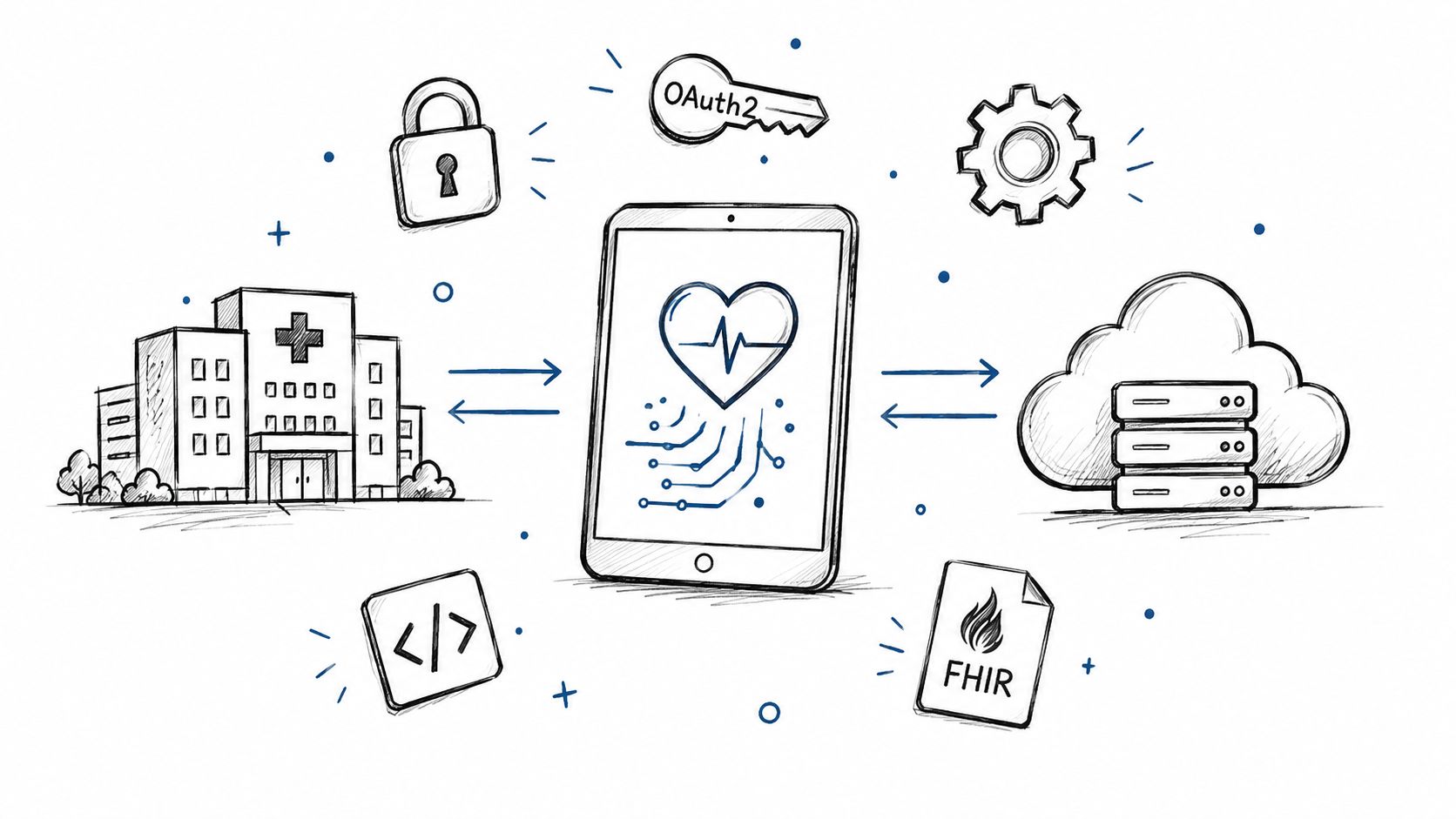
Smart on FHIR guide for healthtech engineers. Learn the OAuth 2.0 launch model, scope syntax, backend services, and US regulatory requirements.
Connect with our team to explore how AI expertise can transform your business.