AI in Healthcare
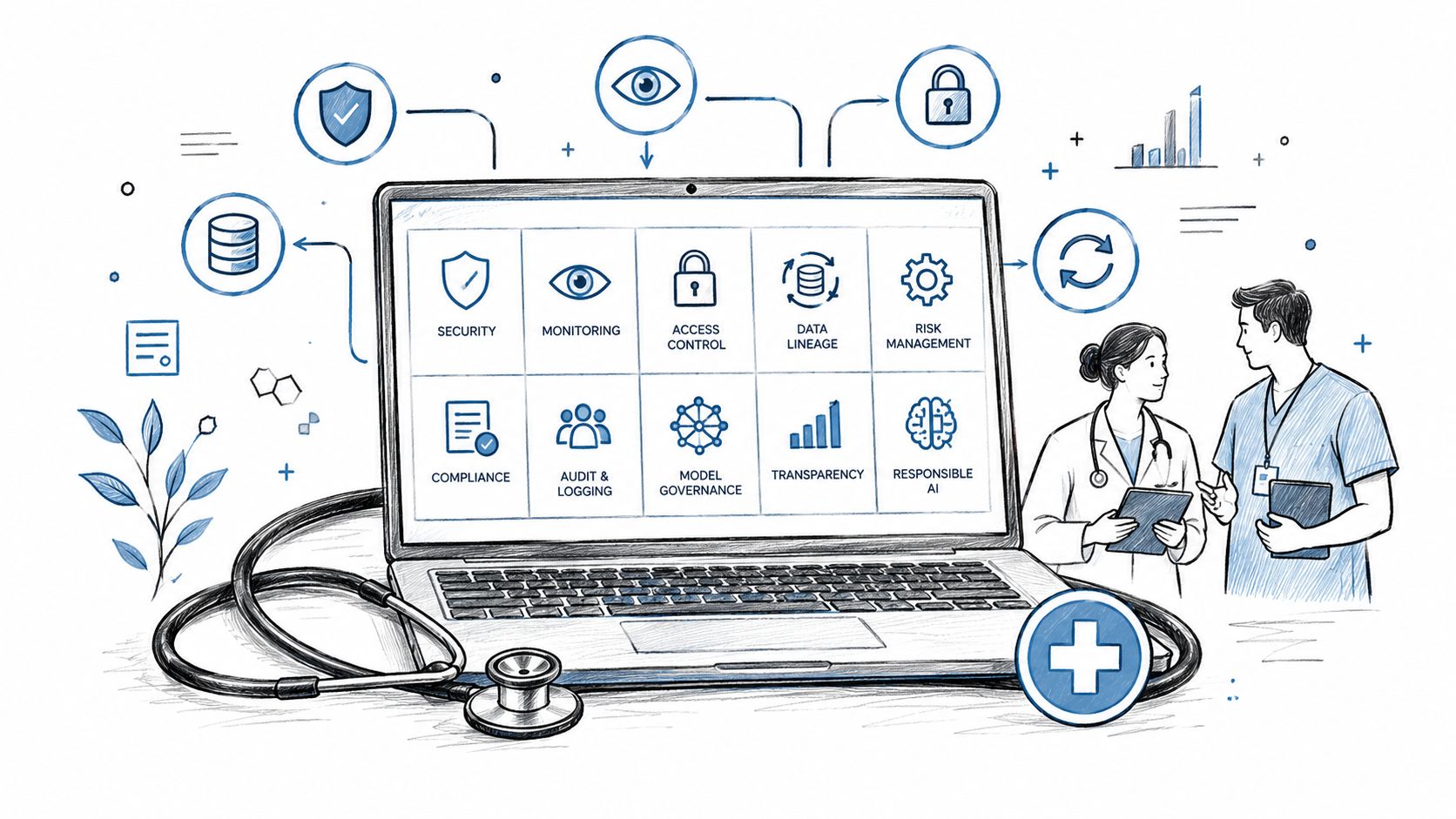
10 AI Governance Platforms for Healthcare Teams
Compare 10 AI governance platforms for healthcare teams, covering model lineage, monitoring, access controls, compliance, and selection criteria.
October 07, 2026Read more
Learn what compliance engineering is, why it matters in healthtech, and how to embed privacy, security, and audit-ready practices into product delivery.
A healthcare SaaS release can look successful until someone asks for the evidence. The feature works, users are adopting it, and the deployment passed the usual engineering checks. Then an auditor asks where access events are recorded, a security lead discovers that a vendor handling protected health information has no documented BAA, or a clinical team realizes nobody is tracking whether an AI model's performance has changed since launch.
Those gaps rarely come from one careless engineer. They emerge when compliance lives in policies and spreadsheets while product decisions happen in tickets, pull requests, CI pipelines, cloud consoles, and production dashboards. Compliance engineering closes that gap by making regulatory intent executable, testable, and observable throughout the product lifecycle.
The need is operational, not theoretical. In 2025, at least 61,556,256 individuals had protected health information exposed or impermissibly disclosed in incidents reported under the U.S. HIPAA breach system, and 35.8% of reported breaches occurred at business associates such as vendors and technology partners, according to this 2025 healthcare data breach analysis. The practical question for a healthtech team isn't whether it can produce a policy binder. It's whether the team can prove, release by release, that its software protects patients and responds when conditions change.
The deployment passed its scheduled checks. Product had approved the clinical workflow, engineering had completed the integration, QA had run regression tests, and security had reviewed the architecture.
Two weeks later, the customer requested an audit package. The team needed to show who accessed patient records, which third parties received data, and how the new AI-assisted recommendation workflow was being monitored.
That request exposed gaps the release checklist had missed. Application logs recorded errors but not every sensitive-data access event. A cloud document-processing service had been approved informally, yet the contract file lacked the required agreement. The model version appeared in a deployment note, while its input-data profile and post-release performance checks sat elsewhere. Engineers could describe the implementation, but they could not reconstruct the control decisions tied to that release.
The team had two costly options: delay customer expansion while engineers added controls, or accept a risk it had not properly measured. Either choice disrupted the roadmap. Compliance had been handled as a final review instead of as an operating property of the product.
Practical rule: If an auditor must ask an engineer to manually reconstruct why a release was safe, the evidence trail is unfinished.
A working compliance engineering system connects obligations to data models, identity policies, threat models, automated tests, approval gates, incident workflows, and production monitoring. Those controls need to sit near the code and delivery pipelines because that is where the relevant evidence is created. For an AI-enabled feature, the release record should also connect the model version, data characteristics, evaluation results, approvals, and post-deployment signals.
The exposure data shows why the boundary extends beyond application code. The same breach analysis records that healthcare providers accounted for 57.5% of reported breaches, business associates for 35.8%, health plans for 6.5%, and clearinghouses for 0.3%. A healthtech company's compliance boundary includes vendors, connectors, hosting services, SDKs, and operational teams, not only its application servers.
Compliance engineering translates regulatory intent into buildable controls and durable evidence. A requirement about confidentiality becomes an access model, a permission test, an audit event, and an alert. A requirement about safe software changes becomes traceability from the requirement to implementation, verification, approval, and the released artifact.
That differs from compliance management. Compliance management defines policies, coordinates assessments, and maintains organizational accountability. Compliance engineering makes those expectations work inside the product and delivery system. An audit is different again. An audit samples whether controls appear to work at a point in time, while an engineering system keeps producing evidence as the team designs, builds, releases, and operates software.

A useful way to explain the distinction to a board or co-founder is to compare regulations with building codes. The code states what a safe structure must achieve. Compliance engineering is the construction method, inspection process, and maintenance routine that keeps the structure standing under real load.
In practice, translate each obligation through four questions:
Teams also need usable evidence, not just a repository full of documents. Clear diagrams, walkthroughs, and versioned operational instructions help engineers preserve context, particularly when systems change. A resource on technical documentation software can help teams think through how product evidence is captured and maintained without separating documentation from the work that creates it.
The standard to aim for is simple: a qualified reviewer should be able to follow a requirement into the backlog, inspect the implementation, see the verification result, identify the approver, and understand how the control is monitored after release.
A mature program has four connected practices. They aren't separate workstreams that meet only during audit season. They form a feedback loop between data handling, risk decisions, software delivery, and operational proof.
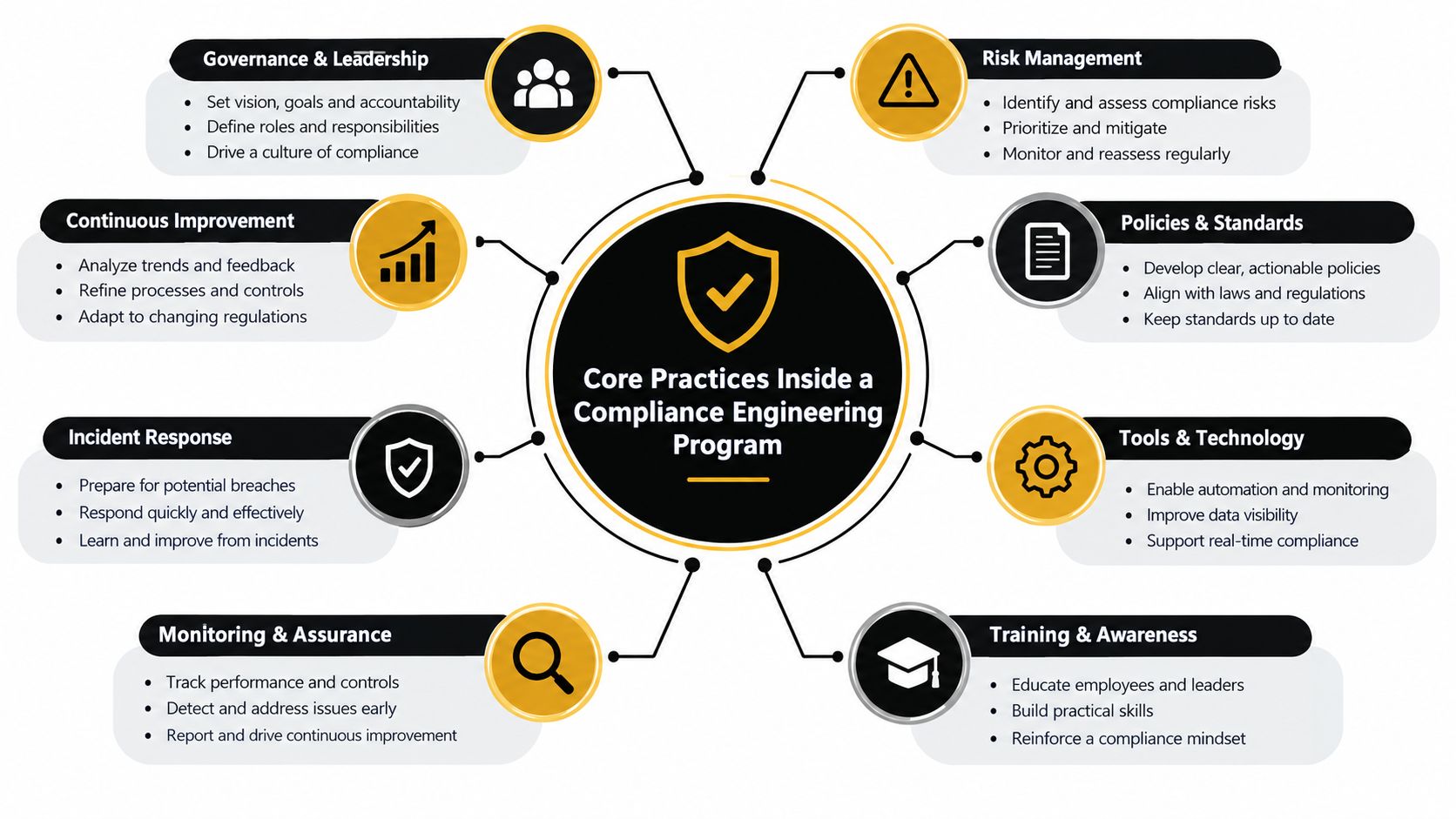
Data minimization isn't a paragraph in a privacy policy. It begins with deciding which fields the product needs, where they are stored, how long they remain available, and which services can read them. Purpose limitation should appear in service boundaries and authorization rules, not only in legal language.
A strong ticket might require a connector to request only the patient attributes needed for a workflow, prohibit sensitive fields from entering general-purpose logs, and record the purpose associated with privileged access. Code review then checks whether the implementation follows those decisions.
Threat modeling should identify assets, trust boundaries, adversaries, attack paths, patient or clinical impact, and mitigations. The output isn't a decorative diagram. It should create owned backlog items such as enforcing service identity scope, isolating tenant data, validating webhook signatures, or adding an alert for unusual record access.
Repeat the exercise when the architecture changes materially, especially when a team introduces an EHR connector, a new AI provider, a device integration, or a data export.
The NIST Secure Software Development Framework, SP 800-218, organizes secure development into four control groups: preparing the organization, protecting software, producing well-secured software, and responding to vulnerabilities. The framework places security across the lifecycle rather than treating it as a pre-release gate.
For a healthtech team, that means security requirements before implementation, protected source and build systems, verification inside the development workflow, and a documented vulnerability-response process after deployment. CI checks can cover dependency risk, secret exposure, infrastructure policy, and security regression tests, but automated checks need human ownership when a finding affects clinical or privacy risk.
The 21 CFR 820.30 design-control logic is useful because it connects requirements, design, implementation, verification, validation, change control, and the device record. For software, evidence might include:
The goal isn't to create more paperwork. It's to make the engineering workflow produce the paperwork naturally.
No single function can own the whole system. Legal and compliance teams interpret obligations, but they usually don't control deployment pipelines. Engineers implement controls, but they shouldn't decide clinical acceptability alone. Quality teams manage formal processes, while product and clinical leaders define intended use and acceptable risk.
A small central compliance engineering function can provide the operating model, templates, control libraries, tooling, and review cadence. Product squads still own the evidence for their services. That division prevents the central team from becoming a queue that every release must pass through.
| Role | Primary Compliance Engineering Responsibilities | Key Artifacts They Produce |
|---|---|---|
| Product | Define intended use, affected users, data purposes, and release scope | Product requirements, intended-use statement, change rationale |
| Engineering | Implement security, privacy, traceability, and reliability controls | Architecture decisions, code, tests, configuration, release artifacts |
| Security | Assess threats, identity, vulnerabilities, suppliers, and incident readiness | Threat models, risk findings, security reviews, response playbooks |
| Quality | Govern design controls, verification, validation, deviations, and records | Quality plans, validation evidence, nonconformance records |
| Clinical | Evaluate clinical relevance, workflow impact, limitations, and review needs | Clinical evaluation inputs, acceptance criteria, review records |
| Leadership | Set risk appetite, resourcing, escalation, and accountability | Risk acceptance, governance decisions, remediation priorities |
Early-stage companies often combine these responsibilities across a few people. That can work if the combined roles are explicit and conflicts are documented. A founder acting as product owner and risk approver, for example, should still record the decision and identify when independent clinical or quality review is required.
Scaling platforms need clearer boundaries. A central team should maintain reusable controls for identity, logging, supplier intake, SBOM handling, and release evidence, while squads apply those controls to their own services. Teams unfamiliar with assurance frameworks can use a plain-language resource such as Trust Services Criteria explained to align security, availability, confidentiality, processing integrity, and privacy discussions before mapping them to their own obligations.
The right question isn't “Who is the compliance person?” It's “Who can make, verify, approve, and retrieve each control decision?”
Pre-launch validation tells you what a system did under defined conditions. It doesn't prove that the system will behave acceptably after users, populations, workflows, prompts, dependencies, and input data change.
That distinction matters for AI-enabled products. A model can remain unchanged while its input distribution shifts. A prompt template can change without a model redeployment. A supplier can alter an endpoint or dependency. A clinical workflow can evolve in a way that changes how users interpret the output. Traditional release approval won't catch every one of these changes.
The postmarket layer needs concrete engineering objects:
The FDA's 2025 draft guidance recommends postmarket performance-monitoring plans for AI-enabled medical devices that address performance changes, possible causes such as input-data shifts, and procedures for mitigation and corrective action, as described in the FDA announcement on the draft AI guidance. That recommendation maps directly to observability and release engineering.
For software that meets the definition of a medical device, the FDA also expects appropriate verification and validation of the device software and its computing platform, tied to design-control requirements. Its SaMD clinical evaluation guidance--Clinical-Evaluation---Guidance-for-Industry-and-Food-and-Drug-Administration-Staff.pdf) distinguishes clinical association from technical and clinical performance. A general accuracy metric isn't enough if the team can't connect the output to the intended clinical condition and intended use.
Teams building SaMD solutions should therefore treat postmarket controls as part of the product architecture, not as a quality document attached after deployment.
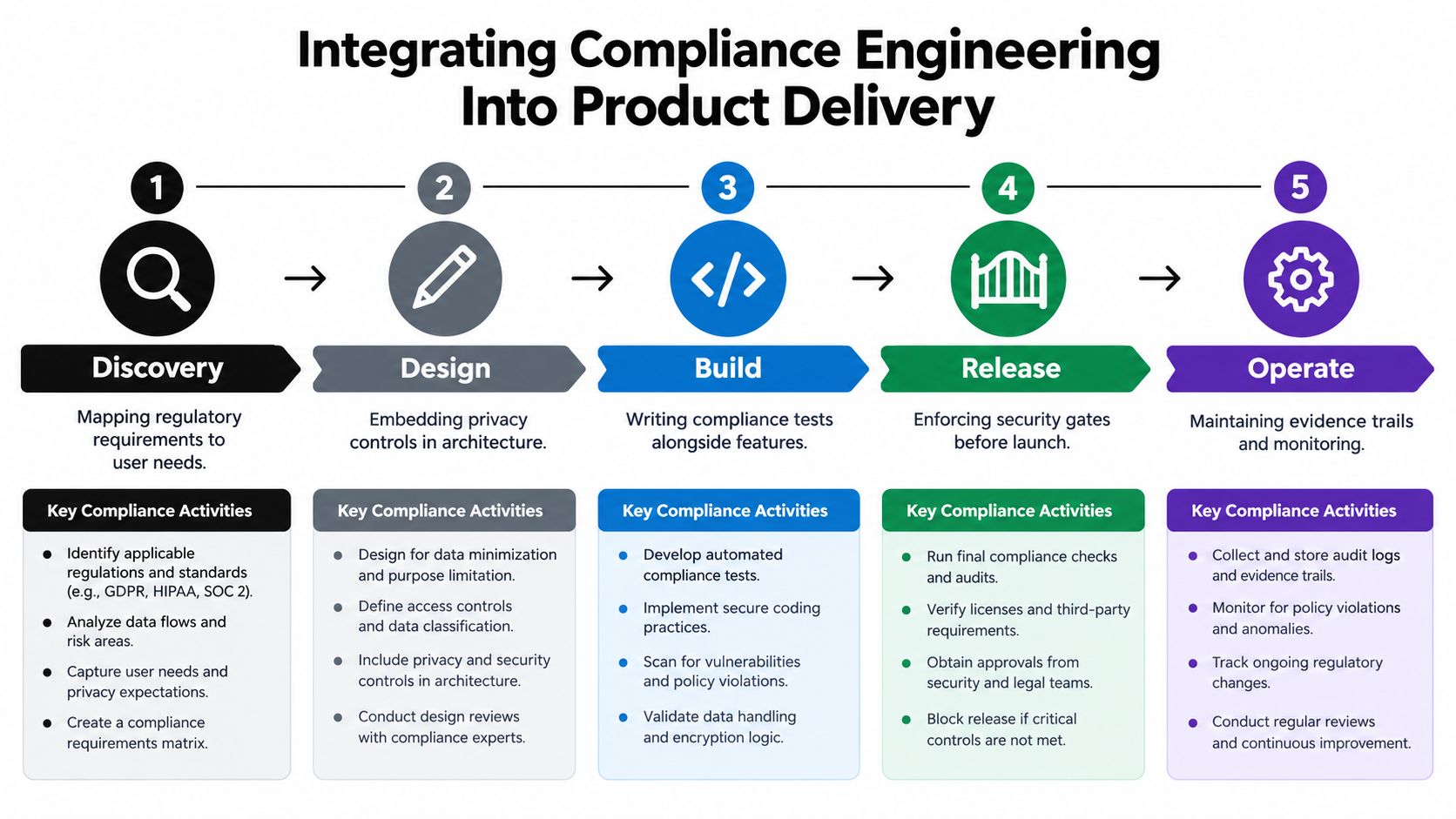
The delivery pipeline should make the safe path the ordinary path. That doesn't mean blocking every change with manual review. It means placing the right control at the stage where the team can act on it most efficiently.
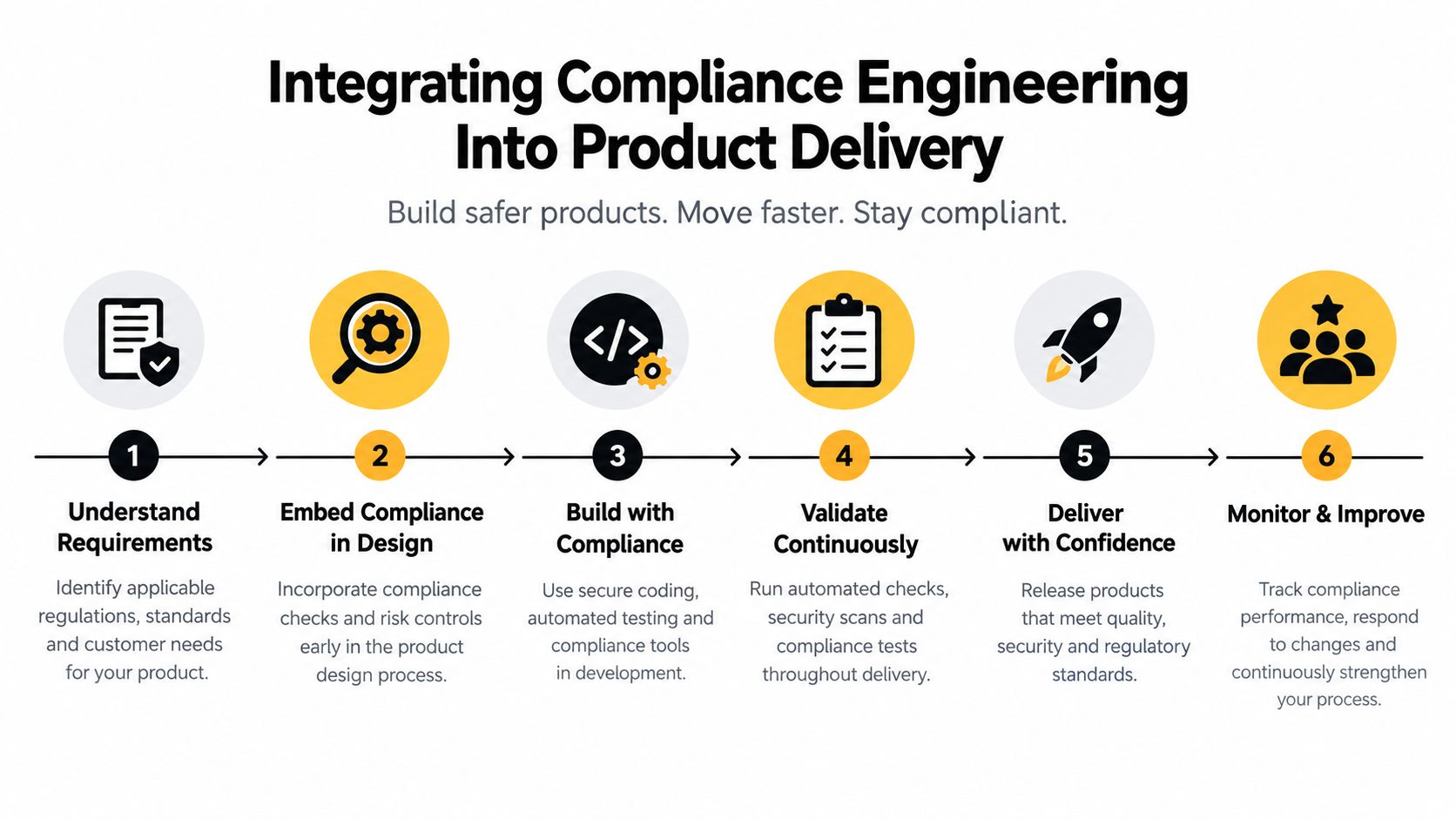
Start by mapping regulatory and contractual requirements to user needs, intended use, data flows, and risk scenarios. A requirement should become a product or system statement that engineers can test. For example, “only authorized care-team members may view a record” needs a defined identity source, role model, emergency-access behavior, audit event, and verification approach.
During design, use threat modeling to challenge trust boundaries and third-party dependencies. EHR connectors, AI services, device SDKs, analytics tools, and support workflows deserve explicit review because they often introduce data paths that aren't visible in the core application diagram.
Write compliance tests alongside feature tests. Check authorization at the API boundary, confirm that sensitive values don't enter logs, validate tenant isolation, and verify that administrative actions generate the required evidence. Store control definitions and exceptions in version control where practical, so reviewers can see how the rule changed.
Generate an SBOM for each relevant release and retain it with the build evidence. FDA guidance identifies useful SBOM metadata such as machine-readable component records, supplier support status, end-of-support dates, vulnerability risk assessments, and device and system impacts, framing the SBOM as a continuous capability rather than a one-time submission artifact, as described in the FDA SBOM guidance.
A release gate should combine automated results with risk-based human approval. A dependency finding may require remediation, a compensating control, or a documented acceptance decision. The pipeline should preserve which path was chosen and why.
After deployment, connect monitoring to the original risk. Alerts should identify meaningful changes in access behavior, vulnerability exposure, integration failures, model performance, or data quality. Incident workflows should connect the event to the affected release, supplier, control, and corrective action.
Teams building Healthcare AI Services can use this lifecycle view to keep clinical software, EHR integrations, and AI components governed through one evidence model. Where external information must be collected or normalized, a web data API may support the data pipeline, but the team still needs to document purpose, provenance, access, retention, and downstream risk.
The useful test is whether an engineer can answer, without archaeology: what changed, which patients or workflows could be affected, what checks ran, who approved the change, and what happens if production evidence shows the assumption was wrong?
“Compliance is a legal or quality problem.” Legal and quality teams are essential, but they can't implement least-privilege access, secure build provenance, rollback logic, or production monitoring by themselves. If the obligation changes system behavior, engineering owns part of the solution.
“More documentation means more compliance.” A long design document doesn't compensate for missing access logs or untested recovery procedures. Useful evidence is connected to an actual decision, implementation, verification result, and owner.
“Compliance engineering kills delivery speed.” Manual review of every low-risk change can create bottlenecks. Reusable controls, automated checks, risk-tiered approvals, and clear exception paths usually reduce repeated negotiation. The trade-off is front-loaded design work in exchange for fewer release surprises.
“AI is too novel for established controls.” AI introduces new evidence needs, particularly around data, model behavior, prompts, drift, and change management. It doesn't eliminate requirements engineering, threat analysis, verification, validation, access control, or incident response.
“Passing an audit means the product is safe.” An audit samples controls. It doesn't replace operational vigilance or clinical judgment. A team can pass an assessment and still miss a new dependency vulnerability, an unapproved vendor path, or a meaningful change in model inputs.
A practical diagnostic is to select one recent production change and ask for the complete chain: requirement, risk, implementation, tests, approval, released artifact, monitoring, and remediation path. Missing links identify engineering work more reliably than another policy review.
A team doesn't need to rebuild its platform to begin. It needs a clear baseline and a narrow first slice.
Inventory the highest-risk data flows, vendors, integrations, and AI components. Assign owners for product, security, quality, clinical review, and release approval. Build threat models for the three flows that could create the greatest patient, privacy, or operational impact, then turn the findings into owned tickets.
Add evidence templates to the normal delivery workflow. Connect requirements to risks, pull requests, test results, approvals, and release artifacts. Add automated checks for access control, sensitive logging, dependency inventory, and supplier records. Start with audit-mode reporting where blocking would create unnecessary disruption, then tune the controls before enforcing them.
Implement postmarket monitoring for the highest-risk workflows. For AI, record model and prompt versions, define performance signals, establish review thresholds, and test rollback or constrained-operation paths. Run an audit simulation using a real release rather than a prepared example.
Teams that need delivery support can evaluate an AI Product Development Workflow alongside their existing quality and security processes. The important questions for a prospective partner are practical:
Early-stage companies need this discipline before complexity makes it expensive, but they can scale the controls to their risk. ISO 13485, SOC 2, HIPAA, GDPR, MDR, and FDA expectations aren't interchangeable checklists. The engineering task is to identify the applicable obligations and express them through one coherent operating system.
Ekipa AI helps healthtech teams turn compliance requirements into architecture, delivery controls, traceable evidence, and postmarket monitoring across clinical software and AI products. Visit Ekipa AI to discuss your delivery risks, or meet our expert team and decide where a focused compliance engineering assessment can support the next release.
Compare 10 AI governance platforms for healthcare teams, covering model lineage, monitoring, access controls, compliance, and selection criteria.
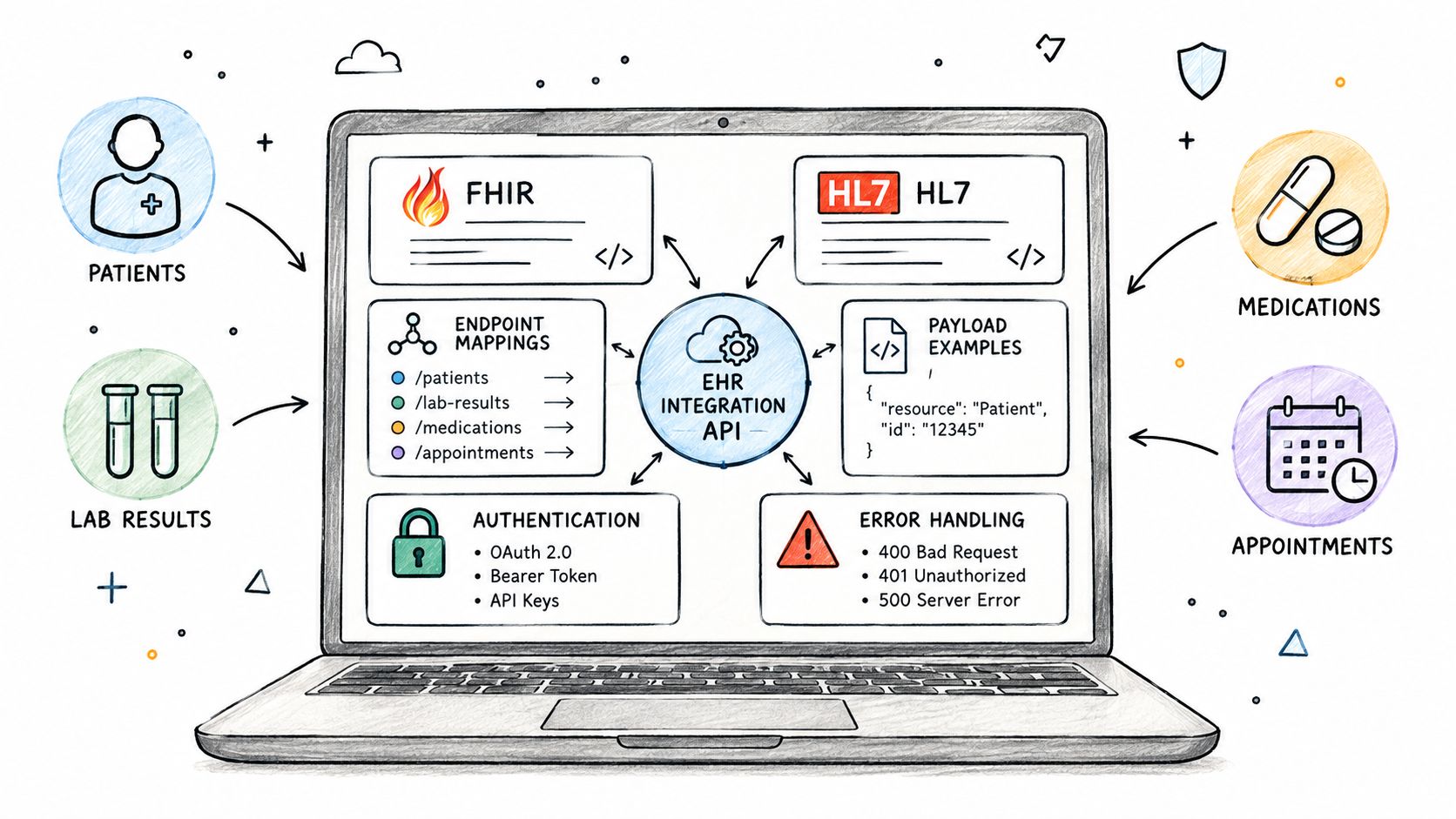
A practical EHR integration API reference covering FHIR R4, SMART on FHIR authorization, HL7 v2 feeds, bulk export, CDS Hooks, error handling and HIPAA safeguards.
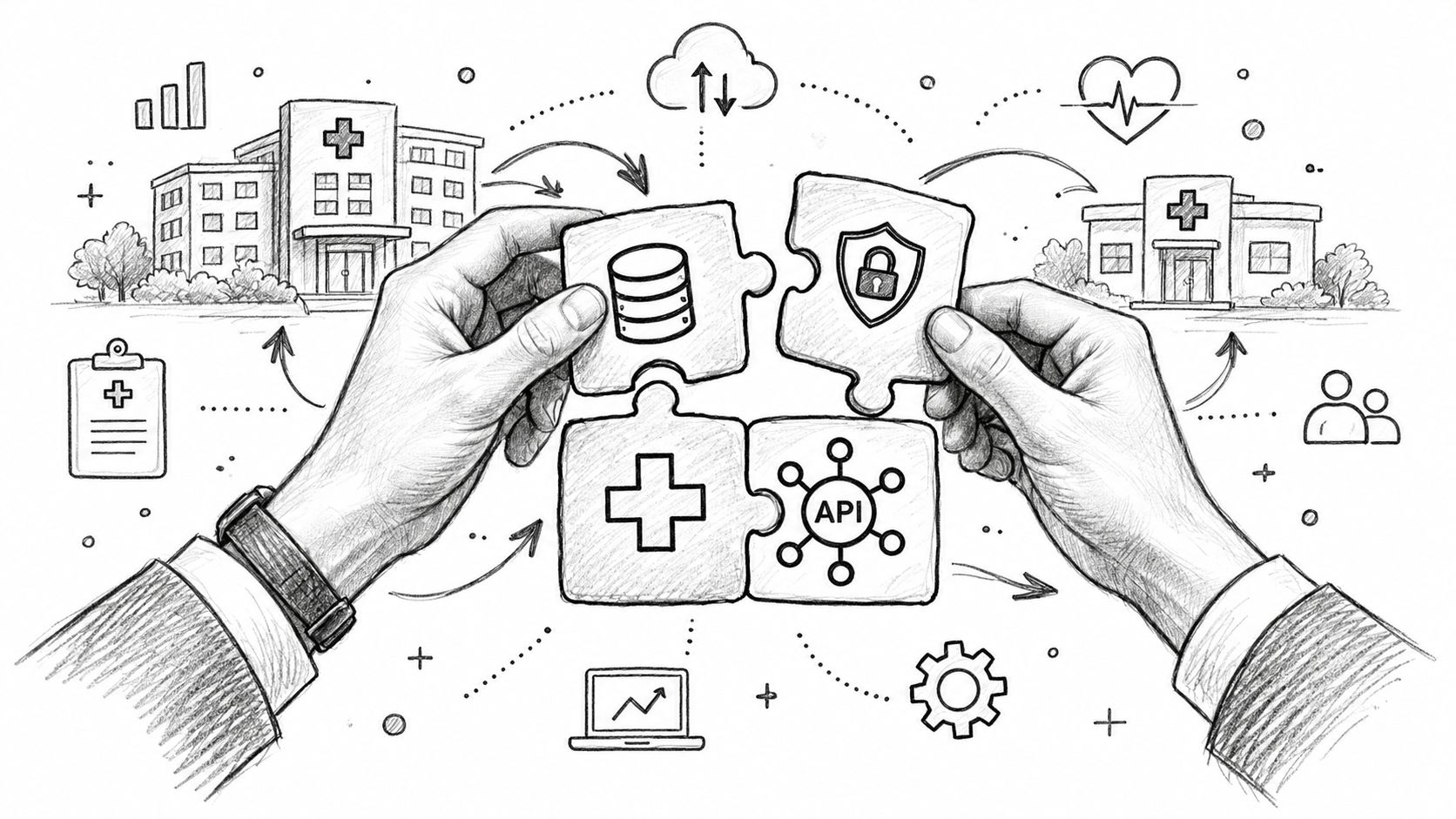
Practical guide to ehr software development covering architecture, FHIR interoperability, HIPAA, security, testing, and team choices for healthtech leaders.
Connect with our team to explore how AI expertise can transform your business.