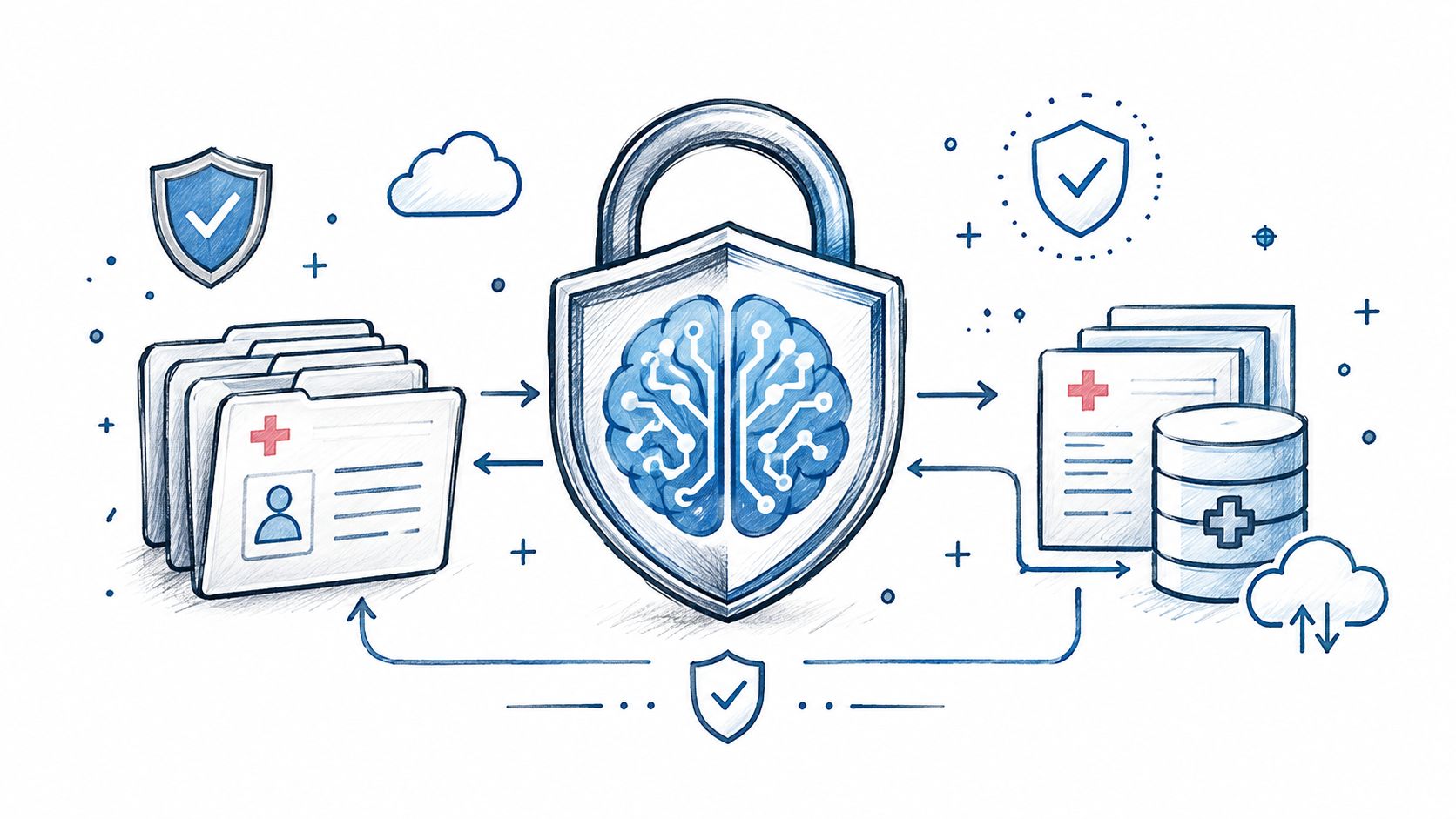
AI in Healthcare
HIPAA-Compliant AI: How to Use LLMs With PHI Safely
How to build HIPAA-compliant AI: when LLM providers need a BAA, data minimization, de-identification, audit controls and a reference architecture.
October 16, 2026Read more
Discover healthcare data quality management practices to boost data integrity, AI-driven insights, and patient outcomes.

Let’s get straight to the point: when healthcare data is bad, it’s not just an IT problem—it’s a patient safety problem. It’s also a direct hit to your organization’s financial health. Healthcare data quality management is the essential discipline of making sure your clinical and operational data is accurate, complete, and trustworthy. Done right, it turns data from a chaotic liability into your most powerful tool for better patient outcomes and a stronger bottom line.
Think about what happens when data goes wrong in the real world. A misdiagnosis because a patient’s history is missing key information. A claim denied over a simple coding mistake. A clinical trial that produces skewed results because of inconsistent data entry across sites. These aren't just theoretical risks; they are daily realities that endanger patients and cripple operations.
Every downstream decision, whether it's a doctor choosing a treatment or an administrator planning a budget, hinges on the quality of the upstream data. It’s that simple.
That’s why a formal, structured approach is no longer a "nice-to-have." We're seeing healthcare software solutions move beyond just storing data to actively validating it. And frankly, innovations in Healthcare AI Services are changing everything. The focus is finally shifting from tedious, reactive data cleanup to proactive, automated quality assurance that flags issues before they ever cause a problem.
The fallout from poor data quality echoes through every part of the healthcare system. The financial waste is massive, but the human cost is what truly matters. From my experience, these are the issues that plague organizations the most:
A sobering 2023 report from the World Health Organization found that 1 in 10 patients is harmed while receiving hospital care. Poor data quality was cited as a major contributing factor, drawing a direct line between data integrity and patient safety.
And you can't talk about data quality without talking about the regulatory minefield. It’s crucial to be constantly evaluating the impact of HIPAA privacy rules in digital analytics. This layer of complexity makes solid data management an absolute necessity. If you want to protect patient privacy and steer clear of crippling fines, you have to get the data right. Understanding these high stakes is the first step.
Before you even think about cleaning a single record, you need to lay the groundwork. The best healthcare data quality programs are built on a solid foundation of data governance—a clear, shared understanding of the rules, roles, and responsibilities for managing data across your entire organization.
This isn’t about creating a massive policy binder that sits on a shelf collecting dust. It's about building a living, breathing framework that people actually understand and use every day.
Without it, you end up with data chaos. Picture a hospital where the cardiology department logs patient addresses using "St." while the oncology department spells out "Street." It seems minor, but that one little inconsistency creates a ripple effect, leading to billing errors, misdirected patient communications, and a completely fractured view of the patient journey. This is exactly the kind of mess a good governance framework is designed to prevent.

One of the most common mistakes I see is organizations treating "data quality" as just another IT problem. In reality, true accountability has to be a shared responsibility, with clinical and business teams taking real ownership of their data. That starts by defining who does what.
Data Owners: Think of these as the senior leaders—maybe the Director of Clinical Informatics or the Head of Revenue Cycle Management. They are ultimately accountable for the data in their domain. They aren't in the weeds managing it day-to-day, but they have the final say on policies, access rules, and quality standards.
Data Stewards: These are your on-the-ground experts. A Data Steward is someone like a nurse informaticist, a billing supervisor, or a lab manager who lives and breathes this data. They understand its real-world context and are tasked with defining data elements, keeping an eye on quality, and fixing issues when they pop up.
Data Custodians: This is where IT comes in. They are responsible for the technical infrastructure—the servers, databases, and security protocols where the data lives. They protect the data, but they don't own its meaning or content.
Getting these roles sorted out creates a clear line of sight for any data-related decision. It's an absolutely essential first move before you dive into any serious AI strategy consulting, because even the most powerful algorithms are worthless if they're running on garbage data.
With your key roles defined, the next move is to form a Data Governance Council. This is your steering committee—a cross-functional team that guides all your data initiatives. You'll want to pull in your Data Owners, key Data Stewards, and representatives from IT, compliance, and analytics.
The council has a few critical jobs:
A well-run governance council takes data management from a bunch of disconnected, departmental side-projects and turns it into a coordinated, strategic program. It makes sure everyone is reading from the same playbook, which builds consistency and trust across the whole organization.
This structure is non-negotiable for any modern healthcare system, especially one looking to implement sophisticated AI tools for business. Building this foundation of clear ownership and agreed-upon rules is the only way to turn your data from a constant liability into your most valuable asset. This is a fundamental part of any successful AI requirements analysis.
If you can't measure it, you can't fix it. It's an old cliché for a reason. After you’ve laid the groundwork with solid governance, the next step is to get specific about what "good data" actually means for your organization. This is where we move from high-level strategy to tangible metrics.
A lot of organizations get stuck here, trying to boil the ocean by measuring everything all at once. My advice? Don't. The real key is to start small and prove the value quickly. Pick one high-impact area—patient demographics or claims coding are usually great places to start—and focus on getting some early wins. This approach, which we bake into our own AI Product Development Workflow, helps build the momentum you'll need for the long haul.
To measure quality in a way that everyone understands, we need a common language. The healthcare industry has largely settled on six core dimensions that give us a solid framework for figuring out what's wrong and how to fix it. Getting a handle on these will help you build Key Performance Indicators (KPIs) that actually mean something for your clinical and business goals.
Here’s the breakdown:
These dimensions aren’t just theoretical. They represent the real-world use cases that disrupt everything from patient care to the revenue cycle. Fixing them requires a smart mix of process improvement, the right technology, and strategic oversight—a combination that sits at the core of our AI strategy consulting philosophy.
Once you’re comfortable with the six dimensions, you can start translating them into specific, measurable KPIs. This is what makes data quality a visible, trackable initiative instead of a vague, nagging problem. You stop saying "we have a lot of duplicate records" and start reporting that the "Duplicate Patient Record Rate is 3.2% this quarter, down from 4.5%." That’s the kind of specific, data-backed reporting that gets you budget and buy-in.
The goal is to build KPIs that don’t just track a number, but are directly tied to a meaningful business outcome. A low "Percentage of Claims with Complete Coding" KPI isn't just a data problem; it's a direct predictor of increased claim denials and delayed cash flow.
To get you started, here is a practical table you can adapt to build your own data quality dashboard. This breaks down how to connect the abstract dimensions to concrete goals your teams can actually work toward. Think of this as a foundational step for any organization that wants to build more advanced capabilities, like custom internal tooling or exploring sophisticated AI Automation as a Service.
This table breaks down the essential dimensions for assessing healthcare data quality, providing clear definitions, practical healthcare examples, and sample KPIs for measurement.
| Data Quality Dimension | Definition | Healthcare Example | Sample KPI |
|---|---|---|---|
| Accuracy | The degree to which data correctly reflects the real-world object or event it describes. | A patient's recorded allergy to penicillin matches their actual medical history. | Percentage of patient records with verified demographic information. |
| Completeness | The proportion of stored data against the potential of "100% complete." | A clinical encounter note includes all required fields for a value-based care program. | Percentage of insurance claims submitted with all required diagnosis and procedure codes. |
| Consistency | Ensuring data is the same and non-conflicting across multiple systems or datasets. | A patient's primary care physician is listed identically in the EHR and the billing system. | Number of data conflicts identified between the Master Patient Index (MPI) and departmental systems. |
| Timeliness | The degree to which data is available for use in the expected time frame. | Emergency department triage data is entered into the EHR in real-time as the patient is being assessed. | Average time from lab result finalization to availability in the clinician’s portal. |
| Uniqueness | Ensuring there are no duplicate records for a single entity within a dataset. | A single, unique medical record number (MRN) exists for each individual patient. | Duplicate patient record rate (percentage of total records). |
| Validity | Data conforms to the syntax (format, type, range) of its definition. | A patient's weight is recorded in pounds and falls within a medically plausible range (e.g., not 900 lbs). | Percentage of data fields that pass automated validation rules upon data entry. |
By establishing clear metrics like these, you can finally shift your data quality efforts from a reactive, fire-fighting mode to a proactive, strategic function that creates real value. And as we'll get into next, having these KPIs is the essential first step before you can even begin to choose the right tools to enforce and maintain data integrity at scale.
Once you have your governance framework and KPIs locked in, it’s time to equip your teams with the right technology. Let's be honest: trying to manage healthcare data quality with spreadsheets and manual spot-checks is like trying to perform surgery with a butter knife. It’s not just slow and risky; you’re guaranteed to miss critical issues. The modern tech stack is about moving beyond reactive cleanup and into the world of proactive data integrity.
The right tools don't just find errors—they help prevent them from ever happening. This is how you shift data quality from a dreaded, periodic project into a continuous, automated process humming along in the background. It's about building a system that makes it easy for people to do the right thing and hard to do the wrong thing.
A solid tech stack for data integrity isn't just one magic tool. It's several key components working together, each playing a specific role in diagnosing, fixing, and maintaining the health of your data.
The biggest leap forward in this space has been the arrival of artificial intelligence. AI elevates data quality from a reactive, rule-based chore to a proactive, intelligent function.
For instance, a machine learning model can be trained to spot anomalies in real-time that a human would easily miss—like a blood pressure reading that is technically valid but highly improbable given a specific patient's history. It’s here that AI-driven validation becomes a massive force multiplier, catching subtle but critical errors before they can cause harm.
Some of these intelligent systems can even start to predict data entry errors before they happen by analyzing user behavior patterns. This fundamental shift from "detect and correct" to "predict and prevent" is the key to achieving scalable data integrity.
The healthcare analytics and data quality market is exploding for a reason. Valued at an estimated $52.98 billion in 2024, it's projected to hit $198.79 billion by 2033. This massive investment is flowing into advanced platforms, especially cloud-based solutions that offer the scalability and real-time access that modern healthcare demands.
Beyond the specific tools, your underlying architecture is crucial. Cloud platforms have become the de facto standard for a reason—they provide the scalability needed to handle ever-growing data volumes and the interoperability required to connect dozens of disparate systems.
As you build this out, adopting a standardized data model like the OMOP Common Data Model can be a massive win. It forces data from different sources into a consistent structure, making it infinitely easier to analyze and trust. When you're looking at AI-powered tools, focus on solutions that can integrate cleanly into your existing workflows. For example, our own VeriFAI platform is designed specifically to help validate and verify data integrity within AI models, plugging directly into the development lifecycle.
Ultimately, your goal is to build an ecosystem where data quality is baked into your operations, not bolted on as an afterthought. It requires a thoughtful selection of tools that work in harmony to create a resilient, trustworthy data foundation for your entire organization.
A grand plan is one thing, but a practical roadmap is what gets the job done. Trying to launch a full-scale healthcare data quality management program overnight is a surefire way to overwhelm your teams and grind everything to a halt. The smart money is on a phased, iterative approach. This way, you can show real value quickly, learn as you go, and build the momentum you need for long-term success.
This kind of structured rollout helps you bank tangible wins at each stage, making it much easier to keep support and resources flowing. It’s all about turning a daunting initiative into a series of manageable, high-impact projects.
The way we manage data has come a long way, moving from manual entry and spreadsheets to sophisticated, AI-driven validation. This journey shows a clear trend towards more automation and proactive quality control.

This progression isn't just about new technology; it's about a fundamental shift in how we maintain data integrity, with modern tools—especially AI—making the process less about manual cleanup and more about intelligent prevention.
Your first month is all about discovery and getting everyone on the same page. The goal isn't to fix everything at once. Rushing this part is a classic mistake that leads to scattered efforts and wasted money. Instead, you're laying a solid foundation.
Here’s what to focus on:
With a clear focus, the next three months are for putting your pilot project into action. This is where the plan meets reality. The aim is to test your processes, tools, and team structure on a small scale, gathering the data and insights you'll need for a wider rollout.
Your key milestones for this phase look like this:
By the six-month mark, you should have a successful pilot under your belt, complete with hard numbers and practical lessons. Now you’re ready to scale. You have a proven business case, a tested methodology, and a much clearer picture of the resources you need.
Your focus now shifts from proving the concept to expanding its reach.
Take the successful processes, workflows, and tool configurations from your pilot and begin applying them to other high-priority departments or data domains. Use the ROI data from the patient registration pilot to get buy-in from other department heads.
With a compelling success story in your back pocket, you can confidently grow your healthcare data quality management program. This is the point where you shift from a small project to an enterprise-wide capability, all built on the solid foundation you've so carefully laid.
Let's be blunt: a data quality program in healthcare isn't just a "nice-to-have" IT project. It's a serious business investment, and like any investment, it needs to show a clear, measurable return. To get and keep the attention of your executive team, you have to move beyond abstract talk about "clean data" and start connecting the dots to real-world financial and clinical results.
This is where you build the story that resonates with leadership. You're not just fixing errors; you're directly impacting the bottom line, improving patient care, and making the entire organization run more smoothly.
The trick is to avoid inventing new metrics. Instead, focus on the KPIs your leadership team already obsesses over and show how your data quality work is pushing those numbers in the right direction.
When building your ROI model, zero in on these high-impact areas:
The market itself tells the story. The global healthcare quality management sector is on track to hit $2.51 billion by 2030. That kind of growth doesn't happen unless organizations see a direct link between solid data management, better clinical outcomes, and a healthier bottom line. You can discover more insights about these market trends and see how the industry is voting with its budget.
Here’s a hard-won lesson: the best tools in the world won't save you if you don't address the human element. A lasting data quality program is built on a culture of shared responsibility, not just on software.
This means you need to invest in your people. Provide regular, straightforward training on data standards and, more importantly, why it matters. Help them see how their work contributes to the bigger picture.
My best advice? Find your "data champions." These are the well-respected individuals in different departments who just get it. Empower them to advocate for the program, answer questions, and build momentum from within. When you combine powerful healthcare software solutions with great processes and truly engaged people, you create an unstoppable force for change.
Once you prove the ROI and build this culture of quality, your program stops being seen as a cost center and becomes what it truly is: a strategic asset. If you're ready to build the business case for your own organization, let's talk. You can connect with our expert team to walk through your specific challenges.
Let's tackle some of the most common questions we hear from healthcare leaders as they navigate the practical hurdles of launching a data quality program.
Don't try to boil the ocean. The best first step is to pick a single, high-impact data domain and perform a focused quality assessment. Patient demographics or clinical billing codes are often great places to begin because the downstream effects of errors there are massive and easy to demonstrate. This initial deep dive gives you a clear, evidence-based baseline of your current challenges. More importantly, it provides the concrete numbers you need to build a compelling business case for executive buy-in and design a pilot project with realistic, measurable goals—a critical piece of any solid AI requirements analysis.
Think of AI as a force multiplier for your data stewards. It automates the tedious, error-prone tasks that bog down your human experts. For example, AI models can validate information as it’s being entered, flagging potential mistakes in real-time before they pollute your systems. They can also scan massive datasets to spot subtle anomalies and patterns that signal deeper issues a human might miss. Ultimately, this automation dramatically boosts both the speed and the accuracy of your data management. It's one of the key reasons organizations look to AI Automation as a Service to solve these foundational problems. As we explored in our AI adoption guide, starting with well-defined use cases like data quality delivers tangible value and builds momentum for broader initiatives.
You can't treat compliance as an afterthought. HIPAA compliance has to be woven into the very fabric of your data quality framework from day one. This means implementing strict, role-based access controls so people only see the data they absolutely need to. It also involves using data masking and robust encryption for all Protected Health Information (PHI) and maintaining meticulous audit logs that track every single touchpoint with sensitive data. And here’s a non-negotiable point: any third-party tool, partner, or provider of custom healthcare software development you bring in must be fully HIPAA compliant. Always demand a signed Business Associate Agreement (BAA) before granting them any access to your data.
The biggest mistake is treating data quality as a one-time cleanup project. True healthcare data quality management is a continuous, ongoing program. You must build a culture where data governance is a shared responsibility, supported by automated tools and regular monitoring. A "set it and forget it" approach guarantees that data will degrade over time, erasing all your hard-earned gains.
Ready to build a data quality framework that delivers real clinical and financial results? Ekipa AI provides the strategic guidance and technical expertise to turn your data from a liability into a strategic asset. Get your Custom AI Strategy report to start today or meet our expert team to discuss your specific needs.
How to build HIPAA-compliant AI: when LLM providers need a BAA, data minimization, de-identification, audit controls and a reference architecture.
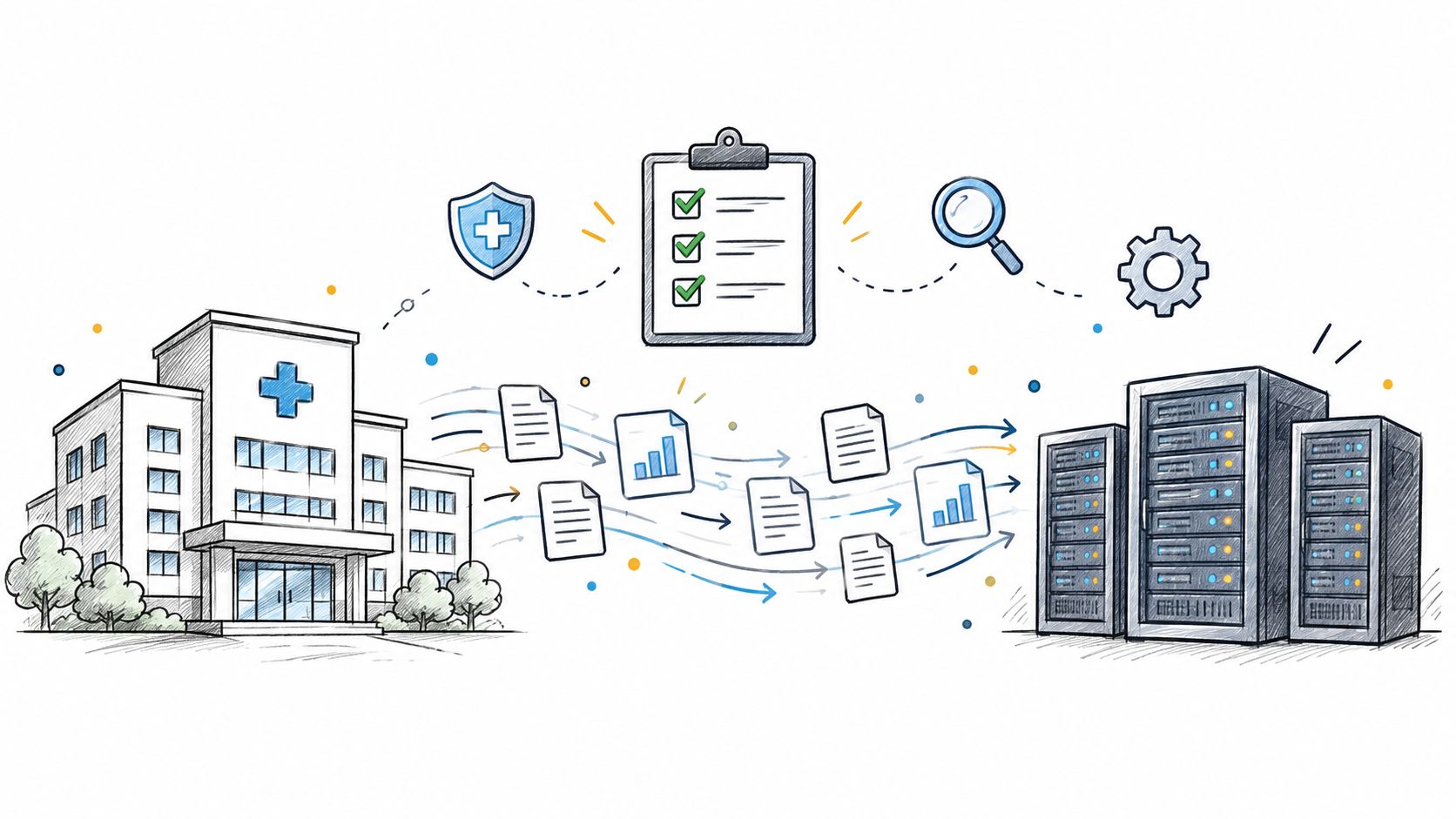
Practical data migration planning guide for healthcare teams. Scope, mapping, compliance, validation, cutover and rollback decisions explained end to end.
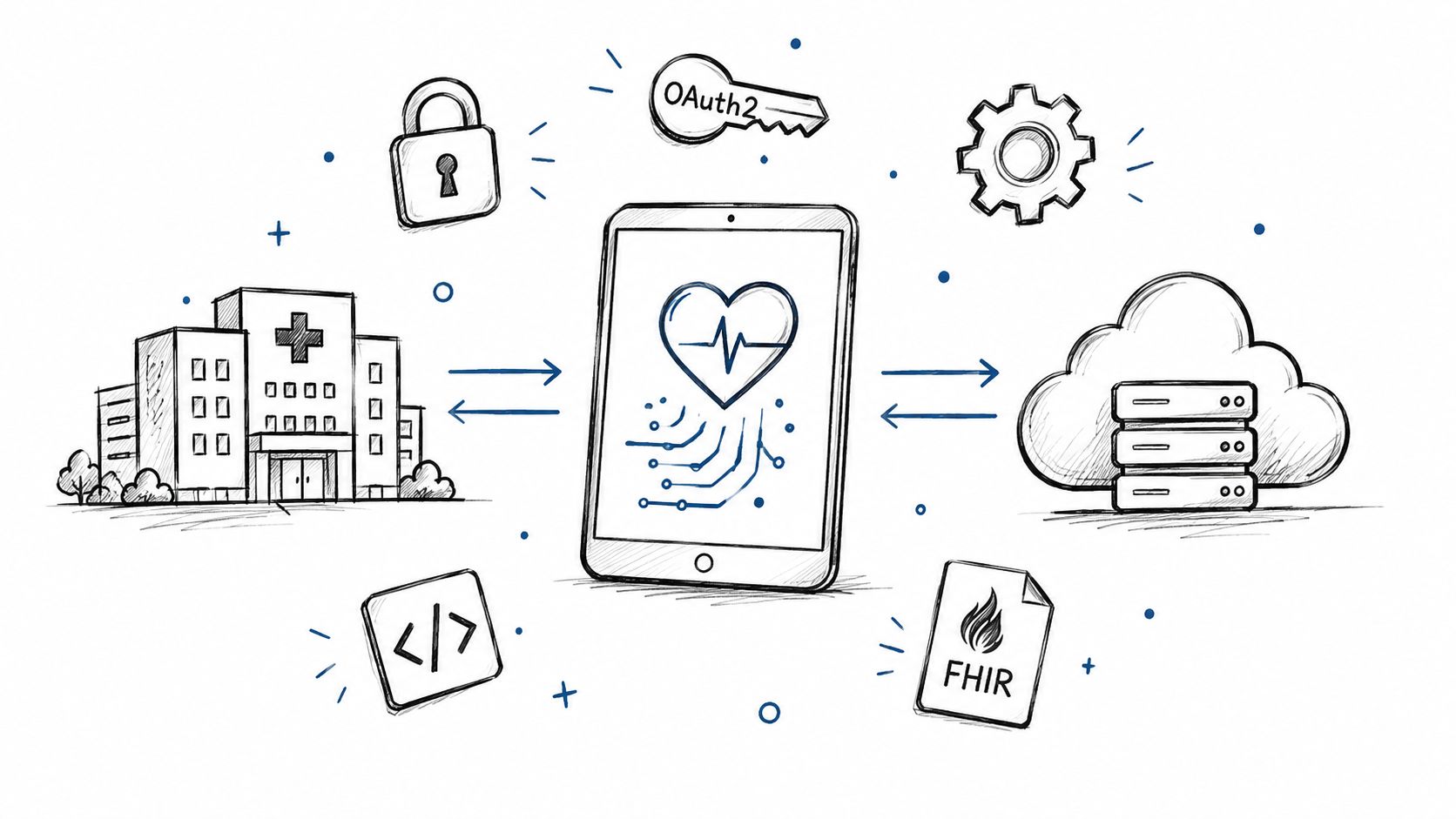
Smart on FHIR guide for healthtech engineers. Learn the OAuth 2.0 launch model, scope syntax, backend services, and US regulatory requirements.
Connect with our team to explore how AI expertise can transform your business.