AI in Healthcare
Smart on FHIR: What It Is and How It Works in Practice
Smart on FHIR guide for healthtech engineers. Learn the OAuth 2.0 launch model, scope syntax, backend services, and US regulatory requirements.
October 14, 2026Read more
Discover the healthtech automation framework powered by AI. Understand its components, architecture, ROI, & 2026 implementation roadmap.

Nearly half of physicians report burnout, according to the American Medical Association, and administrative burden remains one of the biggest drivers of that strain. In parallel, the World Health Organization has warned that AI in health must be implemented with strong governance, transparency, and equity safeguards, not just technical ambition. Those two facts frame the central issue. HealthTech teams are under pressure to automate, but speed alone does not produce a system that clinicians trust or regulators will accept.
The hard part is rarely the model itself. I have seen capable teams deploy note generation, intake routing, or prior authorization support that looked promising in a demo and then stalled in production because ownership was unclear, validation was too narrow, or workflow exceptions piled up faster than anyone expected. In healthcare, weak operating design shows up quickly as compliance exposure, biased performance across patient groups, and manual rework that erases the initial time savings.
A healthtech automation framework powered by AI gives teams a way to build with control from the start. It sets rules for data movement, model oversight, audit logs, escalation paths, and human review. It also closes two gaps that sink many pilots: the operating model gap, where no one defines who runs and monitors the system after launch, and the equity-and-validation gap, where performance is measured in aggregate but not tested across the patient populations the workflow serves.
Analytics matter here too. Automation changes throughput, documentation quality, and staffing patterns, but leaders need visibility into those effects before they can scale responsibly. This article on AI for healthcare BI solutions is a useful companion for teams tying workflow automation to reporting, performance management, and decision support.
Teams that need to implement this in a regulated environment usually benefit from a partner that can handle architecture, governance, and clinical risk together. Ekipa's Healthcare AI Services focus on that delivery model. The goal is straightforward: build automation that reduces operational drag, stands up to scrutiny, and improves care access without creating new blind spots.
Healthcare operations now run under two opposing pressures. Demand for faster, better-coordinated care keeps rising, while clinicians and administrators still spend too much time inside workflows that were never designed for speed. AI has become the practical response because it can absorb repetitive work, support decisions, and keep process quality from slipping under volume.
A single AI feature can help. It can summarize notes, route messages, or flag missing documentation. But a hospital or digital health platform doesn't run on single features. It runs on chains of dependency.
One broken handoff can cancel out the benefit of three good tools. If intake data doesn't map cleanly into the EHR, billing automation inherits bad inputs. If a patient messaging assistant produces output with no oversight path, support teams end up doing shadow work. If model outputs aren't tied to ownership, nobody knows who is responsible when the workflow drifts.
Practical rule: In healthcare, automation should remove work from the system, not move work to a less visible queue.
The organizations getting durable value from AI are treating automation as part of care operations, not as a side experiment owned by innovation teams alone. That means clear rules around data quality, workflow design, auditability, and escalation.
A mature setup usually includes:
That's the baseline now. Not because every AI tool is mature, but because healthcare can't afford automation that behaves unpredictably under load.
A healthtech automation framework powered by AI is best understood as the central nervous system for healthcare operations. It connects signals, systems, and actions. It doesn't just automate one task. It coordinates many tasks across clinical, administrative, and financial workflows while preserving compliance and interoperability.
According to this analysis of healthtech systems for scaling AI-powered care, these frameworks are typically built as an end-to-end pipeline that links clinical workflow analysis, EHR or EMR integration, AI model orchestration, and continuous validation. That architecture matters because growth in healthcare isn't just a traffic problem. It's a controlled-systems problem.

Basic automation says, “Can we make this step faster?”
A framework asks a harder set of questions:
Those questions matter because health systems don't fail only when software crashes. They fail when staff lose trust in the output, when reconciliations pile up, or when compliance teams can't trace what happened.
A practical framework usually spans several layers at once:
| Layer | What it does |
|---|---|
| Workflow layer | Maps intake, scheduling, billing, documentation, and clinical support processes |
| Data layer | Moves structured and unstructured data between source systems |
| Intelligence layer | Runs models for extraction, prediction, classification, and generation |
| Control layer | Orchestrates jobs, applies rules, and handles exceptions |
| Governance layer | Enforces logging, review, policy controls, and validation |
This is why framework design sits close to architecture, operations, and compliance. It isn't a thin automation wrapper on top of old systems. It's a governed operating model that can scale.
For organizations building beyond off-the-shelf tools, this often intersects with custom healthcare software development. The reason is simple. Once automation touches core workflows, product decisions become architecture decisions.
A useful test is whether the system can survive a workflow exception, an API change, and an audit request without manual scrambling.
If the answer is no, you don't yet have a framework. You have a pilot.
Resilience in healthcare automation comes from how the parts work together under pressure. A model can perform well in testing and still fail in production if the intake layer drops context, the workflow engine mishandles exceptions, or reviewers cannot see why a recommendation was made. That is the operating model gap in practice. Teams buy tools for isolated use cases, then discover they never designed the controls, ownership, and review paths needed to run those tools across real clinical and operational workflows.

Healthcare data rarely arrives clean or complete. A single workflow may pull from HL7 messages, FHIR resources, scanned referrals, payer letters, contact center transcripts, and device feeds. The framework needs an intake layer that normalizes formats, resolves identifiers, flags missing fields, and preserves provenance so teams can trace every output back to source data.
This is also where equity risks often start. If intake pipelines drop language preference, race and ethnicity fields, disability indicators, or community-level context, validation later will miss biased performance across patient groups.
A usable model layer is curated, versioned, and tied to specific tasks. Documentation summarization, prior authorization intake, denial prediction, and staffing forecasts should not all run through the same model choice or validation method. Good frameworks define which model is approved for which workflow, what confidence thresholds apply, when a human must review output, and what evidence is required before release.
Teams that scale well treat models like governed components, not experiments.
Orchestration decides what happens when reality does not match the happy path. It routes routine work automatically, pauses low-confidence cases, retries failed jobs, and records each handoff. In practice, this layer determines whether automation reduces workload or creates a second queue that staff have to clean up later.
A good orchestration layer should:
For organizations that need execution support while building internal capability, managed AI automation services for healthcare workflows can be a practical delivery model.
Most failures I see are not model failures. They are interface failures. EHR vendors update endpoints, payer portals change document formats, identity rules tighten, and queue logic breaks without notice. A durable integration layer isolates those changes so every downstream workflow does not need to be rebuilt.
This layer also needs observability. If a referral packet arrives incomplete or a scheduling update posts to the wrong status, the system should surface that quickly and show where the failure occurred.
Security controls have to live inside the framework, not beside it. That includes access controls, audit logs, data retention rules, prompt and output logging where appropriate, model version records, and clear evidence of human oversight. Compliance teams do not need broad claims about safety. They need traceability they can inspect.
Validation belongs here too. A framework is not resilient if it only proves average performance. It needs testing across sites, patient populations, languages, and edge cases so teams can spot where accuracy drops or escalation rates rise. That equity-and-validation gap is one of the main reasons pilots stall after early success.
Review screens, override controls, confidence cues, and escalation workflows determine whether staff will trust the system during a busy shift. If review requires copying data between systems or hunting for missing context, adoption drops fast.
The best interfaces make supervision part of the workflow. Reviewers should see the source evidence, the system output, the reason for escalation, and the allowed next actions in one place.
Staff will not trust AI because a policy says they should. They trust it when the system shows its work, handles exceptions cleanly, and makes review faster than manual recovery.
| Approach | What happens in practice |
|---|---|
| Thin automation on top of unstable workflows | Local speed gains disappear into rework, reconciliation, and support tickets |
| Framework with governed orchestration | Exceptions are routed cleanly, failures are visible, and teams can expand use cases with less operational risk |
| Compliance checks added near launch | Logging gaps, access issues, and validation holes force redesign after build work is already done |
| Human review built into the workflow | Clinical and operations teams can supervise output without creating parallel manual processes |
| Validation based only on average performance | Bias and failure patterns stay hidden until rollout reaches broader patient populations |
The architecture is not the flashy part of the program. It is the part that determines whether automation survives audits, workflow exceptions, and real clinical variation.
A pilot can show technical promise in weeks. Scale fails later, in workflow ownership, policy decisions, and unresolved risk.
That is the operating model gap. It is why two organizations can deploy the same model and get very different results. One turns automation into lower queue times, cleaner handoffs, and measurable staff relief. The other gets stalled approvals, local workarounds, and rising audit exposure.
The second gap is harder to spot. Average model performance can look acceptable while certain patient groups, sites, or documentation patterns experience worse results. If governance does not include validation for equity, subgroup performance, and post-launch monitoring, the framework scales bias along with efficiency.
Governance has to match the structure of the organization and the risk profile of the workflows involved.
Centralized governance fits organizations that need strict consistency across shared platforms and regulated processes. A central team sets architecture standards, approval paths, validation methods, vendor controls, and release policy.
Federated governance fits multi-site systems where local operations differ enough that one workflow design will not hold. The central team still defines guardrails, but site leaders own configuration, training, and exception handling within those guardrails.
Hybrid governance is the common endpoint for larger enterprises. It works well if decision rights are written down with precision. It fails when teams assume someone else owns the edge cases.
| Model | Best fit | Main risk |
|---|---|---|
| Centralized | Shared platforms, high standardization, lower tolerance for variation | Local teams wait on a central queue and create side processes |
| Federated | Multi-site systems, service-line variation, stronger local operators | Validation and control drift between teams |
| Hybrid | Large enterprises balancing consistency and local workflow fit | Confused ownership during incidents or model changes |
One mistake shows up in nearly every failed scale effort. AI is treated as an engineering asset instead of an operational system with clinical and compliance consequences.
Platform engineering should own uptime, deployment discipline, logging infrastructure, and integration reliability. It should not be the only group accountable for whether an automated prior auth workflow, coding assist flow, or intake triage process is producing safe and fair outcomes.
For each automation, assign four named owners:
This structure sounds heavy until the first exception trend appears in production. Then it saves weeks of confusion.
Good governance makes three things obvious. Who can approve change, who can stop automation, and who must review exceptions before harm or compliance issues spread.
Policies alone do not reduce risk. Controls need to be built into the workflow and the surrounding systems.
That usually means:
Teams also need to define failure thresholds in advance. What error rate triggers human review? What subgroup variance triggers revalidation? What kinds of output are blocked from autonomous action? Those decisions are easier before launch than during an incident review.
As noted earlier, strong requirements analysis matters here. The team has to specify what the system may automate, what always requires review, what evidence must be retained, and how recovery works when dependencies fail. Organizations that need help formalizing those decisions usually benefit from AI implementation support for governance, validation, and rollout design.
Many teams validate once, approve the workflow, and move on. That is not enough in healthcare.
Validation should test performance by site, patient population, language pattern, document source, and workflow context where variation is likely. A scheduling assistant may perform well overall but fail more often on referral-heavy specialties. A documentation summarization flow may look accurate on standard notes and degrade on records with fragmented histories or inconsistent formatting.
The point is not to make perfect predictions. The point is to detect uneven performance early enough to contain harm, adjust controls, and retrain staff on when human review is required.
Staff resistance is often described as a cultural issue. In practice, it is usually a design issue.
If automation changes who reviews work, who gets measured, or where exception handling lands, teams need that reflected in staffing plans, SOPs, and queue design. Otherwise the organization shifts hidden labor to nurses, coders, intake coordinators, or revenue cycle teams while reporting gains elsewhere.
That is why ROI and governance are linked. Time savings only become real capacity when leadership decides what happens to the freed time, which manual steps are retired, and how supervision work is distributed. Without that operating model discipline, the system produces activity, not scale.
A strong rollout doesn't start with the most impressive use case. It starts with the workflow where your team can validate assumptions, contain risk, and prove operational fit. That usually means sequencing implementation in phases, not trying to automate the whole organization at once.

Start by mapping workflows, failure points, and dependencies. Don't begin with “Where can we use AI?” Start with “Where does work stall, repeat, or require re-entry?” That shift changes the quality of the roadmap.
This phase should produce a short list of candidate automations, an architecture view, and a governance draft. It should also clarify whether the use case is administrative support, operational optimization, or something closer to a regulated medical purpose.
Good discovery usually includes:
Teams that want a structured delivery path often formalize this inside an AI Product Development Workflow.
Pick one workflow. Keep the scope tight enough to test thoroughly but meaningful enough to reveal operational truth. This phase is where many teams focus only on accuracy and speed. That's not enough.
A better pilot asks four questions:
The fairness question matters here. This discussion of AI's potential in underserved communities makes the key point: AI can improve access, but only if teams invest in inclusive data, diverse model validation, and infrastructure support for safety-net settings. In practice, every pilot should ask which patients benefit first, which patients may be missed, and what monitoring is needed to show the automation performs fairly across groups.
Don't approve a pilot because it works for the average case. Approve it because you understand its edge cases.
Once a pilot proves operationally sound, scale it by pattern, not by enthusiasm. Reuse the governance model, integration approach, review interfaces, and monitoring standards that worked. Don't rebuild the operating model for every department.
This phase is where disciplined delivery matters more than feature velocity. Teams often combine product engineering with ai assisted software development to accelerate implementation, but the acceleration only helps if validation and controls stay intact.
Scaled deployment should include:
The organizations that get repeatable wins treat scale as a system design exercise. Not a rollout campaign.
A large share of AI programs in healthcare never make it past pilot stage because teams measure model output and ignore workflow change. ROI shows up only when automation reduces delay, removes manual work, improves quality, or expands capacity in a process the organization already cares about.
That is why impact measurement needs to start with the operating model, not the model itself. A triage assistant with strong accuracy still fails if routing rules are unclear, escalation owners are undefined, or staff do not trust the output. In regulated environments, the equity-and-validation gap matters just as much. A use case is not ready to scale until teams can show who benefits, where performance degrades, and how exceptions are handled.
Early value usually appears in workflows with high volume, repeatable decision steps, and measurable delays.
Patient access and triage. Automation can structure intake, classify requests, route patients to the right queue, and surface missing information before staff review. The operational gain is lower wait time and more consistent handling across sites, shifts, and payer types.
Clinical documentation and administrative support. NLP tools can draft summaries, extract structured fields, and reduce repetitive chart review. The primary benefit is not a faster note in isolation. It is returning clinician time while keeping enough review control to avoid downstream correction work.
Revenue cycle and back-office operations. Coding support, document classification, prior authorization prep, and denial-focused queue prioritization often produce visible savings early because baseline manual effort is easy to measure. These workflows also expose an important trade-off. Aggressive automation can raise throughput while creating audit risk if traceability and exception handling are weak.
For teams evaluating adjacent opportunities, real-world use cases can help compare where automation fits cleanly and where human judgment should stay in the loop.
Model precision and latency matter, but they are not enough. Executive teams need a scorecard that connects system performance to operational results, compliance requirements, and fairness checks.
| Use case | Operational KPI | Governance check |
|---|---|---|
| Triage automation | Time to routing, queue quality | Review accuracy for escalations |
| Documentation support | Clinician time returned, rework volume | Override rates and error patterns |
| Revenue cycle automation | Processing speed, denial prevention signals | Audit traceability and exception handling |
| Capacity forecasting | Resource allocation quality | Decision review and model drift checks |
I have found one question keeps programs honest. After implementation, validation, staff training, monitoring, and maintenance, does the workflow produce a net operational gain that finance, operations, compliance, and frontline teams all recognize?
That standard is becoming more important as health data use expands. The European Health Data Space regulation entered into force in March 2025, creating a framework for both primary and secondary use of electronic health data across the EU, with strict conditions around access, interoperability, and control according to the European Commission's EHDS overview. For HealthTech teams, the practical implication is clear. Better data access increases opportunity, but it also raises the bar for validation, governance, and demonstrable benefit.
Strong business cases are built from workflow evidence. Start with baseline metrics. Measure current handling time, error rates, handoff delays, backlog volume, and staffing effort. Then compare post-launch results while separating model quality issues from process design issues.
Look for signals such as:
The ROI case becomes credible when leaders can point to a specific workflow, a measurable change, and a control structure that can survive audit, scale, and real-world variation. That is the difference between an impressive demo and a system the organization can keep in production.
Many health systems can name the workflow pain in a single meeting. Far fewer can turn that diagnosis into an operating model that survives integration constraints, compliance review, and day-to-day clinical reality.

That is usually the gap between a promising pilot and a system that scales. The technical work matters, but the harder part is deciding who owns model behavior, how exceptions get handled, what must be validated before release, and how teams prove the system works fairly across patient groups. Those decisions should happen early, before another workflow gets partially automated and handed back to operations to clean up.
A practical starting point is prioritization with constraints attached. Which workflows have enough volume to matter. Which ones touch regulated decisions. Which ones depend on brittle EHR, billing, or CRM integrations. For teams that need a fast baseline, a Custom AI Strategy report can help sort candidate use cases into a roadmap tied to delivery effort, governance requirements, and expected operational return.
Some organizations are still at the discovery stage. They do not need another list of AI use cases. They need a way to scope a first program with clear ownership, validation criteria, and change management built in from the start. Ekipa AI can help frame that work so strategy reflects workflow reality, not vendor demos or internal enthusiasm.
Other teams already know what they want to build and need execution patterns that fit healthcare operations. In those cases, internal tooling often has the fastest path to value because it supports care coordinators, revenue cycle teams, reviewers, and operations staff inside the systems they already use.
There is also a middle layer that gets underestimated. Internal productization. A useful model or workflow assistant does not create much value on its own if no one owns rollout, monitoring, retraining triggers, or fairness checks. AI tools for business matter when they are attached to a defined process, named accountable owners, and outcome metrics that leaders can review monthly.
This discipline should extend beyond model behavior into instrumentation and adoption. Teams cannot fix what they cannot observe, and that includes analytics quality across intake flows, staff tools, and patient touchpoints. Work on identifying digital analytics issues with AI is useful here because broken measurement often hides workflow failure until it shows up as rework, delays, or unexplained variation.
The strongest programs pair strategy with delivery governance. They treat validation, equity, workflow fit, and operating ownership as part of the build, not as a review step at the end. That is how organizations shorten time to value without creating a compliance or trust problem six months later.
Start with workflows that are repetitive, rules-influenced, high-volume, and already painful. Documentation support, scheduling coordination, referral intake, billing review, and queue routing are common examples. Avoid starting with the highest-risk clinical decision workflow unless your validation and governance model is already mature.
Build compliance into the operating model. That means review checkpoints, audit logs, validation standards, documented ownership, and controls over workflow changes. If a system acts inside a regulated process, teams should be able to trace what happened, who reviewed it, and what rule or model version was involved.
Measure workflow outcomes, not just model outputs. Look for reduced rework, cleaner handoffs, faster processing, lower exception volume, and time returned to clinicians or operations teams. If users still maintain side spreadsheets or manual workarounds, the automation probably isn't reducing system effort yet.
They buy tools before deciding how the organization will govern them. The technology usually isn't the first blocker. Ownership, workflow redesign, exception handling, and change management are.
Monitor technical health and operational behavior together. Watch for integration drift, rising override rates, unusual exception patterns, and shifts in who benefits from the automation. This is similar in spirit to how teams approach identifying digital analytics issues with AI: root-cause visibility matters more than surface-level alerts.
You need more than engineering. Involve clinical or operational owners, compliance, security, integration specialists, analytics, and the people who will review exceptions every day. For organizations that want experienced support, speaking with our expert team is a sensible next step.
If you're planning a healthtech automation framework powered by AI and want a grounded path from use case selection to compliant execution, talk to Ekipa AI.
Smart on FHIR guide for healthtech engineers. Learn the OAuth 2.0 launch model, scope syntax, backend services, and US regulatory requirements.
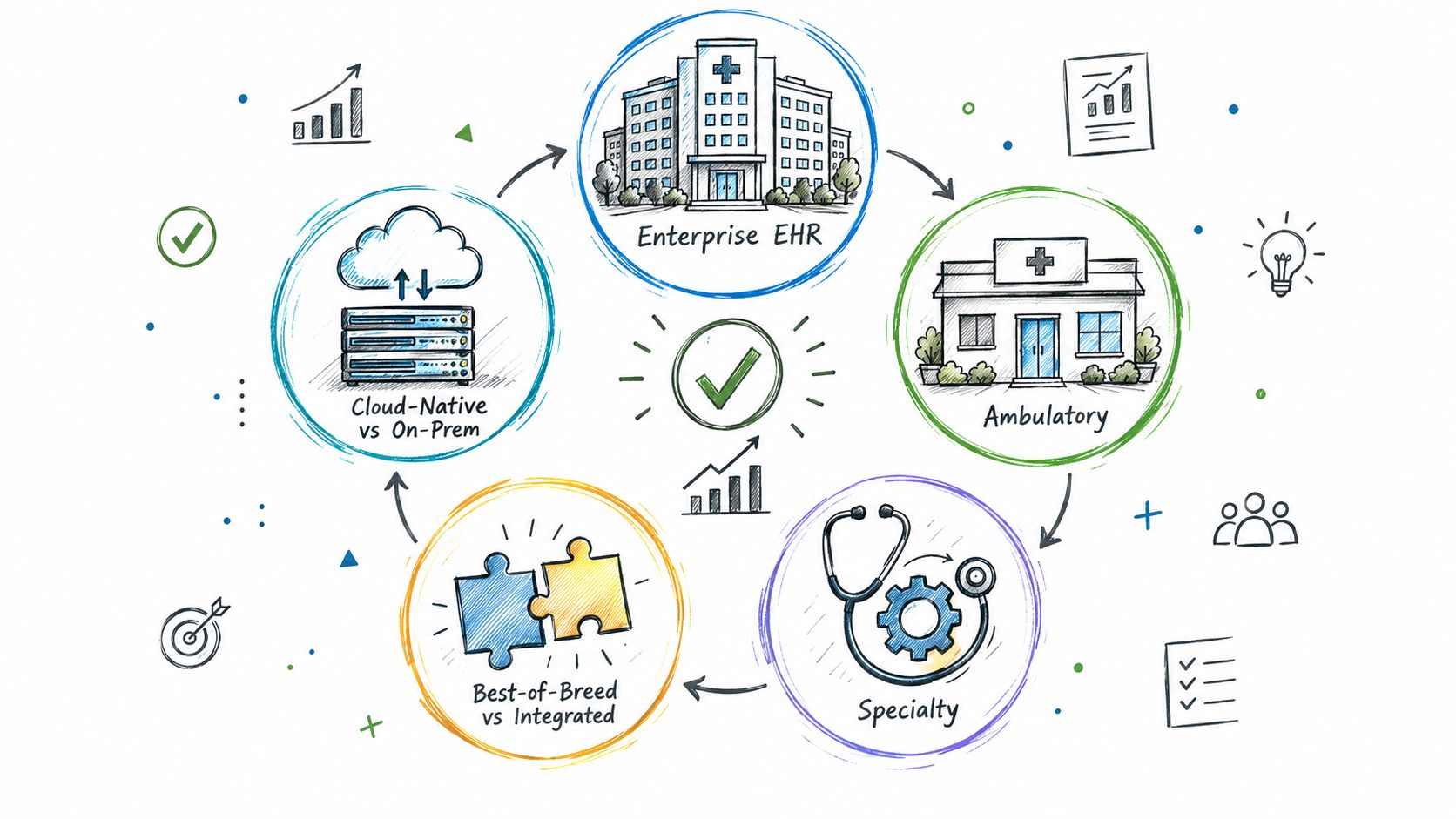
Explore the types of EHR systems by deployment model, care setting and scope. Compare integration options, trade-offs and selection tips for healthtech teams.
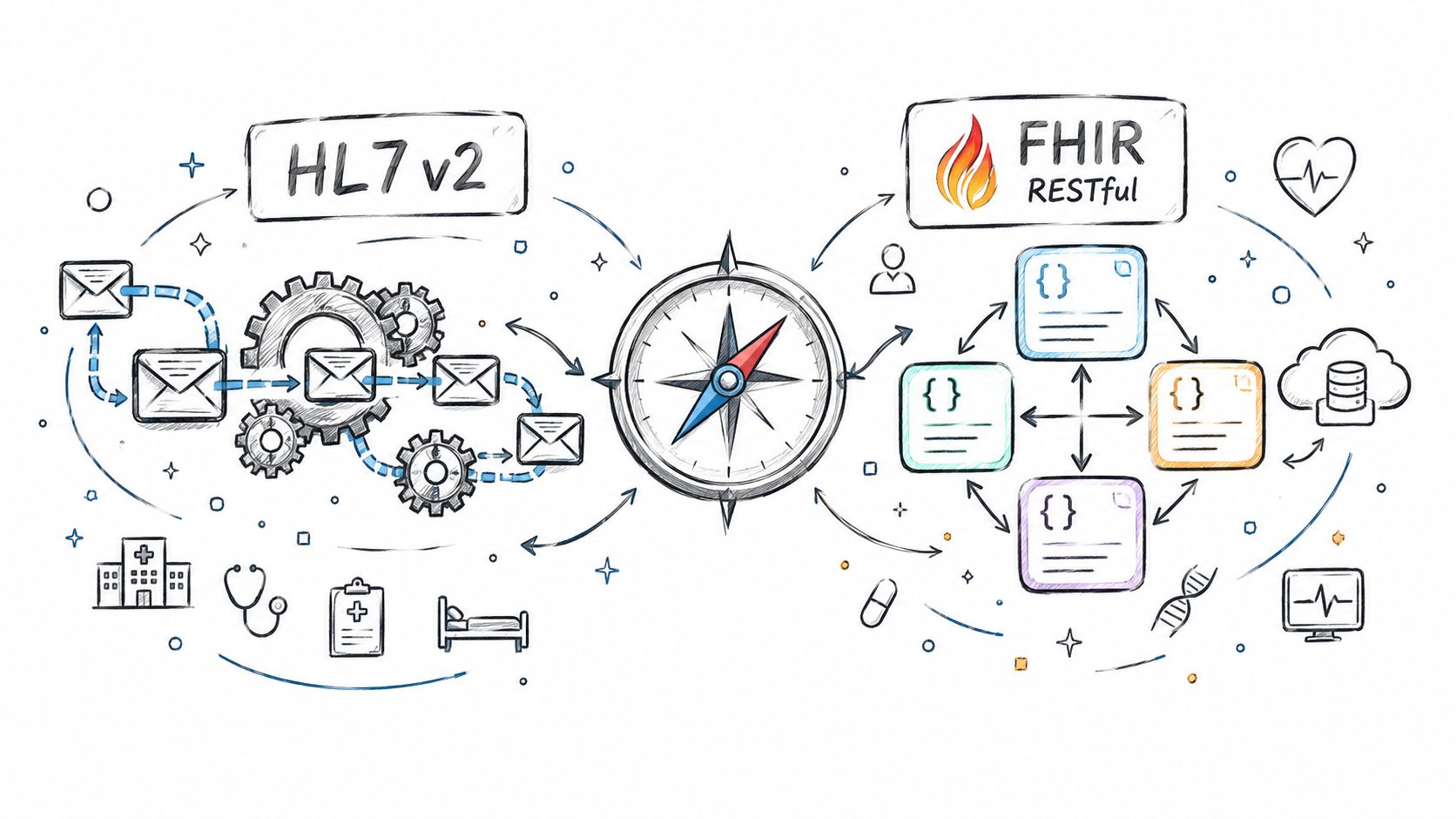
Compare Fhir vs. hl7 standards for healthtech integration. See how HL7 v2 and FHIR differ in use, mechanics, regulation, and real-world architecture.
Connect with our team to explore how AI expertise can transform your business.