Reducing Administrative Burden in Healthcare Using AI Automation
AI automation is helping reduce administrative burden in healthcare by streamlining tasks, minimizing manual work, and improving efficiency. It allows providers to focus more on patient care and less on paperwork.
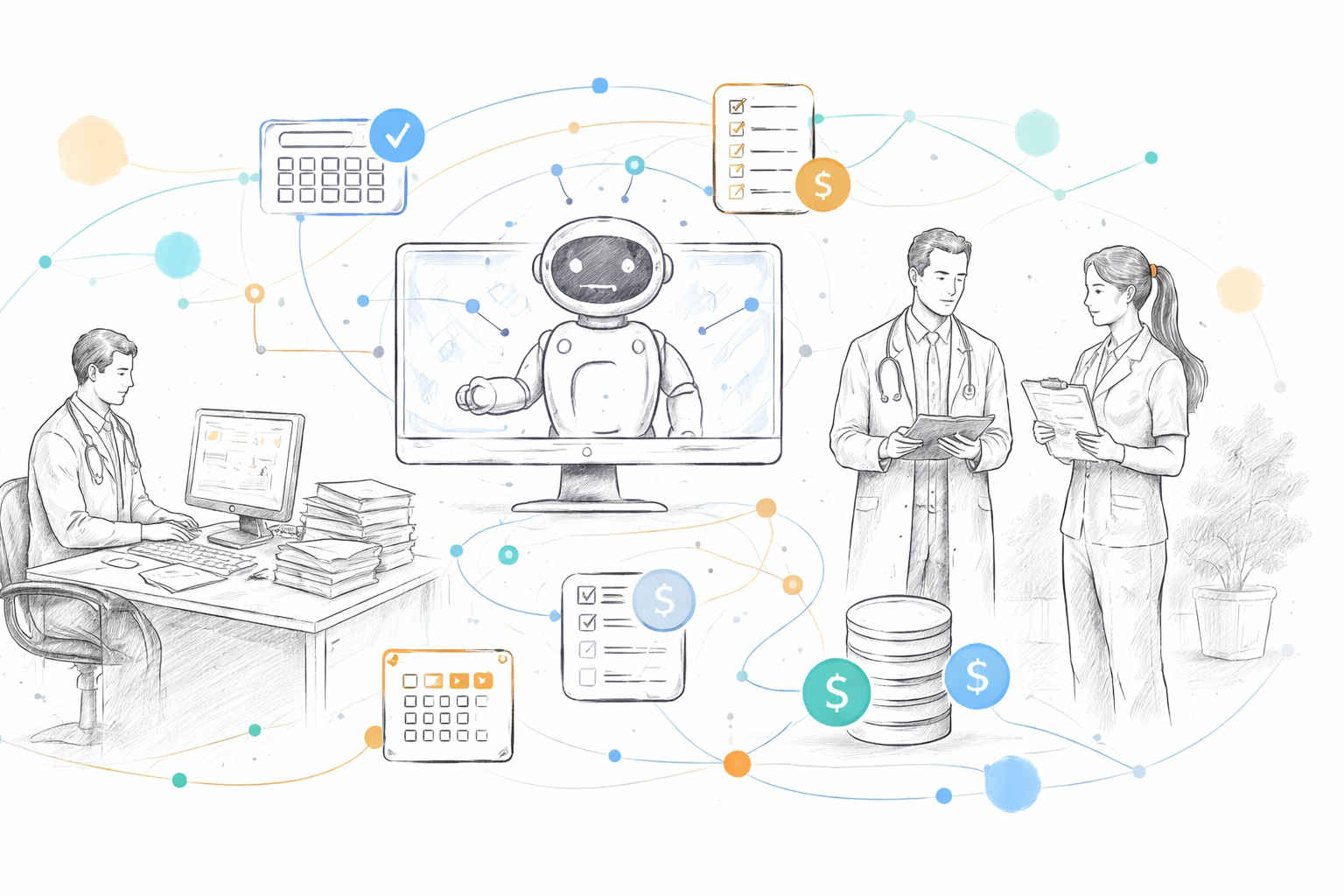
Healthcare systems now carry a heavy load of paperwork and administrative tasks. These duties often pull time away from direct patient care. Doctors and clinical staff spend long hours on documentation, scheduling, and billing. These jobs require precision and focus, which adds strain to already packed days.
This rising workload leads to burnout among healthcare workers and limits quality time with patients. As expectations for care go up, the gap between clinical work and administrative tasks becomes harder to ignore. Healthcare administrative automation offers a practical way to ease this pressure and restore balance to healthcare settings.
What Is Healthcare Administrative Automation?
Healthcare administrative automation refers to the use of artificial intelligence and digital tools to handle everyday non-clinical tasks. These systems process large amounts of data, organise workflows, and complete repetitive jobs with speed and precision. Working with a skilled healthtech engineering partner ensures these systems are built to fit real healthcare environments.
Rather than relying on manual entry, intelligent systems capture, structure, and store information in a usable format. From patient records to appointment schedules, automation simplifies complex processes and creates a smoother flow of work across departments.
Key Administrative Challenges in Healthcare
-
Administrative problems in healthcare often start with manual paperwork. Writing down patient details, updating files, and keeping everything accurate takes a great deal of time. This causes delays in clinical work and adds to staff fatigue.
-
Billing and claims processing bring their own set of difficulties. Mistakes in data entry can result in rejected claims and repeated tasks. Appointment scheduling is another trouble spot, with frequent double bookings and missed visits hurting overall efficiency.
-
Disconnected systems make things worse. Data often lives across different platforms, leading to duplicate entries and limited access. In these situations, healthcare teams feel constant pressure to balance both clinical and administrative duties.
How AI Automation Reduces Administrative Burden

Automated Medical Documentation
AI systems capture patient conversations and turn them into organised records. This reduces the need for manual note-taking and improves accuracy. Clinical staff can spend more time on patient care during visits.
Smart Scheduling and Patient Management
Automation improves appointment scheduling through intelligent systems that handle calendars, send reminders, and adjust bookings when needed. This cuts down missed visits and improves patient flow. Organisations using healthcare AI services gain access to tools that manage patient interactions with consistency and clarity.
AI in Billing and Claims Processing
AI streamlines billing by checking data, processing claims, and lowering errors. This leads to faster claim approvals and fewer interruptions in revenue cycles. A detailed custom AI strategy report guides healthcare providers in finding the right areas for automation and matching them with operational goals.
Data Management and Integration
Automation systems organise and link data across departments. This creates a single view of patient and operational data, improving access and coordination. Advanced systems built through SaMD solutions offer structured data environments that follow healthcare regulations and clinical requirements.
Benefits of Healthcare Administrative Automation
-
Healthcare administrative automation lowers the workload for both clinical and administrative staff. Routine tasks take less time, which improves overall efficiency across departments.
-
Accuracy gets better because automated systems reduce human mistakes in data entry and processing. Faster operations lead to smoother workflows and better service delivery. Cost savings become noticeable as fewer resources go toward repetitive tasks.
-
The use of AI for hospital operations strengthens teamwork across departments and supports better decision-making based on real-time data.
Beyond Administration: Expanding Role of AI in Hospitals
AI reaches further than administrative work and touches wider hospital operations. Workforce management becomes better organised through predictive scheduling and smart allocation of staff. Predictive analytics guides decisions by spotting patterns in patient data and operational trends. Supply chain processes improve with more accurate demand forecasts and better inventory control. Hospitals that aim to reduce admin workload in healthcare also gain clearer visibility across departments. This leads to more organised and quicker responding systems.
Beyond Administration: Expanding Role of AI in Hospitals
AI in Workforce Management
AI improves workforce planning by arranging staff schedules based on demand and who is available. It reduces gaps in shifts and prevents overloading healthcare workers. This creates a more balanced work setting and strengthens overall coordination.
Predictive Analytics for Decision Making
AI studies large amounts of patient and operational data to uncover patterns. Hospitals can make informed choices about patient care, resource planning, and future needs. This leads to better planning and smoother daily operations.
Supply Chain and Operational Improvements
AI strengthens supply chain processes by forecasting inventory needs and tracking usage. It reduces delays in getting medical supplies and prevents shortages. Hospitals gain better control over resources and keep operations running steadily. Hospitals that aim to reduce admin workload in healthcare also gain clearer visibility across departments. This leads to more organised and quicker responding systems.
The Future of Healthcare Administrative Automation
AI systems keep getting smarter and more flexible. Real-time data processing speeds up response times across departments. Fully automated workflows cut manual work and create smooth operations. Patient-focused systems are becoming more important as healthcare providers aim to offer more personal experiences. The future points toward efficient, connected, and data-driven healthcare environments shaped by healthcare administrative automation.
Conclusion
Administrative work has long held back the efficiency of healthcare systems. From paperwork to billing, the load on professionals keeps growing. AI automation offers a clear way to ease this burden and bring greater operational clarity. With careful planning and structured implementation, healthcare providers can boost accuracy, cut delays, and free up more time for patient care. Healthcare administrative automation stands as a practical answer to today's healthcare challenges.
Contact us to explore how intelligent automation can reshape administrative workflows and improve patient outcomes.
Frequently Asked Questions
1. What is healthcare administrative automation?
Healthcare administrative automation uses AI to handle non-clinical tasks like billing and scheduling, often delivered through healthcare AI services with a healthtech engineering partner.
2. How does AI reduce admin workload in healthcare?
AI tools automate documentation, claims, and scheduling to reduce admin workload in healthcare, improving efficiency across departments, and AI for hospital operations.
3. What role does a healthtech engineering partner play?
A healthtech engineering partner helps design and implement scalable solutions, supported by a custom AI strategy report for effective healthcare administrative automation.
4. How do SaMD solutions support administrative automation?
SaMD solutions structure and manage healthcare data securely, improving accuracy and enabling smoother healthcare administrative automation workflows.
5. What are the benefits of AI for hospital operations?
AI for hospital operations improves accuracy, reduces costs, and streamlines workflows, helping healthcare providers reduce admin workload and improve healthcare efficiency.