AI in Healthcare
Smart on FHIR: What It Is and How It Works in Practice
Smart on FHIR guide for healthtech engineers. Learn the OAuth 2.0 launch model, scope syntax, backend services, and US regulatory requirements.
October 14, 2026Read more
Master AI-enabled healthtech process management. Our guide covers business value, key processes, implementation, governance, and avoiding common pitfalls.

AI has moved from pilot-stage curiosity to operating priority in healthcare. By 2026, 71% of healthcare organizations are actively using generative AI, largely to relieve administrative pressure, while 35% of clinicians still spend more time on paperwork than direct patient care. At the same time, 60% of recent healthcare AI investments are targeting administrative automation according to these healthcare AI adoption figures.
That combination changes the conversation. AI-enabled healthtech process management isn't about adding another point solution to an already crowded stack. It's about redesigning how work moves across intake, documentation, prior authorization, revenue cycle, device operations, and internal coordination so teams spend less time chasing tasks and more time handling exceptions that require judgment.
For CTOs and Operations Leads, the fundamental challenge isn't deciding whether AI matters. It does. The harder question is where to apply it, how to integrate it into brittle workflows, and how to avoid the predictable mistakes that sink otherwise promising programs. If you're evaluating Healthcare AI Services, the highest-value work usually starts with process friction, not model selection.
Healthcare operations are carrying too much manual load. Staff bounce between the EHR, payer portals, spreadsheets, call queues, device logs, and inboxes. Every handoff adds delay. Every re-entry creates another chance for error. Every workaround becomes someone's unofficial job.
That is why ai-enabled healthtech process management has become a strategic issue rather than an innovation side project. The organizations getting value from AI are not treating it as a chatbot experiment. They're using it to remove repetitive work from the flow of care delivery and business operations.
The pressure tends to be most visible in a few places:
Practical rule: If a process depends on staff copying data between systems, checking the same information twice, or escalating basic exceptions all day, it's a candidate for AI-enabled redesign.
Leaders often underestimate how much of their margin problem is a workflow problem. AI can help, but only when it's tied to process architecture, governance, and frontline adoption.
AI-enabled healthtech process management is the use of AI to coordinate, optimize, and automate the operational workflows that keep a healthcare organization running. Think of it as an AI-powered nervous system for the enterprise. It senses incoming information, routes work, flags risk, predicts next actions, and supports decisions across systems that were never designed to work together cleanly.

That's different from basic rules-based automation. Traditional automation follows fixed if-then logic. It works well when inputs are consistent and exceptions are rare. Healthcare rarely looks like that. Documentation varies by clinician. Payer rules change. Device usage patterns shift. Scheduling conflicts cascade. The process itself moves.
AI-enabled process management handles ambiguity better because it can:
In practice, this means a health system can move from “staff triage everything manually” to “AI handles routine flow, humans handle exceptions and oversight.”
The value isn't in the model. The value is in what leaves the queue faster, what gets documented more cleanly, what no longer requires a swivel-chair workflow, and what staff no longer have to touch.
A useful way to frame it is by outcomes:
| Operational issue | AI-enabled process management response | Likely business effect |
|---|---|---|
| Fragmented admin work | Connects systems, extracts data, routes tasks | Less manual re-entry and fewer delays |
| High exception volume | Classifies requests and escalates only edge cases | Teams spend more time on judgment work |
| Slow back-office cycles | Automates repetitive decision paths | Faster throughput and clearer accountability |
| Documentation burden | Summarizes, drafts, and structures records | Lower admin load for clinical staff |
For regulated products and embedded intelligence in clinical workflows, adjacent work often overlaps with SaMD solutions. But many of the fastest wins sit outside direct clinical decision-making, in the operational machinery surrounding care.
Not every workflow deserves AI. Some should be standardized first. Some are too broken to automate. The best starting points share three traits: high volume, repetitive decisions, and expensive delays when work gets stuck.
Revenue cycle is usually one of the clearest starting points because the waste is visible. Staff chase missing data, check payer rules, review documentation, correct coding-related issues, and work denials through disconnected systems. The process is repetitive, but the inputs are messy.
A practical AI layer can classify incoming claim materials, extract relevant fields, route work to the right team, and prepare structured summaries for review. In organizations dealing with mixed document formats, tools for parsing medical claim document types can help standardize intake before downstream automation starts. That sounds mundane, but intake quality often determines whether the rest of the workflow works at all.
The before-and-after difference is straightforward:
Prior authorization is where operational drag becomes painfully obvious. Teams gather records, interpret payer requirements, submit packets, track status, answer follow-ups, and restart the process when documentation misses a requirement. Every delay affects scheduling, cash flow, and patient experience.
This workflow is a strong fit for agent-based orchestration because the process crosses systems and roles. AI can assemble clinical context, identify missing fields, monitor status changes, and route exceptions. Humans still decide edge cases, but they aren't wasting cycles on routine checking.
The best prior auth automation doesn't try to eliminate staff. It removes the repetitive chase work so staff can focus on exceptions, payer nuance, and patient communication.
Documentation is one of the most politically sensitive targets because it touches clinician trust. If the output is clumsy, adoption collapses quickly. If the output is usable, the impact is immediate.
Strong implementations don't force a clinician to rewrite machine-generated text. They draft structured summaries, propose note sections, identify missing elements, and support review in the existing workflow. The point is not to automate authorship blindly. The point is to reduce clerical burden while preserving clinical judgment.
These processes look simple from a distance and chaotic up close. Referral packets arrive incomplete. Scheduling rules vary by provider and location. Intake teams juggle follow-ups, insurance checks, and handoffs across channels.
AI works well here when it acts as an operational triage layer:
This category is often overlooked because it does not sound advanced. But it is exactly the kind of high-friction coordination work that creates hidden labor costs and poor patient handoffs.
Most healthcare leaders don't need a deep lesson in model architecture. They do need a clear way to match a technique to a workflow. That's where many programs go wrong. Teams buy a capability before they've defined the operational job to be done.
Machine learning is useful when the job involves prediction or pattern recognition. In healthtech operations, that can include forecasting maintenance risk, predicting scheduling pressure, or identifying which tasks are likely to require escalation.
Natural language processing matters wherever critical information sits inside notes, forms, emails, transcripts, and scanned documents. This is the workhorse for extracting meaning from the messiest part of healthcare operations.
Agentic AI is increasingly relevant when the workflow spans multiple systems and decision points. According to Deloitte's analysis of agentic AI in healthcare operations, these systems can resolve 70% to 80% of routine tasks in back-office processes without human intervention and drive 15% to 40% cost reductions in process cycle times. That's why prior auth, claims coordination, and other multi-step workflows are getting so much attention.
| Healthcare Process | Primary AI Technique | Business Outcome |
|---|---|---|
| Prior authorization | Agentic AI plus NLP | Fewer manual handoffs and faster case progression |
| Claims intake and routing | NLP plus document AI | Cleaner inputs and less manual classification |
| Clinical documentation support | NLP and generative AI | Lower admin burden and more structured records |
| Preventive maintenance planning | Machine learning | Better risk-based servicing decisions |
| Scheduling and referral triage | Machine learning plus NLP | Improved routing and fewer queue delays |
A model can only improve a process if the underlying workflow produces usable data. In healthcare, that usually means dealing with fragmented records, inconsistent naming, partial auditability, and unstructured attachments. If the data isn't mapped to the actual process state, the AI won't know what job it's doing.
Three checks matter early:
Structured discovery beats enthusiasm in these scenarios. If your team is evaluating extraction-heavy workflows, specialized tooling such as an AI-powered data extraction engine can be useful, but only after the source systems, document types, and review logic are understood.
A lot of healthcare operations run on PDFs, faxes, portal exports, attachments, and free text. Before automating downstream steps, teams often need a reliable way to convert those assets into structured inputs. In some environments, developer tools like a Scraping Markdown API can support content normalization in adjacent workflows where documents or web-based payer guidance need to be converted into machine-usable formats. The principle is the same either way: if you can't normalize the input, you can't scale the process.
Operational test: If your AI vendor can't show how the system handles bad inputs, missing fields, duplicate records, and contradictory source data, you're looking at a demo, not an implementation plan.
70 to 90 percent of AI projects fail to reach production or deliver sustained value, depending on the study. In healthcare, the pattern is familiar. Teams spend months proving a model can work, then stall on workflow ownership, exception handling, staff adoption, and vendor constraints.

Start with one process that has enough volume to matter and enough stability to improve. Good candidates usually show up as rework, queue buildup, missed SLAs, avoidable denials, delayed scheduling, or staff time spent chasing documents across systems.
The first decision is not technical. It is operational. Who owns the process, what business result matters, and what would have to change in day-to-day work if AI handled part of it?
A Custom AI Strategy report can help compare use cases by business value, implementation effort, and data readiness. That kind of prioritization matters because a high-visibility use case with weak inputs or unclear accountability usually becomes an expensive pilot.
Once the target is chosen, define the future-state workflow in plain terms. Teams need to know where AI makes a recommendation, where a human confirms or overrides it, what triggers escalation, and which system holds the final record.
This is the stage where many programs lose momentum. The model may be ready, but the work instructions are not. Frontline teams still need updated SOPs, managers need service-level expectations, compliance needs audit visibility, and IT needs a support path for failures and rule changes.
A practical design phase should cover:
A pilot should answer one question. Can the organization run this process better with AI under real operating conditions?
That means measuring more than model accuracy. Check whether staff trust the output, whether exception queues stay manageable, whether turnaround time improves, and whether the process creates hidden cleanup work downstream.
Healthcare technology management offers a useful example. In this analysis of AI-driven risk assessment in preventive maintenance, organizations used AI-based risk scoring to support alternative maintenance strategies, reduce documentation burden, and compress work that had previously taken weeks into a far shorter review cycle. The lesson is practical. AI creates value when it is tied to a defined operational decision, supported by policy, and accepted by the team responsible for the outcome.
Scale after the pilot proves three things. The workflow holds up in production, users follow it consistently, and the business case remains true after exceptions, oversight, and support costs are included.
Expansion usually works best in stages. Add one site, specialty, payer group, or adjacent workflow at a time. That gives operations leaders room to catch process drift, update training, and adjust handoffs before small issues turn into enterprise-wide friction.
The hardest part of scaling is rarely the model. It is standardizing the new way of working across teams with different habits, constraints, and tolerance for change.
The fastest way to create long-term pain is to automate a sensitive workflow without governance. Healthcare operations sit inside regulatory, financial, and clinical constraints. If an AI system routes work opaquely, hides audit trails, or traps your data inside a vendor-controlled workflow, the short-term efficiency gain won't hold.
Effective governance means someone owns each of these questions:
That ownership can't sit with IT alone. Operations, compliance, clinical leadership, and frontline process owners all need defined responsibilities.
A critical risk in healthcare AI adoption is lock-in across fragmented legacy systems. As noted in practical guidance for rural and community providers, health systems need to evaluate vendors for interoperability, data portability, and audit trail transparency to avoid creating new silos and hidden long-term costs.
That should change how you evaluate AI tools for business. Ask harder questions than “Does the demo work?”
Use criteria like these:
| Evaluation area | What to verify |
|---|---|
| Interoperability | Can it connect to existing EHR, billing, scheduling, and internal systems without brittle custom work? |
| Data portability | Can you export process data, model outputs, and audit logs in usable formats? |
| Auditability | Can compliance teams reconstruct what happened, when, and why? |
| Workflow control | Can your team configure routing and review rules without vendor dependence? |
Don't buy an AI workflow you can't unwind. In healthcare, exit strategy is part of implementation strategy.
ROI matters, but it shouldn't be the only metric. Good programs also track queue health, exception handling quality, user adoption, rework burden, and whether the AI shifted labor to higher-value tasks instead of just moving work around.
Useful metrics are usually process-native. If the workflow owner can't explain why a metric matters operationally, it probably won't drive good decisions.
Most failed AI initiatives in healthcare don't fail because the model was impossible to build. They fail because leaders treat implementation as a technology deployment instead of an organizational redesign effort.

One health system executive put it plainly in research on AI implementation barriers: "It's going to be like 10% data science and 90% sociology and change management and workflow redesign." That observation matches what operators see in the field. AI dropped into an unchanged workflow usually creates parallel work, distrust, and local workarounds.
A common pattern looks like this:
That isn't resistance for its own sake. It's often a rational response to poor implementation design.
Start with the workflow before the vendor. Map who touches the process, what information they need, where delays happen, and which exceptions create the most rework. Then decide where AI should assist, where it should automate, and where humans should remain fully in control.
A practical readiness checklist includes:
Disciplined AI strategy consulting earns its keep in these scenarios. The objective isn't to slow the project down. It's to stop avoidable implementation debt from showing up later as adoption failure.
Field lesson: If the new process makes staff maintain both the AI workflow and the old manual fallback indefinitely, the project hasn't transformed the workflow. It has duplicated it.
Healthcare AI programs rarely stall because a model underperforms. They stall because no one owns the operating change across workflow, compliance, integration, and frontline adoption at the same time.
That is the gap Ekipa AI is built to cover. The work usually starts by narrowing the field to a small set of use cases that can produce measurable operational value without creating new compliance or implementation risk. From there, the focus shifts to delivery architecture, system fit, and the process changes required to make the solution hold up in production.
Teams with limited internal bandwidth often need more than advisory support. Ekipa can provide implementation support for AI product development and workflow execution when the challenge is getting an AI initiative into live operations, not just selecting a vendor or drafting a roadmap.
The practical question is where the constraint sits. Some organizations need internal tooling that fits their existing systems and controls. Others need process automation, structured document handling, or targeted product work around a specific operational bottleneck. The right approach depends on the maturity of the team, the quality of the current workflow, and how much operational change the organization can absorb in one phase.
For CTOs and operations leaders, partner selection should come down to execution reality. Can the team work across clinical or administrative workflows, security review, integration requirements, and adoption risk without forcing staff to maintain a parallel manual process indefinitely? That is usually the difference between an AI pilot that gets attention and an AI program that changes throughput, cost, and service levels.
Start with a process that has high volume, repetitive decisions, and painful manual handoffs. Prior authorization, claims intake, documentation support, and scheduling triage are common starting points.
Standard automation follows fixed rules. AI-enabled healthtech process management can interpret unstructured information, adapt to variable inputs, and support decision-making across more complex workflows.
No. However, sufficient process visibility and input quality are required to avoid automating chaos. Organizations should address data access, workflow mapping, and exception handling before scaling.
Usually not the model. The common blockers are weak workflow design, poor change management, low frontline trust, unclear ownership, and integration issues across legacy systems.
Focus on interoperability, portability, auditability, workflow control, and exit options. A strong demo matters less than a clear answer to how the system behaves in production and how your team retains control.
If you're planning ai-enabled healthtech process management and want a practical path from use case discovery to execution, Ekipa AI can help you evaluate where AI fits, what to build first, and how to implement it without creating new operational debt.
Smart on FHIR guide for healthtech engineers. Learn the OAuth 2.0 launch model, scope syntax, backend services, and US regulatory requirements.
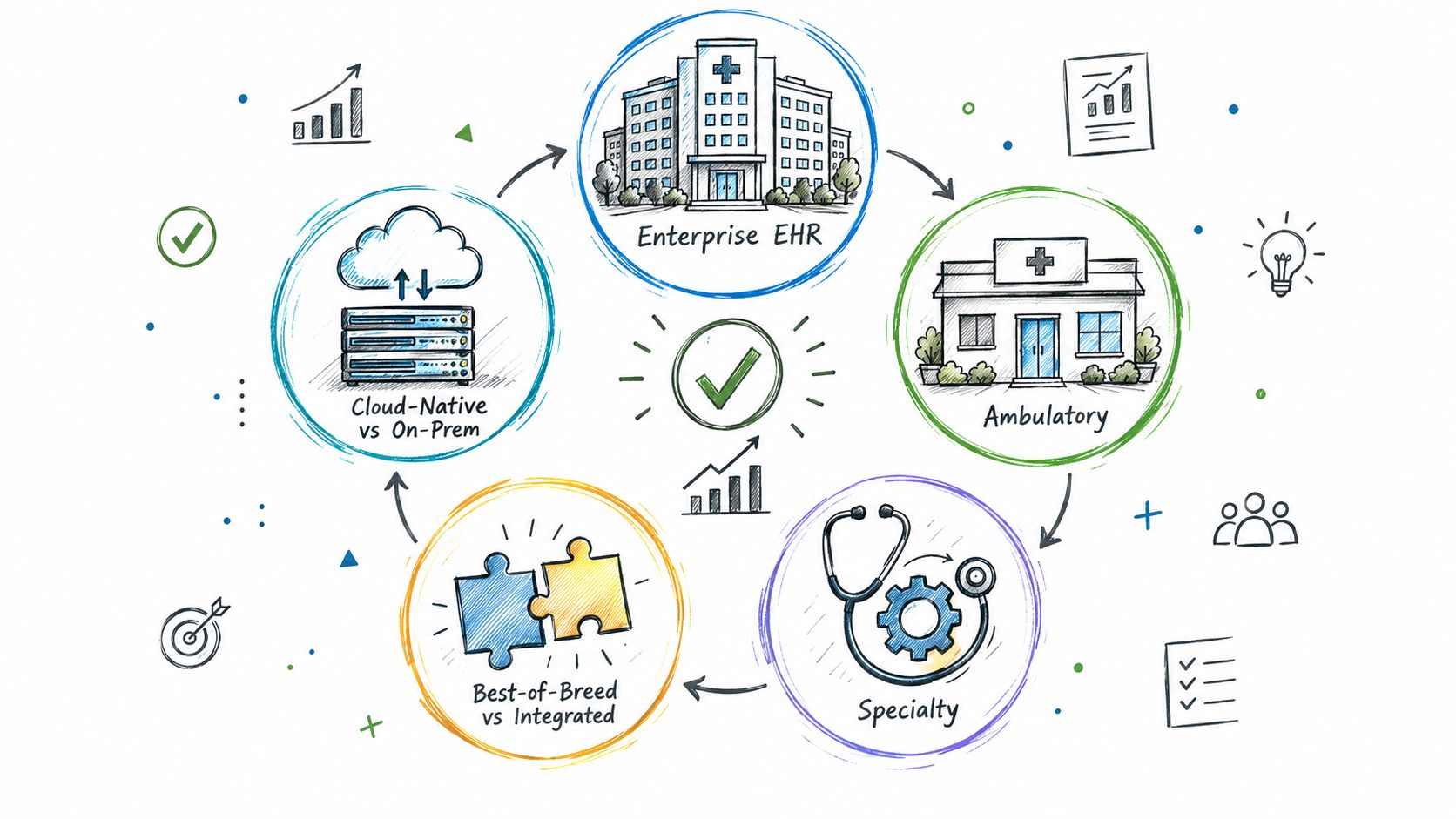
Explore the types of EHR systems by deployment model, care setting and scope. Compare integration options, trade-offs and selection tips for healthtech teams.
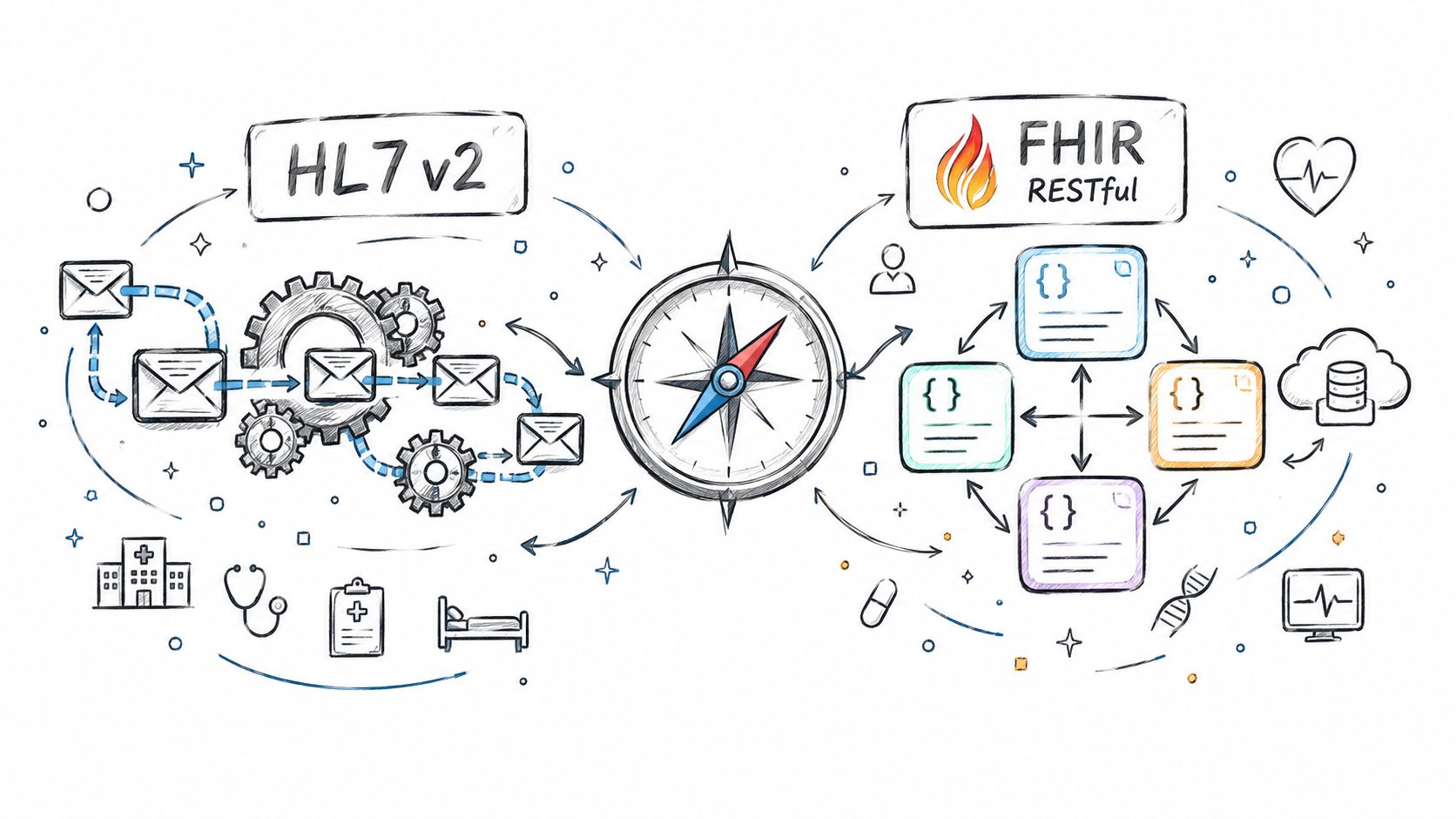
Compare Fhir vs. hl7 standards for healthtech integration. See how HL7 v2 and FHIR differ in use, mechanics, regulation, and real-world architecture.
Connect with our team to explore how AI expertise can transform your business.