
AI in Healthcare
Smart on FHIR: What It Is and How It Works in Practice
Smart on FHIR guide for healthtech engineers. Learn the OAuth 2.0 launch model, scope syntax, backend services, and US regulatory requirements.
October 14, 2026Read more
A practical playbook for healthtech operations optimization using AI. Learn to assess readiness, run pilots, and scale solutions with our step-by-step guide.

Health systems don't need more AI theater. They need fewer bottlenecks, fewer manual handoffs, and better operational decisions.
That urgency is showing up in the market. The AI in hospital operations market is projected to grow from USD 7.51 billion in 2025 to USD 25.70 billion by 2030 at a 27.9% CAGR, according to MarketsandMarkets' AI in hospital operations market forecast. That projection matters because it reflects where buyers are placing bets: patient flow, staffing, scheduling, billing, and the back-office work that ultimately determines whether care delivery runs well or stalls.
In practice, healthtech operations optimization using ai works when leaders treat it as an operating model decision, not a software purchase. The right implementation reduces friction across clinical operations, finance, and administrative workflows. The wrong one adds another dashboard, another exception queue, and another pilot that never scales.
That's where a disciplined approach helps. A strong HealthTech engineering partner can help teams move from broad ambition to clear operational value, especially when existing systems are fragmented and staff tolerance for disruption is low.
AI has become operational infrastructure. It's no longer limited to diagnostics labs or innovation teams running isolated experiments. The most practical demand is coming from teams trying to move patients through the system faster, allocate staff more intelligently, and reduce administrative drag without adding headcount.
What changed is simple. Health systems are under pressure from staffing shortages, inefficient workflows, and rising expectations for speed and accuracy. Operations leaders can't solve those issues with policy memos alone. They need systems that can predict demand, route work, flag exceptions, and support decisions at the point of action.
The strongest operational use cases tend to cluster around a few repeatable problems:
Practical rule: Start with the process that already hurts the most. AI performs best when it removes a known constraint, not when it's asked to invent one.
A lot of teams still ask the wrong first question. They ask, “Where can we use AI?” The better question is, “Which operational decision is expensive, repetitive, delayed, or error-prone enough to justify redesign?” That framing keeps healthtech operations optimization using ai grounded in operational economics rather than novelty.
Most failed AI initiatives don't fail because the model was weak. They fail because the organization wasn't ready to absorb it into daily work.
In 2024, 71% of U.S. hospitals reported integrating predictive AI with their EHRs, with 67% using it for scheduling and 58% for billing, according to the HealthIT.gov data brief on hospital trends in predictive AI use. That doesn't mean every organization is equally prepared. It means operational AI is becoming normal enough that lagging on readiness now carries its own risk.

If your data is delayed, incomplete, or trapped in disconnected systems, AI won't fix that. It will expose it.
Use a simple internal audit:
A practical scope often begins with one workflow where data exists in a workable state, even if it isn't perfect. Perfection isn't required. Traceability is.
Operational AI succeeds when outputs land where people already work. If the scheduling coordinator has to check a separate portal, adoption drops. If a claims reviewer gets AI suggestions directly inside an existing workflow, adoption is far more likely.
Look for these conditions:
Teams that need a structured readiness session often benefit from an AI workshop for operational scoping, especially before they commit budget to implementation.
A broader strategic lens also helps. If you want an outside perspective on sequencing business goals, product choices, and delivery constraints, this guide to an AI-driven strategy offers a useful planning reference.
Even when the stack is serviceable, people issues can stall a rollout. Operations managers may worry that AI recommendations override judgment. Clinical leaders may distrust black-box outputs. Finance may support the concept but reject the workflow change.
Use this readiness screen:
Readiness isn't about having a mature innovation lab. It's about knowing which workflow you'll change, who owns it, and how the output will reach the people doing the work.
For a first major initiative, narrow beats broad. Don't target “operations transformation.” Target a bounded workflow with measurable friction, such as scheduling exceptions, claims routing, intake document extraction, or discharge planning support.
A good first scope usually has these characteristics:
That discipline is what keeps healthtech operations optimization using ai from becoming an expensive discovery exercise.
A first AI use case usually succeeds or fails on one question: can it produce measurable operational value within one budgeting cycle? In healthtech operations, that means choosing work that is frequent, expensive, and structured enough to improve without months of integration work.
A lot of AI guidance still assumes a large hospital system with a data platform team, a formal innovation office, and room for a long pilot. Many healthtech operators do not have that setup. Smaller organizations need a shorter path from problem selection to ROI, with a clear way to quantify upside, delivery risk, and compliance exposure before they spend heavily.

Use a simple prioritization model before you commit engineering time. I recommend scoring each candidate workflow from 1 to 5 across five dimensions:
Then calculate a simple priority view:
Priority score = (Labor impact + Error cost + Decision volume) - (Implementation effort + Risk exposure)
This is not a perfect formula. It is a practical filter. It helps teams avoid picking a use case because it sounds strategic while ignoring the cost to deploy and maintain it.
Revenue cycle triage and document handling often provides the clearest early return. Claims exceptions, denials routing, coding support, prior authorization packets, and document classification all combine high volume with visible rework. For document-heavy workflows, an AI-powered data extraction engine can reduce manual keying and speed up handoffs when forms arrive as faxes, scans, PDFs, and portal uploads.
Patient intake and registration support is another strong candidate. Intake errors create problems that show up later in eligibility, scheduling, billing, and call center volume. AI can classify documents, extract fields, flag missing information, and route exceptions to the right queue. The gain is usually less glamorous than a predictive model, but it is easier to measure and easier to sustain.
Scheduling and workforce operations can work well when the organization already stores historical staffing data, scheduling rules, and service-line demand. Good first applications include exception handling, no-show risk support, and staffing forecasts for a defined department. The trade-off is that labor workflows can trigger faster resistance from managers if recommendations are not explainable.
Bed and patient flow support can produce major value in constrained environments, but I rarely recommend it as the first enterprise AI effort. It depends on cleaner event data, faster operational response, and tighter coordination across departments. If the underlying discharge process is inconsistent, the model will expose the problem more than solve it.
Imaging workflow routing can improve throughput in high-volume settings where queue management is a known bottleneck. It usually requires more system-specific integration work than teams expect, so it belongs near the middle of the roadmap unless imaging operations already have strong local ownership.
| Use Case | Potential ROI | Implementation Complexity | Data Requirements |
|---|---|---|---|
| Staff scheduling support | High when scheduling friction is frequent and manual | Moderate | Historical staffing, demand patterns, scheduling rules |
| Revenue cycle triage | High when claims volume and rework are persistent | Moderate | Claims data, denial reasons, coding inputs, document sets |
| Patient intake automation | Moderate to high when front-desk and back-office teams rekey data | Low to moderate | Forms, eligibility data, identity fields, workflow rules |
| Bed and flow optimization | High in constrained environments | High | ADT events, capacity data, discharge signals, staffing context |
| Imaging workflow routing | Moderate to high in high-volume settings | Moderate to high | Order data, queue states, modality metadata, turnaround records |
Teams often overestimate how much change the organization can absorb while they are still proving value. The common misses are predictable.
Avoid these first:
The first win should be operationally boring and financially obvious.
Infrastructure discipline matters here as well. Pilot economics get distorted when teams overbuild cloud environments before they know the model's real usage pattern. For test stacks and staging workloads, guidance on right-sizing non-production environments can help keep infrastructure spend aligned with the size of the experiment.
If your team is deciding between packaged automation and custom development, compare options based on fit with the workflow, exception handling, auditability, and integration effort. Libraries of real-world use cases, AI Automation as a Service, internal tooling, and custom healthcare software development are useful because they show how teams map AI to actual operational tasks instead of abstract trends.
A practical rollout often combines both approaches. Use packaged capabilities for repeatable work such as extraction, classification, and routing. Reserve custom work for workflow logic that is specific to your care model, payer mix, or compliance rules.
Healthcare teams do not struggle with AI because the model is weak. They struggle because the pilot never becomes part of the operating system.
A good pilot answers one financial question and one workflow question. Can this use case reduce cost, delay, or rework in a measurable way? Can staff use it inside the actual process without creating new failure points? If those answers are unclear, the pilot is too vague.

Pilot design gets sharper when the objective is tied to a specific operational constraint.
Weak objective: improve operations with AI.
Strong objective: reduce manual review time for incoming claims exceptions by a defined percentage, or improve scheduling decisions for one specialty clinic by reducing open slots and late reassignments.
That specificity sets the scope, the baseline, the stakeholder group, and the economics. It also makes approval easier because leadership can see what success should look like before any tool goes live.
Teams often overfocus on model behavior and underinvest in workflow behavior. In practice, workflow behavior determines whether the pilot earns a second phase.
A solid pilot plan usually includes five components:
Baseline measurement
Capture the current state before launch. Record cycle time, labor minutes per transaction, backlog levels, exception volume, escalation routes, and common failure reasons.
Workflow mapping
Mark the exact step where AI enters the process. Then map what happens after the recommendation appears, who acts on it, what confidence threshold triggers review, and where work goes when the system is uncertain.
Human override design
Staff need clear rules for acceptance, override, and escalation. If reviewers invent their own fallback process during the pilot, your metrics will be noisy and adoption will stall.
Cross-functional ownership
Assign one operations owner, one technical owner, and one compliance reviewer. Shared interest is not the same as ownership. If nobody owns data quality, exception handling, and end-user adoption, the pilot drifts.
Monitoring and adjustment plan
Decide in advance how the team will review errors, broken rules, integration failures, and rising override rates. The pilot should also define what gets tuned, by whom, and how often.
Executives do not fund pilots because a dashboard shows strong accuracy. They fund pilots because labor hours drop, throughput rises, denials fall, or service levels improve.
Track measures such as:
For finance workflows, add claim outcomes, denial trends, and time-to-resolution. For staffing workflows, track schedule stability, shift-fill speed, and manager intervention time. For patient flow or access workflows, measure delay points, handoff speed, and abandoned tasks.
I usually recommend one simple pilot scorecard: value created, risk introduced, and supervision still required. That framing keeps the discussion grounded in operating reality instead of technical optimism.
If the only success metric is model accuracy, the team is testing software. It is not proving operational value.
The best pilot scope is small enough to complete in one budget cycle and meaningful enough to produce a credible before-and-after comparison.
Good boundaries include:
This is also the point where teams need implementation discipline, not more strategy slides. A structured AI implementation support workflow can help define owners, milestones, testing gates, and cutover criteria before the pilot expands beyond a controlled environment.
What works
What fails
The teams that get ROI from AI are usually not the ones with the most advanced model. They are the ones that treat the pilot like an operating change, price the upside and the risk early, and decide quickly whether the use case deserves expansion.
Many healthtech teams can get one pilot into production. Far fewer can expand AI across operations without adding audit risk, rework, and workflow confusion.
A pilot proves that a use case can work under controlled conditions. Scale tests whether the organization can run that use case repeatedly, under real volume, with clear accountability. The gap between those two states is usually not model quality. It is governance, operational discipline, and the ability to quantify trade-offs in terms leadership can act on.

Technical metrics matter, but they do not answer the questions a COO, compliance lead, or board member will ask. They need to know where the workflow becomes fragile, what level of human review is still required, and what the failure mode looks like if performance slips.
Use a simple decision framework that connects model behavior to operating impact:
This is the level where ROI becomes credible. A workflow that saves labor but increases exception handling or audit exposure is not really more efficient. It has just moved cost and risk to a different part of the operation.
As AI spreads from one workflow to several, inconsistency becomes expensive. Different approval rules, weak access controls, and unclear ownership create exactly the kind of operational debt that slows future rollout.
Set the control structure before adding volume:
If a use case touches regulated clinical decision support or other higher-risk functions, oversight has to tighten accordingly. Broader Healthcare AI Services and regulated pathways such as SaMD solutions become relevant once the operating and compliance requirements change.
The safest path is staged expansion. Start by extending the validated use case to nearby teams or facilities with similar workflows. Then standardize monitoring, exception handling, and audit controls across each deployment. After that, add adjacent workflows that can reuse the same integrations, data definitions, and review rules. Shared services for document intake, routing, and audit logging usually come later, once the first expansion pattern is stable.
I usually advise clients to make one trade-off explicit at this stage. Standardization slows some local customization. That is often the right choice. Healthtech operators get better long-term returns when they scale a repeatable control model, not a collection of one-off automations.
For teams setting up repeatable delivery, a defined AI implementation support process for rollout governance and cutover planning often matters more than adding another model. Most scale failures come from unmanaged complexity, unclear ownership, and weak controls around change.
Governance protects margin, compliance, and trust. Without it, AI can expand faster than the organization's ability to control it.
The practical path is straightforward. Assess objectively. Choose one use case with clear operational pain. Run a pilot that measures workflow change, not just model performance. Scale only when governance is strong enough to support repeatable deployment.
That's the core of healthtech operations optimization using ai. It isn't a one-time installation. It's an operating discipline that gets stronger as your organization learns where automation helps, where human judgment still matters most, and where risk needs tighter control.
Teams that get this right don't chase AI everywhere. They apply it where decisions are repetitive, delays are costly, and workflows can absorb change. Over time, that creates something more valuable than a successful pilot. It creates an organization that improves its own operations continuously.
If you're evaluating your first major initiative, start smaller than your ambition suggests and measure more rigorously than your vendors recommend. That combination usually produces better results.
When you're ready to pressure-test scope, readiness, and execution plans, connect with our expert team.
Start with a workflow that is repetitive, manual, and measurable. Good first candidates include scheduling support, intake document handling, claims triage, or billing-related routing. Avoid projects that require enterprise-wide coordination before any value appears.
Yes, especially when they focus on pragmatic automation instead of large transformation programs. Smaller organizations often do better with narrower workflows, lower integration complexity, and tools that reduce manual administrative effort without requiring an in-house data science team.
Most failures come from workflow problems, not model problems. Teams choose a promising use case, but they don't define ownership, fallback rules, integration points, or monitoring. The pilot may look good in a demo environment and still fail in daily operations because nobody changed how work gets done.
Use a small set of operational measures tied to the target process. Focus on manual effort removed, turnaround consistency, queue health, exception volume, rework, and user adoption. If the use case touches finance, include process-specific financial outcomes. If it touches staffing, include schedule stability and escalation burden.
Ask five questions:
Those questions usually expose whether the organization has a scalable system or just a promising pilot.
They need to be designed in from the start. That includes access controls, audit logs, approval rules, secure data handling, and clear accountability for model changes. If the workflow intersects with regulated clinical decisions, governance needs to be even tighter.
Most organizations need a mix. Use platforms where the workflow is common and the controls are mature. Build or customize when your process is specific to your service model, local systems, or regulatory context. The right choice depends less on ideology and more on how unique the workflow really is.
Ekipa AI can help you evaluate readiness, prioritize operational use cases, and move from pilot design to implementation with a practical focus on measurable workflow improvement. If you want a clear path for your next initiative, visit Ekipa AI.
Smart on FHIR guide for healthtech engineers. Learn the OAuth 2.0 launch model, scope syntax, backend services, and US regulatory requirements.
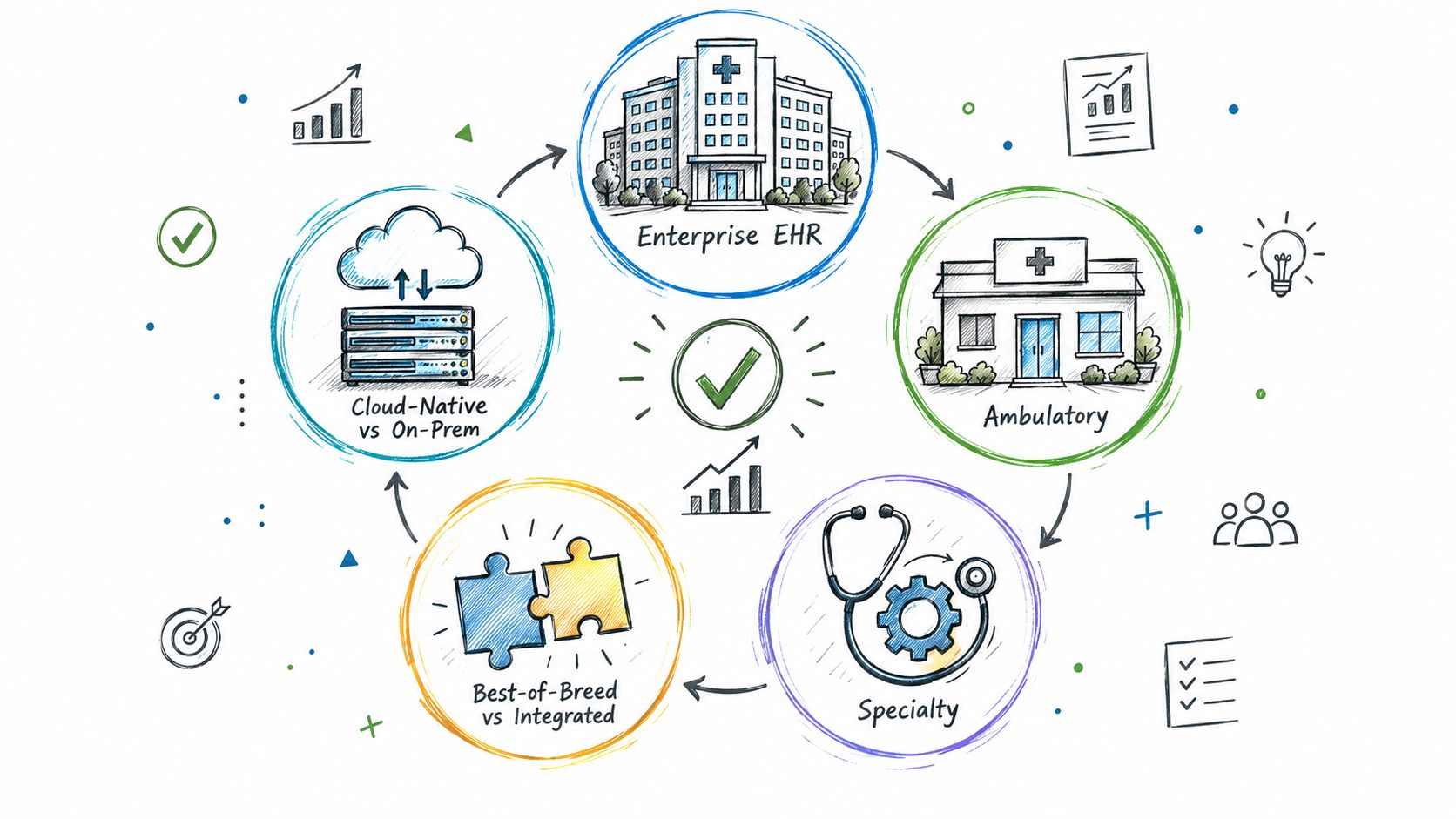
Explore the types of EHR systems by deployment model, care setting and scope. Compare integration options, trade-offs and selection tips for healthtech teams.
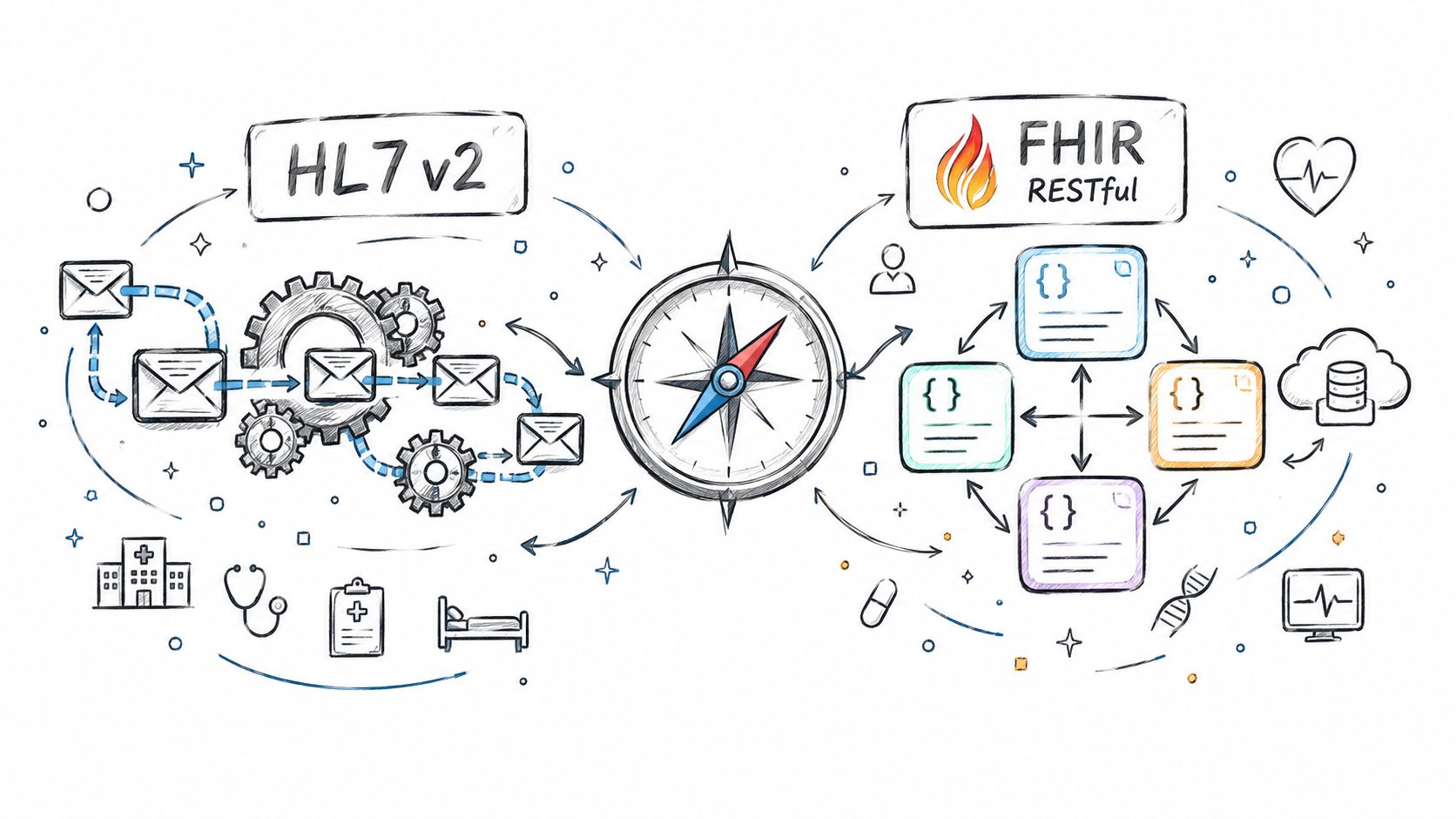
Compare Fhir vs. hl7 standards for healthtech integration. See how HL7 v2 and FHIR differ in use, mechanics, regulation, and real-world architecture.
Connect with our team to explore how AI expertise can transform your business.