AI in Healthcare
Smart on FHIR: What It Is and How It Works in Practice
Smart on FHIR guide for healthtech engineers. Learn the OAuth 2.0 launch model, scope syntax, backend services, and US regulatory requirements.
October 14, 2026Read more
Unify AI models, data pipelines & workflows with an AI orchestration platform for healthtech. Explore key capabilities, use cases & how to choose one.

AI is already inside many healthcare organizations. The problem is that it rarely works as a system.
A hospital might run one model for radiology prioritization, another for scheduling, a separate workflow for prior authorization, and a niche tool for risk stratification. Each tool can be useful on its own. Together, they often create more coordination work, more governance burden, and more pressure on clinical and operations teams that were already stretched.
That's why executives are moving past one-off AI deployments and asking a harder question: how do we run AI reliably across the organization, with clear ROI, auditability, and integration into real care delivery? The answer is usually not another point solution. It's an ai orchestration platform for healthtech that can connect systems, policies, models, and workflows into one operational layer. If your team is evaluating that move, it often helps to work with a HealthTech engineering partner that understands both product delivery and regulated healthcare environments.
Most health systems didn't design their AI estate. They accumulated it.
Radiology adopted one vendor because image triage mattered. Operations bought another because access centers needed automation. Population health added a predictive model for outreach. Then compliance stepped in, security raised concerns, and IT inherited a stack of disconnected services with different interfaces, inconsistent identity handling, and no common governance layer.
The symptoms are familiar:
Many AI programs stall at this stage. The issue isn't model quality alone. It's the absence of a control layer that can coordinate data movement, model execution, business rules, human review, and auditability.
AI in healthcare usually breaks at the handoff points. Between systems, between teams, and between recommendation and action.
The market signal is clear. The global AI orchestration market was valued at USD 9.76 billion in 2024 and is projected to reach USD 58.92 billion by 2033, with a CAGR of 22.4% from 2025 to 2033. Healthcare accounts for approximately 16% of that market, according to Grand View Research's AI orchestration market analysis.
That matters for executive teams because orchestration is no longer a niche infrastructure topic. It's becoming core operating architecture for organizations that want AI to work beyond isolated pilots.
Healthcare feels this pressure earlier than most sectors. Sensitive patient data, legacy interoperability constraints, and the need to defend decisions all raise the bar. A disconnected AI stack doesn't just slow innovation. It increases operational risk and makes scale harder than it should be.
A health system approves three AI initiatives in one quarter. One model scores readmission risk. Another drafts prior authorization summaries. A third flags referral leakage. Each project can work on its own. The operational problem starts when leaders ask harder questions: Which data source triggered the action? Which policy approved it? Who reviewed the output before it reached a clinician or patient? Which workflow system recorded the result?
An AI orchestration platform answers those questions and coordinates the work behind them. In healthtech, it is the operating layer that connects AI models, healthcare data, workflow logic, human review, and audit controls so AI can run inside real care and administrative processes.

In practice, the platform sits between systems of record, AI services, and frontline operations. It determines what data is pulled, which model or rules engine runs, where human approval is required, what action gets written back to the source system, and how every step is logged for audit and compliance.
A mature platform usually handles five functions at the same time:
That combination is what turns AI from a set of disconnected services into an operating capability executives can govern.
Executive teams often hear three categories used interchangeably: MLOps, workflow automation, and orchestration. They solve different problems.
MLOps manages model development, deployment, monitoring, and retraining. It is important for data science teams, but it does not govern the full business process around a model decision.
Workflow automation moves tasks through predefined steps. Many organizations start there and see clear value in the broader benefits of automating business processes. In healthcare, that still leaves open questions about model selection, data normalization, audit trails, and clinician oversight.
AI orchestration sits above both. It connects model execution to operational workflows, enforces rules across systems, and makes sure outputs reach the right person or application in a controlled way. That is why teams evaluating healthcare workflow automation platforms should ask whether the product only automates tasks or can also govern AI-driven decisions across the enterprise.
Healthcare raises the cost of poor orchestration. Data arrives in different formats. Identity resolution can fail. Timing matters in clinical and revenue cycle workflows. Privacy and access controls must be applied at each handoff, not added after deployment. A model output without context, routing, or review logic can create rework, delay care, or introduce compliance exposure.
For executive teams, that changes the buying criteria. The platform is not just middleware and it is not just an AI tool. It is operating infrastructure for how the organization will deploy, control, and measure AI at scale.
That distinction matters for ROI. The financial case rarely comes from the model alone. It comes from reducing manual coordination, shortening cycle times, improving throughput, lowering exception handling, and giving compliance and IT teams one control point instead of many.
Not every orchestration product is built for healthcare reality. Some are strong at generic automation but weak on interoperability. Others can move data but don't provide enough control over policy, lineage, or model behavior. In a regulated environment, those gaps become expensive fast.
The test is simple. If the platform can't coordinate data, models, humans, and controls in one environment, it won't hold up under real operational load.

Healthcare orchestration starts with data movement. According to Zyter's analysis of data and agent orchestration architecture, orchestration platforms in healthtech operate through a unified clinical data fabric architecture with sub-second latency FHIR streaming, supported by real-time data streaming, schema normalization from formats like HL7, and identity resolution. The same source notes that the orchestration layer often reaches payback within 6 to 12 months.
Those details matter because point solutions fail at the seams:
If a vendor can't explain how these functions work, they're probably selling workflow theater, not orchestration.
A credible platform has to govern actions as tightly as it governs computation.
For healthcare, that means:
This is especially important for teams working on SaMD solutions, where change control, validation, and traceability aren't optional.
Practical rule: If governance appears in the product demo only after someone asks about HIPAA, governance isn't part of the architecture.
A platform should fit the healthcare stack you already have, not require a rebuild of the stack you wish you had.
That means connecting with EHR environments, scheduling systems, CRM layers, payer workflows, imaging platforms, and bespoke applications created through custom healthcare software development. It also means handling exceptions well. In healthcare, edge cases are the norm.
Look for support for:
| Capability | Why it matters in healthcare |
|---|---|
| HL7 and FHIR interoperability | Preserves compatibility with existing clinical systems |
| Event-driven workflow triggers | Supports timely action on referrals, labs, scheduling, and care transitions |
| Human review checkpoints | Prevents unsafe or noncompliant automation |
| Bi-directional integrations | Writes outcomes back into systems of record instead of creating side channels |
Many teams also need orchestration to connect frontline work with workflow automation services rather than keeping automation isolated inside one department.
A dashboard that says the system is “running” isn't enough. Healthcare teams need to monitor whether orchestration is producing reliable operational and clinical behavior.
A practical monitoring layer should cover:
Those override patterns are underrated. If clinicians or staff routinely bypass recommendations, the issue may be trust, timing, poor UI integration, or flawed routing logic. The platform should make those patterns visible.
For teams building toward production maturity, these tips for building production AI are useful context because they reinforce the disciplines needed after the pilot phase, especially around reliability and observability.
HIPAA alignment isn't one setting. It's the combined result of architecture, access design, encryption, logging, segmentation, and process discipline.
A healthtech-ready orchestration platform should make security operationally manageable. Security teams need control over who can access what. Compliance teams need defensible logs. Product and engineering teams need enough flexibility to ship without creating shadow workflows.
That balance is what separates a platform that can scale from one that stays trapped in sandbox mode.
At 7:15 a.m., the emergency department is already backed up, case managers are triaging discharges in a separate system, and prior auth requests are sitting in another queue. The problem is rarely a missing model. The problem is that work, data, and decisions are split across too many systems for staff to act quickly and consistently.
Executive teams approve orchestration budgets when it improves throughput, reduces avoidable labor, or turns isolated AI pilots into operational workflows that departments will use.

A practical starting point is administrative work that already crosses teams, systems, and approval steps. Blue Prism's healthcare AI statistics roundup cites a U.K. provider that automated 41 processes in six months. That kind of result matters because it reflects how ROI usually shows up in healthcare. It comes from compressing cycle times, reducing rework, and giving clinical and operational staff fewer handoffs to chase.
Common targets include:
These are not innovation theater projects. They affect staffing pressure, patient access, and cash flow.
In board-level discussions, this is often the first ROI category to model because the baseline is visible. Teams already know how many touches a referral requires, how long authorizations sit before escalation, and where scheduling errors create downstream waste. Orchestration makes those steps measurable and easier to redesign.
Blue Prism's roundup also points to Jamaica Hospital Medical Center using orchestration to route more patients toward appropriate advanced interventions based on AI-driven risk stratification.
That example gets to the core value. A model can generate a score. An orchestration layer determines what happens next: which cases get escalated, which clinician or care team is notified, how the recommendation is documented, and when a human review is required before action. In healthcare, that operational layer is what turns prediction into clinical throughput.
The trade-off is straightforward. The more clinically sensitive the workflow, the more governance you need around thresholds, overrides, and auditability. That can slow deployment, but it also protects the business from preventable compliance and patient safety risk.
The strongest early use cases usually share a few traits:
That is why care coordination, patient intake, revenue cycle support, and navigation workflows often outperform more experimental deployments in the first phase. They have enough complexity to justify orchestration, but the outcomes are still measurable in labor hours, turnaround time, denial reduction, and patient progression.
For teams pressure-testing deployment options in provider and digital health settings, healthcare AI services for implementation and workflow design can help ground the conversation in integration constraints, HIPAA requirements, and operating model choices rather than demo scripts.
A useful executive question is simple: where are highly paid people spending time on routing, chasing, documenting, and re-entering information that software could coordinate instead? Start there. That is usually where the first credible ROI appears.
A vendor selection process usually breaks down in a predictable meeting. The product team is impressed by the demo, security has unanswered questions, IT sees integration work the vendor glossed over, and finance still cannot tell what go-live will cost.
That is why the best evaluations start with operating requirements, not feature comparison. Executive teams need to know whether the platform fits their compliance model, data environment, staffing reality, and margin targets.
The first decision is not which vendor to shortlist. It is whether your organization should build orchestration capabilities internally at all.
Building can be the right call for organizations with strong engineering leadership, mature governance, and experience maintaining healthcare integrations over time. Buying usually makes more sense when speed, implementation capacity, and repeatable deployment patterns matter more than full architectural control.
The trade-off is operational ownership.
For executive teams, this usually starts as a requirements and operating model decision. Procurement comes later.
Many healthcare AI vendors still sell the vision before they explain the delivery model. The problem is not just software pricing. It is the total cost of deployment and ongoing operation.
HealthTech Digital's discussion of healthcare orchestration market gaps points to a familiar issue in this category: limited public clarity around total cost of ownership, licensing flexibility, and ROI expectations for smaller provider organizations.
Treat vague pricing as a risk signal. If a vendor cannot explain implementation scope, integration assumptions, support boundaries, and post-launch responsibilities in plain language, budget variance is likely.
If the vendor cannot describe how your workflow will run after go-live, who supports it, and what changes cost extra, you are approving uncertainty, not reducing it.
| Criteria | Importance | Key Questions to Ask |
|---|---|---|
| Technical interoperability | High | Which healthcare standards and legacy environments do you support? How do you handle non-standard data? |
| Governance and compliance | High | How are access controls, audit trails, policy enforcement, and workflow approvals managed? |
| Workflow flexibility | High | Can the platform support human review, exception handling, and cross-department routing? |
| Implementation model | High | What does deployment require from our internal teams? Who owns integration work and change management? |
| Observability | Medium to high | How do we monitor model behavior, workflow failures, latency, and overrides? |
| Cost clarity | High | What is included in licensing, implementation, support, and ongoing maintenance? |
| Healthcare domain expertise | High | Have you worked with provider workflows, regulated environments, or clinically sensitive processes? |
| Support model | Medium to high | What happens when an integration fails, a workflow changes, or a compliance review requires updates? |
Ask each vendor to walk through one of your real workflows with real constraints. Do not accept a polished generic use case. Use a process that includes multiple systems, exception handling, approvals, and audit requirements. Referral intake, prior authorization support, and patient access workflows are good tests because weak integration design shows up quickly.
Push beyond the happy path. Ask what happens when source data is incomplete, an API is unavailable, a payer rule changes, or a clinician overrides the recommendation. In healthcare, that is normal operation, not edge-case behavior.
It is also worth checking whether the vendor can support the implementation work around the platform, not just the platform itself. Teams that need help with deployment planning, workflow mapping, and change management should evaluate the vendor's healthcare AI implementation support services early, before the contract assumes internal capacity that does not exist.
Ekipa AI is one example of a platform that approaches orchestration from strategy through execution. It should be judged the same way as every other option: workflow fit, integration depth, governance model, implementation burden, and financial clarity.
The strongest vendor is rarely the one with the most ambitious demo. It is the one your organization can deploy safely, govern cleanly, and defend financially after the first pilot.
The fastest way to kill an orchestration initiative is to launch it as an abstract enterprise transformation program. The better path is narrower at the start and more disciplined.
A strong rollout usually moves in phases, with each phase producing evidence that the next phase deserves funding.
Start by choosing one high-friction process with visible business impact. Good candidates have repeated manual steps, multiple systems, and a clear owner in operations or clinical leadership.
This phase should answer a few basic questions:
Many organizations formalize this work through a Custom AI Strategy report, especially when executive stakeholders need a documented rationale before approving implementation.
The pilot should be operationally real, but intentionally limited. Don't start with the broadest use case in the organization. Start with one workflow where success and failure are both easy to observe.
A useful pilot plan includes:
For teams that need delivery structure around this work, an AI Product Development Workflow can help align business owners, engineering, compliance, and operations.
Once the pilot is stable, scale by extending the orchestration layer to adjacent workflows that share similar data sources or decision logic.
Examples include moving from referral routing to intake coordination, or from one specialty pathway into another. Standardization matters here. If every new workflow requires bespoke integration and custom governance logic, scale will become slow and expensive.
At scale, orchestration becomes a portfolio discipline. Leadership should review which workflows are performing, where manual intervention remains high, and which use cases should be retired, redesigned, or expanded.
This phase is less about adding more AI for its own sake. It's about operating the AI estate with the same discipline used for clinical systems, revenue platforms, and enterprise applications.
An ai orchestration platform for healthtech isn't just infrastructure. It's the layer that determines whether AI becomes an operational advantage or operational clutter.
For executive teams, the next move is to review your current AI footprint as a portfolio. Which tools are isolated? Where are teams still creating manual bridges? Which workflows have clear financial or care-delivery consequences when handoffs fail? That exercise often surfaces whether you need a platform decision, a workflow redesign, or both. If your leadership team needs a structured starting point, an AI Strategy consulting tool can help frame the discussion.
For technical and operations leaders, the practical next step is smaller. Pick one workflow with real friction, define the governance boundary, and test orchestration in a controlled pilot. Don't start with ambition alone. Start with a process that can prove operational value.
If you want a deeper conversation on healthtech implementation trade-offs, compliance realities, and execution planning, connect with our expert team.
It helps by enforcing access policies, controlling how data moves between systems, logging actions, and preserving audit trails. The platform itself doesn't “make you compliant,” but it can provide the operational controls needed for a compliant environment if it's configured and governed correctly.
Often yes, but this should be tested early. Strong platforms support standards such as HL7 and FHIR and can also work with less modern environments through APIs, connectors, or custom integration layers. Vendor diligence should focus on how they handle the messy reality of legacy systems, not just standards support in theory.
MLOps manages the lifecycle of models. Orchestration is broader. It coordinates models, data movement, workflow automation, policy enforcement, system integrations, and human approvals so AI outputs become operational actions.
Ekipa AI helps organizations identify, prioritize, and execute AI transformation opportunities across regulated environments, including healthcare. If you're evaluating orchestration, workflow automation, or implementation strategy, Ekipa AI can be a practical starting point for mapping use cases, integrations, and delivery paths.
Smart on FHIR guide for healthtech engineers. Learn the OAuth 2.0 launch model, scope syntax, backend services, and US regulatory requirements.
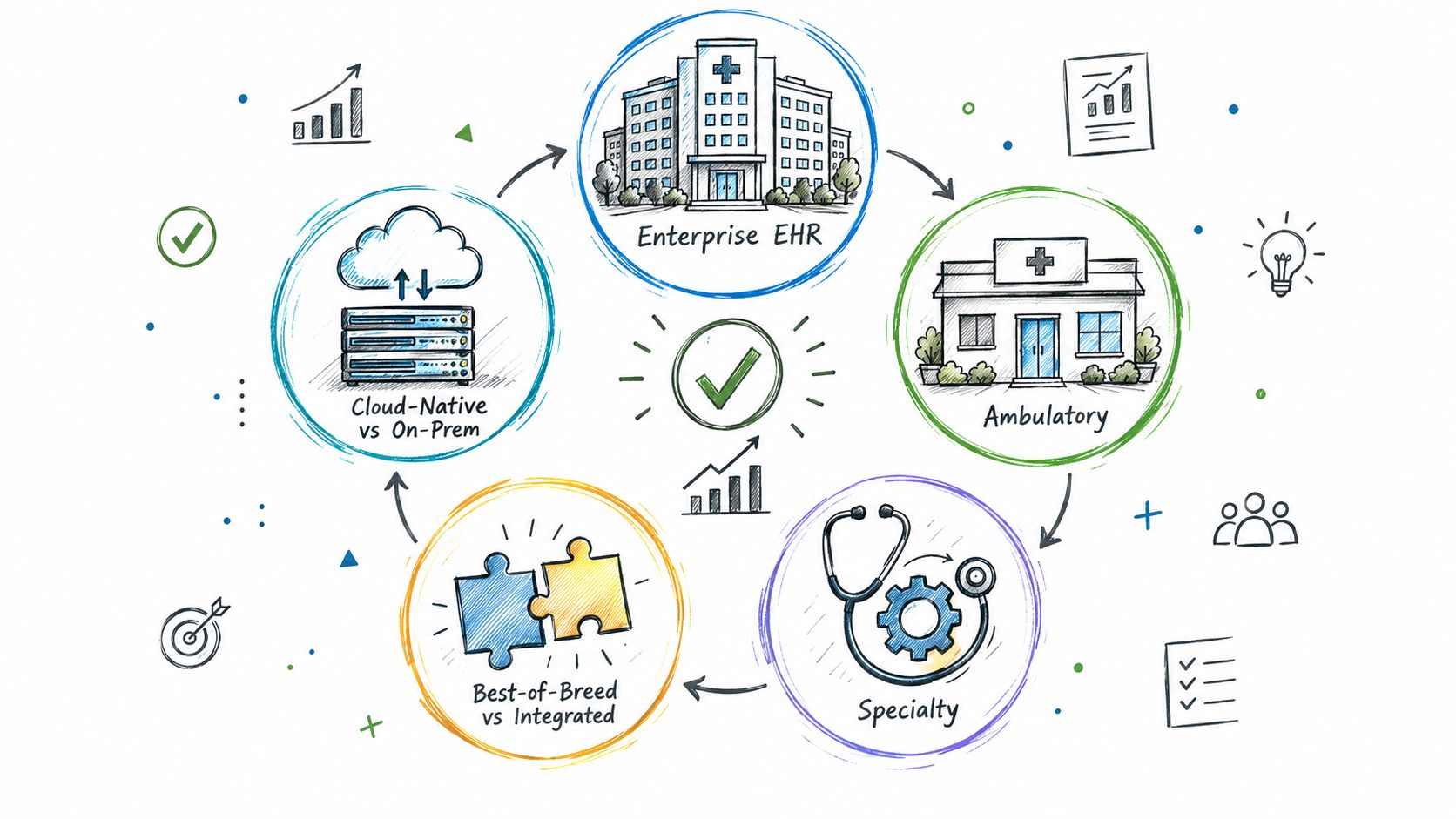
Explore the types of EHR systems by deployment model, care setting and scope. Compare integration options, trade-offs and selection tips for healthtech teams.
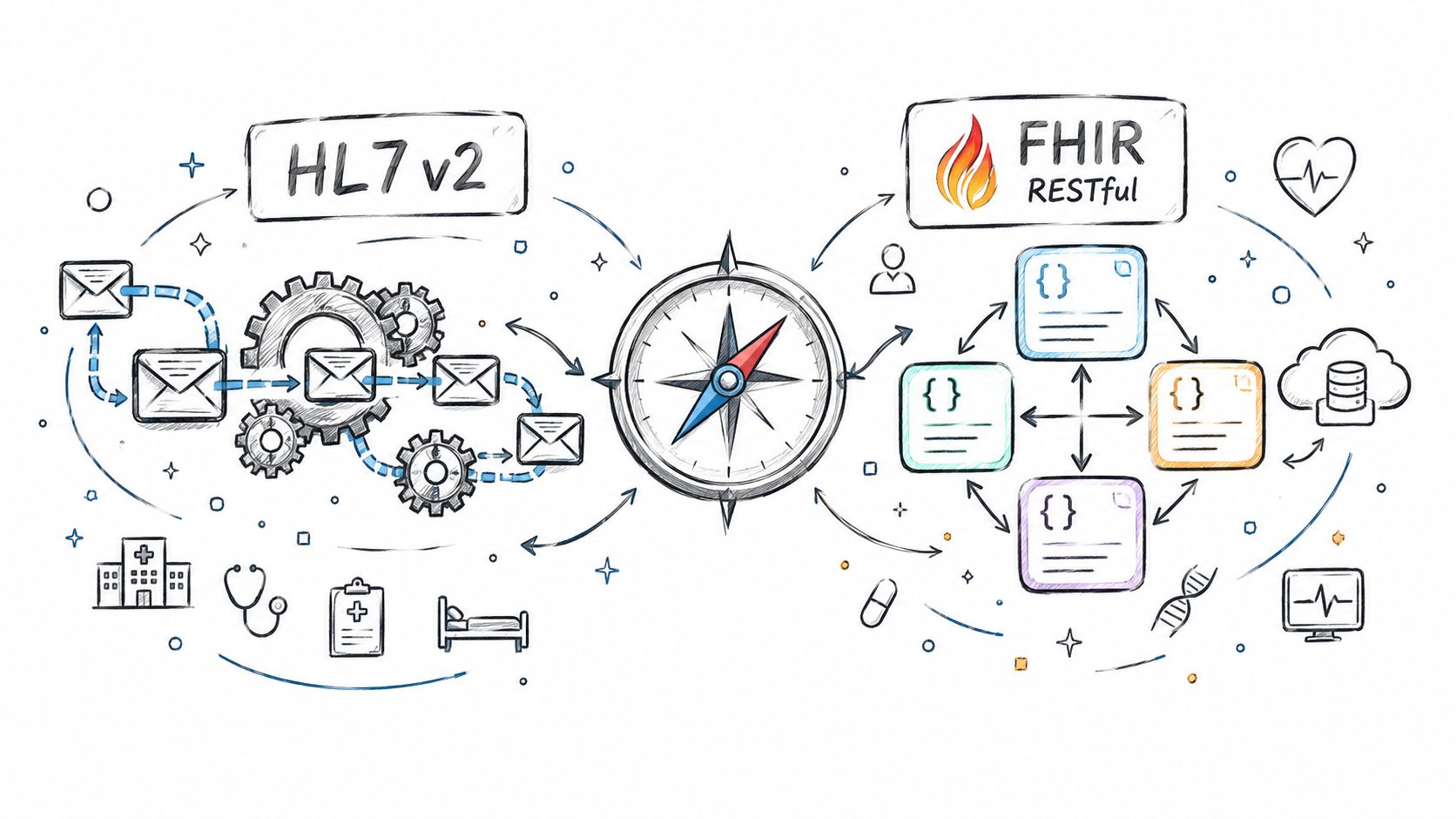
Compare Fhir vs. hl7 standards for healthtech integration. See how HL7 v2 and FHIR differ in use, mechanics, regulation, and real-world architecture.
Connect with our team to explore how AI expertise can transform your business.