AI in Healthcare
Smart on FHIR: What It Is and How It Works in Practice
Smart on FHIR guide for healthtech engineers. Learn the OAuth 2.0 launch model, scope syntax, backend services, and US regulatory requirements.
October 14, 2026Read more
Build compliant, scalable AI infrastructure for healthtech startups. Our end-to-end guide covers architecture, MLOps, HIPAA/GDPR compliance, and cost control.

AI in healthtech stopped being a feature story and became an infrastructure story. In 2025, AI-enabled healthcare startups captured 62% of all venture capital dollars in digital health, and they raised rounds that were 83% larger on average than non-AI peers, according to Vention's 2025 healthtech AI statistics. Investors aren't only looking for a strong model demo. They're looking for evidence that a team can handle data, deployment, compliance, and enterprise scale without rebuilding the stack every quarter.
That changes how a CTO should think about architecture. The first compliant AI stack for a healthtech startup isn't a stripped-down clone of a generic SaaS platform. It needs stronger data boundaries, better auditability, tighter workflow integration, and more discipline around what goes into production. The hard part isn't getting a model to work once. The hard part is making it reliable inside a clinical, operational, or regulated workflow.
A high percentage of development teams that struggle make the same mistakes. They start with notebooks instead of systems, they postpone governance until after pilots, and they wire models into brittle integrations that fail the first time an EHR payload changes. Good AI infrastructure for healthtech startups avoids those traps early.
A healthtech startup rarely loses its edge because the first model underperforms. It loses it when the product cannot survive security review, procurement, or a messy rollout inside a real care workflow. In this market, infrastructure quality affects revenue as directly as model quality.
I have seen the same pattern across early healthtech teams. The company gets a pilot live, shows promising output, and assumes the hard part is done. Then the first enterprise customer asks for audit logs, role-based access, a clear data retention policy, incident response procedures, and proof that PHI is isolated across environments. The sales cycle slows down. Engineering stops building product features and starts rebuilding foundation pieces that should have existed before the pilot.
That is the shift. AI infrastructure is no longer a back-office concern. It shapes how fast you can close deals, how safely you can ship updates, and how much margin survives after inference, storage, and support costs hit production volume.
Three problems usually separate a convincing demo from a durable business:
Each of these failures starts as an engineering shortcut and ends as a commercial problem.
For that reason, the strongest healthtech AI teams do not treat MLOps, security, and compliance as separate workstreams. They design one operating system for all three. That means choosing tooling, data boundaries, deployment patterns, and documentation practices that support both iteration speed and regulated operations. A focused view of Healthcare AI Services can help frame those decisions in the context of provider, payer, and digital health environments, where the constraints differ sharply from horizontal SaaS.
Grand View Research projects the AI in healthcare market will exceed $500 billion by 2033, and healthcare organizations are already reporting fast payback on deployed AI programs, according to Grand View Research's healthcare AI market analysis. That matters for architecture decisions. Buyers now expect working security controls, deployment discipline, and a credible path from pilot to scaled usage.

The first call is simple to state and expensive to change later. Decide where PHI, model workloads, and integration services will run before picking tools.
| Model | When it fits | Main advantage | Main trade-off |
|---|---|---|---|
| Cloud-first | Early-stage products, variable demand, fast iteration | Managed identity, storage, queues, and faster setup | Costs can drift fast, and unmanaged vendor sprawl creates compliance work |
| Hybrid | Products that must keep some workloads or datasets in tighter customer-controlled environments | Better control over data residency and buyer-specific constraints | Networking, IAM, and incident response get harder across boundaries |
| On-prem or private environment | Hospital deployments, medtech devices, or contracts with strict control requirements | Strong control over locality, access, and internal review processes | Highest ops load, longest implementation cycle, weaker fit for small teams |
For most startups, cloud-first is the right default. It keeps the team focused on shipping product, validating workflow fit, and getting through security review with standard controls instead of custom infrastructure.
The trade-off is discipline. If every new use case gets a new database, model endpoint, and logging pattern, the stack becomes expensive to audit and expensive to run.
A healthtech AI platform works better when the boundaries are boring and explicit.
Foundation layer
Data layer
Model layer
Serving and integration layer
Keep these layers separate in code, ownership, and deployment. If the same release process controls ETL jobs, prompt changes, customer-facing APIs, and security policy changes, incident handling gets messy fast.
Architecture decisions usually fail at the edges. In healthtech, the edges are scanned referrals, faxed records, partial CCDAs, malformed HL7 messages, duplicate patient identifiers, and PDF attachments that matter more than the structured feed.
That is why I usually advise teams to treat document pipelines as first-class infrastructure, not side utilities. If your product depends on prior auth packets, referrals, intake forms, or records retrieval, a dedicated AI-powered healthcare document extraction engine can reduce manual review and keep document ingestion from contaminating the rest of the stack. The operational side matters too. Teams working on improving healthcare document handling often discover that routing, indexing, and exception management shape model accuracy as much as model choice.
FHIR is useful. It is not a guarantee of consistency. Two customer environments can both claim FHIR support and still differ on resource completeness, auth patterns, extensions, and event timing.
A practical blueprint usually includes:
This is the part many startup teams miss. MLOps, interoperability, and compliance are not separate design tracks. They share the same boundaries, the same audit requirements, and the same cost profile.
Healthtech products can be ambitious. The infrastructure should be selective.
Use managed databases. Use standard queues. Use containers with clear interfaces. Add custom GPU scheduling, bespoke vector infrastructure, or complex event systems only when the product economics justify the operational burden.
As noted earlier, teams sometimes bring in Ekipa for targeted strategy work before they commit to those choices, and a scoped Custom AI Strategy report can help pressure-test architecture against buyer requirements, compliance scope, and budget. The useful output is not a slide deck. It is a clearer decision on what must be custom, what should stay managed, and what can wait until revenue supports the added complexity.
Startups that turn proprietary clinical data into reliable products tend to earn better outcomes in the market. Menlo Ventures reported that domain-specific AI tools grew 7x year over year in 2025, health systems led adoption at 27%, and startups building proprietary models on internal data saw a 19% funding premium in its 2025 state of AI in healthcare. The implication is straightforward. Data ingestion and governance are not back-office work. They determine how quickly a team can ship, validate, and pass diligence.

Healthcare data breaks in different ways depending on where it comes from. A FHIR Observation feed fails differently from a faxed referral packet. A device stream creates different risk than a batch claims export. Treating them as one ingestion problem usually creates hidden cleanup work that surfaces later in QA, model evaluation, or customer onboarding.
A practical split looks like this:
Each class needs its own controls. Clinical messages need schema validation, code-set checks, and source-level reconciliation. Documents need OCR review, extraction confidence thresholds, and exception queues for low-quality scans. Device data needs timestamp normalization, unit harmonization, and outlier rules before it is safe to use downstream.
For teams buried in faxed records and scanned packets, the bottleneck is often extraction quality rather than model quality. An AI-powered data extraction engine can fit well when the job is converting unstructured healthcare documents into fields that downstream systems and reviewers can use.
One-pass PHI scrubbing is not enough. Identifiers come back through annotation tools, support tickets, logs, generated summaries, CSV exports, and reprocessing jobs. I have seen teams de-identify a training set correctly, then expose patient names again through debug output and review workflows.
Use layered controls instead:
If an enterprise prospect asks where a training example came from, which transformations touched it, and whether PHI was present at each step, the team should be able to answer from system records, not memory.
Governance breaks when it lives only in policy docs and trust-based conventions. Startups move fast, analysts export data locally, engineers create temporary backfills, and product teams ask for exceptions. The operating model has to assume this will happen.
Set a minimum control surface early:
A simple governance table is enough at the start:
| Governance need | Minimum control |
|---|---|
| Lineage | Metadata attached to each dataset and transformation job |
| Access | Role-based controls with least privilege |
| Retention | Scheduled deletion or archival based on policy |
| Auditability | Queryable logs for access, export, and model use |
| Data quality | Validation checks before records enter curated layers |
In many healthtech products, the limiting factor is not the model. It is intake quality, inconsistent source formats, and brittle downstream handoffs. If referrals arrive in six layouts, if scanned records have no consistent sectioning, or if the receiving system only accepts narrow structured fields, the AI layer inherits those constraints.
That is why teams working on document-centric workflows often benefit from operational guidance on improving healthcare document handling before they expand model scope. Better intake design reduces exception rates, improves labeling quality, and lowers the amount of PHI-rich manual correction work.
Founders often ask which model to fine-tune before they have stable source mappings, usable labels, or clear rules for where PHI enters and leaves the workflow. That sequence creates expensive rework.
Start by defining source systems, validation rules, retention boundaries, de-identification points, and the accuracy threshold that is acceptable for each output. In healthtech, the data layer is where product quality, compliance, and unit economics meet. If ingestion is inconsistent or governance is loose, the rest of the stack carries that cost.
According to Bessemer Venture Partners' Healthcare AI Adoption Index, only 30% of healthcare AI pilots make it into production. The pattern behind that number is familiar. Startups spend months on model experimentation, then stall on validation, release control, clinical review, or customer trust requirements.
That is why MLOps in healthtech cannot be treated as a narrow tooling decision. It sits at the intersection of model quality, operational workflow, compliance evidence, and burn rate. A startup that gets this right ships faster and spends less time rebuilding process under customer pressure.
A production-ready workflow has to do two jobs at once. It needs to help the team iterate on models, prompts, and extraction logic. It also needs to preserve enough evidence to explain what changed, who approved it, what data was used, and whether the result is fit for its intended use.
Start with the work itself.
Before training anything, document the actual operating path. Identify where data enters, where staff intervene, which outputs are informational, and which outputs can change a downstream action. That exercise often kills weak use cases early, which is good. It is cheaper to reject a use case in a workflow review than after six weeks of annotation and model evaluation.
This is also where the integrated nature of healthtech infrastructure becomes obvious. A use case that looks easy from an ML perspective can still fail if it creates new review burden for clinicians, falls into a higher-risk regulatory category, or produces savings that are too small to justify implementation work.
Reproducibility is not optional once customer data, PHI boundaries, and regulated workflows enter the picture. Use versioned datasets, fixed training configurations, experiment tracking, and containerized training jobs from the start. MLflow, Weights & Biases, SageMaker Pipelines, and Vertex AI Pipelines can all work. The right choice depends less on brand and more on whether your team can recreate a run, compare results across cohorts, and tie a model artifact back to code and data versions.
For early-stage teams, simpler is often better. A well-structured MLflow setup on your existing cloud stack is usually enough before you add heavier orchestration. The trade-off is manual platform work later if the number of models and environments grows quickly.
Once a model leaves experimentation, treat it like a controlled product artifact. Every release should include:
That discipline matters even more for SaMD solutions, where updates can trigger validation, documentation, and change-control obligations.
Weak MLOps setups often mirror a generic software handoff pattern. Data science builds. Engineering integrates. Clinical review happens late. Regulatory review happens after someone asks for documentation. The result is delay, rework, and model releases that nobody fully owns.
A better pattern uses shared approval points tied to risk.
One rule has served teams well. Do not release a healthcare model until a clinician, an engineer, and the product owner have signed off on the same intended-use statement.
Manual tracking breaks quickly once a team has multiple prompts, model variants, extraction routines, and evaluation sets. You need a controlled way to review datasets, compare runs, approve changes, and store release records. Earlier in the article, I noted the value of internal tooling for managing these operational controls. The exact stack matters less than having one source of truth for model lineage and release status.
A practical startup workflow usually looks like this:
| Stage | What must be controlled |
|---|---|
| Experimentation | Dataset versions, prompts, model configs |
| Validation | Bias review, workflow-specific metrics, human review |
| Approval | Named owner, intended use, release criteria |
| Deployment | Environment isolation, rollback, change log |
| Post-release | Drift checks, error review, user feedback loops |
The first production use case should have a clear workflow fit, measurable value, and a manageable review burden. Administrative support, documentation assistance, coding support, triage support, and structured extraction often meet that standard better than higher-risk decision-support features.
That choice is strategic, not conservative. It lets the team prove that its AI stack can support evidence, release control, and customer trust before it takes on harder clinical or regulatory categories.
Teams that treat MLOps as part of the product operating model tend to get further than teams that treat it as a thin layer around model training. In healthtech, that distinction shows up in audit readiness, implementation speed, and whether the pilot ever becomes a real business.
Deployment choices in healthtech are mostly trade-off choices. There isn't one right pattern. There is only the pattern that best fits your latency, cost, integration, and control requirements.
Here is the practical comparison for your consideration:
| Deployment pattern | Best for | Advantage | Risk |
|---|---|---|---|
| Serverless functions | Burst-heavy, lightweight tasks such as document classification or routing | Low ops burden, pay-for-use efficiency | Cold starts, runtime limits, poor fit for heavier inference |
| Containerized APIs on Kubernetes | Steady production inference, multiple services, stronger control needs | Scalability, observability, release discipline | More platform overhead and cluster management |
| Batch workers and queues | Claims review, coding, summarization, retrospective analytics | Cost control and resilience for non-real-time tasks | User experience suffers if near-real-time behavior is expected |
| Edge or on-device inference | Device-adjacent workflows, low-latency needs, local control | Better locality and reduced dependency on network availability | Harder updates, constrained compute, stronger device management burden |
A common mistake is forcing every inference request into a synchronous API. In many healthtech workflows, asynchronous processing is safer and cheaper. If a prior authorization packet can process in the background and return a validated result to a work queue, don't build a low-latency architecture just because it sounds modern.
Basic uptime and response time monitoring isn't enough. Healthtech teams need to monitor the full chain from data input to user action.
Track at least these categories:
Drift in healthcare is often operational before it is statistical. A hospital changes a form template. A new transcription style alters note structure. A payer revises authorization rules. Those shifts break downstream assumptions even if your core model weights stay the same.
Use a combination of:
The most useful drift alert in healthcare is often not “model score changed.” It's “humans started correcting this output more often.”
Every production model should have:
That sounds obvious. Many teams still skip it because they assume the app layer can absorb problems. It can't, especially when outputs feed operational or clinical queues.
As products mature, teams often need support for recurring model operations, event routing, human-in-the-loop controls, and service orchestration. That's where managed patterns such as AI Automation as a Service can fit, alongside internal systems and open tooling. The key is to keep model operations observable and intervention-friendly.
For founders evaluating what “good” looks like in production, reviewing real-world use cases is useful because the architectural answer depends heavily on whether the product is doing intake automation, ambient documentation, coding support, patient engagement, or device-adjacent inference.
Security failures show up in revenue before they show up in audits. A weak access model, unclear data residency, or missing audit trail can stall enterprise diligence, delay procurement, and force expensive rework after pilots are already live. Cross-border deployments raise that risk further. A F1000Research analysis notes recurring audit failures tied to data sovereignty gaps and reports deployment delays under the EU AI Act for cross-border data flows.

Treat compliance controls as architecture decisions, not policy documents.
Start with where protected data can exist, which systems can process it, and who can reach it under normal operations. That sounds basic. Early teams still blur these boundaries by sending PHI into logs, copying production records into test environments, or giving broad console access to engineers because it feels faster.
The baseline control set is familiar, but the implementation details matter:
Buyers do not trust labels like “enterprise-grade” or “HIPAA-ready” on their own. They trust architecture they can inspect.
Expect direct questions. Where is data stored? How is it deleted? Which staff can access identified records? Can de-identified and identified workflows be separated? Can you trace a specific output to a specific model version, prompt template, and dataset lineage?
Teams that can answer those questions cleanly move through diligence faster. Teams that cannot usually discover the gap in the middle of a deal.
A useful companion read for engineering teams tightening data controls is DataEngineeringCompanies' compliance guide, particularly for the technical implications of healthcare data engineering decisions.
If the company plans to serve more than one region, design for policy separation early. A single global environment with a few access rules is rarely enough once customers start asking about residency, subcontractors, retention periods, and regulator-specific controls.
A few patterns work well:
| Cross-border need | Useful pattern |
|---|---|
| Local data residency | Region-specific storage and processing environments |
| Model improvement without centralizing PHI | Federated learning or federated evaluation where feasible |
| Customer-controlled environments | Private deployment options or isolated tenants |
| Audit readiness | Region-specific logging, retention, and export controls |
Federated methods are not required for every startup. The underlying rule is simpler. Move insights when possible. Move sensitive data only when there is a clear operational or legal reason.
This is also where technical and financial planning intersect. Region-specific stacks, tenant isolation, and separate logging pipelines improve your compliance posture, but they increase cloud and support costs. For many early teams, the right answer is not full multi-region deployment on day one. It is choosing an architecture that can split by region without a rewrite later. If your team needs help making those trade-offs, get implementation support for a compliant healthtech AI stack.
A compliant AI stack changes day-to-day engineering choices. Prompt and output storage needs retention rules. Telemetry often needs to be split so product analytics does not become an accidental PHI sink. New third-party tools need approval paths before someone pastes patient data into them. Generated outputs need red-team testing for data leakage, not just model quality.
I have seen teams lose months because they treated compliance as a documentation exercise. The faster path is to encode it in the platform. Choose providers that can support healthcare contracting. Keep approval records in systems of record. Make access reviews routine. Test deletion workflows before a customer asks for one.
Outside help can make sense if the internal team is thin. A regulatory advisor or experienced healthcare engineering partner can reduce blind spots in architecture and documentation. Responsibility still stays with the startup.
The same failure patterns show up repeatedly:
Security by design costs time up front. Cleanup after failed diligence costs more, takes longer, and usually lands at the worst possible moment.
A first compliant stack doesn't need to be massive. It needs to be deliberate. Build in phases so the architecture matches the company stage instead of outrunning it.

Start with one use case, one curated data path, and one controlled deployment pattern.
Use managed cloud services where possible. Keep the model registry simple. Add audit logging, role-based access, dataset versioning, and a human fallback path before broad rollout. Don't optimize for multi-model orchestration if you still haven't proven one workflow has real pull.
Founders often underinvest in communication assets during this stage. If you're packaging the product for pilots or enterprise review, it helps to design app store visuals and other product-facing assets cleanly so the product story matches the technical credibility.
Once a use case shows traction, strengthen the platform instead of improvising around it.
Add:
This is a good point to formalize the delivery process with an AI Product Development Workflow. One option in that category is Ekipa AI, which provides strategy and implementation support around AI opportunities and execution planning.
Only optimize hard once volume justifies it.
At this stage:
Use a simple cost lens for every major component:
| Layer | Cost question |
|---|---|
| Data ingestion | Are we processing more raw data than the product actually needs? |
| Training | Are we retraining because the workflow changed, or because the pipeline is poorly scoped? |
| Inference | Does this task really need real-time serving? |
| Storage | What must stay hot, and what can move to archival tiers? |
| Monitoring | Are we keeping the logs that support risk and debugging, or hoarding everything? |
The best cost optimization habit is architectural restraint. Most healthtech startups don't need the most advanced AI platform. They need the smallest platform that can pass diligence, support the product, and evolve without a rewrite.
Start with secure data ingestion, audit logging, access control, and one production-ready workflow. Don't start with a broad model platform. Start with the path that turns a real healthcare task into a reliable output.
Use the simplest approach that satisfies the task and your compliance posture. Many startups should begin with managed or hosted models plus strong evaluation and workflow controls. Fine-tuning makes sense when domain performance, cost, latency, or control requirements justify the extra operational load.
Often yes, if the architecture is disciplined. Cloud becomes a problem when teams mix environments, overexpose data, or rely on vendors without the right contractual and technical controls. The issue usually isn't “cloud versus not cloud.” It's whether the environment is designed correctly.
Enough to support the intended use safely. That usually means encryption, access controls, logging, retention rules, vendor review, and clear separation between test and production data before any real deployment. Compliance work after launch still happens, but the foundation can't wait.
Pick workflows with clear operational value and manageable risk. Documentation support, structured extraction, coding support, and administrative automation are often better first deployments than high-stakes autonomous decision systems.
Earlier than one might expect. Once multiple datasets, prompts, reviewers, and release cycles exist, spreadsheets stop working. Internal systems for approvals, lineage, and evaluation quickly become necessary.
For more specific guidance, it helps to speak with our expert team.
If you're building ai infrastructure for healthtech startups and need a clearer path from pilot to compliant production, Ekipa AI can help you assess use cases, shape the architecture, and plan implementation around real healthcare constraints.
Smart on FHIR guide for healthtech engineers. Learn the OAuth 2.0 launch model, scope syntax, backend services, and US regulatory requirements.
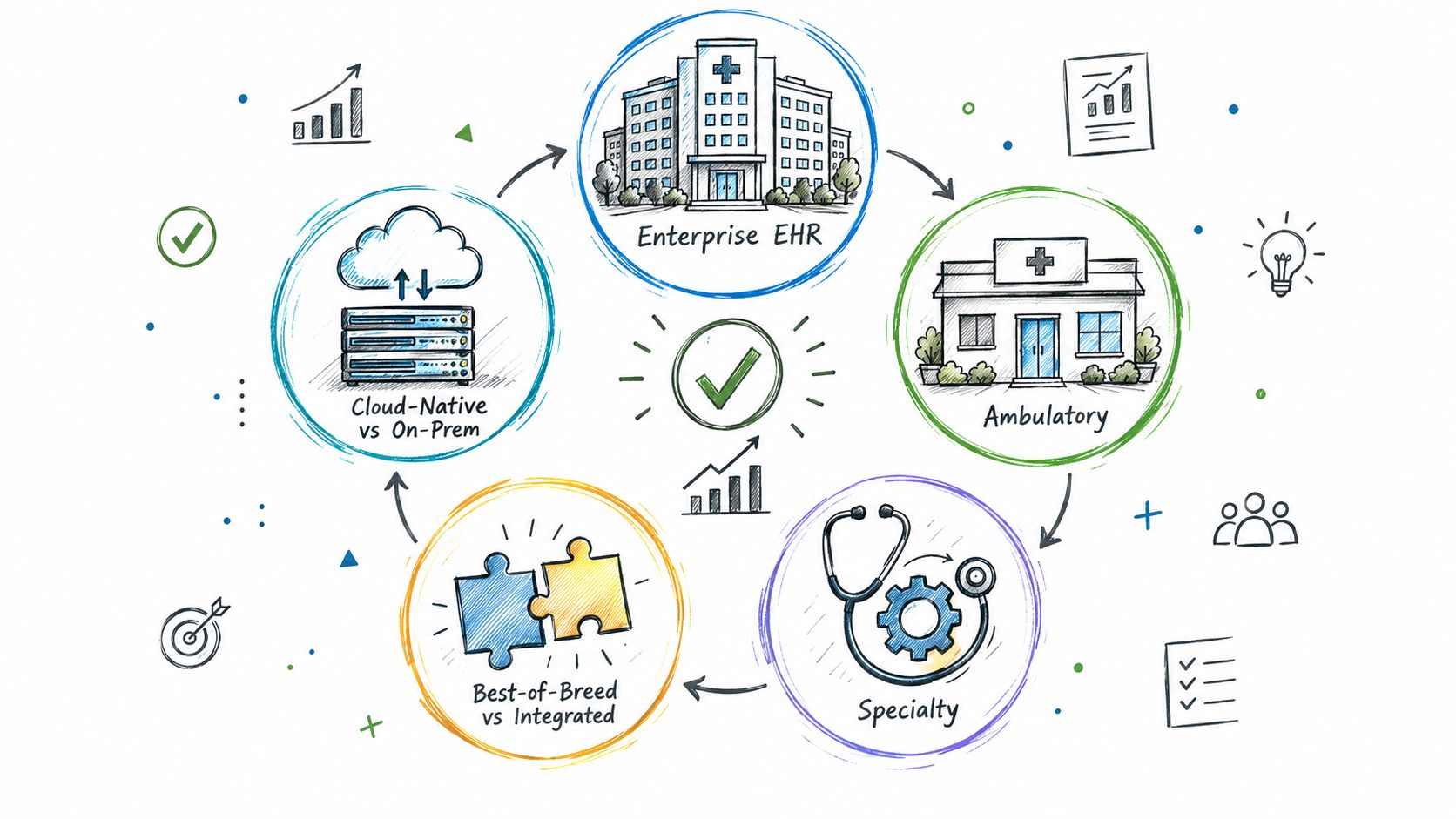
Explore the types of EHR systems by deployment model, care setting and scope. Compare integration options, trade-offs and selection tips for healthtech teams.
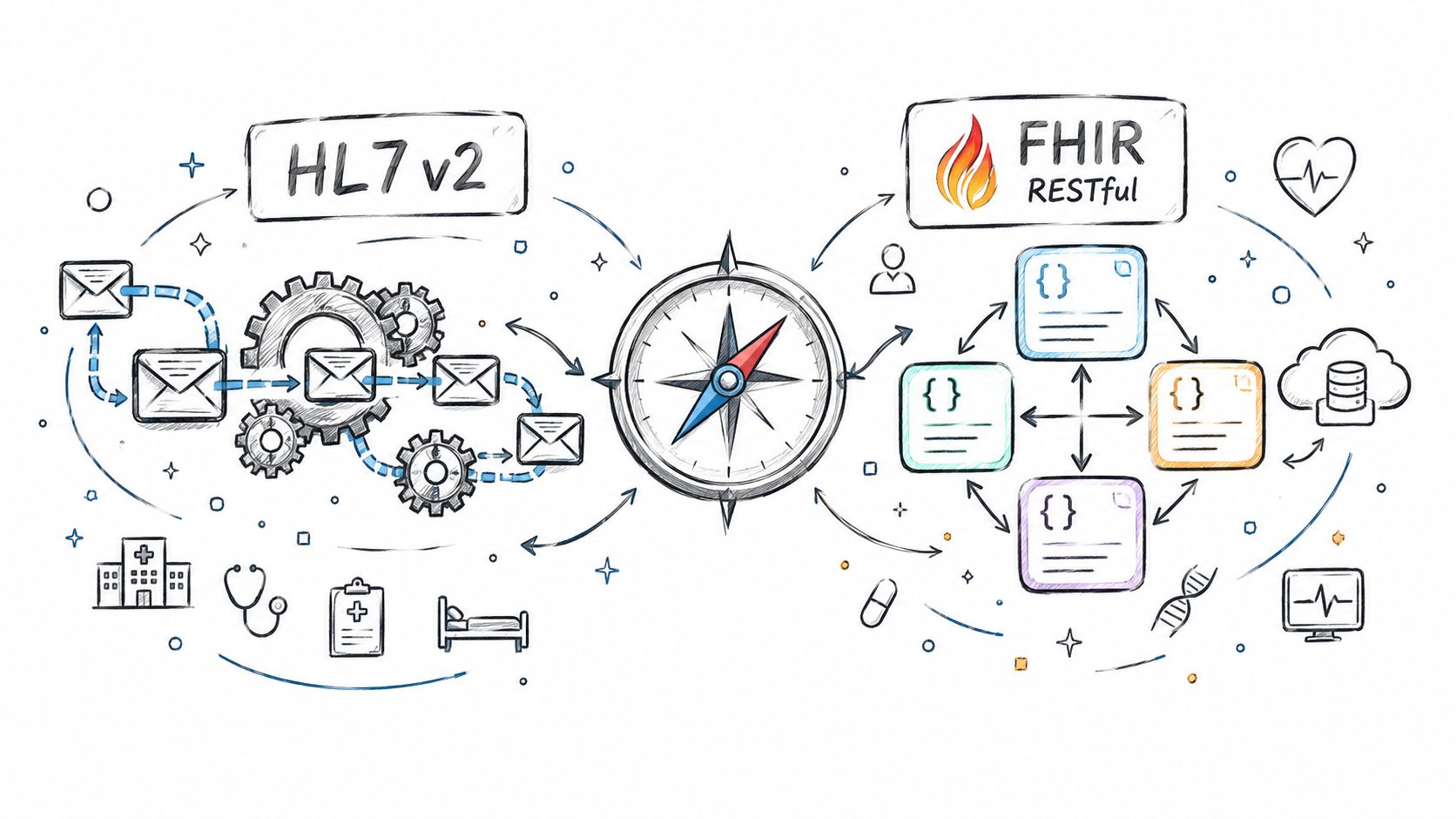
Compare Fhir vs. hl7 standards for healthtech integration. See how HL7 v2 and FHIR differ in use, mechanics, regulation, and real-world architecture.
Connect with our team to explore how AI expertise can transform your business.