AI in Healthcare
Smart on FHIR: What It Is and How It Works in Practice
Smart on FHIR guide for healthtech engineers. Learn the OAuth 2.0 launch model, scope syntax, backend services, and US regulatory requirements.
October 14, 2026Read more
Discover our step-by-step playbook for healthtech digital transformation with AI. Plan, pilot, & scale AI from use-case to compliance & ROI.

Healthtech digital transformation with ai has entered the scale phase. AI is showing up in budget cycles, security reviews, integration backlogs, and operating plans across healthcare, not just in innovation pilots.
That shift raises a harder implementation question. How do you put AI into production in a way that can pass procurement, stand up to clinical scrutiny, satisfy compliance, connect to messy systems, and still get used by frontline teams?
I have seen strong pilots stall for familiar reasons. The model performs well in a demo, but ownership is split across product, IT, compliance, and operations. Data access is slower than expected. Workflow changes are underdesigned. By the time the team reaches deployment, confidence is gone and the business case has weakened.
Post-pilot failure usually has little to do with model novelty. It comes from a disconnect between executive intent and technical execution. Healthtech organizations need an operating playbook that links use-case selection, data readiness, governance, delivery sequencing, and ROI measurement. That is the gap this guide is built to address.
Teams working through those foundations should also review addressing health data challenges, especially if interoperability and governance are already slowing delivery. For organizations mapping strategy to execution, this healthcare AI transformation approach reflects the level of coordination required to move from pilot success to scaled adoption.
More health systems, payers, and digital health companies are now funding AI from operating budgets instead of innovation carve-outs. That shift matters because budgeted programs are expected to survive security review, procurement, integration work, and day-to-day operational scrutiny.
The pressure is no longer about proving that AI can produce an impressive demo. The pressure is proving that it can improve throughput, reduce manual review, support clinical and administrative teams, and hold up under audit. In practice, that changes the standard for success. The bar is production reliability, governance, and measurable operational value.
I have seen this pattern repeatedly. Teams start with a promising pilot, then encounter the actual constraints. Data permissions take longer than planned. Interfaces with the EHR or claims platform are harder than expected. Compliance raises valid questions late in the process because it was not involved early enough. By the time the model is ready, the workflow around it is still not.
A lot of that friction starts with data and system design. The failure point is often not model quality. It is fragmented source systems, inconsistent definitions, weak lineage, limited access controls, or brittle integrations. If your team is working through those issues, addressing health data challenges is a useful reference because it speaks to the operational reality behind AI readiness.
The organizations getting past the post-pilot stall treat AI as an enterprise change program with technical depth, not as a standalone feature request. They set business ownership early, define where human review stays in place, choose workflows that can tolerate iteration, and design auditability before rollout. They also make explicit trade-offs. A narrower first deployment with cleaner controls usually beats a broad launch that creates compliance risk and adoption problems.
A practical operating model usually includes four things:
One rule has held up well across projects. If no one owns the workflow, the data, and the compliance path, the initiative is still a pilot whether the organization admits it or not.
That is why the winning pattern in healthtech is an executive-to-technical playbook that connects strategy to delivery. A capable team providing healthcare AI transformation services can help align product, engineering, security, data, and operations when internal teams are already stretched across platform work and regulatory obligations.
Most AI roadmaps go wrong at the first decision point. Teams start with what the model can do instead of what the business needs fixed. In healthtech, that usually leads to demos that look clever and deployments that nobody uses.
The better starting point is friction. Look for work that is high-volume, repetitive, decision-heavy, delay-prone, or dependent on unstructured data. Good use cases usually sit where teams lose time, where staff switch between systems, or where decisions depend on information buried in notes, faxes, PDFs, inboxes, and EHR screens.

A practical filter is to ask five questions about each candidate use case:
Where is the current bottleneck?
Claims review, prior auth intake, chart abstraction, triage routing, coding support, patient messaging, referral management, adverse event review, and care gap outreach are common starting points.
Who feels the pain every day?
If nobody can point to a team losing time or making avoidable manual decisions, the use case is probably too abstract.
What data is required to make the output useful?
Many attractive ideas fail because the needed data exists only in fragmented formats or arrives too late in the process.
What decision will change if the AI works?
Useful AI changes a downstream action. It doesn’t just generate a summary that sits in a dashboard.
What happens when the model is uncertain?
In healthtech, a fallback path is part of the design, not an afterthought.
Use cases become easier to rank when you evaluate them across three dimensions:
| Priority lens | What to look for |
|---|---|
| Business impact | Faster throughput, lower admin burden, better patient engagement, fewer handoff delays |
| Feasibility | Accessible data, clear decision point, known system integrations, manageable compliance scope |
| Adoption fit | Clinicians or operators can use it without changing everything about how they work |
This is also where ethical and operational realism needs to show up early. A recent review notes that rigorous evidence on cost-effective impact remains limited in many settings, and unresolved issues like data privacy and algorithmic bias still hinder scalable adoption. It also notes that AI tools often fail when they don’t align with local workflows, which is why bias audits and hybrid human-AI models should be part of use-case discovery from the start in this analysis on equitable AI adoption in health systems.
If a use case needs people to invent a new workflow just to make the model look useful, it’s probably the wrong first deployment.
Some categories are usually easier to operationalize than others:
When teams need inspiration beyond brainstorming sessions, a library of real-world use cases helps because it anchors discussions in actual operational patterns instead of buzzwords. For provider engagement and communication workflows, the HCP engagement co-pilot is another example of a focused product area where AI can support repetitive, information-heavy work.
Three use cases often get over-prioritized:
As we explored in our AI adoption guide, the first win should be credible, adoptable, and measurable. It doesn’t need to be glamorous. It needs to survive contact with operations.
A use case can be strategically sound and still fail because the underlying environment can’t support it. In healthtech digital transformation with ai, readiness isn’t a buzzword. It’s the difference between shipping a reliable capability and spending months discovering that core dependencies were never in place.
The assessment should cover data, infrastructure, integration, and operational ownership. Skip any one of those, and the implementation risk climbs fast.
The first question isn’t whether you have data. You do. The question is whether your teams can trust it, access it, and connect it to the workflow where AI is supposed to help.
Look at your environment through this checklist:
A lot of AI projects turn into document understanding projects. That isn’t a problem if you account for it early. If your workflows depend heavily on unstructured inputs, an AI-powered data extraction engine can be part of the foundation rather than a downstream patch.
Technical leaders often underestimate how much of the roadmap depends on interoperability maturity. FHIR, TEFCA-aligned exchange expectations, payer-provider connectivity, and EHR integration patterns all affect how quickly you can move from pilot to production. Even when standards exist, local implementation details still matter.
Assess readiness at three layers:
| Layer | Key question | Common issue |
|---|---|---|
| Source systems | Can core systems expose the needed data consistently? | Data locked in legacy workflows or vendor-specific structures |
| Exchange layer | Can data move between systems with governance and traceability? | Interfaces exist, but ownership and mapping are unclear |
| Application layer | Can the AI output be delivered where work happens? | Insight lands in a dashboard instead of the operational system |
The strongest model won’t matter if the output lands outside the tool the user already trusts.
This is why custom healthcare software development often becomes part of AI transformation work. The AI itself may only be one component. The harder work is stitching data flows, identity, review paths, and UI behavior into a system people can use.
A production AI capability needs more than a cloud account and an API call. It needs a secure path from raw input to reviewed output, plus logging, access control, versioning, monitoring, and rollback options.
A practical infrastructure review should examine:
The output shouldn’t be a vague maturity score. It should be a working decision document with:
That’s the point where AI requirements analysis becomes useful. It turns ambition into concrete system needs, review rules, and implementation boundaries.
If this stage feels slower than expected, that’s normal. In healthtech, speed comes from reducing rework. Most failed programs moved too fast on the wrong assumptions.
In healthcare, compliance work doesn’t slow AI transformation. Late compliance work slows AI transformation. The teams that build fastest over time are the ones that treat regulatory architecture as part of product architecture.
That matters because the biggest deployment barrier isn’t model experimentation. It’s trust in the system handling the data and the decision path around it. According to a review of healthcare AI deployment, data security is the primary barrier, and 75% of U.S. hospitals use legacy EHR systems, which makes retrofitted governance especially fragile in this analysis of healthcare AI architecture and regulation.

A compliance-first build changes what you do in sprint one. It affects system boundaries, vendor selection, data minimization, role-based access, audit logging, retention logic, model review, and escalation paths.
That includes at least four design commitments:
The common mistake is treating compliance as a documentation exercise near launch. By then, the architecture is already hard to change. If the system wasn’t built to support review, logging, and restricted access, the organization ends up redesigning core pieces late.
This is especially relevant for products approaching regulated clinical functionality. If your roadmap touches clinical decision support or productized AI in a regulated context, your SaMD solutions planning can’t sit in a separate lane from engineering.
Build the review path before you optimize the model. In regulated environments, governance is part of usability.
A workable governance model usually includes three layers of control:
| Governance layer | What it covers |
|---|---|
| Data governance | PHI handling, consent boundaries, retention, access, lineage |
| Model governance | Validation, versioning, monitoring, bias review, deprecation rules |
| Operational governance | User training, override logic, escalation paths, incident response |
Organizations also need people who can bridge legal interpretation and technical implementation. In many cases, a specialized regulatory compliance partner helps translate requirements into release-ready controls, especially when product teams are shipping quickly.
For a broader lens on how AI governance and risk management discussions are evolving in regulated business environments, the perspective shared in these Logical Commander Software Ltd. insights is useful. It’s not healthcare-specific, but the core lesson applies. Ethical risk, auditability, and operational control have to be engineered, not assumed.
There is a real trade-off here, but it’s not innovation versus compliance. It’s short-term convenience versus long-term deployability.
If a team cuts corners on governance to get a demo out, they usually pay for it later through stalled procurement, extended security review, rework in data flows, and weak clinician trust. If they build with compliance in the architecture, they often move slower at the beginning and faster everywhere after that.
That’s why I’d push every CTO to ask one question before approving any AI build: can this system explain what it did, who reviewed it, and what data it touched? If the answer is fuzzy, the deployment isn’t mature.
A large share of healthcare AI efforts stall after the pilot. The usual failure point is not model quality. It is execution. Teams prove a concept in a controlled setting, then hit resistance because integration work, workflow ownership, and operational metrics were never defined tightly enough to support a real rollout.
That pattern shows up in post-pilot implementation discussions across health systems. A working demo does not tell you whether a product can survive production traffic, clinical review, exception handling, procurement, and change management at the same time. A roadmap has to connect the boardroom decision to the build plan, then to the frontline workflow. That is the difference between an AI experiment and an AI program that scales.

The first phase should end with a narrow deployment target and a clear operating model.
That means choosing one use case, defining the workflow boundary, documenting the required data, setting reviewer responsibilities, and writing down the success criteria before any build starts. In practice, at this point, executive intent meets technical constraints. A use case may look attractive on a strategy slide, but if the source data is fragmented, the review burden is too high, or the workflow owner is unclear, the team is setting up a pilot that cannot graduate.
A Custom AI Strategy report can shorten this planning cycle for teams that need a structured view of use cases, dependencies, and rollout sequencing. The benefit extends beyond speed alone. It is reducing avoidable rework.
A pilot should answer one operational question with enough rigor that leadership can make a go or no-go decision.
Good pilot questions are specific:
I usually advise teams to keep the pilot narrow, but instrument it heavily. Use real users, real inputs, and clear escalation paths. If staff cannot flag incorrect outputs, route exceptions, and see the basis for a result, the pilot may look successful while hiding the exact issues that will block production.
At this stage, programs either mature or stall.
Deployment work is less about model tuning and more about operational fit. The output has to appear inside the system where work already happens. The user experience has to reflect the role. A clinician, a coding specialist, and an operations manager need different views, different thresholds for review, and different escalation controls. Teams also need production safeguards in place from day one, including logging, access controls, monitoring, and rollback procedures.
If a capability supports a repetitive but non-core workflow, AI automation delivered as a managed service can be a practical model. For highly specific internal processes, purpose-built internal tooling is often the better option because the team can shape the exact review steps, permissions, and control points around the workflow instead of forcing the workflow to fit the tool.
A pilot proves that the capability can work. Integration proves that people will use it correctly. Scale proves that the organization can operate it reliably.
Scaling means extending the system without losing control.
That usually requires three decisions that executives and technical leads need to make together. First, decide whether the same logic can hold across teams, sites, or customer segments with different workflow variation. Second, assign clear operational ownership for incidents, model updates, prompt changes, and user support. Third, identify where human review becomes the bottleneck, because many healthtech teams replace one manual process with another if they do not redesign the review layer.
A disciplined AI product development workflow helps here because scaling in healthtech is product work. It needs release management, user feedback loops, retraining or prompt refinement paths, and governance checks that can hold up as the organization grows. Some teams bring in Ekipa AI during the strategy and delivery planning stage to structure use-case discovery, sequencing, and execution support. That only helps if the process fits the internal operating model and the realities of the clinical or administrative workflow.
If you can’t measure the value, the program won’t keep its budget for long. In healthtech, ROI conversations also shape trust. Clinical leaders want evidence that care quality is protected. Operations leaders want throughput gains. Finance teams want a line of sight to cost or revenue impact.
The strongest measurement plans don’t rely on a single number. They combine clinical, operational, and financial metrics tied to the exact workflow the AI is supposed to improve.
The business case is there. Generative AI is projected to cut annual healthcare system costs by 5% to 10%, equal to $200 billion to $360 billion in savings, and automate up to 30% of administrative tasks for payers according to Softtek’s summary of 2025 digital health AI trends. But no single organization should assume those projections apply automatically. Value has to be proven locally, workflow by workflow.
| AI Application Area | Clinical Metric | Operational Metric | Financial Metric |
|---|---|---|---|
| Clinical documentation support | Documentation completeness after clinician review | Time spent preparing or finalizing notes | Reduction in labor tied to documentation workflow |
| Coding and revenue cycle support | Coding accuracy after audit review | Claim preparation or review turnaround time | Improved capture or reduced rework in revenue cycle operations |
| Patient intake and triage | Appropriateness of routing decisions after human validation | Intake handling time and queue backlog | Lower administrative handling cost per case |
| Prior authorization support | Accuracy of extracted or summarized clinical justification | Time to assemble submission packages | Lower staff effort per authorization workflow |
| Care management outreach | Clinician-assessed relevance of patient prioritization | Outreach throughput and follow-up completion | Better use of care team capacity |
| Document extraction and abstraction | Accuracy of extracted structured fields after review | Manual abstraction time | Lower cost of downstream processing |
A few measurement mistakes show up repeatedly:
Use a simple operating cadence:
That’s how mature AI tools for business get evaluated in healthcare. The test isn’t whether the output looks impressive. The test is whether the organization can show safer, faster, or lower-friction work at a level stakeholders trust.
AI programs in healthtech rarely stall because the model is weak. They stall because strategy, compliance, integration, and frontline workflow design were never managed as one program.
I’ve seen the same failure pattern across payers, providers, and digital health companies. The pilot works in a controlled setting, leadership gets interested, and the organization then runs into harder questions about auditability, EHR integration, exception handling, security review, and operational ownership. That is the point where many teams need a partner who can connect board-level priorities to implementation details without losing time in handoffs between strategy firms, engineering vendors, and internal teams.
The standard matters here. Healthtech organizations do not need AI advice in the abstract. They need a team that can help choose a use case worth scaling, define the controls around it, build the integration path, and support rollout inside real clinical and operational environments.
That is the role Ekipa AI can play.
The useful test is simple. Can the same team discuss ROI with executives, data readiness with engineering, review workflows with operations, and risk controls with compliance? If not, the post-pilot scaling gap usually gets worse.
Strong partners also tell you where not to start. In practice, that can mean delaying a high-visibility use case until source systems are stable, narrowing scope so review burden stays manageable, or choosing workflow augmentation before full automation. Those are the decisions that protect credibility and make broader transformation possible.
Trust comes from delivery history, clear trade-offs, and systems that hold up under real operating conditions.
Start with a workflow they already want fixed. Don’t ask them to support “AI transformation” in the abstract. Ask them to help remove a specific bottleneck, define review rules, and test whether the tool reduces effort without increasing risk.
Buy-in grows when teams can see three things clearly:
If users think the tool was designed around a vendor demo instead of their day-to-day work, adoption will stay shallow.
Usually, it’s a workflow with high manual effort, clear inputs, and measurable outputs. Administrative processes are often a better starting point than higher-risk clinical decisioning because the review path is easier to define and the operational benefit is easier to prove.
Good first projects are narrow. They solve one painful problem well.
Treat data quality and interoperability as product requirements, not cleanup tasks for later. In practice, that means narrowing the use case, documenting source-of-truth systems, defining extraction and review logic, and accepting that some workflows need middleware or custom integration work before AI will be useful.
Many teams discover they don’t need perfect enterprise data. They need reliable data for one workflow plus a safe way to handle uncertainty.
It depends on where your differentiation sits.
Buy when the workflow is common, the governance model is acceptable, and the tool integrates cleanly into your environment. Build when the workflow is central to your product, your operations are unusually specific, or your compliance and review needs require tighter control than an off-the-shelf system offers.
A mixed model is common. Teams buy commodity capabilities and build the workflow layer that creates real value.
Define scaling criteria before the pilot starts. That includes workflow fit, adoption thresholds, review burden, integration requirements, support ownership, and decision rights for expansion.
Teams get stuck when the pilot answers only one question: “Can the model work?” Production requires different questions: “Can people trust it, can systems support it, and can we govern it under real operating conditions?”
Leadership should ask:
If those answers are vague, the program isn’t ready for broad rollout.
Ekipa AI helps organizations move from AI ideas to executable plans with strategy, use-case discovery, implementation support, and product-focused delivery. If you’re evaluating your next move in healthtech digital transformation with ai, explore Ekipa AI and connect with the team behind the work.
Smart on FHIR guide for healthtech engineers. Learn the OAuth 2.0 launch model, scope syntax, backend services, and US regulatory requirements.
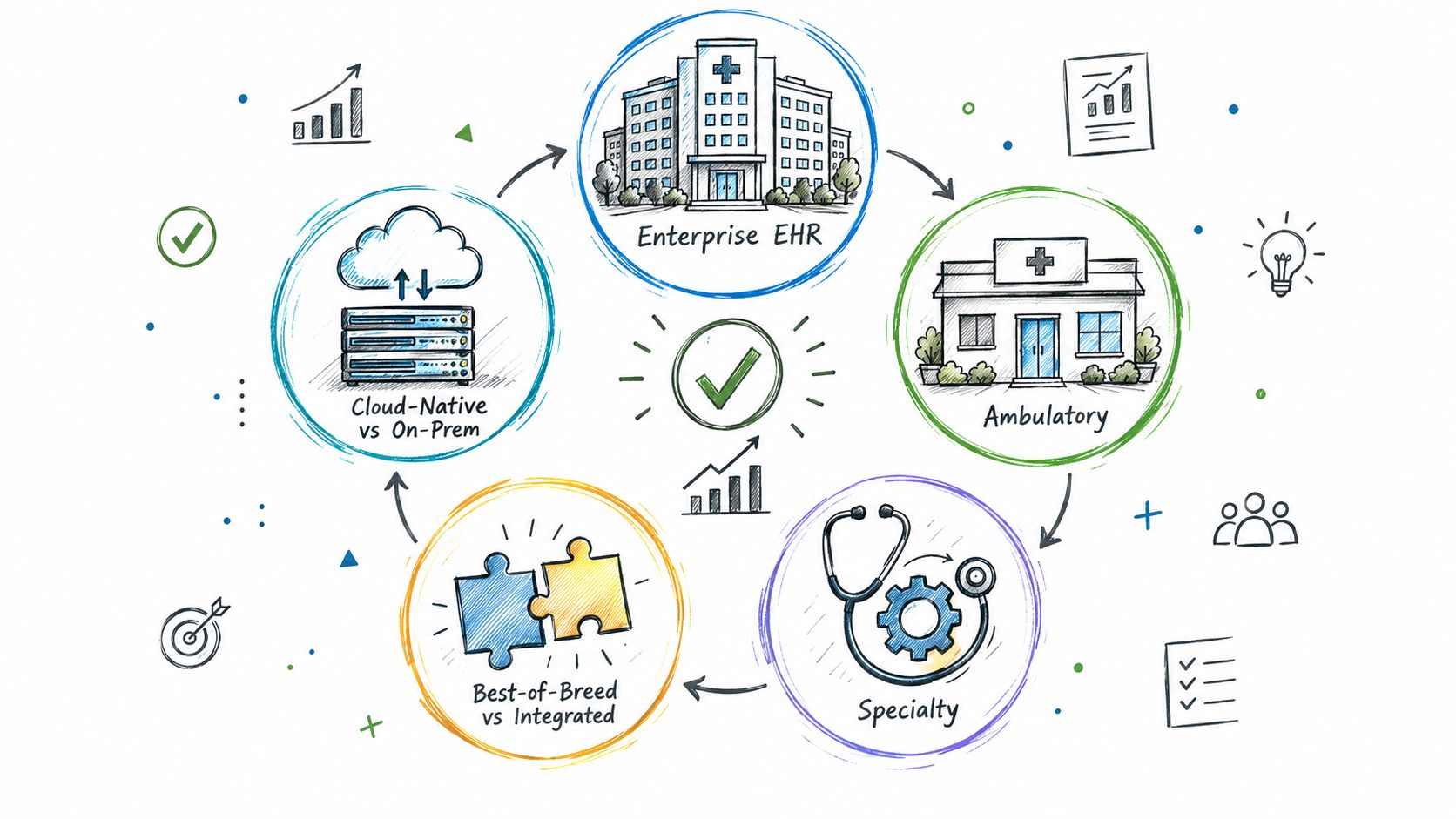
Explore the types of EHR systems by deployment model, care setting and scope. Compare integration options, trade-offs and selection tips for healthtech teams.
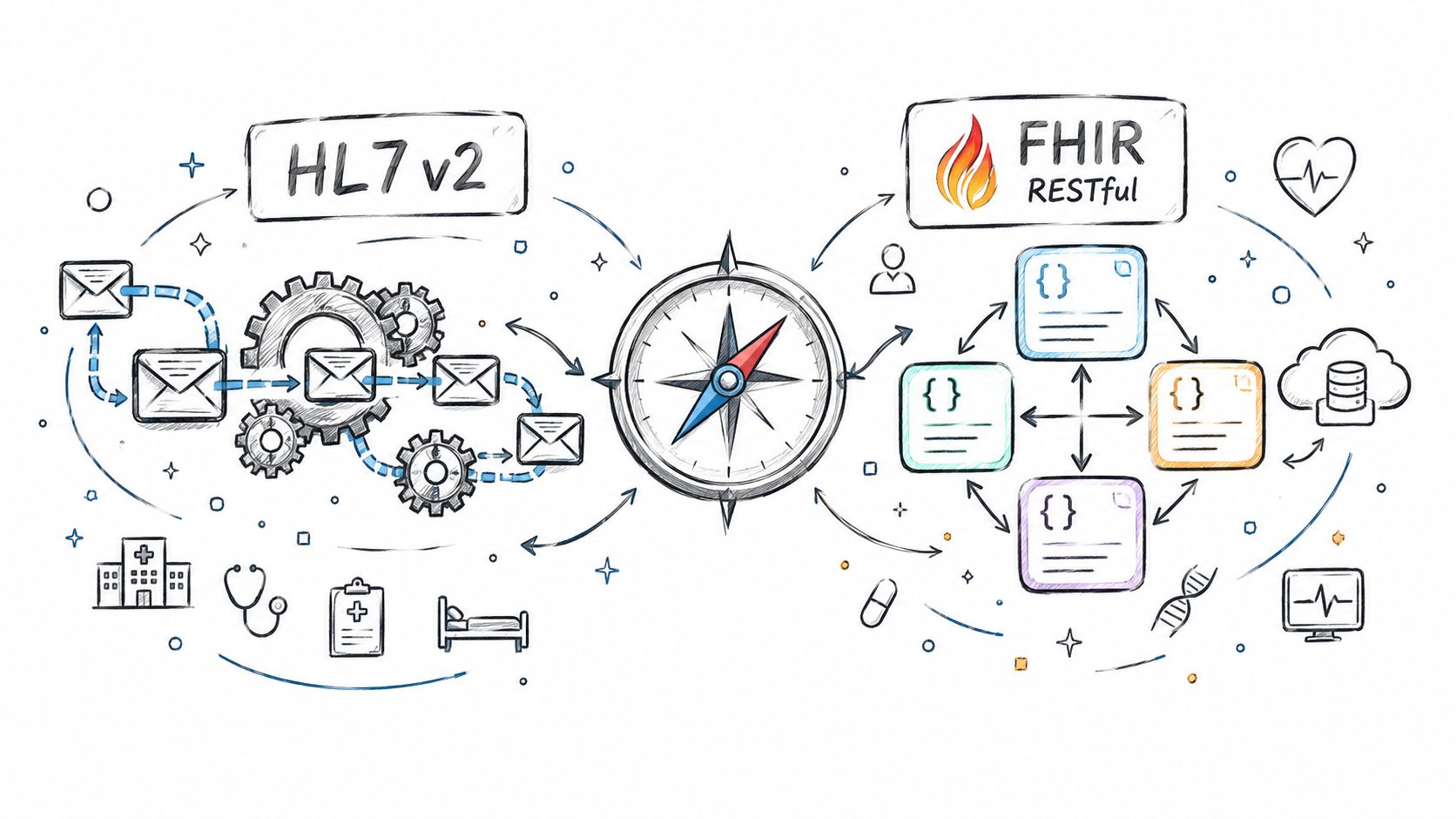
Compare Fhir vs. hl7 standards for healthtech integration. See how HL7 v2 and FHIR differ in use, mechanics, regulation, and real-world architecture.
Connect with our team to explore how AI expertise can transform your business.