AI in Healthcare
Smart on FHIR: What It Is and How It Works in Practice
Smart on FHIR guide for healthtech engineers. Learn the OAuth 2.0 launch model, scope syntax, backend services, and US regulatory requirements.
October 14, 2026Read more
Intelligent automation for healthtech platforms - Elevate your healthtech platform with intelligent automation for healthtech platforms. Discover strategies

In 2025, healthcare organizations sharply increased adoption of domain-specific AI tools, and a large share of that spend went to administrative automation, as noted earlier. That shift matters because paperwork still absorbs a meaningful portion of clinician time, and it creates a clear economic case for automation in healthtech platforms.
For CTOs, intelligent automation is now a platform decision with architectural consequences. The hard questions are less about whether to use AI and more about where to place it, which workflows can tolerate model error, how to maintain auditability, and how to prove that a production deployment improves margin, turnaround time, or staff capacity without creating compliance exposure.
I have seen teams burn six months on a prior authorization demo that looked strong in a sandbox. It extracted fields accurately from a narrow set of forms, then failed once payer formats changed, exceptions piled up, and no one had defined who reviewed low-confidence outputs. The result was manual rework, delayed submissions, and a tool the operations team stopped trusting within weeks.
The teams that get durable value design for those constraints from the start. A successful healthtech automation capability usually looks less glamorous and far more useful. It routes intake across EHR, billing, and payer systems, scores confidence, logs every action, sends edge cases to trained reviewers, and gives compliance teams a record they can inspect. That is the standard to aim for. Stepper AI-native process optimization is a useful reference point for how teams structure workflow automation around measurable operational outcomes rather than model novelty alone.
Administrative waste still absorbs an enormous share of healthcare operating effort, which is why intelligent automation has moved from experimentation to platform planning. The shift is not just about cheaper model inference or better demos. CTOs are under pressure to reduce turnaround time, protect margin, and add capacity without adding compliance risk or headcount at the same pace.
That changes the buying and build decision. The question is no longer whether AI belongs in a healthtech product. The practical question is where automation can make decisions safely, where it needs human review, and which workflows are mature enough to justify integration work across EHRs, billing systems, payer infrastructure, and internal operations tools.
Intelligent automation combines workflow automation, AI models, machine learning, and orchestration logic so the platform can do more than move a task from one queue to another. It can interpret inputs, make bounded decisions, trigger actions, and route exceptions to the right person with context attached.
In healthtech, that usually means combining several layers:
The distinction matters. A single AI feature can improve one task. An IA capability changes operating performance across the product, but only if teams design for traceability, exception handling, and policy enforcement from day one.
Healthtech teams used to evaluate automation as isolated use cases: ambient scribing, claims coding, inbox triage, or call center assistance. Those are still useful entry points. The inflection point is that platforms can now connect those steps into an operational system that carries context across the workflow instead of forcing staff to reconstruct it at every handoff.
That sounds straightforward until production reality shows up. Data is incomplete. Payer rules change. Clinical language is inconsistent. Low-confidence outputs need review queues, service-level targets, and audit logs. Algorithmic bias can skew prioritization if training data reflects uneven access, coding patterns, or historical utilization. Data governance also gets harder once models touch PHI across multiple systems and vendors.
This is why architecture and operating model matter as much as model quality.
For CTOs evaluating architecture patterns, it’s worth reviewing how other teams think about Stepper AI-native process optimization because the useful lens is operational. Which workflows improve throughput, accuracy, and staff capacity when intelligence is built into the process, and which ones create new failure points?
Practical rule: If the workflow still depends on a staff member to copy context across systems, you probably haven’t automated the workflow. You’ve only added software to one step.
A broader product and engineering partner becomes important at this stage. Teams exploring Healthcare AI Services usually do not need another generic model demo. They need workflow selection, compliance-aware architecture, bias monitoring, data controls, and a clear method for proving ROI after the pilot ends.
A smart healthtech platform works like a digital nervous system. Sensors collect signals. Synapses move them quickly. The brain interprets them and decides what happens next. If one layer is weak, the whole system slows down or becomes unsafe.

The platform ingests data from external sources and enterprise systems. For healthtech products, this usually includes EHR events, claims feeds, call recordings, intake forms, lab results, device telemetry, scheduling updates, and payer responses.
The first mistake many teams make is assuming data ingestion is solved because they already have APIs. APIs move data. They don’t normalize it, validate it, reconcile identities, or preserve enough provenance for regulated decisions. Intelligent automation needs those controls from the start.
A practical ingestion layer should handle:
This layer connects systems and moves work. It includes event buses, workflow engines, integration services, robotic process automation where APIs are weak, and rules engines that can enforce deterministic logic.
This is usually the least glamorous part of the stack, and often the most important. If the orchestration layer is brittle, the model doesn’t matter. Healthtech platforms fail here when they build model-centric solutions without designing the operational pathways that turn predictions into action.
A strong orchestration layer decides which tasks can be automated fully, which require review, and which must stop when data quality falls below an acceptable threshold.
The synapses layer is also where many teams justify internal tooling. A queue manager for exceptions, a review console for coding suggestions, or a case dashboard for prior authorization can do more for adoption than another model iteration. Well-designed internal tooling often becomes the bridge between AI output and accountable operations.
The intelligence layer interprets and predicts. Depending on the use case, that could include language models, coding assistance, anomaly detection, forecasting models, or ranking systems for operational prioritization.
The key design principle is bounded intelligence. In healthcare, the platform shouldn’t “freestyle” where deterministic business rules are required. A good architecture separates:
| Layer component | What it should handle | What it should not handle |
|---|---|---|
| Rules engine | Coverage logic, escalation policies, threshold checks | Open-ended language generation |
| ML models | Forecasting, classification, anomaly detection | Final authority on regulated edge cases |
| GenAI services | Summaries, extraction, drafting, structured suggestions | Unsafeguarded autonomous actions in sensitive workflows |
| Human review layer | Exceptions, overrides, audit confirmation | Routine repeatable work that can be standardized |
For teams building regulated workflows or clinical-adjacent products, this architecture thinking also overlaps with custom healthcare software development and, where applicable, product pathways for SaMD solutions. The software has to be usable, traceable, and governable before it can be “smart.”
Analysts at DataArt’s review of intelligent automation in healthcare found two numbers that get a CTO’s attention fast. Revenue cycle automation can cut costs by up to 50% and reduce manual interventions by 70% to 80%. Predictive operations can drive 25% to 35% efficiency gains and reduce patient wait times by 40%. Those results explain why a small set of use cases keeps getting funded while broader AI programs stall.

Revenue cycle is one of the clearest tests of whether intelligent automation can survive contact with real operations. The workflow is repetitive, expensive, and full of delays created by handoffs between documentation, coding, payer rules, authorizations, and follow-up. It also exposes a hard truth. If data quality is poor, automation scales errors faster than staff ever could.
In practice, the strongest RCM programs combine several components instead of relying on one model to do everything. Ambient or dictated documentation capture feeds extraction pipelines. Coding support drafts structured suggestions. Rules engines apply payer logic. Prior authorization workflows assemble the required artifacts and route exceptions to staff. Denial prediction helps teams intervene before a claim fails and starts a rework loop.
Three patterns tend to hold up in production:
The trade-off is straightforward. Higher automation rates can lower admin cost, but only if exception management is designed as a first-class workflow. Many teams underinvest there. They automate intake and submission, then leave staff with vague alerts, no reason codes, and no audit trail. That design usually increases frustration rather than reducing labor.
Another common mistake is automating around process fragmentation. If documentation standards vary by provider, payer policies live in spreadsheets, and appeals happen in email threads, the model becomes a thin prediction layer on top of operational disorder. Standardizing source data and handoff rules usually creates more value than adding another model.
The second high-impact category sits closer to care delivery. Bed management, appointment flow, staffing allocation, discharge timing, and room utilization all suffer when teams react too late. Most healthtech platforms already store enough signals to forecast pressure points. The hard part is connecting those forecasts to operational actions people will trust.
Useful systems combine admission patterns, discharge estimates, no-show risk, staffing rosters, appointment readiness, and device or facility telemetry. The platform should then trigger specific actions: reschedule lower-priority slots, escalate discharge coordination, notify intake teams about bottlenecks, or reroute work to available staff.
Forecasts without workflow execution rarely move the KPI.
That matters in provider operations and in digital health products. If you want to build a healthcare scheduling app, booking logic is only the visible layer. Real performance depends on intake completion, cancellation handling, reminder timing, capacity rules, and how quickly the system reacts when a schedule starts drifting off plan.
The same principle applies to provider engagement workflows. Teams that need coordinated communication, task follow-up, and operational prompts often use focused tools such as an HCP engagement co-pilot for provider communication workflows rather than forcing a general-purpose model into every interaction.
These two categories matter because they tie automation to measurable operating metrics, not abstract model performance. RCM affects denials, days in A/R, coding throughput, and staff utilization. Predictive operations affect wait times, bed turnover, schedule stability, and service levels.
They also reveal whether a healthtech platform is ready for intelligent automation under real constraints. Can it handle exceptions without losing traceability? Can it separate recommendations from regulated decisions? Can it prove the workflow improved outcomes without introducing bias or hidden operational risk?
That is the standard. Not whether the demo looks impressive.
| Use Case | Core Technology | Key KPIs | Potential ROI |
|---|---|---|---|
| Autonomous RCM | GenAI, NLP, workflow automation, payer integrations, rules engines | Manual interventions, coding accuracy, denials, payment cycle speed | Up to 50% cost savings and 70% to 80% fewer manual interventions |
| Predictive operations and patient flow | ML forecasting, real-time data integration, IoT feeds, workflow orchestration | Wait times, bed utilization, staffing allocation, queue stability | 25% to 35% efficiency gains and 40% lower patient wait times |
Teams often talk about compliance as if it’s a checklist. In healthtech, that mindset creates risk. Regulatory compliance matters, but it isn’t enough if the automation itself behaves inconsistently, amplifies bias, or can’t be audited in context.

A useful contrarian view is that intelligent automation can worsen inequity if teams deploy it with generic models and weak governance. As discussed in Notable Health’s perspective on intelligent automation and health inequities, models trained on non-local data can fail on specific populations, such as dermatology apps performing poorly on darker skin, and 80% of AI bias stems from data.
That should change how CTOs design systems. If your training data, labeling assumptions, or fallback logic don’t reflect the actual care environment, the workflow may look efficient while producing systematically worse outcomes for some groups.
Algorithmic governance in healthcare has to go beyond access controls and audit logs. It needs operating rules for how decisions are made, reviewed, and corrected.
A practical governance model includes:
This is especially important for products that may evolve toward regulated decision support, care navigation, or SaMD solutions. A system that can’t explain how it arrived at an output becomes hard to defend operationally, legally, and clinically.
Governance note: If you can’t answer “when should this model be ignored?” you’re not ready to deploy it in a sensitive workflow.
The strongest teams treat privacy, consent, retention, access segregation, and model review as architecture choices, not legal paperwork at the end. That changes vendor selection, event logging, model hosting decisions, and the structure of review tools.
For teams building formal governance routines, resources on actionable AI governance for teams can help frame ownership, review cadence, and policy enforcement in a way engineering and operations can effectively run.
Products built for governance can also support this layer. One example is Alethic AI, which is aimed at making AI oversight and accountability more operational inside workflows, rather than treating governance as a separate documentation exercise.
The business case for intelligent automation is strong. The delivery track record is mixed. According to Softtek’s digital health trends analysis, generative AI and intelligent automation are projected to cut healthcare costs by 5% to 10% annually, equivalent to $200 billion to $360 billion, but 85% of AI proofs-of-concept fail to scale. That gap is where most programs stall.

Start with workflow economics, not model enthusiasm. Identify where staff effort is concentrated, where delays create financial or clinical consequences, and where the process has enough consistency to automate safely.
This phase should answer a few hard questions:
A good Custom AI Strategy report should produce a shortlist of use cases, a target architecture, data and governance requirements, and a phased delivery sequence. If the output is only a list of “AI ideas,” the strategy work wasn’t deep enough.
The pilot shouldn’t prove that a model can produce output. It should prove that the workflow can run with lower friction and acceptable risk. That means you need baseline metrics before launch and operational success criteria after launch.
Measure the full path:
| Pilot question | What to validate |
|---|---|
| Is the data usable? | Completeness, consistency, latency, auditability |
| Is the output reliable enough? | Error patterns, reviewer agreement, exception volume |
| Does the workflow improve? | Turnaround time, queue reduction, fewer handoffs |
| Can staff use it? | Adoption, overrides, trust, training burden |
Pilots fail when teams underinvest in reviewer tooling, exception pathways, and change management. In healthcare, users won’t trust a workflow they can’t inspect.
Scaling means reducing custom handling, strengthening integrations, and building operating controls. Without these, fragile pilots often break. One new payer workflow, one data feed change, or one clinic-specific variation can expose how much logic still lives outside the platform.
The scale phase usually requires:
A formal AI Product Development Workflow addresses these needs. It keeps use case scope, architecture, model behavior, validation, rollout, and feedback loops tied together instead of leaving them as separate workstreams.
Once a workflow is stable, optimize around edge cases and adjacent processes. Most organizations expand too early by chasing new use cases before tightening the first one. That creates a portfolio of pilots and very little platform value.
A better sequence is:
For example, a successful RCM automation foundation may later support authorizations, eligibility, patient collections, and audit prep. A stable operational forecasting system may extend into staffing, room turnover, and outreach prioritization.
Scale is not “more AI.” Scale is repeatable delivery, controlled risk, and a playbook that survives operational variation.
CTOs often ask where AI strategy consulting fits in this roadmap. The answer is early, but not only early. Strategy isn’t just discovery. It also shows up in pilot design, governance choices, and expansion sequencing, which is why the strongest programs revisit assumptions after each phase.
HealthTech teams rarely fail because they lack AI models. They stall because execution breaks across product, compliance, data, and operations.
Ekipa AI is relevant when a CTO needs help turning a promising use case into a production workflow with clear ownership, auditability, and measurable business impact. The practical value is not generic AI advice. It is support across workflow selection, architecture decisions, implementation planning, and delivery in environments where integration debt and regulatory review slow everything down.
The pressure points are usually operational.
In those situations, disciplined requirements work matters more than another prototype. A structured discovery and planning step should force decisions on process boundaries, human review points, failure handling, PHI exposure, and ROI thresholds before engineering capacity gets committed.
A credible partner should cover three things. First, opportunity assessment tied to workflow economics. Second, an execution plan that reflects compliance and data constraints, not just model ambition. Third, delivery support that gets the automation into live operations with monitoring, fallback paths, and accountability for outcomes.
For teams that need hands-on implementation, AI Automation as a Service can fit cross-system workflows such as billing, reporting, scheduling, and documentation processes where internal teams do not want to assemble every component themselves. Teams building adjacent platform capabilities can also evaluate AI tools for business if the goal is to extend operational intelligence into provider or back-office workflows.
The selection criteria are straightforward. Choose a partner that can define model boundaries, work within healthcare data controls, handle edge cases, and quantify value after deployment. If a firm can only get you to a demo, the core work still sits with your team.
The distinction matters because these systems fail in different ways.
Basic automation follows explicit rules. It routes data, triggers notifications, or updates records when the conditions are stable and predictable. Intelligent automation adds interpretation. It can read clinical documents, classify inbound requests, extract context from unstructured text, or recommend the next action when a workflow includes ambiguity.
For a CTO, the practical question is not which one is better. It is which parts of the workflow are deterministic and which parts need judgment. In regulated environments, that boundary affects testing scope, auditability, and who must review exceptions.
Start with a process that has three traits. High volume, measurable delay or labor cost, and a clear system of record. Revenue cycle operations, intake coordination, prior authorization support, and documentation workflows often meet that standard because the pain is visible and the outcome can be measured.
Avoid a first use case that depends on fragmented data, unresolved policy questions, or broad clinical autonomy. Those projects can be valuable later, but they are poor candidates for proving delivery discipline or ROI.
A good first deployment should teach the organization how to handle exceptions, logging, user adoption, and governance under real operating conditions.
Judge ROI at the workflow level.
Measure current handling time, rework rate, queue backlog, denial exposure, escalation volume, and the cost of manual review. Then estimate the likely improvement after automation, along with the new costs it introduces: model monitoring, compliance review, retraining, vendor spend, and human oversight for low-confidence cases.
Teams often get overly optimistic. A model can perform well in testing and still miss the ROI target if staff bypass it, if exception rates stay high, or if each decision requires added review to satisfy policy. In healthtech, savings only count when the workflow holds up in production.
Perfection is not the goal. Traceability is.
A workable foundation includes consistent identifiers, timestamp integrity, access controls tied to role, clear data lineage, and enough normalization to support action across systems. Teams also need a way to preserve the context around each recommendation or automated action, especially when PHI is involved or when a user later challenges the output.
If the platform cannot show what data informed a decision, who had access to it, and what happened next, scale will create compliance and operational risk faster than it creates value.
Yes, if the design is narrower and the governance is tighter.
Under-resourced organizations often deal with weaker interoperability, limited historical data, smaller implementation teams, and less tolerance for disruption. That changes the delivery model. Constrained workflows, local validation, conservative confidence thresholds, and clear fallback paths usually matter more than model sophistication.
The trade-off is speed versus breadth. A narrower rollout is less impressive on paper, but it is more likely to survive contact with daily operations.
No single team should own it in isolation. Product should define the workflow outcome and user experience. Engineering should own reliability, integrations, and observability. Operations should validate whether the process works in practice. Compliance and legal should set the control boundaries. Clinical and domain leaders should define safe escalation, acceptable error, and where human review remains required.
That operating model is what separates a pilot from a production capability.
For organizations that want to test assumptions before committing engineering capacity, reviewing our expert team can help frame what good implementation support looks like in healthtech, where domain judgment, governance design, and change management matter as much as model performance.
If you're planning intelligent automation for healthtech platforms and need a clear path from use case selection to implementation, Ekipa AI can help you evaluate opportunities, structure the roadmap, and move toward production with the right mix of strategy, workflow design, and execution support.
Smart on FHIR guide for healthtech engineers. Learn the OAuth 2.0 launch model, scope syntax, backend services, and US regulatory requirements.
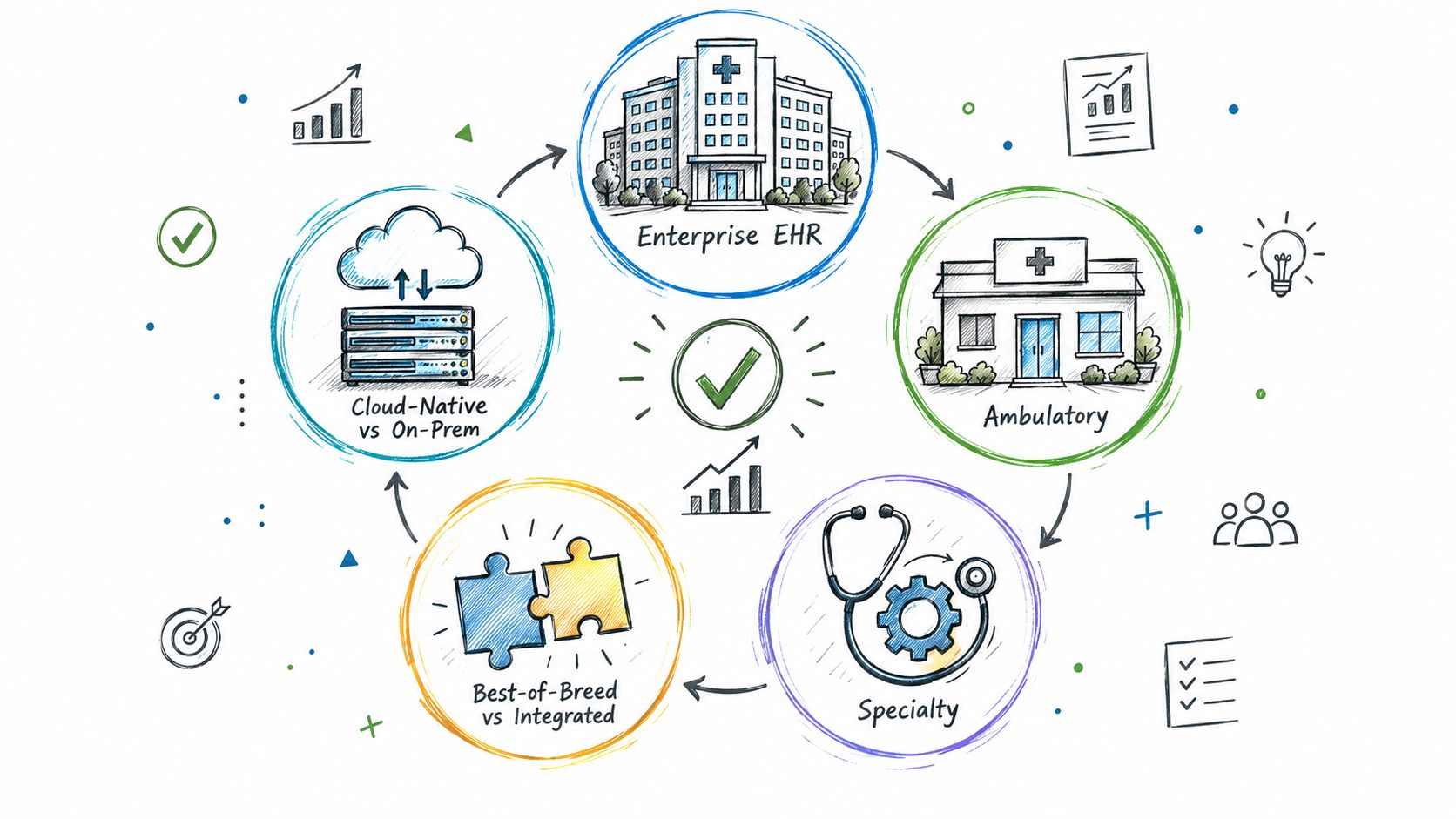
Explore the types of EHR systems by deployment model, care setting and scope. Compare integration options, trade-offs and selection tips for healthtech teams.
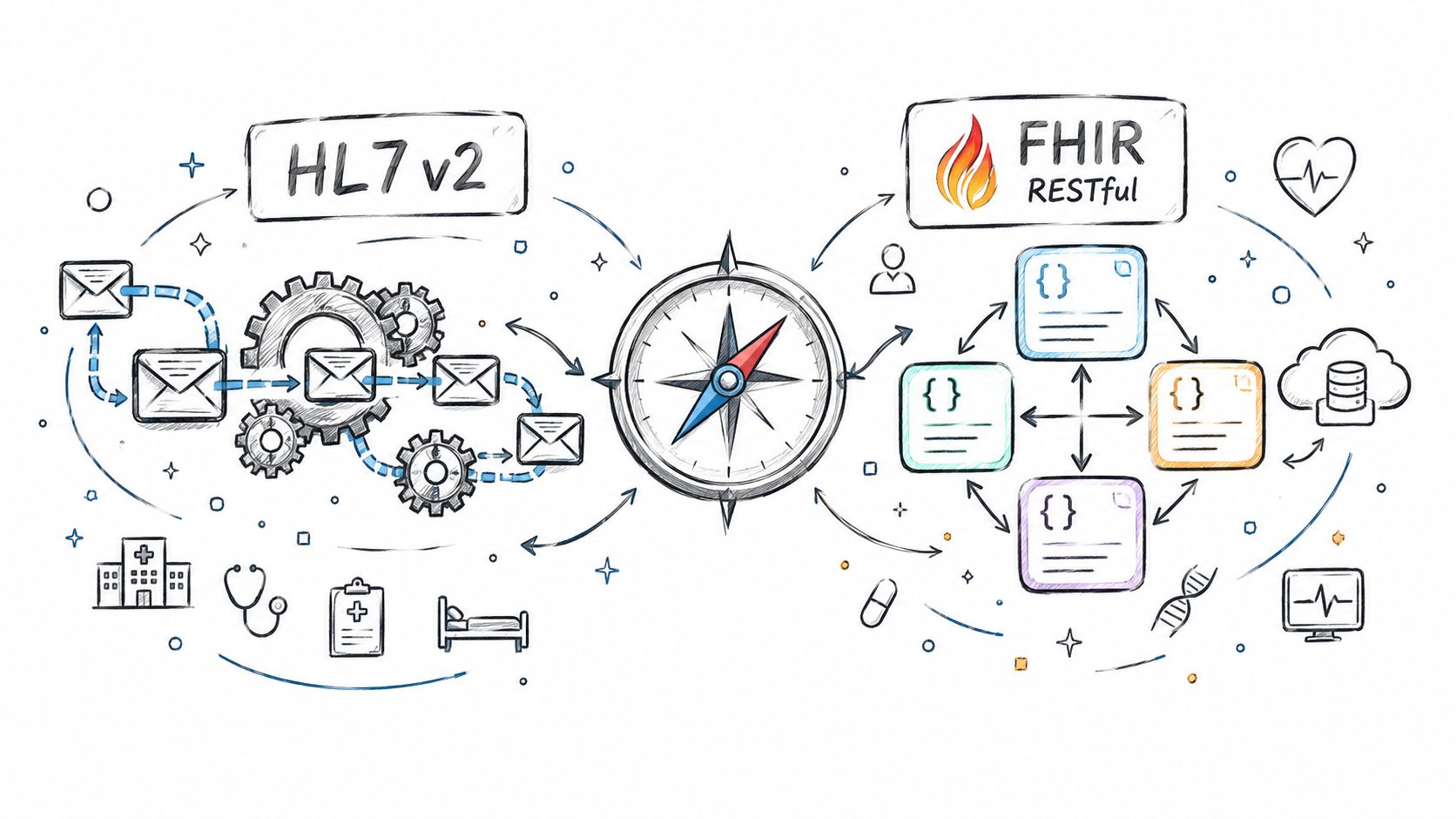
Compare Fhir vs. hl7 standards for healthtech integration. See how HL7 v2 and FHIR differ in use, mechanics, regulation, and real-world architecture.
Connect with our team to explore how AI expertise can transform your business.