
AI in Healthcare
Smart on FHIR: What It Is and How It Works in Practice
Smart on FHIR guide for healthtech engineers. Learn the OAuth 2.0 launch model, scope syntax, backend services, and US regulatory requirements.
October 14, 2026Read more
A practical playbook on healthtech process automation with AI. Learn to scope, build, integrate, and scale automation for maximum ROI while ensuring compliance.

Healthcare leaders don't need another abstract AI vision deck. They need a way to decide what to automate, how to implement it without breaking operations, and how to prove the investment was worth it.
The business case is no longer speculative. Strategic AI integration in healthcare has been associated with 30% efficiency gains, 40% improvements in diagnostic accuracy, and $3.20 returned for every $1 invested within 14 months, while 94% of U.S. healthcare organizations now view AI as core to operations, according to Strativera's healthcare AI transformation analysis. That combination changes the conversation. AI is no longer a side experiment for innovation teams. It's an operating model decision.
In practice, healthtech process automation with ai succeeds when executives and technical leads work from the same playbook. The C-suite needs a capital allocation lens. Tech leads need a delivery roadmap, integration checkpoints, and compliance guardrails. Operations leaders need confidence that rollout won't create new bottlenecks while solving old ones.
That's where disciplined execution matters. In mature teams, the win doesn't come from buying a flashy model. It comes from pairing workflow analysis with selective automation, then scaling only after the pilot proves it can survive the messiness of real care delivery.
Nearly every health system now has AI on the roadmap. This inflection point is more practical than strategic. Teams can no longer absorb rising administrative volume with the same staffing model, the same disconnected systems, and the same manual controls.
I have seen this shift show up first in operating reviews, not innovation meetings. Revenue cycle leaders want fewer status checks and less rework. Clinical operations teams want documentation and routing tasks off overloaded staff queues. Security and compliance teams want clear controls before another tool touches PHI. Once those pressures converge, AI automation becomes an operating decision shared by the C-suite and Tech Leads, not a side project owned by one department.
The pattern is already clear in billing and claims. Many organizations are adopting automated revenue cycle management for practices because repetitive handoffs, portal checks, and manual exception handling are expensive to keep. The same tipping point now shows up in intake, prior authorization, coding support, patient messaging, referral coordination, and documentation workflows.
Three conditions usually signal that an organization is ready.
A practical rule helps here. Start where humans are acting like middleware. If a nurse, registrar, biller, or coordinator is spending hours moving information between the EHR, payer portals, call center tools, and document repositories, that workflow is usually close to automation-ready.
Strong teams also stop separating strategy from implementation. The executive question is whether the workflow matters enough to fund. The technical question is whether the workflow can be integrated, audited, and governed without creating new compliance problems. Those questions belong in the same decision process.
That is why some organizations engage specialized Healthcare AI Services for strategy, integration, and compliance planning early. The goal is not to buy more tooling. The goal is to choose a phased path that ties business value to architecture, security review, and deployment checkpoints before the first pilot goes live.
A bad first automation choice can stall an AI program for a year. In healthcare, the highest-visibility pain point is often not the best first deployment target.
The superior starting point is observable workflow evidence. Teams should document the current process, measure where time is spent, and identify which delays come from manual handling instead of true clinical judgment. That is also the stage where executive priorities and technical constraints need to sit in the same room. A use case only deserves funding if it can produce business value and survive integration, security, and compliance review.

The strongest candidates usually share four traits. They occur often. They follow a defined path most of the time. Manual execution creates measurable delay or error. One operational owner can make decisions when trade-offs come up.
That tends to put a familiar set of workflows near the top of the list:
One caution matters here. Teams regularly overrate process pain and underrate input quality. If referral packets arrive in inconsistent formats, scanned documents are low quality, or payer responses are trapped in disconnected systems, the workflow may still be worth automating, but the first phase has to solve data intake before anything more ambitious. For document-heavy operations, a purpose-built AI-powered data extraction engine for healthcare workflows can reduce that risk by turning variable forms and packets into structured inputs the downstream process can use.
Strong teams do not rank use cases by enthusiasm, seniority, or who complains the loudest. They score them against a small set of criteria and accept the trade-offs that follow.
Operational drag
How much staff time does the process consume, and how often does it interrupt higher-value work?
Data readiness
Is the source data accessible and consistent enough to support a pilot, or will the team spend the quarter cleaning inputs?
Integration complexity
Can the workflow connect into the EHR, payer systems, document repositories, and tasking tools without excessive workaround logic?
Clinical or financial impact
Will success change a metric leadership already tracks, such as turnaround time, denial rate, throughput, or patient response time?
Governance fit
Can the team define review thresholds, exception handling, audit logs, and escalation paths before production use?
I usually advise leadership and technical leads to score each category together, not in sequence. Executives are good at judging impact and ownership. Engineering and security leads are better at spotting hidden integration cost and governance gaps. If those groups score separately, weak candidates often survive too long.
A workflow can look ideal on a whiteboard and still fail in pilot because the documents are inconsistent, the exceptions are poorly defined, or no one owns the final decision when the model is uncertain.
A strong first project is narrow enough to implement in one phase, visible enough to earn trust, and bounded enough to audit. Good examples include extracting intake data into structured fields, triaging denial-related documentation, handling prior auth packets, or summarizing calls for follow-up routing.
Weak first projects usually break for one of three reasons:
That last point matters more than many teams expect. The first project is not just a delivery exercise. It sets the operating standard for model review, auditability, incident response, and change control. If the first deployment is too broad, the organization learns the wrong lessons.
A disciplined discovery process moves in this order:
| Step | What the team does | What you need before moving on |
|---|---|---|
| Map the workflow | Document each handoff, system touchpoint, approval path, and exception route | Agreement on the current-state process |
| Quantify friction | Isolate delays, rework loops, manual entry, and error patterns tied to labor or service impact | A shortlist of pain points linked to business outcomes |
| Test feasibility | Review data quality, system access, PHI exposure, and compliance constraints | Confidence that a pilot is technically and operationally viable |
| Scope the pilot | Define one bounded workflow with clear in-scope users, systems, and review rules | Named owner, timeline, rollback plan, and escalation path |
| Lock metrics | Decide how success will be measured before launch | Baseline KPIs, reporting cadence, and pilot exit criteria |
Some organizations run this analysis internally. Others use a structured outside review to pressure-test assumptions and sequencing. A focused Custom AI Strategy report can help leadership move from a broad opportunity map to a pilot slate with clear order of operations. Reviewing real-world use cases is also useful before locking the first implementation decision, especially when the team needs examples that connect business goals to system design and governance checkpoints.
Once a use case is selected, the conversation gets more technical fast. This is the point where many executive teams oversimplify and many engineering teams overbuild.

Healthtech process automation with ai usually depends on three layers working together. First, a workflow layer that moves tasks and triggers. Second, an intelligence layer that classifies, extracts, summarizes, or predicts. Third, a control layer that handles review, auditability, privacy, and exception management.
You don't need every model type for every workflow. You need the smallest stack that solves the job reliably.
Common building blocks include:
One useful product category here is structured extraction. Teams that handle large document volumes often evaluate tools like this AI-powered data extraction engine when they need to convert messy healthcare paperwork into usable operational data.
Most automation projects don't fail because the model is weak. They fail because the surrounding data and system design are weak.
The recurring issues are familiar:
If your team can't explain where each field originates, who validates it, and where it lands, you're not ready to automate that workflow at production depth.
Privacy, security, and regulatory risk need to shape the architecture from the first design review. In practical terms, that means limiting data movement, defining access boundaries, creating auditable logs, and documenting model behavior in language that legal, compliance, and operations teams can all review.
For regulated products, that rigor gets stricter. If the AI output informs diagnosis, treatment, or other regulated clinical functionality, the solution can move toward the category of SaMD solutions. At that point, product strategy and regulatory planning need to move together.
A few implementation principles hold up consistently:
What works is modest scope, high-quality inputs, and explicit decision boundaries. A document extraction flow with reviewer approval and strong audit logs can be deployed safely. A rules-plus-model workflow for routing referral packets can often deliver value without touching core clinical judgment.
What doesn't work is vague ambition. "Let's build an AI layer over all operations" isn't a roadmap. It's a budget sink.
A realistic stack should fit the workflow. Not the other way around.
Leaders often frame build versus buy as a procurement question. It isn't. It's an operating model choice about control, speed, maintainability, and future constraints.
The wrong decision creates long-term drag. Buy the wrong tool and your team spends years working around someone else's assumptions. Build the wrong system and you own a custom platform no one has bandwidth to maintain.
Start with the workflow itself. If the process is highly specific to your clinical, payer, or operational environment, off-the-shelf tools may fit poorly. If the workflow is common, stable, and not strategically unique, buying often makes more sense.
| Factor | Choose 'Build' If... | Choose 'Buy' If... |
|---|---|---|
| Workflow uniqueness | Your process is specialized and creates competitive or operational advantage | The workflow is common across healthcare organizations |
| Integration needs | You need deep control over EHR, payer, or internal system orchestration | The vendor already supports the systems you rely on |
| Compliance posture | You need bespoke controls, review logic, or deployment constraints | The vendor's security and governance model fits your requirements |
| Internal talent | Your team can own architecture, testing, and lifecycle management | Your team is thin and needs faster delivery |
| Product roadmap control | You expect to evolve the workflow aggressively over time | Standardized functionality is acceptable |
| Time to value | You can tolerate a longer path for better long-term fit | You need a production-ready solution sooner |
Buying is often right when the problem is well understood and your differentiator isn't the automation engine itself. That applies to many task categories in document processing, transcription assistance, workflow routing, and standard admin orchestration.
Vendor evaluation should focus on specifics:
If you're exploring the market broadly, start with a shortlist of AI tools for business but evaluate them against your workflow map, not generic demos.
Building makes sense when the workflow is tied tightly to your own operating logic, when the competitive value sits in orchestration, or when you need to protect domain-specific IP. It also makes sense when existing vendors can't satisfy your security, hosting, or integration requirements.
Working with a healthtech engineering partner can be useful, especially if you need to combine AI components, workflow controls, and system integration without standing up a large internal team immediately. For organizations creating proprietary platforms or tightly customized operations software, custom healthcare software development may be the more durable route.
Buy for commodity workflows. Build for differentiated workflows. Hybridize when the intelligence layer is standard but the orchestration layer is unique.
In practice, the strongest organizations rarely choose pure build or pure buy. They buy stable components where the market is mature, then build the integration, governance, and user workflow layers that reflect how their teams work.
That's usually the most defensible path. It preserves speed without surrendering operational control.
Health systems do not fail at AI because the model is weak. They fail because ownership is fuzzy, controls arrive late, and the pilot never becomes an operating pattern.
The roadmap that works for both executives and technical leads is the same one. Start with a business target the C-suite will defend. Translate it into a bounded workflow the delivery team can instrument, secure, and integrate. Then add governance and scale only after the workflow proves it can survive real exceptions, real users, and real compliance review.
A practical structure for healthcare automation uses five phases: planning, analysis, optimization, acceleration, and full enablement, with a Center of Excellence introduced during optimization and pilot validation before scale, according to Empeek's healthcare automation methodology.

Phase 1 sets the terms of success.
Executives should name the operational result first: lower turnaround time, fewer manual touches, cleaner documentation, fewer denials, better staff utilization. Tech leads should then define the workflow boundary that can produce that result without dragging half the enterprise into the first release.
Answer these questions before any prototype starts:
Architecture decisions belong here too. If the process crosses the EHR, CRM, document systems, payer portals, or internal messaging tools, map each dependency now. Teams that skip this step usually discover late that the AI worked, but the workflow still broke at handoff points.
Phase 2 tests whether the workflow holds up outside a workshop.
The proof of concept should include live data patterns, realistic exceptions, and user feedback from the staff who run the workflow today. Clean samples create false confidence. Messy cases expose what the implementation will cost in review effort, integration work, and policy design.
A useful analysis phase includes:
This phase often changes the investment thesis. Sometimes the right answer is a smaller model with stronger routing, better retrieval, and tighter human review. That is usually cheaper to run and easier to defend in an audit.
Optimization turns a pilot into a repeatable delivery model.
This is the point where organizations should establish a Center of Excellence, or at least a clear cross-functional governance group. Without that layer, each team creates its own prompts, evaluation methods, approval patterns, and logging standards. Costs rise. Auditability drops. Reuse disappears.
A good CoE usually owns:
| CoE responsibility | Why it matters |
|---|---|
| Reusable automation patterns | Prevents every team from rebuilding routing, review, and logging |
| Model and prompt evaluation methods | Creates consistent testing across use cases |
| Compliance documentation templates | Speeds security, privacy, and legal review |
| KPI tracking standards | Lets leaders compare ROI across initiatives |
| Rollout playbooks | Gives delivery teams a standard path to production |
For C-suite leaders, Phase 3 is where AI stops being a string of pilots and becomes a portfolio. For tech leads, it is where standards reduce delivery friction.
Acceleration should follow adjacency, not enthusiasm.
Expand into workflows that share similar inputs, system dependencies, review logic, and regulatory constraints. If document intake extraction works, referral packet processing may be a logical next move. If prior authorization status handling works, adjacent utilization management tasks may follow. That sequence shortens integration time and lowers governance overhead because the control pattern is already familiar.
This is also the phase to harden the operating model. Add production monitoring, reviewer capacity planning, release controls, rollback paths, and periodic model evaluation. Teams that need support across design, implementation, and rollout often use a structured AI implementation support model for healthcare automation to keep delivery moving without stalling internal engineering priorities.
Full enablement means the organization can deploy AI process automation repeatedly, with known controls and predictable delivery steps.
At this point, teams usually move beyond structured forms into voice, chat, inbox triage, and unstructured clinical or administrative records. The pattern should stay disciplined: one bounded use case, one accountable owner, one review workflow, one measurement plan, and one compliance record that shows how decisions are made and checked.
Scale should not weaken control. It should standardize it.
Automation programs stall when workforce planning shows up after the technical design. Staff resistance is usually a design signal, not a cultural flaw. Review queues may be poorly built. Escalation rules may be unclear. Exception burden may have shifted to frontline teams without anyone measuring it.
Role redesign works better than role compression.
A practical workforce plan includes:
BCG's 2026 discussion of AI agents in healthcare argues that organizations need to plan multi-year workforce shifts and role redesign as AI augments work rather than replacing it, in its analysis of how AI agents will transform healthcare.
Frontline trust drops fast when automation removes visible tasks but leaves behind a larger exception queue and less clarity about who owns it.
For organizations that need ongoing operational support rather than a one-time implementation, AI Automation as a Service can fit workflows that require continued tuning, and targeted internal tooling can help ops teams manage approvals, reviewer queues, and exception handling without overloading core systems. Ekipa AI is one option in this category for teams looking at strategy-to-execution support across healthcare workflows.
Healthcare AI programs usually stall after the first win, not because the model failed, but because the organization never defined what scale should prove. The ultimate assessment is whether the workflow keeps producing measurable value under normal operating conditions, with audits, exceptions, and policy changes included.
The first 30 to 90 days after go live should answer three questions. Is the process faster in a way that matters to the business. Is quality holding under production volume. Can the same operating model be repeated in the next workflow without creating more compliance and support overhead than value.

Executives need a scorecard tied to business outcomes. Tech leads need instrumentation that shows where the workflow breaks. Using only one view causes problems. A dashboard that shows time saved but hides exception growth will mislead the leadership team. A dashboard full of model metrics but disconnected from labor, revenue cycle, or service performance will not survive budget review.
Track a balanced set of measures:
One metric matters more than teams expect. Measure the percentage of cases completed straight through versus the percentage that require human rescue. That number usually tells both the CFO and the engineering lead whether the workflow is scaling effectively.
Scale changes the failure mode. Early pilots fail loudly because everyone is watching. Expanded deployments fail subtly because edge cases spread across teams, sites, and integrations.
That is why scaling needs operating controls, not just better prompts or another model release.
Set four checkpoints before expanding a workflow to new volumes, departments, or geographies:
Review exception trends on a fixed cadence
Look for shifts by payer, document type, language, location, and intake source. A stable average can hide a sharp decline in one segment.
Monitor user behavior, not only system output
Bypass activity, excessive overrides, and side spreadsheets usually indicate trust or usability problems before formal complaints appear.
Revalidate integrations after upstream change
Template edits, EHR field updates, payer form revisions, and document layout changes can degrade routing or extraction without triggering a system outage.
Keep change governance active
Any update to prompts, thresholds, routing rules, or connected systems should pass through compliance, security, and operational review with a documented approval path.
In practice, the organizations that scale cleanly treat monitoring as part of the product, not as project cleanup. They budget for it, assign it, and review it at the same cadence as other operational KPIs.
Audit logs matter. Fair performance across patient groups matters just as much.
The California Health Care Foundation notes that AI may help analyze data for underserved groups, but experts also warn that bias mitigation still gets too little attention, and outcomes depend on intentionally diverse datasets in its discussion of AI and underserved communities.
For C-suite leaders, that means ROI cannot be judged only by labor savings or throughput. For tech leads, it means test coverage cannot stop at average accuracy. An intake classifier, triage workflow, or outreach process can look successful in aggregate while performing worse for patients with limited English proficiency, inconsistent documentation history, or fragmented access to care.
A practical equity review asks:
Teams do not need to solve every fairness question before launch. They do need a repeatable review process, segmented testing, and clear thresholds for intervention. That is what scaling with integrity looks like in practice. It connects executive oversight, technical monitoring, and compliance decision-making into one operating model instead of treating them as separate workstreams.
Start with one workflow that is high-volume, repetitive, and painful, but not clinically ambiguous. Patient intake, referral handling, prior auth document review, and repetitive documentation support are usually better first candidates than broad clinical decision workflows.
Less than is typically desired initially. The first release should automate the repeatable core and leave clear reviewer checkpoints for low-confidence or high-risk cases. That gives the team production learning without forcing blind trust.
Skipping workflow mapping. Organizations often buy a capable tool before they understand the actual process, exception paths, and data handoffs. That leads to brittle automation and frustrated staff.
Not always. Many early workflows depend more on process design, data preparation, integration, and reviewer experience than on novel model development. The need for a larger specialist team grows as workflows become more complex or more regulated.
Ask vendors to walk through your real workflow, not a polished generic demo. Make them show exception handling, auditability, human review, access controls, and integration depth. If they can't explain how the system behaves when data is missing or inconsistent, the evaluation isn't complete.
It becomes more complex when the AI output influences regulated clinical use, not just administrative efficiency. At that point, product design, validation, documentation, and regulatory planning need tighter alignment.
Include throughput, turnaround time, exception rate, correction rate, user adoption, and a small set of business outcomes tied directly to the pilot's original objective. Keep the dashboard operational. If teams can't act on a metric, remove it.
Use a structured discovery process that ties workflow evidence to feasibility, integration, and governance. If you need a fast starting point, an AI Strategy consulting tool can help frame opportunity areas before you commit engineering capacity.
If you're evaluating healthtech process automation with ai and want a practical path from use case selection to compliant rollout, Ekipa AI can help you assess workflows, prioritize opportunities, and move into execution with the right mix of strategy and technical support. You can also review our expert team to see who supports these engagements.
Smart on FHIR guide for healthtech engineers. Learn the OAuth 2.0 launch model, scope syntax, backend services, and US regulatory requirements.
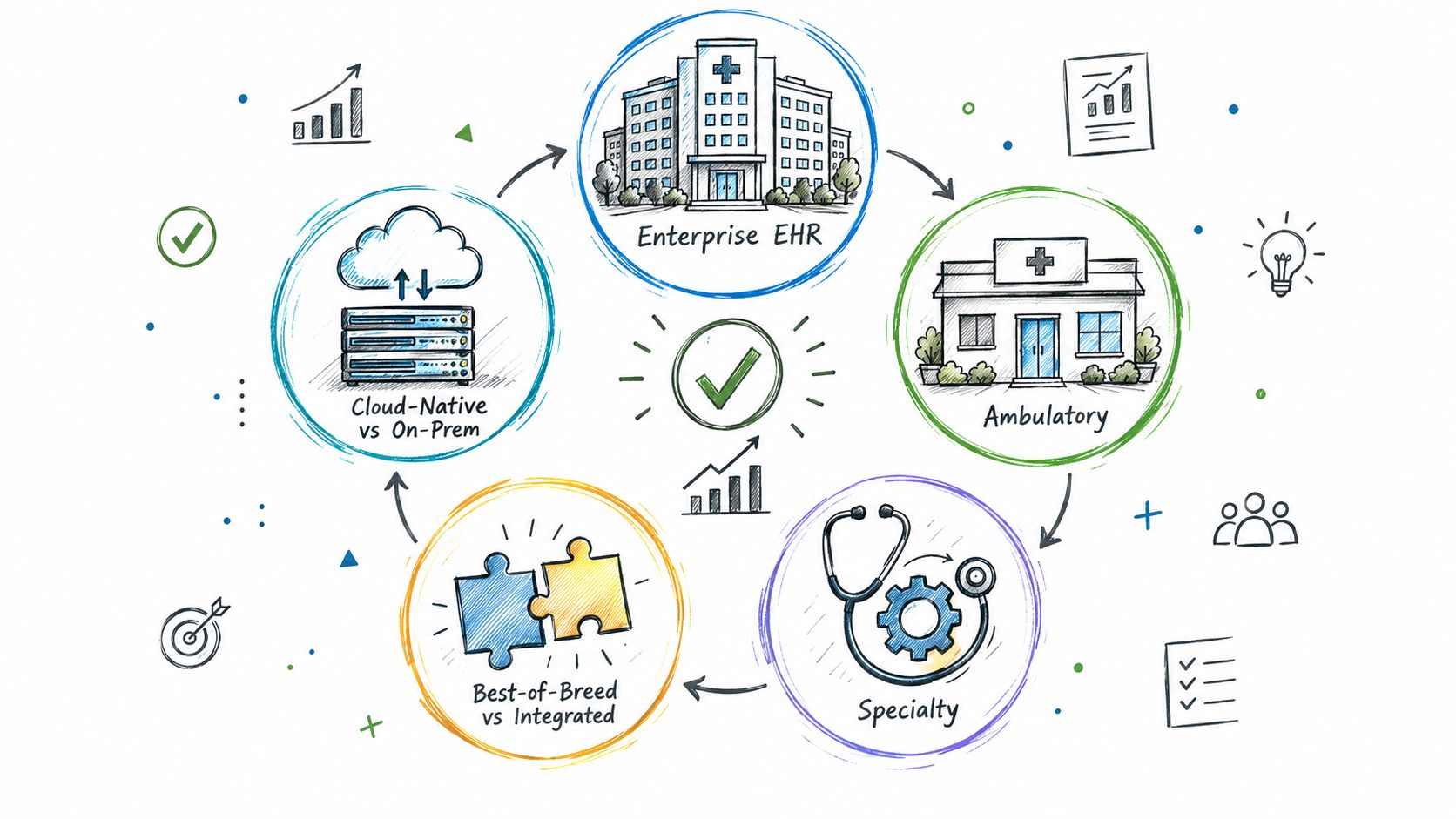
Explore the types of EHR systems by deployment model, care setting and scope. Compare integration options, trade-offs and selection tips for healthtech teams.
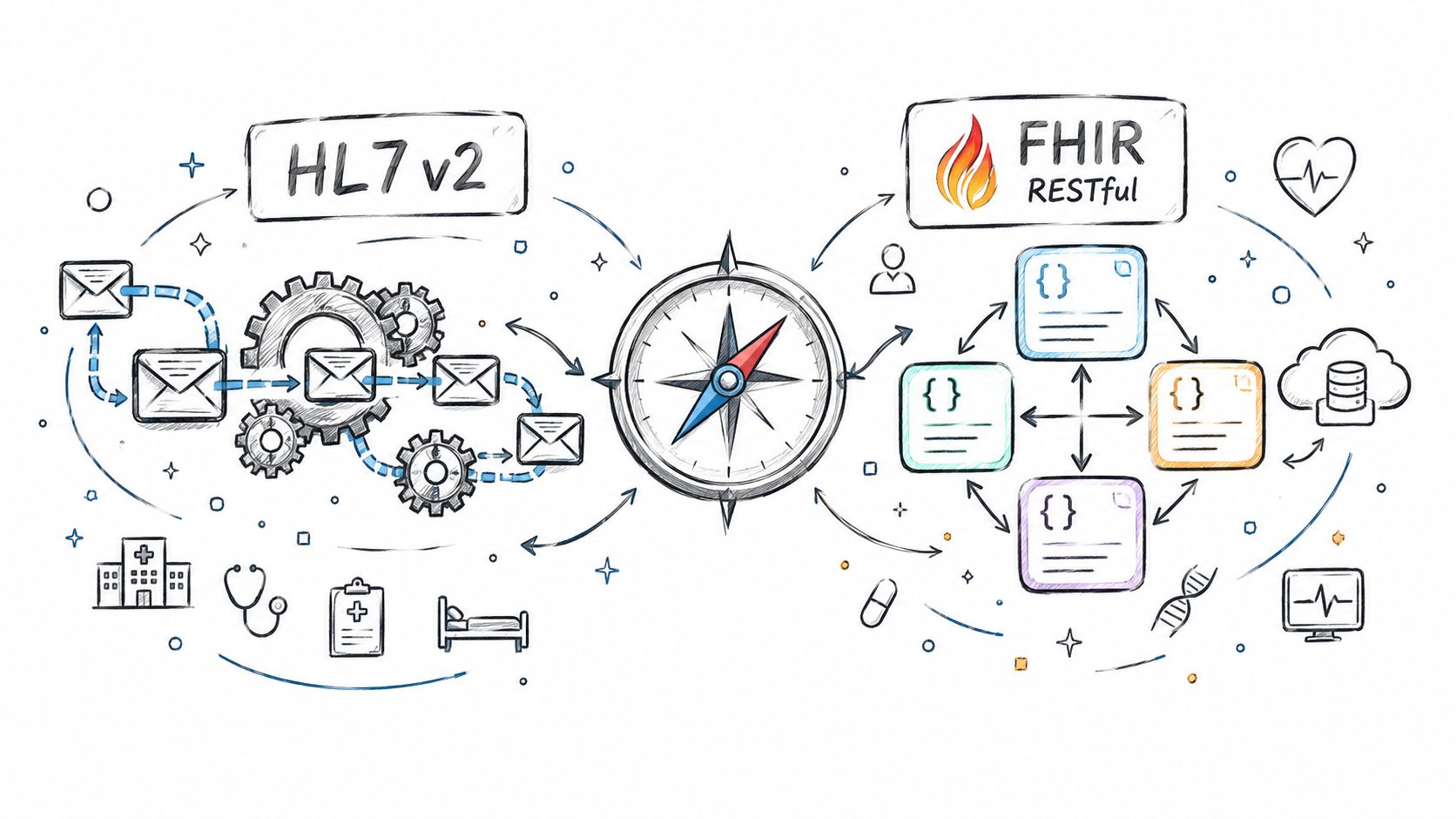
Compare Fhir vs. hl7 standards for healthtech integration. See how HL7 v2 and FHIR differ in use, mechanics, regulation, and real-world architecture.
Connect with our team to explore how AI expertise can transform your business.