AI in Healthcare
Smart on FHIR: What It Is and How It Works in Practice
Smart on FHIR guide for healthtech engineers. Learn the OAuth 2.0 launch model, scope syntax, backend services, and US regulatory requirements.
October 14, 2026Read more
Explore top AI solutions for HealthTech companies in 2026. This guide covers use cases, ROI, implementation roadmaps, and how to accelerate your strategy.

HealthTech leaders don’t need another generic AI trends piece. They need a blunt answer to one question: which ai solutions for healthtech companies move revenue, outcomes, and operations, and how do you get them into production before the window closes?
The market signal is already loud. Buyers, providers, payers, and startups have moved past curiosity. The divide now exists between teams that can operationalize AI inside regulated healthcare environments and teams that stay trapped in pilot mode.
AI in healthcare has already moved from experiment to budget line. Market analysts now project steep growth across the sector, but the headline number matters less than the operating signal behind it. HealthTech companies are under pressure to cut admin cost, improve care quality, launch product features faster, and prove ROI under regulatory scrutiny. AI sits in the middle of all four.
That shift has changed the leadership question. It is no longer whether AI matters. It is which AI bets can get into production fast enough to affect revenue, margin, retention, or outcomes.
If you want a broader view of healthcare AI innovation across products and care delivery, that perspective is useful. For operators, the main issue is execution speed inside a regulated business.
A polished AI strategy deck has almost no value on its own. Value shows up when a model fits a real workflow, uses reliable data, and reaches a user who will act on the output.
HealthTech teams should pressure-test every AI initiative against four operational questions:
Programs stall when no one owns those answers. The usual failure mode is not lack of ambition. It is weak execution discipline across product, data, compliance, and integration.
Use a simple rule. If an AI initiative does not have a workflow owner, a data owner, and an integration owner, it is still in discovery.
That is the right filter for evaluating ai solutions for healthtech companies. Prioritize systems you can ship safely, measure clearly, and expand once adoption is proven. Teams that want domain-specific delivery support often start with focused Healthcare AI Services for healthtech teams, because generic AI playbooks break quickly in healthcare.
“AI” is too broad to be useful. In practice, most healthtech products and internal systems fall into four categories. Each one solves a different operational problem, depends on different data, and fails in different ways.
Think of them like specialists inside a hospital system. You wouldn’t ask a radiologist to run revenue cycle. Don’t ask one AI pattern to solve every healthcare problem.
Predictive systems estimate what’s likely to happen next. They’re useful when your team needs to detect risk early, prioritize attention, or allocate resources before a failure becomes expensive.
Common applications include:
These systems usually need structured historical data. Claims, labs, vitals, encounter histories, utilization patterns, and timestamped events matter more than polished marketing claims about “AI-powered insights.”
Predictive analytics works best when the output changes a real decision. If nobody acts on the alert, the model is trivia.
NLP handles unstructured language. In healthcare, that means clinical notes, discharge summaries, referral letters, prior auth text, inbox messages, and dictated documentation.
This is often the fastest route to near-term value because healthcare runs on messy text.
NLP can support:
The hard part isn’t just language understanding. It’s context. Healthcare text is full of shorthand, negation, ambiguity, and specialty-specific language. “Rule out,” “history of,” and “family history” can’t be treated the same way.
Computer vision is the right category when the input is visual. Imaging, scans, pathology slides, wound photos, forms, and device output all fit here.
Good use cases include:
Vision systems usually require higher clinical scrutiny because the output can shape diagnosis or urgency. That means stronger validation discipline, tighter workflow design, and much clearer escalation logic when the model confidence is weak.
Clinicians don’t trust image AI because it’s AI. They trust it when it fits their review process and behaves predictably under edge cases.
This category gets underestimated. A lot of value in healthtech doesn’t come from exotic models. It comes from automating repetitive multi-step work across systems.
Examples include:
Teams often benefit from an AI Automation as a Service approach because the challenge isn’t only the model. It’s the orchestration around forms, queues, staff approvals, audit logs, and system handoffs.
| AI Category | Core Function | Example Use Case | Data Requirement |
|---|---|---|---|
| Predictive Analytics | Estimate likely future events or risks | Patient deterioration alerts, readmission risk, capacity forecasting | Structured historical clinical or operational data |
| Natural Language Processing | Understand and extract meaning from text | Coding support, note summarization, chart review | Unstructured clinical text, transcripts, messages |
| Computer Vision | Analyze images or scanned documents | Imaging support, pathology review, document extraction | Medical images, scans, visual datasets |
| Automation | Execute or coordinate repeatable workflows | Claims handling, intake workflows, prior auth support | Process rules, system access, workflow data, often mixed structured and unstructured inputs |
Don’t start with the model class. Start with the bottleneck.
Use this filter:
If you’re still unsure, review comparable real-world use cases before committing engineering time. It’s faster to match patterns than to reinvent a use case from scratch.
The strongest AI programs in healthtech don’t start with moonshots. They start where friction is already expensive.
A coding backlog. Trial matching bottlenecks. Documentation overload. Patient communication delays. Those are real business problems with clear owners, messy data, and visible cost.

XpertDox’s XpertCoding platform uses AI and NLP to automate medical coding and achieves over 99% coding accuracy, targeting a known revenue cycle bottleneck where manual errors contribute to 10% to 20% denial rates, as described by The Healthcare Technology Report.
That matters because revenue cycle AI is easier to justify than many clinical AI initiatives. The workflow is already measured. The pain is already visible. The value path is direct:
This is one reason I often tell teams to stop chasing the flashiest use case first. Back-office and middle-office AI can fund the harder clinical programs later.
Another strong example is Tempus. Its platform combines clinical notes, genomic data, and molecular profiles to support precision oncology. The reported outcomes include 2x to 3x higher success rates in matching patients to trials, reduced enrollment time by 40%, and 7+ million de-identified records used for model training, according to GEM Corporation’s overview of top AI companies in healthcare.
This is the important lesson. High-value AI in healthtech often comes from combining data modalities, not just applying a model to one source. Notes alone are useful. Genomics alone is useful. Together, with the right clinical workflow, they become commercially significant.
That’s how healthtech platforms create defensibility. Not by saying “we use AI,” but by building an engine that connects fragmented data into a better operational or clinical decision.
The market rewards products that fit into the daily path of work. That’s why clinician assistants, coding copilots, trial matching tools, and workflow summaries gain traction faster than isolated dashboards.
A focused product like a Clinic AI Assistant makes sense when it reduces documentation burden, surfaces context inside a care workflow, or speeds up communication between staff and patients. The point isn’t novelty. The point is fewer clicks and faster decisions.
The best healthcare AI products don’t ask users to visit another screen. They compress work inside the screen users already trust.
If I were advising a peer on where to start, I’d rank opportunities in this order:
Administrative throughput
Clinical workflow acceleration
Differentiated product intelligence
New category creation
For teams building regulated product layers, the jump from workflow AI to SaMD solutions is meaningful. You need tighter validation, cleaner evidence paths, and stronger controls around model behavior.
A lot of teams confuse a compelling demo with a viable program. Don’t.
Before greenlighting a use case, force the answer to three questions:
If your team needs external research to pressure-test where demand exists before building, a source of evidence-backed market opportunities can help narrow the field. But market research doesn’t replace workflow validation. It complements it.
The strongest business value usually lands in four buckets: lower labor intensity, faster revenue capture, improved care decisions, and better product stickiness. Those are the outcomes worth funding.
Treat compliance as part of product delivery, or expect the project to stall in security review, procurement, or clinical signoff.

Security is still one of the biggest blockers to healthcare AI adoption. Blue Prism’s healthcare AI statistics roundup reports that 50% to 61% of healthcare leaders across providers, payers, and pharma cite it as a top barrier. That should shape your operating model from day one. If security review fails, your roadmap is irrelevant.
Healthcare buyers assess security alongside accuracy, usability, and workflow fit. They should.
Your AI system needs clear controls around:
Ask hard questions early. Where does protected health information move? What gets stored in prompts, logs, and third-party services? How are outputs monitored after launch? If a vendor cannot answer those questions in plain language, do not put them in the critical path.
Healthcare AI fails on operational data quality long before it fails on model architecture.
The usual problems are predictable:
Fix the data path before you optimize the model. That means defining source-of-truth systems, tightening data contracts, cleaning labels, and deciding which records are fit for training versus real-time inference. Teams that need help turning that into an execution plan usually benefit from AI implementation support for regulated healthtech products.
Explainability is not a research checkbox. It is an adoption requirement.
Clinicians, operators, compliance leads, and medical directors need to understand why the system produced an output and what action it expects next. A useful AI recommendation should make clear:
If a frontline user cannot defend the output in an audit review or case discussion, usage drops fast.
Commercial teams face the same constraint. Growth tactics in healthcare have to respect trust, consent, and communication rules. The patient-centric growth guide is a useful reference because patient acquisition and compliance have to be designed together.
Healthcare AI delivery is infrastructure work with clinical consequences. Pick partners accordingly.
I would ask any partner these five questions:
The winners in healthtech AI will not be the companies with the best demo. They will be the teams that can pass security review, document controls, integrate cleanly, and prove value in production. That is the gap between AI strategy and actual ROI. Close that gap early.
Healthcare AI adoption is rising, but execution still lags. Menlo Ventures reports that healthcare organizations are deploying more domain-specific AI, yet many teams still lack a practical operating model for getting from strategy to production. That is the primary bottleneck. Healthtech leaders do not need another use case list. They need a build sequence that gets to ROI fast.

Start with one operational problem that already hurts the business.
Pick a problem with a clear owner, measurable cost, and a workflow that people already want fixed. Documentation backlog, intake delays, prior auth friction, referral leakage, and trial matching failures are all reasonable candidates. “We should use AI” is not a candidate.
Your output from this phase should be concrete:
If you need help forcing that level of clarity, use a structured AI implementation planning workflow. The goal is not paperwork. The goal is to leave the room with a buildable plan.
Run a proof of concept only when the use case has earned it.
I use four filters:
That sounds obvious. It is still where teams waste months.
A proof of concept should answer three questions fast. Can the model perform on your real data. Can the result fit into the daily workflow without creating extra clicks or review burden. Can you deploy it under your security, privacy, and compliance constraints. If one answer is no, stop expanding scope and fix the blocker.
Write requirements at the workflow level, not the demo level. Define inputs, outputs, confidence thresholds, fallback logic, user actions, permissions, and review steps before engineering starts.
This phase decides whether the project becomes a product or stays a pilot.
Healthcare systems are messy. Integration work usually takes longer than model tuning, and poor integration kills adoption even when model quality is acceptable. Plan for environment separation, source data validation, security review, audit logging, human override paths, and production monitoring from day one.
The engineering priorities are usually:
If your roadmap includes adjacent platform work, teams often pair the AI build with custom healthcare software development so the model output can live inside the product, portal, or internal workflow that staff already use.
Ekipa AI is one example of a delivery partner that supports strategy, use case discovery, implementation support, and execution. That model fits teams that need more than advisory work and less overhead than a long consulting cycle.
Go-live is an operations exercise.
Users need to know when to trust the output, when to question it, and who owns exceptions. If that is unclear, staff will bypass the system, create side processes, and pull the workflow back to manual review. Adoption fails long before anyone calls the model inaccurate.
Put real structure around rollout:
For internal workflows, a focused internal tool often works better than a broad product redesign. Narrow scope wins here. Teams learn faster, risk stays contained, and the path to a measurable result is shorter.
Launch a narrow workflow, instrument every step, and make it easy for staff to challenge the output. Friction during rollout usually points to workflow design problems, not user resistance.
Define the scorecard before launch.
Track the metric that justified the project in the first place. That may be turnaround time, denial rate, charting time, throughput, triage speed, document quality, or pilot-to-habitual usage. Do not hide behind generic innovation metrics.
Expansion should follow the system pattern that proved value, not a vague mandate to add more AI. Our AI adoption guide covers that decision process in more detail.
Good expansion logic is disciplined:
That is how healthtech teams close the gap between AI strategy and execution. Pick a costly problem, prove value in the workflow, ship with controls, and expand only after the operating model works.
AI strategy fails in healthtech for a simple reason. The work breaks at the handoff between ambition and execution.
Healthtech leaders already know where AI could help. The hard part is turning a promising idea into a shipped workflow that passes security review, fits the product roadmap, works with messy data, and produces a result the business can measure. That gap is where budgets stall and pilots die.
Ekipa AI is built for that gap.
The pattern is predictable. Leadership wants speed. Product wants clarity. Engineering wants requirements. Compliance wants controls. Operations wants something staff will use.
If nobody owns the full path from prioritization to deployment, the program slows down fast.
The common failure points are specific:
These are operating model problems, not idea problems.
A healthcare AI partner should reduce decision time, tighten scope, and help the internal team ship faster. Anything less adds meetings, not momentum.
That means connecting four jobs that usually get split apart:
That combined model matters in healthtech because delays rarely come from model selection alone. They come from unclear ownership, weak workflow design, and long waits between strategic approval and technical action.
Ekipa AI helps healthtech companies move from AI intent to an executable program. The value is not abstract strategy work by itself. The value is getting to a scoped initiative, aligned team, and delivery plan without wasting a quarter on internal drift.
Use Ekipa AI when you need to:
That is the standard healthtech teams should hold any AI partner to. Clear prioritization. Clear scope. Clear owners. Fast execution.
If your team has AI demand but no clean path from strategy to delivery, fix that operating gap first. That is how you get from interest to ROI.
Start with a workflow that is already causing visible cost, delay, or rework. Good first bets are documentation support, coding automation, claims review, patient intake, and clinical summarization because the operational pain is obvious and the result is easy to measure.
Avoid broad AI programs in the first phase. Pick one use case with a clear owner, a defined workflow, and a success metric your finance and operations teams will accept.
Use a four-part screen before you approve any budget:
A weak answer on any of these is a scope problem, not a green light. Fix the workflow and data assumptions first, then fund the build.
Plan for staged ROI, not a big payoff at the end. The first return should come from labor savings, cycle-time reduction, or throughput improvement in a narrow workflow. Later gains come from broader adoption, better product performance, or improved retention.
As noted earlier, market research on healthcare AI points to strong ROI potential. The mistake is using that as permission to fund vague experimentation. Set a 30-day, 90-day, and 6-month value target before implementation starts.
Use a simple rule. Buy for common workflows. Build for differentiated workflows.
If the problem looks like every other healthtech company’s problem, such as ambient documentation or standard prior auth support, a vendor is usually faster. If the workflow sits inside your product moat, clinical model, or proprietary data advantage, build more of it yourself. The wrong choice creates either wasted engineering time or painful vendor dependence, so decide based on strategic value and integration cost.
Poor execution discipline.
Teams approve the idea before they define the workflow, owner, integration point, escalation path, and measurement plan. Then the model output lands in a product or ops environment that nobody trusts or uses. AI projects fail in handoffs, not in slide decks.
Yes. Tool-first buying creates a pile of disconnected pilots.
A usable strategy does not need to take months. It needs to answer a few hard questions fast: which use case goes first, what data is required, what system owns the output, who is accountable for adoption, and how value will be measured. That is the gap between AI interest and production delivery.
Yes, but treat them as separate programs at the start. Operational AI and product AI usually rely on different data sources, user behaviors, risk controls, and success metrics.
Keep the architecture aligned where it makes sense. Keep the rollout decisions separate until each use case proves value.
If your team needs help turning AI priorities into a scoped delivery plan, Ekipa AI can support use case selection, implementation requirements, and execution planning without adding more coordination drag.
Smart on FHIR guide for healthtech engineers. Learn the OAuth 2.0 launch model, scope syntax, backend services, and US regulatory requirements.
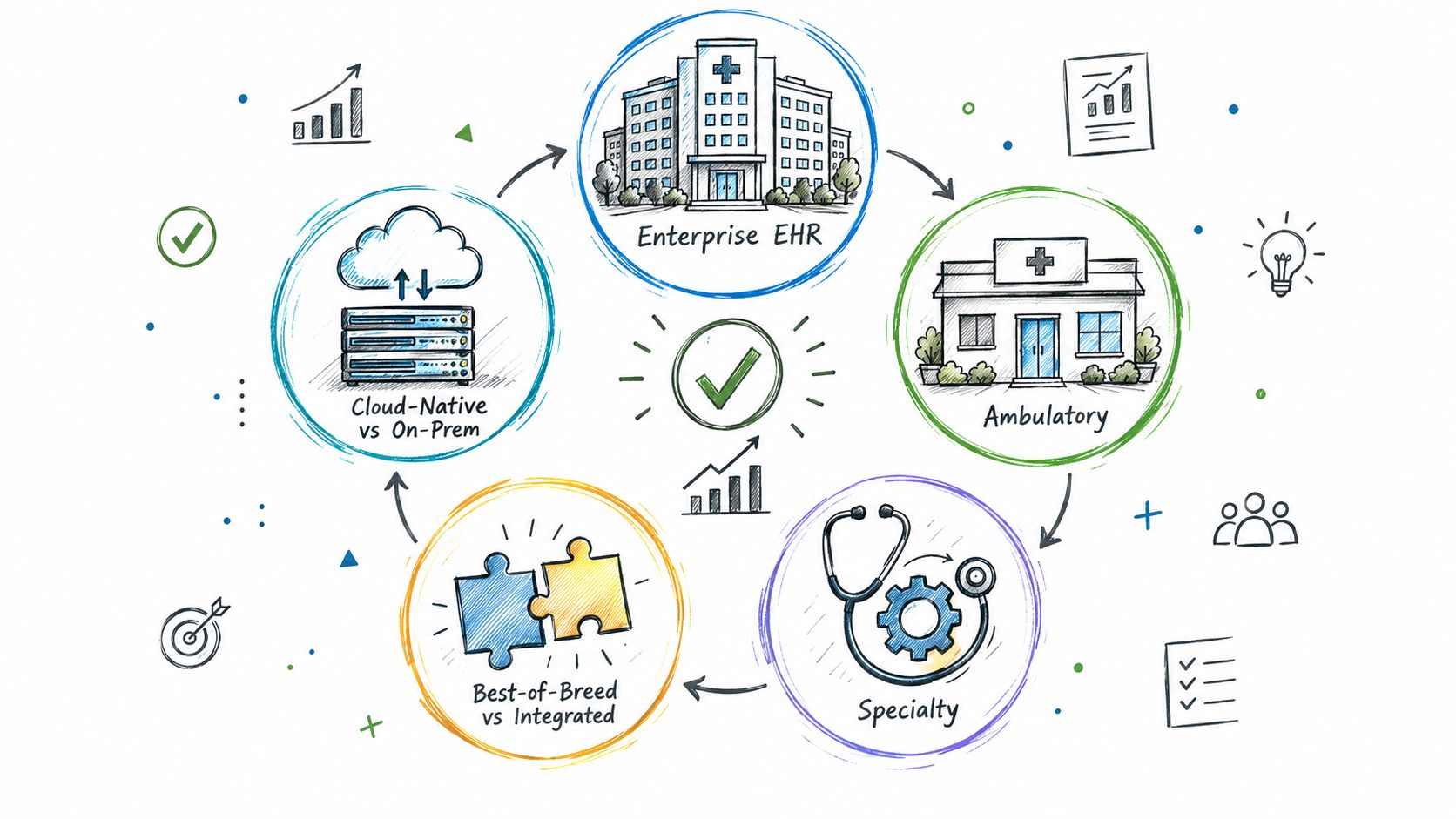
Explore the types of EHR systems by deployment model, care setting and scope. Compare integration options, trade-offs and selection tips for healthtech teams.
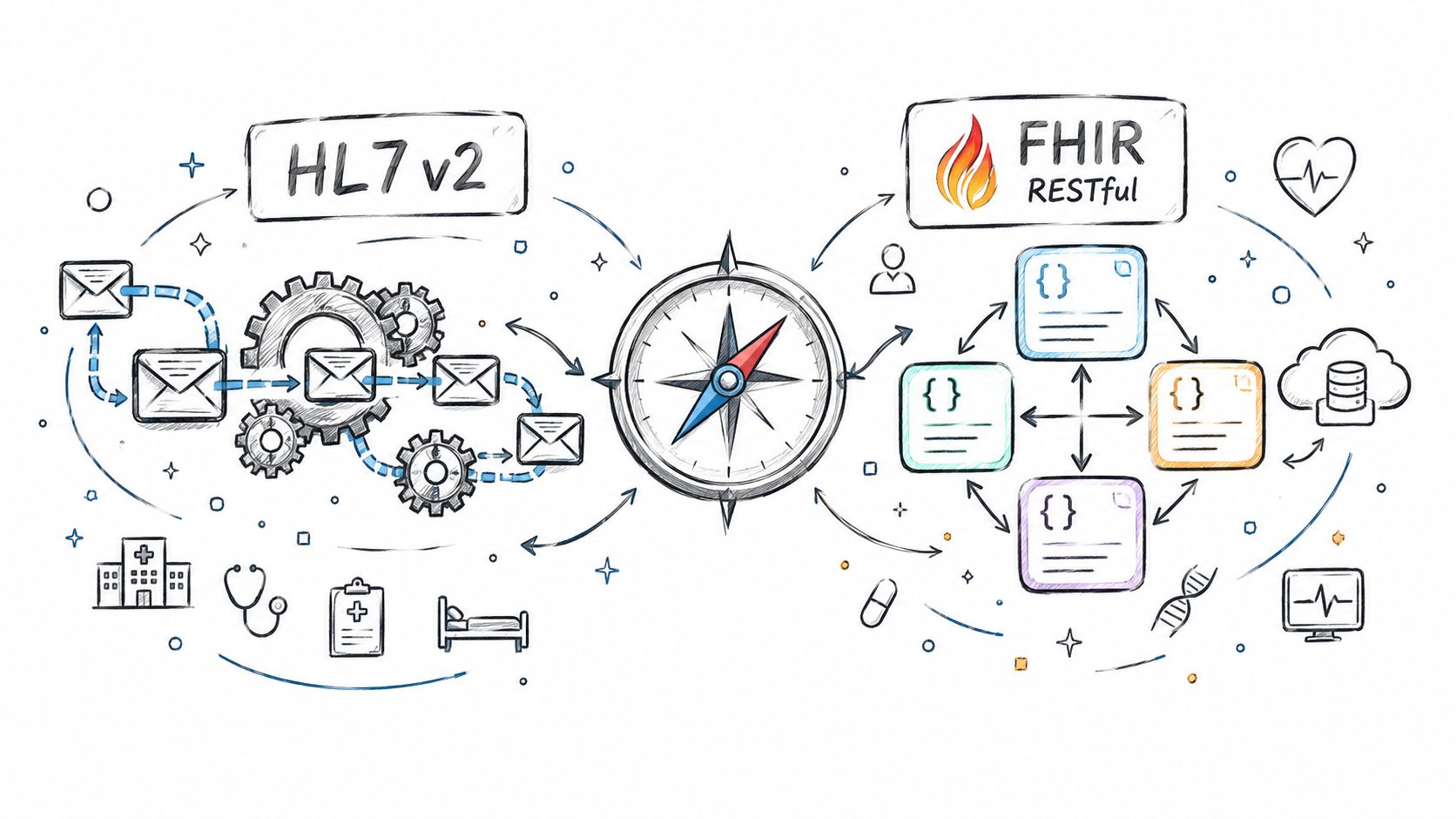
Compare Fhir vs. hl7 standards for healthtech integration. See how HL7 v2 and FHIR differ in use, mechanics, regulation, and real-world architecture.
Connect with our team to explore how AI expertise can transform your business.