AI in Healthcare
Smart on FHIR: What It Is and How It Works in Practice
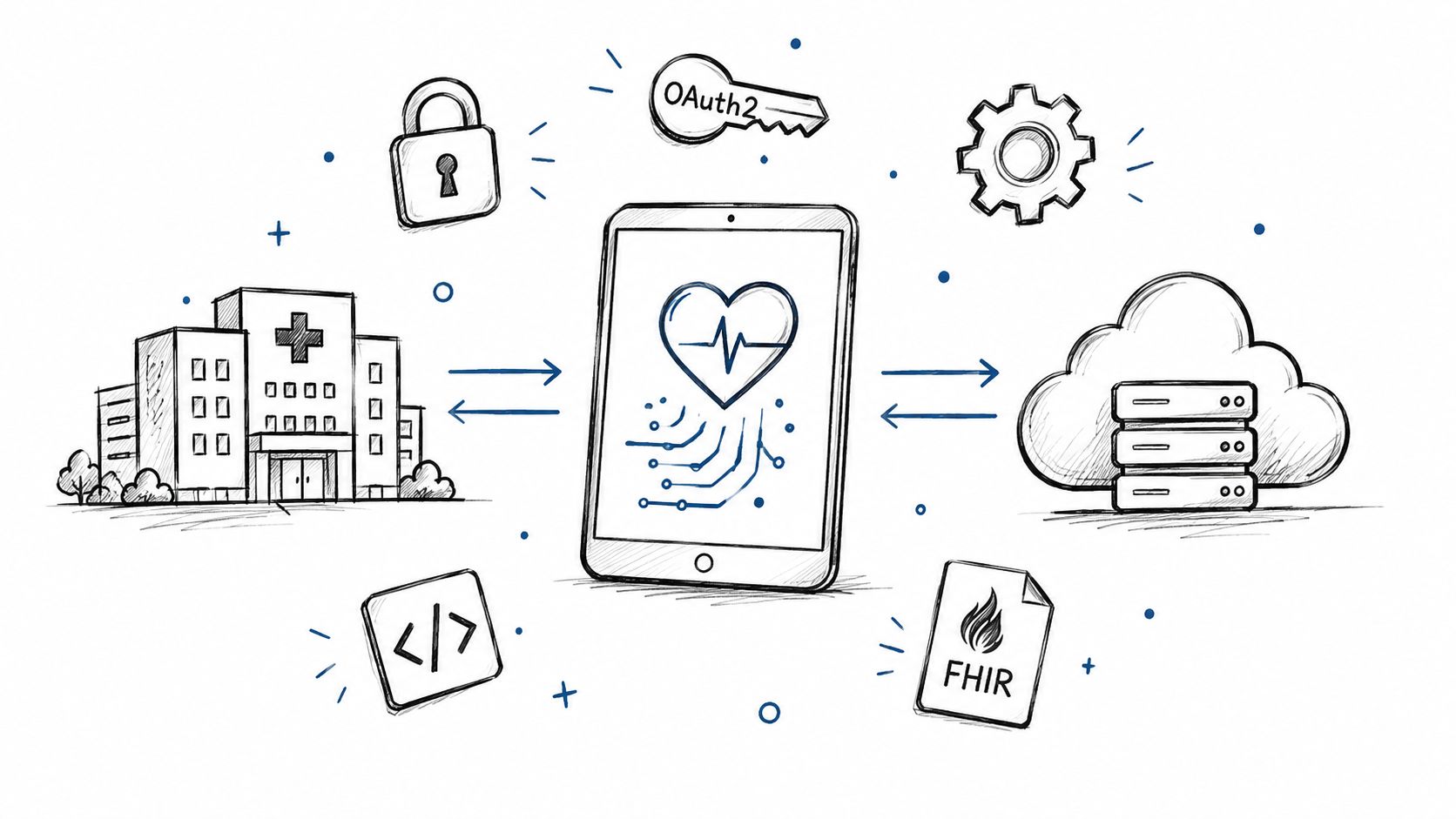
Smart on FHIR guide for healthtech engineers. Learn the OAuth 2.0 launch model, scope syntax, backend services, and US regulatory requirements.
October 14, 2026Read more
A step-by-step playbook on scalable AI automation for healthtech systems. Learn to design, implement, and monitor compliant AI solutions that deliver real ROI.

Healthcare AI has crossed the point where pilot projects are the main story. The market is projected to grow from $39.34 billion in 2025 to $1,033.27 billion by 2034, and AI-driven applications could save the industry $150 billion annually by 2026, according to Fortune Business Insights. That kind of scale changes the executive question from “Should we test AI?” to “How do we operationalize it safely across the business?”
That's where most organizations get stuck. They buy point solutions, run a successful demo, and then hit the hard realities of EHR integration, governance, model monitoring, clinician trust, and ROI accountability.
Scalable ai automation for healthtech systems isn't a model problem alone. It's an operating model problem. It touches architecture, data stewardship, compliance, workflow design, and executive governance at the same time. Leaders who treat it as a narrow technical initiative usually end up with fragmented tools and weak adoption. Leaders who treat it as a strategic transformation build systems that hold up under clinical and operational pressure.
This playbook is written from that second perspective. If you're evaluating enterprise automation across clinical, administrative, or revenue workflows, the practical benchmark isn't novelty. It's whether the system can run reliably in production, withstand audit scrutiny, and create measurable operational value inside a real care environment. For teams looking for a partner with healthcare context, Healthcare AI Services can support that broader execution model.
Healthcare AI spending is rising fast, but the executive decision is no longer whether to experiment. It is where to place capital, governance attention, and operating ownership so automation improves margin, throughput, and care delivery without creating new compliance exposure.
The strongest near-term demand is not in futuristic autonomy. It is in workflows that already consume budget and management time every quarter: documentation, intake, prior authorization, coding support, contact center operations, and revenue cycle coordination. These are board-level issues because they affect labor cost, cash flow, clinician capacity, and patient experience at the same time.
That shift changes the investment frame. AI should be evaluated as core operational infrastructure, with clear controls for security, auditability, and accountability. Executives who still fund it as an isolated innovation track usually get a collection of pilots. Executives who treat it as an enterprise operating model decision are more likely to get repeatable gains across functions.
The first enterprise win should come from a workflow that can survive scrutiny from operations, compliance, finance, and clinical leadership. In practice, the best starting points usually share three characteristics:
I have seen organizations lose a year chasing the highest-visibility demo while ignoring the harder executive question: can this be governed, integrated, and owned at scale? A polished proof of concept can hide weak data provenance, incomplete access controls, unclear human review steps, and no production monitoring plan. Those gaps do not stay technical for long. They become legal, financial, and reputational issues.
This is why AI automation now belongs in the C-suite agenda. The trade-off is not speed versus caution. The fundamental trade-off is isolated short-term wins versus a disciplined platform approach that can support multiple workflows, stand up to audits, and produce defendable ROI. Teams that need support with healthcare AI strategy and implementation should evaluate partners the same way they evaluate internal programs: integration depth, governance maturity, and production accountability.
For executives, the practical benchmark is simple. Fund use cases that reduce cost or cycle time within a controlled workflow, assign clear business ownership, and align early with legal and security on managing risk and regulatory compliance frameworks. AI in healthcare creates enterprise value when it is treated as a managed operating capability, not a series of disconnected tools.
According to Snowflake research on healthcare interoperability and AI scaling, 85% of healthcare leaders say interoperability has become a higher priority over the past two years. That should get executive attention. AI scale in healthtech is rarely constrained by model ambition. It is constrained by data ownership, data quality, and governance discipline.

At the C-suite level, this section is about operating risk and capital allocation. If the organization cannot identify where source data lives, who owns it, how it moves, and what policy governs its use, every later investment runs slower and costs more. Teams often call this a technical cleanup project. It is an enterprise control problem with direct impact on speed to value.
Healthtech data rarely starts clean. A single workflow can pull from the EHR, lab feeds, billing platforms, payer transactions, CRM records, call center logs, and spreadsheet-based exceptions maintained by operations teams. That mix is common. So is the executive mistake of assuming the AI team can sort it out downstream.
In practice, a usable foundation starts with a few hard decisions:
Executives should treat those choices as prerequisites for scale, not technical preferences.
Governance in healthtech AI is not a policy binder that appears before go-live. It shapes what the system is allowed to do, who can use it, and how the organization defends those decisions under audit.
That means setting rules for:
Leadership teams that need a reference point for structuring these controls should review guidance on managing risk and regulatory compliance frameworks. The useful lesson is practical. Governance has to show up in approvals, access controls, audit logs, exception handling, and vendor management.
Practical rule: If governance starts after vendor selection, the program is already carrying avoidable risk.
Strong programs start with a disciplined inventory. That includes source systems, data dependencies, workflow boundaries, approval paths, quality thresholds, and failure scenarios. It also includes business ownership. If nobody owns the workflow outcome, AI automation usually turns into a technical asset without operational accountability.
I have found that early AI requirements analysis is one of the fastest ways to expose whether a use case is ready. It forces the team to answer executive questions that matter later: Which data elements are required? What level of completeness is acceptable? Where does PHI enter the process? Who reviews low-confidence outputs? What audit evidence will be needed six months after launch?
That discipline changes investment quality. Instead of automating around data defects, the organization fixes the conditions that create defects in the first place.
| Risk signal | What it looks like in practice | Why it blocks scale |
|---|---|---|
| Siloed source systems | Teams export CSV files manually to move data between departments | Automation becomes fragile and auditability drops |
| Inconsistent data definitions | The same field means different things across systems | Models learn noise and business users lose trust |
| Undefined approval paths | Nobody knows who owns data use decisions | Projects stall at security, compliance, or procurement review |
Perfect data is not the standard. Controlled, traceable, decision-ready data is. For healthtech executives, that is the foundational starting point for scalable AI automation.
Many AI deployments fail for an unglamorous reason. The model works, but the system around it doesn't.
A pilot can survive with manual exports, a lightly secured endpoint, and a developer who knows every edge case. Enterprise automation can't. Once multiple departments, clinical reviewers, and external systems enter the loop, architecture choices start determining whether the initiative expands or stalls.

There's no universal winner here. The right answer depends on product maturity, compliance burden, team depth, and integration complexity.
A monolithic architecture can still be the right decision when the workflow is tightly bounded, the team is small, and speed of controlled delivery matters more than service-level independence. It's easier to reason about, easier to validate end-to-end, and often easier to audit early on.
A microservices approach becomes attractive when different automation domains need different release cycles, scaling profiles, or control boundaries. Clinical documentation, prior authorization routing, identity services, audit logging, and model inference often evolve at different speeds. Splitting them can improve resilience and maintainability, but only if the team has the platform discipline to manage it.
A practical comparison looks like this:
| Architecture choice | Strength | Trade-off |
|---|---|---|
| Monolith | Simpler deployment and validation path | Harder to isolate scaling and release risk later |
| Microservices | Better separation for complex domains and integrations | More operational overhead, more interfaces to secure |
The mistake is choosing microservices because it sounds more modern. In regulated environments, every additional service adds surface area for authentication, logging, failure handling, and compliance review.
The more important architectural choice is whether the system is designed API-first. Healthcare AI rarely lives in isolation. It has to connect to EHRs, payer systems, identity providers, document stores, messaging tools, and internal review workflows.
That means your API layer needs to handle more than request and response. It needs to support:
For many teams, custom healthcare software development becomes part of the equation. Off-the-shelf AI products may handle inference well, but the surrounding workflow integration is often what determines value.
Epic, Cerner, payer portals, billing systems, and older internal applications don't become easier to work with just because the AI layer is new. The integration burden stays real.
Three patterns tend to work better than “rip and replace” thinking:
The healthiest architecture isn't the one with the most services. It's the one that fails safely, logs clearly, and can be understood by the people who must govern it.
Executives should push architects on one question: if this use case succeeds, what breaks when usage expands across teams, facilities, or geographies?
The answer often reveals hidden fragility. Hard-coded interfaces, brittle data contracts, no queueing strategy, unclear retry logic, and model-serving components tied directly to production apps all create future pain.
A good architecture for scalable ai automation for healthtech systems has room for controlled growth. It doesn't need to be maximalist. It needs to be modular where risk and change are highest.
A large share of health systems still struggle to productionize AI because their delivery process is immature, not because the model is weak. Research on MLOps in healthcare implementation found that 77% of US health systems cite immature AI tools as the top barrier to success. For executives, that changes the agenda. The question is not whether a data science team can produce a promising model. The question is whether the organization can release, govern, audit, and improve that model repeatedly under real operating constraints.

Healthcare MLOps has a wider mandate than standard software delivery. The pipeline has to preserve lineage, enforce access controls, document approvals, support rollback, and show who signed off on what. In regulated environments, those details determine whether an AI capability scales across business units or stalls after a pilot.
A workable pipeline usually includes five parts:
Data ingestion and preprocessing
Training and inference data need standardized schemas, validation rules, and traceable transformations. In practice, that means reducing source-level variation before it reaches the model, especially across EHR, claims, scheduling, and operational data feeds.
Version control for data, code, and models
Reproducibility matters when an output is questioned by compliance, operations, or a clinical leader. Teams need to identify the dataset, feature logic, model artifact, prompt or configuration, and approval record tied to that result.
Automated validation gates
Candidate releases should clear more than accuracy thresholds. Strong gates include subgroup performance checks, business-rule validation, service-level checks, and formal review steps for higher-risk workflows.
CI/CD for retraining and deployment
Retraining should happen through controlled pipelines, not manual handoffs. The release process needs environment promotion rules, rollback paths, and clear separation between experimentation and production.
Post-deployment review loops
Production operations should capture model quality, exception rates, human override rates, latency, and workflow impact. Those signals determine whether a model deserves wider rollout or tighter controls.
The programs that scale do not start by automating every use case. They establish one repeatable operating model, prove it under scrutiny, then extend it.
In my experience, four decisions matter early.
First, assign ownership across the full release path. Data science can build the model, but product, compliance, security, operations, and platform engineering all own part of the production outcome. If nobody owns release governance end to end, model promotion becomes slow when risk is high and reckless when pressure is high.
Second, create approval gates that match business impact. A low-risk document classification workflow does not need the same release scrutiny as a prior authorization recommendation engine. Executives should insist on tiered controls, not one blanket process that either blocks everything or waves everything through.
Third, use pre-production modes aggressively. Shadow mode, silent mode, and human-in-the-loop review expose failure patterns before the model affects downstream operations. That extra step costs time, but it is usually cheaper than a rushed launch that creates rework for care teams or revenue cycle staff.
Fourth, log every release event. Model versions, feature definitions, prompt changes, threshold changes, approval records, and rollback actions should all be auditable. Teams rarely regret having too much release history.
The failure modes are predictable.
Teams deploy from notebooks. Validation lives in slide decks instead of pipelines. Retraining starts without a documented trigger. Aggregate metrics are treated as proof that the system is safe for every population and every site. Audit trails depend on tribal knowledge.
Those patterns create a governance problem before they create a technical one. The board and executive team will eventually ask who approved the model, what changed between versions, and why performance shifted in one market or patient segment. MLOps is the mechanism that lets the organization answer those questions with evidence instead of reconstruction.
Bias review cannot sit outside the release process. It has to be part of it.
A practical fairness workflow includes:
| Pipeline stage | Fairness question |
|---|---|
| Training | Are important patient or population groups underrepresented? |
| Validation | Does performance degrade across demographic or local cohorts? |
| Deployment | Are high-risk outputs routed to human review? |
| Monitoring | Is real-world disparity increasing as data shifts? |
This becomes more important as deployments spread across regions, specialties, and care settings. Local documentation habits differ. Population mix differs. Escalation patterns differ. A model that performs acceptably in one operating context can fail without warning in another if fairness checks are treated as a quarterly review item instead of a release requirement.
Buy versus build is rarely the first question. The first question is whether the organization has a clear control model for approvals, environment management, exception handling, and auditability. Without that, adding more tools just increases surface area.
Some organizations build these controls internally. Others use managed platforms to reduce implementation burden and standardize workflow enforcement. A service model such as AI automation infrastructure for healthtech operations can help centralize orchestration, permissions, and routing when internal platform capacity is limited. The actual test is simpler: can the system enforce policy, support repeatable releases, and stand up to compliance review?
A model that can be demoed but cannot be versioned, tested, rolled back, and audited is still a prototype.
Healthcare leaders shouldn't think of deployment as the finish line. They should think of it as the point where accountability becomes continuous.
That's especially true because analysis of AI risks in healthcare operations reports misdiagnoses in 83 out of 100 pediatric cases when a general LLM was used without proper validation. The same source notes that workflow disruption can increase clinician workload by 20-30%, trigger resistance in 40% of cases, and that 42% of organizations report high ROI from AI in clinical operations when validation and monitoring are done properly. Those numbers should end the habit of treating monitoring as a technical afterthought.

A model can degrade without anyone changing the code. Input distributions shift. Documentation styles change. A new clinic captures data differently. A payer updates a rule. The workflow around the model changes, and performance slides.
Teams need active monitoring for:
These signals should be visible in dashboards that operations, product, and risk teams can all interpret.
High-stakes healthcare workflows need controlled intervention paths. That applies even when the model is performing well.
For SaMD solutions, safety monitoring should include output anomaly detection, confidence thresholds, reviewer escalation rules, and a documented process for pausing or rolling back deployment when risk indicators appear. A mature team doesn't ask whether humans are involved. It asks where their judgment is most valuable and how the system routes work to them at the right moment.
The safest AI systems don't eliminate human oversight. They concentrate it where the consequences of error are highest.
A common design failure is burying the human reviewer inside an awkward interface that adds clicks and confusion. That's how organizations increase workload while claiming to improve it. Human-in-the-loop only works when the review step is fast, clear, and supported by context.
When AI touches PHI, document flows, or clinical operations, security and product design become inseparable. Every prompt, model output, API call, and integration path has to be evaluated as part of the attack surface.
A practical security checklist includes:
Teams delivering HealthTech engineering partner services usually learn this quickly. The AI layer doesn't replace existing security obligations. It adds new ones around model behavior, prompt handling, and third-party dependencies.
The best monitoring programs don't just collect telemetry. They trigger action. If drift increases, retraining policy should define what happens. If user overrides spike, workflow review should start. If output anomalies appear, product, clinical, and compliance owners should know who can halt the system.
That operating discipline is what makes scalable ai automation for healthtech systems trustworthy. Not because the system never fails, but because the organization knows how to detect, contain, and correct failure before it spreads.
A large share of healthcare AI initiatives never reach sustained operational use. The technology may perform well in testing, yet the program still underdelivers because adoption, accountability, and value measurement were not designed with the same rigor as the model.
Research on the healthcare AI implementation gap describes a pattern executives will recognize. Health systems often move faster on pilots than on governance, workflow ownership, and operating readiness. The result is predictable. Early enthusiasm gives way to stalled rollouts, limited usage, and weak business confidence.
For C-suite leaders, adoption is not a training problem alone. It is an operating model decision.
Clinical and operational teams use AI consistently when the tool fits the job, exceptions are easy to escalate, and accountability is obvious. If the system adds review steps, creates uncertainty about who owns the final decision, or sits outside the core workflow, usage drops fast.
I have seen this pattern repeatedly. Teams approve an AI use case because the pilot metrics look promising, then discover that managers, compliance leads, frontline users, and IT each assumed someone else owned rollout decisions. That ambiguity slows adoption more than model quality issues in many programs.
Adoption planning should cover four areas:
The trade-off is straightforward. Embedding AI into real workflows takes more coordination up front, but it lowers resistance and reduces shadow processes later.
HealthTech executives should measure ROI at the workflow level. Broad claims about innovation rarely survive budget review. A stronger case ties value to one process, one owner, and a short list of measurable outcomes.
Good ROI measurement usually looks like this:
| KPI category | Example measure |
|---|---|
| Operational efficiency | Time saved in documentation, intake, routing, or review workflows |
| Quality and consistency | Reduction in avoidable rework, escalation errors, or incomplete records |
| Financial performance | Revenue cycle improvement, lower administrative burden, better utilization |
| Adoption health | Usage patterns, override rates, reviewer burden, staff acceptance |
Many programs lose credibility at this stage. They report model accuracy, but not labor impact. They report pilot usage, but not whether reviewer burden fell. Executives need both. An AI system that improves throughput by 15 minutes per case but adds five minutes of clinician review may still be worth deploying. A system that looks impressive in a dashboard but creates downstream cleanup work usually is not.
A durable business case starts with a narrow use case, a named executive sponsor, and baseline metrics collected before launch. Teams that need a more structured rollout can use an AI product implementation roadmap to sequence readiness, deployment, and value tracking in a way that finance and operations leaders can audit.
Executives do not need a perfect enterprise plan before starting. They do need an ordered plan that ties investment to adoption risk and measurable return.
| Phase | Key Activities | Estimated Duration |
|---|---|---|
| Readiness and prioritization | Use-case selection, governance definition, data inventory, stakeholder alignment | Varies by organization |
| Architecture and integration design | API planning, workflow mapping, approval paths, system fit assessment | Varies by organization |
| Pilot deployment | Validation, controlled rollout, user training, baseline KPI tracking | Varies by organization |
| Scale and optimization | Expansion to adjacent workflows, threshold refinement, reporting improvement, operating cadence review | Ongoing |
The key is sequencing. Prove value in one workflow. Confirm that users adopt it, managers can govern it, and finance can see the effect. Then repeat the pattern. That is how health systems turn AI automation from isolated pilots into a portfolio of reliable operating capabilities.
Scalable ai automation for healthtech systems is not one project. It's a sequence of decisions about governance, architecture, deployment discipline, workflow fit, and business accountability.
That's why execution usually breaks at the seams between teams. Product defines a use case. Engineering builds an integration. Compliance raises concerns late. Clinical users see extra work instead of less. Nobody owns the full operating model. A partner with delivery depth can help align those moving parts before they turn into expensive rework.
For teams moving from AI planning to production delivery, a structured AI Product Development Workflow provides a practical bridge between strategy and execution. If you want to evaluate your roadmap, implementation sequence, or governance design with people who work in this space, connect with our expert team.
Start where cost, volume, and operational friction are already obvious. Prior authorization intake, documentation support, referral processing, coding review, and patient message triage usually produce faster learning than anything tied to autonomous clinical decision-making. Executives should prioritize a workflow with measurable baseline performance, clear human oversight, and a short path from pilot results to an operating budget decision.
Yes, if the integration strategy is disciplined.
Few health systems replace core platforms to make AI possible. They add orchestration layers, event triggers, APIs, and fallback paths so the workflow keeps running when a model fails, slows down, or returns low-confidence output. In practice, the constraint is rarely the age of the EHR alone. It is the quality of surrounding integration patterns, identity controls, and workflow design.
Treat compliance, privacy, and security as operating requirements from day one. That means defining data access rules, auditability, model approval criteria, consent boundaries, human review thresholds, and incident response before production rollout.
I have seen teams lose months by treating compliance as a legal review at the end. In healthtech, that approach usually creates redesign work in architecture, vendor contracts, and clinical workflows.
A large internal AI team is not the requirement. Clear ownership is.
One executive sponsor should own the business outcome. Product, engineering, compliance, data governance, and frontline operators each need defined decision rights. If those groups are only loosely aligned, the organization gets a pilot. It does not get repeatable deployment.
A pilot shows that a model can perform under controlled conditions. A scalable system shows that the organization can deploy, monitor, govern, support, and finance that capability across multiple workflows.
That gap is where many programs stall. The technical model may work, but production reliability, change management, audit readiness, and workflow adoption are what determine whether AI becomes part of operations or remains an isolated experiment.
Bias risk is managed through data selection, validation design, and post-launch monitoring. Teams should test performance across the populations, care settings, and workflow contexts that matter to the business and to patient safety. If performance varies materially by subgroup, the answer is not to force automation harder. The answer is to add review controls, narrow the use case, retrain, or reconsider deployment.
The decision depends on internal maturity, speed requirements, and risk tolerance. Organizations with strong product leadership, integration engineering, security review, and MLOps discipline can build more in-house. Organizations that lack one or more of those capabilities often benefit from outside support for architecture, implementation sequencing, and governance setup, while keeping internal ownership of strategy and domain decisions.
Start with a bounded business case. Rank use cases by operational pain, data readiness, compliance complexity, and time to measurable value. Then fund one initiative with explicit success metrics, a named owner, and a decision point for expansion, redesign, or shutdown.
That approach keeps AI spending tied to evidence, not enthusiasm.
Ekipa AI helps organizations turn early AI concepts into execution plans and production programs. For leadership teams assessing automation across clinical, operational, or revenue workflows, the work usually starts with sharper prioritization, clearer governance, and an honest view of what the current operating model can support.
Smart on FHIR guide for healthtech engineers. Learn the OAuth 2.0 launch model, scope syntax, backend services, and US regulatory requirements.
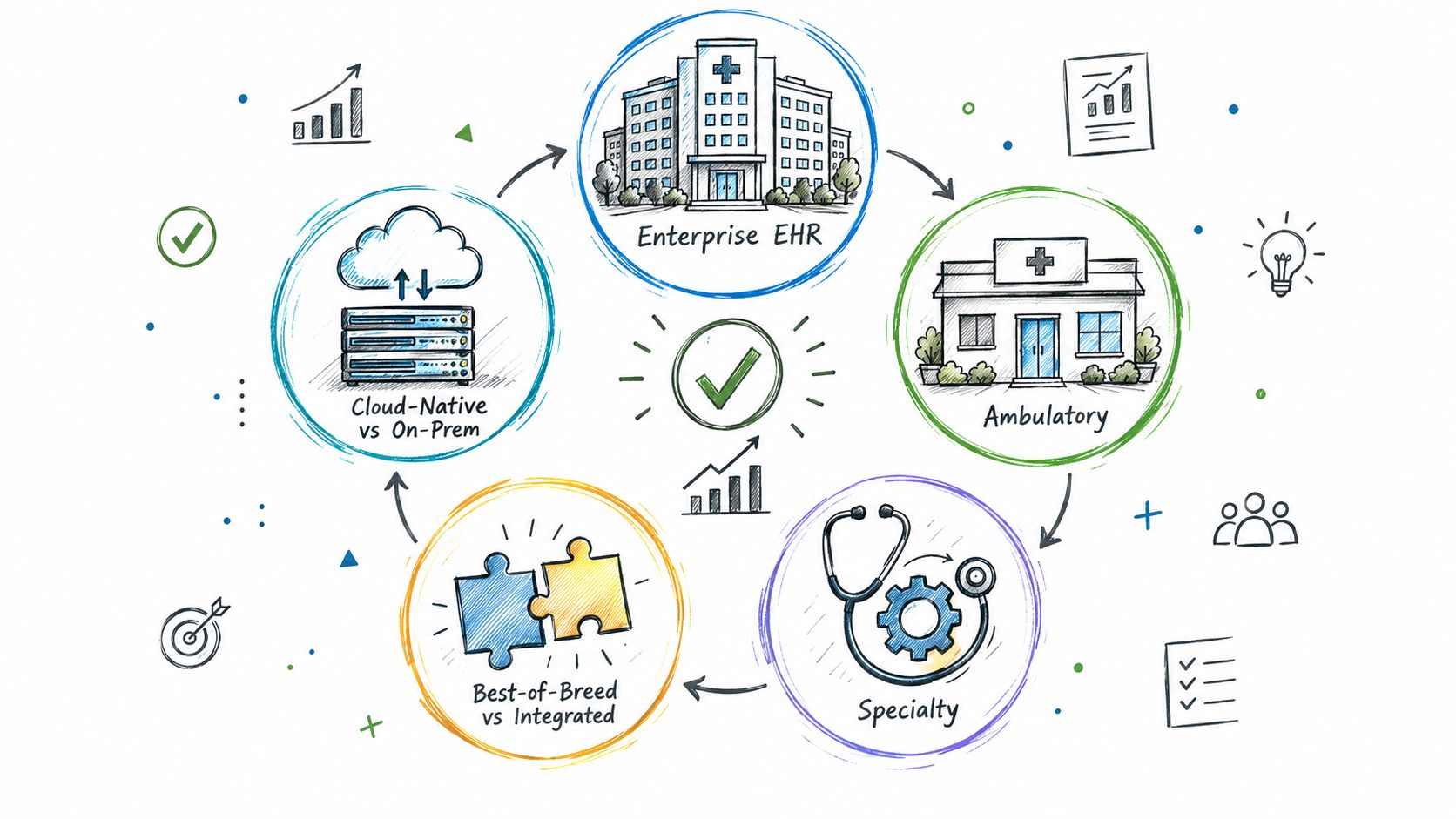
Explore the types of EHR systems by deployment model, care setting and scope. Compare integration options, trade-offs and selection tips for healthtech teams.
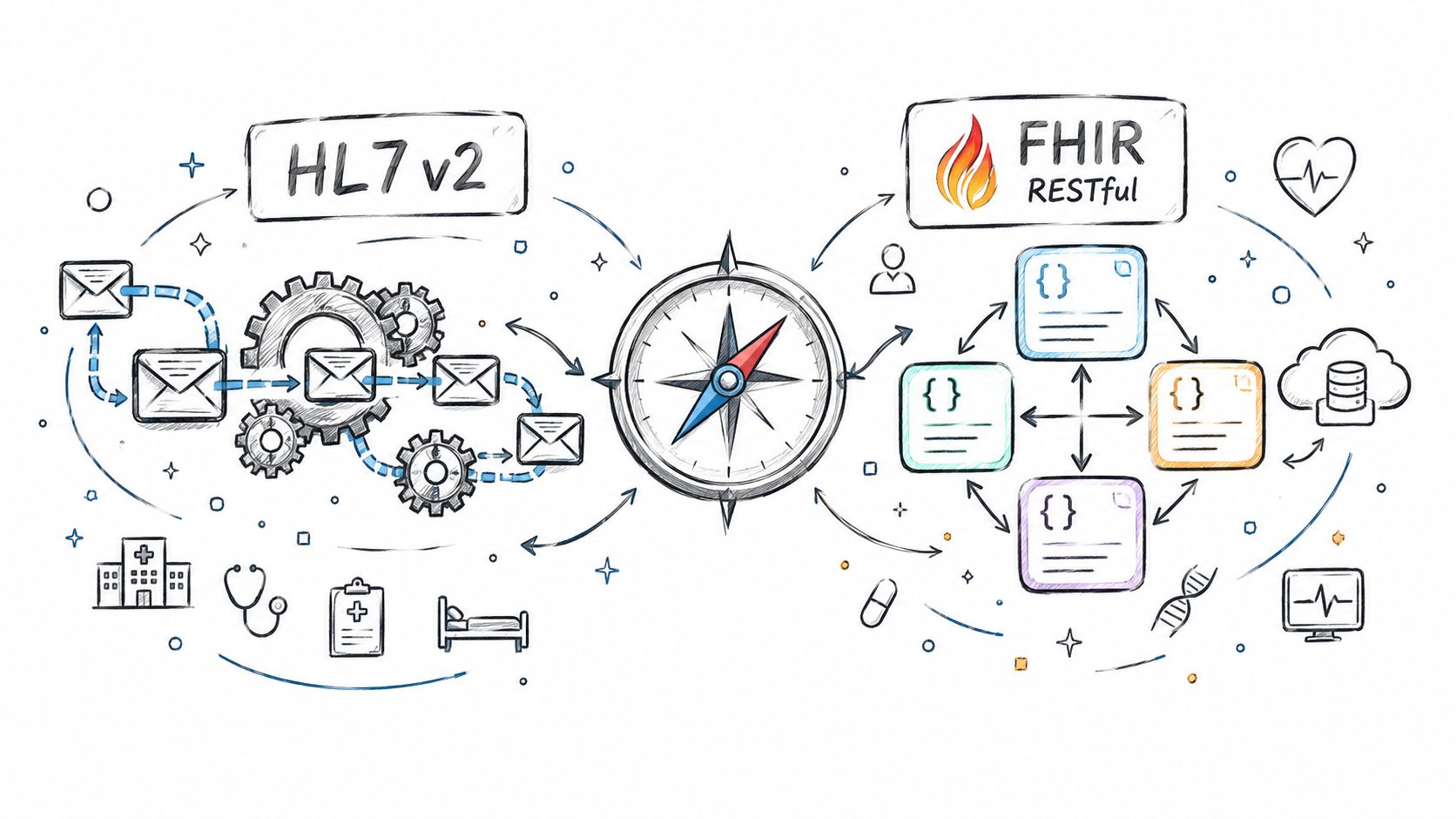
Compare Fhir vs. hl7 standards for healthtech integration. See how HL7 v2 and FHIR differ in use, mechanics, regulation, and real-world architecture.
Connect with our team to explore how AI expertise can transform your business.