AI in Healthcare
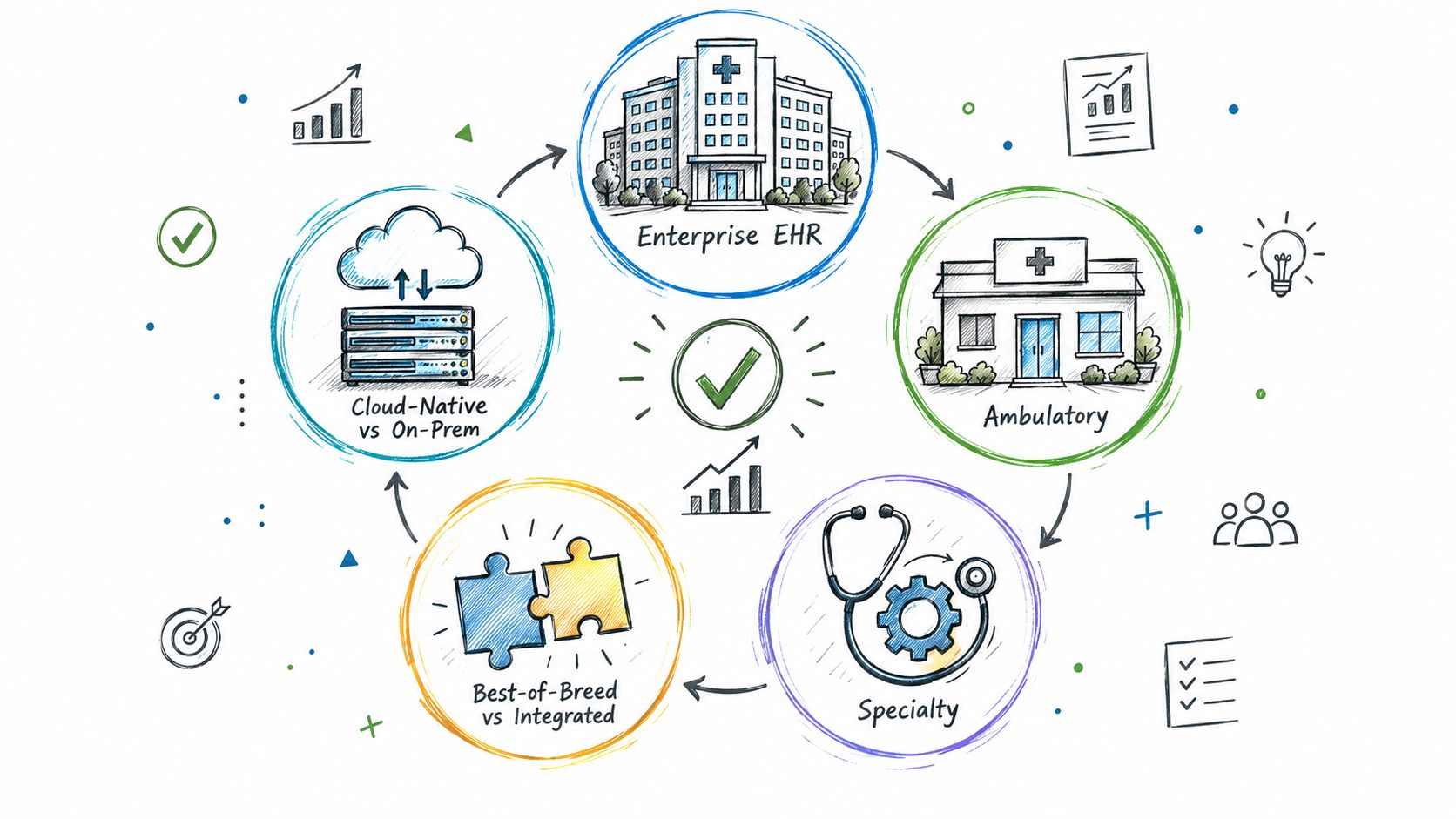
Types of EHR Systems: A 2026 Buyer's Guide
Explore the types of EHR systems by deployment model, care setting and scope. Compare integration options, trade-offs and selection tips for healthtech teams.
October 13, 2026Read more
A practical guide to AI governance in healthcare systems. Learn to build frameworks, navigate regulations, and implement ethical AI for better patient outcomes.

Think of AI governance in healthcare as the essential rulebook for using artificial intelligence safely and effectively. It’s the collection of policies, roles, and processes that ensures AI tools are helping, not hurting—protecting patient safety and data privacy while delivering real clinical value. For any healthcare leader, it's the only way to turn the potential chaos of new technology into a controlled, meaningful impact.
The rush of AI into medicine has created a bit of a "wild west" feel, making the need for clear oversight more urgent than ever. We're seeing clinicians, already stretched thin by burnout and staffing shortages, turn to unapproved generative AI tools just to get through the day. This has created a massive "shadow AI" problem, where these tools are used completely outside of any institutional control, putting patients and their data at serious risk.

In this environment, AI governance in healthcare systems isn't some bureaucratic hurdle. It’s the blueprint we need to harness AI's power responsibly, providing the guardrails that prevent chaos and build a foundation of trust.
Many experts are pointing to 2026 as "the year of governance" for AI in healthcare. It's the year when the C-suite finally has to get a handle on the explosion of generative AI use among clinicians. While this trend is a clear response to burnout, the risks from unauthorized tools are just too high—think of an AI generating a response that sounds authoritative but is clinically wrong, or the gradual deskilling of our medical professionals.
With the digital health market on track to blow past $300 billion in 2026, the stakes for getting this right are enormous. As experts at Wolters Kluwer have noted, ensuring transparency and trust is paramount. A strong governance framework is what transforms this huge risk into a strategic advantage. It sets clear rules and defines who is responsible, making sure every AI tool is vetted, monitored, and actually helps the organization achieve its goals.
Governance isn’t just a safeguard—it’s the frame that holds everything together. As AI becomes a permanent fixture in health care, thoughtful governance will be the difference between tools that merely function and those that truly transform care.
Sitting back and waiting for something to go wrong is a recipe for disaster. Taking a proactive stance on AI governance, however, brings several crucial benefits to the table for any healthcare organization.
For healthcare leaders, establishing strong AI governance in healthcare systems is no longer just an option. It's the core strategy for survival and growth in a world that will be increasingly driven by AI.
Solid AI governance in healthcare systems isn't just a set of abstract ideas; it’s built on five concrete pillars. I like to think of them as the load-bearing walls of your entire AI strategy. If one is weak, the whole structure is at risk, no matter how sophisticated the technology inside. When you build on these foundations, you create a framework that isn’t just powerful, but also safe, fair, and worthy of trust.

These pillars work in concert to give you complete oversight, ensuring every AI tool—from simple internal tooling for administrative tasks to complex diagnostic models—operates responsibly. Getting this right isn’t just about dodging fines. It's about earning the deep-seated trust of patients and clinicians, which starts with a comprehensive AI requirements analysis.
Anyone in healthcare knows we operate within a thicket of regulations designed to keep patients safe. Your AI governance framework has to be a map through this landscape, ensuring every tool you deploy is fully compliant.
Laws tell you what you must do, but ethics tell you what you should do. This pillar ensures your technology aligns with core human values and respects the rights and dignity of every patient.
It’s where you have to ask the hard questions. Is an algorithm unintentionally amplifying historical biases against a specific demographic? Does a patient truly understand how an AI's recommendation is shaping their treatment plan? These ethical checks can't be an afterthought; they must be woven into the entire AI lifecycle, from the first sketch to long-term monitoring.
An AI tool can be technically perfect and legally compliant but still be ethically problematic. Governance must prioritize fairness, patient autonomy, and equity to ensure that technology is used for good, a core component of our expert AI strategy consulting.
If AI is the engine, data is its fuel. This pillar is all about making sure that fuel is clean, high-grade, and secure. Bad data doesn't just lead to bad AI performance—in healthcare, it can lead to genuinely harmful outcomes.
The key disciplines here are:
Some of the most powerful AI models can feel like a "black box," making it nearly impossible to see how they reached a conclusion. This pillar is about cracking that box open.
Think of it this way: clinicians and patients have a right to an "ingredient list" for the algorithms affecting their care. Accountability means keeping meticulous records, using explainable AI (XAI) techniques whenever possible, and, crucially, having a clear process for what happens when an algorithm gets it wrong. Who is responsible? This transparency is the bedrock of clinical trust.
This might be the most important pillar of all. AI should be a powerful assistant, not the final decision-maker. This pillar formalizes the principle that a qualified human expert must always be in the loop, especially when the stakes are high.
This is about designing workflows where AI surfaces insights, flags risks, or suggests possibilities, but the final judgment always rests with a clinician who can apply context, empathy, and years of experience. This "human-in-the-loop" model is the ultimate safety net, preventing over-reliance on automation and keeping patient care where it belongs: in human hands. This principle is fundamental to our AI Product Development Workflow.
The rulebook for AI governance in healthcare systems is being written as we speak, creating a tangled and often confusing web of regulations across the globe. For any healthcare organization with national or international goals, getting a handle on this landscape isn't just about ticking a compliance box—it's a fundamental part of your strategy. Falling behind on these shifting laws can stop innovation dead in its tracks, shut you out of new markets, and open you up to serious legal trouble.
Moving through this environment demands a smart, forward-thinking approach. There's no single, unified road for AI regulation. Instead, it’s a series of branching paths, each with its own set of rules. This is where an expert AI strategy consulting tool can make a real difference, helping you build a flexible plan that can adapt as rules change and keep you compliant across every border.
You can see this divergence clearly when you compare Europe and North America. The European Union has jumped out ahead with its EU AI Act, which came into force in August 2024. This groundbreaking law sets up a strict, risk-based framework that classifies AI tools based on how much harm they could cause. For healthcare, this means almost all diagnostic aids and clinical decision-support systems are labeled high-risk, requiring tough pre-market evaluations, quality management systems, and ongoing monitoring after they're deployed.
At the same time, other parts of the world are stuck in regulatory limbo. Canada’s proposed Artificial Intelligence and Data Act (AIDA), for instance, was held up in early 2025. This created a lot of uncertainty and slowed down AI adoption in one of the world's major healthcare markets. When governments don't provide clear rules, the responsibility falls on healthcare organizations to govern themselves with strong internal standards.
This global regulatory patchwork drives home a critical point: a one-size-fits-all approach to AI governance simply will not work. What keeps you compliant in Berlin might not cut it in Boston or Toronto.
This push for more AI governance is happening while expectations are sky-high. A 2026 outlook from Deloitte found that 64% of health executives expect to see big cost savings from AI-driven automation. But even with all this optimism, the same report points out that we haven't seen wide-scale clinical use of generative AI yet. Only 30% of systems globally are using it at a large scale, and these regulatory hurdles are a big part of the reason why. You can read the complete 2026 global health care outlook on Deloitte's website for more on this.
To make sense of these different approaches, it helps to see them side-by-side. The table below breaks down some of the key international regulations and what they mean for healthcare AI.
This table compares major international AI regulations, highlighting their specific requirements for healthcare AI systems and implications for deployment.
| Regulation/Framework | Geographic Scope | Key Healthcare AI Requirement | Impact on Implementation |
|---|---|---|---|
| EU AI Act | European Union | Classifies most clinical AI as high-risk, mandating strict conformity assessments, risk management, and post-market monitoring. | Requires significant investment in compliance infrastructure, documentation, and continuous oversight from the start. |
| US FDA Framework | United States | Regulates AI/ML as a Medical Device (SaMD) with a risk-based approach. Focuses on total product lifecycle and Good Machine Learning Practice (GMLP). | Demands a clear "pre-determined change control plan" for models that learn and adapt, plus rigorous validation. |
| Canada's AIDA (Proposed) | Canada | Proposed a risk-based framework similar to the EU's, requiring impact assessments and public transparency for high-impact systems. | The legislative stall has created uncertainty, pushing organizations toward voluntary adoption of best practices to prepare for future rules. |
| UK Pro-Innovation Approach | United Kingdom | Rejects a single AI law, instead empowering existing regulators (like the MHRA for healthcare) to develop context-specific rules. | Creates a more flexible but potentially fragmented system. Organizations must track multiple sector-specific guidelines. |
As you can see, the path to compliance is different depending on where you operate. This complexity underscores the need for a governance model that is both robust and adaptable.
On top of direct AI regulations, you have another layer of complexity: data sovereignty laws. These rules demand that any data generated within a country's borders must stay there. This has huge consequences for how you train and deploy AI models, especially if you work across different countries.
Think about these challenges:
For anyone in the healthcare field, Navigating The Risks And Regulations Of Ai In Healthcare is essential for getting AI implementation right. A truly future-proof AI governance framework has to be built from the ground up with the flexibility to handle these varied and sometimes conflicting legal demands.
Moving from theory to practice is where the real work of AI governance in healthcare systems begins. A solid framework isn't something you can download and install overnight. It’s built through a careful, step-by-step process that turns abstract principles into concrete actions protecting patients and empowering clinicians.
The entire process is a cycle: Assess, Define, Implement, and Monitor. Think of it as a living system, not a static binder on a shelf. It has to adapt as new tools and regulations emerge. The first two phases, 'Assess' and 'Define,' are where you lay the essential groundwork for everything that follows.
Your first move is to get the right people in the same room. An AI governance committee can't be tucked away in the IT department or legal office. It needs a true cross-section of your organization to see the full picture.
Your committee should absolutely include voices from these areas:
This group’s first job? Take inventory. They need to create a complete list of every AI tool being used, especially the "shadow AI" solutions that staff might have adopted on their own. You can't govern what you don't know exists.
Once the committee is formed, it's time to set the rules of the road. When it comes to governance, ambiguity is your worst enemy. Everyone involved must know exactly what they're responsible for.
A critical role to establish right away is the Clinical AI Safety Officer. This person or small team will be the go-to for monitoring AI tools in the real world, acting as the first line of defense if performance slips or a safety issue pops up.
Your policies need to be crystal clear about what a "governable AI" even is inside your organization. This helps you focus your efforts on the tools with the highest risk and impact, from diagnostic algorithms to administrative tools, instead of getting bogged down evaluating every minor application.
This phase is all about documentation that people will actually use. Create a clear policy for vetting and procuring new AI from vendors. Draft simple, direct use policies that tell staff exactly how they can—and cannot—use the tools you've approved.
This is where your policies hit the ground running. The rollout of any new AI tool should follow a disciplined workflow with clear go/no-go decision points. No AI should ever touch a live clinical environment without passing through these gates first.
The regulatory landscape your framework has to account for is complex and still taking shape. Regulations in one part of the world often influence standards everywhere else.

As you can see, established rules like the EU AI Act create a baseline, but the lack of progress elsewhere means organizations have to be prepared for a future of global standards.
Once a tool is deployed, the "Monitor" phase starts—and it never stops. You have to keep a constant watch for problems like model drift, where an AI's accuracy degrades over time. Establish key performance indicators (KPIs) to track not just fairness and accuracy, but the actual impact on patient outcomes.
An essential part of this ongoing monitoring is having a system to check and validate AI outputs. With generative AI becoming more common, you need reliable methods for AI model validation to maintain trust and ensure the information being used is accurate and safe.
A brilliant governance plan on paper is one thing. Actually getting an AI tool to work seamlessly in a busy clinic is another challenge entirely. This is where the theory meets reality—embedding AI into the daily rhythm of patient care, safely and without disrupting the people who use it.
The biggest hurdle isn't the technology; it's the people. Simply dropping a new AI tool into a high-stress hospital environment and expecting everyone to use it is a proven recipe for failure. The key is thoughtful change management that convinces clinicians the tool is there to solve a problem, not create one.

Ultimately, the success of any healthcare AI comes down to whether clinicians actually use it. We've seen incredible adoption when it's done right. For instance, some health systems report that nurses choose to use AI-drafted end-of-shift notes over 90% of the time. That’s a testament to its real-world value.
That kind of trust doesn't happen by magic. It's built intentionally.
Once an AI tool is live in the clinic, the real work of AI governance in healthcare systems begins. This isn't about a one-time launch check. It’s about constant, vigilant monitoring to ensure the tool remains safe, fair, and effective long after the initial rollout.
An AI model can be 99% accurate in a controlled lab environment but still be a failure in the clinic. The messy, unpredictable reality of patient care is the only test that matters, and patient outcomes must always be the top priority.
This ongoing oversight is your only defense against "model drift," which happens when an AI's performance gets worse over time as patient data or clinical practices evolve. A solid governance plan must have a clear strategy for this surveillance, all tied to specific key performance indicators (KPIs).
Here’s what you absolutely must keep an eye on:
These aren't just theoretical ideas; they're grounded in what works. A tool like a Clinic AI Assistant, for example, can be a game-changer for patient communication and administrative workloads, but only if it's continuously monitored and refined. This diligent oversight is what turns a promising piece of technology into a trusted, indispensable part of modern healthcare.
We've covered a lot of ground, from the core principles of AI governance in healthcare systems to the practical steps for putting it into action. This isn't just a technical or compliance exercise; it's a fundamental shift in how we approach innovation. Think of it less as a project with a finish line and more as a sustained commitment to safety, ethics, and excellence.
Ultimately, solid governance is what builds the trust that’s absolutely essential for both clinicians and patients to embrace AI. When people trust the tools, they’ll use the tools.
Getting ahead of the curve is key. Moving from a reactive, check-the-box approach to a proactive one turns governance from a burden into a real strategic asset. It creates a safe space for innovation and makes sure every AI tool is genuinely focused on what matters most—improving patient care. As we explored in our AI adoption guide, a thoughtful framework actually helps you move faster, not slower, by deploying new tools safely.
The road to building truly trustworthy AI is challenging, but you certainly don’t have to figure it all out on your own.
Successfully navigating this new territory requires deep expertise, from sketching out your initial strategy to handling the long-term monitoring. Whether you’re developing custom healthcare software development from scratch or weaving together various healthcare software solutions, having the right governance partner is a game-changer. It’s about making sure your AI initiatives are built on a solid foundation of safety and accountability right from the start.
The goal is to make governance an enabler, not a barrier. By embedding oversight into your AI Product Development Workflow, you create a system where responsible innovation can thrive safely and at scale.
Working with our expert team means you have a guide for the entire journey. We help ensure your AI programs—from the big-picture strategy to the daily on-the-ground work—deliver safe, scalable, and meaningful results. It's how you build the confidence needed to turn powerful technology into truly better care.
As healthcare leaders begin to tackle AI governance, a few key questions always come up. Here are the straight answers to the most common ones we hear, designed to give you clarity and a path forward.
Don't go it alone. Your very first move should be to pull together a multi-disciplinary AI Governance Committee. This isn't a task for just the IT department; you absolutely need clinical leaders, IT security, legal counsel, data scientists, and even patient advocates at the table to see the full picture.
Their first job is to get a handle on what's actually happening on the ground. They need to inventory every current and planned AI tool, including any "shadow AI" that staff might be using without official approval. This initial audit, combined with a high-level risk assessment, gives you the baseline you need to start writing policies that matter. Kicking off with a formal AI requirements analysis will get the committee focused on the most critical risks and opportunities right away.
Thinking about the ROI of governance purely in terms of profit is a mistake. It’s better to think of it as de-risking your AI investments, which ensures the returns you do get are predictable and sustainable.
You can measure the return by tracking a few key areas:
Yes, absolutely. While the foundational principles of safety and fairness are the same, generative AI brings a whole new set of risks that require a more focused approach. With traditional machine learning, your main worries are biased data and model accuracy.
For generative AI, your governance has to be laser-focused on the risk of hallucinations—that's when the model confidently makes up false clinical information that sounds completely plausible. This demands a much higher level of human oversight and verification.
On top of that, your framework must have strict protocols for:
Simply put, your policies for generative AI have to be tougher and more specific to handle these unique challenges.
A strong AI governance committee needs people with different backgrounds to get a 360-degree view of both the risks and the rewards. Your team is incomplete if it's all tech people or all clinical people; you need both.
At a minimum, your committee should include:
It’s also a smart move to include representatives from major departments like nursing and radiology. This ensures the policies you create are practical, work with real-world clinical workflows, and earn the trust of the people who will be using these tools every day. This diverse team is your single best asset for building a successful AI governance in healthcare systems framework.
Explore the types of EHR systems by deployment model, care setting and scope. Compare integration options, trade-offs and selection tips for healthtech teams.
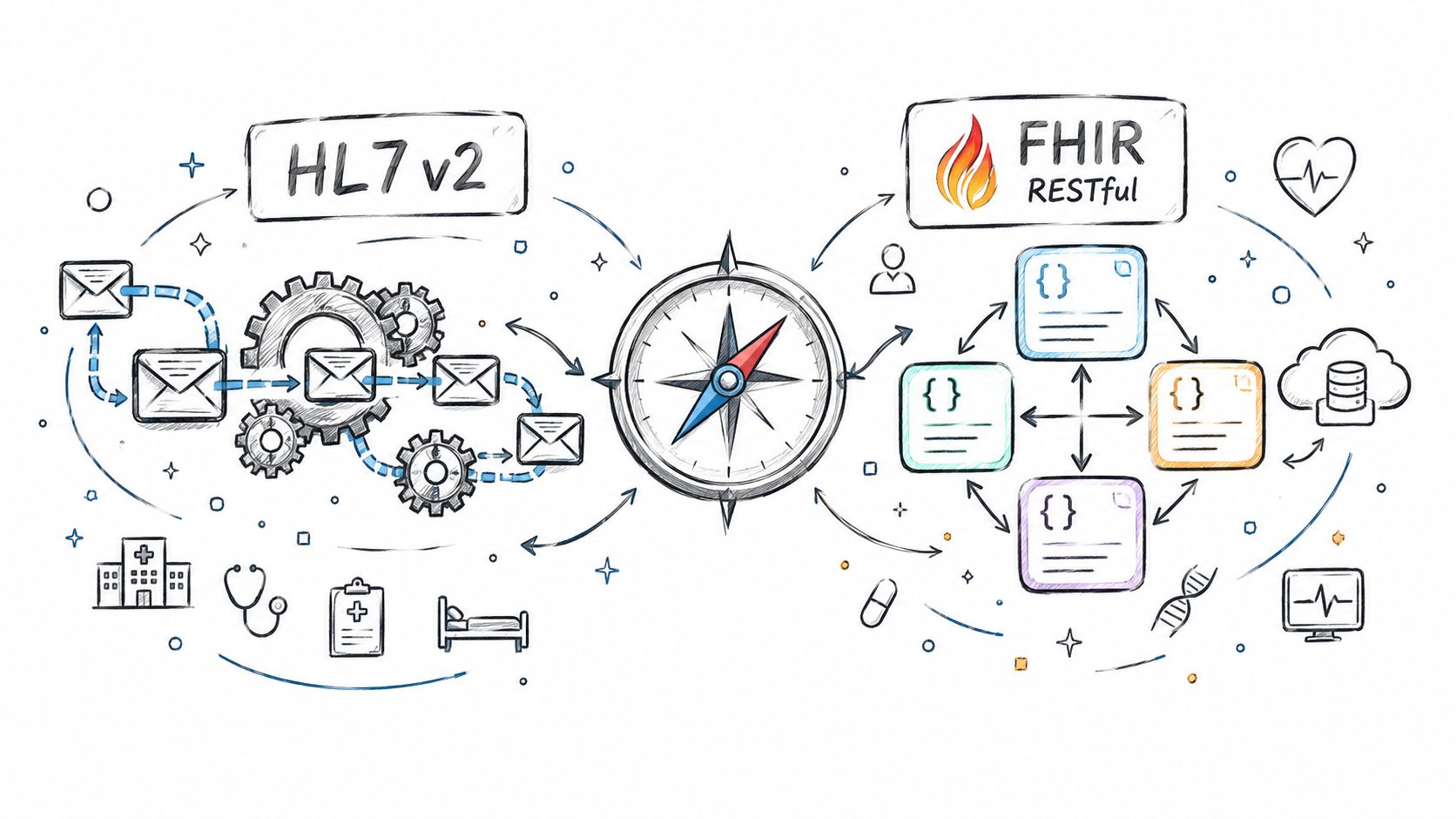
Compare Fhir vs. hl7 standards for healthtech integration. See how HL7 v2 and FHIR differ in use, mechanics, regulation, and real-world architecture.
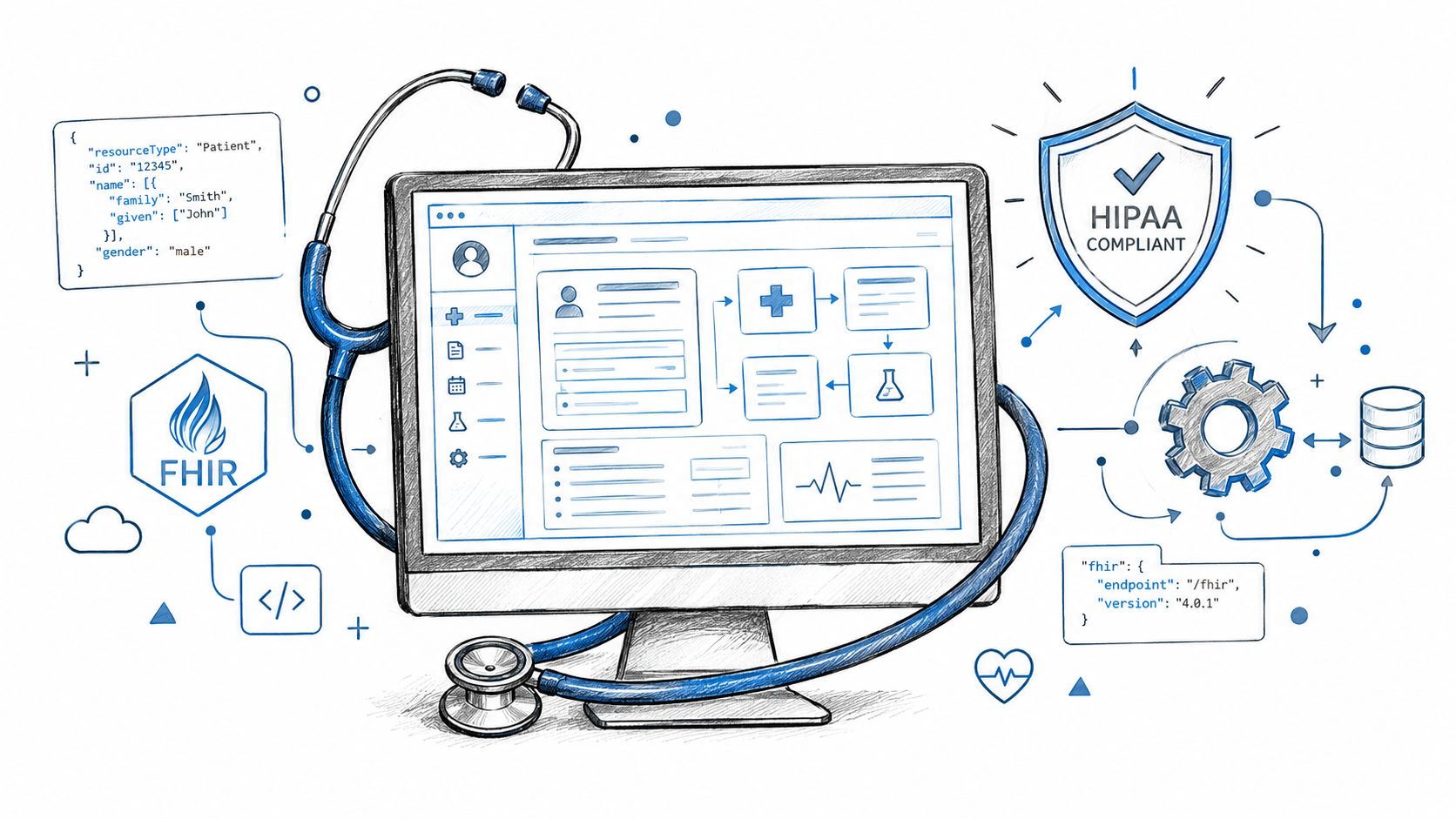
A practical EMR software development guide covering build vs extend decisions, ONC certification, FHIR integrations, and clinical workflow design.
Connect with our team to explore how AI expertise can transform your business.