
AI Integration
Epic FHIR API: What You Can and Can't Do
Epic FHIR API capabilities and limits for healthtech teams. Covers FHIR R4 resources, SMART on FHIR auth, sandbox testing, write access, and HL7 v2 gaps.
October 23, 2026Read more
Discover ai tools for personalized patient care with top risk stratification, remote monitoring, and actionable insights for better outcomes.
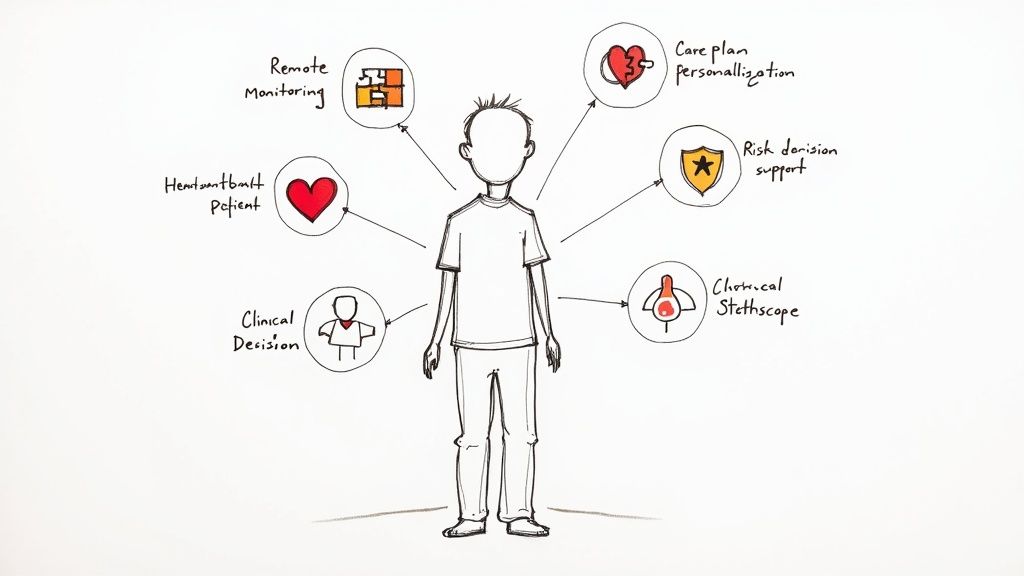
Precision and speed are critical as patient volumes grow and care complexities increase. For CEOs, CTOs, and AI strategists tasked with delivering proactive, tailored interventions, selecting the right AI tools for personalized patient care is essential. This listicle curates 12 leading platforms—from AWS HealthScribe for risk stratification to Biofourmis for remote monitoring—each evaluated on real-world use cases, compliance notes, integration tips, and ROI insights.
What you’ll learn in this article:
Clear categories: risk stratification, care plan personalization, remote monitoring, clinical decision support, conversational agents
Honest pros and cons alongside deployment guidance and privacy considerations
Screenshots and direct links for every solution, plus internal anchors to AI solutions and our Custom AI Strategy report
Quick access to real-world use cases that demonstrate tangible impact in healthcare environments
You’ll also find pointers to AI strategy consulting insights and AI tools for business overviews to align technology with your organizational goals.
Whether you’re mapping a pilot or scaling an enterprise rollout, this resource helps you identify platforms that solve pressing challenges: early risk detection, dynamic care adjustments, and seamless clinician–patient engagement. You’ll also find pointers to AI strategy consulting insights and AI tools for business overviews to align technology with your organizational goals.
By focusing on concise analysis and strategic formatting, we cut through marketing fluff so you can compare features, vendor selection criteria, and compliance hurdles at a glance. Ready to navigate the best AI tools for personalized patient care? Scroll down to dive into detailed breakdowns, hands-on implementation tips, and short case studies that guide your next steps.
AWS Marketplace provides a central catalog of third-party AI and ML solutions deployable on AWS for healthcare scenarios. Hospital IT and digital health teams can procure turnkey offerings for predictive analytics, NLP, imaging, and chatbots that integrate directly into existing AWS environments. It stands out by combining procurement controls and private offers with a broad vendor ecosystem.
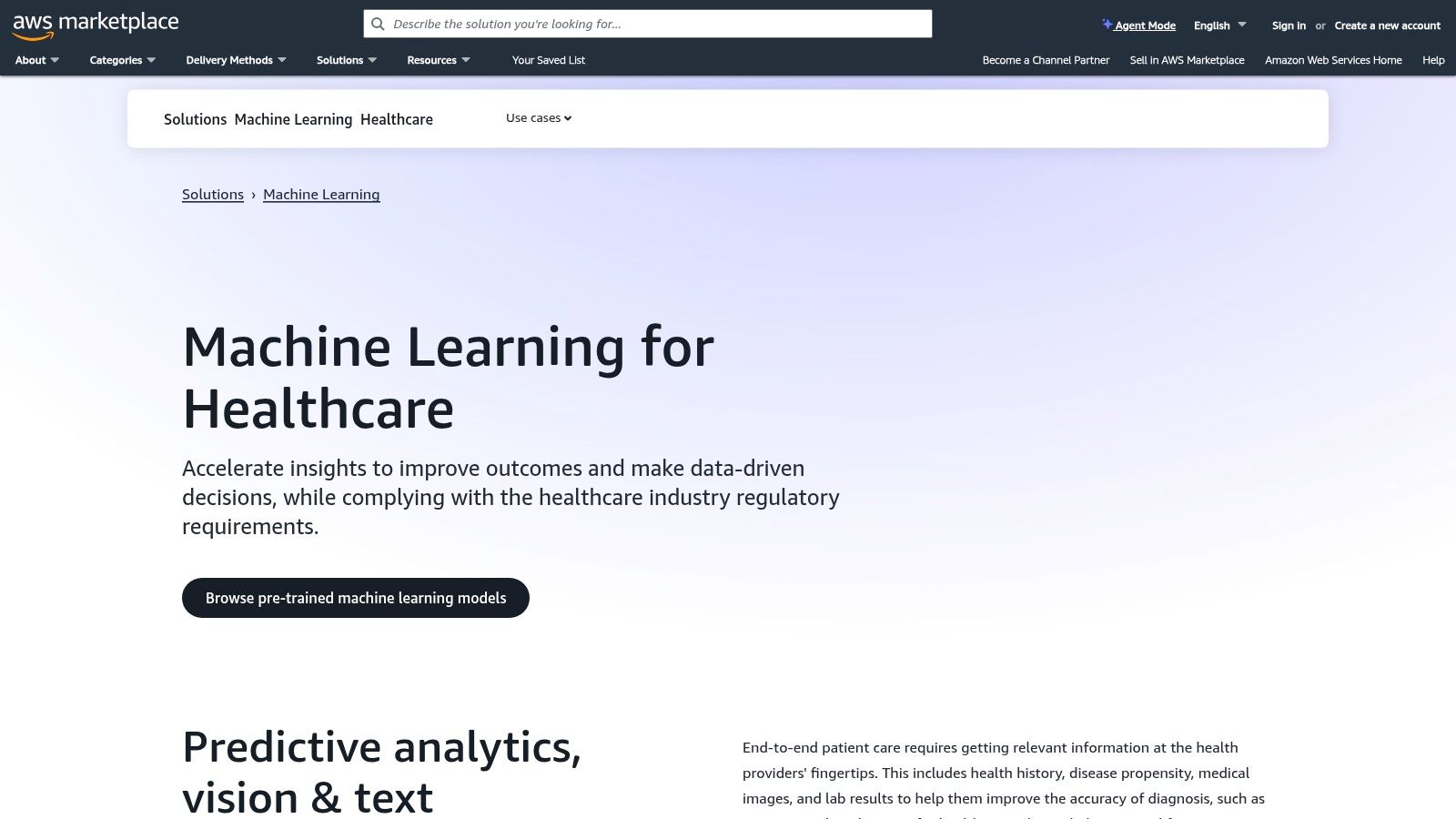
Learn more about AWS Marketplace – Healthcare AI and ML solutions
Catalog of HIPAA-aligned AI models across clinical and operational use cases
Private offers, procurement controls, and enterprise billing
Turnkey deployment via AWS CloudFormation templates or SaaS connectors
Pros
Centralized buying with flexible contract and billing options
Broad selection of vendor solutions for personalized patient care
Cons
Not plug-and-play for small clinics
Pricing often requires requesting a private offer
“Standardized procurement with on-demand scaling simplifies enterprise rollouts”
Start with a proof-of-concept using free-tier deployment patterns
Leverage AWS IAM for fine-grained access control
Integrate with other AI solutions to build a unified care plan workflow
Monitor usage with AWS Cost Explorer to optimize ROI
Most solutions require an AWS account with configured IAM roles. Availability spans major AWS regions. Pricing structures vary by vendor and often involve requesting private offers. Enterprise support is available through AWS Partner Network.
Official website: https://aws.amazon.com/marketplace/solutions/machine-learning/healthcare
AWS HealthScribe is a HIPAA-eligible generative AI service from AWS that transforms clinician–patient conversations into structured summaries and draft care plans. It reduces documentation burden by automatically identifying speaker roles and extracting medical entities. Its fully managed pipeline and tight AWS security controls stand out for enterprises seeking scalable, compliant clinical summarization. It integrates seamlessly with existing AWS environments and can be tied into custom healthcare software development projects or complemented by our AI strategy consulting engagements.
Learn more about AWS HealthScribe
Speaker role identification and medical entity extraction
Evidence-backed clinical summaries with structured draft notes
Console and API access, includes Free Tier minutes
HIPAA eligibility across US AWS regions
Fully managed deployment with AWS security and compliance controls
Pros
Clear published pricing and initial free minutes to start
Rapid pilot path inside existing AWS environments
Cons
Requires engineering resources for integration
Summaries need human oversight for final QA
“Automating clinical documentation can free up to 30 percent of clinician time for direct patient care”
Start with 60 Free Tier minutes for a small proof-of-concept
Align pilot metrics with your AI requirements analysis process
Connect summarization outputs to internal tooling or EHR modules
Integrate into your AI Product Development Workflow
Review outputs and tweak prompts as we explored in our AI adoption guide
Access via AWS console or API with a standard AWS account. Free Tier provides up to 60 minutes per month of transcription, then pay-as-you-go rates apply. AWS HealthScribe is HIPAA eligible in US regions, with enterprise support available through AWS Partner Network and options for AI Automation as a Service. Official website: https://aws.amazon.com/healthscribe/
Google Cloud MedLM offers a family of foundation models tuned specifically for healthcare tasks—such as clinical summarization, medication search, and patient risk stratification—through Vertex AI. US-based teams can integrate these models with Google Healthcare API and BigQuery, building custom, patient-specific workflows while leveraging robust data governance and encryption. As part of your broader AI solutions stack, MedLM enables rapid prototyping of personalized care services.
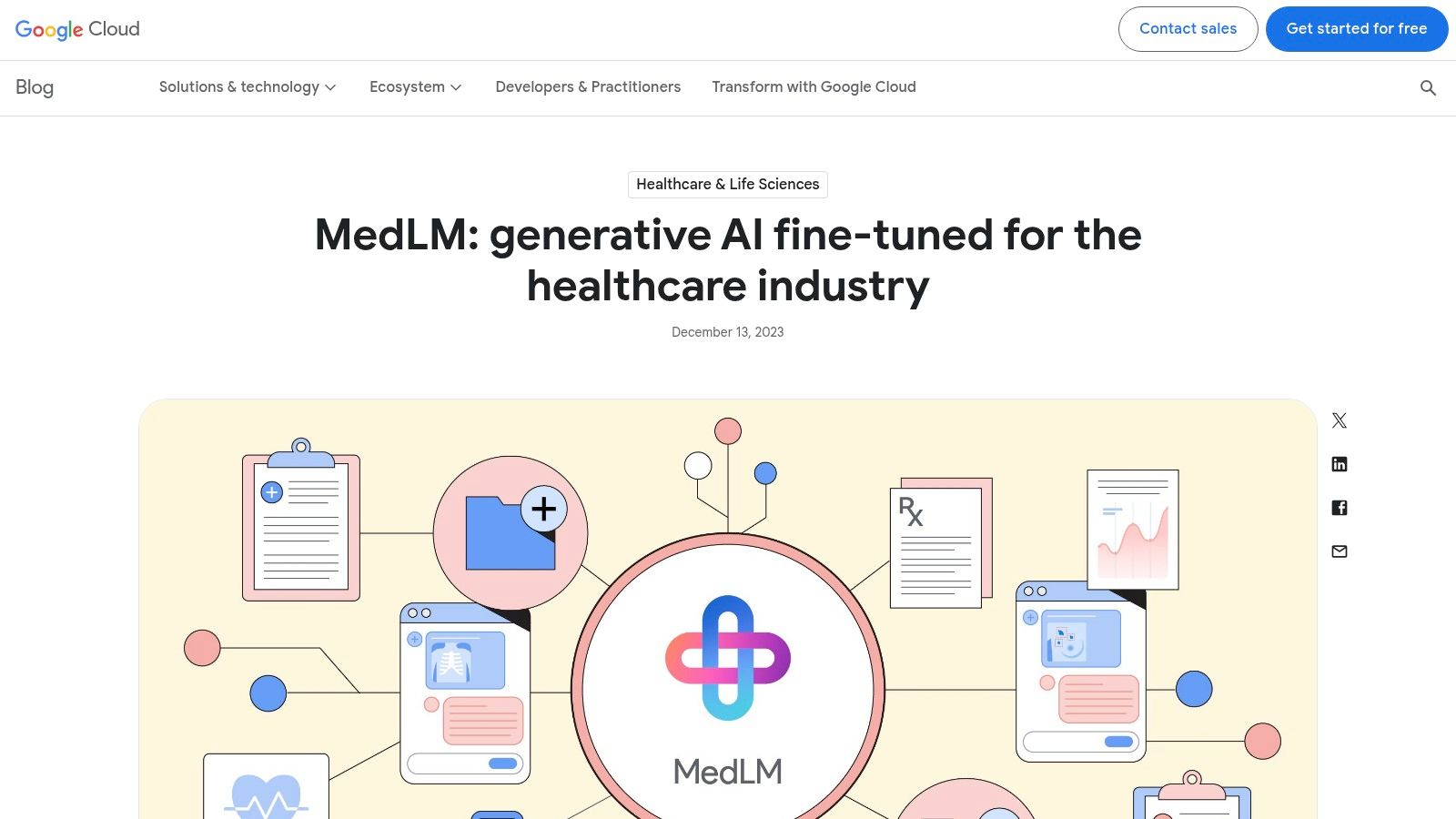
Learn more about Google Cloud MedLM (on Vertex AI)
Multiple model sizes optimized for summarization, search, and clinical insights
Direct integration with Google Healthcare API and BigQuery for real-time EHR data
Vertex AI pipelines support fine-tuning on de-identified patient records
Built-in IAM controls, encryption, and audit logs for HIPAA compliance
Pros
Enterprise-grade security with granular access controls
Highly customizable to specific care pathways
Cons
US-only availability via enterprise allowlist
Requires ML/engineering resources for full integration
“Fine-tuned healthcare models accelerate clinical summarization and reduce time-to-insight”
Engage an AI strategy consulting partner early to secure allowlist access
Use Vertex AI pipelines in tandem with AI Automation as a Service for repeatable deployments
Leverage internal tooling and refer to real-world use cases to automate data QA and validate model outputs
Monitor model drift with Vertex AI Model Monitoring and tie alerts into your AI Product Development Workflow
Access requires a US-based Google Cloud account with Healthcare API enabled and allowlist enrollment. Pricing is consumption-based, combining Vertex AI training/inference fees with BigQuery storage and query costs. Enterprise support and custom SLAs can be arranged through Google sales or via a Custom AI Strategy report.
Official website: https://cloud.google.com/blog/topics/healthcare-life-sciences/introducing-medlm-for-the-healthcare-industry
Google Cloud Marketplace provides a curated catalog of transactable healthcare and life sciences solutions that run natively on GCP. Clinical and operations teams can rapidly trial validated partner applications for patient risk stratification, care plan personalization, remote monitoring, and more. It stands out by combining a Generative AI catalog with streamlined procurement and consolidated Google billing for faster pilot-to-production workflows in personalized patient care.
Healthcare & Life Sciences category plus a dedicated Generative AI catalog
Validated partner solutions and turnkey professional services
Streamlined procurement with consolidated Google billing
Many listings offering free trials or negotiable enterprise terms
Pros
Rapid trial and deployment paths integrated with GCP services
Broad ecosystem from startups to established vendors
Native connectors to BigQuery, Vertex AI, Cloud Healthcare API
Cons
Requires enterprise cloud skillset for deployment
Detailed pricing often available only via sales negotiations
“With validated partners and quick trial offers, teams can accelerate pilot to production workflows”
Start with a free‐trial listing to test interoperability with your internal tooling
Engage AI strategy consulting to align vendor selection to clinical use cases
Map requirements using AI requirements analysis before procurement
Follow our best practices for cloud governance as we explored in our AI adoption guide
Leverage the AI Product Development Workflow to move from POC to production
Requires a Google Cloud account with billing enabled
Solutions available in all major GCP regions with HIPAA and HITRUST options
Pricing varies by partner; many offer free trials or enterprise agreements
Official website: https://cloud.google.com/marketplace/
Nuance DAX Copilot (tryDAX) offers an ambient documentation engine that listens during patient consultations and produces structured notes directly in the EHR. As part of your broader AI solutions, it reduces administrative overhead so clinicians can focus on personalized in-encounter counseling. With transparent entry-level pricing and prebuilt MEDITECH and Epic connectors, it scales from small clinics to enterprise workflows.
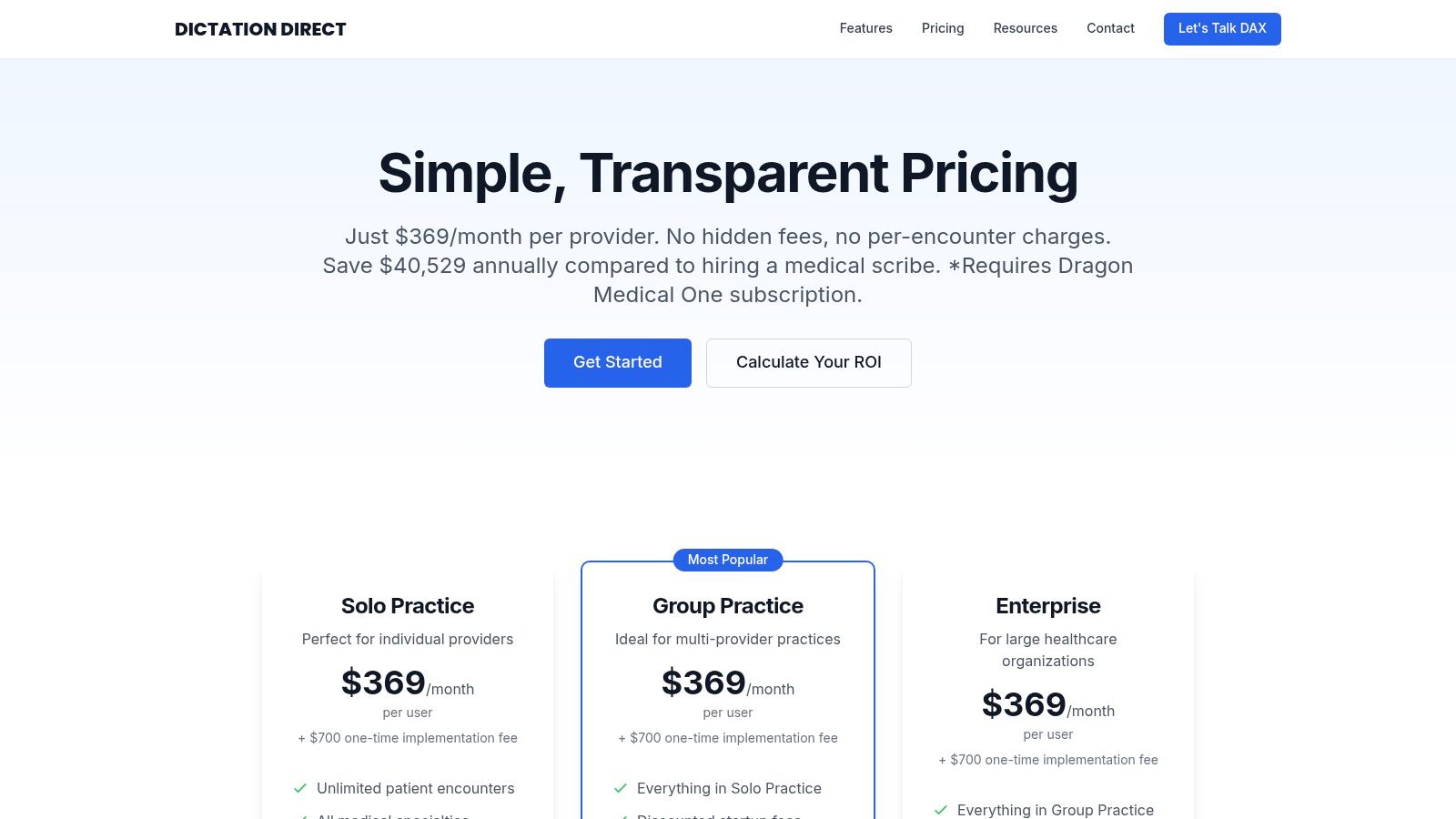
Learn more about Nuance DAX Copilot (tryDAX)
Ambient note generation powered by Dragon Medical voice workflows
Bi-directional EHR integrations (MEDITECH, Epic, Allscripts)
Mobile and desktop apps with dedicated implementation support
Seamless fit into your AI Product Development Workflow
Pros
Transparent entry-level pricing and tiered onboarding
Clinician-trusted brand with proven enterprise credibility
Cons
Requires Dragon Medical One subscription for full functionality
Per-provider costs can escalate for large groups
“Real-time documentation frees clinicians to deepen patient engagement”
Pilot in one specialty to fine-tune voice profiles and templates
Engage AI strategy consulting to align DAX Copilot with your digital health roadmap
Extend capabilities via custom healthcare software development for niche workflows
Subscription available at https://trydax.com/pricing/ with clear per-provider rates. Nuance provides a dedicated customer success team for onboarding and technical support.
Official website: https://trydax.com/pricing/
Abridge delivers an ambient AI platform that listens to clinical conversations and automatically generates structured documentation and patient-friendly after-visit summaries. By embedding evidence links inline, it supports personalized, equitable care and reduces provider burnout. Its real-time multilingual drafting adapts to diverse patient populations and integrates seamlessly into existing EHR workflows.
As part of broader AI solutions, Abridge complements AI strategy consulting engagements by accelerating note accuracy and compliance.
Learn more about Abridge via our HCP engagement co-pilot
Real-time note drafting with inline evidence links
Multilingual support and patient-friendly after-visit summaries
Seamless EHR integrations with enterprise-grade security
Recognized Best in KLAS for ambient AI performance
Pros
Clinician-centric interface accelerates adoption
Proven at scale through active health-system partnerships
Cons
Requires enterprise sales engagement, no per-seat pricing public
Change-management essential for workflow integration
Pilot in high-volume clinics to measure documentation time savings
Engage IT early for AI requirements analysis
Leverage AI Product Development Workflow to align with existing tooling
Train care teams on after-visit summaries for enhanced patient engagement
Pricing is based on enterprise licensing, with custom quotes available upon request. Abridge is available in major US health systems and deploys via direct partnership. Demo and proof-of-concept programs can be requested directly through the vendor.
Official website: https://www.abridge.com/
Viz.ai is an AI-powered care coordination platform with FDA-cleared algorithms (such as stroke triage) that deliver real-time team activation and workflow orchestration. It accelerates time-sensitive treatment decisions and personalizes acute care pathways across neuro, cardiology, and vascular specialties.
Learn more about Viz.ai
50+ FDA-cleared imaging and signal algorithms for stroke, aneurysm, myocardial infarction
Real-time alerts and team activation workflows on mobile and desktop
Support for multiple disease areas: neuro, cardiology, vascular
Clinical specialist implementation support for rapid go-live
Pros
Proven impact on time-to-treatment in acute care
Strong clinical implementation and support infrastructure
Cons
Geared toward hospitals and IDNs, not small practices
Pricing and contracts require demos and enterprise quotes
“Real-time coordination reduces time-to-treatment by up to 30 minutes”
Pilot stroke triage alerts to validate PACS integration
Define alert thresholds with clinical leads
Train teams on mobile workflows for faster response
Leverage clinical specialists during onboarding
Viz.ai requires an enterprise demo and custom quote. Availability focuses on major hospital networks with tiered licensing based on patient volume. Typical implementation spans 4–8 weeks with dedicated onboarding.
Official website: https://www.viz.ai/
Additionally:
Explore our AI solutions for end-to-end deployment
Engage our AI strategy consulting team for roadmap guidance
Tempus is a precision medicine platform offering clinical genomic tests combined with AI-driven treatment matching and clinical trial suggestions. Providers can order assays via Tempus Hub or through EHR integrations (Epic, OncoEMR), gaining Smart reports that pinpoint targeted therapies and open trials. It stands out by blending broad genomic panels with predictive algorithms to deliver truly personalized oncology and neurological care.
Learn more about Tempus and how it augments your care pathway.
Hub-based ordering, kit management, and mobile phlebotomy scheduling
AI-driven Smart reports matching therapies and clinical trials
Native EHR integrations (Epic, OncoEMR) and FHIR API support
Support services: financial assistance, payer negotiation, real-time dashboards
Pros
End-to-end precision oncology and neurology workflow
Integrated clinical decision support for personalized patient care
Automated trial matching boosts enrollment rates
Cons
Test pricing varies by payer and indication
Turnaround times depend on sample type and lab capacity
“Tempus transforms raw genomic data into actionable treatment insights”
Pilot with high-volume oncology cases to demonstrate ROI quickly
Integrate via FHIR APIs in internal tooling, and review our AI adoption guide for seamless implementation
Leverage our AI solutions or explore custom healthcare software development for advanced analytics
Tempus requires a clinical account and lab onboarding. Pricing is not fully public—providers receive custom quotes based on payer mix and indication. Mobile phlebotomy and financial assistance programs help offset costs. Contact our expert team for integration support and to set up your Tempus Hub account.
Official website: https://www.tempus.com/order/
Current Health by Best Buy Health is an end-to-end RPM and care-at-home platform combining an FDA-cleared wearable, integrated devices, and AI-guided care pathways. Health systems use it to deliver personalized patient care at scale, with multilingual engagement, real-time alerts, and seamless EHR integration. It stands out by offering full logistics, 24/7 clinical support, and deep Epic connectivity to centralize monitoring and escalation workflows.
Learn more about Current Health (Best Buy Health): https://www.currenthealth.com/remote-patient-monitoring/
FDA-cleared continuous-monitoring wearable plus pulse oximeters and blood pressure cuffs
AI-guided care pathways with personalized prompts and multilingual patient engagement
Bi-directional EHR integration (Epic, Cerner, Allscripts) for alerts and documentation
Full logistics management: device shipping, setup, returns, and 24/7 clinical support
Customizable escalation rules and real-time risk stratification
Pros
End-to-end operations including devices, connectivity, and support
Deep Epic integration centralizes monitoring and alert workflows
Cons
Enterprise contract only; no self-serve per-patient pricing available
Requires clinical workflow design, staff training, and implementation effort
“Continuous at-home monitoring with AI-driven escalation improves patient outcomes and reduces readmissions”
Partner with clinical and IT teams to map data flows into your AI solutions
Pilot a defined patient cohort to refine alerts and care pathways
Leverage multilingual prompts and caregiver notifications to boost adherence
Integrate device data with your internal tooling for unified dashboards
Current Health is available via enterprise licensing, billed per device or population. Requires contract negotiation, clinical workflow design, and training phases. Deployment spans North America and select European regions. Contact sales for custom pricing.
Official website: https://www.currenthealth.com/remote-patient-monitoring/
Biofourmis is an AI-guided virtual care and remote patient monitoring (RPM) platform that learns each patient’s baseline physiology to personalize monitoring, alerts, and interventions for hospital-at-home and post-acute programs. Healthcare leaders evaluating AI solutions can integrate Biofourmis with their existing workflows through our AI Product Development Workflow or scale via AI Automation as a Service. For strategic alignment, consider pairing with AI strategy consulting to define ROI and roadmap.
Continuous physiology monitoring with individualized baseline modeling
Device-agnostic connectivity and cellular backup options
Centralized data lake and advanced analytics to personalize interventions
End-to-end support for hospital-at-home and post-acute care workflows
Pros
Focus on individualized baselines and predictive analytics
Supports complex care-at-home programs and virtual care models
Cons
Enterprise deployments only, pricing by quote
Integration work required to embed into existing EHR workflows
“Personalizing alerts based on patient baseline reduces false alarms by 30 percent”
Pilot with a small patient cohort to validate baseline models
Integrate via FHIR APIs into your EHR and clinical decision support toolsets
Leverage cellular connectivity to ensure uninterrupted home monitoring
Train care teams on dashboards and predictive alerts
Biofourmis is available globally under enterprise contracts with pricing by quote. Access requires device provisioning, clinical workflow alignment, and a deployment roadmap.
Official website: https://biofourmis.com/platform
Cleerly uses AI-driven quantification of CCTA to measure plaque volume, composition, and stenosis for patient-specific cardiovascular risk stratification. It enables clinicians to personalize prevention and treatment strategies through a web-based workflow that integrates with existing imaging systems. As part of our curated list of AI tools for personalized patient care, Cleerly complements other AI solutions for cardiovascular decision support.
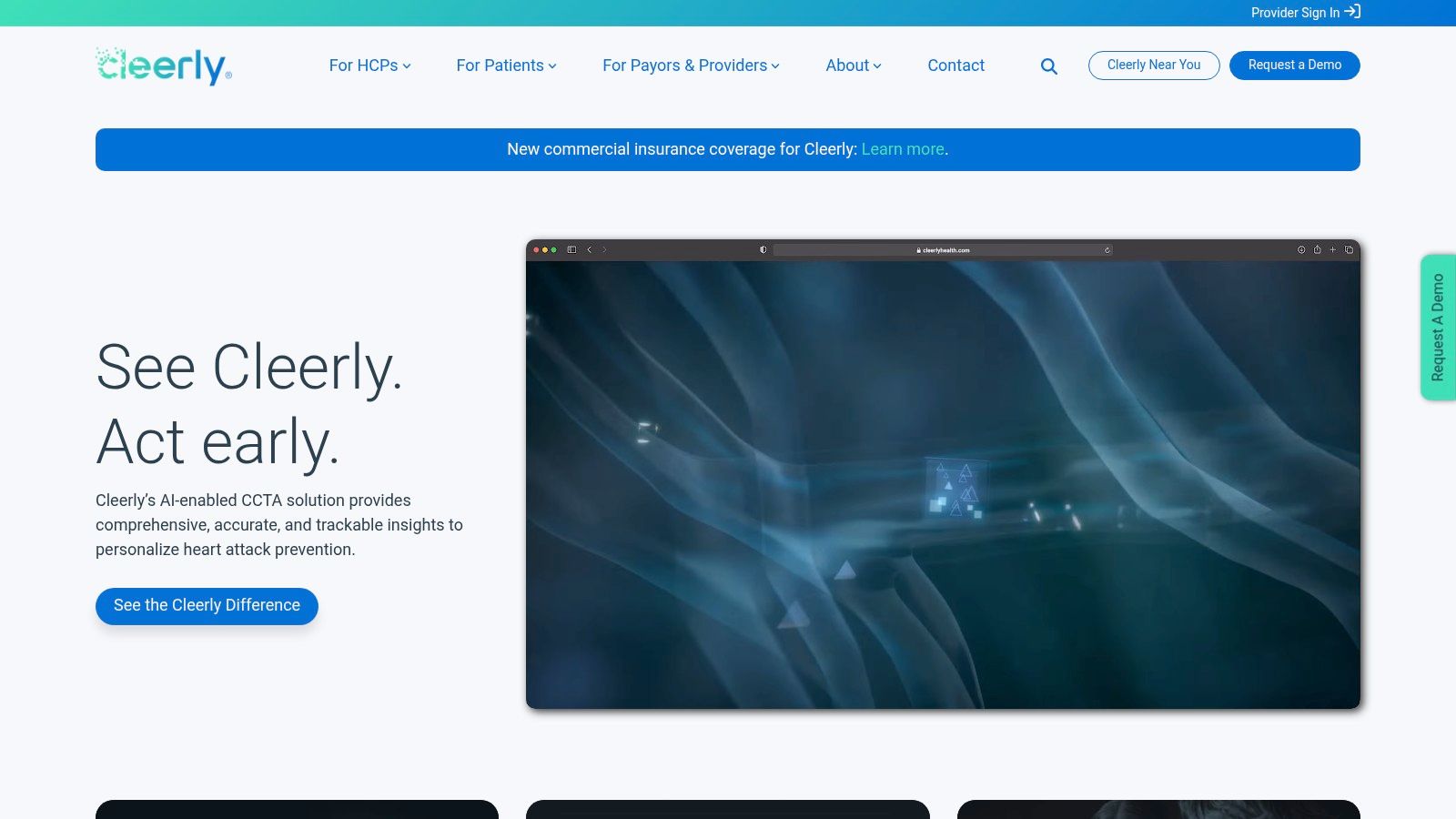
Learn more about Cleerly
AI-driven quantification of coronary plaque volume and composition
Web-based clinician workflow and automated reporting
Partnerships with value-based care networks for outcome tracking
Support for clinical workflows with growing reimbursement pathways
Pros
Enables precise, patient-specific risk stratification to guide therapy
Increasing provider adoption through expanding reimbursement support
Cons
Requires high-quality CCTA imaging and coordination with radiology centers
Service pricing is variable and often negotiated via partner clinics
“Cleerly’s detailed plaque analysis drives more informed cardiovascular care decisions”
Integrate via DICOM connectors to existing PACS systems
Train radiology and cardiology teams on interpreting volumetric metrics
Leverage partnerships with value-based networks for maximum ROI
Align results with your AI Product Development Workflow to streamline reporting
Cleerly is delivered as a licensed SaaS platform through partner imaging centers. Pricing varies by scan volume and care network contracts. Clinics must establish a service agreement and imaging protocol.
Official website: https://cleerlyhealth.com/
For deployment guidance, consult our expert team
HeartFocus is an FDA-cleared iPad app that gives real-time AI guidance to help clinicians acquire diagnostic-quality cardiac ultrasound views using Butterfly probes. By overlaying live visual prompts, it reduces operator variability and expands access to high-quality echo acquisition at the point of care. This focus on precise image capture enhances personalized patient care and can plug into broader AI solutions for remote monitoring or decision support.
Learn more about HeartFocus: https://www.heartfocus.ai/product
Live AI probe guidance with visual overlay and voice cues
Instant image-quality validation and auto-recording of best clips
Compatible with Butterfly iQ+ and iQ3 handheld probes
Small-team and enterprise licensing, 30-day free trial
Pros
Transparent annual pricing and easy 30-day free trial
Empowers non-expert users to capture echo-quality views
Cons
Requires purchase of a compatible Butterfly probe
Focuses on acquisition guidance rather than a full diagnostic AI suite
“Real-time visual prompts help non-expert staff capture diagnostic-grade cardiac views”
Pair HeartFocus with your existing internal tooling for streamlined clip review
Feed recorded clips into the AI Product Development Workflow for model retraining
Conduct hands-on training sessions for sonographers and nursing staff
Pilot on low-acuity wards before scaling to critical care units
Licenses are sold per device with transparent annual rates and a no-risk 30-day trial. A compatible Butterfly handheld probe is required (additional cost). Enterprise agreements are available with volume discounts. Customer support is provided via direct vendor channels.
Official website: https://www.heartfocus.ai/product
| Solution | Core features | Target audience | Integration & compliance | Value proposition (unique selling point) | Price & access |
|---|---|---|---|---|---|
| AWS Marketplace – Healthcare AI and ML solutions | Centralized catalog of third-party AI/ML models and turnkey offerings across clinical & operational use cases | Hospitals, digital health teams, enterprise procurement | Deploys into AWS environments; HIPAA-aligned vendors; enterprise billing & private offers | Wide vendor selection + procurement controls for fast vendor adoption | Pricing via vendors/private offers; enterprise quotes common |
| AWS HealthScribe | Generative AI for clinician–patient conversations: speaker ID, entity extraction, structured drafts | Health systems piloting clinical summarization; engineering teams | Console/API access; HIPAA-eligible; US region availability | Reduces documentation burden with published usage pricing and free minutes | Published usage pricing; free tier minutes; requires technical integration |
| Google Cloud MedLM (Vertex AI) | Foundation models tuned for clinical summarization, med search; multiple model sizes | ML teams building custom patient workflows on GCP | Integrates with Healthcare API, BigQuery, Vertex pipelines; US allowlist | Strong data governance and model customization for care pathways | Access via enterprise allowlist; engineering resources required |
| Google Cloud Marketplace (Healthcare & Life Sciences) | Curated partner solutions + Generative AI catalog; trials & partner professional services | GCP customers, procurement & IT teams | Deploys to GCP; validated partners; consolidated Google billing | Streamlined procurement and rapid trial-to-deploy on GCP | Many listings offer free trials; detailed pricing via partners/sales |
| Nuance DAX Copilot (tryDAX) | Ambient clinical documentation, Dragon Medical voice workflows, EHR integrations | Clinics and practices seeking in-encounter note automation | EHR integrations (e.g., MEDITECH); requires Dragon Medical One subscription | Transparent entry-level pricing; established clinician adoption & EHR workflows | Public entry pricing available; per-provider costs scale for large groups |
| Abridge | Real-time note drafting, evidence links, multilingual after-visit summaries | Health systems, multilingual patient populations | EHR integrations; enterprise security and deployments | Clinician-centric real-time drafting with evidence links | Enterprise sales motion; no public per-seat pricing |
| Viz.ai | FDA-cleared imaging algorithms, real-time alerts, team activation workflows | Hospitals and IDNs for acute care (stroke, neuro, cardio) | FDA-cleared algorithms; clinical implementation and integration support | Proven reductions in time-to-treatment and strong clinical support | Enterprise demos & quotes; not targeted at small practices |
| Tempus | Genomic testing + AI treatment & clinical trial matching; EHR integrations | Oncology/neurology providers, precision medicine teams | EHR integrations; lab logistics, sample kits & support services | Integrated precision medicine workflow: ordering → matched recommendations | Test pricing varies by payer/indication; not fully public |
| Current Health (Best Buy Health) | RPM platform with FDA-cleared wearable, integrated devices, AI care pathways | Health systems running care-at-home and RPM programs | FDA-cleared wearable; Epic and major EHR integrations; ops & 24/7 support | End-to-end RPM operations (devices, connectivity, care escalation) | Enterprise contracts only; no self-serve per-patient pricing |
| Biofourmis | Continuous physiology monitoring, individualized baseline models, analytics | Hospital-at-home, post-acute and virtual care programs | Device-agnostic connectivity; data lake & analytics; EHR integration required | Personalized predictive analytics to tailor monitoring & interventions | Enterprise deployment; pricing by quote; integration work required |
| Cleerly | AI quantification of coronary plaque from CCTA; web reporting & risk stratification | Cardiology practices, imaging centers, value-based care networks | Requires CCTA imaging; clinical reporting workflows & partnerships | Patient-specific plaque quantification to guide prevention & treatment | Service pricing via partners/clinics; varies by deployment |
| HeartFocus | iPad app with live AI probe guidance and image-quality validation (Butterfly compatible) | Clinicians needing echo acquisition support; small teams to hospitals | Compatible with Butterfly iQ+/iQ3 probes; app licensing & trials | Enables non-experts to acquire diagnostic-quality cardiac views | Transparent annual pricing; 30-day free trial; requires probe purchase |
As you’ve seen through our analysis of 12 top AI tools for personalized patient care, the potential to transform clinical workflows and patient outcomes has never been greater. From patient risk stratification to conversational agents, each solution brings unique value—and unique challenges—to your organization.
Holistic categories covered:
Risk stratification (AWS Marketplace)
Care plan personalization (Tempus, Biofourmis)
Remote monitoring (Current Health, HeartFocus)
Clinical decision support (Cleerly, Viz.ai)
Conversational agents (Nuance DAX Copilot, Abridge)
Integration considerations: data interoperability, EHR connectors, internal tooling
Compliance and privacy: HIPAA readiness, regional data residency, audit trails
ROI and vendor selection criteria: total cost of ownership, time-to-value, support SLAs
Real usage insights: pilot outcomes, clinician feedback loops, scalability hurdles
Define objectives
Align AI goals with clinical KPIs and population health targets
Involve stakeholders from IT, care teams, and finance
Conduct AI requirements analysis
Map data sources, security constraints, and regulatory needs
Explore our AI requirements analysis framework
Evaluate and shortlist tools
Use decision matrices to compare features, pricing and ease of deployment
See real-world use cases for reference
Run a controlled pilot
Set clear benchmarks for accuracy, adoption rate, and ROI
Leverage AI Automation as a Service for rapid deployment
Scale and refine
Incorporate clinician feedback and iterative improvement
Build your AI Product Development Workflow
Start with patient stratification if you need to prioritize high-risk groups
Focus on care personalization for chronic disease management
Opt for remote monitoring platforms to extend care beyond the hospital
Add conversational agents when patient engagement and triage are critical
Combine tools in modular fashion to address multiple touchpoints
Data governance and security policies
EHR and third-party integration points
Vendor support, training, and change management
Compliance with HIPAA, GDPR, and local regulations
Total cost versus projected clinical and operational gains
As we explored in our AI adoption guide, a structured roadmap is key to minimizing risks and maximizing impact. For an in-depth evaluation tailored to your needs, request a Custom AI Strategy report or discuss your challenges with our AI strategy consulting tool. If you’re looking to strengthen your internal capabilities, explore internal tooling or engage our AI solutions team.
With careful planning and the right mix of AI tools for business, you can deliver truly personalized care at scale. The future of patient-centered healthcare starts with a clear roadmap—and ends with better outcomes for everyone.
Q1: What are AI tools for personalized patient care?
AI tools for personalized patient care leverage machine learning, natural language processing, and predictive analytics to tailor diagnostics, treatment plans, and patient engagement strategies. These platforms can automate documentation, stratify risk, and monitor patients remotely for more precise, proactive interventions.
Q2: How do I choose the right AI tool for my healthcare organization?
Begin with an AI requirements analysis to map clinical use cases, data sources, and compliance needs. Refer to real-world use cases and pilot high-impact categories—like risk stratification or care personalization—before scaling via AI Automation as a Service.
Q3: Are these AI tools HIPAA compliant?
Most solutions listed are HIPAA eligible or offer compliance controls (e.g., AWS HealthScribe, Google Cloud MedLM). Always verify vendor certifications, data residency options, and audit logging when integrating with EHRs and patient data systems.
Q4: How can I integrate these AI platforms with my existing EHR?
Use vendor-provided APIs, FHIR connectors, or internal tooling to bridge data flows. Embed AI outputs into clinician workflows via your AI Product Development Workflow and ensure security with IAM roles and encryption.
Q5: What ROI can I expect from implementing AI in patient care?
ROI varies by use case—common outcomes include 20–30% reduction in documentation time, faster diagnosis-to-treatment cycles, and improved patient adherence through personalized monitoring. Use pilot metrics and vendor case studies to project total cost of ownership and value delivered.
Ready to put these insights into action? Partner with Ekipa AI to accelerate your AI-driven healthcare initiatives. Our end-to-end expertise helps you select, deploy, and scale the best AI tools for personalized patient care. Start your journey today at Ekipa AI.
Learn more about our expert team to see how we can support your transformation.
Epic FHIR API capabilities and limits for healthtech teams. Covers FHIR R4 resources, SMART on FHIR auth, sandbox testing, write access, and HL7 v2 gaps.
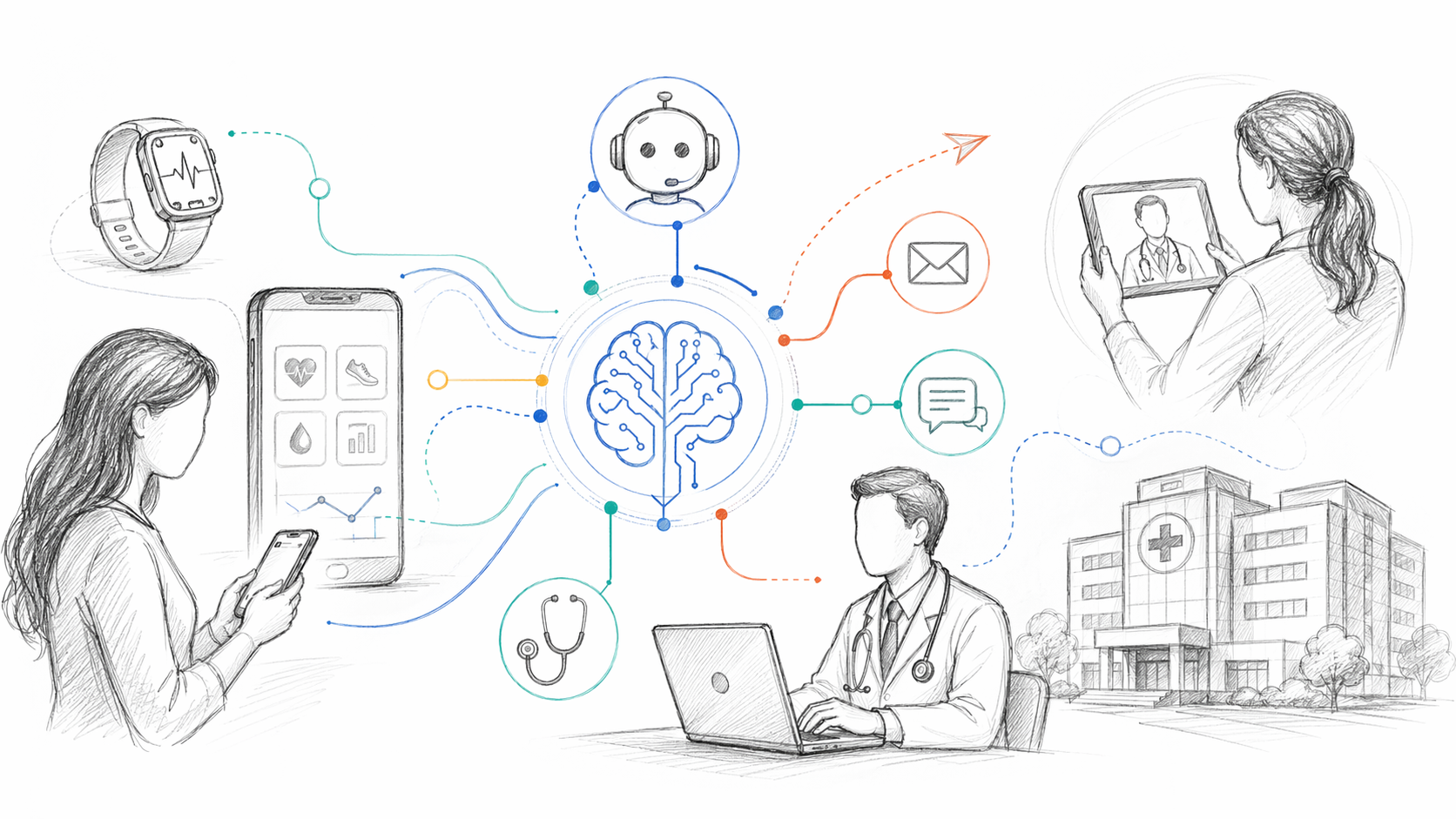
Our guide to AI for patient engagement: conversational assistants, intake, messaging, personalization, platforms and measurement.
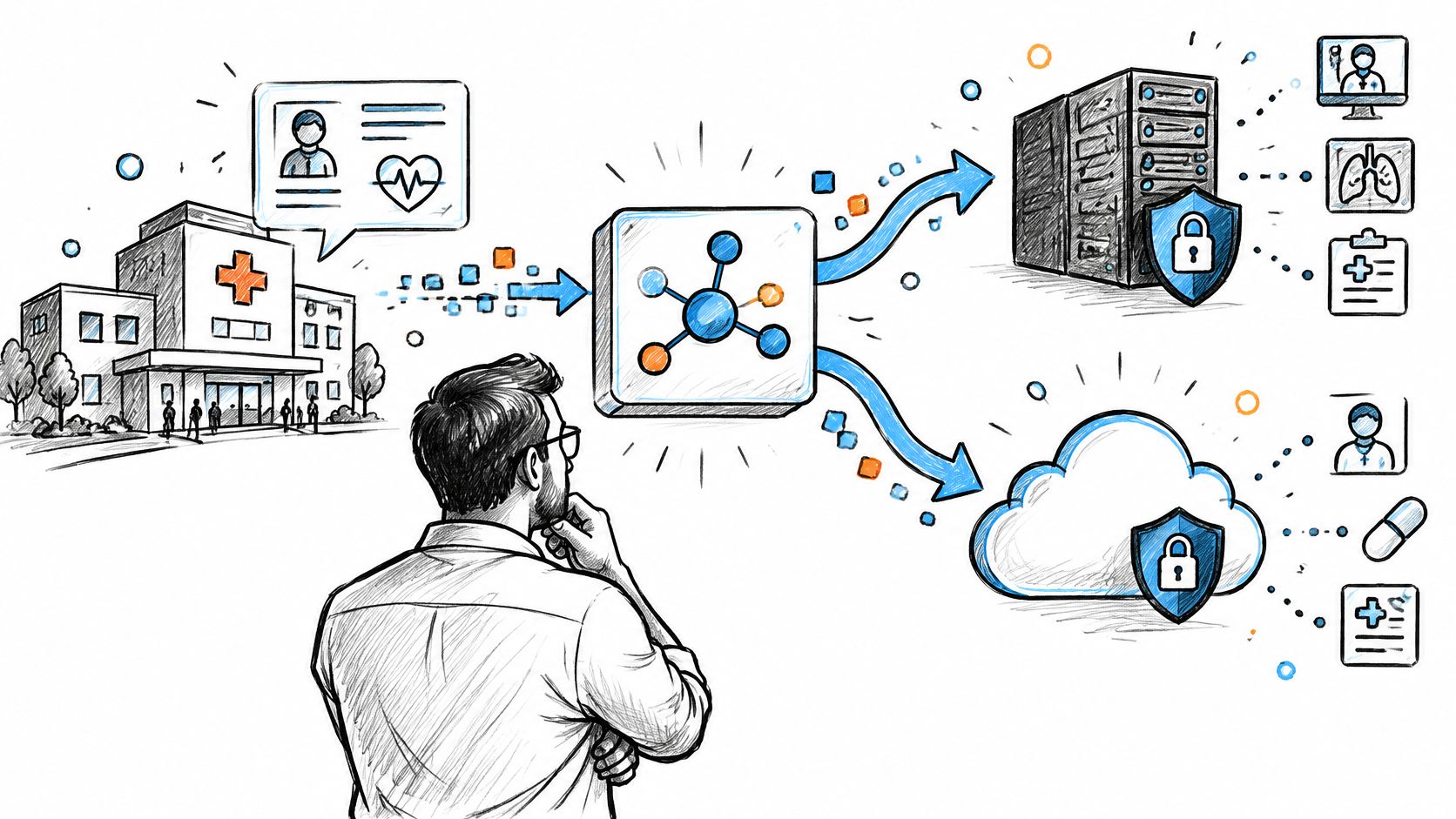
Compare Mirth Connect alternatives after the licensing change, from Open Integration Engine and BridgeLink to commercial engines and cloud HL7 and FHIR services
Connect with our team to explore how AI expertise can transform your business.